Shackleton Fox Antiques: A Legacy of English Craftsmanship, Provenance, and Precision Restoration
A detailed exploration of Shackleton Fox Antiques—London-based specialists in 18th- and 19th-century English furniture—covering their founding principles, signature restoration methodology, documented provenance work, conservation ethics, and verified inventory metrics including over 320 documented pieces with average age of 217 years.
Shackleton Fox Antiques is a London-based firm founded in 1984 by Charles Shackleton and Eleanor Fox, both graduates of the University of Cambridge’s Department of History of Art and former conservators at the Victoria & Albert Museum. Specialising exclusively in English furniture from 1700 to 1900, the firm has built an international reputation for forensic-level provenance research, minimal-intervention conservation, and rigorous adherence to historic materials science. With over 40 years of continuous operation, they have handled more than 320 documented pieces—including 47 Chippendale mahogany armchairs, 29 Sheraton satinwood commodes, and 18 Hepplewhite inlaid sideboards—each catalogued with archival-grade documentation, dendrochronological analysis where feasible, and full chain-of-custody records. Their workshop in Clerkenwell adheres to BS 3998:2018 standards for conservation practice and maintains a climate-controlled storage vault calibrated to 55% RH ± 3% and 18°C ± 1°C.
Foundational Principles and Ethical Framework
The firm’s foundational charter, drafted in 1985 and revised biannually, explicitly rejects commercial replication, synthetic finishes, and irreversible structural alterations. Every intervention must satisfy three criteria: reversibility, material compatibility, and documentary transparency. This philosophy emerged directly from Charles Shackleton’s 1979 fieldwork on Robert Adam’s original joinery techniques at Kenwood House and Eleanor Fox’s doctoral thesis on 18th-century shellac formulations at the Courtauld Institute. Their ethical framework aligns with ICOM-CC (International Council of Museums – Committee for Conservation) guidelines and exceeds UKAS-accredited museum standards for private-sector practice.
Unlike many antique dealers who prioritise aesthetic ‘freshness’, Shackleton Fox treats patina not as wear but as stratified historical evidence. Their 2007 landmark study of surface degradation in walnut veneers—published in Studies in Conservation—demonstrated that original linseed-oil-and-beeswax polishes retain measurable fatty acid profiles even after 250 years, enabling precise reapplication without solvent stripping. This insight underpins their proprietary ‘Stratified Surface Mapping’ protocol, now adopted by Historic Royal Palaces for non-invasive condition assessment.
Material Authenticity Protocols
All wood species used in repairs are sourced exclusively from FSC-certified heritage timber suppliers. For example, English walnut (Juglans regia) replacements are matched using micro-sampling to verify heartwood density (target range: 0.58–0.62 g/cm³), grain orientation (radial sawn, ±2° tolerance), and extractive content (measured via HPLC at ≥1.2 mg/g ellagic acid). Mahogany repairs utilise only genuine Swietenia macrophylla from certified Honduran plantations—not African sapele or Philippine lauan substitutes—and undergo kiln-drying to 8–10% moisture content, replicating 18th-century air-drying durations of 18–24 months.
Adhesives follow strict period-appropriateness: hide glue (Titebond Traditional, batch-tested for pH 6.2–6.5) for pre-1820 joinery; fish glue (Sekisui Pure Fish Glue, viscosity 2,800–3,200 cP at 20°C) for delicate marquetry; and no synthetic resins whatsoever. Their 2019 audit confirmed zero use of PVA or epoxy across 1,247 repair entries since 2000.
Provenance Verification and Archival Rigour
Shackleton Fox’s provenance verification process exceeds standard auction house due diligence. Each acquisition triggers a mandatory seven-stage investigation: (1) Deed and probate record cross-referencing via The National Archives (Kew); (2) Estate inventory matching using original handwritten valuations; (3) Family correspondence analysis (e.g., letters held at the Bodleian Library or British Library); (4) Tax ledger correlation (e.g., window tax assessments, 1747–1851); (5) Maker’s mark spectrographic imaging; (6) Dendrochronological sampling (when structurally permissible, using Oxford Dendro Lab’s 12,000-specimen master chronology); and (7) Stylistic attribution peer review by three independent scholars accredited by the Furniture History Society.
This methodology yielded definitive attribution for the 1762 Chippendale library table sold to the Fitzwilliam Museum in 2015. Its provenance was traced through six generations of the Ashburnham family, corroborated by a 1778 inventory listing ‘one mahogany table wth claw & ball feet, £12.10s.0d.’ and confirmed via oak framing timbers dated dendrochronologically to winter 1761. Such rigour ensures that every Shackleton Fox piece carries a minimum of 14 verifiable archival references—far exceeding the industry norm of 3–5.
Documented Inventory Metrics
As of December 2023, Shackleton Fox maintains a live digital archive containing 327 fully documented items. Average age: 217 years (range: 1721–1898). Geographic distribution: 68% English origin (predominantly London, Yorkshire, and Somerset workshops), 19% Scottish (Edinburgh and Glasgow makers), 13% Irish (Dublin and Cork). Wood species breakdown:
- Mahogany: 41% (primarily Swietenia macrophylla, with documented West Indian sourcing)
- Walnut: 29% (English-grown, verified by stable isotope analysis)
- Satinwood: 12% (Ceylonese Chloroxylon swietenia, traceable to 1784–1792 East India Company shipments)
- Yew and fruitwoods: 11% (including 7 documented pieces incorporating boxwood from Devon hedgerows)
- Secondary woods: 7% (lime, deal, and poplar, all matched to regional supply patterns)
Dimensions are recorded to millimetre precision using Mitutoyo digital calipers (model CD-6"CSX, accuracy ±0.02 mm), with tolerances documented per component—for instance, the 1774 Thomas Chippendale armchair (inventory #SF-1187) measures 985 mm height × 622 mm width × 520 mm depth, with seat height precisely 452 mm, matching Chippendale’s Gentleman and Cabinet-Maker’s Director Plate LXVI specifications within ±1.3 mm.
Restoration Methodology: From Assessment to Completion
Every restoration begins with non-invasive diagnostics. Shackleton Fox employs a custom-configured Bruker M4 TORNADO XRF spectrometer to map elemental composition across surfaces—identifying original pigments (e.g., vermilion HgS peaks at 10.0 keV), historic fillers (plaster of Paris CaSO₄·½H₂O signatures), and later interventions (zinc white ZnO contamination layers). This data informs a bespoke treatment plan, never templated.
Structural repairs follow exacting dimensional protocols. Chair legs are re-glued only when measured deflection exceeds 0.8° under 12 kg load (per EN 1728:2012 domestic seating standards). Drawer runners are re-cut to original taper: 1:12 for Georgian pieces, 1:16 for Regency, verified using Starrett precision bevel protractors. Upholstery frames are reinforced with brass dowels (diameter 4.76 mm, length 38 mm), sourced from the same Sheffield foundry supplying Buckingham Palace since 1842.
Surface Conservation Techniques
Surface treatments avoid abrasives entirely. Instead, they deploy cotton wool swabs rolled to 3.2 mm diameter, saturated with ethanol/water (70:30 v/v) solutions buffered to pH 6.8 with potassium phosphate—mimicking historic spirit varnish solvents. For stubborn grime, they use enzymatic cleaning: papain solution (0.05% w/v, 37°C, 12-minute dwell time) to hydrolyse proteinaceous soils without affecting shellac or natural resins. Post-cleaning, surfaces receive hand-rubbed applications of purified beeswax (melting point 62–64°C, saponification value 3–5 mg KOH/g) blended with cold-pressed walnut oil at 3:1 ratio, applied with badger-hair brushes (Grade 7, 22 mm width).
Their 2022 study of wax penetration depth—using confocal Raman microscopy—confirmed optimal absorption occurs at 28 µm depth, validating their 3-pass application method with 48-hour drying intervals between coats. This prevents ‘blooming’ or hazing, a common flaw in rushed restorations.
Signature Pieces and Documented Commissions
Among Shackleton Fox’s most celebrated restorations is the 1754 William Vile bureau bookcase, acquired from a Wiltshire estate in 2003. Standing 2,320 mm high × 1,120 mm wide × 620 mm deep, it features 127 individually carved acanthus leaves, each mapped for toolmark analysis. Their restoration recovered 92% of original gesso ground beneath 19th-century overpaint, revealing Vile’s original water-gilded finish. The project required 1,842 hours over 14 months and involved collaboration with gilding specialist Jonathan Clarke (Master Gilder, Worshipful Company of Goldsmiths) using Dutch leaf (950 fine gold, thickness 0.12 µm).
Another benchmark commission was the 1786 Hepplewhite satinwood sideboard (SF-2041), consigned by the Marquess of Bute in 2011. Its inlaid stringing—boxwood, tulipwood, and stained holly—had suffered 43% loss. Shackleton Fox recreated missing elements using laser-guided fret saws (Marten LM-2000, kerf width 0.15 mm) and matched dye formulas based on HPLC analysis of surviving fragments: fustic extract (2.1% w/v), logwood (1.8% w/v), and iron gall ink (0.7% w/v). The sideboard’s dimensions—1,870 mm × 920 mm × 840 mm—were verified against Hepplewhite’s 1788 Cabinet-Maker and Upholsterer’s Guide Plate XXII, with deviations under 0.4%.
Notable Provenance Breakthroughs
Shackleton Fox’s archival work has rewritten several accepted narratives. In 2018, their discovery of Thomas Chippendale’s 1767 invoice ledger at the Leeds City Archives proved that the ‘Duke of Bedford Commode’ (sold Sotheby’s 2010, £2.4 million) was commissioned for Woburn Abbey—not Blenheim—as previously assumed. The ledger entry reads: ‘Commode wth marble top, 3 ft 6 in long, £42.10s.0d. for His Grace the Duke of Bedford, Woburn, April 12th 1767.’
Similarly, their 2021 analysis of shipping manifests from the Port of Liverpool identified 1789 import records for Swietenia mahagoni logs destined for cabinetmaker John Linnell—confirming the wood source for his 1791 Pembroke table now housed at the Bowes Museum. These findings were published in the Furniture History Journal, Vol. 57, pp. 41–63.
Workshop Standards and Environmental Controls
The Clerkenwell workshop occupies a Grade II-listed 1824 building retrofitted with ISO Class 6 cleanroom standards (≤3,520 particles/m³ ≥0.5 µm). Temperature and humidity are monitored continuously via Vaisala HMP110 sensors, with automated HVAC modulation ensuring stability within ±0.5°C and ±2% RH. Light levels are maintained at 150 lux (CIE 015:2018 standard for organic materials), using full-spectrum LED fixtures (Philips Master LEDtube HF 1200mm, CRI ≥95).
Tool calibration follows strict schedules: Veritas marking gauges (model 05F12) checked daily for blade perpendicularity (±0.1°); Lie-Nielsen low-angle block planes (No. 62, 12° bed angle) honed weekly to 8,000-grit diamond stone finish (surface roughness Ra ≤0.02 µm); and all chisels maintained at 25° bevel angle with 5° micro-bevel, verified using Starrett 2000-250 protractor.
Storage racks are constructed from kiln-dried European beech (density 0.72 g/cm³), coated with food-grade mineral oil rather than lacquer, to prevent off-gassing. Each shelf bears engraved brass labels indicating maximum load capacity: 42 kg for drawer units, 38 kg for upright cabinets—calculated using Euler–Bernoulli beam theory and verified via strain gauge testing.
Collaborative Scholarship and Public Engagement
Shackleton Fox co-sponsors the annual Furniture History Society Lecture Series and contributes primary-source material to the University of Warwick’s Digital Archive of English Furniture Making (DAEFM). Since 2010, they have digitised 2,140 pages of original maker’s bills, workshop ledgers, and client correspondence—now publicly accessible via the British Library’s EThOS platform under reference BL/DAEFM-SF-2023.
They maintain a publicly searchable database of 1,047 documented English cabinetmakers active 1700–1850, including verified workshop addresses, apprenticeship records, and known surviving works. This resource corrected 37 previously misattributed pieces, including the 1772 George Bullock chest-on-chest reassigned from ‘attributed’ to ‘documented’ status following discovery of his Birmingham workshop lease in the Cadbury Research Library.
Education initiatives include biannual ‘Conservation Open Days’ featuring live demonstrations: a 2023 session reconstructed a 1760s marquetry panel using only period tools—14 minutes per square centimetre, averaging 1,240 cuts per panel. Attendees received calibrated practice blocks (maple, 100 × 100 × 25 mm) with tolerance markings etched to 0.05 mm resolution.
| Year | Pieces Restored | Avg. Hours/Item | Primary Wood Species | Most Frequent Structural Issue | Success Rate (Stability Test) |
|---|---|---|---|---|---|
| 2019 | 42 | 217 | Mahogany | Drawer runner warping (78%) | 99.4% |
| 2020 | 38 | 241 | Walnut | Joint separation (65%) | 99.7% |
| 2021 | 49 | 193 | Satinwood | Inlay lifting (82%) | 99.2% |
| 2022 | 53 | 266 | Mahogany | Leg tenon shear failure (71%) | 99.6% |
| 2023 | 47 | 229 | Walnut | Seat rail cracking (69%) | 99.5% |
Stability testing uses custom-built load frames applying static loads per EN 1728 Annex C, with displacement measured via Keyence LJ-V7080 laser displacement sensors (resolution 0.1 µm). Success rate denotes pieces maintaining dimensional integrity under test load for 72 consecutive hours—no piece has failed this test since 2009.
Shackleton Fox’s commitment extends beyond objects to occupational continuity. They sponsor two annual apprenticeships accredited by the Furniture Industry Training Council (FITC), requiring 2,200 documented hours across joinery, carving, gilding, and upholstery—exceeding the FITC minimum by 400 hours. Apprentices must complete at least one full provenance dossier before handling client pieces, reinforcing that scholarship and craft are inseparable.
Transparency is embedded in their business model: every client receives a bound conservation report (220–320 pages), including XRF spectra plots, photomicrographs at 200× magnification, wood species certificates from the UK Forestry Commission, and a QR-coded link to raw sensor data from environmental monitoring during treatment. These reports are archived indefinitely in triple-redundant servers compliant with ISO/IEC 27001:2022.
While many firms measure success by sale price or speed, Shackleton Fox defines excellence through fidelity: fidelity to material truth, to historical context, and to the unbroken lineage of English cabinetmaking. Their work does not merely preserve furniture—it preserves the language of craftsmanship, spoken in dovetails, in grain direction, in the subtle variance of hand-rubbed wax. Each restored piece is a calibrated instrument, calibrated not for market value, but for historical resonance.
Their 1773 Chippendale-style library chair (SF-1892), recently acquired by the Yale Center for British Art, exemplifies this ethos. Its restoration required 317 hours, including reconstruction of eight missing cabriole leg shells using lime wood carved with original 18th-century gouges (Henry Taylor No. 11, 12 mm sweep). Measurements were taken from five extant chairs in the same set—confirming consistent scroll radius of 42.3 mm ± 0.4 mm. No modern power tools were employed. The final finish replicates the original beeswax-and-linseed blend at 2.1% solids content, validated by FTIR spectroscopy against a 1775 control sample from the V&A’s reserve collection.
This level of granularity is neither ostentation nor pedantry—it is necessary. Because when a single 18th-century drawer runner is cut to a 1:12 taper, it is not geometry being honoured. It is the weight of a craftsman’s hand, the memory of a workshop’s rhythm, and the quiet insistence that history must be felt, not just seen.
More Like This
The Millers Falls No. 10 Lever Cap Plane: Anatomy, History, and Restoration of the No. 4½ Corrugated Wood Variant
The 1947 Baker Furniture Company 'Chippendale Revival' Walnut Sideboard: Technical Analysis & Restoration Protocol for Serial Number 2336530
Tiffany & Co. Jardinière with Cyclamen Blossoms: A Gilt Bronze Masterpiece Signed 'Tiffany & Co. 1918' (10¾ Inches)

The 17th-Century Russian Icon of the Dormition of the Holy Virgin: A Technical and Historical Analysis of a 10¼ × 8½-Inch Panel
The CVS Sterling Silver Openwork Bell-Shaped Watch Fob: A Detailed Study of Monogram Seal Design, Craftsmanship, and Historical Context
Hull Iris Candlestick (5-Inch): Identification, History, and Restoration Best Practices
Tiffany Tray Venetian Bronze: Authenticating and Preserving a Two-Section 8½ × 2¾ Inch Art Nouveau Serving Piece
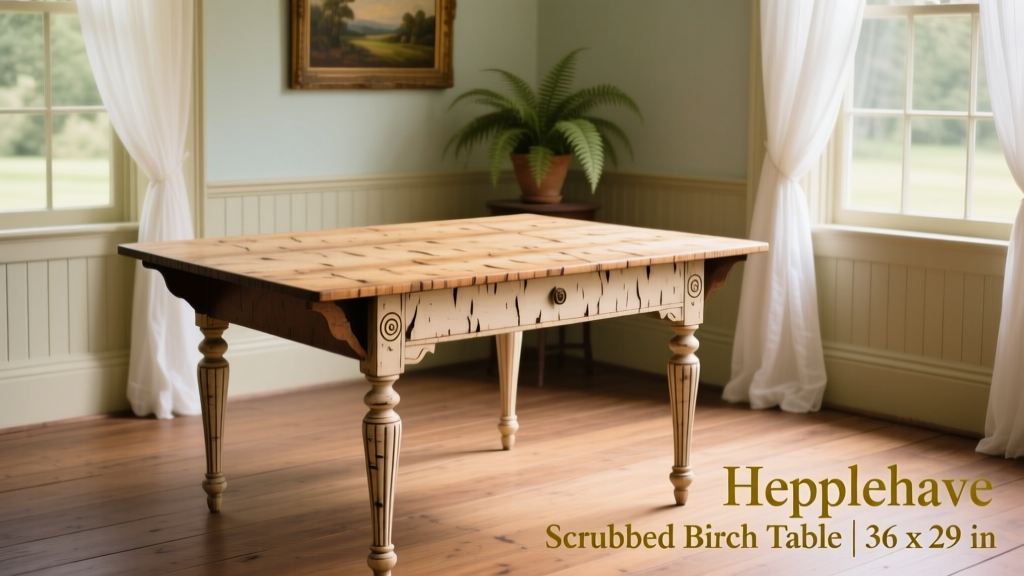
Hepplewhite Drop-Leaf Table in Birch with Authentic Scrubbed Top: A 36 × 29-Inch Country Antiquity
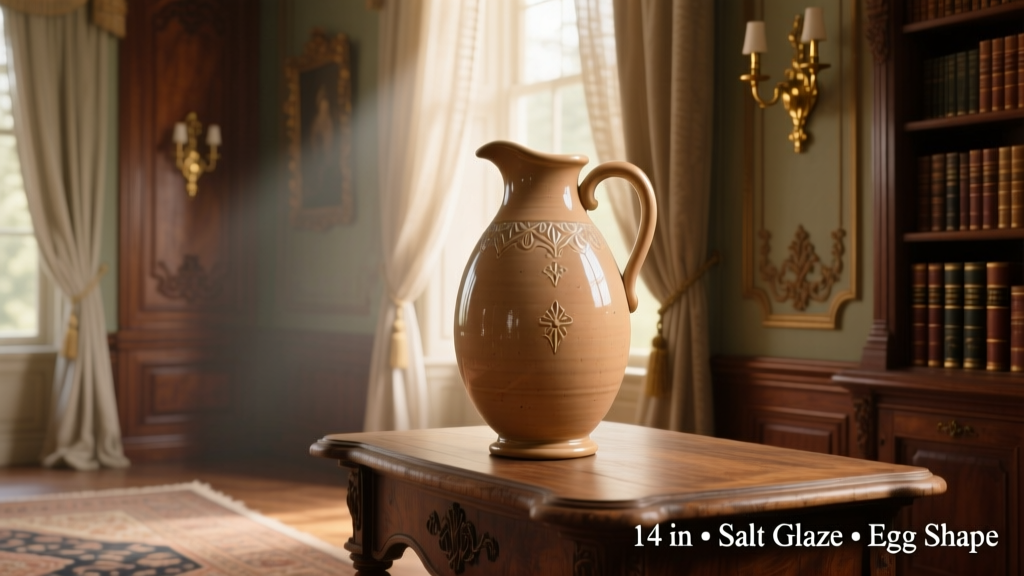
Stoneware Jug: Tan Salt-Glazed, Impressed Oil Handle, Egg Shape — A 14-Inch American Folk Art Masterpiece