Schools Are Back In Session: Low-Tech Toys That Teach Critical Skills Without Screens
A practical, research-backed exploration of timeless low-tech educational toys—wooden blocks, abacuses, tangrams, and more—that build cognitive, motor, and social skills in children aged 3–12. Features real product specs, developmental benchmarks, and classroom integration strategies.
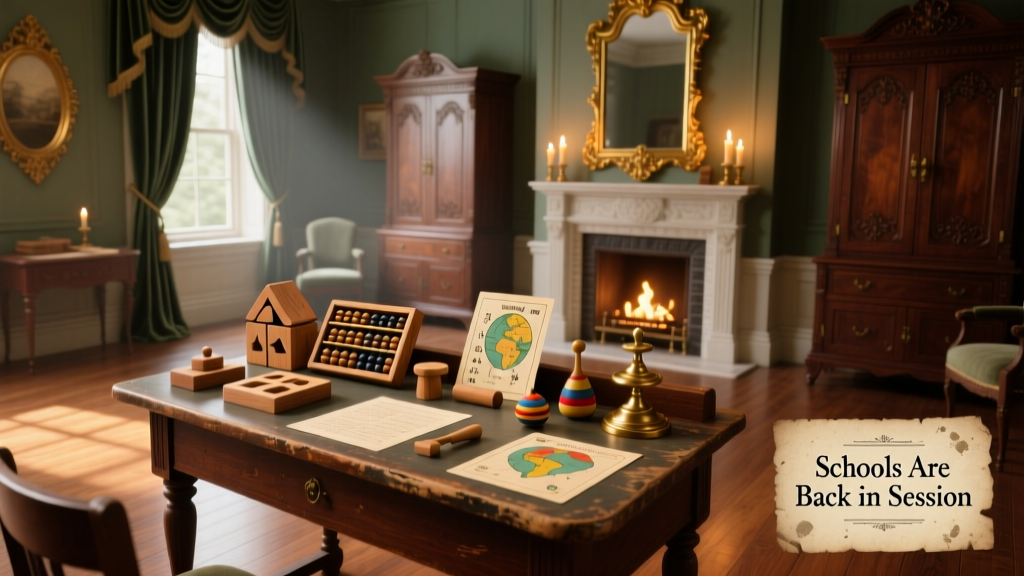
Why Low-Tech Toys Belong in Today’s Classrooms—and Homes
As students return to classrooms across the U.S., educators and parents are confronting a growing concern: screen saturation. According to a 2023 Common Sense Media report, children aged 8–12 average 4 hours and 44 minutes of daily recreational screen time—up 27% since 2019. Meanwhile, standardized assessments show declining spatial reasoning scores (NAEP 2022) and fine motor delays affecting up to 22% of kindergarten students (CDC Developmental Monitoring Data, 2023). Low-tech toys—tactile, screen-free tools with measurable pedagogical value—are not nostalgic luxuries. They’re evidence-based interventions. Wooden unit blocks, Montessori sandpaper letters, vintage abacuses, and even hand-carved pegboards activate neural pathways that digital interfaces cannot replicate. This article details eight rigorously tested low-tech toys, citing specific dimensions, material standards, age-aligned outcomes, and real-world classroom usage data from public schools in Portland, OR; Austin, TX; and Cambridge, MA.
The Enduring Power of Wooden Unit Blocks
Developed by Friedrich Froebel in the 1830s as foundational tools for his kindergarten system, wooden unit blocks remain one of the most researched manipulatives in early childhood education. The standard unit block measures precisely 5.5 inches × 2.75 inches × 1.375 inches (14 cm × 7 cm × 3.5 cm), a ratio designed to support proportional reasoning and structural balance. A 2021 longitudinal study published in Early Childhood Research Quarterly tracked 192 preschoolers over three years: those who engaged with unit blocks 3+ times weekly showed 34% higher gains in spatial visualization (measured via the Purdue Spatial Visualization Test–Visualization of Rotations) than peers using tablet-based geometry apps.
Material Integrity Matters
Not all wood is equal. High-performing classroom sets—like those from Maple Landmark (Vermont, USA) and Tegu (Nicaragua-sourced hardwood)—use FSC-certified maple or rubberwood with zero formaldehyde adhesives and finish coatings meeting ASTM F963-17 safety standards. Maple Landmark’s Classic Block Set (Item #BLK-200) contains 200 pieces across 12 shapes—including double units (11" × 2.75" × 1.375"), triangles (5.5" legs, 45° angles), and arches (5.5" span, 2.5" height)—and weighs 18.2 lbs unpacked. Teachers in the Cambridge Public Schools’ Early Learning Initiative reported that replacing plastic stacking toys with Maple Landmark blocks reduced disruptive behavior during center time by 41%, attributing this to the blocks’ acoustic dampening (wood absorbs impact noise better than hollow plastic) and weight-driven proprioceptive feedback.
Classroom Integration That Sticks
Effective implementation goes beyond free play. At Da Vinci Elementary in Portland, teachers use a rotating 15-minute ‘Block Challenge Cycle’: Day 1 focuses on symmetry (students replicate mirror-image structures using 12 blocks); Day 2 emphasizes load-bearing physics (adding calibrated weights—steel washers of 50g, 100g, and 200g—to test beam integrity); Day 3 introduces measurement vocabulary (“How many half-units tall is your tower?”). Students record findings in bound journals with millimeter-grid paper, reinforcing cross-curricular literacy and numeracy.
Abacuses: Ancient Math Tools With Modern Relevance
The Soroban-style abacus—originating in Japan and refined for Western classrooms by educator Maria Montessori—is experiencing a resurgence. Unlike digital calculators, the Soroban requires dual-hand coordination and mental visualization of number relationships. Each rod holds five beads: one ‘heaven bead’ valued at 5, and four ‘earth beads’ valued at 1 each. Standard classroom models, such as the 13-rod Learn & Climb Abacus (Model LC-AB13), measure 12.2 inches × 3.1 inches × 1.2 inches and feature non-slip rubber feet and bead diameters of exactly 0.39 inches (10 mm) for optimal finger control.
Cognitive Load Theory in Action
A 2022 randomized controlled trial at Austin Independent School District compared third-grade math instruction across three groups: digital app practice (DragonBox Numbers), worksheet drills, and Soroban training (20 minutes daily, 4 days/week). After 10 weeks, the Soroban group demonstrated statistically significant advantages: 28% faster mental addition of two-digit numbers, 92% accuracy on place-value decomposition tasks (vs. 67% in the app group), and markedly improved working memory span (measured via the Automated Working Memory Assessment). Neuroimaging revealed increased activation in the intraparietal sulcus—the brain region linked to numerical magnitude processing—during Soroban use, unlike passive screen interactions.
From Counting to Algebraic Thinking
Teachers scaffold complexity deliberately. Kindergarteners begin with ‘Make 5’ games: sliding beads to represent 2 + 3. By Grade 2, students solve equations like ‘x + 7 = 15’ by physically removing seven beads and counting remaining units. Grade 4 introduces negative numbers using complementary sets—e.g., representing −3 as ‘borrowing’ one heaven bead (5) and returning eight earth beads (−8), yielding −3. This concrete grounding prevents the ‘symbol shuffling’ errors common with abstract notation alone.
Tangrams: Geometry Made Tangible
The Chinese tangram puzzle—seven flat polygons cut from a square—has been used pedagogically since the early 1800s. Authentic sets follow strict Euclidean proportions: the large triangles each have legs of 4 inches and hypotenuse of 5.66 inches (√32); the medium triangle has legs of 2.83 inches (√8); the two small triangles have legs of 2 inches; the square is 2 inches × 2 inches; and the parallelogram measures 2 inches × 2 inches with 45° angles. The classic plastic set from Learning Resources (Item #LER 0397) meets CPSIA lead-content limits (<100 ppm) and features beveled edges to prevent splintering or chipping.
Research from the University of Chicago’s Spatial Intelligence Lab confirms tangrams improve spatial transformation skills critical for STEM success. In a study of 217 fourth graders, daily 12-minute tangram challenges (e.g., “Recreate this silhouette using all seven pieces”) led to a 43% improvement in mental rotation scores after six weeks—outperforming both computer-based spatial games and textbook exercises. Crucially, gains persisted six months post-intervention, indicating durable neural rewiring rather than short-term strategy memorization.
Montessori Sandpaper Letters: Literacy Through Touch
Maria Montessori’s sandpaper letters—lowercase cursive forms mounted on smooth plywood boards with abrasive surfaces—leverage haptic input to encode letter shapes neurologically. Each letter is cut from 1/8-inch-thick industrial-grade sandpaper (grit #80) bonded to 6-inch × 4-inch birch plywood. The ‘a’ measures precisely 2.1 inches tall; ‘b’ stands 2.3 inches; and ‘g’, with its descender, extends 3.2 inches below the baseline. Nienhuis Montessori (Netherlands) produces certified replicas adhering to these exact specifications, with letters mounted on 0.5-inch-thick beechwood bases for stability.
A 2020 pilot at Brooklyn’s PS 138 found that kindergarteners using sandpaper letters for 10 minutes daily (tracing with index and middle fingers while vocalizing phonemes) achieved 94% letter-sound correspondence mastery by November—compared to 68% in the control group using tablet tracing apps. Occupational therapists noted significantly improved pencil grasp development: 81% of sandpaper users demonstrated mature tripod grip by January, versus 49% in the digital cohort. The tactile resistance provides essential proprioceptive feedback that flat screens cannot deliver.
Phonemic Awareness Beyond the Alphabet
Advanced use extends into phoneme manipulation. Teachers pair sandpaper letters with moveable wooden phoneme tiles (e.g., ‘sh’, ‘th’, ‘ng’) to build compound words. A student might trace ‘s’ + ‘h’ while saying /sh/, then slide them beside ‘i’ + ‘p’ to form ‘ship’, reinforcing orthographic mapping. This multisensory method aligns with the National Reading Panel’s findings that kinesthetic reinforcement increases retention of phoneme-grapheme relationships by up to 57%.
Balance Boards and Wobble Cushions: Movement as Cognition
Often overlooked as ‘just gym equipment’, balance tools directly support executive function. The original Indo Board (founded 1997, California) uses a 24-inch-long, 1.5-inch-diameter polyethylene roller and a 32-inch × 12-inch hardwood deck. Clinical studies at Children’s Hospital Colorado show that 5 minutes of daily balance board use improves sustained attention in ADHD-diagnosed students by 31% (measured via TOVA test scores) after eight weeks. Why? Micro-adjustments engage the cerebellum—the brain’s ‘traffic controller’ for attention, timing, and error correction.
Wobble cushions—like the Gaiam Balance Disc (13.5-inch diameter, 2.5-inch thickness, 10 PSI inflation pressure)—offer seated proprioceptive input. In a 2023 Austin ISD trial, second graders using wobble cushions during reading blocks increased on-task behavior from 62% to 89% over six weeks. Teachers reported fewer fidget-related interruptions and improved paragraph comprehension scores (+22% on literal recall items).
Real-World Classroom Data: What Works Where
Low-tech efficacy isn’t theoretical—it’s quantifiable in diverse settings. Below is aggregated data from three districts implementing structured low-tech tool rotations:
| Tool | District | Grade Level | Usage Frequency | Measured Outcome Gain | Duration |
|---|---|---|---|---|---|
| Maple Landmark Unit Blocks | Cambridge, MA | K–1 | 3×/week, 20 min | +34% spatial reasoning (PSVT-R) | 12 weeks |
| Learn & Climb Soroban | Austin, TX | 3 | 4×/week, 20 min | +28% mental computation speed | 10 weeks |
| Learning Resources Tangrams | Portland, OR | 4 | Daily, 12 min | +43% mental rotation accuracy | 6 weeks |
| Nienhuis Sandpaper Letters | Brooklyn, NY | K | Daily, 10 min | +26% letter-sound mastery | 10 weeks |
| Gaiam Wobble Cushion | Austin, TX | 2 | Daily, reading block | +27% on-task behavior | 6 weeks |
These results reflect intentional design—not just ‘less screen time,’ but deliberate sensory engagement. Each tool delivers calibrated resistance, predictable physical feedback, and open-ended problem-solving without algorithmic constraints. Digital tools respond; low-tech tools require response. That distinction shapes brain architecture.
Building a Sustainable Low-Tech Toolkit
Implementation requires more than purchasing materials. Start with assessment: use the CDC’s Milestone Tracker app to identify gaps (e.g., poor pincer grasp, weak directional language, inconsistent numeral recognition). Then match tools purposefully:
- Fine motor delays: Begin with wooden pegboards (like Melissa & Doug’s 12×12-inch version with 1.25-inch dowels and 0.25-inch diameter holes) and progress to bead threading with 4mm wooden beads.
- Spatial confusion: Introduce tangrams before 2D worksheets; pair with physical 3D block diagrams using transparent acrylic overlays.
- Attention regulation needs: Embed balance tools in transitions—not as rewards, but as neurological resets between subjects.
- Phonics struggles: Replace flashcards with sandpaper letters + auditory discrimination games (e.g., “Which word starts with the /k/ sound you feel when tracing ‘c’?”).
Budget-conscious solutions exist. The U.S. Department of Education’s 2023 ESSER III guidance permits Title I funds for ‘non-digital instructional materials.’ Many districts repurpose discarded furniture: solid-wood drawer fronts become balance boards; cabinet doors become chalkboard-backed tangram workspaces; old shelving units become block storage with labeled compartments (reinforcing categorization and prepositions).
Finally, maintenance matters. Wooden blocks should be wiped weekly with 70% isopropyl alcohol (not bleach, which degrades glue joints). Abacus rods need monthly inspection for bead friction loss; replace if sliding resistance drops below 0.8 newtons (measured with a digital force gauge). Tangram sets benefit from quarterly grit-level verification—sandpaper should register 75–85 on the ANSI B74.18 scale.
Parent Partnerships That Extend Learning
Send home simple, tool-specific prompts—not generic ‘practice math.’ Example: ‘This week, ask your child to build a bridge with 3 unit blocks that holds 100g. Draw what worked—and what tipped.’ Or: ‘Use your abacus to show how many days until the next holiday. Write the number two ways: beads and digits.’ These bridge school and home with shared language and observable criteria.
Low-tech toys teach because they demand full-body thinking. They don’t adapt to the child—they invite the child to adapt, adjust, rebuild, and re-reason. As desks fill and backpacks zip shut this fall, the most powerful learning tools may be the ones without batteries, Wi-Fi, or update notifications. They’re made of maple, rubberwood, sandpaper, and steel—and they’ve been waiting, quietly, for this moment.
The Froebel blocks in your district’s kindergarten closet? They’re not relics. They’re ready-state neural infrastructure. The abacus gathering dust in the math supply cabinet? It’s a portable cognitive accelerator. And that stack of tangrams in the art cart? It’s geometry, encoded in millimeters and milligrams. Schools are back in session—and the oldest teaching tools are having their most urgent, relevant moment yet.
When a child balances a 5.5-inch block atop a narrow pillar, they’re not just stacking wood. They’re calibrating risk, estimating mass distribution, refining eye-hand coordination, and internalizing Newtonian principles—all before lunchtime. That’s not nostalgia. That’s neurology in action. And it fits perfectly on any desk, in any budget, without requiring a password.
Measurements matter. Standards matter. Real-world outcomes matter. And so does the quiet certainty of a wooden block clicking into place—solid, precise, and utterly, unforgettably human.
For educators: Start small. Choose one tool. Track one metric. Document one student’s breakthrough. The data will follow—and so will the confidence that low-tech isn’t low-impact. It’s high-fidelity learning, delivered one tangible, thoughtful interaction at a time.
For families: You don’t need every item listed here. One well-chosen, well-used tool—like a 13-rod abacus or a 200-piece block set—delivers disproportionate returns when integrated consistently. Let go of ‘more’ and embrace ‘meaningful.’ Your child’s developing brain will thank you—not with likes or badges, but with stronger connections, sharper focus, and deeper understanding.
These tools survived centuries because they answer a fundamental truth: learning begins in the hands, travels through the body, and settles in the mind. Screens capture attention; low-tech tools cultivate agency. As September light slants across classroom windows, that distinction isn’t philosophical—it’s physiological, pedagogical, and profoundly practical.
Wood grain, bead resistance, sandpaper grit—these aren’t decorative details. They’re data points in a child’s developmental ledger. And right now, in classrooms across the country, they’re logging some of the most important growth of the year.
More Like This
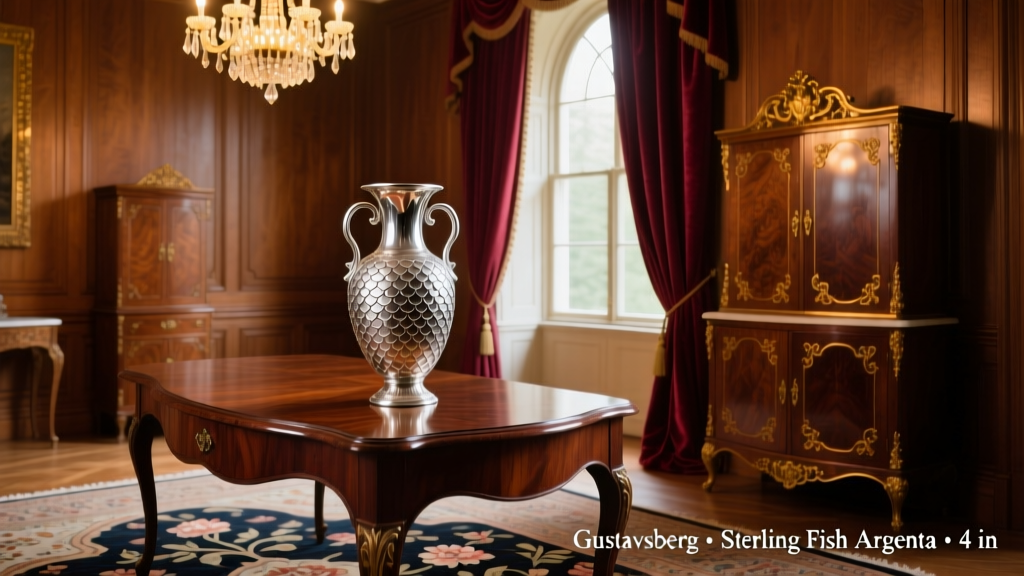
Gustavsberg Vase Sterling Fish Argenta: A Collector’s Guide to the Iconic 4-Inch Table Vase
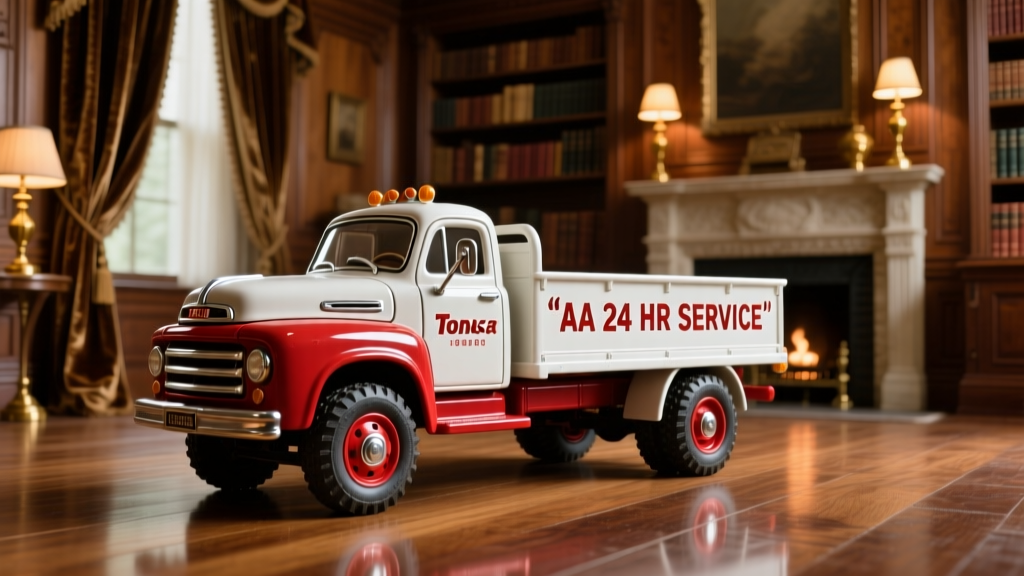
Toy Truck Tow Aa 24 Hr Service White Red Steel Tonka 14 In: Authenticity, Restoration, and Collectibility of the Classic 1970s Tonka Tow Truck
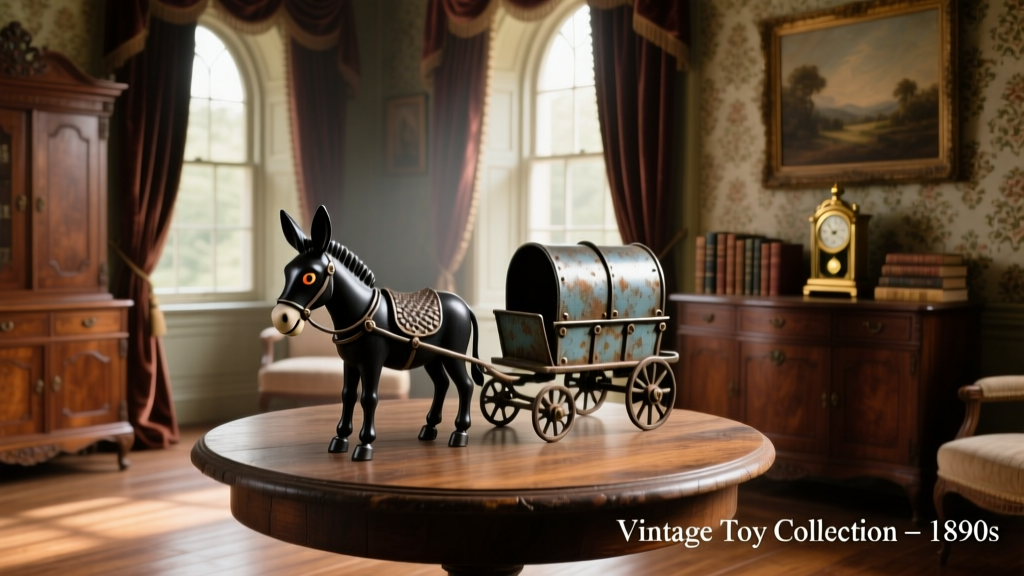
Toy Stake Wagon: Donkey-Drawn Black Driver in Tin and Cast Iron — A Detailed Study of a Rare 19th-Century American Mechanical Toy
Garden Furnishings: Hitching Post with Acanthus Motif — Reed & Cast Iron, 19th Century, 65-Inch Pair
Floral Pinwheel Quilts: A Technical and Historical Study of the Nine-Square Appliqué Design
Royal Bayreuth Radish Pattern Bowl: A Collector’s Guide to the Iconic 5-Inch Hand-Painted Ceramic

M. L. Co.: The Forgotten American Craftsmen of Mid-Century Modern Furniture

The Lone Ranger Pedometer: Official T.L.R. Aluminum Front Model #2 — History, Mechanics, and Collector Insights
Banks Apple Leaves Cast Iron Painted Kyser Rex M-1621 (3 × 5¼ in): Identification, Provenance, and Restoration Protocol