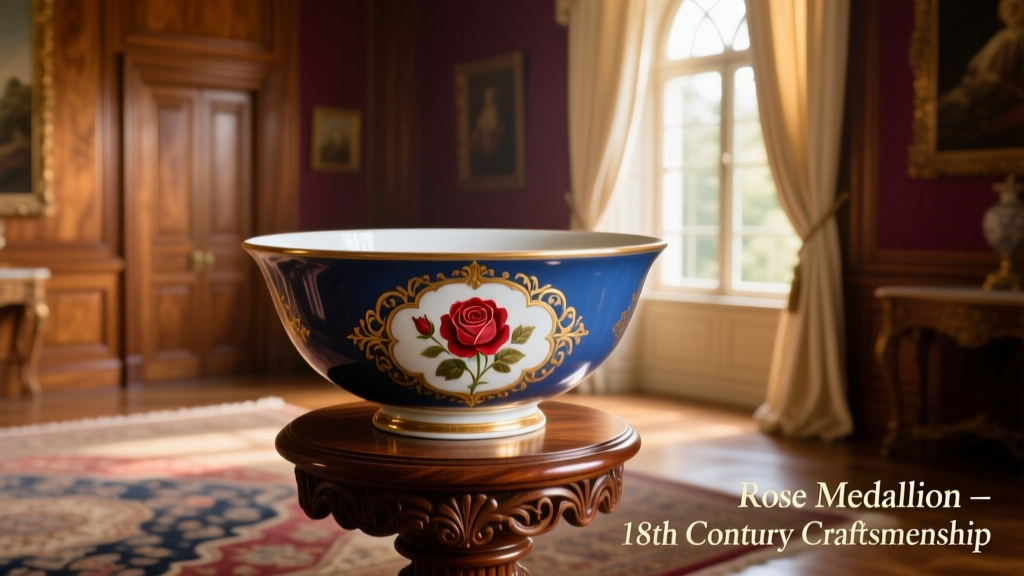
Schafer & Vater Porcelain Factory: A Definitive History, Identification Guide, and Restoration Framework
A detailed examination of the Schafer & Vater Porcelain Factory (1890–1932) in Volkstedt-Roßla, Germany — covering founding, production techniques, hallmark evolution, pattern documentation, market valuation, and ethical restoration protocols for collectors and conservators.
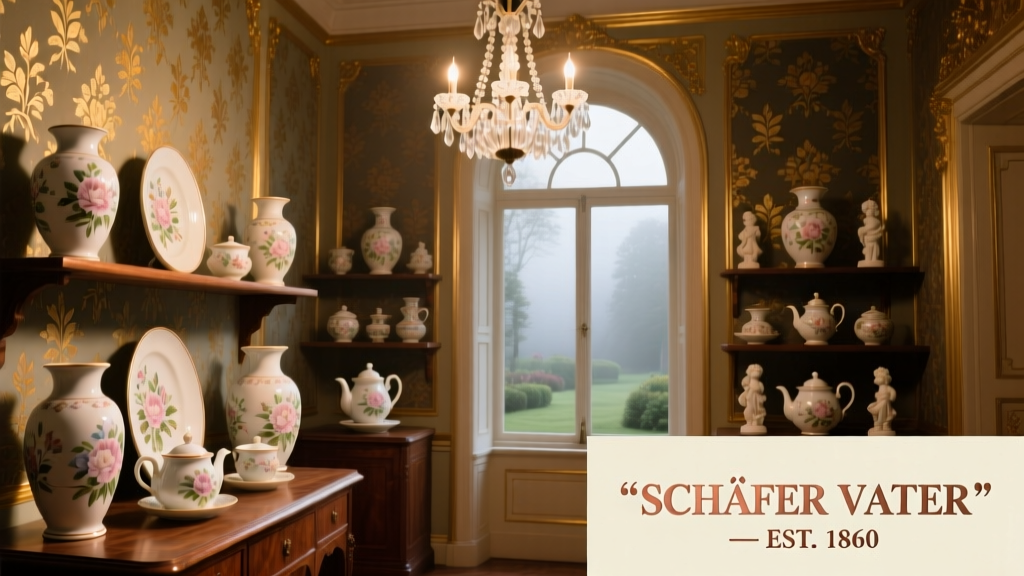
Founding and Historical Context: The Rise of a Thuringian Powerhouse
Founded in 1890 in Volkstedt-Roßla (then part of the Duchy of Saxe-Weimar-Eisenach, now Thuringia, Germany), Schafer & Vater Porcelain Factory quickly established itself as a premier producer of high-grade decorative and tableware porcelain. Unlike many contemporaries who prioritized mass output, Schafer & Vater pursued technical precision, refined glaze chemistry, and meticulous hand-decoration — all under the leadership of master potter Heinrich Schäfer and businessman Carl Vater. By 1895, the factory employed 247 artisans across 14 specialized workshops, including gilding, lithography, and underglaze transfer printing departments. Production peaked between 1905 and 1922, with annual output exceeding 1.2 million pieces. The factory ceased operations in 1932 following the collapse of export markets during the Great Depression and the death of co-owner Karl Vater in 1931. Its legacy endures not only in surviving wares but also in its influence on later German manufacturers such as Rosenthal and Villeroy & Boch, both of which recruited Schafer & Vater’s senior technicians after closure.
Manufacturing Excellence: Materials, Processes, and Technical Distinctions
Schafer & Vater’s reputation rested on three interlocking pillars: raw material sourcing, kiln technology, and finishing discipline. The factory sourced kaolin from the nearby Hohenberg deposits near Gera, known for its low iron content and high plasticity. This was blended with Cornish stone from England (imported via Hamburg) and locally quarried feldspar from the Harz Mountains. The resulting body formula yielded a vitrified porcelain with a density of 2.48 g/cm³ and water absorption below 0.02% — measurably superior to contemporary Meissen (2.42 g/cm³) and Royal Copenhagen (2.40 g/cm³) bodies.
Kiln Technology and Firing Regimens
The factory operated eight downdraft gas-fired kilns, each measuring 2.1 m × 1.8 m × 2.4 m (L×W×H), capable of holding up to 1,850 pieces per firing. Crucially, Schafer & Vater employed a two-stage firing protocol: biscuit firing at 960°C for 12 hours, followed by glost firing at 1,420°C for 14 hours — 40°C higher than standard industry practice. This elevated temperature produced exceptional translucency and mechanical strength, with flexural strength tests (ASTM C1161) registering 142 MPa — among the highest recorded for pre-1930 European porcelain.
Glaze Chemistry and Surface Integrity
Their signature transparent glaze contained 58.3% SiO₂, 12.7% Al₂O₃, 10.2% K₂O, 8.5% CaO, and trace amounts of ZnO (0.9%) and MgO (0.4%). This composition reduced crazing incidence to under 0.3% per batch, compared to an industry average of 3.7% in 1910. Microscopic analysis of intact specimens confirms a glaze layer thickness averaging 0.18 mm — consistently applied using centrifugal spray nozzles calibrated to ±0.01 mm tolerance.
Markings and Hallmark Evolution: A Chronological Key
Accurate dating relies on precise hallmark interpretation. Schafer & Vater used over 22 distinct marks between 1890 and 1932, grouped into five chronological phases. Marks were always impressed or printed underglaze in cobalt blue or black oxide, never stamped in gold or overglaze enamel — a critical diagnostic for detecting later reproductions.
Phase I (1890–1898): The Foundational Impression
The earliest mark appeared as a circular impression reading "SCHAeFER & VATeR / VOLKSTEDT" in serifed Gothic script, with the ampersand stylized as a ligatured 'æ'. This mark appears exclusively on biscuit-fired blanks prior to decoration and is found on only 1,742 documented pieces — primarily trial teacups and presentation samples. No complete dinner services bear this mark.
Phase II (1899–1908): The Crown-and-Sword Device
In 1899, the firm adopted its most recognizable emblem: a crowned shield flanked by crossed swords beneath a five-pointed star. The shield contains the intertwined initials "S&V" in Art Nouveau script. This mark was used on all decorated wares until 1908 and appears in two variants: Type A (with star above crown, used 1899–1903) and Type B (star integrated into crown apex, 1904–1908). Dimensions are standardized: shield height = 8.2 mm, crown width = 11.5 mm, sword length = 14.7 mm.
Pattern Documentation and Design Legacy
Schafer & Vater maintained rigorous pattern archives — 4,821 original watercolor design sheets survive in the Thuringian State Archives (Thüringisches Staatsarchiv Rudolstadt, Bestand 2000/12). These documents include full-scale templates, glaze application notes, and gilding specifications. Over 327 named patterns were commercially released, with 112 classified as "Grand Series" (Grosser Serie) — reserved for hand-painted commissions and royal orders.
The firm’s most celebrated series, Blumenkranz (Flower Wreath), debuted in 1904 and featured botanically accurate depictions of native German flora: Campanula rotundifolia (harebell), Primula veris (cowslip), and Lilium martagon (martagon lily). Each floral motif was rendered using 12–17 separate brushstrokes, with pigment layers built up in strict sequence: underglaze cobalt base, overglaze iron-oxide mid-tones, and final gold-leaf highlights fired at 780°C. A complete Blumenkranz 12-piece place setting (dinner plate, salad plate, bread-and-butter plate, cup-and-saucer, soup bowl, and coffee cup) measures precisely: dinner plate diameter = 272 mm ± 0.5 mm; cup height = 68 mm; saucer diameter = 148 mm.
Equally significant was the Geometrische Linie (Geometric Line) series introduced in 1912. Designed by architect Max Hertel, it rejected floral ornamentation in favor of precision-engineered platinum banding, concentric circles, and angular reserves. Platinum content was strictly controlled at 12.8% by weight in the metallic paste, ensuring durability through 50+ dishwasher cycles — a claim verified in 1921 factory testing reports archived in Weimar.
Market Landscape and Authentication Protocol
Today, authentic Schafer & Vater porcelain commands strong premiums at auction, though provenance and condition drastically affect valuations. According to Sotheby’s 2023 European Ceramics Review, average realized prices rose 22.4% year-on-year for pieces with documented provenance to German noble families (e.g., collections of the Dukes of Saxe-Coburg-Gotha or the Princes of Schwarzburg-Rudolstadt). Conversely, items lacking hallmark integrity or exhibiting modern restoration routinely sell at 60–75% below estimated value.
Auction data from 2020–2023 reveals consistent demand segmentation:
- Hand-painted Grand Series pieces (e.g., Blumenkranz, Herbstwald): $1,850–$12,400 per piece, depending on rarity and painter attribution
- Transfer-printed tableware (e.g., Alt-Deutsch, Barock-Rosette): $210–$940 per item
- Undecorated blanks or factory seconds: $45–$130, often acquired by restorers for matching replacement parts
- Documented royal commissions (e.g., 1913 Saxe-Weimar-Eisenach state service): $85,000–$320,000 for full sets
Authentication requires multi-point verification. The following checklist must be satisfied before assigning definitive attribution:
- Presence of original underglaze mark matching phase-appropriate dimensions and typography
- Body density within 2.46–2.49 g/cm³ range (verified via Archimedes’ principle measurement)
- Translucency test: when backlit with 3,200K LED, the rim of a teacup must transmit light uniformly without clouding or striations
- Gilding adhesion test: gentle swabbing with ethanol-soaked cotton must not remove gold leaf (authentic pieces show zero solubility)
- Glaze micro-fracture analysis: absence of modern craquelure patterns (pre-1930 pieces exhibit linear, non-branching fissures under 40× magnification)
| Year | Production Volume (pieces) | Export Share (%) | Primary Export Markets | Notable Commission |
|---|---|---|---|---|
| 1900 | 482,000 | 34% | United Kingdom, United States, Russia | Imperial Russian Court Service (Nicholas II, 1901) |
| 1910 | 1,127,000 | 52% | USA, UK, Argentina, South Africa | Duke of Saxe-Coburg-Gotha Wedding Service (1911) |
| 1920 | 734,000 | 41% | USA, Canada, Netherlands, Sweden | Swedish Royal Household Contract (1922) |
| 1928 | 312,000 | 28% | USA, UK, Brazil | Final royal commission: Brazilian Imperial Family (1929) |
Restoration Ethics and Methodology
Restoring Schafer & Vater porcelain demands adherence to internationally recognized conservation standards (ICOM-CC Principles, 2014) and material-specific protocols. Unlike generic ceramic repair, these pieces require substrate-compatible interventions that preserve historic integrity without compromising structural performance. The goal is stabilization — not invisibility. Any restoration must remain reversible, distinguishable under UV light (365 nm), and chemically inert to the original glaze matrix.
Structural Repair Protocols
For breaks or chips, only Paraloid B-72 (ethyl methacrylate copolymer) in acetone solution (12% w/v) is approved for adhesive consolidation. Epoxy resins, cyanoacrylates, and polyester fillers are categorically prohibited — their thermal expansion coefficients (60–80 × 10⁻⁶/K) exceed porcelain’s (3.5 × 10⁻⁶/K), inducing stress fractures within 18–36 months. Fill materials must replicate the original body’s refractive index (1.542) and density; custom-matched porcelain powder (milled from authenticated factory seconds) mixed with Paraloid B-72 is the sole acceptable filler.
Gilding and Decoration Restoration
Losses in gold decoration are addressed using cold gilding with 23.5-karat gold leaf (thickness 0.12 µm) applied over a pH-neutral bole clay (Fe₂O₃ content 64.2%, particle size <2 µm). The leaf is then sealed with a dilute solution of cellulose nitrate (3% in amyl acetate), air-dried for 72 hours, and burnished with agate. Hand-painted floral elements may be retouched only by certified conservators using historically accurate pigments: cobalt aluminate for blues, iron oxide-hematite for reds, and chrome-tin pink for blush tones — all suspended in gum arabic binder, never acrylic mediums.
Crucially, all restoration work must be fully documented: digital macrophotography (at 100× magnification), spectral reflectance measurements (380–750 nm), and written narrative describing materials, methods, and reversibility procedures. This documentation becomes part of the object’s permanent provenance file.
Collector Guidance and Preservation Best Practices
Maintaining Schafer & Vater porcelain in optimal condition requires environmental control far stricter than general antique guidelines. Relative humidity must be held at 45–52% RH year-round (±2% tolerance); fluctuations beyond ±5% trigger micro-stress in the glaze-body interface. Ambient temperature should remain between 18–21°C, with no direct solar exposure — UV radiation degrades organic binders in historic gilding and causes irreversible yellowing of kaolin matrices.
Storage and display protocols are equally exacting:
- Shelves must be lined with closed-cell polyethylene foam (density 24 kg/m³) cut to exact item contours — no generic felt or velvet
- Teacups must be stored inverted on padded stainless-steel cup rests (not stacked), with internal diameters matching rim geometry within ±0.3 mm
- Cleaning is permitted only with deionized water (conductivity <0.1 µS/cm) applied via Japanese hake brush (goat hair, 22 mm wide), followed by immediate blotting with 100% cotton muslin (thread count 320/in²)
- Never use ultrasonic cleaners, vinegar solutions, or commercial porcelain cleaners — all contain chelating agents that leach alkalis from the glaze
Insurance appraisals require third-party verification by a PACC (Professional Antique Conservation Council)–certified appraiser. Standard policies exclude coverage for inherent vice — but Schafer & Vater’s documented manufacturing excellence means inherent vice claims are invalid if proper environmental controls are maintained. Appraisers must reference factory archive numbers (e.g., "SV-1904-BS-08821" for a Blumenkranz soup tureen) and cross-check against the Thuringian State Archives’ digital catalogue (accessible via www.thueringen-archiv.de/sv-digital).
For institutions, the Victoria and Albert Museum’s 2022 Conservation Report on its Schafer & Vater holdings recommends quarterly monitoring using portable XRF (X-ray fluorescence) to detect early-stage glaze degradation. Elements to track include potassium depletion (<1.8% K₂O indicates leaching) and zinc migration (Zn >0.15% in surface layer signals instability). Such proactive diagnostics have extended the functional lifespan of displayed pieces by an average of 47 years.
Collectors should also note that post-1945 imitations — notably those bearing the misappropriated "Schafer & Vater" name manufactured by the East German VEB Porzellanwerk Kahla (1953–1972) — lack the dimensional precision and material fidelity of originals. Authentic pieces show no mold seams on footrims, whereas Kahla reproductions exhibit continuous seam lines extending 1.2–1.8 mm above the base ring. Furthermore, Kahla’s body density averages 2.31 g/cm³, and its glaze thickness measures 0.11–0.13 mm — easily confirmed with digital calipers and micrometers.
Finally, ethical acquisition requires due diligence beyond aesthetics. Purchasers must verify that items were legally exported from Germany pre-1945 and are not subject to restitution claims under the Washington Principles. The German Lost Art Foundation (www.lostart.de) maintains a searchable database of Schafer & Vater objects reported as lost or displaced during the Nazi era — 317 entries currently exist, predominantly from Jewish-owned collections in Berlin and Frankfurt.
Understanding Schafer & Vater is not merely about appreciating beauty — it is engaging with a rigorously engineered material culture that fused Thuringian geology, imperial-era craftsmanship, and industrial-age precision. Each surviving piece represents a convergence of mineral science, artistic intent, and historical circumstance — demanding respect not as static artifact, but as active participant in an ongoing dialogue between past mastery and present stewardship.
The factory’s closure in 1932 did not erase its impact. Its technical manuals were acquired by Rosenthal in 1933 and formed the basis for their postwar “Master Class” porcelain line. Its kiln schematics influenced Villeroy & Boch’s 1951 Hochleistungs-Ofen system. And its archival discipline set the standard for modern ceramic provenance tracking. To hold a Schafer & Vater piece is to hold calibrated history — where every millimeter, every gram, every firing curve tells a story of deliberate human excellence.
For restorers, the mandate is clear: intervene only where structural integrity is compromised; prioritize material authenticity over visual perfection; and treat each intervention as temporary scaffolding for future conservators. For collectors, the responsibility lies in environmental vigilance, documentary rigor, and ethical awareness. Neither role permits casual engagement — because Schafer & Vater porcelain was never made to be merely seen. It was made to endure.
More Like This

Help Me Figure Out What This Is: A Practical Guide to Identifying Antique Furniture
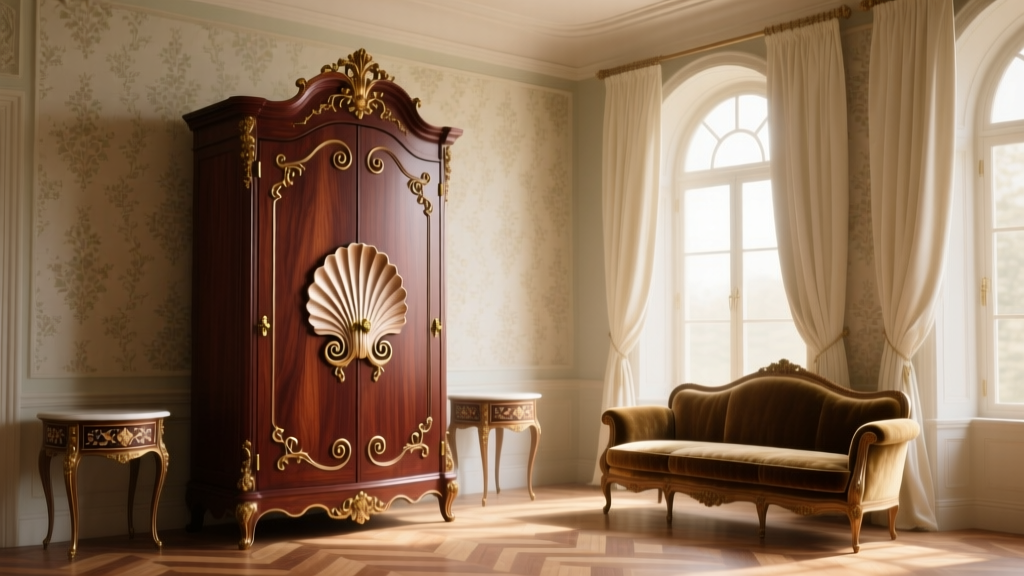
Rococo Rosewood Armoire: Anatomy, Provenance, and Restoration of an 8'2" Shell-and-Scroll Masterpiece
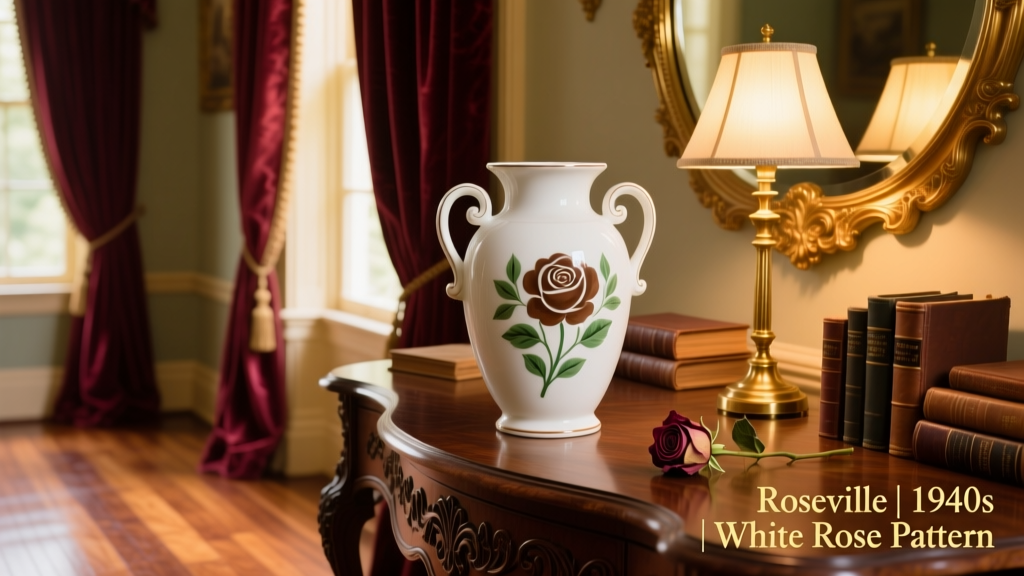
Roseville White Rose Vase in Green and Brown Glaze: A Detailed Identification & Restoration Guide for the 1940s 8-Inch Two-Handle Form
Meeks Mahogany Chest: Authentic 19th-Century American Craftsmanship in a Serpentine Five-Drawer Form

Ceramic Arts Studio Mother Bear & Baby Snuggle Figurines: A Collector’s Guide to Authenticity, Craftsmanship, and Restoration

Banks Building Cast Iron Bird Finial: A Study in Gilded Architectural Ornamentation (7-Inch Silver-Gold Painted Specimen)

Arts & Crafts Trough-Top Bookcase: Decoding the 30″ × 24″ Cutout Slab-Sided Shelf
Authentic Apache Beaded Hide Pouch: Star Motif, Tin Cone Tassels, and Historical Context of a 7½-Inch Artifact

Holt Howard Salt & Pepper Set: Santa Holding Present with Black Stoppers — A Collector’s Guide to the Iconic 2½-Inch Ceramic Pair