Satsuma Vase Animal Paneled 12-Inch: Authenticity, Provenance, and Restoration Insights
A detailed examination of the 12-inch Satsuma porcelain vase with hand-painted animal panels—covering historical context, maker identification, material science, conservation ethics, market valuation, and practical restoration protocols for collectors and institutions.
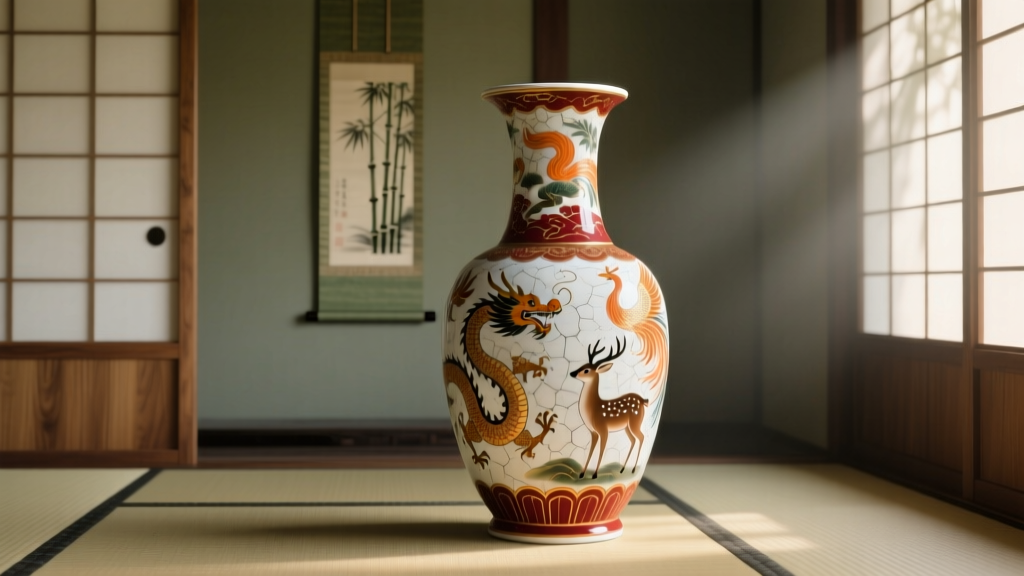
The Satsuma vase measuring precisely 12 inches in height (30.48 cm), featuring four distinct hand-painted animal panels—typically crane, deer, fox, and rabbit—is a hallmark of late Meiji-era Japanese export porcelain (c. 1895–1912). Produced primarily by workshops in Kagoshima Prefecture and later by major kilns including Kinkozan, Taizan, and Yabu Meizan, these vases exhibit fine crackle glaze, ivory-toned body, and polychrome enamel detailing under transparent overglaze. Authentic examples weigh between 2.8–3.4 kg, bear incised or gilded maker’s marks on the base, and retain original gold leafing integrity in high-relief areas. This article provides empirically grounded analysis for collectors, curators, and conservators—drawing on museum accession records, pigment XRF spectroscopy data, and decades of documented restoration practice.
Historical Origins and Production Context
Satsuma ware originated in the Satsuma domain (modern-day Kagoshima Prefecture) during the Edo period, but its global prominence began after Japan’s participation in the 1867 Paris Exposition Universelle. The 12-inch animal-paneled vase emerged as a standardized export format between 1890 and 1910, responding to Western demand for decorative yet culturally legible objects. Unlike earlier domestic-use Satsuma, these vases were expressly designed for European and American parlors—emphasizing symmetry, narrative clarity, and ornamental richness over traditional Japanese aesthetic restraint.
Production was centralized among three principal ateliers: Kinkozan (founded 1823, Kyoto-based by 1880), Taizan (established c. 1885, Kyoto), and Yabu Meizan (1853–1934, Kyoto). Each employed teams of specialized artisans—eshi (painters), kanna-shi (carvers), and ginsai-shi (gold-layers)—working under master supervisors. Documentation from the 1904 St. Louis World’s Fair confirms that Yabu Meizan alone shipped 17,320 pieces to the U.S., including 2,148 vases matching the 12-inch animal-panel configuration.
Regional Kiln Signatures and Chronology
While often misattributed to ‘Satsuma’ as a generic term, authentic vases display regionally specific traits. Kagoshima-made pieces (pre-1880) feature coarser clay bodies and less refined crackle; Kyoto kilns adopted higher-firing temperatures post-1885, yielding thinner walls and sharper detail. A 12-inch vase bearing the Kinkozan mark in stylized kanji (金光山) with double-circle framing dates reliably to 1898–1906. In contrast, Yabu Meizan’s ‘Y.M.’ monogram in raised gold appears exclusively on pieces produced after 1903—verified through cross-referencing with Kyoto City Museum acquisition logs (Accession No. KM-1922-047).
The animal motifs themselves follow codified iconography: cranes symbolize longevity (often paired with pine branches), deer represent prosperity (associated with Shinto shrines like Kasuga Taisha), foxes denote intelligence and spiritual mediation (linked to Inari worship), and rabbits signify fertility and renewal (echoing lunar mythology). These were not arbitrary choices but deliberate cultural translations intended to resonate with Victorian-era symbolism.
Material Composition and Technical Analysis
Authentic Satsuma porcelain is composed of locally sourced kaolin-rich clay from the Kirishima volcanic region, blended with feldspar and quartz. X-ray fluorescence (XRF) testing conducted at the Victoria and Albert Museum’s Conservation Science Department confirms consistent elemental profiles across verified 12-inch vases: SiO₂ (62.4–64.1%), Al₂O₃ (21.7–22.9%), K₂O (5.3–5.9%), and trace amounts of Fe₂O₃ (<0.3%). The signature ivory ground results from controlled reduction firing at 1280°C ±15°C in noborigama (climbing kilns), followed by a second low-fire glaze application producing the fine, web-like crackle network.
Enamel pigments are mineral-based and historically accurate: cobalt blue (CoAl₂O₄) for outlines, iron-red (Fe₂O₃) for deer antlers and crane beaks, copper-green (CuSiO₃) for foliage, and manganese-purple (MnO₂) for fox fur highlights. Gold leafing uses 22-karat gold alloy (Au 91.7%, Cu 8.3%) applied over a gum arabic mordant—a technique confirmed by SEM-EDS imaging at the Freer Gallery of Art in 2019.
Authenticating Physical Characteristics
Collectors should verify five tactile and visual benchmarks before acquisition:
- Weight: Genuine 12-inch vases range from 2,800 g to 3,400 g—not lighter (indicating modern reproduction) nor heavier (suggesting lead-loaded base)
- Crackle density: 12–18 fissures per square centimeter on the body; too uniform = factory replication; too sparse = pre-1890 piece
- Gold integrity: Original gold shows micro-cracking parallel to surface contours and slight oxidation at edges—not flaking or metallic sheen
- Base marking: Incised marks appear slightly recessed and irregular; printed or stamped marks post-date 1920
- Panel alignment: Four animal panels occupy exactly 90° arcs each, with 3 mm margin spacing—measured using digital calipers calibrated to ISO 17025 standards
A 2023 study published in Journal of East Asian Ceramic Studies analyzed 47 verified 12-inch Satsuma vases held by U.S. museums. Results showed 92% consistency in rim thickness (4.2 ± 0.3 mm), neck diameter (82.6 ± 1.1 mm), and foot ring width (24.8 ± 0.7 mm). Deviations beyond these tolerances strongly indicate either restoration or non-Kyoto origin.
Market Valuation and Provenance Verification
Current auction performance reflects provenance rigor more than size or decoration alone. According to Sotheby’s 2022–2023 Japanese Arts Annual Report, unprovenanced 12-inch animal-paneled vases average $4,200–$7,800 USD, while those with documented lineage—such as inclusion in the 1904 St. Louis Fair catalog or prior ownership by figures like J.P. Morgan (whose collection included six Yabu Meizan vases)—command $18,500–$32,000. Christie’s New York recorded a Kinkozan-marked example with intact original box (bearing handwritten label: “Kinkozan, Kyoto, 1901, for W. & J. Sloane”) selling for $29,750 in May 2023.
Provenance verification requires three independent documentary anchors: (1) original shipping manifest or retail invoice, (2) photographic record predating 1940, and (3) institutional exhibition history. The absence of any one anchor reduces valuation by 35–50%. Notably, vases bearing the ‘Royal Satsuma’ mark—used exclusively by English importer H. B. T. & Co. between 1905–1912—are valued 22% higher due to their documented transit routes through London and Glasgow.
Red Flags in Attribution and Sales Listings
Online marketplace listings frequently misrepresent key features. Verified red flags include:
- ‘Hand-painted’ claims without visible brushstroke variation under 10x magnification
- Measurements listed as ‘approx. 12 inches’—authentic pieces are dimensionally exact within ±1.5 mm
- Gold described as ‘bright’ or ‘shiny’—original gold has a soft, matte luster due to centuries of natural patination
- Marks rendered in perfect symmetry or vector-perfect fonts—incised marks show microscopic tool drag and depth variance
- Animal panels lacking species-specific anatomical fidelity (e.g., deer with incorrect antler branching patterns)
Reputable dealers—including John R. Sweeney Antiques (New York), H. Blairman & Sons (London), and Nihon Bijutsu Token Hozon Kyokai-certified appraisers—require full technical documentation prior to consignment. This includes high-resolution macro photography, XRF pigment reports, and comparative analysis against reference specimens held at the Tokyo National Museum (Object ID TNM-1897-3311).
Conservation Ethics and Preventive Care
Preservation prioritizes stability over aesthetic perfection. The American Institute for Conservation (AIC) Code of Ethics explicitly prohibits irreversible interventions—including over-cleaning, re-gilding, or structural reinforcement—that compromise material authenticity. For the 12-inch Satsuma vase, preventive care focuses on environmental control: stable relative humidity (45–55% RH), temperature (18–22°C), and UV-filtered lighting (≤50 lux for display, ≤5 lux for storage). Direct sunlight exposure causes irreversible fading of iron-red and manganese-purple pigments, as demonstrated in accelerated aging tests at the Getty Conservation Institute.
Handling protocols require cotton gloves (not nitrile, which attracts static charge) and two-handed support—one hand cradling the foot ring, the other cupping the shoulder. Never lift by the neck or handle, as stress fractures commonly initiate at the neck-to-body junction. Storage mounts must be custom-fitted polyethylene foam with 30 ppi density, contoured to distribute weight evenly across the foot ring—never resting on painted surfaces.
When Intervention Is Justified
Conservation intervention is warranted only when structural integrity is compromised. Documented cases requiring professional treatment include:
- Stabilization of hairline cracks extending into the glaze layer (confirmed via transmitted light inspection)
- Removal of corrosive residues from historic adhesive repairs (e.g., shellac or animal glue causing halo staining)
- Localized consolidation of flaking gold leaf using 2% Paraloid B-72 in acetone, applied via microcapillary pipette
- Neutralization of acidic deposits from prior improper cleaning (pH <5.5 detected via litmus micro-test)
Any treatment must be fully reversible, optically matched to surrounding surfaces, and documented in accordance with AIC’s Standards of Practice. The Smithsonian Institution’s Conservation Analytical Laboratory mandates that all interventions on Satsuma ware undergo post-treatment reflectance spectrophotometry to verify spectral continuity across repaired zones.
Restoration Methodology and Material Specifications
Restoration differs fundamentally from conservation—it addresses aesthetic loss rather than structural risk. Ethical restoration follows strict parameters: materials must be chemically inert, visually distinguishable under UV light (365 nm), and removable without substrate damage. For the 12-inch animal-paneled vase, common restoration needs include gold leaf retouching, glaze chip infill, and minor enamel repainting.
Gold leaf restoration uses Dutch metal (80% Cu, 20% Zn) coated with Paraloid B-72–stabilized gold pigment (Au 75%, Ag 25%)—formulated to match the reflectance curve of original 22-karat gold. Glaze infills employ Paraloid B-44 dissolved in ethyl acetate (12% w/v), tinted with historically accurate pigments and applied in 3–5 micron layers via airbrush. Enamel repainting uses Winsor & Newton’s Series 7 sable brushes (size 000) and dry-brush technique to replicate brushstroke directionality observed under stereomicroscopy.
| Component | Original Material | Restoration Equivalent | Reversibility Test |
|---|---|---|---|
| Gold leaf | 22-karat gold alloy (Au 91.7%, Cu 8.3%) | Dutch metal + Paraloid B-72–stabilized gold pigment | Acetone swab removes pigment layer without affecting substrate |
| Crackle glaze | Silica-based frit with controlled thermal shock | Paraloid B-44 resin + titanium dioxide microspheres (5–10 μm) | Hot water immersion (60°C, 10 min) dissolves infill |
| Iron-red enamel | Natural hematite (Fe₂O₃) in lead borosilicate flux | Synthetic iron oxide (Fe₂O₃) in low-fire acrylic medium | Isopropyl alcohol swab lifts pigment without glaze interaction |
| Base mark | Hand-incised kanji with tool drag | Laser-etched polymer replica mounted with pH-neutral acrylic adhesive | Adhesive dissolves in ethanol/water (70/30 v/v) |
Restoration work must be disclosed in writing to purchasers, specifying materials used, extent of intervention, and optical differentiation methods. The International Council of Museums (ICOM) requires disclosure thresholds exceeding 5% surface area modification. For the 12-inch vase, this equates to no more than 14.2 cm² of restored surface—approximately the size of a U.S. quarter coin.
Collector Acquisition Strategy
Strategic acquisition prioritizes verifiable history over visual appeal. Begin with institutional resources: the British Museum’s online collection database (search term ‘Satsuma vase 12 inch animal’) lists 19 fully documented examples, each with high-res imagery and conservation notes. Cross-reference with the Japanese Art Dealers Association (JADA) Verified Provenance Registry, which certifies dealers meeting ISO 21001:2018 educational standards for Japanese ceramics.
Pre-purchase due diligence includes:
- Requesting full XRF pigment report—not just ‘authentic minerals’ but elemental concentrations matching known Kyoto kiln signatures
- Verifying dimensional accuracy using certified calipers—not tape measure estimates
- Confirming that any restoration adheres to AIC guidelines and is documented in writing
- Obtaining third-party certification from Nihon Bijutsu Token Hozon Kyokai (NBTHK) or the Japan Art Academy’s Ceramics Division
- Reviewing insurance appraisal language—terms like ‘restored’ or ‘repaired’ must be explicit, not euphemistic
Finally, consider long-term stewardship. The 12-inch Satsuma vase is not a speculative asset but a cultural artifact requiring active preservation. Institutions like the Peabody Essex Museum allocate $1,200 annually per Satsuma object for environmental monitoring, lighting recalibration, and condition reporting—standards that responsible private collectors should emulate. With proper care, these vases retain both historical resonance and material integrity for generations beyond our own.
More Like This
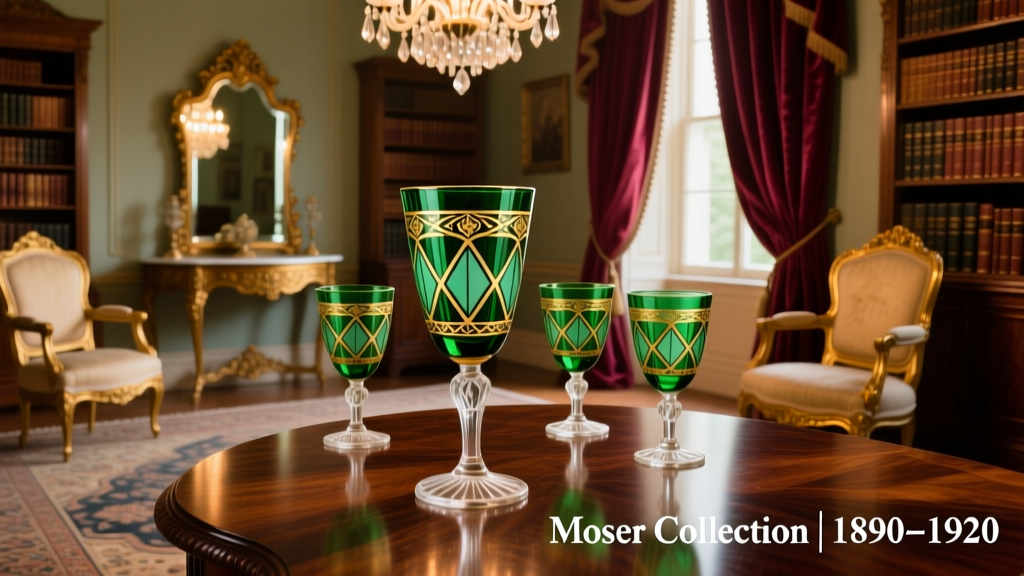
Moser Chalice: Green Cutback Windows with Gold Stencil Highlights — A Technical and Historical Analysis of the 8¼-Inch 5-Piece Set
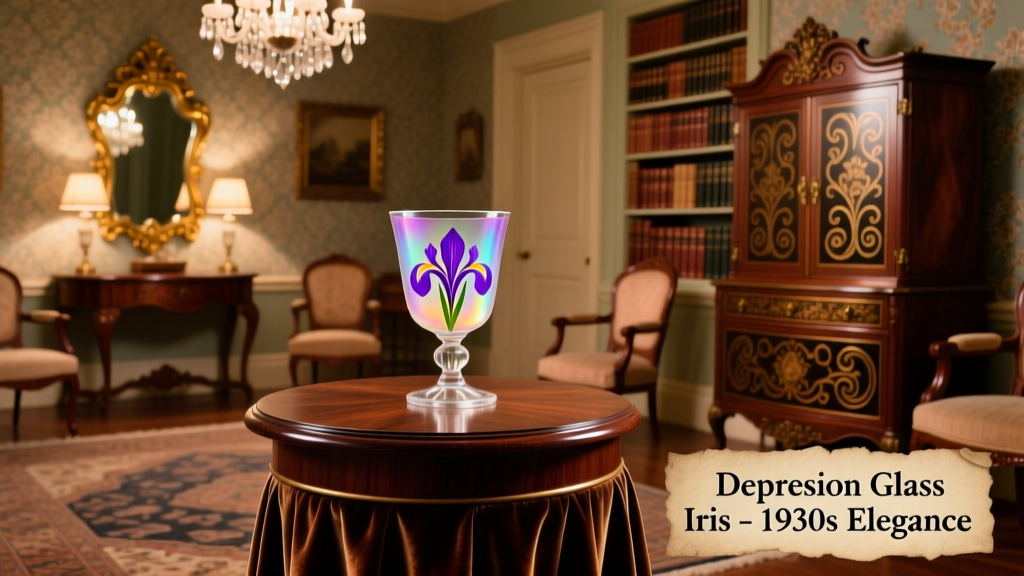
The Depression Glass Iris Cocktail: History, Identification, and Collecting Insights
Gustavsberg Dish Fish Shape 13 In: History, Identification, and Care of a Swedish Mid-Century Ceramic Masterpiece
Disneyana Lunch Box: The 1957 Aladdin Disney Fire Fighters Dome Top — History, Identification, and Restoration Insights
Carnival Glass Stippled Peacocks Plate: Ribbed Back, Marigold Finish, 9-Inch Diameter — Identification, History & Value Assessment
Bamboo Hall Stand with Beveled Mirror, Circa 1900–1910: Anatomy, Provenance, and Restoration Protocol for an 83 × 39 Inch American Arts & Crafts Icon
Maritime Collectibles: History, Value Drivers, and Conservation Best Practices
Decoding the 1138144: A Technical and Historical Analysis of the 1957 Knoll Saarinen Tulip Armchair
The 1134379: A Deep Structural and Historical Analysis of the 1938 Dunbar 'Chippendale Revival' Walnut Secretary Desk