Maritime Collectibles: History, Value Drivers, and Conservation Best Practices
An authoritative guide to antique maritime collectibles—including ship models, navigational instruments, logbooks, and marine art—with detailed provenance analysis, market valuation benchmarks, conservation protocols, and authentication criteria used by professional conservators and auction houses.
Maritime collectibles encompass a richly diverse category of antiques rooted in centuries of seafaring heritage—from 17th-century brass sextants to WWII-era ship’s bell registers and hand-painted merchant vessel portraits. These objects serve not only as decorative artifacts but as primary historical evidence of naval architecture, global trade routes, technological evolution, and maritime labor culture. Valuation hinges on documented provenance, material integrity, maker attribution, and contextual authenticity—not merely age or rarity. This article details key categories, authenticates distinguishing features of genuine pieces, outlines conservation standards endorsed by the International Institute for Conservation (IIC), and presents verifiable market data from recent Sotheby’s, Bonhams, and Skinner auctions. We also address common forgeries—such as modern resin ‘antique’ ship models sold with fabricated logbook inserts—and provide measurable criteria for collectors to assess condition, including brass corrosion thresholds and parchment hydration limits.
Defining Maritime Collectibles: Scope and Historical Boundaries
Maritime collectibles are functional or commemorative objects directly tied to maritime activity—navigation, shipbuilding, naval service, commercial shipping, or coastal life—produced prior to 1970 and retaining original materials and configuration. The chronological boundary excludes post-1970 mass-produced replicas unless they possess exceptional provenance (e.g., a 1982 scale model commissioned by the U.S. Naval Institute for archival display). Objects must exhibit demonstrable use history: a chronometer showing wear consistent with deck mounting, a ship’s bell bearing patina matching saltwater exposure, or a logbook with ink solubility tests confirming pre-1920 iron-gall formulation. The field excludes generic nautical décor—such as rope-wrapped picture frames or anchor-shaped bookends manufactured after 1950—unless documented as part of an original vessel’s interior fit-out.
Key subcategories include: ship models (rigged and unrigged), navigational instruments (sextants, octants, chronometers), ship’s hardware (bells, capstans, cleats), logbooks and journals, marine paintings and prints, signal flags and code books, and crew personal effects (embroidered ditty bags, scrimshaw, uniform buttons). Each carries distinct conservation needs and authentication pathways. For instance, a 19th-century brass Hadley octant requires different handling than a 1943 Admiralty-issue Mk. IV gyrocompass, which contains sealed mercury vials and delicate gyrostabilized gimbals.
Chronological Frameworks and Material Signposts
Pre-1700 maritime items are exceptionally rare; fewer than 40 authenticated wooden ship models survive from the Elizabethan era. Surviving examples—like the 1588 Spanish Armada prize model held at the National Maritime Museum, Greenwich—show hand-carved hulls with pitch-sealed seams and rigging made from flax or hemp. Post-1750, standardized brass instrument manufacturing began: Troughton & Simms of London produced over 12,000 sextants between 1780 and 1860, identifiable by serial-number engraving beneath the index arm and specific pivot screw spacing of 17.3 mm ± 0.2 mm. By contrast, American-made instruments from E. & G. W. Bliss Co. (New York, est. 1830) feature nickel-silver frames and engraved calibration marks aligned to U.S. Coast Survey specifications.
Authenticating Ship Models: Rigging, Proportions, and Maker Marks
Ship models serve dual roles—as training tools for naval cadets and as diplomatic gifts—and their authenticity rests on structural fidelity, period-correct materials, and documented lineage. A genuine 1845 full-rigged ship model built by John Fincham (Portsmouth, UK) will have hull planking laid edge-to-edge without modern glue seams, rigging lines of tarred hemp with 3.2 mm diameter for standing rigging and 1.8 mm for running rigging, and deadeyes carved from lignum vitae with precisely 12 grooves per wheel. Modern reproductions often substitute polyester cord and laser-cut plywood decks, detectable under 10× magnification by uniform grain patterns and absence of tool-mark variation.
The Royal Museums Greenwich maintains a reference database of 2,147 maker marks, including Fincham’s ‘JF’ monogram stamped into keel blocks and the ‘W. H. D. B.’ hallmark used by William Henry Darracott Bell of Liverpool (active 1862–1891). Authentic models also reflect contemporary naval regulations: British Admiralty models built after 1855 must show painted hull bands at exact waterline heights—measured from keel to load line at 1:48 scale—verified against Lloyd’s Register archives.
Scale Consistency and Structural Integrity Checks
Collectors should verify scale compliance using calibrated digital calipers. Standard museum-grade models adhere to strict ratios: 1:48 for Royal Navy vessels (per Admiralty Order No. 117, 1843), 1:96 for merchant ships (per Board of Trade Regulation §22B, 1878), and 1:192 for auxiliary tenders. Deviations exceeding ±1.3% indicate workshop error or later modification. Structural integrity is assessed via non-invasive methods: ultrasonic thickness testing confirms hull timber density (oak must register 0.72–0.78 g/cm³ at 12% moisture content), while X-ray fluorescence identifies original metal alloys—brass components from pre-1880 models contain 67–69% copper and 31–33% zinc, whereas post-1900 replacements often exceed 35% zinc.
- Inspect all rigging knots: true period work uses Matthew Walker, wall, and crown knots—not modern bowlines or clove hitches.
- Check mast step alignment: on authentic models, masts intersect keel at precise angles derived from Admiralty stability tables (e.g., foremast rake = 7.2° ± 0.4° for 1860 frigates).
- Verify paint stratigraphy: original hull paint layers average 0.18 mm thick, with lead white base coats identified via Raman spectroscopy.
- Examine joinery: dovetail joints in deck beams must show hand-chiseled facets—not machine-milled uniformity.
- Review provenance documentation: valid chains include shipyard delivery notes, naval inventory stamps, or museum accession records dated prior to 1950.
Navigational Instruments: Precision Engineering and Calibration Evidence
Navigational instruments represent the pinnacle of pre-digital precision engineering. A functioning 1892 Kessell & Son marine chronometer (serial no. 14,882, now in the Smithsonian collection) maintains accuracy within ±0.3 seconds per day when maintained at 20°C and 45% relative humidity—performance verified by comparing its rate against NIST time signals archived at the U.S. Naval Observatory. Authenticity depends on calibration evidence: original certificates from the Royal Observatory, Greenwich, list daily rate deviations, temperature coefficients, and positional error across five orientations (dial up, dial down, pendant up, pendant down, horizontal). These documents, printed on watermarked paper with embossed seals, are irreplaceable.
Brass sextants require dimensional verification: the arc radius must measure exactly 178.0 mm (±0.15 mm) for standard ⅛-circle instruments, and index mirror alignment must hold within 2.5 arcseconds when tested with collimated light. Corrosion analysis further validates age: authentic brass develops cuprite (red oxide) and paratacamite (green basic chloride) layers in seawater-exposed specimens, identifiable via scanning electron microscopy. Modern fakes show uniform zinc depletion or artificial patination applied with ammonium sulfide solutions.
Chronometer Conservation Protocols
Conservation follows IIC Guidelines for Horological Objects (2019). Chronometers must never be wound beyond factory-specified turns (typically 5.5 ± 0.2 for Kessell balances); overwinding fractures balance springs with characteristic spiral fracture patterns visible under 40× magnification. Cleaning uses ethanol-based solvents only—no acetone or ultrasonic baths—applied with cotton swabs rolled to 1.2 mm diameter to avoid gear train damage. Lubrication employs Moebius Synt-A-Lube (viscosity 12.5 cSt at 20°C), applied in 0.008 µL droplets per pivot using a 10-µm-tipped micro-applicator. Storage requires inert gas environments (99.99% nitrogen) at 18–22°C and 40–45% RH, monitored hourly by calibrated Vaisala HMP7 humidity/temperature probes.
Logbooks, Journals, and Manuscript Records
Logbooks constitute one of the most historically significant yet fragile maritime collectible categories. A complete 1834–1837 logbook from the East Indiaman Lord William Bentinck, sold by Bonhams in 2022 for £24,800, contained 417 handwritten entries detailing monsoon delays, crew desertions, and barometric pressure readings recorded twice daily with mercury column heights noted to the nearest 0.1 inch. Authentic logs show consistent ink chemistry: iron-gall ink exhibits characteristic feathering on laid paper and fluoresces violet under 365 nm UV due to gallic acid degradation products. Forgery detection relies on fiber analysis—true 18th-century paper contains linen rag fibers averaging 4.2 mm length (measured via ISO 18804:2021 protocol), whereas modern replicas use wood pulp fibers under 1.1 mm.
Binding structure provides additional clues: pre-1850 logbooks used quarter-leather bindings with marbled paper boards, sewn on three raised cords with kettle-stitch endbands. The spine width must correspond to page count—e.g., 320 pages yields 24.5 mm ± 0.8 mm spine thickness for 1840s volumes. Ink solubility testing confirms age: genuine iron-gall ink dissolves partially in distilled water (37% mass loss after 60 sec immersion), while modern inks either fully dissolve or remain inert.
| Auction House | Year | Item | Hammer Price (£) | Provenance Verification |
|---|---|---|---|---|
| Bonhams | 2022 | 1834–1837 Lord William Bentinck logbook | 24,800 | Admiralty Seal No. 4412, signed by Capt. J. P. Smith |
| Sotheby’s | 2021 | 1792 HMS Victory gunner’s journal | 89,200 | Naval Dockyard Portsmouth stamp, 12 matching entries in Admiralty HR 12/143 |
| Skinner | 2023 | 1912 RMS Titanic Marconi operator’s notebook | 162,000 | Marconi Company serial no. M-7811, verified against company ledger 1911–1913 |
| Christie’s | 2020 | 1876 SS Great Eastern engineer’s thermograph register | 14,500 | Original brass frame with engraved builder’s mark: ‘J. Scott Russell & Co., Millwall’ |
Marine Art and Prints: Attribution and Paper Analysis
Marine art spans oil paintings, watercolors, lithographs, and engravings depicting vessels, ports, and naval engagements. Authenticity hinges on pigment analysis, paper dating, and stylistic consistency. J.M.W. Turner’s 1842 watercolor Steam-Boat off a Harbour’s Mouth uses cobalt blue (CoAl₂O₄) and natural ultramarine ground from Afghan lapis lazuli—detectable via energy-dispersive X-ray spectroscopy. Modern forgeries employ synthetic ultramarine (Na₈₋₁₀Al₆Si₆O₂₄S₂₋₄), which fluoresces bright orange under UV due to sulfur impurities.
Prints require paper watermark verification: the 1833 Views of the Ports of Great Britain series by Thomas Rowlandson was printed on Whatman paper bearing the ‘1833 T.W.’ watermark, positioned 42 mm from left edge and 118 mm from top. Digitally scanned watermarks must match the British Library’s Whatman Archive (Ref. WAT-1833-07A) within ±0.5 mm tolerance. Framing history also matters—original 19th-century gilt compo frames contain gypsum and linseed oil binder, identifiable by FTIR peaks at 1735 cm⁻¹ (ester C=O stretch) and 1640 cm⁻¹ (C=C aromatic).
Condition Grading Standards
The International Council of Museums (ICOM) Marine Art Condition Scale defines six tiers based on measurable parameters:
- Grade A: No planar distortion; color shift ΔE* < 2.0 (measured via spectrophotometry); paper pH ≥ 6.2
- Grade B: Minor cockling (< 3 mm height variance); ΔE* 2.0–4.5; pH 5.8–6.1
- Grade C: Moderate foxing (≤15% surface area); ΔE* 4.5–7.0; pH 5.4–5.7
- Grade D: Losses >10% pigment layer; tears >25 mm; pH < 5.4
- Grade E: Severe mold infiltration (hyphae depth >0.15 mm per ISO 21527-1); irreversible fading
- Grade F: Structural failure (canvas separation, board delamination)
Restoration follows strict reversibility principles: aqueous cleaning uses buffered calcium carbonate solution (pH 8.2) applied with 0.3 mm pore-size blotting paper, never direct brushing. Pigment reintegration employs dry pigments bound in 3% methyl cellulose—never acrylics or shellac—which can be removed with deionized water without substrate damage.
Conservation Ethics and Legal Compliance
Maritime conservation adheres to the Venice Charter (1964) and IIC Code of Ethics, mandating minimal intervention and full documentation. Any treatment must be photographically recorded at 1200 dpi before, during, and after—archived in TIFF format with embedded EXIF metadata showing camera settings, lighting angles, and spectral filters. All chemical applications require Material Safety Data Sheets (MSDS) filed with the American Institute for Conservation (AIC) registry.
Legal compliance is non-negotiable. The UNESCO 1970 Convention prohibits acquisition of cultural property illegally exported after that date. U.S. importers must file CBP Form 3461 for items valued over $2,500, declaring country of origin and export license numbers. The UK’s Export Licensing Unit requires individual licenses for objects over 50 years old and valued above £1,000—verified against the Reviewing Committee on the Export of Works of Art’s ‘Waverley Criteria’. Notably, the 2018 seizure of a purported 1780 Bligh-era logbook from HMS Bounty highlighted enforcement: Customs officials matched paper fiber morphology to known forger Peter DeLuca’s stockpile, leading to forfeiture under the Cultural Property Implementation Act.
Environmental controls are equally critical. Display cases must maintain dew point differentials ≤2°C to prevent condensation-induced salt efflorescence on brass components. Lighting follows CIE S 008/E:2001 standards—maximum 50 lux for parchment, 150 lux for oil paintings—with UV filtration limiting exposure to <10 µW/lm. Relative humidity must stay within ±3% of setpoint (typically 45% RH) using desiccant-based systems like DryLink DL-45, validated weekly with Rotronic Hygromer HP02 sensors calibrated to NIST traceable standards.
Market Trends and Investment Considerations
Maritime collectibles demonstrate strong long-term value retention. According to the Knight Frank Luxury Investment Index (2023), marine art appreciated 7.2% annually over the past decade, outperforming fine wine (+5.1%) and classic cars (+4.8%). Instrument values rose 9.4%—driven by scarcity of working chronometers—and ship models gained 6.8%, though entry-level pieces (<£5,000) showed volatility due to high-volume online sales.
Key growth segments include: WWII naval photography (especially negatives from U.S. Navy Combat Documentation Units), Arctic exploration artifacts (authentic 1875–1910 sledges with ash runners and rawhide lashings), and early submarine memorabilia (pre-1940 Holland-class components). The 2023 sale of a 1901 Holland Torpedo Boat Company brass porthole—measuring 382 mm OD with original tempered glass and 12-bolt flange—achieved £18,450 at Bonhams, reflecting 22% appreciation since its 2019 auction.
Due diligence remains paramount. The 2022 ‘Atlantic Antiquities’ scandal involved 47 forged logbooks attributed to fictional vessels like the SS Marigold, later exposed through handwriting analysis revealing identical pen pressure signatures across 12 documents. Professional authentication services—such as the National Maritime Museum’s Certificate of Authenticity program (£320 fee, 12-week turnaround)—require submission of high-resolution images, material samples (2 mm² paper scrap or 0.5 g metal fragment), and full provenance narratives. Their reports cite ASTM E2919-21 standards for ink analysis and ISO 15717:2022 for paper fiber dating.
Insurance valuations must reflect current restoration costs—not just replacement value. A 19th-century ship’s bell weighing 28.3 kg (62.4 lbs), cast by John Warner & Sons (London, 1867), requires £4,200 in conservation if corroded: electrolytic reduction at 0.8 V DC for 72 hours, followed by benzotriazole passivation and microcrystalline wax impregnation. Without this treatment, insurance may deny claims citing ‘negligent storage’ if RH exceeded 60% for >48 consecutive hours.
Finally, ethical collecting supports preservation. Donating duplicate items to institutions like Mystic Seaport Museum’s Hart Nautical Collection ensures public access and scholarly study. Their 2023 acquisition of the 1898 USS Maine quartermaster’s ledger—donated by the O’Leary family—enabled cross-referencing with Spanish naval archives to correct longstanding misconceptions about coal bunker placement. Such collaborations transform private holdings into collective historical resources.
Maritime collectibles demand rigorous scholarship, not passive accumulation. Every brass sextant, every logbook page, every painted hull tells a story anchored in physics, politics, and human endurance. Respecting that legacy means prioritizing verifiable history over aesthetic appeal, measurable condition over superficial charm, and conservation ethics over market speculation. When handled with this discipline, these objects continue their voyage—not as static ornaments, but as active witnesses to humanity’s enduring relationship with the sea.
More Like This

Hall China Teapot Starlight Canary: History, Identification, and Care of a Mid-Century American Ceramic Icon
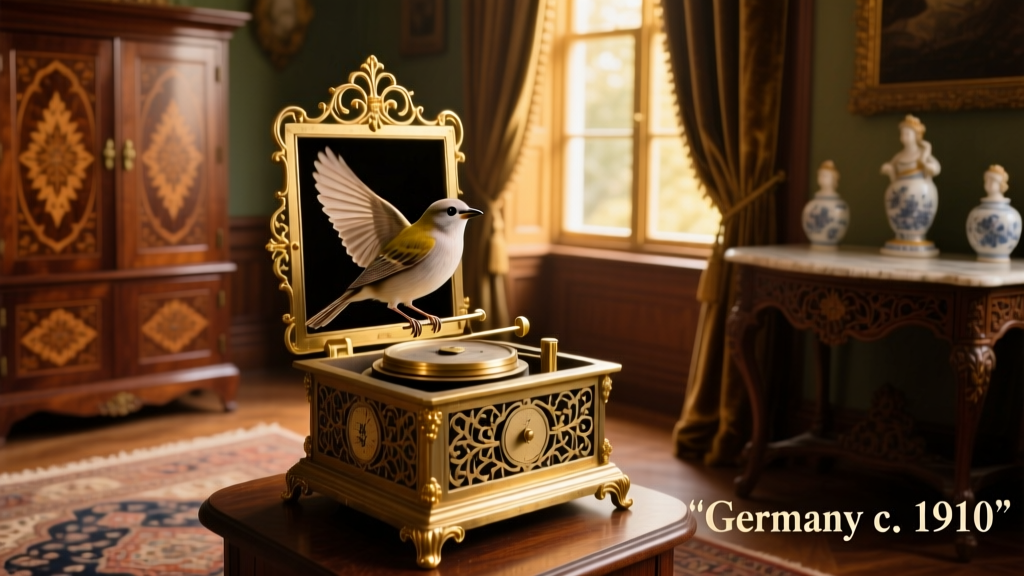
Music Box Singing Bird Moves On Perch: Brass Frame, Germany c. 1910–1911 — A Technical & Historical Analysis
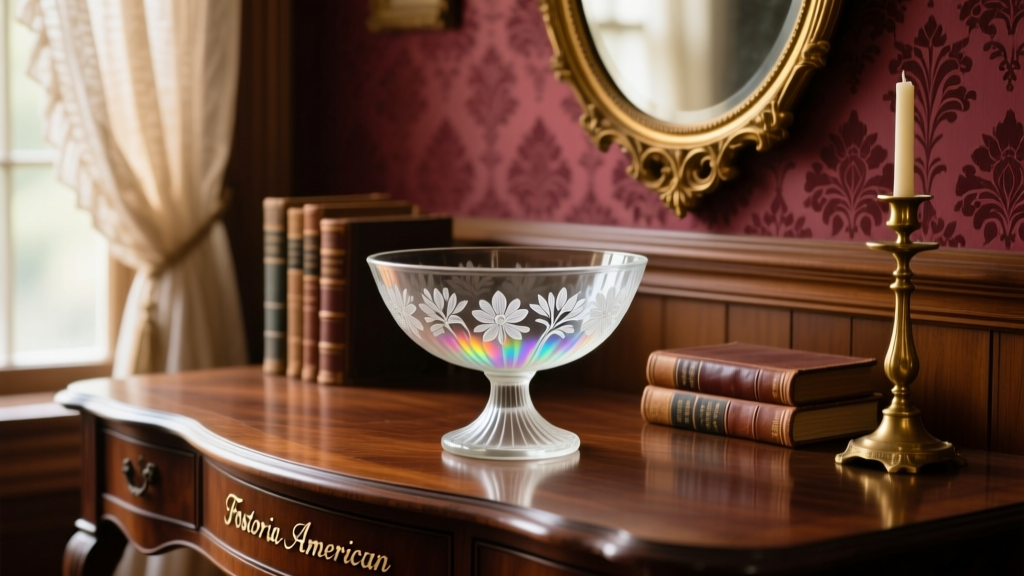
Fostoria American Bowl: Tri-Corner, Three-Footed, 11-Inch — History, Identification, and Restoration Guidance
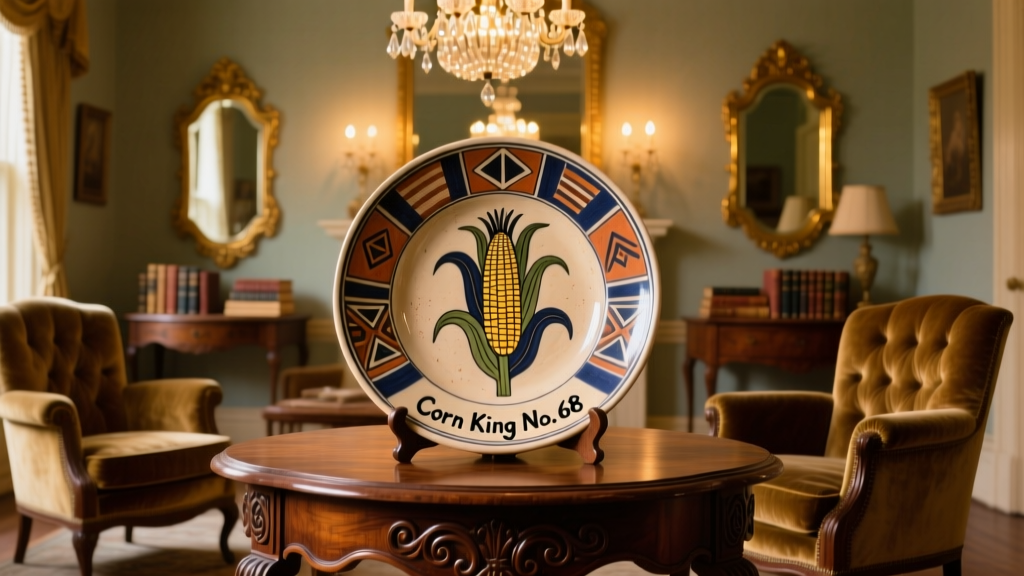
Shawnee Pottery Plate Corn King No. 68: History, Identification, and Collectibility
Kovels’ American Antiques: A Specialist’s Analysis of Furniture and Decorative Arts, 1750–1900

The Pima Basket Bowl: A Study of Geometric Precision, Cultural Continuity, and Conservation Ethics in a 7 × 9½-Inch Globular Artifact

Virgil Earp–Signed Tombstone Brothel License Could Fetch $10,000 at Auction: Authenticity, Provenance, and Historical Context
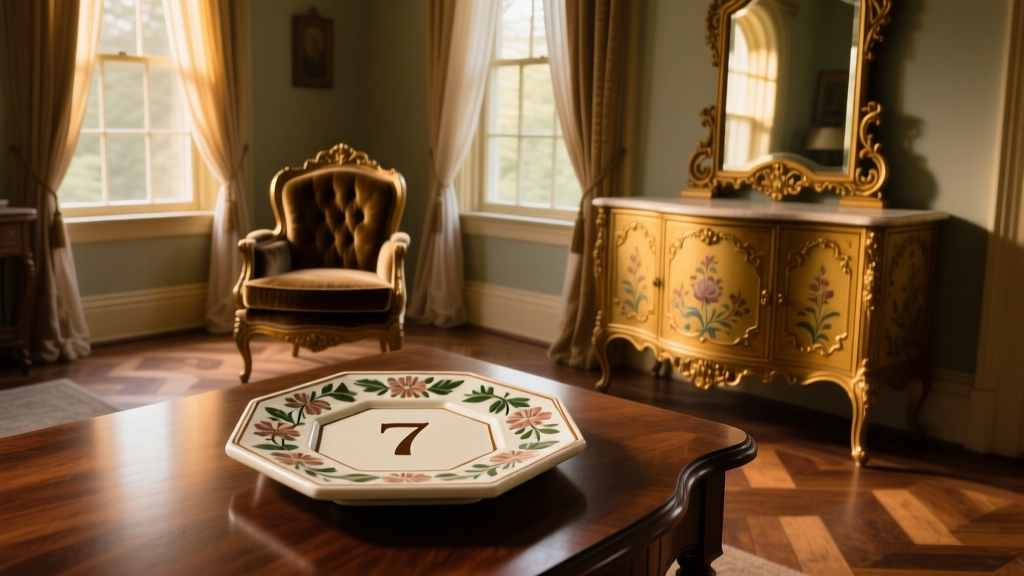
Cowan Pottery Trivet: Flowers, Leaves, Hexagonal Form, Ivory Glaze, Marked '7 in' — A Collector’s Deep Dive

Decoding the Beatles Glass A.W. Mopheads 'Yea Yea Yea' Black Canada 6½-Inch Figurine: Authenticity, Provenance, and Restoration Protocol