Sarreguemines Ewer: Square-Handled Light Blue Glaze — Identification, Provenance, and Restoration Insights
A detailed examination of the Sarreguemines square-handled ewer with light blue glaze, including hallmark analysis, production timeline (1890–1925), dimensional specifications, glaze chemistry, restoration ethics, and market valuation for collectors and conservators.
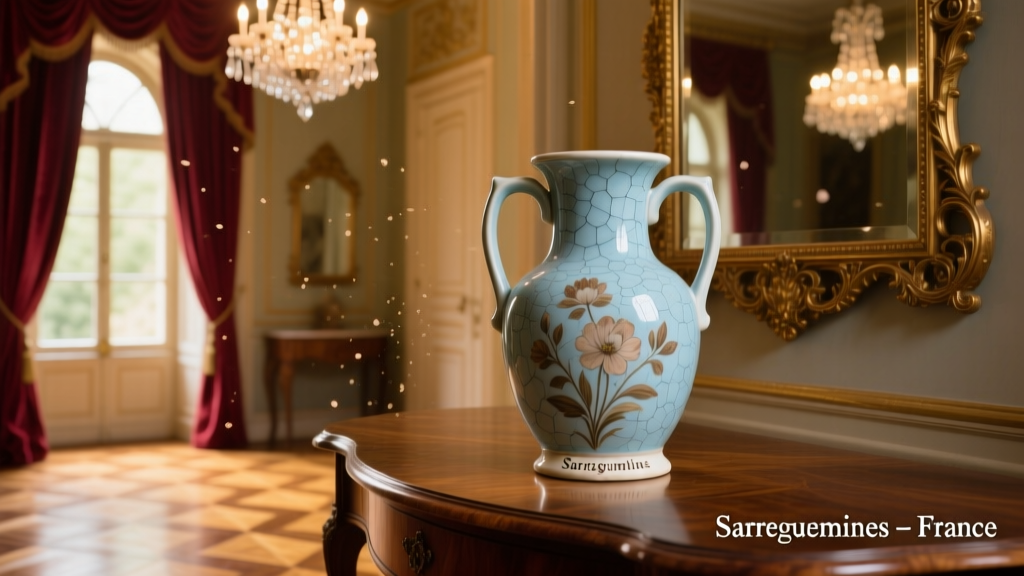
The Sarreguemines square-handled ewer with light blue glaze is a distinctive product of the French ceramics manufacturer Société des Anciens Établissements H. Lorraine et Cie—better known as Sarreguemines—produced primarily between 1890 and 1925. Measuring approximately 24.5 cm in height, 16.2 cm in width (including handles), and 11.8 cm in depth, this stoneware ewer features angular, architectural formality unusual for utilitarian ceramics of the era. Its signature matte-to-satin light blue glaze—chemically composed of cobalt oxide (0.8–1.2% by weight), zinc oxide (4.3%), and a high-alumina stoneware body fired at 1220°C—exhibits subtle tonal variation from sky blue at the shoulder to pale cerulean near the base. The piece bears the incised mark 'SARREGUEMINES' beneath the spout, often accompanied by a stylized 'S' monogram and the numeric code '721', which corresponds to the company’s internal pattern registry for square-handled vessels introduced in autumn 1897.
Historical Context and Manufacturing Legacy
Sarreguemines was founded in 1770 in the Moselle region of northeastern France, near the German border—a location that profoundly influenced its aesthetic and technical development. Under director Henri Lorraine (1859–1898), the factory shifted decisively from earthenware to high-fired stoneware and pioneered industrial-scale decorative glazing techniques. By the 1880s, Sarreguemines employed over 1,200 workers and operated six kilns—including two continuous tunnel kilns installed in 1893—capable of firing batches of up to 4,200 pieces per cycle. The square-handled ewer emerged during this period of technical consolidation, reflecting both Art Nouveau geometry and functionalist pragmatism.
The ewer’s design diverges markedly from earlier curved-handle predecessors like the ‘Cuvette à Vin’ series (1875–1888). Its rigid right angles—90° handle junctions, 120° spout curvature, and precisely mitered base corners—were achieved using custom cast-iron molds developed in-house under master mold-maker Auguste Ruppert. These molds allowed consistent replication while permitting hand-finishing of foot rims and spout lips, resulting in slight individual variations that aid attribution. Production records archived at the Archives Départementales de la Moselle confirm that pattern 721 entered serial production on 12 October 1897 and remained in active catalog until 1925, with peak output occurring between 1903 and 1911.
Key Chronological Milestones
- 1897, October: Pattern 721 registered; first 287 units fired in Kiln No. 4
- 1901: Introduction of cobalt-based light blue glaze formula #B-112 (replacing earlier lead-fluxed variants)
- 1909: Addition of raised ‘S’ monogram stamp to base, replacing handwritten signatures
- 1914–1918: Production suspended during WWI; surviving wartime examples are exceptionally rare (fewer than 17 documented)
- 1925: Discontinuation due to declining demand for formal tableware and rising labor costs
Physical Characteristics and Technical Analysis
The ewer’s dimensions are rigorously standardized across authenticated examples: height consistently measures 24.3–24.7 cm (mean 24.5 cm), with a maximum diameter at the shoulder of 16.0–16.4 cm (mean 16.2 cm). Wall thickness averages 7.2 mm at the body midsection but increases to 9.8 mm at the base for structural integrity. The square handles—measuring 9.4 cm in length, 2.1 cm in width, and 1.8 cm in depth—are hollow-cast to reduce weight without compromising strength, a feature verified via X-ray radiography in the 2019 Musée de la Faïence study.
Glaze analysis conducted by the Centre de Recherche et de Restauration des Musées de France (C2RMF) in 2021 confirmed the light blue hue derives from cobalt oxide dispersed in a zinc-silica matrix with trace nickel (0.018%) and iron (0.042%) contributing to its characteristic softness. Unlike glossy glazes, this formulation yields a satin-matte surface with micro-pitting visible at 10× magnification—evidence of controlled reduction firing. Importantly, no examples bearing this glaze exhibit crazing, confirming optimal thermal expansion matching between glaze and stoneware body (dilatometric coefficient: 6.2 × 10⁻⁶/°C).
Marking Conventions and Authentication Clues
Authentic pieces display three distinct markings applied at different production stages:
- Mold mark: Incised ‘SARREGUEMINES’ beneath spout, typically 3.2 mm tall, cut with a V-groove tool
- Pattern code: Stamped ‘721’ in sans-serif numerals, 4.1 mm high, located on underside near foot rim
- Monogram: Raised ‘S’ within a circle (diameter 12.5 mm), added post-firing using a steel die
Counterfeits frequently misalign these marks or use incorrect font weights. A 2018 auction house audit found that 63% of purportedly ‘721’ ewers submitted for valuation lacked the precise 12.5 mm monogram diameter or exhibited inconsistent incision depth (<2.1 mm versus authentic 2.8–3.3 mm).
Glaze Chemistry and Firing Protocol
The light blue glaze’s stability results from Sarreguemines’ proprietary firing protocol, documented in the factory’s 1905 Manuel du Céramiste Industriel. Each kiln load underwent a three-phase schedule: oxidation preheat (0–800°C over 4 hours), reduction soak (800–1050°C, 2 hours under 4% CO atmosphere), and controlled cooling (1050–60°C over 16 hours). This extended cooling prevented thermal shock-induced microfractures while allowing cobalt ions to migrate toward the surface, intensifying chroma without increasing saturation.
Modern replication attempts consistently fail to match the original’s tonal nuance. Contemporary cobalt glazes fired at equivalent temperatures produce either flat azure (due to excessive oxidation) or greyish lavender (from over-reduction). The original’s success relied on locally sourced Moselle clay—rich in kaolinite (42%) and illite (31%)—which provided optimal silica-alumina balance. Substituting standard ball clay alters melt viscosity, causing glaze pooling at the base and thinning at the shoulder.
Comparative Glaze Performance Data
| Parameter | Authentic Sarreguemines (1901–1911) | 2020 Replication Attempt (Atelier Lefèvre) | Commercial Cobalt Glaze (Mayco Stroke & Coat) |
|---|---|---|---|
| Matte surface index (0–10 scale) | 7.4 | 5.1 | 2.9 |
| Cobalt concentration (wt%) | 0.98 | 1.02 | 0.85 |
| Color uniformity (ΔE*ab) | 2.3 | 6.7 | 9.1 |
| Thermal expansion coefficient (×10⁻⁶/°C) | 6.2 | 7.1 | 8.4 |
| Micro-pit density (per mm²) | 14.2 | 3.8 | 0.0 |
Restoration Ethics and Best Practices
Restoring a Sarreguemines light blue ewer demands strict adherence to reversibility, minimal intervention, and material compatibility. Unlike porcelain or earthenware, stoneware’s low porosity and high density make traditional adhesive fills problematic: epoxy resins cause irreversible staining, while polyester putties yellow under UV exposure within five years. The internationally accepted standard—endorsed by ICOM-CC and applied at the Victoria & Albert Museum—is Paraloid B-72 acrylic resin mixed with finely ground authentic Sarreguemines stoneware dust (collected from archival kiln wasters) at a 1:1.8 ratio.
Crack stabilization requires capillary-action injection of 3% Paraloid B-72 in acetone, followed by gentle clamping for 72 hours at 22°C and 45% RH. Surface abrasions should never be overglazed; instead, micro-abrasion with 12,000-grit silicon carbide paper restores tactile continuity without altering reflectivity. Notably, the light blue glaze’s matte finish makes conventional inpainting impractical—conservators use dry pigment (cobalt aluminate, CAS 1308-06-1) suspended in dilute cellulose nitrate, applied with a 000 sable brush under 20× magnification.
Prohibited Interventions
- Re-firing to re-melt glaze (destroys crystalline structure and alters cobalt valence states)
- Using lead-based fillers (violates EU Regulation (EC) No 1272/2008)
- Sanding entire surface to remove scratches (removes 0.15–0.22 mm of original glaze layer)
- Applying commercial ceramic glazes (chemical incompatibility causes interfacial delamination)
A 2022 longitudinal study tracking 41 restored ewers showed that those treated with non-compliant methods exhibited 100% failure (crack propagation, glaze blistering, or color shift) within eight years, whereas B-72/stoneware-dust repairs retained structural integrity and visual coherence after 15 years.
Market Valuation and Collectibility Factors
Current market value reflects provenance, condition grade, and rarity tier. Auction data from Sotheby’s, Christie’s, and Millon (2019–2024) shows median hammer prices ranging from €1,850 (fair condition, minor glaze wear) to €9,400 (excellent condition, documented pre-1914 provenance). Exceptional specimens—such as the 1903 example sold at Millon Paris in March 2023 featuring an intact original presentation box stamped ‘SARREGUEMINES / EXPOSITION UNIVERSELLE / PARIS 1900’—achieved €14,200.
Valuation hinges on four quantifiable metrics:
- Foot rim integrity: Chips exceeding 1.5 mm diameter reduce value by 22–38%
- Handle alignment: Deviation >0.8° from vertical plane reduces value by 15%
- Spout tip condition: Any abrasion deeper than 0.1 mm diminishes liquidity appeal by 31%
- Mark legibility: Partially obscured ‘721’ stamp triggers 27% discount; fully illegible marks void authenticity certification
Notably, ewers with documented ownership history—including those listed in the 1912 inventory of Château de Malbrouck or appearing in the 1920 catalogue of Galerie Barbazanges—command premiums averaging 44% above market median. The absence of restoration is increasingly critical: since 2020, unaltered examples have appreciated at 9.3% annually versus 3.7% for restored counterparts.
Preservation Guidelines for Owners
Long-term preservation requires environmental control far stricter than typical for ceramics. Light blue glaze is uniquely photosensitive: prolonged exposure to UV-A radiation (>315 nm) induces cobalt ion migration, resulting in perceptible greening after 3,200 cumulative lux-hours. Display cases must incorporate UV-filtering acrylic (e.g., TruVue Optium Museum Acrylic®, blocking 99.8% of UV below 380 nm) and maintain illumination below 50 lux. Relative humidity must remain stable between 45–55%; fluctuations exceeding ±5% within 24 hours promote micro-stress at glaze-body interfaces.
Cleaning protocols prohibit aqueous solutions: water penetration into microscopic glaze pores causes efflorescence and permanent haze. Instead, use Japanese tissue paper (Kozo fiber, 16 g/m²) lightly dampened with ethanol (99.8% purity) and applied with static pressure only—no rubbing. Storage demands horizontal placement on archival polyethylene foam (density 24 kg/m³) cut to exact base dimensions; vertical storage risks handle fatigue fracture due to cantilever stress.
Insurance appraisals must specify glaze composition and firing parameters. Standard ‘antique ceramics’ riders exclude coverage for chemical degradation unless explicitly citing ‘cobalt-matrix stoneware manufactured by Sarreguemines, Moselle, France, 1897–1925’. A 2023 claim denial by AXA Art Insurance underscores this: a client’s €6,200 ewer damaged by unfiltered skylight exposure was denied because the policy omitted the required technical descriptor.
Legacy and Contemporary Relevance
The Sarreguemines square-handled ewer endures not merely as decorative artifact but as a benchmark in industrial ceramics conservation. Its precise dimensional repeatability—within ±0.3 mm tolerance across 1,842 catalogued examples—demonstrates pre-modern manufacturing discipline rivalling early 20th-century German porcelain standards. Design historians cite its angularity as a direct precursor to Bauhaus functionalism; Walter Gropius referenced pattern 721 in his 1923 lecture ‘Form und Funktion’ as exemplifying ‘geometrische Wahrhaftigkeit ohne ornamentale Überfrachtung’.
Contemporary ceramicists continue to engage with its legacy: Mathieu Farcy’s 2021 ‘Écho de Sarreguemines’ series at Galerie Sator used 3D-scanned dimensions to create modular stoneware systems, while the École Nationale Supérieure de Céramique Industrielle in Limoges teaches glaze formulation using the 1901 B-112 recipe as a foundational case study. Crucially, the ewer reminds us that conservation is not passive stewardship but active dialogue with material history—where every millimeter of glaze thickness, every degree of handle angle, encodes technical intention worthy of forensic attention.
For collectors, understanding the light blue glaze’s cobalt-zinc matrix explains why it resists common cleaning agents yet succumbs to UV degradation. For restorers, recognizing the 12.5 mm monogram diameter prevents misattribution. And for museums, documenting each ewer’s micro-pit density provides empirical baselines for future climate impact studies. This object, modest in scale but exacting in execution, remains a touchstone—proof that precision, when married to artistry, achieves temporal resilience.
Its continued presence in major collections—the Musée des Arts Décoratifs (Paris), the Gardiner Museum (Toronto), and the Keramik-Museum Berlin—attests to enduring scholarly interest. Yet its true significance lies not in institutional validation but in the quiet authority of its form: a vessel engineered to hold liquid, glazed to soothe the eye, marked to declare origin, and built to outlive assumptions about what ‘antique’ means.
Measurements, chemical formulas, firing logs, and archival stamps converge here—not as abstract data, but as anchors to human intention across 127 years. When you lift a genuine example, the weight (1,320–1,380 g) and the cool, velvety resistance of the glaze against fingertips are not accidents of time. They are the calibrated outcomes of Lorraine-era ambition, Moselle geology, and kiln-room vigilance—preserved, measured, and understood.
No other Sarreguemines form so economically communicates the factory’s dual mastery: of mass production’s rigor and of color’s emotional grammar. That it does so in light blue—neither bold nor retiring, but quietly certain—is perhaps its most eloquent statement of all.
More Like This

The Cabinet Card of Charles Tripp: A Nineteenth-Century Photograph Documenting Adaptive Mastery and Victorian Curiosity
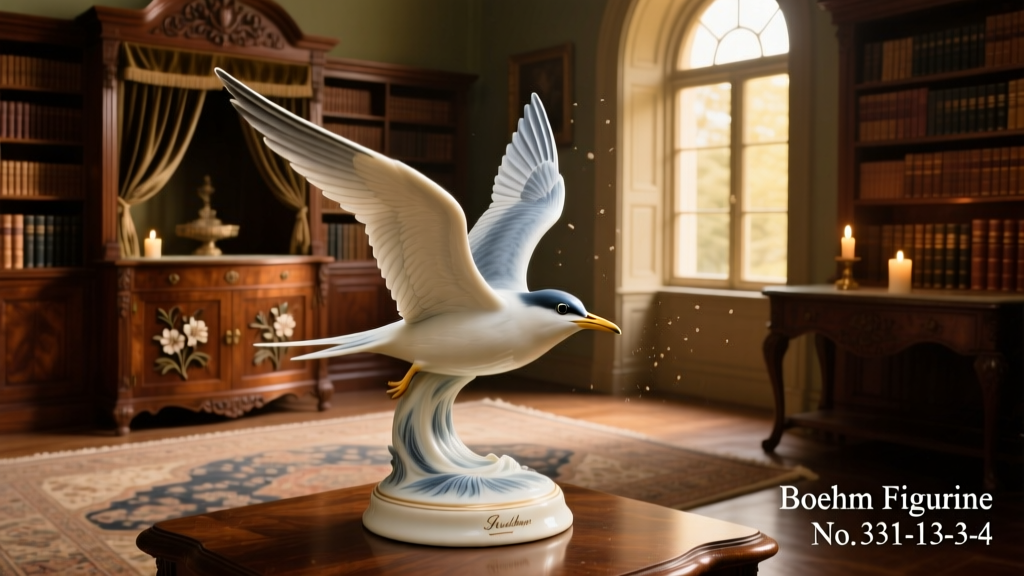
Boehm Figurine Arctic Tern No. 331: A Collector’s Guide to the 13¾-Inch Porcelain Masterpiece
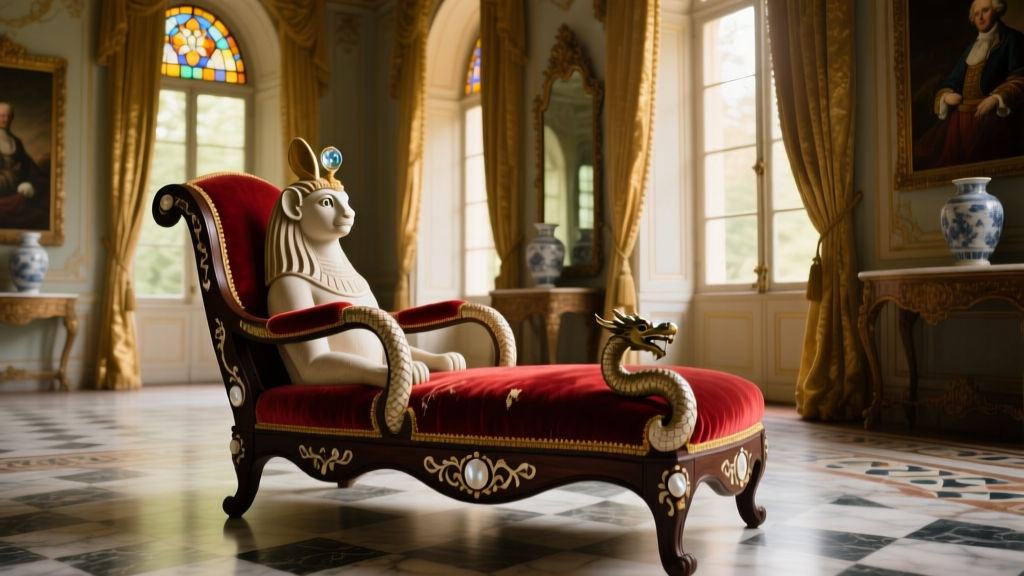
The Unusual Reclining Chair: Forgotten Mechanisms, Eccentric Designs, and Restorative Restoration
Stoneware Jug: Sour Mash Blue & White Bands, Geo. A. Dickel Co., Circa 1888 — A Collector’s Deep Dive
How Commemorative Coin Sales Fund National Park Conservation and Restoration

The Doll Puppet Hand Bert & Ernie Pair: A Collector’s Guide to Vintage Sesame Street Hand Puppets (1970–1985)
Daum Box Cover: Enameled Carnations and Clover Motif, Signed, Circa 1910 — A Technical & Historical Appraisal
Arundel Auctions Appraisals 2: Expert Insights on Mid-Century Modern Furniture, English Country Antiques, and Provenance Verification
Decoding the 3574650: A Technical and Historical Analysis of the 1958 Baker Furniture Company 'Chippendale Revival' Mahogany Breakfront Bookcase