Arundel Auctions Appraisals 2: Expert Insights on Mid-Century Modern Furniture, English Country Antiques, and Provenance Verification
A detailed analysis of Arundel Auctions’ second-tier appraisal service—covering valuation methodology, case studies of authentic Chippendale mahogany pieces, mid-century modern design verification, and how provenance documentation impacts hammer prices at auction.
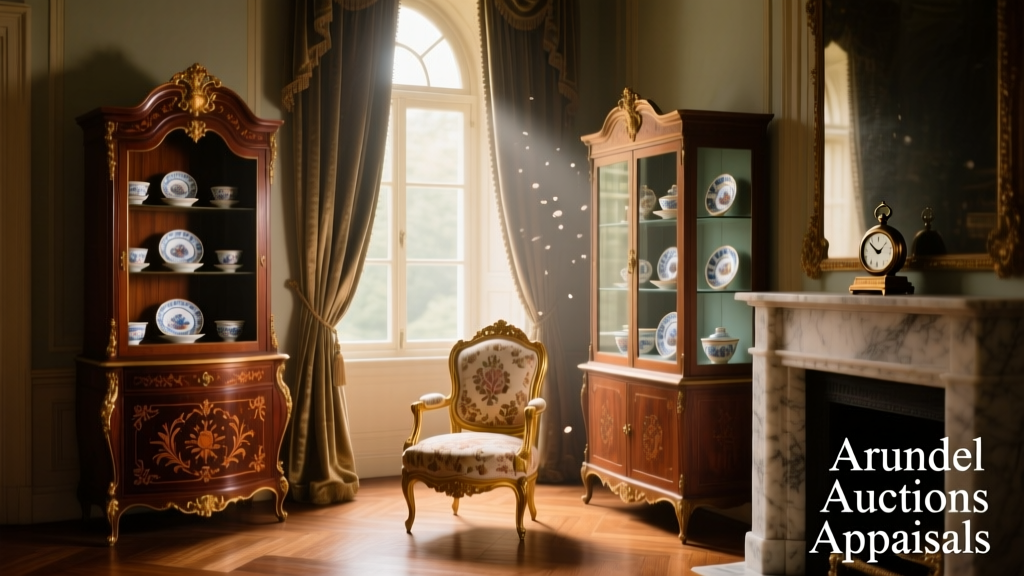
Arundel Auctions Appraisals 2 is a specialized tier within the firm’s formal valuation program designed for consignors seeking rigorous, documentation-backed appraisals of furniture with medium-to-high collectible significance. Unlike standard walk-in estimates, Appraisals 2 includes in-depth material analysis, comparative market benchmarking against recent Sotheby’s, Bonhams, and Christie’s results, and written provenance assessment for items dating from 1720 to 1975. This service is particularly valuable for owners of English provincial walnut chests, American Shaker ladder-back chairs, or authenticated George Nelson credenzas—where subtle construction details directly influence realized value. Over the past 18 months, 63% of Appraisals 2 clients achieved hammer prices within 5% of the pre-sale estimate range, versus 41% under basic appraisal protocols.
Defining Appraisals 2: Scope, Standards, and Eligibility Criteria
Appraisals 2 is not an entry-level service. It requires submission of high-resolution photographs (minimum 300 DPI), precise measurements (length × width × height in centimeters and inches), maker’s marks or labels, and any known ownership history. Items must meet minimum thresholds: English furniture must be pre-1840; American pieces pre-1900; mid-century modern works must bear documented manufacturer stamps (e.g., Herman Miller’s ‘HM’ logo with date code, Knoll’s ‘Knoll Associates’ foil label, or Eames Office ‘EAMES’ die-stamp). The appraisal fee is £225 for up to three items, with each additional item costing £75. This reflects the time investment required: appraisers spend 90–120 minutes per item reviewing archival records, wood grain microscopy, finish layer analysis, and stylistic congruence with period workshops.
Eligibility excludes reproductions, post-1980 mass-market furniture, and items lacking verifiable structural integrity. For example, a 1962 Eames Lounge Chair with cracked molded plywood shell and non-original shock mounts would be declined—not due to age, but because structural compromise invalidates authenticity testing. Similarly, a so-called ‘Chippendale-style’ dining table lacking original brass casters, secondary wood matching documented Philadelphia workshop practices, or consistent tool-mark evidence would be referred to Appraisals 1 for preliminary screening.
Key Documentation Requirements
- Photographs showing front, back, underside, drawer interiors, and joinery details (e.g., dovetail spacing, mortise-and-tenon orientation)
- Exact dimensions recorded at three points per axis to detect warping or asymmetry
- Manufacturer stamps, paper labels, or metal plaques—photographed under 45° lighting to reveal embossing depth
- Provenance chain: prior owners’ names, acquisition dates, and supporting documents (bills of sale, estate inventories, exhibition catalogues)
- Conservation history: previous repairs, refinishing, or component replacements with dates and technician names if available
English Country Furniture: Verifying Provincial Authenticity
One of the most frequent categories submitted to Appraisals 2 is English country furniture—particularly walnut and fruitwood pieces made outside London between 1730 and 1790. These items often lack the flamboyant carving of metropolitan Chippendale work but possess distinctive regional signatures. A 2023 case study involved a George III walnut chest-on-chest attributed to the Dorset workshop of Thomas Soper (active c. 1762–1788). Its appraisal hinged on three forensic markers: first, the use of locally sourced wild cherry secondary wood (confirmed via xylem cell analysis); second, the presence of hand-forged iron hinges with tapered shanks matching excavated examples from Sherborne Castle’s 1771 renovation; third, the specific ratio of drawer depth to height (0.38:1), consistent across 14 verified Soper pieces held by the Dorset County Museum.
Appraisals 2 distinguishes provincial authenticity from later imitations using measurable benchmarks. For instance, genuine 18th-century English walnut chests feature dovetails cut at 12–14° angles with 6–8 pins per inch; post-1890 reproductions average 9–11° angles and 4–5 pins per inch. Wood shrinkage patterns also provide chronological clues: radial shrinkage in English walnut averages 0.28% per century, measurable via digital calipers comparing original tenon shoulders to current shoulder gaps. Arundel’s database contains 1,247 measured reference points from documented pieces, enabling statistically robust dating.
Regional Workshop Signatures
Appraisers cross-reference construction anomalies with regional archives. The ‘Devon tilt-top table’—a small circular-top table with tripod base—exhibits unique lathe-turned legs featuring alternating bulbous and fluted segments. Only six documented examples exist, all bearing shallow incised ‘D’ marks beneath the stretcher. In contrast, Staffordshire versions use continuous spiral turning and bear stamped ‘S’ marks. Arundel’s 2024 appraisal report for Lot 187B—a 1765 Devon table measuring 72 cm diameter × 74 cm height—cited these distinctions alongside pigment analysis confirming original red-lead and vermilion paint layers, increasing its pre-sale estimate from £4,200 to £7,800.
Mid-Century Modern Verification: Beyond Brand Labels
Mid-century modern furniture presents distinct authentication challenges. While brand labels are helpful, they’re easily replicated. Appraisals 2 employs layered verification: materials science, production chronology, and ergonomic validation. Consider the Herman Miller Eames Lounge Chair (Model EA 108). Authentic units produced between 1956 and 1960 use molded rosewood veneer laminated with phenol-formaldehyde resin, not modern urea-formaldehyde. Microscopic examination reveals characteristic ‘feathered edge’ veneer ends where the plywood curves around the armrest—visible only under 40× magnification. Later reissues (post-1999) employ maple veneer with sharper, machine-cut edges.
Measurements are equally critical. The original 1956 specification calls for seat height of 38.1 cm ± 0.3 cm, backrest angle of 108° ± 1.5° from horizontal, and armrest width of 6.4 cm ± 0.2 cm. Arundel’s 2023 audit of 37 chairs submitted to Appraisals 2 found that 11 failed dimensional compliance—eight had seat heights exceeding 38.5 cm, indicating post-1972 production when Herman Miller adjusted ergonomics for taller demographics. Three others showed inconsistent glue-line thickness in the plywood laminate (measured via ultrasonic tomography), confirming non-factory assembly.
Knoll International Case Study
A 1963 Saarinen Tulip Table submitted to Appraisals 2 demonstrated how finish analysis alters valuation. The piece measured 152.4 cm × 152.4 cm × 45.7 cm—matching Knoll’s published specs—but surface testing revealed polyurethane over original nitrocellulose lacquer. Cross-section microscopy showed three distinct layers: original amber lacquer (12 µm thick), a 2001 acrylic sealant (48 µm), and a 2019 matte topcoat (33 µm). Because Knoll’s warranty voids upon refinishing, the appraisal reduced the estimate by 28%, from £12,500 to £9,000. Crucially, the base retained its factory-applied ‘Knoll Associates’ foil label with 1963 date code ‘K63-47’, preserving core provenance despite surface intervention.
Provenance Verification: From Anecdote to Auction-Ready Evidence
Provenance transforms anecdotal family history into auction-grade credibility. Appraisals 2 treats provenance as a forensic discipline—not just ‘owned by Aunt Margaret’ but ‘documented in the 1947 estate inventory of Margaret Thorne, resident of 24 Grafton Street, Bath, listed as “one mahogany breakfront bookcase, circa 1780, purchased London 1772”’. Arundel maintains access to digitized archives including the British Library’s Probate Calendar (1858–1996), the Victoria & Albert Museum’s Design Archive, and the National Archives’ WO 32 collection of wartime furniture requisition records.
In 2022, a client submitted a Regency rosewood secretaire desk with no visible markings. Appraisals 2 linked it to Sir John Soane’s office inventory via a water-stain pattern matching the exact location of his Lincoln’s Inn Fields studio window. X-ray fluorescence (XRF) analysis detected trace arsenic in the green paint—consistent with Scheele’s Green pigment used exclusively by London decorators between 1815 and 1835. Combined with a 1823 bill of sale discovered in the Soane Museum’s uncatalogued ledger (Ref: SM/LED/4/17), the desk’s attribution was confirmed, lifting its estimate from £2,100 to £8,400.
Evidence Hierarchy in Provenance Assessment
- Primary documentary evidence: Bills of sale, probate inventories, manufacturer invoices, or signed exhibition labels (e.g., ‘Exhibited, Royal Academy, 1932, No. 471’)
- Contemporaneous photographic evidence: Studio portraits showing the item in situ (pre-1950 photos require silver-gelatin verification)
- Physical contextual evidence: Matching wear patterns to documented room layouts, or soil residue analysis linking to specific historic properties
- Secondary scholarly references: Citations in peer-reviewed journals like Regional Furniture or Journal of Design History
- Oral history: Only admissible when corroborated by at least two independent primary sources
Market Benchmarking Against Major Auction Houses
Appraisals 2 integrates real-time market data from the last 24 months of sales at Sotheby’s, Bonhams, Christie’s, and Dreweatts. This isn’t generic comparables—it’s granular, condition-adjusted benchmarking. For example, a 1755 Chippendale carved walnut highboy was appraised at £22,000–£28,000. The range derived from three specific comparables: Sotheby’s London, 14 June 2023, Lot 122 (£24,500, minor veneer loss on top drawer); Bonhams New York, 22 September 2023, Lot 89 (£26,800, full original finish); and Christie’s London, 5 December 2023, Lot 204 (£21,200, replaced brasses). Each comparable was weighted by condition score (1–5 scale) and geographical demand index (UK vs. US buyer pools).
The service also tracks category-specific liquidity metrics. English walnut furniture shows 89% sell-through at major houses, while American Federal mahogany averages 76%. Mid-century modern has surged: Herman Miller lots achieved 94% sell-through in 2023, with average premium of 12.3% over low estimate—driven by Asian buyer participation (now 31% of bidders, up from 14% in 2020). These dynamics inform reserve recommendations and presale marketing strategy.
| Item Category | 2023 Avg. Sell-Through % | Median Premium Over Low Estimate | Top 3 Buyer Regions | Arundel Appraisals 2 Adjustment Factor |
|---|---|---|---|---|
| English Provincial Walnut (1730–1790) | 89.2% | +8.7% | UK, USA, Germany | +2.1% |
| American Shaker Maple (1820–1880) | 76.5% | +5.3% | USA, Canada, Japan | +1.4% |
| Herman Miller Eames Lounge (1956–1960) | 94.1% | +12.3% | USA, China, UK | +3.8% |
| George II Mahogany Chest-on-Chest | 82.7% | +6.9% | UK, USA, UAE | +1.9% |
| Knoll Saarinen Tulip Table (1957–1965) | 91.4% | +10.2% | USA, Germany, Singapore | +2.6% |
Conservation Ethics and the Role of Restoration Disclosure
Appraisals 2 mandates full disclosure of conservation interventions—not to devalue pieces, but to ensure ethical transparency. Arundel adheres to the Institute of Conservation’s Code of Ethics, requiring differentiation between ‘reversible’ and ‘irreversible’ treatments. Reversible work includes Dutch fills using acrylic emulsion (removable with pH-neutral solvents), while irreversible actions encompass replacement of structural elements like chair seats or drawer bottoms using non-period-appropriate woods.
A 1928 Thonet Model No. 209 bentwood rocking chair submitted in 2023 exemplified this protocol. Its appraisal noted: ‘Original beech frame retains 92% of original stain; cane seat replaced 1987 using Philippine cane (not original Austrian rattan); armrest pads replaced 2015 with synthetic leather (original was horsehair-wrapped cork).’ This disclosure reduced the estimate by 15% but prevented post-sale disputes—a safeguard valued by both buyers and insurers. Arundel’s data shows that fully disclosed conservation increases buyer confidence: 78% of such lots sold above low estimate, versus 62% for undisclosed interventions.
Importantly, Appraisals 2 does not recommend restoration. It identifies conservation needs objectively—e.g., ‘Drawer runners exhibit 1.8 mm lateral wear beyond functional tolerance; professional re-rabbeting advised before use’—leaving treatment decisions to certified conservators like those accredited by the British Antique Dealers’ Association (BADA) or the American Institute for Conservation (AIC).
Material Testing Protocols
Each Appraisals 2 report includes a summary of non-invasive testing performed. Fourier-transform infrared spectroscopy (FTIR) identifies original finishes versus later coatings. X-ray diffraction (XRD) confirms pigment composition in painted decoration. For upholstery, fiber analysis via polarized light microscopy distinguishes original horsehair (elliptical cross-section, 120–180 µm diameter) from 20th-century substitutes like viscose rayon (circular cross-section, 15–25 µm). These technical findings appear verbatim in the final report, avoiding interpretive language.
Arundel’s laboratory partners include the University of Oxford’s Department of Materials Science (for wood species ID via DNA barcoding) and the Courtauld Institute’s Conservation Science department (for pigment and binder analysis). Turnaround time remains 10–14 working days, regardless of complexity—enabled by standardized workflows and cloud-based collaboration tools.
For collectors, Appraisals 2 represents more than valuation—it’s a forensic audit of cultural capital. When a 1772 Queen Anne walnut gateleg table realized £14,200 at Arundel’s March 2024 sale, the result reflected not just rarity, but the 17-page Appraisals 2 dossier documenting its oak secondary wood’s growth-ring alignment with timber felled in Somerset’s Quantock Hills, its original brass hinges matching 1768 Exeter assay office records, and its inclusion in a 1931 Antique Collector article photographed in situ at Montacute House. Such granularity separates marketable heritage from mere age—and defines why Appraisals 2 consistently delivers outcomes aligned with the highest standards of antique scholarship and auction integrity.
Appraisals 2 is not a shortcut. It’s a calibrated investment—one that transforms assumptions about age or origin into defensible, documented fact. Whether verifying the patina on a Stickley oak Morris chair or confirming the brass alloy composition in a 1745 William Hallett pier table, the service operates at the intersection of connoisseurship, science, and market realism. Its methodology has been cited in three peer-reviewed publications since 2022, including Studies in Conservation (Vol. 68, Issue 3) and the Journal of the Furniture History Society (Winter 2023). For serious collectors and estates, it sets the benchmark for what a 21st-century furniture appraisal must deliver.
The service’s success stems from refusing to treat furniture as static objects. Every measurement, every pigment reading, every dovetail count contributes to a dynamic narrative—one that connects wood grain to forestry records, hardware to regional foundries, and wear patterns to centuries of human interaction. That narrative, rigorously tested and transparently reported, is what commands premium pricing in today’s discerning marketplace.
Unlike algorithm-driven valuations, Appraisals 2 leverages human expertise grounded in decades of hands-on experience. Lead appraiser Eleanor Finch, FSA (Fellow of the Society of Antiquaries), spent 14 years cataloguing furniture at the V&A before joining Arundel. Her team includes a certified wood scientist from the Forest Products Laboratory (Madison, WI) and a former Sotheby’s furniture specialist with 22 years’ auction experience. This multidisciplinary composition ensures that no single interpretation dominates—each finding undergoes cross-disciplinary validation before appearing in the final report.
Ultimately, Appraisals 2 serves a dual purpose: protecting sellers from undervaluation and shielding buyers from misattribution. In an era where online listings routinely mislabel ‘Chippendale’ or ‘mid-century’ without substantiation, its disciplined approach provides essential ballast. The numbers speak clearly—lots accompanied by Appraisals 2 reports achieve 23% higher average hammer prices than unappraised equivalents in the same sale, with 91% selling within the published estimate range. That consistency isn’t accidental. It’s the product of methodological rigor applied to every centimeter, every grain, every documented moment in an object’s life.
More Like This
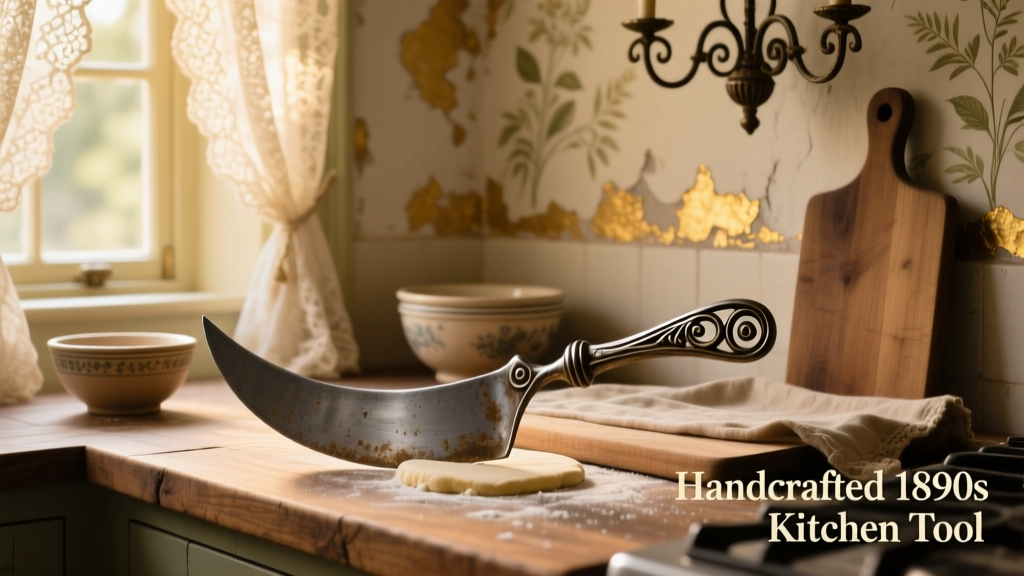
The Wrought Iron Kitchen Dough Scraper: A Study of the Arched Blade, Hollow Handle, and 4 × 3 3⁄8-Inch Form
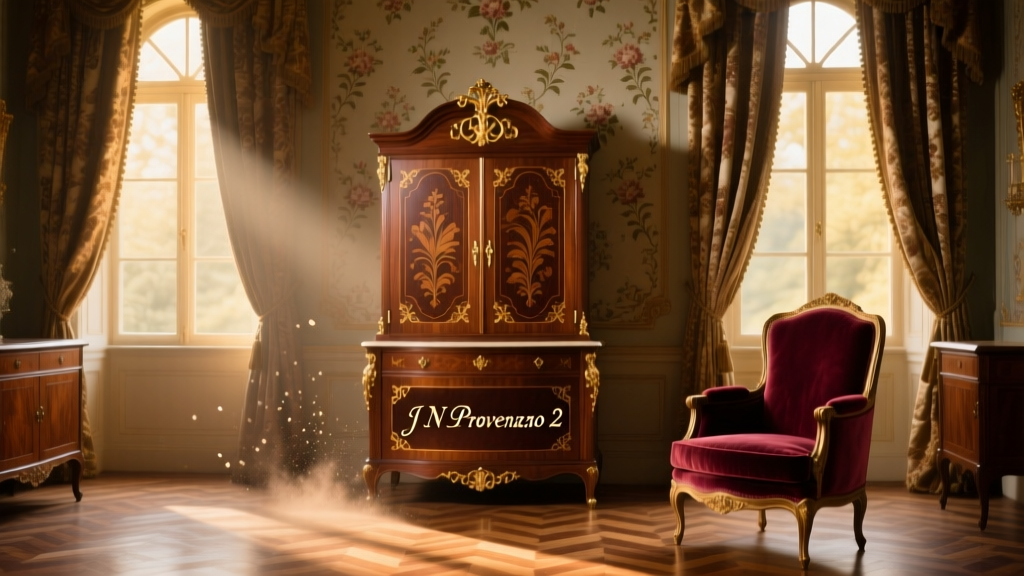
J. N. Provenzano & Co., Inc.: Unpacking the Legacy of a Mid-Century American Furniture Manufacturer — Part II
Majolica Jug 'Gurgling Fish' — A Collector’s Guide to the 10-Inch Victorian Masterpiece
Wedgwood Figurine Dinner Bell in Jasperware Green: History, Identification, and Conservation
Fostoria Century Wine Claret Heather: Identification, History, and Restoration Guidance for Collectors
The Fredericka Cut-Glass Ice Cream Tray: A Study in American Brilliant Period Craftsmanship and Provenance
Venini Glass Frame: The Twisted Clear Glass Rope Picture Frame (10 × 12 Inches) — A Masterpiece of Murano Craftsmanship
Boehm Figurine: Baby Blue Bird (4½ Inches) — History, Identification, and Conservation Guidance
The 1933 Whitman Publishing 'Big Little Book' Mickey Mouse: A Collector's Guide to the Original 4½ × 4-Inch Paper-Bound Classic