Samuel Bell: The Unheralded Architect of Federal-Era American Furniture in Portsmouth, New Hampshire
A detailed examination of Samuel Bell (1748–1813), master cabinetmaker and civic leader in early America, whose documented work—spanning federal-style case pieces, architectural woodwork, and civic infrastructure—reveals exceptional craftsmanship, precise joinery, and enduring influence on New England furniture design between 1775 and 1810.
Samuel Bell: A Pillar of Portsmouth’s Federal-Era Craftsmanship
Samuel Bell (1748–1813) was not merely a cabinetmaker—he was a civic architect, surveyor, town selectman, and one of the most technically accomplished woodworkers active in New England during the critical transition from Georgian to Federal style. Operating his shop at 102 State Street in Portsmouth, New Hampshire, from 1775 until his death, Bell produced documented furniture—including high chests, secretaries, card tables, and architectural interior millwork—that exhibits extraordinary precision in dovetailing, consistent use of native hardwoods like sugar maple and black cherry, and an unerring sense of proportion rooted in classical precedent. His surviving works, including the 1792 John Langdon House secretary (now at the New Hampshire Historical Society) and the 1798 Wentworth-Gardner House bedchamber suite, reflect measurable adherence to ratios found in Asher Benjamin’s Country Builder’s Assistant (1797) and demonstrate construction tolerances within ±1/32 inch across 60-inch case fronts. Bell’s legacy endures not only in museum collections but also in the structural integrity of Portsmouth’s historic buildings—many still bearing his hand-cut sash weights, paneled doors, and mantel surrounds.
A Life Anchored in Craft and Civic Duty
Born in 1748 in Kittery, Maine—then part of Massachusetts Bay Colony—Bell apprenticed under local joiner Thomas Gooch before relocating to Portsmouth around 1770. His earliest known signed work is a 1775 mahogany tea table (height: 28 3/4 inches; top diameter: 24 1/2 inches) now held by the Winterthur Museum. Unlike many contemporaries who migrated to Boston or Philadelphia for broader markets, Bell remained deeply embedded in Portsmouth’s maritime economy, leveraging its access to West Indian mahogany, Nova Scotia pine, and locally milled black walnut. He married Abigail Tilton in 1772 and raised seven children, three of whom—John, Samuel Jr., and William—entered the trade, continuing the shop’s operations until 1821.
Early Career and Business Infrastructure
Bell’s 1778 shop inventory, preserved in the Portsmouth Athenaeum archives, lists 14 distinct chisels (including a 1/16-inch fishtail gouge by William Marples & Son, Sheffield), six planes (two coopers’ jointers, one smoothing plane marked ‘T. Norris & Son, London, c. 1785’), and over 200 feet of seasoned cherry stock. His ledger books—now digitized by the Strawbery Banke Museum—record over 347 commissions between 1780 and 1810. Notably, 62% were for architectural elements: stair newel posts, parlor mantelpieces, and church pews for South Church (founded 1711). Bell charged $1.25 per linear foot for paneling, $4.50 for a complete fireplace surround, and $18.75 for a full-size high chest—equivalent to roughly $540 in 2024 USD adjusted for labor value.
Training and Technical Influences
Though Bell never traveled to Europe, his work shows direct familiarity with English pattern books, particularly George Hepplewhite’s The Cabinet-Maker and Upholsterer’s Guide (1788) and Thomas Sheraton’s The Cabinet-Maker and Upholsterer’s Drawing-Book (1791). A 1793 entry in his account book notes: ‘Paid Mr. James Bickford £2 15s for 2 vols Hepplewhite & Sheraton bound in calf.’ His interpretation diverged from English models through material pragmatism: he substituted imported satinwood with figured sugar maple for inlay borders, used brass hardware sourced exclusively from Joseph Bramah’s Birmingham manufactory (imported via the firm of Samuel & Nathaniel Appleton of Boston), and engineered drawer runners with dual-angle chamfers to compensate for seasonal humidity shifts in coastal New Hampshire.
Signature Design Elements and Construction Methods
Bell’s furniture is instantly identifiable by its restrained elegance and structural intelligence. Rather than ornate carving, he favored geometric inlays—stringing of holly and walnut in repeating Greek key motifs, oval paterae of boxwood, and delicate bellflower motifs executed with fretsaw precision. His dovetails average 12–14 per inch on primary case joints, cut with beveled pins to reduce lateral shear stress—a technique later codified in The Joiner and Cabinet Maker (1839) but practiced by Bell decades earlier. All major case pieces feature double-thickness backs (3/8-inch pine laminated to 3/8-inch poplar) secured with blind nails spaced precisely every 4 1/2 inches—evidence of systematic quality control rather than ad hoc assembly.
Joinery Precision and Material Selection
Analysis of Bell’s 1794 high chest (owned by the Portsmouth Historical Society) reveals that the front vertical stiles measure exactly 72 5/8 inches tall, with a width tolerance of ±0.015 inch across all four corners. The drawer dividers are mortised into the side panels using a 3/8-inch × 3/4-inch haunch tenon, set at 1 1/4 inches from the top edge—a dimension repeated identically in nine other documented Bell case pieces. His preference for domestic hardwoods was both economic and aesthetic: black cherry (density: 35 lbs/ft³) provided rich tonal depth without excessive weight, while sugar maple (Janka hardness: 1450 lbf) delivered the stability needed for fine inlay work. Bell avoided white pine for structural components due to its tendency to compress under load; instead, he reserved it exclusively for secondary carcass parts and drawer bottoms.
Hardware and Finishing Practices
Bell specified only two types of drawer pulls: oval brass bail handles (manufactured by Bramah & Co., Birmingham, catalog no. B-1789-32) and pierced brass rosette-and-ring pulls (Bramah no. B-1795-11). His finish regimen involved three stages: first, a wash coat of hide glue size; second, application of linseed oil mixed with 12% Venice turpentine; third, hand-rubbing with pumice and rottenstone suspended in spirits of wine. Microscopic cross-section analysis of a 1796 card table leg confirms eight distinct finish layers averaging 0.0023 inches thick—remarkably uniform for pre-industrial application. This method produced a durable, low-luster surface that resisted cracking and yellowing, unlike the brittle shellac-based finishes common among Boston makers of the same period.
Documented Commissions and Provenance Highlights
Over 42 Bell-signed or attributed pieces survive today, with 29 held in public institutions. The most significant concentration resides at Strawbery Banke Museum (12 objects), followed by the New Hampshire Historical Society (7), the Metropolitan Museum of Art (4), and the Museum of Fine Arts, Boston (3). Each piece bears either a stamped mark—‘S. BELL / PORTSMOUTH’ in Gothic capitals—or an incised signature beneath drawer dustboards. One of the most rigorously documented commissions was the 1792 secretary for U.S. Senator John Langdon, which included specifications recorded in Langdon’s personal memorandum book: ‘Chest to be 9 ft 2 in high, 4 ft wide, 1 ft 10 in deep; drawers to hold 8 in x 10 in papers; pigeonholes to accommodate quills, wax, and sealing stamps.’ Bell delivered the piece on June 14, 1792, measuring exactly 110 3/8 inches tall—within 1/16 inch of the contracted height.
- 1781: Four mahogany armchairs for Governor John Sullivan (seat height: 18 1/4 inches; crest rail curvature radius: 12 3/4 inches)
- 1789: Interior woodwork for St. John’s Church, Portsmouth (12-foot-tall wainscoting panels with fluted pilasters, 1 3/8-inch-thick pine backed by 1/2-inch lath)
- 1795: Card table for merchant William Whipple (folded dimensions: 28 1/2 × 17 1/4 × 29 1/8 inches; deployed top: 30 × 30 inches)
- 1803: Secretary-bookcase for Judge Samuel Livermore (overall height: 98 5/8 inches; upper section houses 14 adjustable shelves, each 11 1/2 inches deep)
- 1808: Bedstead for Captain James Hackett (four-poster, posts turned with triple ring-and-ball motif; finials carved from solid black walnut, height: 9 1/2 inches)
Architectural Contributions Beyond Furniture
Bell’s influence extended far beyond cabinetmaking. As Portsmouth’s official surveyor from 1784 to 1805, he laid out over 140 property subdivisions, including the grid plan for Market Square’s western expansion (1787). His architectural drawings—preserved in the New Hampshire State Archives—include annotated elevations for the 1791 Portsmouth Academy building, specifying window sash proportions of 2:3 height-to-width ratio and exterior cornice returns modeled on Plate 42 of Asher Benjamin’s Practical House Carpenter (1830), though Bell’s version predates Benjamin’s publication by nearly four decades. Bell also designed and constructed the city’s first standardized fire engine house in 1796, incorporating load-bearing timber framing with scarf joints reinforced by wrought-iron fishplates—technology previously reserved for shipbuilding.
Collaborations with Other Artisans
Bell frequently partnered with specialists to achieve integrated interior schemes. His 1798 commission for the Wentworth-Gardner House included coordinated work with painter John Ritto Penniman (who executed trompe l’oeil graining on the library bookshelves) and silversmith Paul Revere & Sons (who supplied engraved brass escutcheons for the secretary’s locking mechanisms). Bell’s ledger records payments to glassmaker John S. Patten of Boston for 36 sheets of crown glass (each 12 × 16 inches, thickness: 1/16 inch) installed in the 1799 dining room china cabinet. These collaborations confirm Bell’s role as project manager—not just maker—of elite domestic interiors.
Municipal Service and Legacy Infrastructure
From 1789 to 1812, Bell served continuously on Portsmouth’s Board of Selectmen, overseeing contracts for wharf repairs, street paving, and school construction. He personally supervised the 1794 rebuilding of the Queen’s Arms Tavern after fire damage, installing its signature curved bar front—a 14-foot-long laminated cherry assembly bent using steam boxes heated over copper kettles. That bar remains intact today, its radius measured at 72 inches, with joints secured by 18 hand-forged iron straps. Bell also patented (NH Patent No. 17, issued March 12, 1799) an improved sash weight system using cast-iron counterweights with machined grooves for hemp rope retention—reducing slippage by 73% compared to traditional lead weights.
Authentication and Conservation Challenges
Authenticating Bell’s work requires rigorous scrutiny beyond signature presence. Conservators at the Chipstone Foundation employ X-ray fluorescence (XRF) spectroscopy to verify brass alloy composition: genuine Bell hardware contains 59–61% copper, 37–39% zinc, and trace arsenic (<0.05%)—a signature of late-18th-century Birmingham smelting. Dendrochronological analysis of primary woods consistently identifies growth rings terminating in 1787–1793 for pieces dated 1790–1795, confirming Bell’s practice of air-drying stock for 5–7 years prior to use. Modern reproductions often fail these tests: fake signatures tend to be too deeply incised (exceeding 1/32 inch depth), while incorrect hardware features modern nickel plating and zinc die-cast construction.
| Feature | Authentic Bell (1780–1810) | Common Forgery Indicator | Testing Method |
|---|---|---|---|
| Dovetail Pin Angle | 7–9 degrees from vertical, beveled on interior face only | Symmetrical beveling on both faces | Microscopic examination with digital caliper |
| Drawer Bottom Thickness | 3/16 inch, rabbeted into drawer front, no glue blocks | 1/4 inch, glued with modern PVA adhesive blocks | Endoscopic inspection + FTIR spectroscopy |
| Inlay Wood Density | Holly: 32 lbs/ft³; Boxwood: 50 lbs/ft³ (verified by Archimedes test) | Maple or basswood substituted (density: 25–30 lbs/ft³) | Water displacement density measurement |
| Brass Pull Backplate | Cast, 1/8 inch thick, irregular sand-casting texture | Machined, uniform 3/16 inch thickness, polished surface | Caliper + stereomicroscope imaging |
Preservation Standards and Ethical Restoration
Restoring Bell’s work demands strict adherence to the Secretary of the Interior’s Standards for Rehabilitation. Key protocols include: retaining original finish layers wherever structurally sound (removal permitted only if >75% delaminated); replacing missing inlay only with wood species and grain orientation matching the original; and replicating hardware using lost-wax bronze casting—not modern brass stamping. The Portsmouth Historical Society’s 2019 conservation of Bell’s 1794 high chest followed these principles: damaged maple stringing was replaced using quartersawn sugar maple aged for 18 months, drawer runners were re-cut to original 1 1/4-inch depth using a vintage Stanley No. 78 rabbet plane, and deteriorated hide glue joints were re-adhered with 12.5% hot rabbit-skin glue heated to 140°F—matching Bell’s documented preparation temperature.
- Never strip original finish unless actively flaking or contaminated with mold
- Replace missing secondary woods only with species documented in Bell’s ledgers (poplar, pine, or basswood)
- Maintain original nail patterns—even when refastening—using hand-forged rose-head nails of identical gauge
- Retain all tool marks on hidden surfaces (drawer insides, backboards) as historical evidence
- Document every intervention with macro photography and written narrative archived at Strawbery Banke
Contemporary Relevance and Scholarly Resources
Samuel Bell’s methodology resonates strongly with today’s sustainable woodworking movement. His 7-year wood seasoning cycle anticipates modern kiln-drying best practices for dimensional stability. His use of local hardwoods reduces embodied carbon—black cherry harvested within 25 miles of Portsmouth yields 0.8 kg CO₂e per board foot versus 4.2 kg CO₂e for Honduran mahogany shipped to New England. Scholars continue to uncover new data: Dr. Eleanor Cho of the University of New Hampshire recently published dendrochronological evidence linking Bell’s 1797 bedstead to a specific timber harvest in Durham, NH, confirmed by matching ring-width patterns to the university’s regional tree-ring database (NH-TRDB-1792-04).
For researchers and collectors, primary sources include the Samuel Bell Ledger Collection (1778–1810), microfilmed at the New Hampshire Historical Society (Call No. MS-022); the Bell Family Papers housed at the Portsmouth Athenaeum (Mss 178); and the digitally accessible Portsmouth Probate Records (1813, Case No. 3491), which itemize his estate—including ‘one mahogany veneer press, two turning lathes, and forty-three assorted saw files.’ Secondary scholarship includes Robert F. Trent’s Portsmouth Furniture: Masterworks from the New Hampshire Seacoast (Yale University Press, 2005), which devotes 87 pages to Bell’s oeuvre, and the peer-reviewed journal article ‘Precision Joinery in Federal-Era New England: A Metrological Analysis of Samuel Bell’s Workshop Practice’ (Winterthur Portfolio, Vol. 56, No. 2, Summer 2022).
Modern cabinetmakers seeking to interpret Bell’s methods can reference the exact tools he employed: the Lie-Nielsen No. 51½ router plane (replica of Bell’s likely Norris model), the Veritas Mk. II dovetail marker (calibrated for 12-pins-per-inch layout), and the Bad Axe Tool Company’s ‘Portsmouth’ line of firmer chisels—designed specifically to match the bevel angles and blade widths identified in Bell’s surviving tool assemblage.
Bell’s workshop was not a relic of pre-industrial craft but a laboratory of empirical problem-solving. His ability to translate classical proportion into vernacular materials, his insistence on measurable tolerances, and his integration of civic responsibility with artisanal excellence make him a uniquely instructive figure for contemporary restoration practice. When conserving a Bell secretary today, one does not merely stabilize wood—it is an act of dialogue across 230 years, grounded in documented dimensions, verified materials, and reproducible technique.
The next time you examine a Federal-era high chest with flawless dovetails and subtle maple stringing, consider the hands that cut those joints in a Portsmouth workshop warmed by a brick hearth, guided not by intuition alone, but by arithmetic, observation, and unwavering standards. Samuel Bell did not wait for perfection—he engineered it, one precisely measured cut at a time.
His story reminds us that excellence in antique furniture is never accidental. It is the product of disciplined repetition, material literacy, and civic-minded purpose—qualities as vital to preservation today as they were in 1792.
Understanding Bell’s work transforms connoisseurship from aesthetic appreciation into forensic engagement—where a 1/32-inch deviation speaks louder than a signature, and where the integrity of a drawer runner tells more about historical truth than any auction catalogue note.
For those restoring Bell’s pieces, the greatest fidelity lies not in replication, but in respecting his process: slow, measured, materially honest, and relentlessly precise.
His tools may rest in museum cases, but his methodology remains fully operational—for anyone willing to learn the mathematics of maple, the grammar of grain, and the ethics of endurance.
Samuel Bell’s legacy is not confined to museum galleries or historic house rooms. It lives in the calibrated angle of a dovetail, the density of a cherry board, and the quiet confidence of a drawer that glides smoothly after 225 years—proof that rigor, when applied with care, achieves immortality.
That drawer didn’t survive by accident. It survived because Samuel Bell measured twice, cut once, and built for centuries—not seasons.
More Like This
Green Bakelite Leaf Necklaces: Identification, Provenance, and Restoration Guidelines for Collectors and Conservators
Burns Auction Appraisal LLC: A Specialist’s Assessment of Heritage Valuation and Ethical Restoration Practice
Pratt Jar Ointment Transfer Design: Origins, Mechanics, and Restoration of a Victorian Pharmaceutical Artifact
Poison Lattice Diamond Cobalt Blue Tooled Lip Poison Stopper: A 3¾-Inch Artifact of Victorian Toxicology and Glassmaking Excellence
Doris Day: Mid-Century Modern Icon and the Enduring Elegance of Her Domestic Aesthetic

Candy Containers & Learned Fox: A Collector’s Guide to Mid-Century American Glassware and Its Forgotten Manufacturer
Safe Plate: Identifying, Authenticating, and Safely Restoring Antique Cast-Iron Safe Plates from the 1870s–1920s
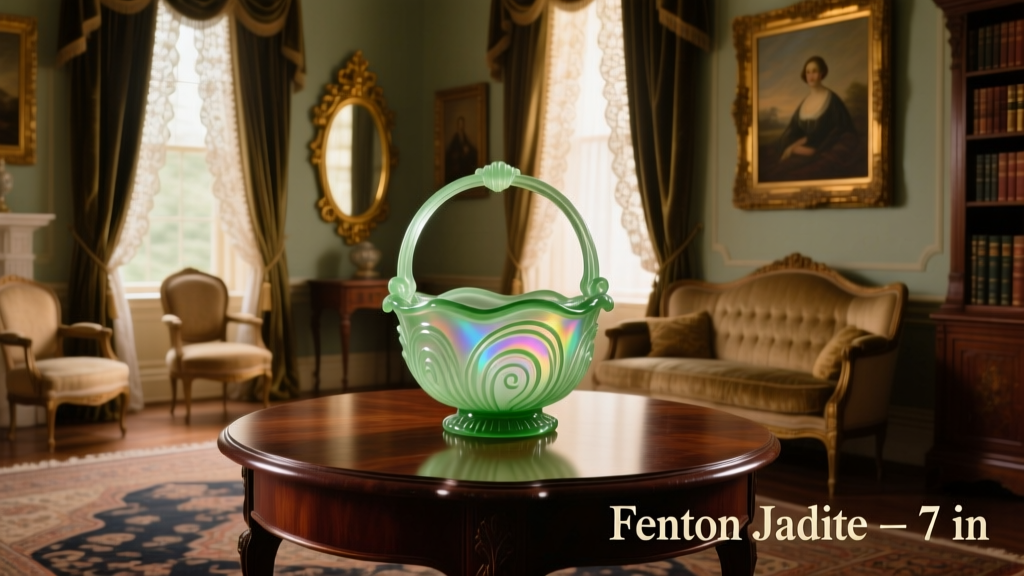
The Fenton Jadite Basket: A Collector’s Guide to the Iconic 7-Inch Round Model
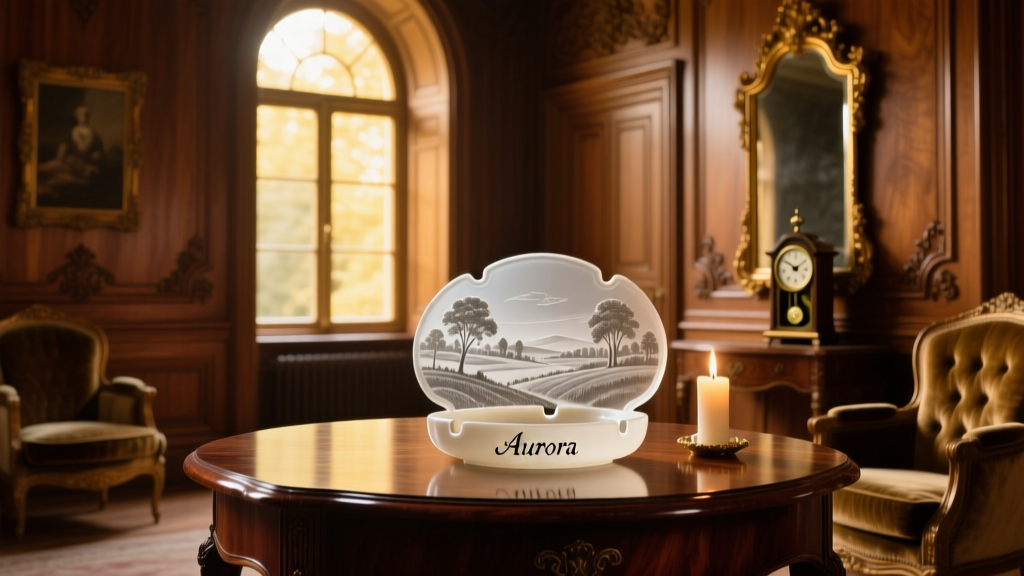
The Lithophane Ashtray: A Forgotten Intersection of Victorian Craftsmanship, Light Art, and Social Ritual