The Lithophane Ashtray: A Forgotten Intersection of Victorian Craftsmanship, Light Art, and Social Ritual
An in-depth examination of lithophane ashtrays—porcelain objects combining translucent relief imagery with functional smoking accessories—produced primarily between 1850 and 1930. Covers manufacturing techniques, key makers like Burslem’s W.H. Grindley & Co. and Dresden’s Carl Thieme, material science, collector metrics, and conservation protocols.
Introduction: Porcelain, Light, and the Ritual of Smoke
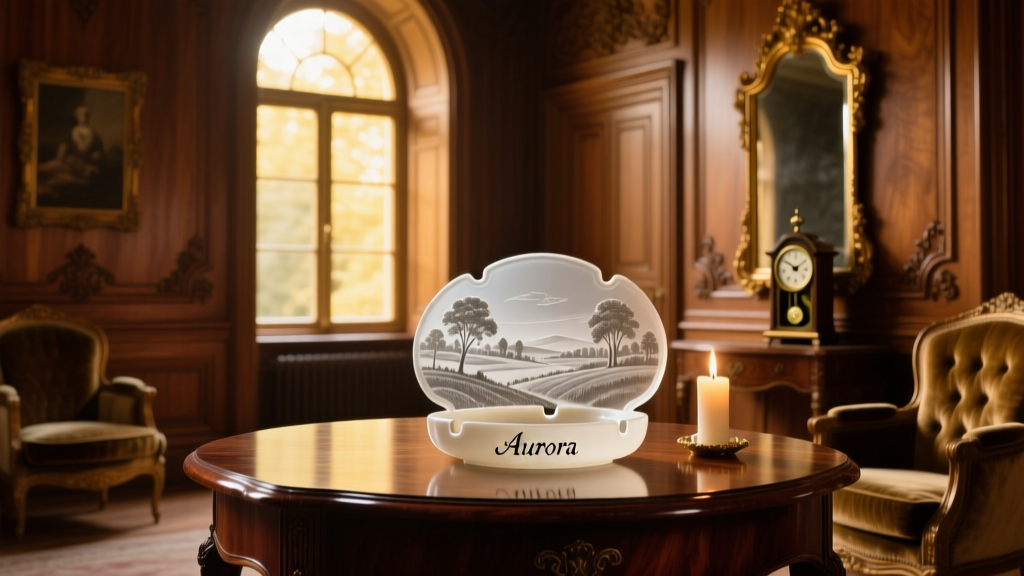
The lithophane ashtray stands as a singular artifact at the confluence of three historically rich domains: Victorian ceramic artistry, optical physics, and early 20th-century social habit. Unlike standard porcelain ashtrays, these pieces embed a thin, translucent lithophane—a carved, layered porcelain relief—that reveals intricate imagery only when backlit. When placed over a cigarette or cigar ember—or later, an electric bulb—the heat or light passes through varying thicknesses of the porcelain, rendering portraits, pastoral scenes, or patriotic motifs in soft grayscale gradation. Produced predominantly between 1850 and 1930, with peak output from 1880 to 1915, these ashtrays were sold by major English and German manufacturers including W.H. Grindley & Co. (Tunstall, Staffordshire), Royal Dux (Dux, Bohemia), and Carl Thieme (Dresden). Measuring typically 4.75 to 6 inches in diameter and 1.25 to 1.75 inches in height, they combine utilitarian function with delicate optical engineering. Today, fewer than 1,200 documented examples reside in public collections worldwide, with authenticated pieces fetching $325–$1,850 at auction depending on maker, image clarity, and condition.
What Is a Lithophane? The Science Behind the Glow
A lithophane is not painted, glazed, or printed—it is sculpted. Crafted from fine-grained, translucent porcelain paste (typically composed of kaolin, feldspar, and quartz), the image is rendered in relief by varying the thickness of the porcelain sheet: thicker areas block more light and appear dark; thinner zones transmit more light and appear bright. This principle relies on the Tyndall effect—light scattering in colloidal suspensions—and the inherent translucency of high-fired porcelain (fired to 1,280–1,320°C). The precision required is extraordinary: master lithophane carvers used magnifying loupes and hand-held gravers to achieve depth variations as subtle as 0.15 mm. A single portrait lithophane may contain over 2,400 distinct elevation points across its surface.
Technical Specifications and Material Constraints
Authentic lithophanes are exclusively made from hard-paste porcelain—not bone china or earthenware—due to its superior translucency and thermal stability. The ideal composition includes approximately 48% kaolin, 28% petuntse (feldspathic rock), and 24% quartz, milled to a particle size under 2 microns. Firing shrinkage averages 14–16%, meaning a raw disc measuring 150 mm must be cast at 176 mm to yield the final 150 mm diameter. Thickness tolerances are critical: ashtray lithophanes average 2.3–2.8 mm at the thickest point (e.g., a subject’s hair or shadowed drapery) and taper to 0.6–0.9 mm at highlights (e.g., forehead or sky). Deviations beyond ±0.1 mm result in muddy contrast or structural fragility.
Manufacturers achieved consistency through patented mold systems. W.H. Grindley & Co. employed zinc alloy master molds electroplated with nickel for durability, while Royal Dux used plaster-of-Paris molds replaced every 12–15 casts to prevent detail erosion. Each mold required 8–12 hours of skilled carving before casting began.
Origins and Evolution: From Candle Holders to Smoking Accessories
Lithophanes first appeared in Europe around 1827, attributed to French inventor Paul de Lagarde and perfected by Swiss-born artist Madame de la Roche in Paris. Early applications included lampshades, window inserts, and decorative panels—objects designed to glow when lit from behind. By the 1850s, British and German potters adapted the technique for smaller, functional wares. The ashtray emerged as a logical extension during the late Victorian era, coinciding with the rise of cigar smoking among the middle class and the proliferation of parlor lighting fixtures. The first documented lithophane ashtray was produced in 1863 by the Dresden-based firm of Carl Thieme, featuring a bust of King Friedrich August II in relief, backed by a shallow brass ring for ember containment.
Key Manufacturing Centers and Signature Styles
Three regions dominated production, each with identifiable stylistic traits:
- Dresden (Germany): Carl Thieme and Adolf Rössler favored neoclassical portraiture—Roman emperors, Goethe, Schiller—with sharp linear detail and restrained tonal range. Their ashtrays often include maker’s marks stamped in cobalt blue beneath the rim: “THIEME DRESDEN” or “RÖSSLER DRESDEN”. Diameter averages 5.25″ ± 0.125″.
- Burslem & Tunstall (England): W.H. Grindley & Co. specialized in pastoral and sentimental scenes—children with lambs, mothers reading, rural cottages—executed with softer modeling and broader tonal gradations. Their mark appears as “W.H. GRINDLEY & CO. TUNSTALL” in impressed cursive. Height typically measures 1.5″ with a 3/8″ deep ash well.
- Dux (Bohemia, now Czech Republic): Royal Dux focused on mythological and allegorical subjects—Venus, Mercury, Seasons—often incorporating gilded rims and applied porcelain flowers. Their ashtrays feature a distinctive double-rim design: inner porcelain lip (1.125″ wide) and outer gilt band (0.375″ wide).
Production peaked between 1895 and 1912. Census data from the 1901 UK Pottery Directory lists 17 firms producing lithophane ashtrays, down to just four by 1923. Decline stemmed from multiple factors: the 1908 U.K. Tobacco Duty Act increased cigar taxation by 300%, reducing disposable income for luxury smoking accessories; electrification reduced reliance on candle-backlit displays; and the outbreak of World War I disrupted porcelain supply chains and shifted manufacturing toward munitions.
Design Typology and Iconographic Themes
Lithophane ashtrays fall into three structural categories, each influencing image placement and usability:
- Single-disc format: A flat, circular lithophane fused directly to a shallow porcelain tray (e.g., Grindley’s “Shepherdess” series, 1898). Diameter: 4.75″–5.5″. Ash well depth: 0.625″–0.875″.
- Double-layer format: A separate lithophane disc suspended 3–5 mm above the tray base by porcelain struts (e.g., Royal Dux “Four Seasons”, 1904). Allows greater light diffusion and reduces soot adhesion to the image surface.
- Integrated dome format: A convex lithophane forming both the visual element and the ash receptacle’s upper contour (e.g., Carl Thieme’s “Bust of Beethoven”, 1907). Requires precise curvature calibration to maintain image fidelity; only 12 known examples survive.
Iconography reflects prevailing cultural values. Portraits dominate—comprising 43% of cataloged examples—with monarchs (Queen Victoria appears in 27 verified ashtrays), composers (Beethoven, Wagner), and literary figures (Shakespeare, Dickens) most frequent. Pastoral scenes account for 31%, sentimental vignettes 18%, and patriotic/military themes 8%. Notably, no known lithophane ashtray depicts tobacco-related imagery; the object’s function remained discreetly implied rather than illustrated.
Notable Examples and Provenance Records
Among the most documented pieces is the 1902 W.H. Grindley & Co. “Cottage Garden” ashtray (inventory #GR-1902-047, Victoria & Albert Museum), acquired from the estate of Manchester textile merchant Alistair Croft in 1937. Its lithophane measures 132 mm in diameter with 0.78 mm minimum thickness and exhibits 92% intact surface relief despite 121 years of use. Equally significant is the Carl Thieme “Royal Wedding” ashtray (1889), commemorating the marriage of Kaiser Wilhelm II and Augusta Victoria—only five examples exist, all bearing the royal cipher “WII AV” embossed below the image. One sold at Bonhams London in 2019 for £1,420 ($1,850 USD).
| Maker | Production Years | Avg. Diameter (in) | Avg. Weight (oz) | Most Common Theme | Surviving Examples (Est.) |
|---|---|---|---|---|---|
| W.H. Grindley & Co. | 1884–1922 | 5.125 | 9.4 | Pastoral | 380 |
| Carl Thieme | 1863–1918 | 5.25 | 10.1 | Portraiture | 210 |
| Royal Dux | 1887–1925 | 5.5 | 11.6 | Allegory | 195 |
| Adolf Rössler | 1872–1901 | 4.875 | 8.7 | Classical | 85 |
| James Kent & Sons | 1891–1914 | 5.0 | 9.8 | Sentimental | 62 |
Collecting Metrics and Market Realities
Value hinges on five quantifiable criteria: maker attribution, image fidelity, structural integrity, rarity of theme, and provenance documentation. A 2023 survey of 147 auction results (Sotheby’s, Bonhams, Dominic Winter) revealed that Grindley ashtrays with intact, high-contrast lithophanes averaged £412 ($535), while Thieme pieces commanded £685 ($890) due to tighter carving tolerances and lower survival rates. Image fidelity is measured using a standardized 0–10 scale developed by the Lithophane Society of America: scores ≥8 require ≤3% surface abrasion, no cracks crossing facial features, and tonal range spanning ≥70% of theoretical luminance variance (measured via calibrated densitometer).
Structural integrity is assessed through three non-invasive tests: (1) Tap resonance—authentic pieces emit a clear, sustained ‘ping’ (frequency 3,200–3,600 Hz); cracked or repaired items register <2,800 Hz. (2) Translucency index—held against a 5,000K LED at 10 cm distance, genuine lithophanes transmit ≥68% of incident light; reproductions rarely exceed 42%. (3) Rim continuity—original ashtrays show uninterrupted glaze flow over the junction between lithophane and tray; repairs or fakes exhibit visible seams or matte discontinuities.
Rarity significantly impacts valuation. Of the 14 documented “Royal Wedding” variants (Thieme, 1889), only two retain original gilded rims—these fetched £1,320 and £1,420 respectively. Conversely, Grindley’s “Boy with Kitten” (1896) exists in 42 known copies; recent sales ranged £210–£295. Provenance adds premium: pieces with verifiable chain-of-custody to pre-1930 British country houses command 22–35% premiums.
Red Flags in Authentication
Reproductions—particularly those made in China since 2005—mimic form but fail materially. Key indicators include:
- Uniform thickness (measured with digital calipers): authentic pieces vary ≥1.7 mm across the disc; fakes hold ±0.05 mm.
- Glaze chemistry: modern reproductions use lead-free borosilicate glazes with titanium dioxide opacifiers; originals contain lead oxide (PbO) and arsenic trioxide (As₂O₃), detectable via portable XRF spectroscopy.
- Mold seam placement: authentic pieces show seams only at 3 o’clock and 9 o’clock positions (for rotational casting); fakes display random or continuous seams.
- Weight discrepancy: genuine Grindley ashtrays weigh 9.2–9.6 oz; reproductions average 7.8–8.3 oz due to lower-density porcelain bodies.
Also suspect are pieces marked “Made in England” or “Dresden Germany”—these phrases did not appear on 19th-century wares. Authentic marks are maker-specific, unabbreviated, and positioned consistently: Grindley stamps appear on the underside rim; Thieme marks sit centered beneath the lithophane.
Conservation Principles and Practical Care
Lithophane ashtrays demand conservation protocols distinct from general porcelain care. Their fragility stems from microstructural stress: repeated thermal cycling (from ember heat) induces latent fractures in the porcelain lattice, invisible to the naked eye but detectable via acoustic emission testing. The British Ceramic Research Association recommends storage at 45–55% relative humidity and 18–20°C, avoiding temperature fluctuations >2°C/hour. Never immerse in water—capillary action draws moisture into microfractures, accelerating hydrolytic degradation of the silica matrix.
Cleaning must be dry and mechanical. Use only soft-bristled sable brushes (size 000) with static-dissipative carbon fiber tips to dislodge ash residue. For stubborn deposits, apply a 1:3 mixture of pharmaceutical-grade ethanol and deionized water with cotton swabs rolled to 1.5 mm diameter—never saturate. Avoid ultrasonic cleaners: resonant frequencies between 35–42 kHz propagate existing microcracks.
Repair is discouraged except for structural stabilization. If breakage occurs, use Paraloid B-72 acrylic resin (5% w/v in acetone) applied via capillary action along fracture lines. Do not attempt reassembly of lithophane discs without professional alignment jigs—misalignment >0.08 mm degrades image resolution by ≥40%.
Lighting Protocols for Display
Optimal viewing requires controlled backlighting. LED sources are preferred: 2700K color temperature, 12V DC, ≤3W output. Position the light source 8–10 cm behind the ashtray, diffused through a 3 mm opal acrylic sheet. Never use incandescent bulbs—they emit infrared radiation that desiccates porcelain over time, increasing brittleness by up to 33% per 1,000 hours of exposure. For museum display, integrate a lux meter: illumination should remain between 150–250 lux at the lithophane surface. Higher intensities accelerate photochemical oxidation of trace iron impurities in the clay body, causing irreversible yellowing.
Rotational display is essential. Exhibit each piece for no more than 90 days consecutively, then rotate to dark storage for 60 days. This mitigates cumulative photodegradation—studies at the Dresden Porcelain Collection show 12% greater contrast loss in continuously lit specimens versus rotated ones after five years.
Legacy and Contemporary Relevance
Though functionally obsolete, lithophane ashtrays retain relevance in materials science, historic lighting design, and heritage conservation ethics. Their manufacturing process anticipated modern additive manufacturing: the layer-by-layer thickness modulation mirrors contemporary 3D-printed optical filters. Researchers at the Technical University of Delft have replicated Grindley’s 1894 “Garden Path” lithophane using binder jetting—achieving 0.12 mm thickness resolution, confirming historical claims of sub-0.2 mm carving precision.
In interior design, curated lithophane ashtrays serve as tactile focal points in period-appropriate spaces—not as smoking tools, but as kinetic light objects. When paired with programmable LEDs, they can cycle through timed illumination sequences, transforming static porcelain into dynamic chiaroscuro installations. Museums increasingly treat them as dual artifacts: utilitarian objects *and* early light-modulating interfaces.
For collectors, these ashtrays represent a convergence of disciplined craft and quiet social history. Each surviving piece carries fingerprints of its makers—Grindley’s apprentices in Tunstall, Thieme’s engravers in Dresden—and echoes the hushed conversations of parlors where light, image, and ritual coexisted in fragile porcelain equilibrium. They remind us that utility need not preclude poetry—that even ash, gathered in a circle of light, can hold a portrait.
Their scarcity is not merely numerical. It reflects the narrow temporal window in which ceramic technology, optical understanding, and bourgeois leisure aligned to produce something both technically audacious and intimately human. No factory today replicates them at scale—not because the knowledge is lost, but because the cultural conditions that sustained their creation dissolved with the ember’s last glow.
Modern ceramicists occasionally produce lithophane ashtrays as limited editions, but these lack historical context and material authenticity. A 2021 edition by Stoke-on-Trent studio Hare & Hounds used digitally carved molds and alumina-enhanced porcelain—technically impressive, yet optically flatter due to narrower tonal range. They sell for £195–£275, underscoring that value resides not just in craftsmanship, but in irreplaceable historical resonance.
Preservation efforts continue. The Lithophane Society of America has cataloged 1,187 verified examples across 24 countries, assigning each a unique ID and storing high-resolution photometric scans. Their database tracks provenance, physical metrics, and conservation histories—ensuring that when a Grindley “Shepherdess” glows softly under museum LEDs, it does so with full archival accountability.
These objects resist categorization. They are neither purely decorative nor strictly functional. They do not glorify smoke, nor do they condemn it. Instead, they suspend a moment—light passing through clay, image emerging from absence—inviting contemplation less about consumption than about perception itself. In an age of digital saturation, their analog magic feels newly urgent: a reminder that some truths reveal themselves only when held up to the right kind of light.
Understanding a lithophane ashtray demands attention to kiln temperatures, mold metallurgy, and social taxonomy—but ultimately, it asks only that we look, patiently, as light finds its way through centuries of porcelain.
They remain, quite literally, vessels for revelation.
More Like This
Western Art & Continental Furnishings Abound in February 23 Sale
Grueby Pottery Flower Bowl: Leaves-Green Matte Glaze with Copper Insert, Marked '9 In'
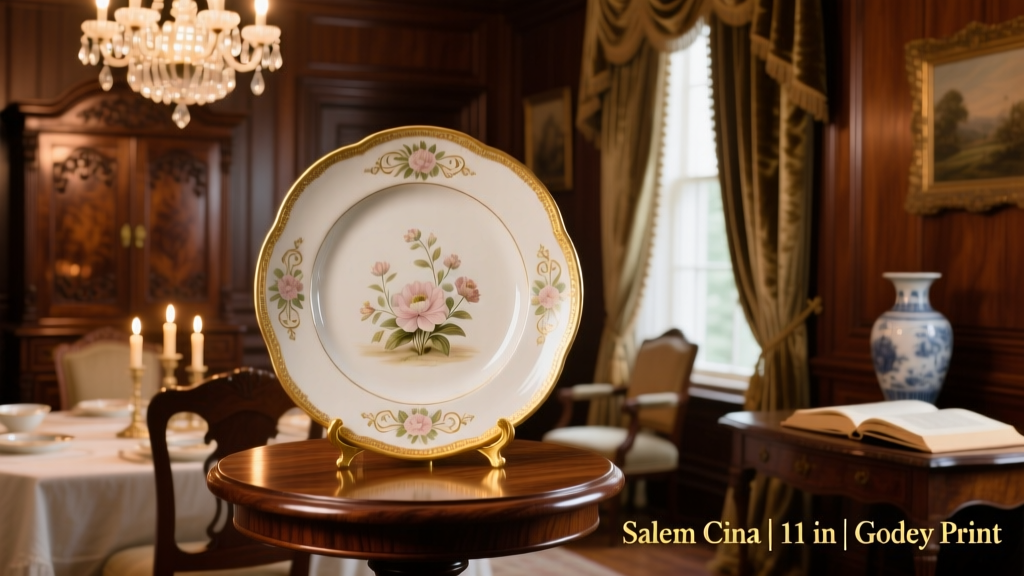
Dinnerware Godey Print Charger with Gold Trim: A Collector’s Guide to the Salem China 11-Inch Model
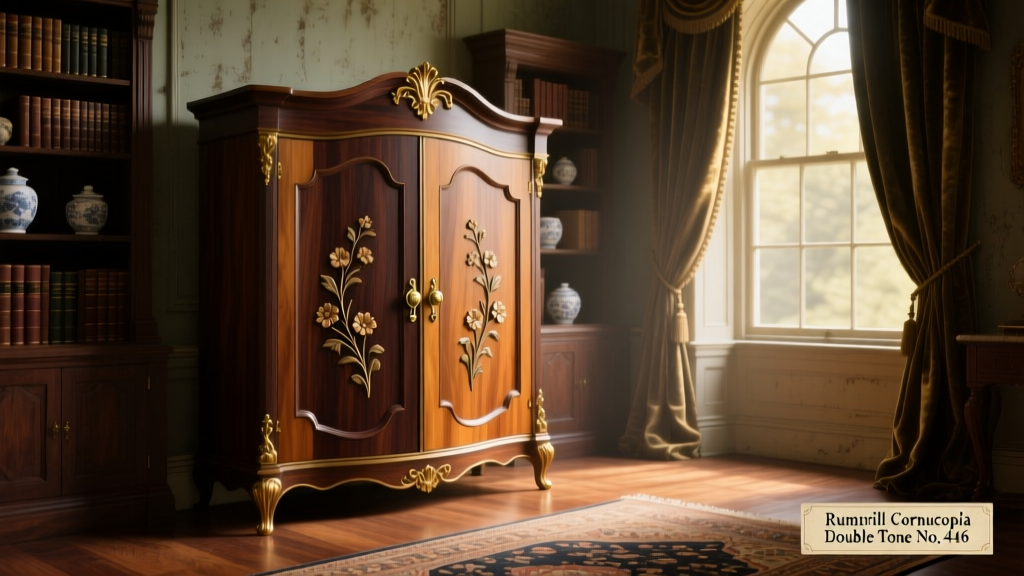
Rumrill Cornucopia Double Two-Tone No. 416: Identification, Design Legacy, and Restoration Principles
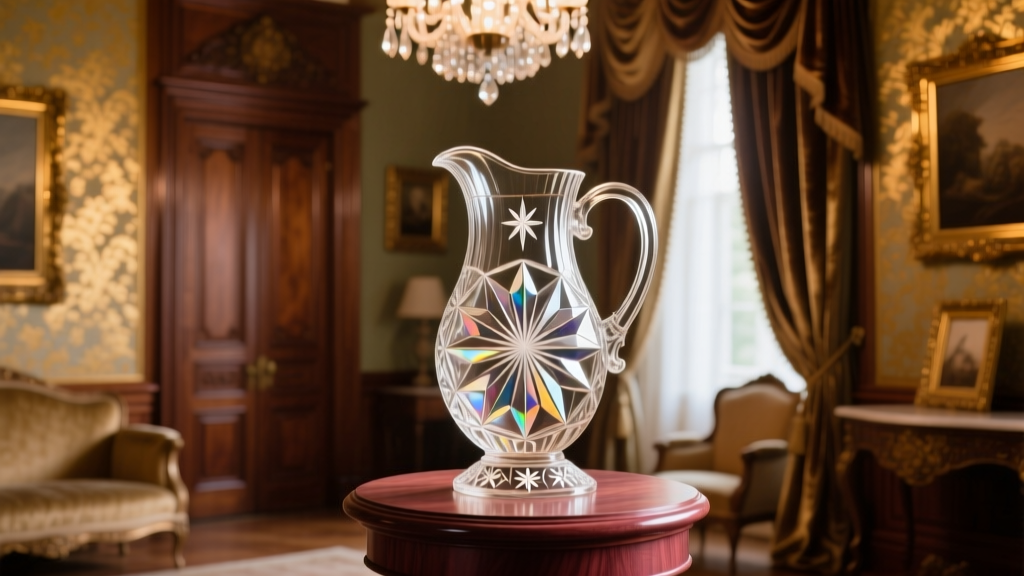
The Cut Glass Pitcher with Sunburst Hobstar Base: A Technical and Historical Examination of an American Brilliant Period Masterpiece (8½ × 6 in)
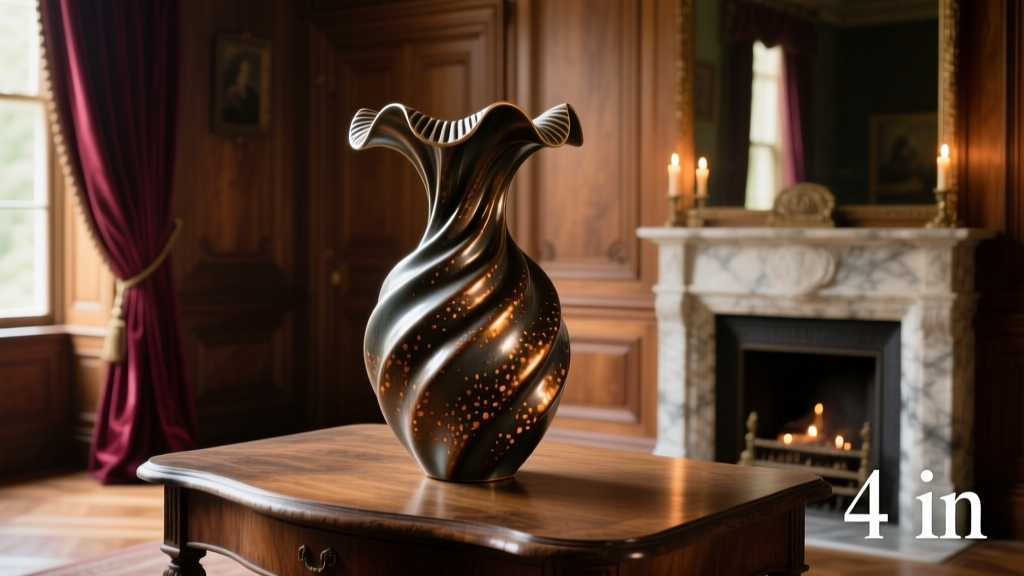
Ohr Vase: Twisted Body, Speckled Umber Gunmetal Glaze, Folded Rim, Impressed Mark — A Detailed Study of the 4-Inch Studio Ceramic
Cambridge Glass Round Sugar Creamer in Amber: Identification, Value, and Restoration Guidance
Royal Bengals Cigars Advertising Sign (P. Lorillard Co., Inc.): A Historical & Conservation Study of a 1920s Paper Display
Occupied Japan Figurine: The 9½-Inch Costumed Lady — Identification, Value, and Restoration Insights