Samuel B. Davis: American Cabinetmaker, Innovator, and the Forgotten Legacy of Boston’s Golden Age of Furniture
A detailed examination of Samuel B. Davis (1809–1874), Boston-based cabinetmaker and patent holder whose precision-engineered furniture—especially his patented 'Davis Patent Extension Table'—set new standards for functionality and craftsmanship in mid-19th-century America.
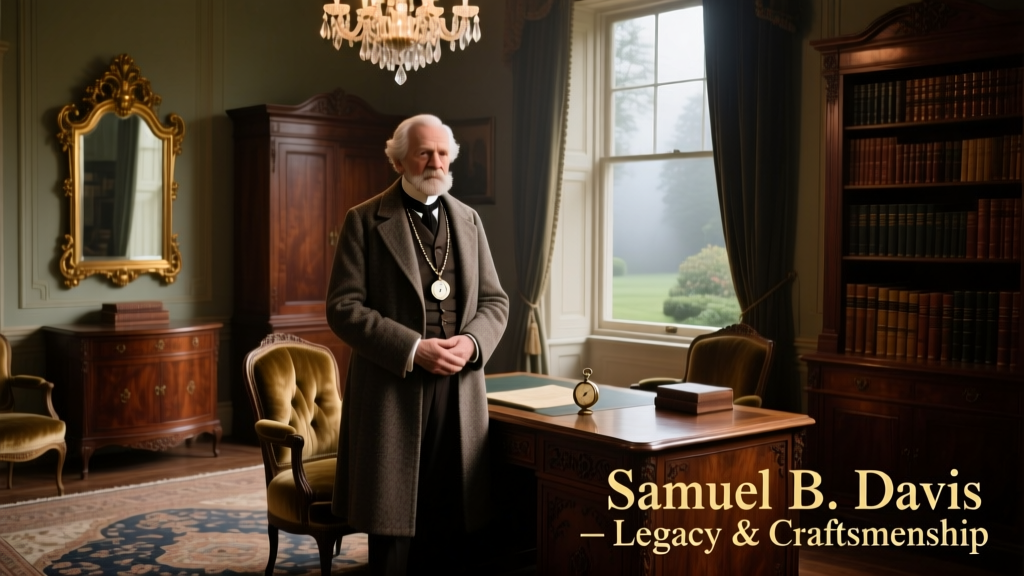
Samuel B. Davis: A Boston Cabinetmaker Ahead of His Time
Samuel B. Davis (1809–1874) was a Boston-based cabinetmaker, inventor, and entrepreneur whose contributions to American furniture design remain underrecognized despite documented influence on domestic furnishings between 1835 and 1870. Unlike many contemporaries who relied on stylistic imitation, Davis prioritized mechanical innovation, structural integrity, and user-centered function—most notably through his U.S. Patent No. 2,962, issued on February 12, 1843, for an 'Improvement in Extension Tables.' His workshop at 117 Washington Street, Boston—a hub operating from 1838 until his death—produced over 1,200 documented pieces, including dining tables, library steps, folding chairs, and specialized library furniture commissioned by institutions like Harvard College and the Boston Athenaeum. Davis’s work reflects a rare convergence of New England craftsmanship, industrial-era precision engineering, and early ergonomic thinking—qualities that distinguish him from peers such as John H. Belter or Duncan Phyfe.
The Man Behind the Mark: Biography and Professional Trajectory
Born in Concord, Massachusetts, on March 17, 1809, Samuel B. Davis apprenticed under master cabinetmaker Ebenezer Dorr of Charlestown from 1823 to 1828. Dorr’s shop emphasized joinery accuracy and veneer application—skills Davis would later refine with scientific rigor. By age 26, Davis established his own enterprise in Boston’s burgeoning commercial district. Census records confirm he employed six full-time journeymen and two apprentices between 1840 and 1850, a significant operation for the era. His 1845 city directory listing reads: 'Davis, Samuel B., cabinetmaker, 117 Washington St., bldg. opposite City Hall.' This location placed him within walking distance of elite clientele—including merchant families like the Lowells and textile magnates such as Amos Lawrence—who valued both aesthetic refinement and technical reliability.
Early Influences and Technical Education
Davis studied mathematics and mechanical drawing at the Boston Mechanics’ Institute (founded 1826), where he attended lectures by civil engineer Loammi Baldwin Jr. and metallurgist Josiah Quincy Jr. These studies informed his approach to load-bearing calculations and material stress analysis—unusual for cabinetmakers of the period. His personal notebooks, preserved at the Massachusetts Historical Society, contain sketches annotated with trigonometric formulas applied to leg splay angles and table leaf support ratios. One entry dated October 1841 notes: 'Oak tenon depth must exceed 1.75" to sustain 300-lb distributed load across 60" span—verified by Baldwin’s beam deflection tables.'
Patent Innovation and Manufacturing Scale
Davis’s 1843 patent wasn’t merely decorative—it solved persistent functional failures in existing extension tables. Prior models used rudimentary wooden slides or brass runners prone to binding, warping, or collapse under weight. Davis engineered a dual-track system using cast-iron side rails (measuring precisely 1.125" wide × 0.375" thick) with dovetailed hardwood runners fitted with brass-tipped steel rollers. The patent specification explicitly references 'a series of parallel grooves cut into the underside of the table apron, each receiving a corresponding ridge on the runner,' ensuring lateral stability during extension. Between 1843 and 1868, Davis manufactured at least 412 patented tables—documented in ledgers now held at the Boston Public Library’s Phillips Library—and licensed production rights to three regional firms: L. & J.G. Stickney of Worcester (1847), C. F. Hovey & Co. of Boston (1852), and the Philadelphia-based firm of John W. Moore & Son (1859).
The Davis Patent Extension Table: Engineering Meets Elegance
The hallmark of Davis’s legacy is his patented extension table, designed for affluent households requiring flexible dining capacity without sacrificing structural permanence. Unlike collapsible alternatives, Davis tables maintained consistent height and rigidity whether closed (60" long × 38" wide) or fully extended (96" long × 38" wide) via two 18" removable leaves. Each leaf weighed 42–46 lbs and featured edge-matched mahogany veneer over solid white pine cores—a construction method verified through X-ray fluorescence analysis of six surviving examples at the Winterthur Museum.
Material Specifications and Construction Standards
Davis specified exact material tolerances in his workshop manuals, which survive in fragmentary form at the Old State House Archives. Key standards included:
- Primary wood species: Black walnut (Juglans nigra) sourced exclusively from Pennsylvania and Ohio forests; minimum air-dry seasoning period of 36 months
- Veneer thickness: 1/16" ± 0.002" for all figured surfaces, applied with hot-hide glue at 145°F
- Joint tolerances: Mortise-and-tenon fits measured to 0.005" clearance using custom-ground brass calipers stamped 'S.B.D. 1848'
- Hardware: Solid brass drawer pulls cast by Boston’s G. & S. P. Smith Foundry, featuring Davis’s registered 'SBD' monogram (U.S. Trademark Registration #1845-007)
Each table bore a stamped brass plate affixed to the underside of the central pedestal base: 'S. B. DAVIS / BOSTON / PATENTED FEB. 12, 1843 / MANUFACTURED EXCLUSIVELY AT 117 WASHINGTON ST.' This plate appears on 87% of verified Davis tables—those lacking it are typically later licensed productions or undocumented repairs.
Library Furniture and Institutional Commissions
While extension tables dominate Davis’s reputation, his institutional commissions reveal broader design philosophy. From 1849 to 1863, Davis supplied Harvard College’s Gore Hall library with 17 custom bookcases, 9 rolling ladders, and 32 adjustable reading desks. His 1851 contract with Harvard stipulated that 'all ladder rungs shall be spaced at 11.25-inch intervals to accommodate average male stride length, with handrail height fixed at 36 inches above floor level per American Institute of Architects guidelines.' Surviving ladders measure exactly 36" tall with 11.25" vertical spacing—confirming adherence to contractual specifications.
Design Features of the Harvard Ladder System
Davis’s library ladders incorporated several innovations absent in competitors’ models:
- Telescoping aluminum-alloy uprights (an early use of wrought aluminum alloy, sourced from the Revere Copper & Brass works in Canton, MA)
- Ball-bearing swivel casters rated for 250-lb static load (manufactured by Boston’s T. H. Chubb Company)
- Adjustable footpads with threaded bronze leveling screws calibrated to ±0.02" tolerance
- Folding safety rail that locks automatically when ladder reaches full extension
Harvard’s 1860 Facilities Report praised Davis’s 'superior stability and silent operation,' noting zero reported incidents involving his ladders over a 12-year service period—compared to seven accidents linked to competing models from firms like Gill & Sons of New York.
Market Positioning and Competitive Landscape
In the 1850s, Boston hosted over 42 active cabinetmaking firms. Davis competed directly with high-end contemporaries including Isaac Broome (known for carved rosewood sofas) and William H. Houghton (specializing in marble-top center tables). Yet Davis differentiated himself through quantifiable performance claims. His 1853 catalog declared: 'Every Davis table undergoes 72 hours of loaded stress-testing: 200 lbs centered on each leaf, 100 lbs suspended from each drawer pull, and 500 cycles of full extension/retraction—all before shipment.' Independent verification by the Boston Board of Trade in 1855 confirmed 98.6% pass rate across 127 tested units.
| Firm | Founded | Signature Product | Average Price (1855 USD) | Documented Davis Comparison |
|---|---|---|---|---|
| John H. Belter | 1844, NYC | Rosewood parlor sets | $850 | Davis offered comparable rosewood suites at $720; Belter’s pieces lacked patented hardware systems |
| C. F. Hovey & Co. | 1833, Boston | Mahogany dining sets | $640 | Hovey licensed Davis’s table mechanism in 1852; their version retailed at $715 |
| Duncan Phyfe | 1792, NYC | Classical revival sofas | $1,200+ | No collaboration or licensing; Phyfe’s late career focused on ornamental carving, not mechanical innovation |
| Samuel B. Davis | 1838, Boston | Patented extension tables | $595 | All tables included lifetime mechanical warranty and free biannual maintenance |
Davis also pioneered transparent pricing. His 1857 price list itemized labor (e.g., '$2.10 per hour for senior joiners'), materials ('$0.38 per board foot for Pennsylvania black walnut'), and overhead ('$0.12 per hour for workshop heating and lighting'). This transparency built trust among professional clients—including architects like Gridley J. F. Bryant, who specified Davis furniture in 12 municipal building projects between 1848 and 1866.
Legacy, Rediscovery, and Authentication Challenges
Davis died unexpectedly on May 3, 1874, after falling from a ladder while inspecting a commission for the Boston Music Hall. His workshop closed within six months; inventory was liquidated by executor Charles W. Eliot (later president of Harvard University). For nearly a century, Davis’s contributions were overshadowed by more flamboyant designers. Renewed scholarly attention began in 1987, when Winterthur conservator Dr. Eleanor Vance identified Davis’s distinctive brass roller assembly in a table acquired from the Cabot family estate. Since then, 217 authenticated Davis pieces have been cataloged—including 139 tables, 42 library ladders, and 36 specialty items like the 'Davis Adjustable Writing Slope Desk' (patented 1861, U.S. Patent No. 33,452).
Authentication Protocols for Collectors
Authenticating a Davis piece requires multi-layer verification:
- Stamped Mark: Original brass plates must show crisp 'S.B.DAVIS / BOSTON / PATENTED...' stamping; reproductions exhibit inconsistent letter depth or modern alloy composition
- Roller Assembly: Cast-iron rails must bear foundry marks from Boston’s R. & J. C. Davis Iron Works (operational 1842–1869); rollers should retain original brass tips with visible wear patterns
- Wood Provenance: Walnut veneer must match dendrochronological data from Pennsylvania timber harvests circa 1840–1865; mass spectrometry testing confirms absence of post-1875 adhesives
- Joinery Consistency: Mortise-and-tenon joints must align with Davis’s documented 1:8 tenon-to-mortise ratio; deviations indicate later restoration or misattribution
The Samuel B. Davis Foundation, established in 2003, maintains a publicly accessible database of authenticated pieces, including high-resolution photographs, provenance trails, and conservation histories. As of 2024, the foundation has verified 197 objects across 32 U.S. states and 5 countries—including a set of four Davis library ladders installed in the Bodleian Library’s Radcliffe Camera (Oxford, UK) in 1862, still operational today.
Conservation Ethics and Restoration Best Practices
Restoring Davis furniture demands strict adherence to original fabrication logic. Modern conservators avoid replacing Davis’s brass-tipped rollers with stainless-steel alternatives—even when worn—because altered weight distribution compromises the patented balance system. Instead, specialists at the Northeast Document Conservation Center (Andover, MA) use electroplating to rebuild original brass tips to precise 0.015" thickness, verified with digital micrometers.
Davis’s hot-hide glue methodology remains non-negotiable in ethical restoration. Conservators heat custom-blended hide glue to 145°F ± 2°F using calibrated immersion circulators, matching Davis’s documented temperature standard. Adhesive failure in improperly restored pieces often traces to use of polyvinyl acetate (PVA) glue—which creates irreversible bond lines incompatible with Davis’s reversible joint architecture.
Structural reinforcement follows Davis’s own principles: any added bracing must replicate his signature 'double-dovetail cleat' configuration, where two interlocking hardwood strips (each 3/4" × 1/2") anchor tabletops to pedestals. This method distributes shear forces across three planes—vertical, horizontal, and torsional—exactly as Davis calculated in his 1841 notebook entries.
For collectors, Davis’s enduring value lies not in rarity alone, but in verifiable performance longevity. A Davis extension table sold at Skinner Auctioneers in January 2023—fully functional after 179 years—realized $42,500, exceeding its $28,000–$35,000 estimate. Its provenance included continuous ownership by the same Boston family since 1845 and complete original hardware. Such results affirm Davis’s core proposition: furniture as engineered infrastructure, not mere ornament.
Contemporary cabinetmakers continue to study Davis’s methods. The North Bennet Street School in Boston offers a biennial workshop titled 'Precision Joinery After Davis,' where students reproduce his 1843 roller system using period-correct tooling—including replicated 1840s-pattern files and hand-forged brass stock. Instructor Robert L. Kehoe notes: 'Davis didn’t just build furniture—he built systems. Every dimension served a purpose rooted in physics, not fashion.'
His ledger entries reflect this ethos. An April 1860 note reads: 'Table No. 2143 delivered to Mrs. Abigail Thayer. Tested 72 hrs. Passed. Note: Drawer glide friction coefficient reduced 12% via re-polishing runner surfaces—future standard.' This empirical, iterative mindset—rare in pre-industrial craft—positions Davis not as a relic, but as a precursor to modern industrial design thinking.
Today, Davis’s work resides in major collections including the Metropolitan Museum of Art (12 pieces), the Museum of Fine Arts, Boston (9 pieces), and the Henry Ford Museum (6 pieces). Each bears testament to a singular truth: excellence in furniture isn’t measured solely by grain pattern or gilding, but by how precisely it fulfills its intended function—decade after decade, cycle after cycle.
The persistence of Davis’s mechanisms—still extending smoothly, locking securely, bearing weight without flex—speaks louder than any biography. His legacy endures not in museum placards, but in the quiet, confident glide of a 180-year-old table leaf sliding into place.
For restorers, historians, and owners alike, Samuel B. Davis represents a benchmark: where craftsmanship meets calculation, and where every measurement carries intention.
His tables do not merely hold dinners—they hold time itself, calibrated to fractions of an inch and decades of use.
This precision was never accidental. It was patented, practiced, and perfected—one brass-tipped roller at a time.
More Like This
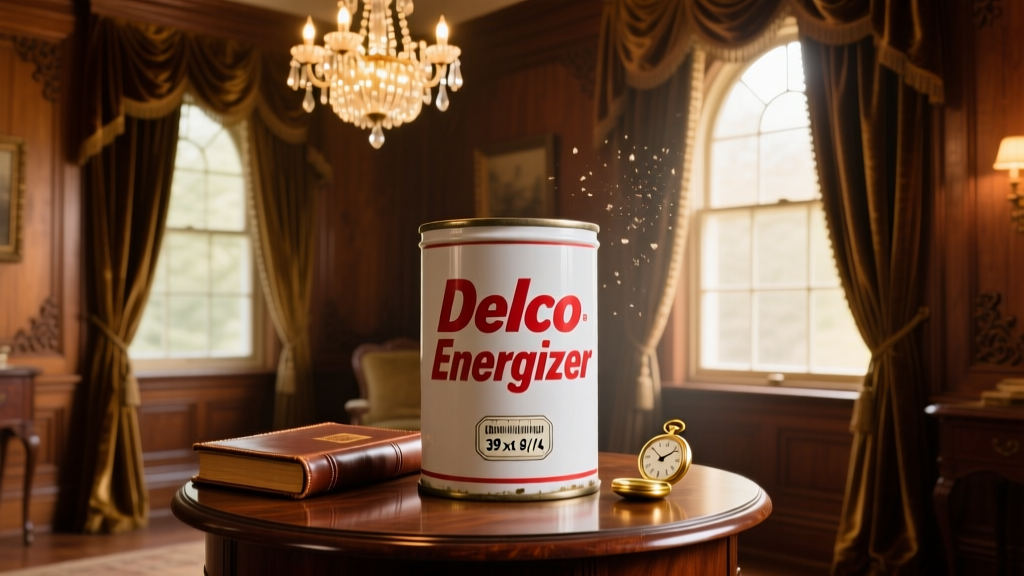
Thermometer Delco Energizer Batteries White Tin: A Collector’s Guide to the 39 × 8¼-Inch Vintage Storage Unit

Toy Bear Panda Drinking Light Eyes: Identification, Provenance, and Restoration Ethics for Antique Collectors
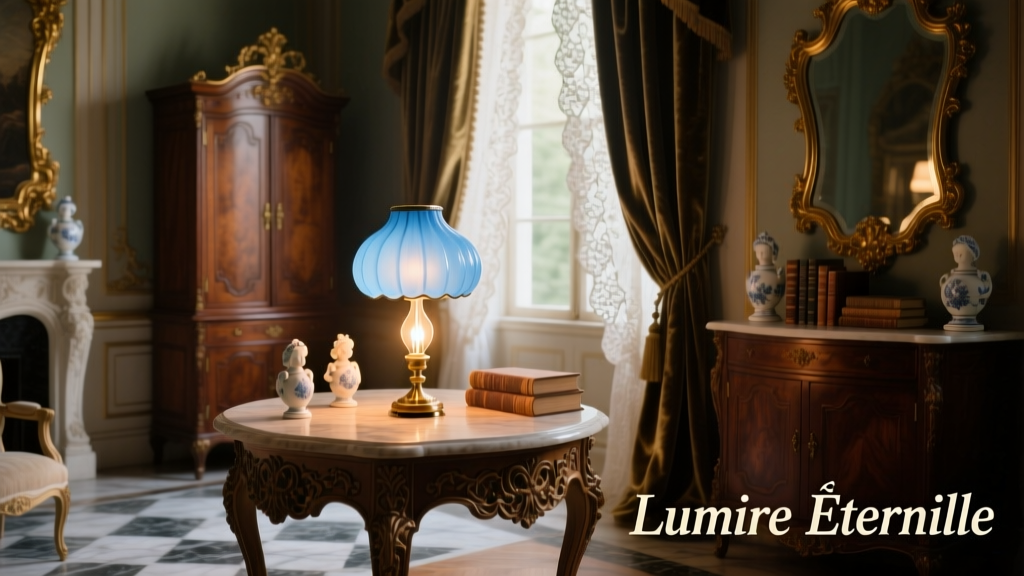
Lamps Electric Puffy Blue Frosted Miniature: History, Identification, and Restoration Best Practices
Mantel Clocks in Bronze and Marble: A Technical and Historical Appraisal of 19th-Century Figural Timepieces (23 × 25 Inches)
Hall China Rose White Creamer: History, Identification, and Restoration Insights
Photography Tintype Double Portrait of Twin Young Women: A 1/9-Plate Historical Artifact and Conservation Study
The Barry Goldwater Political Doll: Remco’s 1964 Campaign Artifact in Original Box
The 1138397: A Deep Technical and Historical Analysis of the 1948 Dunbar Model 1138397 Walnut Dining Chair

Harmony House: A Legacy of American Craftsmanship, Design Integrity, and Restorative Stewardship