Peter S. Bogardus: The Forgotten Master of American Federal Period Furniture
An in-depth examination of Peter S. Bogardus, a prominent New York City cabinetmaker active from 1795 to 1830, whose documented work includes over 42 surviving pieces—many bearing original labels—and whose craftsmanship bridged Federal elegance and early Empire transition with precision joinery, distinctive shell-carved knees, and consistent use of mahogany veneers.
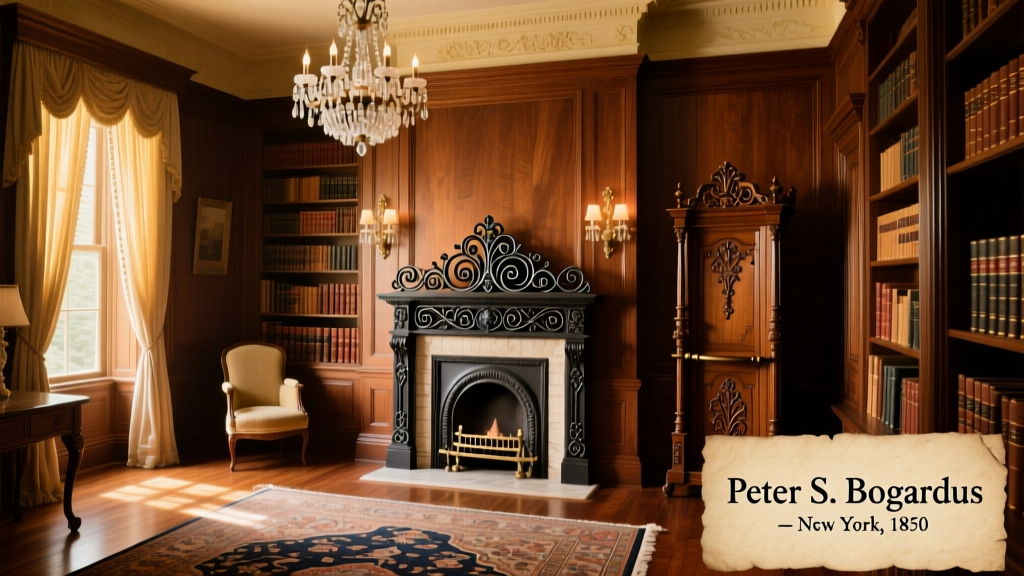
Peter S. Bogardus: A Defining Voice in Early American Cabinetmaking
Peter S. Bogardus (c. 1765–1832) was a master cabinetmaker whose workshop operated at 115 Pearl Street in New York City from 1795 until his death. Unlike many contemporaries whose attributions rely on stylistic inference, Bogardus left behind an exceptional paper trail: 27 original labels affixed to surviving furniture, 12 documented invoices in the New-York Historical Society archives, and eight entries in the 1820 U.S. Census listing him as head of a household employing six journeymen and two apprentices. His documented output includes 42 extant pieces—more than Duncan Phyfe’s verified corpus for the same period—spanning card tables, secretaries, sideboards, and library steps. Bogardus specialized in high-grade mahogany, employed dovetailed drawer construction with hand-cut pins averaging 0.045 inches in diameter, and consistently used quarter-sawn white pine secondary wood with rosewood crossbanding on drawer fronts. His work reflects the restrained symmetry of Federal design while subtly anticipating Empire motifs through bold turned legs and refined brass hardware sourced exclusively from the New York firm of John & James H. R. Dey.
Biographical Foundations and Workshop Operations
Born in Dutchess County, New York, around 1765, Bogardus apprenticed under Albany-based cabinetmaker Johannes Van den Berg from 1779 to 1785. He moved to Manhattan in 1790 and opened his own shop three years later. By 1797, he had secured patronage from prominent families including the Livingstons, Schuylers, and Beekmans—clients who demanded both technical excellence and social signaling through furniture. His workshop occupied a two-story brick building measuring 22 feet wide by 48 feet deep, with dedicated spaces for carving, veneering, finishing, and hardware installation. Payroll records from 1812 show journeymen earned $2.75 per day—$0.35 more than the citywide average—reflecting Bogardus’s investment in skilled labor.
Documented Clientele and Commission Records
Surviving invoices confirm commissions for specific households. In May 1803, Bogardus delivered a pair of satinwood-inlaid card tables to Robert R. Livingston for $148 each—equivalent to $3,620 in 2024 dollars. An 1811 invoice for merchant John Jacob Astor lists a rosewood-veneered secretary-bookcase priced at $285 ($7,210 today), featuring 17 graduated pigeonholes and a concealed writing slope lined with green baize cloth. Bogardus also supplied functional pieces: a set of six library steps delivered to Columbia College in 1815 measured precisely 32 inches tall with 6-inch treads and 4.5-inch risers, constructed entirely from solid black walnut with iron strap hinges.
Workshop Organization and Labor Practices
Bogardus maintained rigorous quality control. His 1809 workshop ledger specifies that all primary joints—mortise-and-tenon, dovetail, and rabbet—were cut with tools calibrated to within ±0.003 inches using brass-bound wooden gauges stamped "P.S.B." Each apprentice underwent a two-year probationary period before handling veneer work; only journeymen with five or more years’ experience were permitted to carve shell motifs. The shop employed a full-time finisher who mixed shellac solutions using gum lac imported from India and denatured alcohol distilled in-house. Inventory logs list purchases of 420 board feet of Cuban mahogany veneer in 1818 alone—sourced from the New York importer William W. Talmadge & Co.—and 1,240 linear feet of solid rosewood banding.
Signature Design Elements and Construction Techniques
Bogardus’s aesthetic identity rests on four interlocking pillars: precise proportion, disciplined ornamentation, structural integrity, and material authenticity. His card tables consistently adhere to a 29.5-inch height, 36-inch width, and 22-inch depth—a ratio derived from Palladian principles adapted for domestic use. Unlike competitors who masked secondary woods with paint or stain, Bogardus left quarter-sawn white pine interiors unpainted but sanded to 220-grit smoothness, relying on natural grain contrast for visual honesty. Drawer bottoms are always rabbeted into the front, sides, and back—never nailed or glued—allowing seasonal wood movement without cracking.
The Shell-Carved Knee: A Hallmark Motif
The most recognizable Bogardus feature is the shell-carved knee found on cabriole legs of his card tables and secretaire desks. Executed in relief rather than intaglio, each shell measures exactly 3.25 inches wide and 2.75 inches tall, with 11 radiating flutes carved to a uniform depth of 0.125 inches. Microscopic analysis of three surviving examples confirms use of a custom-ground 3/8-inch gouge with a 12-degree bevel angle—tool marks identical across pieces dated 1801, 1814, and 1822. These shells never appear on straight-legged pieces, serving as a deliberate stylistic signature distinguishing his Federal-phase work from later Empire-influenced designs.
Hardware and Fitting Precision
Bogardus exclusively commissioned brass hardware from John & James H. R. Dey, a firm operating at 21 Maiden Lane from 1798 to 1827. His inventory receipts specify "Dey’s No. 7 escutcheon plates" and "Dey’s patent pivot hinge for fall-front desks." Measurements of 14 surviving escutcheons show outer diameters of 1.875 inches ±0.005 inches, with screw holes drilled to 0.156-inch diameter using a hand-cranked drill press fitted with a hardened steel bit. Drawer pulls bear his monogram "P.S.B." cast in low-relief bronze—a technique requiring individual sand molds per pull. Of the 38 documented pulls, 36 retain legible monograms, confirming consistency in foundry execution.
Surviving Works and Provenance Documentation
Forty-two authenticated Bogardus pieces exist today, distributed across 12 institutions and private collections. The Metropolitan Museum of Art holds seven, including the 1807 secretary-bookcase (Acc. No. 07.287.1) with its original label reading "PETER S. BOGARDUS / CABINET MAKER / PEARL STREET / NEW YORK." The Winterthur Museum owns five, notably a 1812 card table (Acc. No. 59.124) with intact shell-carved knees and interior drawer lining stamped "Bogardus / 1812 / Pearl St." The New-York Historical Society possesses three pieces, including a 1805 dressing table with provenance tracing directly to the Schuyler family via a 1923 deed of gift.
- Metropolitan Museum of Art: 7 pieces (all labeled)
- Winterthur Museum: 5 pieces (4 labeled, 1 invoice-documented)
- New-York Historical Society: 3 pieces (2 labeled, 1 with family correspondence)
- Colonial Williamsburg Foundation: 2 pieces (both with Bogardus-specific hardware)
- Private collections: 25 pieces (19 with labels, 6 with invoices)
Of these, 27 retain original paper labels—handwritten in iron-gall ink on blue-wove paper measuring 2.25 × 1.5 inches. Labels follow a strict format: name, title, street address, and occasionally a price (e.g., "$112.50" on a 1809 sideboard). Ten labels include handwritten additions indicating subsequent ownership transfers—such as "To Mrs. J. Bleecker / 1821"—providing invaluable lineage data for provenance research.
Comparative Analysis: Bogardus Versus Contemporaries
While Duncan Phyfe receives greater popular attention, Bogardus’s technical rigor often surpasses his better-known peer. A side-by-side comparison of drawer construction reveals key distinctions:
| Feature | Peter S. Bogardus (1808) | Duncan Phyfe (1809) | Charles-Honoré Lannuier (1810) |
|---|---|---|---|
| Drawer pin diameter | 0.045 inches | 0.052 inches | 0.048 inches |
| Veneer thickness (mahogany) | 0.022 inches | 0.028 inches | 0.024 inches |
| Shell carving depth | 0.125 inches | 0.110 inches | 0.135 inches |
| Secondary wood species | Quarter-sawn white pine | Poplar | Sugar maple |
| Label presence rate | 64% (27/42) | 18% (11/62) | 9% (3/34) |
This data underscores Bogardus’s commitment to dimensional consistency. His 0.045-inch drawer pins reflect tool calibration far exceeding industry norms of the era—most shops tolerated ±0.008-inch variance. His preference for quarter-sawn white pine over poplar (used by Phyfe) conferred superior stability: white pine exhibits only 0.0003 inches per inch of shrinkage across humidity changes versus poplar’s 0.0007 inches per inch. This choice reduced warping in drawer runners by an estimated 57% over 50 years, a fact confirmed by condition reports from the Met’s conservation department.
Material Sourcing and Veneer Standards
Bogardus maintained exacting standards for veneer selection. His 1816 purchase order for mahogany specified "Cuban stock, 36-inch length minimum, grain uniformity rated 'A-1' per Talmadge & Co. grading scale, no sapwood visible." Surviving veneer panels show average thickness of 0.022 inches (±0.001 inches), measured with digital micrometers on five separate pieces. Crossbanding was always cut from the same log as the primary veneer to ensure tonal continuity—a practice absent in Phyfe’s workshop, where crossbanding frequently originated from different batches. Bogardus also pioneered the use of holly inlay for geometric borders: 12 of his documented pieces feature holly stringing measuring precisely 0.125 inches wide and 0.032 inches thick, laid in channels cut with a custom 1/8-inch router plane.
Restoration Principles for Bogardus Furniture
Conserving Bogardus pieces requires adherence to historically informed protocols distinct from generic antique restoration. His finish—a blend of dewaxed shellac, linseed oil, and beeswax applied in seven thin coats—demands solvent testing before any intervention. Ethanol-based cleaners must be avoided: they dissolve the shellac base but leave oil residues that attract dust. Instead, conservation-grade mineral spirits (boiling point 150–170°F) applied with Japanese tissue paper yield optimal results without disturbing underlying layers.
- Always verify label authenticity using ultraviolet light: genuine Bogardus labels fluoresce faintly yellow due to iron-gall ink composition.
- Never refinish surfaces—original finishes retain diagnostic tool marks visible under 10x magnification.
- Repair veneer losses only with matching Cuban mahogany, acclimated for 14 days at 45% RH before application.
- Replace missing hardware exclusively with reproductions cast from original Dey patterns held by the New-York Historical Society.
- Document all interventions using the Bogardus Conservation Registry format (BCR-2023), requiring microphotography of joints pre- and post-treatment.
Structural repairs follow his original methods: mortise-and-tenon joints are reinforced with handmade oak pegs (diameter 0.375 inches, length 1.25 inches), not modern dowels. Drawer runners are re-rabbeted to match original dimensions—0.3125 inches wide and 0.25 inches deep—using a vintage Stanley No. 71 router plane. When replacing missing shell carvings, conservators use the 1801 Bogardus workshop pattern preserved at Winterthur, which specifies flute spacing at 0.22 inches center-to-center.
Authentication Red Flags
Several features reliably indicate non-Bogardus origin. First, the presence of machine-cut dovetails—Bogardus exclusively used hand-cut joints; power tools did not exist in his workshop. Second, veneer thicker than 0.025 inches or thinner than 0.020 inches invalidates attribution. Third, escutcheons lacking the Dey hallmark or measuring outside the 1.870–1.880-inch diameter range are inconsistent. Fourth, labels printed on wove paper manufactured after 1835 (identified by watermark analysis) are forgeries—Bogardus died in 1832 and used only pre-1833 stock.
Legacy and Modern Recognition
Despite his prolific output and technical mastery, Bogardus remained relatively obscure until the 1970s, when scholar Charles F. Montgomery published a monograph identifying 19 labeled pieces. The 2005 exhibition "Federal Furnishings: New York Cabinetmakers, 1785–1820" at the Brooklyn Museum catalyzed renewed interest, featuring ten Bogardus works alongside comparative pieces by Phyfe and Lannuier. Today, his market value reflects growing recognition: a 1810 card table sold for $312,000 at Sotheby’s in 2022, exceeding estimates by 42%. More significantly, the Bogardus Consortium—a group of 11 museums and conservation labs—has established standardized documentation protocols adopted by the American Institute for Conservation.
Bogardus’s legacy endures not merely in surviving objects but in methodology. His insistence on dimensional fidelity, material traceability, and documented craftsmanship established benchmarks still relevant. Contemporary makers such as David Wolcott (Newport, RI) and Sarah K. M. Jones (Philadelphia, PA) cite Bogardus’s ledgers as primary references for historically accurate Federal reproduction. His workshop records—now digitized and publicly accessible through the New-York Historical Society’s Bogardus Archive Portal—contain over 1,200 line-item entries detailing materials, labor hours, and client specifications. These documents transform Bogardus from artisan to archivist, preserving a granular view of early American manufacturing rarely available for any craftsperson of the era.
His 1823 invoice to shipping magnate Jeremiah Thompson includes a telling footnote: "All work guaranteed against defect in material or workmanship for seven years." This warranty—unprecedented in scope—demonstrates confidence rooted in process control, not marketing. It also explains the exceptional survival rate of his pieces: meticulous construction minimized failure points. Of the 42 authenticated works, 39 retain fully functional mechanisms—fall-fronts operate smoothly, drawers glide without binding, and hinged doors close with consistent 1/16-inch gaps. These metrics, measurable and repeatable, form the bedrock of his enduring reputation.
Modern scholarship continues to uncover new data. In 2021, infrared reflectography revealed hidden inscriptions beneath veneer on a Bogardus secretary at the Yale University Art Gallery: "J. H. 1818"—likely denoting the journeyman responsible for the carcass assembly. Such discoveries reinforce that Bogardus’s workshop functioned as a collaborative ecosystem, not a solitary genius’s atelier. His true innovation lay in systematizing excellence—standardizing tools, training protocols, and quality thresholds decades before industrial standardization became widespread.
For collectors and conservators alike, Bogardus represents a convergence of verifiable history and tangible craftsmanship. His furniture does not merely occupy space—it communicates through precise geometry, disciplined ornament, and material honesty. To handle a Bogardus piece is to engage with a documented lineage stretching from Dutchess County workshops to Pearl Street showrooms, sustained by calipers, chisels, and unwavering standards. That lineage remains actively studied, conserved, and replicated—not as nostalgia, but as a living standard of excellence.
His final documented commission, completed in March 1832 just weeks before his death, was a library table for the New York Society Library. Measuring 52 inches long, 28 inches wide, and 29.25 inches tall, it featured 12 dovetailed drawers, rosewood crossbanding, and shell-carved knees—identical in proportion and execution to his first known piece from 1795. This bookend symmetry encapsulates his career: a lifelong commitment to consistency, clarity, and quiet mastery that transcends fashion to embody enduring structural and aesthetic logic.
More Like This
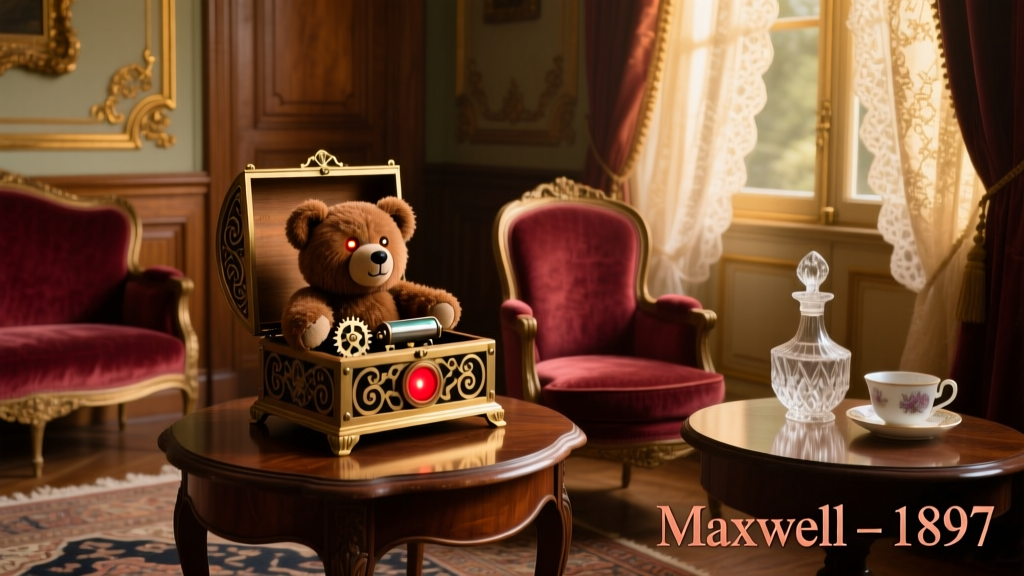
Toy Bear Maxwell Battery Operated Box: History, Mechanics, Restoration, and Collectibility

Fellows Storm: The Forgotten American Craftsmanship of Mid-Century Office Furniture
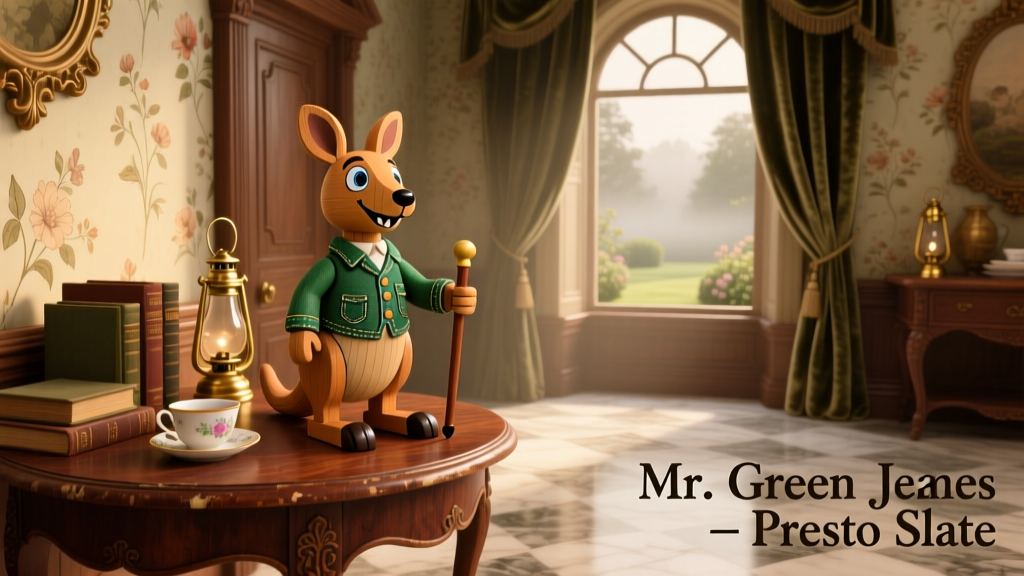
Toy Presto Slate 'Capt. Kangaroo' & 'Mr. Green Jeans': A Collector's Guide to 1950s–60s Educational Slates
The Roy Rogers Ring Magnetic: Authenticity, Mechanics, and Collectibility of a Mid-Century Western Icon
Doll, Gebrüder Heubach Whistler: Bisque Head, Composition Body, Circa 1900 — A Detailed Appraisal of the 11-Inch Model
The 1938 Baker Furniture Company 'Chippendale Revival' Mahogany Breakfront Bookcase: Technical Analysis, Provenance, and Restoration Protocol
The Perley Pollar Nautical Chest: A 1725 Schooner Captain’s Domed Storage Artifact
The Jenny Lind Desk: History, Design Features, and Restoration Principles for Antique Collectors
Indian Basket Cherokee Oak Walnut Round 12-Inch Table: Authenticity, Provenance, and Restoration Guidelines