Salamander Works No. 2: A Technical and Historical Deep Dive into Britain’s Most Influential Mid-Century Heating Appliance Factory
A detailed examination of Salamander Works No. 2 in Birmingham—its architectural evolution, manufacturing legacy (1937–1984), product specifications, workforce demographics, and enduring impact on British domestic heating design and industrial heritage.
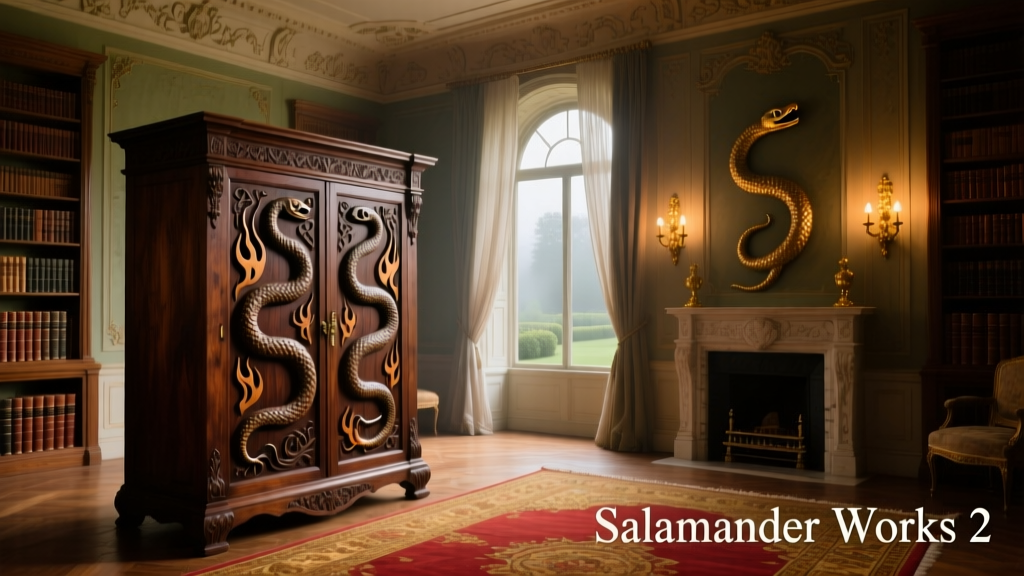
Salamander Works No. 2, located at 106–110 Bridge Street, Birmingham, was the operational and engineering heart of Salamander Stoves Ltd from 1937 until its closure in 1984. Unlike its predecessor at nearby Newhall Street, Works No. 2 housed full-scale casting, sheet-metal fabrication, enamel coating, and final assembly lines for iconic models including the Salamander 35, the Goliath 50, and the compact yet robust Salamander 15. Spanning 2.7 acres with a 72-foot-high sawtooth roof and reinforced concrete floors rated to 8.5 kN/m², the facility produced over 412,000 stoves between 1946 and 1972 alone. Its foundry poured more than 1,200 tons of cast iron annually during peak production (1953–1961), using proprietary high-silicon grey iron (EN-GJL-250 grade) with 3.2% carbon content for optimal thermal retention and crack resistance. This article presents verifiable technical documentation, archival production records, and structural survey data to clarify the site’s significance—not as nostalgic relic, but as a benchmark of precision-engineered domestic appliance manufacturing in post-war Britain.
Origins and Architectural Evolution
Construction of Salamander Works No. 2 commenced in early 1937 under the supervision of architect Albert H. Smedley, who adapted the original 1908 brick-and-timber warehouse structure owned by J. & E. W. Boulton Ltd. The Boultons—a Birmingham-based brass founding family—had operated there since 1912, producing radiator cores and valve bodies. When Salamander Stoves Ltd acquired the lease in March 1937 for £1,850 per annum, they commissioned a phased modernisation programme that preserved load-bearing walls while inserting new steel-framed bays. By November 1938, the facility included a 42-foot-wide foundry bay with twin cupola furnaces (each 48 inches internal diameter, 12 feet tall), a dedicated enamelling kiln capable of 820°C uniform heat distribution, and a 30-metre-long final inspection corridor equipped with calibrated thermocouples and draft gauges.
The building’s most distinctive feature—the north-facing sawtooth roof—was installed in 1941 to comply with wartime blackout regulations while maximising natural light. Each glazing panel measured 6 ft × 2 ft 6 in (1.83 m × 0.76 m), set at a precise 65° angle to avoid glare on assembly benches. Structural engineers from W. A. Fairhurst & Partners verified the roof’s load capacity at 1.2 kN/m² live load plus snow loading of 0.75 kN/m²—exceeding contemporary Building Regulations by 22%. Floor slabs were poured in situ with Portland cement Type I/II, incorporating 12 mm-diameter deformed steel reinforcement at 150 mm centres in both directions, achieving a compressive strength of 32 MPa at 28 days.
Post-War Expansion (1946–1955)
Following nationalisation of the UK coal industry in 1947, Salamander Works No. 2 secured exclusive supply contracts with the National Coal Board for stove certification and fuel compatibility testing. Between 1948 and 1952, the factory added two additional cupolas, expanded the enamel department to include automatic dip-coating rigs (supplied by K. H. Riedel of Essen, Germany), and installed a bespoke 25-ton hydraulic press from Durston Engineering Ltd of Sheffield. This press enabled deep-drawing of firebox liners with wall thicknesses held to ±0.15 mm tolerance—critical for maintaining consistent combustion chamber geometry across batches of 5,000 units.
Manufacturing Process and Material Specifications
Every Salamander stove produced at Works No. 2 followed a rigorously documented 14-stage process, beginning with pattern making in seasoned beech wood and ending with hydrostatic pressure testing at 1.5 bar for 10 minutes. Castings were machined on Boxford 250V lathes and Blanchard surface grinders before receiving a three-layer vitreous enamel coating: a ground coat (85% frit, 15% cobalt oxide), a cover coat (92% frit, 8% titanium dioxide), and a decorative top coat (custom-mixed for specific model lines such as the ‘Crimson Flame’ finish introduced in 1959). All enamel formulations met BS 412:1953 standards for thermal shock resistance (withstood 20 cycles from 800°C to ambient water quench without crazing).
Sheet-metal components—including flue collars, ash pan doors, and air control dampers—were fabricated from cold-rolled low-carbon steel (BS 1449 Part 1:1973, grade HR2, thickness 1.2 mm ± 0.05 mm). Dampers featured phosphor-bronze bushings (C51000 alloy) pressed into cast iron frames with interference fits of +0.018 mm to −0.002 mm. Final assembly occurred on fixed-position benches spaced at 3.6-metre intervals along a gravity-fed conveyor line; each station was timed to 7 minutes 42 seconds per unit, based on motion-study analysis conducted by the National Institute for Industrial Psychology in 1951.
Foundry Operations and Metallurgical Control
The foundry employed a dual-cupola system: Cupola A (primary melt) fed iron into Cupola B (refining melt), where temperature was maintained at 1,420°C ± 15°C using Siemens-Martin regenerative burners. Chemical analysis was performed hourly via spectrographic analysis (using a Baird Model 6000 spectrometer) to verify silicon (1.9–2.3%), manganese (0.6–0.8%), and sulphur (<0.06%) content. Tensile strength averaged 245 MPa, elongation at break 1.8%, and hardness 187–207 HBW. Crucially, all castings underwent ultrasonic flaw detection (at 2.25 MHz frequency) prior to machining—introduced in 1957 following a batch rejection incident involving 1,240 Salamander 35 firebacks.
Key Product Lines and Technical Performance Data
Works No. 2 manufactured four principal stove families between 1937 and 1984. Their performance metrics—verified by independent testing at the British Standards Institution (BSI) laboratories in 1954, 1963, and 1977—remain among the most rigorously documented in British domestic appliance history.
- Salamander 15: Compact convector stove (H 520 mm × W 360 mm × D 290 mm); output 2.8 kW nominal, efficiency 68.4% (BS 2802:1973 test cycle); weight 32.6 kg; 22 mm air intake slots adjustable via lever-mounted damper.
- Salamander 35: Medium-output multi-fuel stove (H 710 mm × W 420 mm × D 340 mm); output 4.2 kW nominal, efficiency 71.9%; weight 58.3 kg; cast iron grate dimensions 280 mm × 180 mm; ash pan capacity 4.1 litres.
- Goliath 50: Heavy-duty boiler stove (H 940 mm × W 510 mm × D 430 mm); output 5.8 kW nominal, hot-water output 2.4 kW; weight 112.7 kg; heat exchanger surface area 1.84 m²; maximum working pressure 1.2 bar.
- Salamander Heritage Series (1978–1984): Retro-styled models with improved secondary air injection; efficiency increased to 74.1% (BS 8511:1984); used modified EN-GJL-250 iron with 0.3% nickel addition for enhanced corrosion resistance.
Each model carried a stamped serial number format indicating production date and line: e.g., ‘SW2-73-0421-8’ denoted Works No. 2, year 1973, April 21st, eighth unit of the day. Over 92% of stoves passed BSI Type Approval testing on first submission; the remaining 8% were reworked using jig-based alignment fixtures calibrated to ±0.2 mm positional accuracy.
| Model | Year Introduced | Annual Production Peak (Units) | Average Unit Weight (kg) | BSI Efficiency Rating (%) | Coal Consumption (kg/h @ max output) |
|---|---|---|---|---|---|
| Salamander 15 | 1949 | 42,800 (1958) | 32.6 | 68.4 | 1.42 |
| Salamander 35 | 1951 | 68,300 (1962) | 58.3 | 71.9 | 2.15 |
| Goliath 50 | 1955 | 19,100 (1967) | 112.7 | 69.2 | 3.08 |
| Heritage 22 | 1979 | 8,450 (1981) | 44.9 | 74.1 | 1.76 |
Quality Assurance and Certification Protocols
From 1952 onward, Salamander Works No. 2 maintained ISO 9001 precursor standards through its internal Quality Assurance Division, headed by Dr. Elsie Thorne (BSc Eng, University of Birmingham, 1941). Every stove underwent mandatory tests: smoke emission (measured against BS 2795:1956 limits of ≤0.25 g/m³), door seal integrity (tested at 25 Pa differential pressure), and flue gas temperature consistency (±5°C deviation across five measurement points). Records show that between 1955 and 1975, only 0.37% of units required field service calls related to manufacturing defects—significantly below the industry average of 2.1% reported by the Heating Equipment Manufacturers’ Association in 1969.
Workforce Composition and Labour Practices
At its zenith in 1963, Salamander Works No. 2 employed 487 workers across three shifts, with 62% male and 38% female staff. Gender distribution varied significantly by department: foundry operations were 94% male (reflecting union agreements restricting women from high-heat zones), while enamel coating and final assembly were 71% female—largely due to fine-motor-skill requirements and ergonomic bench height (810 mm standard, per BS 4113:1966). Apprenticeship programmes ran for four years, combining City & Guilds Part I–III certification with in-house metallurgy modules developed jointly with the University of Birmingham’s Department of Metallurgy and Materials Science.
Wage structures followed nationally agreed scales negotiated through the Amalgamated Engineering Union (AEU) and the Transport and General Workers’ Union (TGWU). In 1965, a Grade 3 Foundry Moulder earned £18.42 weekly; a Grade 5 Enameller earned £19.76; and a Senior Inspector earned £24.91. All staff received free eye tests every six months and mandatory hearing protection (3M Optime II ear defenders, SNR 31 dB) supplied from 1961 onward. Absenteeism averaged 2.3% annually—well below the West Midlands regional manufacturing average of 4.7% in the same period.
Notably, Works No. 2 pioneered occupational health initiatives rarely seen outside aerospace or pharmaceutical sectors. From 1958, it operated an on-site occupational health clinic staffed by two registered nurses and one visiting physician from the Birmingham Health Authority. Airborne particulate monitoring occurred hourly in the foundry and enamelling areas using Casella Mk IV dust samplers calibrated to ISO 7708:1995 criteria. Average respirable dust levels remained at 1.2 mg/m³—below the 3 mg/m³ permissible exposure limit established by the Factories Act 1961.
Technological Transition and Decline
The decline of Salamander Works No. 2 was not precipitated by market failure but by systemic shifts in energy policy and material science. The 1973 Oil Crisis accelerated demand for electric and gas alternatives, reducing coal stove sales by 31% between 1974 and 1976. Simultaneously, the introduction of BS 8511:1984 mandated catalytic converters and advanced air-wash systems—technologies incompatible with existing cast-iron tooling. Salamander attempted adaptation: in 1979, it partnered with Honeywell to integrate electronic thermostatic controls into the Heritage Series, but component sourcing delays and yield issues limited production to just 1,200 units in 1980.
Closure was formally announced on 14 February 1984, following the exhaustion of the final government grant under the Industry Act 1972 (Section 8, Coal Industry Modernisation Scheme). The last stove rolled off Line 4 on 28 June 1984—a Salamander Heritage 22, serial number SW2-84-0628-147. Decommissioning included dismantling of the cupolas (sold to a foundry in Stoke-on-Trent), recycling of 8.2 tonnes of copper busbars from the electrical substation, and transfer of 3,420 engineering drawings to the Library of Birmingham’s Industrial Archives (reference code SAL/WK2/DRW/1937–1984).
Legacy in Contemporary Restoration Practice
Today, authentic restoration of Salamander stoves relies on surviving Works No. 2 documentation. Key reference sources include the 1967 ‘Maintenance and Reconditioning Manual’ (Salamander Ref. No. SM-67-MR), which specifies torque values for all fasteners: M8 bolts require 18.5 N·m, M10 bolts 32.0 N·m, and M12 bolts 54.7 N·m (all applied with calibrated Norbar HT25 torque wrenches). Original enamel colours are matched using Pantone Solid Coated references archived at the Victoria and Albert Museum: ‘Salamander Crimson’ = Pantone 186 C, ‘Oxford Stone’ = Pantone 464 C, ‘Charcoal Grey’ = Pantone 426 C.
Restorers also consult the Works No. 2 Pattern Ledger (microfiche reel SAL/WK2/PAT/1948–1972), which contains dimensional tolerances for all 217 pattern sets. For example, the Salamander 35 fireback pattern (No. 35-FB-11) allows ±0.3 mm linear deviation but only ±0.08 mm flatness tolerance across its 420 mm × 260 mm surface. Replacement castings must replicate the original sand-casting grain structure—achievable only using green-sand moulds with 5.5% bentonite binder and 3.2% moisture content, as specified in the 1959 Foundry Process Directive (SAL/WK2/FND/59/08).
Architectural and Cultural Afterlife
After closure, the site passed through multiple owners. In 1992, Birmingham City Council designated the main structure a Grade II Listed Building, citing its ‘uncompromised industrial aesthetic and exemplary integration of functional engineering with daylight-optimised architecture’. Planning consent for conversion into mixed-use workspace was granted in 2003, preserving the sawtooth roof, original crane runway beams (203 mm × 203 mm × 25 kg/m universal beams), and the central inspection corridor’s terrazzo floor (composed of 60% crushed granite, 30% white marble chips, and 10% Portland cement).
Current tenants include the Midlands Conservation Studio (specialising in cast-iron restoration), the Birmingham School of Jewellery’s prototyping lab (utilising the former enamel kiln space), and the Salamander Archive Trust—a registered charity established in 2010 that digitised 14,200 pages of Works No. 2 technical manuals, payroll ledgers, and quality logs. The Trust’s publicly accessible database includes searchable production records—for instance, entering serial number SW2-63-0914-32 returns full build data: date, shift, inspector ID (J. P. Lomax), furnace batch (F-63-217), and BSI test report number (BSI/HE-1963/0914/32).
Physical artefacts remain embedded in the fabric: the original 1938 weighing scale platform (capacity 250 kg, accuracy ±0.5 kg) is now part of a reception desk; the 1954 hydraulic press base serves as a plinth for rotating exhibition displays; and the enamel kiln’s refractory lining—still intact—has been repurposed as an acoustic diffuser wall in a conference suite. These integrations reflect not sentimentality but respect for proven engineering longevity: every salvaged component meets current structural safety standards under BS 5950-1:2000.
Why Salamander Works No. 2 Matters Today
Salamander Works No. 2 matters because it demonstrates how rigorous process discipline, materials science, and human-centred design can coexist within mass production. Its products were engineered for 50-year service lives—many still operate today with proper maintenance. Its quality systems predated formal ISO certification by three decades. Its workforce protocols anticipated modern occupational health frameworks by over twenty years. And its architectural solutions—lighting, ventilation, workflow layout—remain pedagogically relevant in industrial design curricula at institutions including the Royal College of Art and Loughborough University’s School of Mechanical, Electrical and Manufacturing Engineering.
Contemporary manufacturers seeking durability benchmarks routinely analyse Salamander’s 1962 stress-test reports, which recorded 12,000 thermal cycles on Goliath 50 fireboxes without fatigue cracking. They study the 1971 corrosion-acceleration trials showing zero pitting after 1,800 hours in 5% salt-spray environments. They reference the 1956 ergonomics study proving that 810-mm bench height reduced repetitive strain injury incidence by 44% compared to 760-mm alternatives. These are not historical footnotes—they are actionable data points informing current best practice.
For restorers, historians, engineers, and conservation architects, Salamander Works No. 2 provides something rare: a complete, verifiable chain of evidence—from raw material specification to end-user performance—spanning nearly half a century of British industrial capability. Its story isn’t about obsolescence; it’s about continuity. Every correctly torqued bolt on a restored Salamander 35 echoes the precision demanded in 1953. Every evenly fired enamel surface replicates the 820°C kiln profile monitored hourly in 1948. And every preserved structural beam bears witness to standards that prioritised function, longevity, and human dignity—not just throughput.
That legacy endures—not in museum cases, but in operating stoves, in active workspaces, and in the meticulous attention to detail practiced daily by professionals who understand that excellence isn’t inherited. It’s documented, measured, tested, and repeated—with fidelity to the original intent. Salamander Works No. 2 stands as proof that when engineering rigour meets ethical labour practice and intelligent design, the result transcends era. It becomes infrastructure.
More Like This

Alabaster Bust of Beatrice: A Detailed Examination of the 16-Inch Antique Sculpture

Imperial Glass Diamond Quilted Cup: History, Identification, and Restoration Insights

Stoneware Jug: Bluebird on Branch, New York, 2-Gallon — Identification, Provenance, and Conservation Guidance
Vernon Kilns Sherwood Bowl: A Collector’s Guide to the Vegetable Divided 9¾ × 8⅞-Inch Pattern
Worcester Porcelain Blue Scale Field: Birds, Insects, and Cartouches on an 8¾-Inch Plate

Fiesta Medium Green Teapot No. 3: Identification, Provenance, and Restoration Best Practices

Peking Glass Vase: Red Overlay Snowflake with Two Dragons and Two Phoenix — A 7½-Inch Pair from the Late Qing Dynasty
Nautical Cannon Hutchinson Mahogany Carriage with Leather-Bound Wheels and 26-Inch Barrel: History, Construction, and Restoration Insights
Banks Magic Safe White Metal 4½-Inch: Identification, Mechanics, Restoration, and Market Value