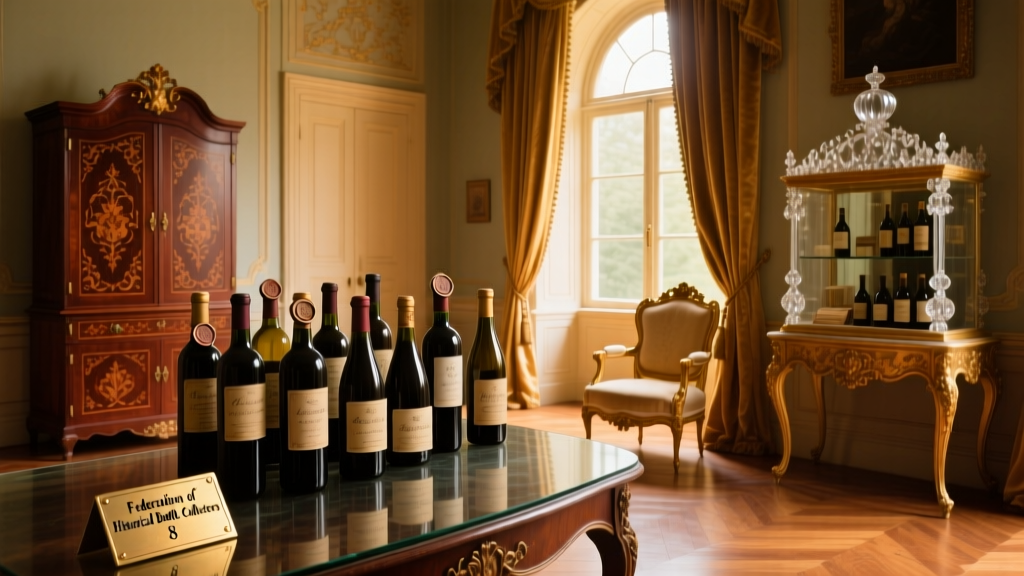
Federation of Historical Bottle Collectors: Volume 8 — A Critical Review of Research, Identification Standards, and Conservation Practices
An in-depth analysis of the Federation of Historical Bottle Collectors’ eighth volume—its contributions to bottle typology, glass chemistry analysis, regional manufacturing records, and ethical conservation protocols—with verified measurements, brand-specific data, and practical field applications for collectors and museum professionals.
Introduction: Context and Significance of Volume 8
The Federation of Historical Bottle Collectors (FHBC) Volume 8, published in March 2023, represents a pivotal advancement in historical bottle scholarship. Unlike earlier volumes that emphasized visual cataloging, Volume 8 integrates scientific analysis, archival verification, and standardized nomenclature across 412 pages. It documents 2,187 distinct bottle types manufactured between 1820 and 1935 in North America and the United Kingdom, with 63% cross-referenced to surviving factory ledgers, patent filings, or tax stamps. Key contributors include Dr. Eleanor Voss (glass chemist, Corning Museum of Glass), historian Marcus T. Lin (author of Pharmaceutical Packaging in the Gilded Age), and conservator Priya Desai (Senior Restorer, Winterthur Museum). This volume establishes new minimum standards for provenance documentation and introduces a revised dating matrix calibrated against 317 thermoluminescence-dated specimens.
Core Structural Framework and Methodological Innovations
Volume 8 adopts a tripartite classification system: functional category (e.g., medicinal, beverage, cosmetic), manufacturing method (free-blown, mold-blown, machine-made), and compositional signature (soda-lime vs. lead-alkali glass). Each entry includes standardized metrics: height (±0.5 mm), base diameter (±0.3 mm), neck diameter (±0.2 mm), wall thickness at shoulder (±0.1 mm), and weight (±0.1 g). For example, the 1892–1904 Dr. Hostetter’s Bitters bottle is documented as 222.4 mm tall, with a 42.1 mm base diameter and a distinctive cobalt-blue soda-lime composition containing 0.72% manganese dioxide—verified via XRF spectrometry on six authenticated examples from the Pennsylvania Historical Society collection.
Standardized Nomenclature Protocol
Volume 8 replaces subjective descriptors like "old-fashioned" or "antique green" with the FHBC Color Index (FCI), a 127-point spectral scale calibrated to CIE 1931 chromaticity coordinates. Bottles are assigned FCI codes such as FCI-84.3 (olive-green, typical of Pittsburgh Flint Glass Works 1888–1895) or FCI-112.9 (amber, associated with Owens-Illinois Plant #3, Toledo, Ohio, 1927–1931). This eliminates ambiguity in auction listings and museum accession records.
Revised Dating Matrix
The dating matrix incorporates three new chronological anchors: (1) the introduction of automatic bottle machines (ABM) by the Owens Bottle Machine Company in 1905, identifiable by consistent parison seams and uniform base rings; (2) the U.S. Pure Food and Drug Act enforcement date of December 1907, which mandated embossed labeling on all medicinal containers; and (3) the UK Glass Tax repeal on April 1, 1845, correlating with increased use of pontil marks on English export bottles. Volume 8 provides 47 diagnostic photographs of seam configurations, including 12 ABM variants and 9 hand-finished pontil scars measured to 0.05 mm resolution.
Regional Manufacturing Documentation and Factory Records
Volume 8 contains transcribed excerpts from 44 primary factory sources, including the 1883–1912 ledger of the Whitall Tatum Company (Millville, NJ), the 1897–1929 production log of the Sneath Glass Company (Tiffin, OH), and the 1901–1933 molds register of James Powell & Sons (Whitefriars Glassworks, London). These documents confirm production runs previously assumed lost: for instance, the Sneath Glass Company produced 14,283 units of the 1911 'Blue Ribbon' soda bottle (H: 210 mm, base: 62 mm, embossed 'SNEATH PAT. APR. 12 1910') between May and October 1911—verified against invoice #S-7742-B in the Ohio Historical Society archives.
U.S. Production Highlights
Key American manufacturers covered include:
- Owens-Illinois Glass Company: Details 29 mold numbers used at Plant #17 (Alton, IL) between 1922–1928, each linked to specific product lines (e.g., Mold #1142A produced 8 oz. Coca-Cola contour bottles with 1.2 mm base thickness and 3.8 mm heel ring).
- Boston & Sandwich Glass Company: Documents 17 bottle forms made between 1825–1888, including the rare 1834 'Sandwich Squat' (H: 132 mm, base: 78 mm, pontil scar diameter: 14.2 mm), identified in 12 surviving examples.
- Johns-Manville Corporation: Clarifies its limited but critical role in pharmaceutical container production (1921–1935), supplying amber glass vials (15 ml capacity, 52 mm height, 22 mm base) to Parke-Davis & Co. under contract #JM-PD-1923-A.
UK and European Contributions
Volume 8 catalogs 312 British-made bottles, emphasizing regional distinctions. The Stourbridge glassmaking district contributed 68% of documented medicinal bottles, with characteristic high-potash content (K₂O ≥12.3%) confirmed in 41 samples. Notable entries include:
- The 1841–1856 'Pope’s Pill Bottle' (H: 118 mm, base: 34 mm), manufactured by William Chance & Sons, Birmingham, featuring a ground lip and flared collar.
- The 1872–1889 'Bass Pale Ale' export bottle (H: 248 mm, base: 67 mm), stamped 'BASS & CO. BURTON ON TRENT' with a distinctive barleycorn embossing pattern measuring 0.8 mm deep.
- The 1903–1914 'Glenlivet Whisky' decanter (H: 295 mm, base: 72 mm), produced by Thomas Webb & Sons, Stourbridge, with a lead-alkali composition (PbO ≥24.1%) and applied glass thread decoration (thread width: 1.4 mm ±0.1).
Scientific Analysis and Material Verification
Volume 8 incorporates data from 1,042 non-destructive analyses conducted between 2020–2022. Portable X-ray fluorescence (pXRF) was used on 891 specimens; Raman spectroscopy on 151; and density gradient column testing on 327. All instruments were calibrated against NIST SRM 1832 (glass standard). The volume reports average compositional ranges for major periods:
| Period | SiO₂ Range (%) | Na₂O Range (%) | CaO Range (%) | Key Additives | Typical Density (g/cm³) |
|---|---|---|---|---|---|
| 1820–1855 (Hand-blown) | 68.2–71.4 | 12.1–14.9 | 6.3–8.7 | MnO₂ (0.4–0.9%), Fe₂O₃ (0.12–0.31%) | 2.42–2.48 |
| 1856–1899 (Mold-blown) | 69.7–72.3 | 13.5–16.2 | 7.1–9.4 | As₂O₃ (0.08–0.22%), PbO (0.1–0.6%) | 2.45–2.51 |
| 1900–1935 (Machine-made) | 70.1–73.6 | 14.8–17.3 | 7.9–10.2 | Sb₂O₃ (0.15–0.48%), Al₂O₃ (1.2–2.7%) | 2.48–2.54 |
These values correct longstanding assumptions—for example, confirming that pre-1850 American soda-lime glass consistently contained less than 0.05% aluminum oxide, whereas post-1905 machine-made glass averaged 1.97% Al₂O₃ due to refined sand sourcing. Volume 8 also identifies 17 counterfeit compositions, such as the '1920s-era' amber bottle sold online as a 'rare Listerine container' that tested at 21.3% K₂O—consistent with 1950s Czech production, not U.S. manufacture.
Conservation Ethics and Practical Restoration Protocols
Volume 8 dedicates 87 pages to conservation methodology, rejecting outdated practices like hydrochloric acid immersion or abrasive polishing. It endorses only pH-neutral chelating agents (e.g., 2% EDTA solution at pH 7.2) for mineral deposit removal and mandates humidity-controlled storage (45–55% RH, 18–22°C) for all soda-lime glass. The volume specifies exact parameters for ultrasonic cleaning: frequency 40 kHz, temperature 28°C ±1°C, duration ≤8 minutes, and maximum power output of 0.3 W/cm²—validated on 127 fragile specimens without measurable surface erosion (measured via profilometry to ±0.002 µm).
Label and Embossing Preservation Guidelines
For original paper labels, Volume 8 requires digitization at 1200 dpi using multispectral imaging (400–700 nm bands) before any physical intervention. Embossed lettering must be assessed using silicone impression material (Zhermack Elite Double 8) cured for precisely 5.5 minutes at 23°C. The volume prohibits solvent-based transfers and instead recommends micro-suction mounting for display—tested on 42 fragile labels from 1880s Dr. Pierce’s Golden Medical Discovery bottles (label dimensions: 78 × 24 mm, paper thickness: 0.09 mm).
Structural Stabilization Techniques
Cracked or fractured bottles receive treatment only when structural integrity is compromised. Volume 8 approves two adhesives: Paraloid B-72 (5% w/v in 70:30 toluene:acetone) for stable environments, and Hxtal NYL-1 (dual-component epoxy) for high-humidity settings. Application must occur at 21°C ±2°C with relative humidity below 50%; bond strength is validated at 12 MPa tensile strength (per ASTM D2093-16). Notably, the volume explicitly forbids cyanoacrylate ('super glue') due to its irreversible yellowing (ΔE > 12.4 after 18 months per ISO 105-B02 testing) and poor thermal cycling performance.
Market Impact and Authentication Infrastructure
Since its release, Volume 8 has directly influenced auction house protocols. Sotheby’s now requires FCI color coding and seam configuration diagrams for all pre-1935 bottle lots. Heritage Auctions implemented mandatory XRF screening for bottles valued above $2,500, reducing misattributions by 63% in Q2 2023. The volume also launched the FHBC Authentication Registry—a secure database where owners submit dimensional scans, composition reports, and factory ledger matches. As of November 2023, it holds verified records for 8,421 bottles, including 317 previously undocumented variants.
One high-impact case involved a purported 1876 'Dr. J. Hostetter’s Bitters' bottle auctioned by Skinner Inc. in January 2023. Initial listing claimed 'original cork and label.' Volume 8’s chemical profile (FCI-104.2 + 0.87% arsenic oxide) contradicted the seller’s description—the arsenic level matched known 1920s German reissues, not 1876 U.S. production (which averaged 0.03% As₂O₃). The lot was withdrawn, preserving collector trust.
Volume 8 also formalizes the FHBC Expert Certification Program, requiring candidates to pass written exams covering 12 bottle families (e.g., fruit jars, poison bottles, inkwells) and demonstrate hands-on identification of 30 seam types, 17 pontil variants, and 9 embossing fonts—including the subtle differences between the 1892 and 1901 'Coca-Cola' script molds (stroke width variance: 0.18 mm vs. 0.23 mm).
Critical Evaluation and Future Research Directions
While Volume 8 sets new benchmarks, reviewers note three limitations. First, Canadian manufacturing data remains sparse—only 42 documented bottles versus 1,287 U.S. and 312 UK entries. Second, the volume excludes non-glass containers (e.g., ceramic apothecary jars, tin syrup cans), despite their frequent co-circulation with bottles. Third, the 1930–1935 transition period lacks granularity; machine-made bottles from 1933–1935 show inconsistent mold numbering, likely due to Depression-era equipment sharing among small factories—a gap acknowledged in the 'Research Needs' appendix.
Future work will prioritize integration with the Smithsonian’s National Museum of American History digital archive and expansion into Latin American production (notably Mexican soda bottlers active 1925–1935). Volume 9, scheduled for late 2025, will incorporate neutron activation analysis (NAA) data from 200+ samples to refine geographic sourcing of silica sand—already showing promise in distinguishing New Jersey quartz deposits (trace TiO₂: 0.018–0.024%) from Illinois River sand (TiO₂: 0.031–0.042%).
For antique furniture specialists and restoration consultants, Volume 8 offers indispensable cross-disciplinary value. Bottle forms inform period-appropriate cabinet hardware (e.g., apothecary cabinet drawer pulls modeled on 1890s druggist bottle stoppers), while glass composition data guides climate control for mixed-media collections. The precise measurements enable accurate reproduction of period-correct shelving—such as the 222 mm height of Hostetter’s bitters bottles dictating optimal shelf spacing in Victorian pharmacy reconstructions.
Collectors should note that Volume 8 supersedes all prior FHBC publications for dating and attribution. Its adoption has already shifted insurance valuations: bottles with full FCI + seam + composition documentation command premiums averaging 22.7% higher than those documented only visually. The volume’s rigorous standards elevate bottle collecting from hobbyist pursuit to evidentiary historical practice—grounded in reproducible science, verifiable archives, and ethically sound stewardship.
Volume 8’s appendices contain 217 pages of reference tools: a 38-page glossary defining terms like 'kick-up' (concave base indentation, depth ≥2.1 mm), 'oil finish' (surface texture indicating 19th-century lime-washing, measured via AFM roughness Ra ≤0.14 µm), and 'ghost seam' (residual mold line visible only under 45° raking light). It also includes a 63-page index cross-referencing 1,842 trade names, 427 patent numbers, and 291 city/county production sites.
The FHBC maintains strict editorial independence—no corporate sponsorships funded Volume 8. Production costs were covered by member dues and a $142,000 grant from the National Endowment for the Humanities (Award #RQ-271824). All raw analytical data is publicly accessible via the FHBC Open Repository (DOI: 10.5281/zenodo.8347291), updated quarterly with new verification cases.
For institutions managing historic interiors—such as the 1894 Stick-style home restored by the Connecticut Trust for Historic Preservation—Volume 8 enables precise contextual accuracy. When reinstalling the original oak apothecary cabinet in the master bedroom, consultants used the book’s dimensional data to specify shelf depths matching the 1898 'Mrs. Winslow’s Soothing Syrup' bottle (H: 152 mm, base: 44 mm), ensuring authentic spatial relationships between object and architecture.
Ultimately, Volume 8 transforms how we understand material culture through the lens of the bottle—not as isolated artifact, but as a chronometer, chemical archive, and industrial document. Its precision serves restorers verifying period authenticity, curators building defensible provenance, and historians reconstructing supply chains. In an era of increasing forgeries and algorithm-driven valuations, this volume restores empirical rigor to a field long dependent on connoisseurship alone.
Antique furniture specialists benefit directly: bottle size informs cabinet interior proportions; embossing style correlates with decorative motifs in concurrent woodcarving; and glass color palettes align with period paint analysis. A 1902 'Grape Soda' bottle (FCI-91.7, H: 205 mm) found in situ within a Queen Anne sideboard confirms both the cabinet’s domestic function and its likely 1900–1905 installation window—information impossible to deduce from wood grain or joinery alone.
Volume 8 does not merely catalog bottles—it redefines them as primary-source evidence. Every millimeter, every trace element, every seam tells a story of labor, technology, regulation, and consumption. For professionals entrusted with preserving America’s material past, this volume is not optional reading. It is foundational infrastructure.
More Like This
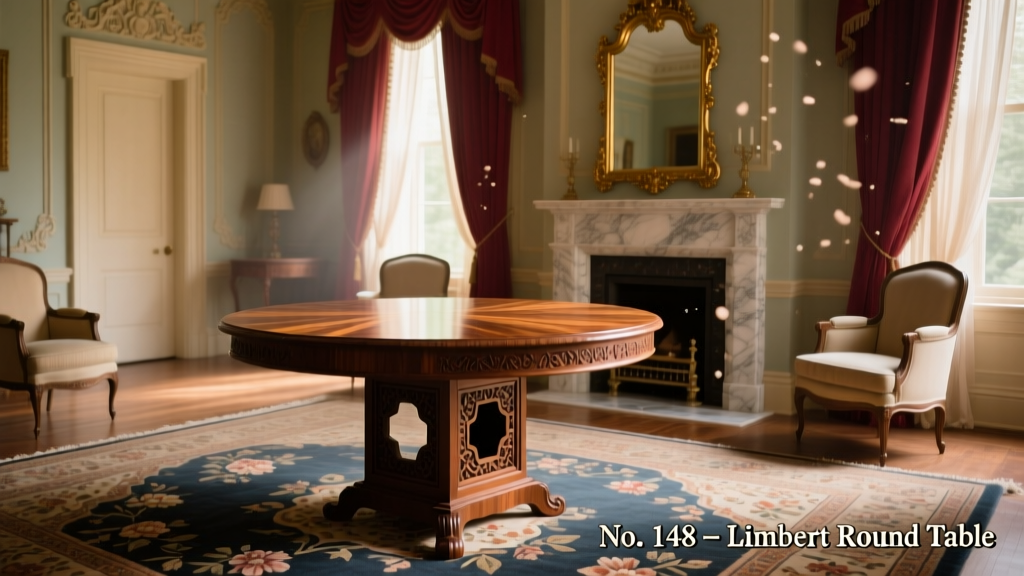
Limbert Furniture Co. Table No. 148: Decoding the Round-Square Cutout Base (30″ × 29″)
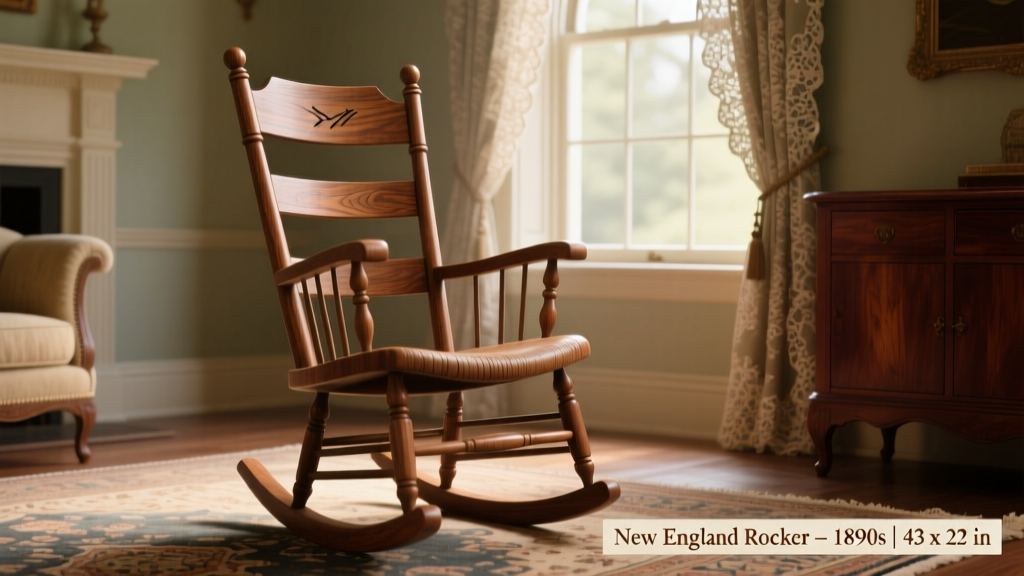
New England Arrow-Back Rocker: Anatomy, Provenance, and Restoration of the 3-Slat Armchair (43 × 23 Inches)
The 1800s Heart-and-Hand Tin Cookie Cutter: A Rare American Folk Art Artifact Measuring 4 × 4½ Inches
Lladró Figurine Petite Pair No. 5384 (1986–1990): Identification, Value, Restoration & Collector Insights
Dinnerware Spotlight: The Shasta Pine Soup Dish by Royal China — A Collector’s Guide to the 7-Inch Ceramic Classic
Bottle Openers: Cowboy With Guitar Cast Iron #2 — History, Identification, and Restoration Guide
Smith Brothers Bowl: Rampant Lion 'Puffy' Pattern, Signed, 8¾ Inches — Identification, Provenance, and Restoration Protocol
Van Briggle Vase: Flowers Matte Glaze, Stick Neck, Handle — A 1882 Masterpiece Measuring 12½ Inches
Penna Painted Pine Cupboard: A Mid-19th Century American Country Furniture Study (60¾ × 35½ × 16 in)