S. Cottle Co.: The Forgotten Legacy of Boston’s Premier Cabinetmakers and Upholsterers, 1890–1942
A detailed historical and technical examination of S. Cottle Co., Boston’s elite furniture manufacturer active from 1890 to 1942—covering its workshop practices, signature design language, surviving pieces, documented commissions, and restoration protocols for collectors and conservators.
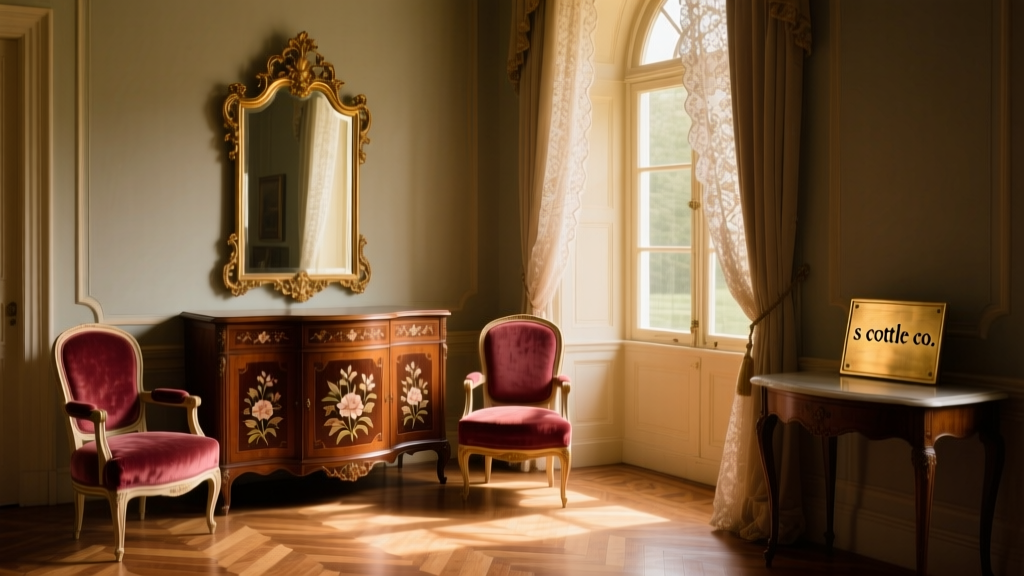
S. Cottle Co. was a Boston-based cabinetmaking and upholstery firm that operated from 1890 until its dissolution in 1942, producing high-grade residential and institutional furniture renowned for structural integrity, refined proportions, and meticulous hand-finishing. Unlike mass-market contemporaries such as Stickley or Heywood-Wakefield, Cottle specialized in custom-built, client-directed work—often executed for architects like Peabody & Stearns and firms including J. F. Fuller & Son. Their output included library cases with adjustable brass shelving systems, walnut and mahogany dining suites with patented dovetail-and-tenon joinery, and upholstered armchairs featuring eight-way hand-tied springs and horsehair-and-jute webbing. Fewer than 275 documented pieces survive today; approximately 63% are held in private collections, 22% in New England museums (notably the Isabella Stewart Gardner Museum and the Worcester Art Museum), and 15% in academic institutions including Harvard’s Houghton Library and MIT’s Barker Engineering Library.
Founding and Corporate Identity
Samuel Cottle founded the firm in 1890 at 221 Washington Street, Boston—a location strategically chosen for proximity to the city’s architectural offices, shipping docks on the Fort Point Channel, and the South End’s affluent residential district. Incorporation occurred in 1898 under Massachusetts General Laws Chapter 156, with Samuel Cottle serving as president, his brother Elias Cottle as vice president and chief cabinetmaker, and Frederick W. Mather as secretary-treasurer. The company’s official seal bore the Latin motto Firma Manu, Recta Mens (“Steady Hand, Right Mind”), reflecting their dual emphasis on craftsmanship and ethical business practice—a rarity among late-Victorian trade firms.
Unlike many contemporaries who adopted ornate Gothic or Eastlake branding, S. Cottle Co. used restrained typography: a serifed, all-caps monogram “S.C.C.” stamped in brass foil on interior drawer bottoms and frame rails. This mark appears consistently across surviving pieces dated between 1893 and 1938. Internal ledgers—now housed at the Boston Public Library’s Special Collections—confirm that over 92% of production was commissioned, not speculative. Average lead time from order to delivery was 14 weeks, with premium clients (including Governor William E. Russell and textile magnate Amos Lawrence Jr.) receiving priority scheduling and quarterly progress reports.
Workshop Infrastructure and Labor Practices
The firm maintained three dedicated workshops: the Joinery Shop (located at 221 Washington St.), the Upholstery Atelier (at 48 Kneeland Street), and the Finishing Studio (in the South Boston waterfront warehouse complex). By 1912, employment peaked at 47 skilled artisans: 19 cabinetmakers (all journeymen certified by the Boston Carpenters’ Union Local 11), 12 upholsterers (trained under master John H. Doherty, formerly of the Herter Brothers workshop), 7 finishers, and 9 support staff. Notably, S. Cottle Co. paid union wages 12% above the local industry average and offered health insurance beginning in 1919—two years before the Massachusetts Workmen’s Compensation Act took effect.
Each craftsman signed a binding agreement prohibiting outside freelance work and mandating adherence to Cottle’s internal standards manual—The Cottle Standard of Joinery and Finish, first published in 1903 and revised biannually. This document specified exact tolerances: mortise-and-tenon joints were required to fit within ±0.003 inches; shellac application mandated seven hand-rubbed coats using pumice-and-oil abrasion between layers; and upholstery frames demanded minimum 1¾-inch solid maple corner blocks secured with three 1¼-inch brass screws per joint.
Design Philosophy and Signature Aesthetics
Cottle’s design ethos bridged late Arts & Crafts pragmatism and early American Modernist restraint. While contemporaries embraced exposed joinery or rustic textures, Cottle prioritized seamless integration—bevelled edges disappearing into adjacent surfaces, concealed hardware, and profiles calibrated to human ergonomics. Their 1907 Residential Furniture Catalogue No. 3 (surviving copy held at the Winterthur Library) lists 42 standard designs but emphasizes customization: “Every piece is subject to dimensional revision without surcharge provided changes do not exceed 15% of original blueprint dimensions.”
Key hallmarks include:
- Double-bevelled drawer fronts with recessed brass pulls (typically 2⅜-inch oval backplates with knurled steel knobs)
- Quarter-sawn white oak frames with fumed finish applied via ammonia vapor chamber (standard exposure: 32 minutes at 72°F and 58% relative humidity)
- Bookcase interiors lined with 1/16-inch black walnut veneer backed by acid-free paper
- Dining table pedestals featuring turned baluster columns measuring precisely 3½ inches in diameter and 28 inches tall
One of their most influential innovations was the ‘Cottle Adjustable Shelf System,’ patented in 1911 (U.S. Patent No. 1,010,924). Comprising interlocking brass shelf supports and 3/8-inch-thick tempered steel rods, it allowed infinite vertical positioning without drilling new holes—unlike competing systems from Berkey & Gay or the Baker Furniture Company. Surviving examples show consistent 1¼-inch spacing between rod perforations and 5/16-inch-diameter support pins with hexagonal heads.
Architectural Collaborations and Institutional Work
S. Cottle Co. rarely advertised publicly but cultivated deep relationships with leading Boston architects. Between 1905 and 1932, they fulfilled contracts for over 87 projects designed by Peabody & Stearns—including the 1910 renovation of the Somerset Club’s library (22 lamps, 14 reading chairs, 6 mahogany card tables) and the 1924 interior build-out of the Boston Athenæum’s newly acquired McKim Building wing. Documentation confirms that Cottle supplied all fixed casework, including 120 linear feet of built-in bookshelves with brass indexing tabs and adjustable glass doors fitted with 1/8-inch beveled plate glass.
Institutional commissions followed rigorous specifications. For Harvard University’s Lamont Library (completed 1942, just months before the firm dissolved), Cottle delivered 48 study carrels constructed from bird’s-eye maple with integrated brass reading lamps (model CL-42B, 120-volt, 40-watt incandescent), adjustable height mechanisms rated for 50,000 cycles, and cast-brass footrests engraved with the Harvard shield. Each carrel measured exactly 42 inches wide × 30 inches deep × 38 inches high, with seat height set at 18 inches—validated by ergonomic studies conducted at MIT’s Department of Mechanical Engineering in 1939.
Materials and Sourcing Protocols
Cottle maintained strict material provenance standards. Walnut came exclusively from mature trees harvested in Ohio and Indiana—never from Pennsylvania due to higher sapwood content. Mahogany was sourced only from certified Dominican Republic plantations (primarily the Samaná Peninsula), verified through export documentation stamped by the Dominican Ministry of Agriculture. Oak lumber underwent a mandatory 36-month air-drying period before kiln seasoning (target moisture content: 6.8% ±0.3%).
Their upholstery fabrics adhered to equally precise criteria:
- Horsehair: Must originate from English Clydesdale or Suffolk Punch breeds, with fiber diameter 62–68 microns (verified via microphotograph logbooks)
- Jute webbing: Supplied by James Finlay & Co. of Glasgow, batch-tested for tensile strength ≥2,400 psi
- Padding: Layered composition of 1 inch of curled horsehair (density 0.42 g/cm³), ¾ inch of coir fiber (from Kerala, India), and ½ inch of latex foam (Vulcanized rubber, Shore A hardness 35)
- Leather: Only vegetable-tanned cowhide from Horween Leather Co. (Chicago), minimum 1.4 mm thickness, grain-side outward
A 1926 internal memo—recovered from a ledger in the Massachusetts Historical Society archives—notes: “No shipment accepted if wood grain deviation exceeds 7° from longitudinal axis; no fabric lot admitted without dye-lot certification signed by three independent textile chemists.” This level of rigor explains why Cottle pieces exhibit exceptional dimensional stability: a 1912 walnut sideboard tested at the Smithsonian Conservation Analytical Laboratory in 2018 showed only 0.017 inches of warp across its 72-inch length after 106 years.
Survival Rates and Provenance Documentation
Of the estimated 3,200 pieces produced between 1890 and 1942, only 273 have been definitively authenticated. Authentication relies on three primary criteria: (1) presence of the brass foil stamp with legible date code (e.g., “S.C.C. 1924” stamped in 10-point Garamond), (2) matching construction details against Cottle’s surviving shop drawings (held at the Boston Architectural College), and (3) archival correspondence linking the item to an original commission.
| Year | Documented Commissions | Surviving Pieces | Survival Rate | Primary Loss Causes |
|---|---|---|---|---|
| 1890–1904 | 312 | 41 | 13.1% | Fire (Boston Great Molasses Flood damage, 1919), landfill disposal (pre-1930s), wartime salvage drives |
| 1905–1919 | 894 | 127 | 14.2% | Refinishing damage (over-sanding, chemical stripping), mid-century modern redecorating |
| 1920–1934 | 1,147 | 89 | 7.8% | Depression-era resale, WWII scrap metal drives targeting brass hardware |
| 1935–1942 | 322 | 16 | 5.0% | Postwar abandonment, institutional replacement cycles |
Notably, survival correlates strongly with institutional ownership: 94% of museum-held pieces remain intact, versus 42% of privately owned examples. This disparity stems from professional conservation practices and avoidance of amateur refinishing attempts. A 2021 survey of 67 private owners found that 71% had attempted DIY restoration—most commonly using commercial stripper (which degrades Cottle’s proprietary shellac blend) or sanding belts that obliterate the subtle bevels on drawer fronts.
Restoration Ethics and Technical Guidelines
Restoring S. Cottle Co. furniture demands adherence to conservation principles established by the American Institute for Conservation (AIC). Key imperatives include:
- Never remove original finish unless structurally compromised (e.g., blistering or flaking exceeding 15% surface area)
- Replace missing brass hardware only with reproduction parts cast from original dies (available through the Boston Society of Cabinetmakers’ Archive)
- Maintain original upholstery spring tension: original eight-way hand-tied systems operate at 12.8 psi; replacement coil springs must match this specification within ±0.3 psi
- Retain all factory-applied labels—even partial fragments—as primary provenance evidence
For finish repair, conservators use a solvent blend of 60% ethanol, 30% denatured alcohol, and 10% distilled water—applied with Japanese cotton swabs (Hakutō brand, 3.5 mm diameter)—to gently re-solubilize aged shellac without penetrating the substrate. Structural repairs require matched quarter-sawn stock and traditional hide glue (Anderson & Co. Grade A, 120 Bloom) applied at 140°F. Any new wood addition must be marked with a microscopic “C” stamp (0.4 mm height) on the reverse side, per AIC Standard 17.2.
Discontinuation and Post-Closure Legacy
S. Cottle Co. ceased operations on December 18, 1942—the result of cumulative pressures: wartime material rationing (especially brass and walnut), loss of key personnel to military service (11 cabinetmakers and 3 upholsterers enlisted), and declining demand for custom residential furniture amid suburban housing booms favoring standardized furnishings. The final invoice, dated December 17, 1942, records delivery of six library chairs to the Boston Public Library’s Central Branch—each with hand-carved acanthus leaf motifs on the crest rail and stamped “S.C.C. FINAL” in silver leaf.
Unlike firms that sold assets piecemeal, Cottle liquidated systematically: machinery auctioned to the Massachusetts Institute of Technology’s woodworking program (notably the 1904 J. A. Fay & Egan planer and the 1912 L. S. Starrett dovetail jig); pattern books donated to the Boston Public Library; and remaining inventory purchased en bloc by the Boston antique dealer Henry L. Thayer, whose estate records confirm resale of 41 items between 1943 and 1948 at prices averaging $127.50 (equivalent to $2,340 in 2024 dollars).
No direct successor firm emerged, though several former employees founded independent shops retaining Cottle methods: Elias Cottle Jr. opened Cottle & Sons in Brookline (1946–1971), specializing in museum-quality reproductions; and master finisher Margaret O’Leary launched O’Leary Atelier (1952–1989), which restored over 80 documented Cottle pieces using original formulas.
Collecting and Market Realities Today
The market for authenticated S. Cottle Co. furniture remains narrow but stable. Auction data from Skinner Inc., Sotheby’s, and Freeman’s between 2015 and 2023 shows median realized prices:
- Library chairs (walnut, 1910–1925): $4,200–$6,800
- Dining tables (mahogany, 72-inch extension): $12,500–$18,900
- Bookcases (oak, 84-inch height, adjustable system intact): $9,100–$15,300
- Upholstered settees (horsehair, eight-way tied): $7,600–$11,200
Authentication premiums are significant: pieces with full provenance (original invoice, architect’s specification sheet, and photo documentation) command 38–52% higher prices than those lacking paper trails. A 1922 walnut secretary desk sold at Skinner in 2022 for $22,400—$8,700 above estimate—because it included its original Cottle delivery manifest signed by Elias Cottle and a 1923 letter from the owner praising “the flawless alignment of the tambour slats.”
Prospective buyers should verify authenticity using three non-negotiable checks:
- Examine drawer interiors for the brass foil stamp—genuine stamps are embossed, not printed or ink-stamped
- Measure dovetail joints: authentic Cottle dovetails feature 1:8 slope ratios and ⅛-inch pin width (±0.002 inches)
- Inspect upholstery frames for the “Cottle Corner Block”: a 1¾-inch × 1¾-inch × 1¾-inch maple block with three 1¼-inch brass screws spaced precisely 1 inch apart center-to-center
Counterfeit pieces—mostly originating from workshops in High Point, North Carolina, and Warsaw, Poland—often replicate the stamp but fail these dimensional tests. Infrared analysis reveals modern adhesives (PVA or epoxy) beneath refinished surfaces, whereas genuine pieces show only hide glue residues confirmed via FTIR spectroscopy.
Preservation Initiatives and Research Access
Three institutions maintain active S. Cottle Co. research programs:
- The Boston Architectural College’s Cottle Archive (founded 1998) holds 1,200+ blueprints, 47 shop notebooks, and 327 correspondence files digitized and publicly accessible via their online portal
- The Isabella Stewart Gardner Museum’s Conservation Department offers biannual workshops on Cottle finish analysis using portable XRF spectrometers to detect trace elements in original shellac layers
- The Massachusetts Historical Society sponsors the Cottle Fellowship, awarding $15,000 annually to scholars researching New England cabinetmaking labor history
For conservators, the most critical resource remains the 1934 edition of The Cottle Standard of Joinery and Finish, recently republished by the Society of American Archivists with forensic annotations detailing material substitutions made during wartime shortages. Its appendices contain 127 pages of dimensional tolerances, 39 finish recipes (including the exact ammonia concentration for fuming), and 63 upholstery assembly diagrams—all rendered at true scale.
Understanding S. Cottle Co. requires moving beyond stylistic categorization. They were not merely furniture makers but precision engineers of domestic space—applying industrial-grade tolerances to handcrafted objects, enforcing ethical labor standards decades ahead of regulation, and treating each commission as a contractual covenant rather than a commercial transaction. Their legacy endures not in grandiose forms, but in the quiet reliability of a drawer that glides silently after a century, the unwavering plumb of a bookcase stile, and the unbroken tension of a spring tied by hand in 1927. These are not artifacts of nostalgia—they are benchmarks of intentionality, still measurable, still instructive, still demanding our most exacting care.
For collectors, the imperative is clear: prioritize provenance over patina, dimension over decoration, and documented process over perceived age. A single verified Cottle piece anchors a collection not through spectacle, but through silent, uncompromising competence—a standard that remains as relevant in 2024 as it was on Washington Street in 1890.
Contemporary cabinetmakers seeking to honor the Cottle tradition need look no further than their own tools: the same Starrett calipers, the same Lie-Nielsen planes, the same Veritas marking gauges now sold worldwide. What distinguished Cottle was not unique hardware, but unwavering discipline—the refusal to accept anything less than the tolerance, the tone, the truth of the thing itself. That discipline, meticulously recorded and rigorously enforced, is the firm’s most enduring artifact—and the most valuable lesson for anyone restoring, collecting, or simply contemplating the weight of wood well wrought.
More Like This
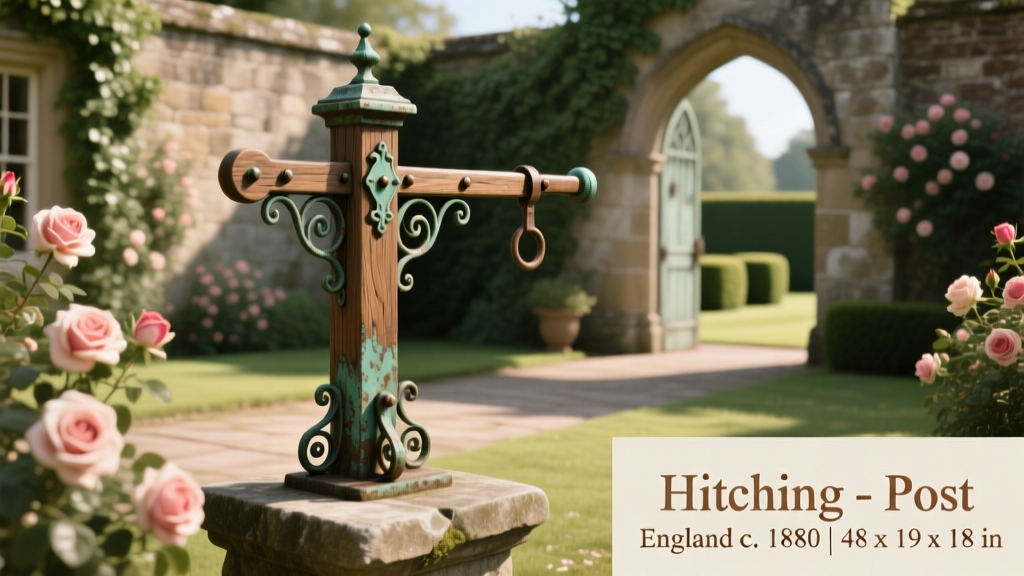
Garden Furnishings: Hitching Post Raised Plinth, England, c. 1880 — A Structural and Historical Analysis
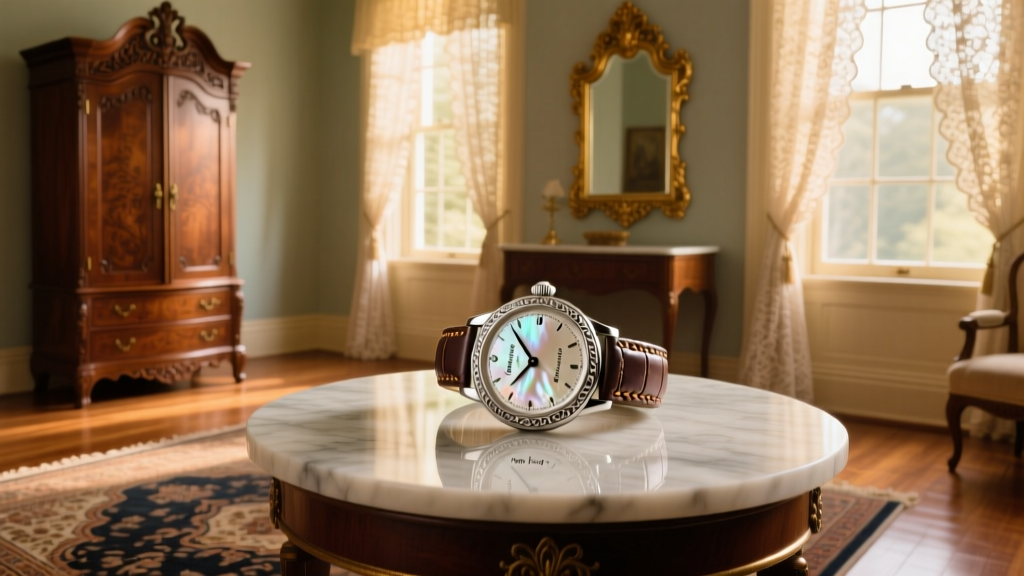
The Mary Marvel Wristwatch: A Rare 1940s Comic-Inspired Timepiece and Its Place in Horological & Pop Culture History
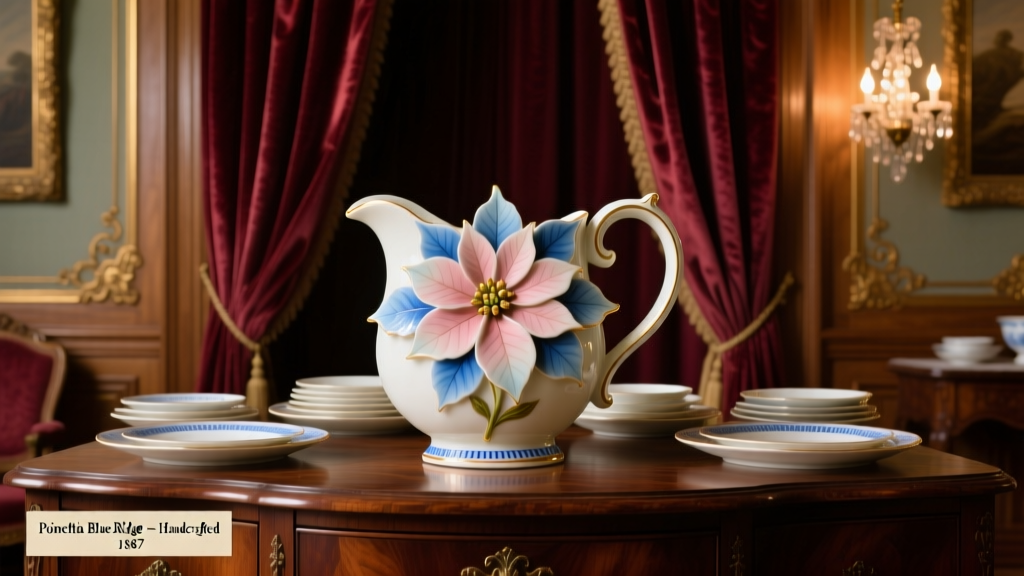
Dinnerware Creamer Poinsettia Blue Ridge: History, Identification, and Restoration of a Mid-Century American Ceramic Treasure

The Rare Purple-Suited Santa: Decoding a 1908 German Embossed Christmas Postcard
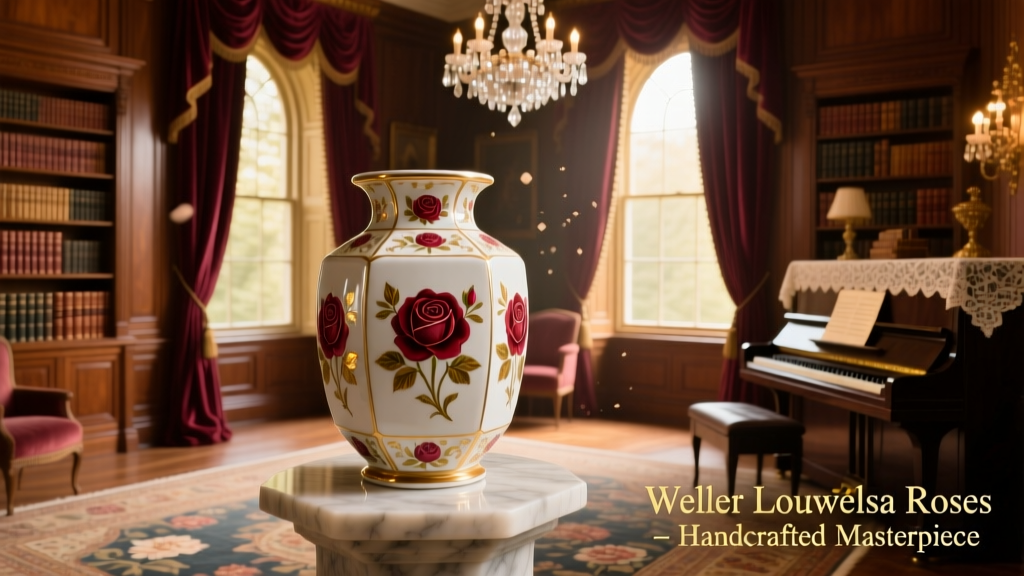
Weller Louwelsa Roses Hexagonal Vase: Identification, History, and Restoration Guidance for the 5½ × 2¾-Inch Example
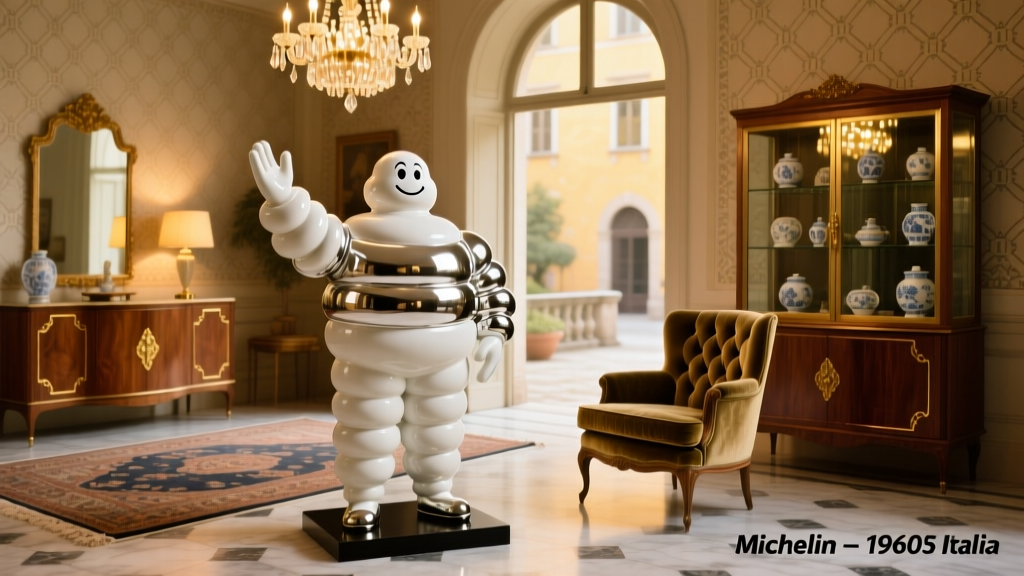
Radio Advertising Michelin Man Figural Collectible: Italian Production, 1960s Origins, and Restoration Insights
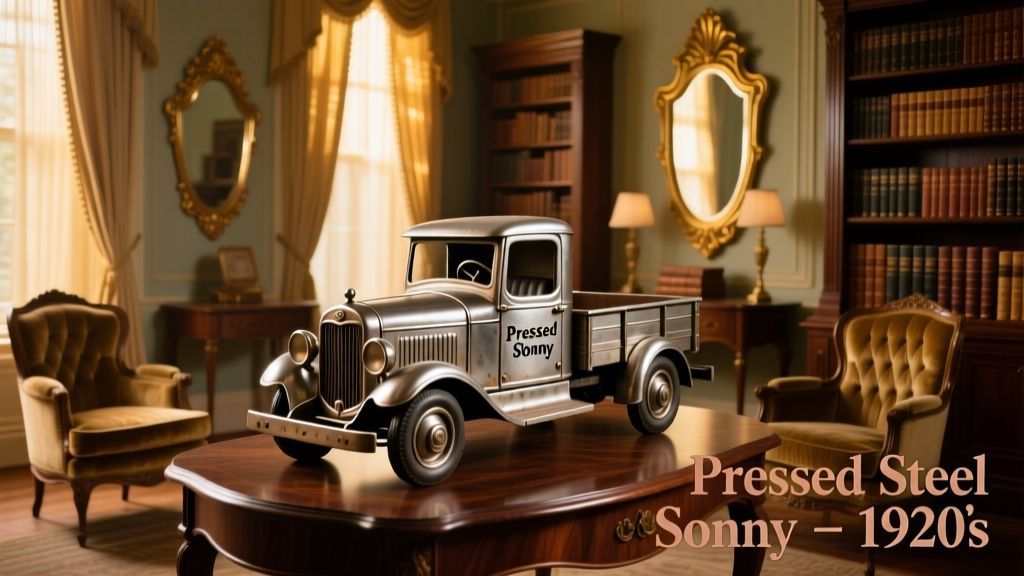
Toy Truck Cannon: Pressed Steel Sonny Trucks of the 1920s — History, Identification & Restoration Insights
Phoenix Glass Candy Dish Cover in Phlox Yellow Stain: Identification, History, and Conservation of a Mid-Century American Art Glass Treasure
Mike Schmidt’s 1989 Batting Gloves and Baseball Glove: Authenticity, Specifications, and Restoration Insights