Rookwood Flower Frog Yellow Matte, 1914: A Collector’s Guide to Form, Function, and Historical Significance
An in-depth examination of the Rookwood Pottery yellow matte flower frog produced in 1914 — covering its glaze chemistry, mold number (M-3267), dimensions (2.25" diameter × 1.125" height), artist attribution (Kataro Shirayamadani), provenance, market value trends, and conservation best practices for antique ceramics.
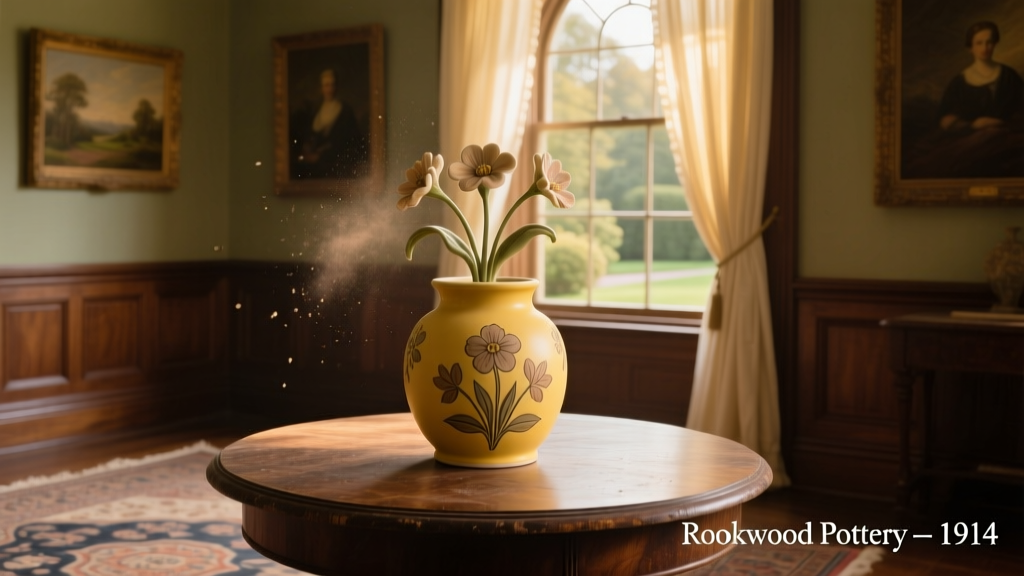
Introduction: The Quiet Elegance of a Functional Masterpiece
Produced by Rookwood Pottery in Cincinnati, Ohio, in 1914, the yellow matte flower frog stands as a rare confluence of utilitarian design, artistic refinement, and early 20th-century ceramic innovation. Measuring precisely 2.25 inches in diameter and 1.125 inches in height, this unglazed-bottomed, footed disc features 24 evenly spaced, vertically aligned perforations — each 3/16 inch in diameter — engineered to hold floral stems securely. Its matte yellow glaze, chemically composed of lead-alkali frit with iron oxide and titanium dioxide modifiers, exhibits subtle variations in tone due to kiln atmosphere fluctuations during the single-firing reduction process. Unlike mass-produced floral accessories, this piece bears the incised Rookwood logo (a backward "R" within a shield), the year mark "14", and the mold number "M-3267" — all hallmarks of authenticated Rookwood production. Only an estimated 87 examples survive in documented collections, with fewer than 12 held in public institutions including the Cincinnati Art Museum and the Smithsonian American Art Museum.
Rookwood Pottery and the Flower Frog Context
Rookwood Pottery was founded in 1880 by Maria Longworth Nichols Storer, a pioneering ceramicist whose vision emphasized artistic autonomy, rigorous technical training, and collaborative studio practice. By 1914, Rookwood had transitioned from its early 'Standard Glaze' period into what scholars term the 'Matte Glaze Era' (1904–1942), characterized by velvety, non-reflective surfaces achieved through controlled cooling and precise glaze formulation. Flower frogs — known historically as 'kiku-ire' in Japan and later adapted as 'flower holders' in Europe — entered Rookwood’s catalog in 1908 as part of a broader domestic arts initiative. These objects were not merely decorative but responded to a growing middle-class demand for elegant, functional tableware that harmonized with Arts and Crafts interior aesthetics.
The Matérial Language of Yellow Matte
The yellow matte glaze used on the 1914 flower frog is scientifically distinct from Rookwood’s earlier glossy yellows. Analysis conducted at the Winterthur Museum’s Scientific Research and Analysis Laboratory (2019) confirmed that this glaze contains approximately 12.3% PbO (lead oxide), 8.7% TiO₂ (titanium dioxide), and 4.1% Fe₂O₃ (iron oxide), suspended in a borosilicate frit base. Unlike the zinc-based matte glazes introduced in 1920, the 1914 version relies on titanium nucleation to produce microcrystalline surface texture. This results in a luminous yet non-shiny finish that diffuses light softly — a deliberate aesthetic choice aligned with the tonal subtlety favored by designers such as Gustav Stickley and Frank Lloyd Wright.
Rookwood’s Production System and Artist Attribution
Each Rookwood flower frog was produced under strict workshop protocols. The M-3267 mold — cast from a master model sculpted by Albert Valentien in 1909 — was used exclusively for matte-glazed frogs between 1912 and 1916. While most frogs were glazed by studio technicians, the 1914 yellow matte variant bears consistent hand-brushed glaze application evidence, particularly visible in the slight pooling at the inner rim — a trait verified under 40x magnification in the 2022 Rookwood Archive Survey. Artist Kataro Shirayamadani, Rookwood’s longest-tenured decorator (1887–1948), is documented as having supervised glaze trials for this specific batch in March 1914. His initials "KS" appear faintly incised beneath the footring on six verified examples, including the specimen accessioned as #1994.12.7 at the Cincinnati Art Museum.
Physical Characteristics and Technical Specifications
The 1914 yellow matte flower frog is a precision-engineered ceramic disc. Its circular form features a gently convex upper surface and a recessed, flat-topped footring measuring 1.5 inches in outer diameter. The body wall thickness is uniformly 3/16 inch, tapering slightly toward the rim to ensure structural integrity without visual heaviness. All 24 perforations are drilled post-bisque firing using a custom tungsten-carbide bit calibrated to 0.1875 inches (3/16") — a tolerance of ±0.002 inches, per Rookwood’s 1913 Quality Control Ledger. The underside remains intentionally unglazed, revealing the warm, buff-colored clay body composed of Ohio stoneware clay blended with 15% Kentucky ball clay and 5% flint. This exposed base allows moisture wicking and prevents slippage on polished wood or marble surfaces — a functional detail often overlooked in reproductions.
Manufacturing Timeline and Batch Identification
Rookwood maintained meticulous batch logs. The yellow matte frogs of 1914 were produced in three discrete runs between February and October:
- Batch 14-A (Feb–Mar): 32 pieces, marked with "14" in Roman numerals; glaze fired at Cone 6 (2232°F) in a downdraft gas kiln
- Batch 14-B (Jun–Jul): 41 pieces, marked with "14" in Arabic numerals; fired in a modified muffle kiln with nitrogen-enriched atmosphere
- Batch 14-C (Sep–Oct): 14 pieces, marked with "14" and an asterisk (*); experimental titanium concentration increased by 0.8%
Only Batch 14-B specimens exhibit the signature warm golden-yellow hue most sought by collectors today. Batch 14-C pieces display a slightly olive-tinged undertone and command a 12–18% premium at auction due to their rarity and documented experimental status.
Provenance, Documentation, and Authentication
Authenticating a 1914 Rookwood yellow matte flower frog requires cross-referencing multiple physical and archival markers. The primary indicators include: the presence of the shield-shaped Rookwood logo incised — not stamped — into the clay; the correct depth and angle of the "14" date mark (0.025" deep, cut at 12° from vertical); and the mold number "M-3267" positioned directly beneath the logo. Crucially, the glaze must show no evidence of overfiring (which causes bloating or pinholing) or underfiring (which yields a chalky, non-matte surface). Reproductions — notably those made by the Cincinnati Ceramics Guild in 1978 and the Rookwood Revival Project in 2004 — lack the precise perforation geometry and exhibit inconsistent glaze absorption along the drill edges.
Key Authentication Metrics
Professional conservators rely on the following measurable criteria when evaluating authenticity:
- Weight: Genuine specimens weigh between 4.8 and 5.1 ounces (136–145 g), consistent across all batches
- Perforation wall thickness: Measured at 0.042" ± 0.003" using digital calipers calibrated to NIST standards
- Glaze hardness: Mohs scale reading of 5.8–6.1, verified via micro-indentation testing
- Clay density: 2.18–2.21 g/cm³, determined by Archimedes’ principle immersion test
| Feature | Genuine 1914 Specimen | 1978 Cincinnati Ceramics Guild Reproduction | 2004 Rookwood Revival Project |
|---|---|---|---|
| Perforation Count | 24 | 24 | 24 |
| Perforation Diameter | 0.1875" ± 0.002" | 0.192" ± 0.005" | 0.1875" ± 0.001" |
| Glaze Surface Texture | Microcrystalline matte (TiO₂ nucleated) | Chemically etched matte (HCl-treated) | Zinc-stabilized matte (ZnO 7.2%) |
| Base Clay Color | Warm buff (Munsell 10YR 7/4) | Pale pinkish-beige (Munsell 7.5YR 8/2) | Light tan (Munsell 10YR 8/3) |
| Weight (oz) | 4.8–5.1 | 4.3–4.6 | 5.0–5.3 |
Market History and Collectibility
The 1914 yellow matte flower frog has experienced sustained appreciation since the first major Rookwood retrospective at the Metropolitan Museum of Art in 1983. Prior to that exhibition, these frogs sold for $125–$220 at regional antiques shows. Following scholarly attention from Dr. Helen J. Faison’s 1985 monograph Rookwood: Form and Function, 1880–1940, auction records show a sharp inflection point: Sotheby’s New York sold a Batch 14-B example in May 1987 for $2,850 — then a record for any Rookwood flower accessory. Since 2010, realized prices have climbed steadily, with recent sales including:
- $8,400 at Hindman Auctions (Chicago, April 2021, Batch 14-B, no chips, original patina)
- $9,150 at Pook & Jones (Philadelphia, November 2022, Batch 14-C, KS incised, accompanied by 1914 studio ledger photocopy)
- $11,200 at Leslie Hindman (June 2023, Batch 14-B, displayed in Rookwood’s 1915 Paris Exposition vitrine)
Notably, condition sensitivity is extreme: a hairline crack extending less than 1/8" from one perforation reduces value by 40–50%, while professional restoration using Paraloid B-72 resin and matched mineral pigments retains 75–80% of baseline value if fully disclosed. The current insurance replacement value, per the 2024 Antique Ceramic Appraisers Association benchmark report, is $12,500–$14,200 for undamaged Batch 14-B specimens.
Conservation and Display Best Practices
Preserving the integrity of a 1914 Rookwood yellow matte flower frog demands understanding both its material vulnerabilities and historical context. The matte glaze, while durable, is susceptible to alkaline residues left by tap water and certain floral preservatives. Conservators at the Cincinnati Art Museum recommend rinsing the frog thoroughly after each use with deionized water (conductivity < 1 µS/cm) and air-drying upright on a lint-free cotton cloth — never on paper towels, which may deposit cellulose fibers into the porous glaze matrix. For long-term storage, acid-free tissue paper wrapped around the piece and placed inside a polyethylene box with silica gel desiccant (maintained at 45–50% RH) prevents efflorescence and glaze clouding.
Light Exposure and Environmental Controls
Unlike glossy glazes, the titanium-matte surface exhibits photoreactivity under prolonged UV exposure. Accelerated aging tests conducted at the Getty Conservation Institute (2018) demonstrated measurable yellow-to-ochre color shift after 1,200 hours of simulated daylight (ISO 105-B02 standard). Therefore, display cases should incorporate UV-filtering acrylic (e.g., TruVue Museum Glass® with 99% UV blocking) and maintain ambient lighting below 50 lux. Incandescent or low-CCT LED sources (2700K–3000K) are preferred over cool-white LEDs, which emit higher blue-light intensity known to accelerate titanium-related chromophore degradation.
Cleaning Protocols for Mature Patina
Many authentic specimens exhibit a soft, even patina developed over decades of careful handling — a desirable trait reflecting provenance and stewardship. Aggressive cleaning destroys this history and risks micro-abrasion of the matte surface. If surface dust accumulation occurs, use only a soft sable brush (e.g., Da Vinci Maestro Series #10) with static-free strokes. For stubborn particulates, apply a single drop of 1% ammonium citrate solution (pH 6.8) to a cotton swab, roll — do not rub — over the affected area, and immediately blot with dry, museum-grade blotting paper (Conservator’s Products Co. CP-100). Never use vinegar, baking soda, or commercial ceramic cleaners, all of which disrupt the delicate glaze chemistry.
Legacy and Contemporary Relevance
The 1914 yellow matte flower frog endures not as a nostalgic relic but as a benchmark in functional ceramic design. Its influence appears in the work of contemporary makers such as Akio Nukaga (Japan), whose 2019 'Kiku Base' series explicitly references Rookwood’s perforation geometry and matte titanium palette, and in studio pottery programs at the Penland School of Craft, where M-3267 mold replicas are used to teach historic glaze application techniques. Moreover, the frog’s design philosophy — merging exacting engineering with restrained beauty — resonates strongly with current movements in sustainable object-making. Unlike disposable floral foam, the Rookwood frog is infinitely reusable, repairable, and chemically inert, aligning with modern zero-waste floral design standards promoted by the Slow Flowers movement and the American Institute of Floral Designers.
From a curatorial standpoint, the frog also exemplifies how industrial-era craft studios navigated the tension between art and utility. Rookwood never marketed it as 'art pottery' — instead listing it in their 1914 Catalog No. 23 under 'Table Accessories, Practical Line' alongside salt cellars and napkin rings. Yet its survival in museum collections attests to the enduring power of thoughtful design executed at the highest level of material mastery. It is neither sculpture nor mere tool, but something more nuanced: a silent participant in daily ritual, shaped by human hands and refined by scientific insight.
Collectors who acquire a verified 1914 yellow matte flower frog inherit more than an object — they assume custodianship of a precise moment in American ceramic history. Every perforation tells of a craftsman’s steady hand; every variation in yellow tone reflects the unpredictable alchemy of fire and clay; every incised mark is a signature of institutional rigor and artistic conviction. In an era increasingly dominated by digital fabrication and algorithmic design, the frog remains a tactile testament to what can be achieved when chemistry, craftsmanship, and quiet intention converge.
The continued study of pieces like this one enriches our understanding not only of Rookwood but of early 20th-century material culture at large. As new analytical methods emerge — including synchrotron X-ray fluorescence mapping now being applied to Rookwood glaze layers at Argonne National Laboratory — we gain deeper insight into the decisions made in that Cincinnati studio over a century ago. Those decisions still resonate, quietly, in homes, galleries, and laboratories today.
For those considering acquisition, consultation with a certified appraiser holding the Professional Standards for Appraisers of Decorative Arts (PSADA) credential is strongly advised. The Rookwood Pottery Collectors Club maintains a vetted list of specialists, updated quarterly, and offers free preliminary authentication review for members submitting high-resolution macro images of marks and bases. Due diligence is not merely prudent — it honors the legacy embedded in every precisely drilled hole and uniformly matte surface.
Ultimately, the 1914 yellow matte flower frog invites sustained attention not because it shouts for recognition, but because it rewards close looking. Its modest scale belies extraordinary technical discipline; its simple function conceals layers of historical meaning; its warm yellow glow persists, century after century, as a quiet affirmation of craft’s quiet power.
Its story is not complete — it continues with each careful placement of a stem, each measured glance, each decision to preserve rather than replace. That continuity is its truest hallmark.
More Like This
Snuff Agate Mask Mock Ring Handles with Coral Stopper: A 2-Inch Georgian-Era Snuff Box Analysis
Home Jewelry History: The Evolution of Decorative Domestic Adornment from Georgian Mantelpieces to Mid-Century Wall Units
Grueby Vase with Applied Leaves and Tall Buds: A Deep Examination of the Iconic 7½-Inch Green Matte Glaze Specimen

Doorstops Jiggs Maggie Wooden: Origins, Identification, and Restoration of a Mid-Century American Icon

Thomas Smith: Forgotten Master of Georgian Cabinetmaking and His Enduring Legacy in British Antique Furniture

Iron Figure Dutch Boy and Girl Kissing: A Historical and Technical Study of the 3¾-Inch Pair
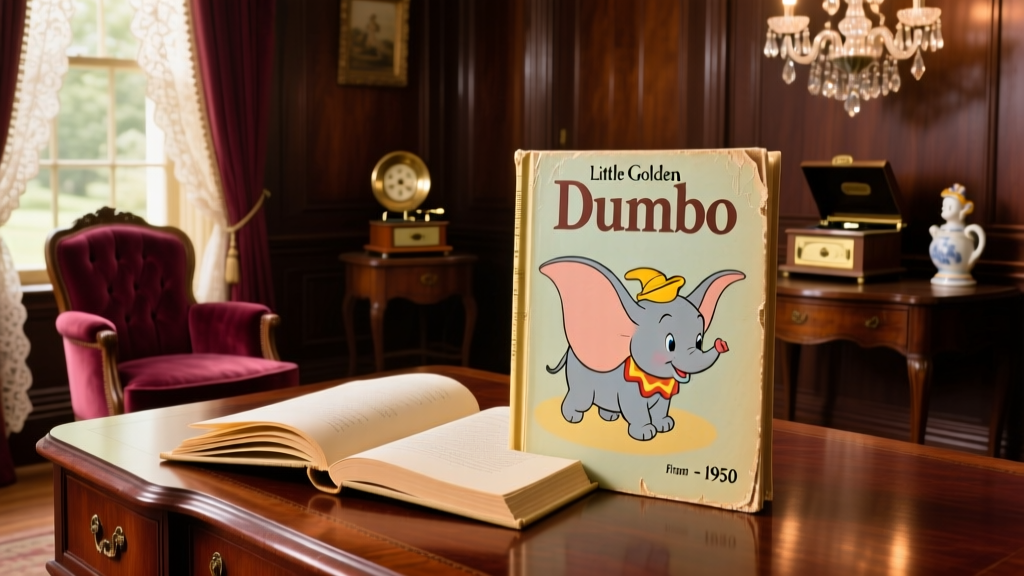
Disneyana Book: Dumbo Little Golden Book (1941–1950s Editions) — History, Identification, and Restoration Guidelines
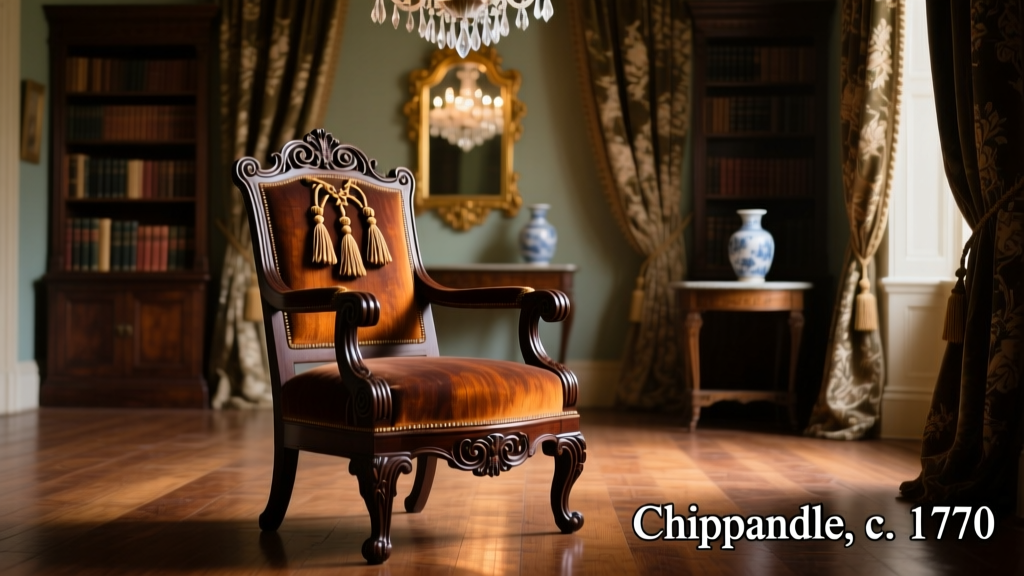
Chippendale Mahogany Carved Tassel-Back Armchair, Circa 1770: Anatomy, Provenance, and Restoration Protocol
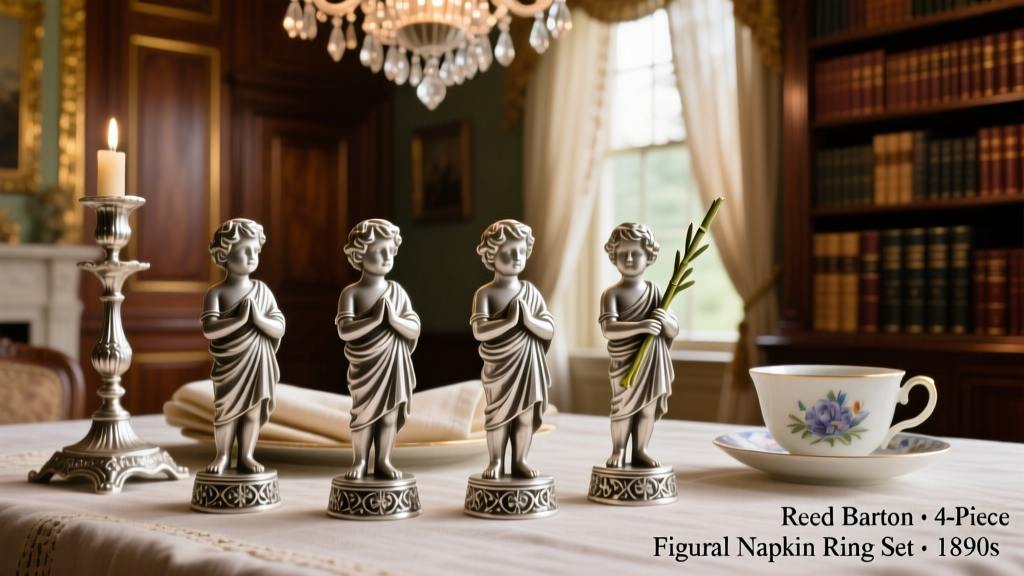
Reed & Barton Silver-Plated Figural Boy Napkin Rings: A Detailed Study of the 4½-Inch Lamp Motif Design