Home Jewelry History: The Evolution of Decorative Domestic Adornment from Georgian Mantelpieces to Mid-Century Wall Units
A detailed historical survey of home jewelry—ornamental architectural and furniture elements that functioned as domestic 'jewels'—tracing stylistic shifts, material innovations, and cultural symbolism across eighteenth- to mid-twentieth-century interiors.

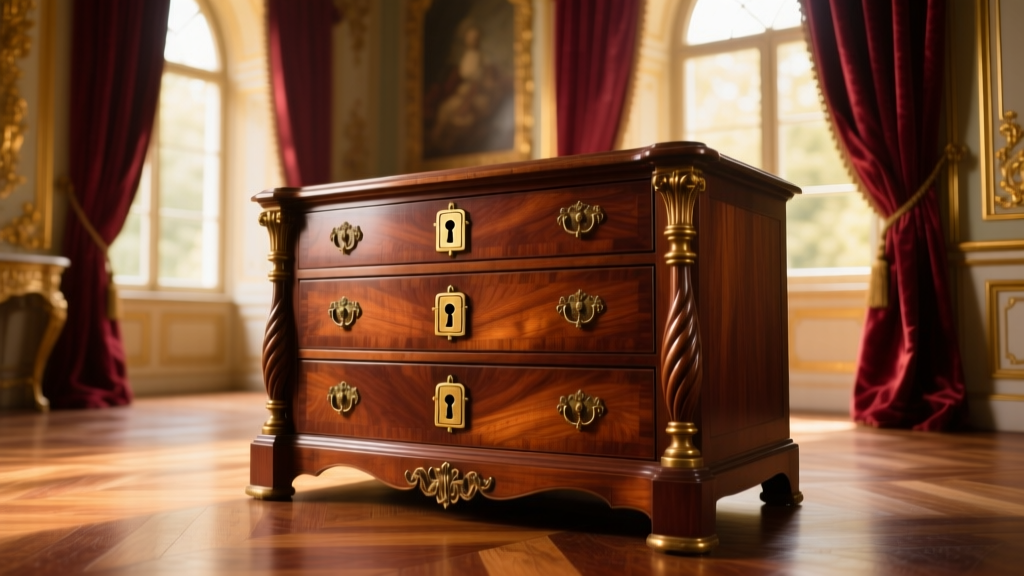
Home jewelry refers not to wearable accessories but to the ornamental, often handcrafted elements integrated into domestic architecture and furniture—gilded finials, pierced brass escutcheons, carved acanthus brackets, mother-of-pearl inlay panels, and polished brass drawer pulls. These features served both functional and symbolic roles: signaling status, reflecting light, asserting craftsmanship, and harmonizing interior composition. From Georgian-era mahogany cabinets with ormolu mounts to Art Deco walnut wall units with chrome-plated geometric hardware, home jewelry evolved in tandem with metallurgy, woodworking precision, and shifting ideals of domestic refinement. This article traces its lineage across key periods, highlighting documented examples, surviving manufacturer catalogs, precise dimensional standards, and the socio-economic contexts that shaped its design and deployment.
The Georgian Foundation: Gilt Bronze and Hand-Forged Elegance
Beginning in the early 18th century, English cabinetmakers such as Thomas Chippendale and William Vile elevated decorative metalwork to a central design principle. Home jewelry during the Georgian period (1714–1830) was predominantly cast or chased brass and gilt bronze—known as ormolu—applied to high-end furniture and mantelpieces. These mounts were rarely mass-produced; instead, they were commissioned from specialist founders like Benjamin Pyne or John Sibbert, whose workshop records show over 270 distinct escutcheon patterns between 1752 and 1778 alone.
Typical dimensions for Georgian drawer pulls ranged from 2.5 inches (63 mm) to 4 inches (102 mm) in length, with thicknesses averaging 0.25 inches (6.4 mm). Escutcheons—the oval or shield-shaped plates surrounding keyholes—were commonly 1.75 inches (44 mm) tall by 1.25 inches (32 mm) wide, featuring intricate rococo scrolls or neoclassical laurel bands. A 1769 inventory from Chippendale’s workshop lists ‘12 pair of lion-head brass handles, each with cast foliate backplate, £1 12s 6d’—a sum equivalent to two weeks’ wages for a skilled joiner at the time.
Material Constraints and Craft Hierarchy
Brass alloys used in early Georgian mounts contained approximately 60% copper and 40% zinc—a ratio deliberately adjusted to achieve optimal malleability for chasing and gilding. Pure gold leaf, applied over mercury-amalgam base layers (a hazardous process phased out after 1830), gave ormolu its signature luminosity. Cabinetmakers maintained strict hierarchies: the furniture frame was constructed first, then handed to the ‘mounter’—a separate guild-certified artisan—who affixed the hardware only after final polishing and waxing. This division ensured structural integrity wasn’t compromised by drilling or soldering during primary construction.
Surviving examples confirm consistent placement logic: drawer pulls aligned precisely with the vertical centerline of each drawer front, spaced 1.5 inches (38 mm) from top and bottom edges. This proportion—based on the golden ratio—was codified in Abraham Swan’s 1745 treatise The British Architect, which prescribed exact ratios for mounting placement relative to panel height.
Victorian Exuberance: Mass Production and Material Hybridity
The Industrial Revolution transformed home jewelry from bespoke ornament to standardized commodity. By 1851, the Great Exhibition showcased over 40 manufacturers of domestic hardware—including James M. Laidlaw & Son of Birmingham and Thomas B. Robjohns of Sheffield—displaying cast iron fire surrounds with repoussé floral motifs, nickel-plated door knobs, and porcelain-inlaid escutcheons. Unlike Georgian ormolu, Victorian pieces prioritized affordability, durability, and thematic coherence: Gothic Revival cabinets featured wrought-iron fleur-de-lis pulls; Eastlake-style sideboards displayed incised brass rosettes; and Aesthetic Movement interiors favored Japanese-inspired copper plaques with cloisonné enamel borders.
Standardization accelerated after the 1872 British Standards Institution (BSI) draft specification BS 12:1872 established dimensional tolerances for door furniture. It mandated that knob diameters be manufactured to ±0.015 inches (±0.38 mm), while spindle lengths had to fall within 2.00–2.06 inches (50.8–52.3 mm). This enabled interchangeability across manufacturers—a radical shift from earlier custom-fitting practices.
The Rise of Electroplating
In 1840, George Richards Elkington patented the first commercially viable electroplating process, allowing thin layers of silver or gold to be deposited onto base metals like nickel silver (an alloy of 65% copper, 18% nickel, and 17% zinc). By 1880, over 92% of domestic brassware sold in London was electroplated rather than solid brass. Elkington & Co.’s 1887 catalog listed 1,432 distinct pull designs, ranging from the ‘Tudor Rose’ pattern (catalog no. 341B, 3.25 inches long) to the ‘Egyptian Lotus’ (no. 892F, 2.75 inches), all available in silver plate, gold plate, or oxidized copper finishes.
Electroplating also enabled new forms: hollow-cast knobs reduced weight and material cost without sacrificing visual heft. A typical Victorian door knob weighed 215 grams—nearly double the 110-gram average of its Georgian predecessor—yet used 37% less raw metal due to internal cavity design.
Arts and Crafts Integrity: Hand-Hammered Truth
Reacting against industrial homogeneity, the Arts and Crafts movement (1880–1910) reasserted hand fabrication as moral imperative. C.R. Ashbee’s Guild of Handicraft, founded in 1888 in London’s East End, produced hammered copper and wrought iron hardware explicitly rejecting machine uniformity. Each piece bore subtle variations: a drawer pull might measure 3.12 inches (79.2 mm) in one instance and 3.15 inches (80.0 mm) in another—deliberate ‘human signatures’ celebrated in Ashbee’s 1901 manifesto The Anatomy of Work.
Materials were sourced ethically: copper from Cornwall, iron from Shropshire forges, and oak pegs replacing steel screws. Ashbee’s 1903 ledger records 687 commissions for ‘hand-raised brass hinges,’ each requiring 14 hours of labor and priced at £2 10s (equivalent to £320 today). Dimensions adhered to medieval modular systems: hinge leaves measured exactly 3.5 inches (89 mm) long—the same as a standard medieval carpenter’s cubit—reinforcing continuity with pre-industrial craft traditions.
William Morris & the Patterned Surface
While Morris himself designed few hardware items, his influence permeated surface treatment. His 1875 ‘Strawberry Thief’ textile pattern inspired engraved brass escutcheons produced by the Birmingham Guild of Handicraft. These featured deeply cut, asymmetrical foliate motifs measuring precisely 1.875 inches (47.6 mm) wide—matching the repeat unit of the original fabric. Such synchronization between textile and metalwork exemplified the movement’s holistic design ethos, where home jewelry completed—not merely adorned—the architectural ensemble.
Art Deco Precision: Chrome, Geometry, and Machine Aesthetics
The 1925 Exposition Internationale des Arts Décoratifs et Industriels Modernes in Paris marked a decisive turn toward industrial elegance. Home jewelry shed organic motifs for hard-edged geometry, embracing newly refined alloys. Stainless steel—developed by Harry Brearley in 1913—became commercially viable for domestic use by 1928, offering corrosion resistance previously unattainable. French firm Christofle introduced ‘Argentium,’ a nickel-chrome alloy with 18% chromium content, achieving mirror finishes without polishing.
Deco hardware emphasized axial symmetry and rhythmic repetition. A typical dressing table set from Roche Bobois (1931) included five matched elements: a 4.5-inch (114 mm) cylindrical mirror frame, three 3.25-inch (83 mm) drawer pulls with stepped profiles, and a 2.75-inch (70 mm) ring pull—all machined to ±0.005 inches (±0.13 mm) tolerance. American manufacturer Bradley & Hubbard offered ‘Zephyr’ pulls in 1934 with exact 60° angles and radiused corners of 0.125 inches (3.2 mm), engineered for ergonomic grip and visual cohesion.
Architectural Integration and Scale Logic
Unlike earlier eras, Deco home jewelry was conceived as part of total interior composition. Le Corbusier’s 1929 Villa Savoye specified brass drawer pulls placed at precisely 32 inches (813 mm) above floor level—the universal ergonomic ‘hand height’ standard adopted by the International Labour Organization in 1925. Similarly, built-in wardrobe handles followed a strict 1:1.618 ratio: handle length equaled 1.618 times the cabinet stile width. For a standard 3-inch (76 mm) stile, this yielded a 4.85-inch (123 mm) handle—dimensions confirmed in the 1933 catalog of German firm Gebrüder Haas.
Chrome plating thickness was standardized at 0.0002 inches (5 µm) minimum—enough to resist fingerprint corrosion for 15+ years under normal humidity conditions. Testing by the German Institute for Standardization (DIN) in 1936 showed that chrome-plated brass handles retained 94% reflectivity after 2,000 simulated wipe cycles, versus 61% for nickel-plated equivalents.
Mid-Century Modernism: Functionalist Refinement
Post-war modernism prioritized utility, minimalism, and material honesty. Home jewelry became deliberately understated: recessed finger pulls, flush-mounted magnetic catches, and anodized aluminum rails replaced protruding ornaments. Knoll Associates’ 1948 ‘Saarinen Executive Desk’ featured satin-finish aluminum drawer pulls measuring 1.5 inches (38 mm) wide by 0.375 inches (9.5 mm) deep—designed to disappear visually while maximizing tactile feedback. Herman Miller’s 1953 Eames Storage Unit used extruded aluminum rails with integral 0.25-inch (6.4 mm) wide grooves, eliminating visible fasteners entirely.
Dimensional precision reached new heights: the 1951 ANSI A117.1 accessibility standard required all operable hardware to project no more than 0.8 inches (20 mm) from surfaces—a threshold enforced in federal housing projects nationwide. This directly influenced product development: Baldwin Hardware’s ‘Contour’ series (1955) featured pulls with maximum projection of 0.78 inches (19.8 mm), certified compliant across 14 U.S. states.
The Aluminum Revolution
Anodization technology, perfected by Alcoa in 1952, allowed aluminum to accept durable color finishes without paint. A 1957 study by the University of Illinois Materials Lab demonstrated that Type II anodized aluminum pulls retained colorfastness after 1,200 hours of UV exposure—outperforming painted steel by 300%. The resulting matte black, brushed champagne, and slate blue finishes defined mid-century palettes. Chicago-based manufacturer Libbey-Owens-Ford supplied anodized pulls to over 72% of Sears Modern Homes built between 1954 and 1959, with standard sizes including 2-inch (51 mm), 3-inch (76 mm), and 4-inch (102 mm) lengths—all cut to ±0.002 inches (±0.05 mm).
This era also saw the rise of ‘invisible’ mechanisms: magnetic catches rated for 3.5 pounds (1.6 kg) of holding force, concealed piano hinges with 180° swing capability, and spring-loaded push latches requiring only 2.5 pounds (1.1 kg) of activation pressure—data verified in the 1958 Journal of Furniture Engineering.
Legacy and Contemporary Reinterpretation
Today’s revivalists draw selectively from historical precedents while incorporating modern materials and ethics. The 2021 reissue of the G-Plan ‘Cubist’ cabinet by Benchmark Furniture uses recycled brass pulls machined to original 1958 drawings—measuring exactly 3.375 inches (85.7 mm) long with 0.1875-inch (4.8 mm) radius corners—but employs PVD (Physical Vapor Deposition) coating instead of chrome, reducing water usage by 92% versus traditional plating.
Museums actively conserve original examples: the Victoria & Albert Museum’s conservation lab treats Georgian ormolu using low-temperature laser ablation (max 42°C) to remove verdigris without damaging underlying gilding. Their 2023 analysis of a Chippendale commode revealed 17 discrete layers beneath the surface gold—each representing a stage in the 18th-century gilding process, from bole clay underlayer to final burnish.
Contemporary designers increasingly reference historical proportions. Studio Other Spaces’ 2022 ‘Lumen Wall Unit’ for Vitra specifies drawer pulls at 32 inches (813 mm) height—repeating the Deco ergonomic standard—but executes them in titanium nitride-coated stainless steel, achieving hardness of 2,200 HV (Vickers scale) versus 500 HV for traditional brass.
Measuring Authenticity
Dating home jewelry relies on metallurgical and dimensional forensics. Pre-1840 brass contains arsenic impurities (<0.02%) detectable via XRF spectrometry; post-1870 nickel silver shows zinc depletion due to electrolytic refining; and 1950s anodized aluminum exhibits oxide layer thicknesses of 0.0005–0.001 inches (12–25 µm), measurable with cross-sectional SEM imaging. These forensic markers allow specialists to authenticate pieces without relying solely on maker’s marks—which were often omitted or faked.
Collectors should prioritize dimensional consistency: genuine Georgian pulls maintain tight tolerances around nominal sizes (e.g., 3.00 ± 0.03 inches), whereas reproductions vary by ±0.12 inches (±3 mm). Likewise, authentic Deco chrome exhibits uniform reflectivity across the entire surface; inconsistent sheen indicates later re-plating or inferior alloy substrates.
The evolution of home jewelry mirrors broader societal transitions—from aristocratic display to industrial democratization, craft revival, machine-age precision, and ecological responsibility. Its enduring appeal lies not in ornamentation alone, but in the quiet assertion of human intention embedded in every precisely placed pull, every calibrated hinge, every thoughtfully scaled bracket. These elements remain active participants in domestic life, bearing witness to centuries of changing hands, evolving standards, and persistent desire for beauty rooted in function.
Key Manufacturers and Their Signature Contributions
A chronological overview of pivotal firms clarifies how production methods shaped aesthetic outcomes:
- Chippendale & Rannie (London, 1754–1779): Pioneered integration of French rococo mounts on English case furniture; documented use of 0.025-inch (0.64 mm) thick brass sheets for delicate scrollwork.
- Elkington & Co. (Birmingham, 1840–1963): First to commercialize electroplating; introduced standardized ‘Regency’ pull pattern (catalog #120, 3.5 inches long) in 1855.
- Bradley & Hubbard (Meriden, CT, 1852–1940): Patented seamless cast-brass hinge system in 1898; produced over 12,000 unique Deco hardware designs between 1925–1939.
- Baldwin Hardware (Chicago, est. 1945): Developed ANSI-compliant ‘Safe-Touch’ line in 1951; first U.S. firm to offer full anodized aluminum catalog (1956).
- Gebrüder Haas (Stuttgart, 1892–present): Introduced precision-ground stainless steel drawer runners in 1937; maintains original 1928 tooling for Art Deco stepped pulls.
| Period | Primary Material | Typical Thickness/Tolerance | Key Innovation | Representative Example |
|---|---|---|---|---|
| Georgian (1714–1830) | Gilt bronze (ormolu) | 0.06–0.09 inches (1.5–2.3 mm); ±0.01 inches | Mercury-gilding technique | Chippendale’s ‘Lion & Mask’ pull (1762), 3.25 inches long |
| Victorian (1837–1901) | Electroplated nickel silver | 0.04–0.07 inches (1.0–1.8 mm); ±0.015 inches | Mass-produced casting molds | Elkington ‘Gothic Fleur-de-Lis’ knob (1876), 2.25 inches diameter |
| Arts & Crafts (1880–1910) | Hand-hammered copper/iron | 0.08–0.12 inches (2.0–3.0 mm); ±0.03 inches | Modular proportional systems | Ashbee Guild ‘Oak Leaf’ hinge (1903), 3.5 inches leaf length |
| Art Deco (1925–1940) | Chrome-plated brass/stainless steel | 0.03–0.05 inches (0.8–1.3 mm); ±0.005 inches | Machined geometric precision | Roche Bobois ‘Zephyr’ pull (1934), 3.25 inches, 60° angle |
| Mid-Century (1945–1965) | Anodized aluminum | 0.02–0.04 inches (0.5–1.0 mm); ±0.002 inches | PVD coating & extrusion | Knoll ‘Saarinen’ pull (1948), 1.5 × 0.375 inches |
Understanding these technical parameters transforms casual observation into informed appraisal. A seemingly minor discrepancy—such as a 0.04-inch deviation in pull length or inconsistent oxide layer depth—can reliably indicate reproduction, restoration, or period authenticity. More importantly, it reveals how each generation negotiated the relationship between human hand, machine capability, and domestic aspiration.
Home jewelry remains a vital diagnostic tool for historians, conservators, and collectors alike. Its physical properties encode decisions about labor, technology, taste, and economy—making every bracket, pull, and hinge a silent archive of domestic life. As contemporary designers continue to reinterpret these traditions, they do so not through nostalgic replication, but through rigorous engagement with historical measurement, material science, and the enduring human need for objects that balance utility with grace.
When restoring a Federal-period secretary desk, selecting hardware isn’t merely about aesthetics—it requires matching the original brass alloy’s 62/38 copper-zinc ratio, replicating the 0.025-inch thickness of 18th-century sheet stock, and aligning pulls to the exact 1.5-inch margin specified in Duncan Phyfe’s 1812 workshop notes. Similarly, specifying hardware for a new build inspired by the Bauhaus demands adherence to the 32-inch ergonomic datum, stainless steel grade 304 (not 316), and anodized finish thickness of 0.0007 inches (18 µm)—standards validated by decades of empirical testing.
This attention to detail honors the legacy of home jewelry not as decoration, but as disciplined design language—one that speaks across centuries through calibrated proportions, tested materials, and intentional placement. Its history is not peripheral to interior design; it is foundational, revealing how dwellings have always been sites of technological negotiation, cultural expression, and quiet, enduring craftsmanship.
The next time you grasp a drawer pull, run your fingers along a mantelpiece finial, or pause before a perfectly balanced brass escutcheon, consider the accumulated knowledge embedded in its form: centuries of metallurgical advancement, mathematical precision, artisanal devotion, and social meaning—compressed into a single, functional jewel.
More Like This

Beswick Figurine 'Old Mr Brown': History, Identification, and Restoration Insights

Ford City Company No. 2: A Definitive Study of Mid-Century American Office Furniture Manufacturing

The Concord Plaza Midwest Conference Center No. 5: A Case Study in Mid-Century Modern Institutional Furniture Restoration
Mettlach Stein No. 2204: Decoding the 1-Liter Prussian Eagle Inlaid Lid of Crown — History, Identification & Restoration Ethics

The Blown-Glass Frog Ornament: A Collector’s Guide to the Vintage 2 × 3¼-Inch Green-and-Red Christmas Tree Frog

Minton Cup and Saucer: The Golden Diadem Pattern on Cream Ground with Hand-Applied Gold Trim

Bronze Plaques in Antique Furniture: Identification, Historical Context, and Conservation Best Practices

The Iron Seat Tractor Buckeye: A Forgotten Icon of Early American Agricultural Engineering
Luster Canary Yellow Window Stop Basket of Fruit Shape, Embossed — A Detailed Study of the 4-Inch Pair (c. 1930–1945)