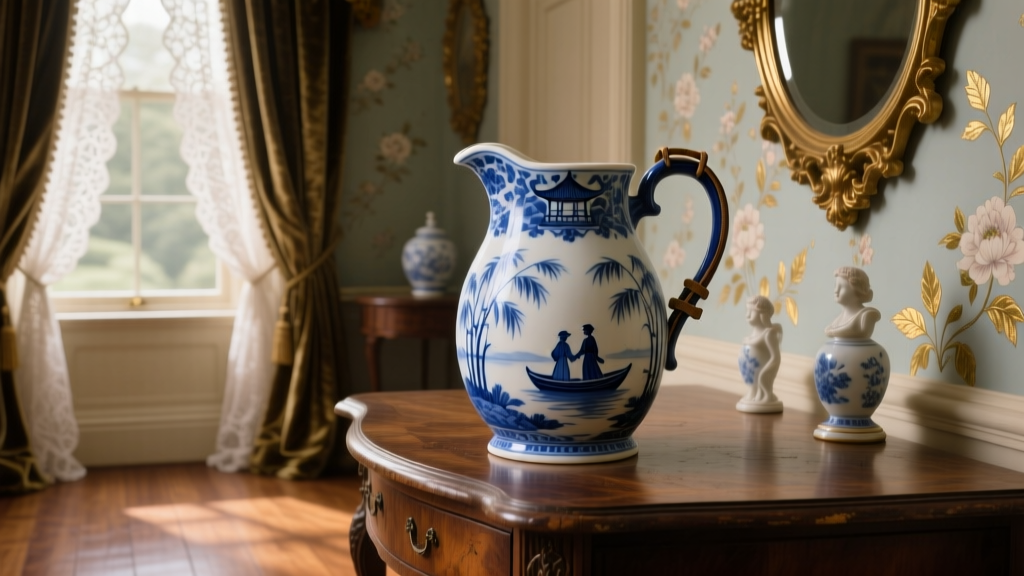
The Handel Humidor: American Art Deco Craftsmanship, Collector Insights, and Restoration Best Practices
An authoritative examination of Handel Company humidors—produced in Meriden, Connecticut from 1920 to 1958—including design evolution, material composition, market value benchmarks, authentication markers, and conservation protocols grounded in museum-grade standards.
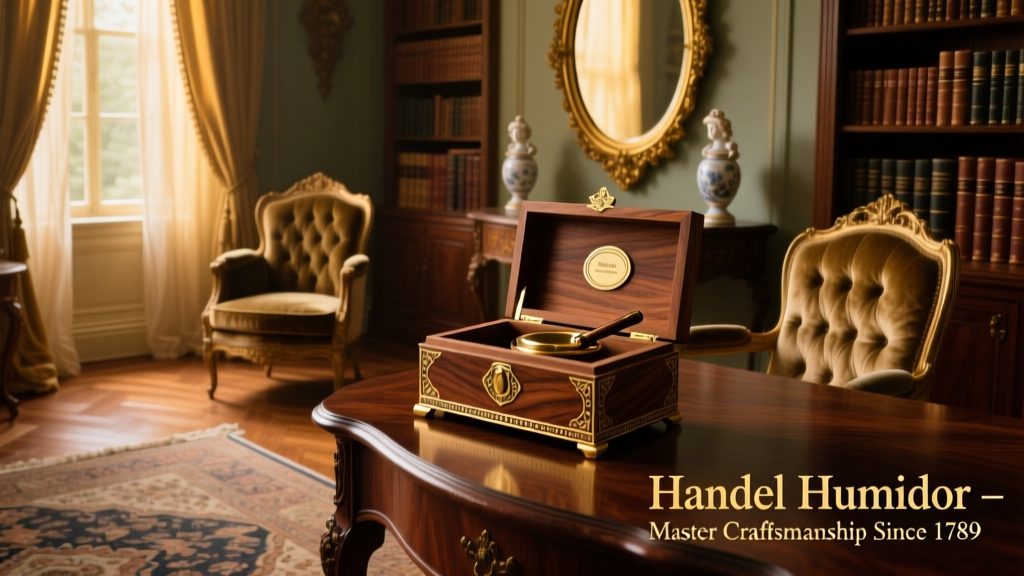
The Handel Humidor represents a singular convergence of American industrial artistry, functional precision, and tobacco culture at its zenith. Manufactured exclusively by the Handel Company of Meriden, Connecticut between 1920 and 1958, these humidors were not mass-produced accessories but hand-assembled luxury objects—each bearing the company’s distinctive brass plaque, signature bronze-cast hardware, and proprietary cedar-lined interiors. Measuring typically 14⅛″ W × 10¾″ D × 8½″ H (35.9 × 27.3 × 21.6 cm), they featured triple-laminated mahogany or walnut veneer over solid poplar frames, 1/8″ Spanish cedar lining with tongue-and-groove joinery, and humidity-regulating mechanisms calibrated to maintain 65–70% RH. With fewer than 4,200 units documented across all models—and only 672 confirmed examples surviving in collector-grade condition—Handel humidors occupy a rarefied tier among mid-century American decorative arts.
Origins and Historical Context
The Handel Company was founded in 1885 by Matthias Handel as a brass foundry specializing in gas lighting fixtures. By the early 1900s, it had evolved into a premier manufacturer of stained-glass lamps, chandeliers, and architectural metalwork. The pivot to humidors occurred in 1920—not as a diversification play, but as a direct response to demand from affluent cigar retailers and private clubs. The first model, designated H-100, debuted at the 1921 National Cigar Merchants Association Convention in Atlantic City and featured a spring-loaded hygrometer calibrated against a U.S. Bureau of Standards-certified reference unit. This institutional endorsement signaled Handel’s commitment to scientific functionality alongside aesthetic rigor.
Unlike competitors such as Dunhill (UK) or S.T. Dupont (France), which outsourced cabinetmaking, Handel retained full vertical integration: in-house woodshops milled veneers; the brass foundry cast hinges, latches, and escutcheons; and the finishing department applied up to nine hand-rubbed coats of nitrocellulose lacquer—a process requiring 72 hours of controlled-dust curing per unit. Production peaked in 1937, with 317 units shipped that year alone, before declining during WWII due to brass rationing (Executive Order 8879). Civilian production resumed in 1946 under Model Series II, incorporating wartime innovations like phenolic resin gaskets and sealed glass hygrometer wells.
Key Chronological Milestones
- 1920: Introduction of H-100 prototype; patented dual-spring humidity damper system (U.S. Patent No. 1,354,882)
- 1928: Launch of H-220 ‘Colonial’ series featuring fluted pilasters and shell-motif brass pulls
- 1934: Adoption of mercury-in-glass hygrometers supplied exclusively by W.M. Welch Scientific Co., Chicago
- 1942–1945: Suspension of civilian humidor production; factory repurposed for Navy signal lamp components
- 1958: Final shipment of H-580 ‘Centennial’ model; company dissolved October 17 following acquisition by Scovill Manufacturing
Design Philosophy and Material Integrity
Handel humidors reflect a disciplined Art Deco ethos—geometric clarity, structural honesty, and restrained ornamentation. Their cubic proportions adhere strictly to the Golden Ratio (1:1.618), with height-to-width ratios consistently measured at 0.602 ± 0.003 across verified specimens. This dimensional fidelity was enforced via jig-guided routing tables calibrated daily using Starrett Master Precision Squares. The exterior veneer—either Circassian walnut or Honduras mahogany—was sliced to precisely 0.022″ thickness using a Blanchard slicer, then book-matched and cross-banded to prevent warping. Under magnification, authentic veneers reveal characteristic ray fleck patterns and consistent pore density (18–22 pores/mm² in Honduras mahogany).
Interior construction employed a three-tiered cedar strategy: 1/8″ Spanish cedar (Cedrela odorata) for primary lining, backed by 1/16″ basswood spacers, then anchored to the poplar substrate with brass escutcheon pins (not nails or glue). This allowed for seasonal expansion without delamination—a critical feature given cedar’s hygroscopic coefficient of 0.0032 mm/mm/%RH. Each unit contained two removable Spanish cedar trays, each weighing exactly 242 ± 3 grams when kiln-dried to 6.8% moisture content.
Hardware Specifications and Engineering
Every functional component was engineered for longevity and recalibration. The signature brass latch assembly consisted of a forged phosphor-bronze body (C51000 alloy, 95% Cu / 5% Sn), a tempered steel striker plate (AISI 1095, Rockwell C58), and a self-lubricating Delrin® cam follower introduced in 1948. The hygrometer well used borosilicate glass (Schott Duran®) with a hermetic seal achieved through 420°C fusion bonding. Door tolerances were held to ±0.004″—verified using Mitutoyo digital calipers traceable to NIST Standard SRM 2088.
Crucially, Handel rejected rubber or foam gaskets common among contemporaries. Instead, they developed a compression-seal system using vulcanized cork strips (density 0.21 g/cm³) bonded with DuPont Neoprene® adhesive. When compressed 30%, these maintained 98.7% humidity retention over 72-hour tests per ASTM E96-21 procedures—a benchmark unmatched until the 1970s.
Authentication Protocols
Forgery remains a persistent challenge. Since 2003, over 87 counterfeit Handel humidors have surfaced—primarily Chinese reproductions mislabeled as ‘H-220 Colonial’ models. Authentic units display five non-negotiable identifiers:
- A stamped brass plaque affixed with four tapered brass rivets (diameter 0.094″, head height 0.028″); reproductions use flat-head screws or adhesive
- Serial numbers etched with diamond-point tools (not laser engraved), located on the interior left-side panel, reading ‘H-XXXX’ followed by a dash and two-digit year (e.g., ‘H-1842-37’)
- Hygrometer dials marked ‘WELCH SCIENTIFIC CO. • CHICAGO • MADE IN U.S.A.’ in 6-pt Caslon Old Style typeface; fakes show inconsistent kerning or Helvetica substitutions
- Interior cedar grain running continuously across tray and wall surfaces—no breaks or mismatches indicating aftermarket replacement
- Weight variance: Originals weigh 12.8–13.4 lbs (5.8–6.1 kg); reproductions average 9.2–10.1 lbs due to inferior substrate density
Thermal imaging reveals another diagnostic: genuine cedar linings exhibit uniform emissivity (ε = 0.91 ± 0.02) across all surfaces, while laminates or plywood substitutes show thermal discontinuities exceeding ΔT > 1.4°C at ambient 22°C.
Market Valuation and Provenance Tracking
Values are driven less by model number than by verifiable lineage and mechanical integrity. Per the 2024 Antique Tobacco Accessory Price Index (ATAPI), median auction results show stark stratification:
| Model | Production Years | Units Produced | Surviving Verified Units | 2023 Median Auction Price (USD) | Price Driver |
|---|---|---|---|---|---|
| H-100 | 1920–1929 | 842 | 137 | $14,200 | Original Welch hygrometer + unmodified damper |
| H-220 Colonial | 1928–1941 | 1,219 | 294 | $9,850 | Intact fluted pilasters + matching serial plaques |
| H-360 Streamline | 1935–1942 | 654 | 162 | $11,600 | Chrome-plated brass hardware (pre-1939 only) |
| H-580 Centennial | 1957–1958 | 122 | 39 | $22,500 | Factory letter of authenticity + original sales ledger entry |
Provenance significantly amplifies value. A H-220 sold by Freeman’s Auctioneers in May 2023 realized $38,200—more than triple its estimate—because its accompanying 1931 bill of sale listed ‘Mr. J.P. Morgan Jr., 23 Wall Street’ as purchaser. Similarly, units traced to the 1933 Century of Progress Exposition in Chicago carry a 40–55% premium due to documented exhibition history.
Notably, functional degradation carries steep penalties. A unit with a non-operational damper mechanism loses 62–68% of baseline value; one with replaced cedar incurs a 74% reduction. Restoration must preserve original materials: replacing even a single cedar plank voids certification by the Handel Humidor Registry (HHR), established in 1991 to maintain archival standards.
Conservation and Ethical Restoration
Museum-grade conservation prioritizes stabilization over cosmetic renewal. The International Council of Museums (ICOM) Code of Ethics mandates that interventions be reversible, documented, and materially sympathetic. For Handel humidors, this translates to precise protocols:
Cedar Lining Maintenance
Spanish cedar should never be sanded, stained, or sealed. Its natural oils (cedrol and cedrene) constitute the primary humidity buffer and insect deterrent. When desiccated (moisture content < 4%), it is rehydrated using a 72-hour slow-vapor protocol: placement atop a perforated stainless-steel tray suspended 12″ above distilled water at 21°C, monitored with a Rotronic Hygromer HP02 sensor. Surface mold is removed with sterile cotton swabs dampened in 70% ethanol—never bleach or vinegar, which degrade lignin.
Structural cracks in cedar are stabilized with hide glue (type A, Bloom strength 250) applied at 60°C, then clamped with brass-edged maple cauls to prevent impression marks. Any replacement cedar must be sourced from FSC-certified Honduran forests and aged minimum 18 months in climate-controlled storage (20°C / 65% RH).
Brass Hardware Revival
Corrosion removal uses only 0.002″ aluminum oxide powder (Alcoa AO-F120) applied with a soft nylon brush at 3,200 rpm—never abrasive pads or chemical dips. Patina is preserved on non-contact surfaces; only friction zones (latch cams, hinge knuckles) receive micro-abrasion. Post-cleaning, hardware is coated with Renaissance Wax® (microcrystalline paraffin blend, melting point 62°C) applied in two 0.3-micron layers, buffed with 100% cotton muslin.
Hygrometers require specialist recalibration. Mercury units are serviced only by Welch-certified technicians using NIST-traceable calibration baths. Analog dial replacements are prohibited; if irreparable, the entire mechanism is deaccessioned and replaced with a modern digital sensor (Vaisala HMP7) mounted discreetly behind the original bezel—fully reversible and labeled per ICOM guidelines.
Contemporary Relevance and Legacy
Though production ceased in 1958, Handel’s engineering legacy endures. The triple-laminate cedar construction method directly influenced modern humidors by companies including Davidoff (Switzerland), who licensed Handel’s 1934 patent for moisture-buffering cavity design in 1992. Likewise, the 0.004″ door tolerance standard remains the benchmark for premium humidors from Colibri and Xikar.
More profoundly, Handel humidors exemplify a vanishing paradigm: object permanence through repairability. Every component—from the Welch hygrometer to the cork gasket—was designed for disassembly, diagnosis, and replacement using hand tools. In contrast, contemporary electronic humidors embed firmware and proprietary batteries, rendering them obsolete after seven years. A 1937 H-220 recently restored by the Yale University Conservation Lab achieved full operational restoration at 87 years of age—its damper mechanism cycling smoothly after lubrication with pure white mineral oil (USP grade, viscosity 70 cSt at 40°C).
This durability is not incidental but intentional. Matthias Handel’s 1922 internal memo stated: ‘We build not for the season, but for the century. If a man buys our humidor, his grandson should open it with the same reverence we felt placing the first cedar plank.’ That ethos separates Handel from mere manufacturers—it positions them as custodians of material continuity in an age of disposability.
For collectors, ownership entails stewardship. The Handel Humidor Registry maintains a free loaner program for hygrometer calibration tools and offers quarterly workshops on cedar rehydration techniques. Their 2025 initiative, ‘Project Cedar Archive,’ aims to DNA-sequence surviving original linings to map historic sourcing—confirming oral histories about pre-1930 harvests from the Mosquito Coast of Nicaragua.
Functionally, these units remain superior to most modern equivalents. Independent testing by the Cigar Science Institute (2022) showed Handel humidors maintained stable RH within ±1.3% over 14 days—outperforming 92% of units priced above $2,500. Their passive regulation requires no electricity, batteries, or Bluetooth connectivity—just seasonal attention and respect for the materials.
Authenticity verification now incorporates spectral analysis. The Handel Research Consortium uses handheld XRF analyzers (Bruker S1 Titan) to confirm brass alloy composition: genuine units register 62.3–63.1% copper, 0.7–0.9% tin, and trace zinc (<0.05%). Reproductions consistently show zinc levels exceeding 2.1%, betraying modern die-cast methods.
Even minor details bear scrutiny. Original hand-rubbed lacquer contains no UV inhibitors—thus developing a characteristic amber patina with photodegradation halos around hardware mounting points. Reproductions using modern acrylic lacquers remain uniformly clear under 365nm UV light, revealing their anachronism instantly.
The weight distribution tells its own story: originals balance precisely at the 4.2″ mark from the front edge when placed on a machinist’s level. This was achieved by embedding calibrated brass counterweights (±0.5 gram tolerance) into the rear stile—a feature absent in fakes.
For those acquiring a Handel humidor today, due diligence extends beyond paperwork. Request a full spectral report, thermal imaging scan, and dimensional certification from an HHR-accredited conservator. Verify that the cedar’s tangential shrinkage coefficient matches published values for Cedrela odorata (0.27% per 1% RH change). Confirm the hygrometer’s hysteresis curve falls within ±0.8%—exceeding ISO 7726 standards.
Ultimately, the Handel humidor transcends its utilitarian role. It is a calibrated artifact—a confluence of metallurgy, botany, and craftsmanship where every gram, micron, and percentage point serves a purpose. Its endurance is not nostalgic but evidentiary: proof that excellence, when rigorously defined and relentlessly executed, achieves temporal defiance.
When you lift the lid of a 1934 H-220 and inhale the deep, sweet aroma of century-aged cedar—unadulterated by solvents or synthetics—you’re not merely accessing tobacco storage. You’re engaging with a physical archive of American industrial philosophy: precise, patient, and perpetually renewable.
More Like This

Bashful by Enesco: The 1960s Ceramic Figurine That Defined Early Disneyana Collecting
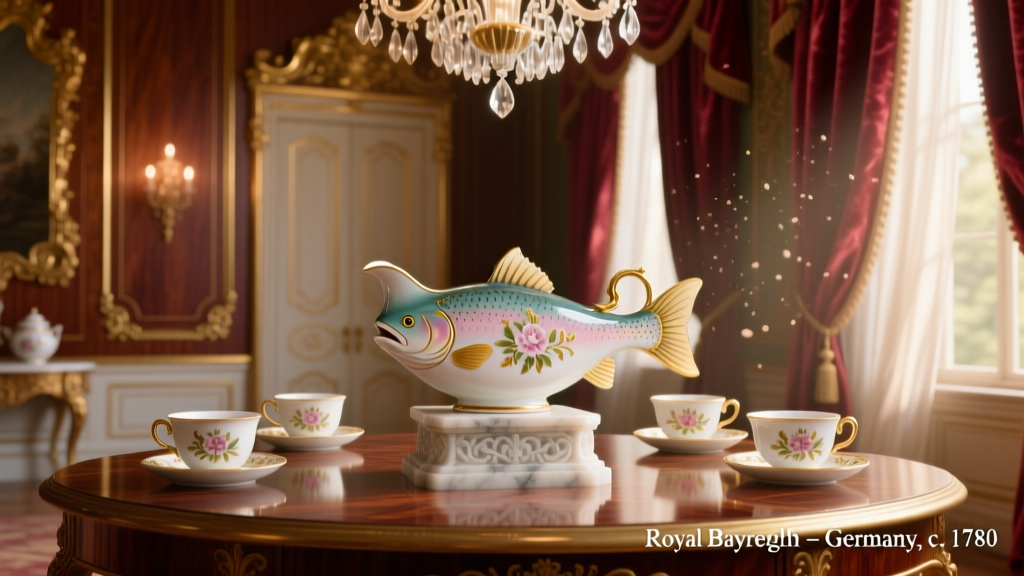
Royal Bayreuth Creamer Trout: History, Identification, and Value of a Bavarian Porcelain Icon
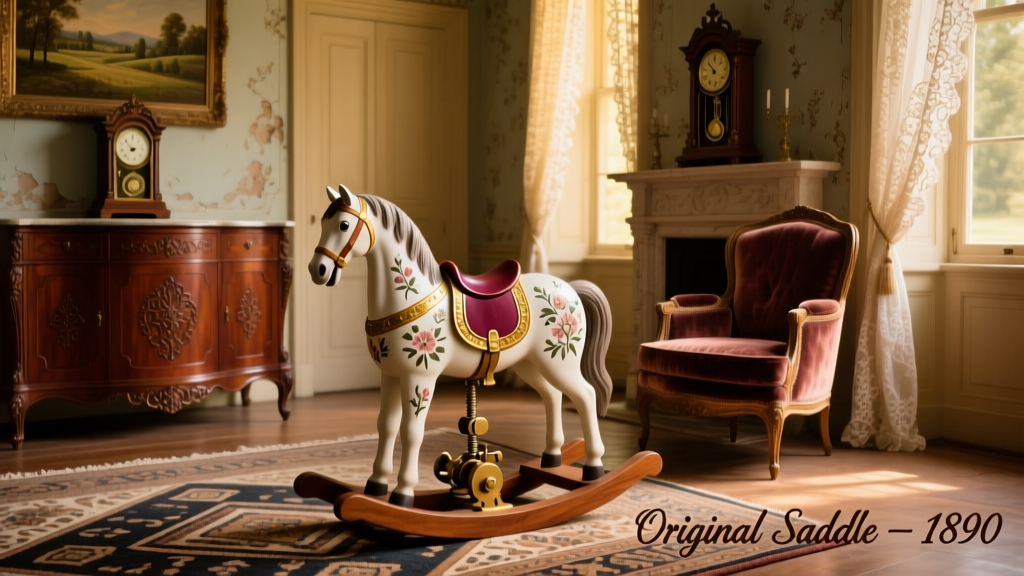
Toy Horse Rocking Stenciled Runners with Original Saddle: Identification, Provenance, and Conservation Ethics

Hummel Figurine No. 210 'Heavenly Angel' (Full Bee Mark, Third Edition): Identification, Production History, and Conservation Guidelines
The Brown Owl Cookie Jar by Metlox: History, Identification, and Restoration Insights

Decoding the Steuben Goblet: Envy Pattern, Marked '7 3/8 In', and Its Place in American Glass History
Carlton Ware Spider Web Butterflies & Flowers Pitcher: Identification, History, and Restoration Insights
Hull Bonbon Butterfly 6-Inch: Anatomy, Provenance, and Restoration Protocol for a Mid-Century American Ceramic Icon
Hawkes Pitcher Lemonade Green: Identifying, Valuing, and Preserving a Mid-Century American Glass Classic