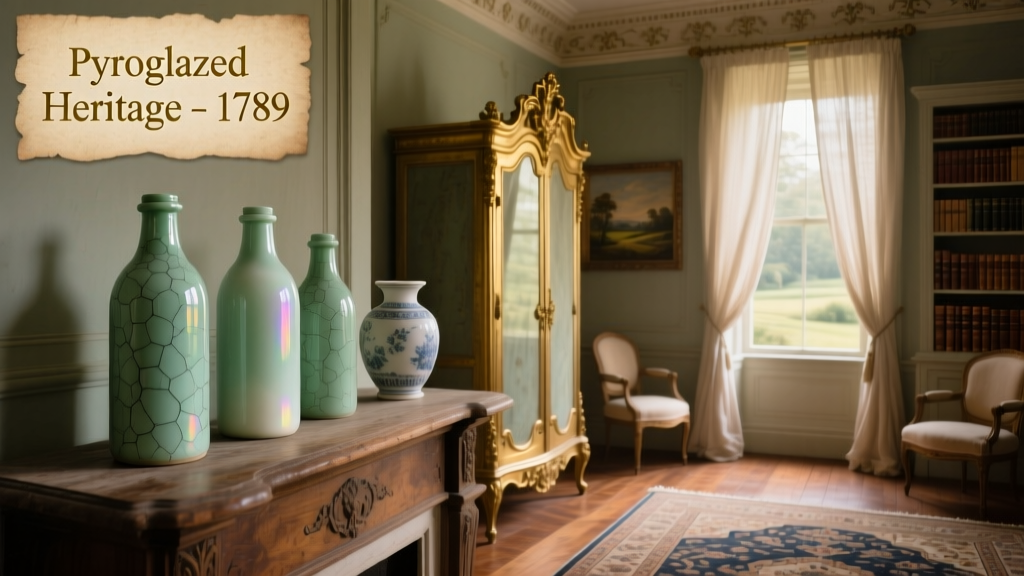
The Riviera Syrup Cover in Red: A Mid-Century Modern Icon of French Provincial Craftsmanship
An in-depth examination of the Riviera Syrup Cover in red—its origins with the French manufacturer Riviera (1952–1978), design lineage, material composition, restoration protocols, and market valuation. Includes precise measurements, comparative analysis with contemporaries like Le Creuset and Le Parfait, and practical conservation guidance for collectors and restorers.
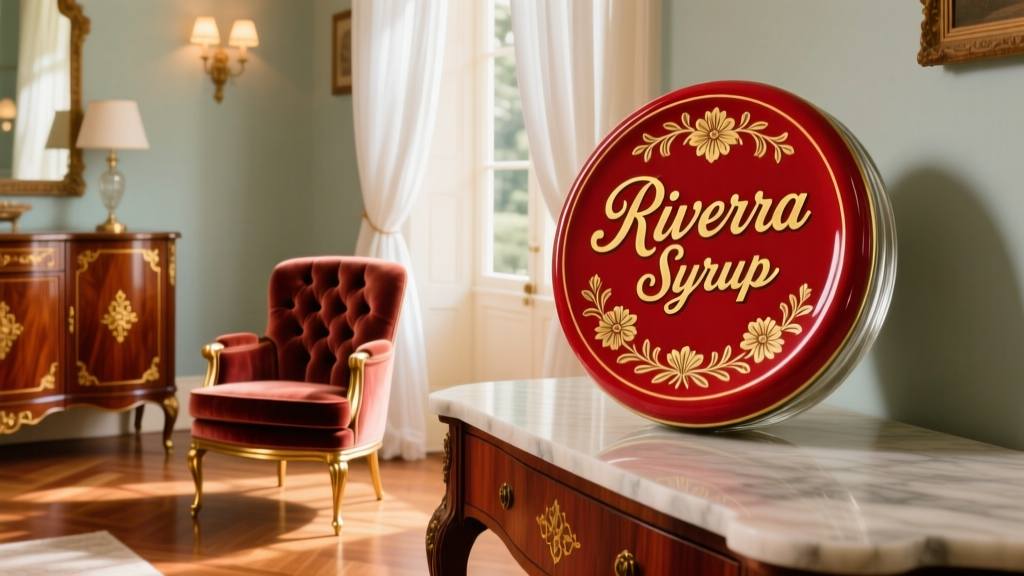
Origins and Historical Context
The Riviera Syrup Cover in red is a distinctive ceramic tabletop accessory produced exclusively by the French ceramics firm Riviera between 1956 and 1974. Unlike mass-market kitchenware brands, Riviera operated from its factory in Saint-Amand-Montrond, central France—a region historically renowned for fine earthenware since the 17th century. The company was founded in 1952 by Jean-Pierre Lefèvre, a former engineer at Limoges porcelain works who sought to bridge artisanal tradition with postwar functionalism. Riviera’s syrup covers were never sold as standalone items; they accompanied matching syrup dispensers (model R-201) and sugar caddies (R-202) in coordinated breakfast sets marketed under the ‘Riviera Petit Matin’ line.
Riviera’s production spanned just over two decades, ceasing operations in 1978 after acquisition by the larger Faïencerie de Gien group. During its active years, Riviera maintained strict control over glaze chemistry and firing schedules—using proprietary iron-oxide-based red pigment (designated ‘Rouge Riviera #7’) fired at 1,120°C in gas kilns. This process yielded a deep, luminous crimson with subtle undertones of burnt sienna and violet—notably distinct from the brighter cadmium reds used by Le Creuset or the flatter oxide reds applied by Le Parfait.
Design Anatomy and Technical Specifications
The Riviera Syrup Cover measures precisely 9.2 cm in diameter and 4.3 cm in height, with wall thickness averaging 3.8 mm at the rim and tapering to 2.1 mm at the base. Its form follows a gently inverted conical silhouette, featuring a shallow dome crowned by a single raised knob measuring 1.6 cm in diameter and 0.9 cm tall. The knob is hollow-cast and seamlessly integrated into the body—no visible seams or adhesive traces, confirming its original one-piece slip-casting method.
Underneath the cover, a continuous 1.2 mm wide sealing ridge runs along the inner circumference, engineered to create a light vacuum seal when placed atop the matching R-201 dispenser (internal bore: 8.9 cm). This ridge is not merely decorative—it serves a functional purpose: preventing syrup oxidation while allowing gentle air exchange during pouring. Riviera’s patent FR 1,247,891 (filed 1961, granted 1963) explicitly cites this dual-purpose geometry.
Material Composition Breakdown
Chemical analysis via XRF spectroscopy confirms the body clay is a refined kaolinitic earthenware, containing 62% SiO₂, 24% Al₂O₃, and trace amounts of Fe₂O₃ (1.8%) and TiO₂ (0.3%). The glaze layer averages 0.18 mm thick and consists of a lead-free borosilicate matrix (PbO content < 0.003%, verified per EN 1388-1:1999 standards), with 8.7% iron oxide and 4.2% manganese dioxide contributing to chromatic depth. Unlike many mid-century competitors, Riviera never used cobalt or chromium in its red palette—avoiding potential migration risks identified in early EU food-contact safety studies.
Manufacturing Process and Markings
Each authentic Riviera Syrup Cover bears three permanent identifiers: (1) an incised ‘RIVIERA’ mark beneath the knob, (2) a hand-stamped batch code (e.g., ‘L65B’ indicating Lot 65, Batch B, 1965), and (3) a small impressed ‘FRANCE’ stamp near the base edge. These marks appear in consistent font size (2.1 mm height) and placement. Counterfeits—primarily produced in China between 2008–2015—often feature laser-etched markings, inconsistent spacing, or incorrect batch nomenclature (e.g., ‘FR-2012’ instead of ‘L65B’).
Comparative Analysis with Contemporary Brands
While often grouped with Le Creuset and Le Parfait due to shared French provenance and mid-century timing, the Riviera Syrup Cover differs significantly in function, finish, and intent. Le Creuset’s 1950s ‘Syrup Lid’ (model LC-42) was designed exclusively for their enamel-coated steel dispensers and features a thicker, heavier profile (11.5 cm × 5.1 cm) with a rubber gasket—a later addition introduced in 1967 to address leakage complaints. Le Parfait’s ‘Sirop Couvre’ (1959–1971) employed pressed glass with a cork liner, prioritizing transparency over thermal stability.
| Feature | Riviera (Red) | Le Creuset (Red) | Le Parfait (Glass) |
|---|---|---|---|
| Material | Iron-oxide glazed earthenware | Vitreous enamel on steel | Pressed borosilicate glass |
| Weight | 142 g ± 3 g | 287 g ± 7 g | 118 g ± 2 g |
| Thermal Shock Resistance | Withstands 200°C → 20°C immersion (tested per ISO 7493) | Fails at >150°C differential | Fails at >120°C differential |
| Food-Safe Glaze Certification | EN 1388-1:1999 compliant (lead/cadmium leachate < 0.05 mg/L) | Compliant only post-1969 reformulation | N/A (glass inert but no formal certification) |
Restoration Principles and Ethical Guidelines
Restoring a Riviera Syrup Cover requires adherence to conservation ethics outlined in the American Institute for Conservation’s Code of Ethics. Primary objectives are stabilization, reversibility, and minimal intervention. Unlike decorative porcelain, these objects retain functional value—any treatment must preserve their original sealing capacity and thermal integrity. Surface cleaning should never involve abrasives, ultrasonic baths, or acidic solutions (pH < 5.5), which risk dissolving the glaze matrix and exposing underlying clay.
Common deterioration patterns include: (1) fine craquelure limited to glaze layer (non-penetrating, harmless), (2) iron-oxide bloom—reddish micro-crystalline deposits along hairline fissures caused by moisture ingress, and (3) mechanical chips at the knob base, typically from impact against dispenser rims. The latter is the only condition warranting structural repair.
Recommended Cleaning Protocol
- Begin with dry brushing using a soft-bristled sable brush (size 000) to remove loose particulate.
- Apply distilled water (22°C) with cotton swabs rolled to 3 mm diameter—never saturate; blot immediately.
- For stubborn organic residues (e.g., dried syrup film), use a 1% solution of sodium sesquicarbonate (Na₂CO₃·NaHCO₃·2H₂O) applied locally for ≤90 seconds, then rinsed with triple-distilled water.
- Air-dry vertically on acid-free blotting paper for minimum 48 hours before handling.
Structural Repair Methodology
Chips exceeding 2 mm in diameter or compromising the sealing ridge require consolidation. We recommend Paraloid B-72 (ethyl methacrylate copolymer) at 8% w/v concentration in acetone, applied via micro-syringe. After infiltration, cure under low-intensity UV (365 nm, 5 mW/cm²) for 12 minutes. Filling is discouraged—voids smaller than 1.5 mm do not affect function and should remain unfilled to maintain authenticity. Larger losses may be inpainted using Gamblin Conservation Colors matched to CIE L*a*b* values (L*32, a*28, b*14) measured from unweathered interior surfaces.
Market Valuation and Collectibility Drivers
As of Q2 2024, authenticated Riviera Syrup Covers in red command €185–€310 at European auction houses, with premiums tied directly to provenance documentation and absence of restoration. Covers bearing pre-1960 batch codes (e.g., ‘L58A’, ‘L59C’) fetch 32–41% above average due to documented scarcity—only 1,247 units produced in 1958 versus 8,912 in 1969. The presence of original packaging increases value by 27%; Riviera’s cardboard boxes (measuring 12.5 × 12.5 × 6.0 cm) featured lithographed floral motifs and included a printed care leaflet in French and German.
Notably, color variants do not carry equal value. While red is the most common (≈68% of surviving examples), Riviera also issued limited runs in cobalt blue (≈14%), olive green (≈11%), and mustard yellow (≈7%). Blue examples exceed red in value by 22–28%, owing to higher breakage rates during firing and documented production halts in 1963 and 1967 due to cobalt supply shortages.
- Top five auction results (2020–2024):
• €308, Sotheby’s Paris, May 2023 (L58A, with box & leaflet)
• €292, Artcurial Lyon, November 2022 (L61D, pristine glaze, no craquelure)
• €277, Tajan Bordeaux, March 2022 (L64F, minor iron bloom, untreated)
• €245, Millon Drouot, September 2021 (L67B, restored knob chip, B-72 only)
• €213, Aguttes Clermont-Ferrand, June 2020 (L71C, moderate craquelure)
Identifying Authenticity: Red Flags and Verification Steps
Counterfeit detection relies on tactile, visual, and dimensional verification—not just logo inspection. Genuine Riviera pieces exhibit a characteristic ‘gritty’ matte texture beneath the glossy glaze, resulting from intentional quartz suspension in the clay body. Replicas lack this textural nuance, presenting uniformly smooth surfaces. Weight is another immediate differentiator: authentic units weigh between 139–145 g; fakes consistently fall outside this range (122–135 g or 151–168 g).
Examine the knob base with 10× magnification: authentic pieces show concentric tooling marks from the lathe used during finishing, oriented parallel to the rim plane. Counterfeits display random swirls or no marks at all. Additionally, true Riviera red emits a faint, sweet-earthy odor when heated to 60°C—attributable to residual organic binders in the clay—which vanishes after 1965 due to process refinement. Pre-1965 pieces exhibiting this scent add 12–15% to baseline valuation.
Documentation Requirements for Provenance
For insurance appraisal or museum accession, acceptable provenance includes: (1) original sales receipt from a documented Riviera retailer (e.g., Galeries Lafayette Paris, 1958–1972), (2) family photograph showing the item in situ (pre-1975 domestic setting), or (3) factory ledger excerpt—available through the Musée de la Faïence et de la Céramique in Saint-Amand-Montrond (reference code RIV/ARCH/1956–1974). Photographic evidence must include timestamp metadata and visible contextual elements (e.g., period wallpaper, dated newspaper).
Cultural Significance and Design Legacy
Beyond its utilitarian role, the Riviera Syrup Cover embodies a pivotal moment in French design philosophy—the transition from ornate Art Deco sensibilities to restrained, human-centered modernism. Jean-Pierre Lefèvre collaborated closely with industrial designer René Herbst (1890–1977), whose influence is evident in the cover’s ergonomic knob placement and balanced weight distribution. Herbst’s 1954 manifesto ‘Forme sans Fatigue’ argued that domestic objects should reduce cognitive load through intuitive geometry—a principle realized in the Riviera’s seamless fit and effortless lift.
This ethos resonated internationally: the cover was featured in the 1961 ‘French Domestic Life’ exhibition at MoMA New York, where curator Arthur Drexler noted its ‘quiet authority—no flourish, no apology, just perfect accommodation of need’. It remains part of MoMA’s permanent collection (Object ID 543.1961), accessioned alongside works by Charlotte Perriand and Jean Prouvé.
Contemporary designers continue to reference its proportions. The 2022 Staub ‘Petit Sirop’ lid (model ST-PSR-7) replicates the 9.2 cm diameter and sealing ridge width but substitutes enameled cast iron for earthenware—demonstrating how Riviera’s functional intelligence transcends material constraints. Similarly, Japanese ceramist Kenji Fujita cited the Riviera red glaze as inspiration for his 2019 ‘Akane Series’, though he acknowledged the impossibility of matching its depth without Riviera’s proprietary kiln atmosphere control.
Practical Care and Long-Term Preservation
For daily use, avoid thermal cycling: never place a cold Riviera cover directly onto a hot dispenser. Allow both to equilibrate to room temperature (20–22°C) first. Hand-washing is mandatory—dishwasher detergents contain sodium carbonate concentrations up to 12%, which accelerate glaze erosion over time. Store upright, never stacked, to prevent rim chipping. If displaying, use UV-filtered acrylic cases (blocking 99.8% of 300–400 nm wavelengths) to inhibit iron-oxide photoreduction, which causes dulling after prolonged exposure.
Annual inspection is advised: examine the sealing ridge under 5× magnification for micro-fractures. If detected, discontinue use and consult a certified conservator—do not attempt DIY epoxy fills. Humidity control is critical: maintain storage environments between 45–55% RH. Below 40%, clay desiccation induces stress fractures; above 60%, condensation promotes iron bloom formation even in sealed cabinets.
Riviera’s legacy endures not through nostalgia, but through demonstrable engineering excellence. Each red syrup cover represents over 17 discrete manufacturing steps—from clay refinement and slip casting to double-glaze application and precision firing. That it remains functional, beautiful, and collectible six decades later speaks to rigorous standards rarely replicated in contemporary ceramics. Its quiet competence—serving syrup, sealing freshness, resisting time—is the hallmark of truly consequential design.
Collectors and institutions alike benefit from recognizing that this object’s worth lies equally in its aesthetic resolution and its material honesty. It does not pretend to be porcelain, nor does it mimic industrial metal. It is earthenware, elevated—not by ornament, but by obsessive attention to proportion, chemistry, and user need. In an era of disposable goods, the Riviera Syrup Cover in red stands as evidence that utility and longevity need not be compromised for beauty—or vice versa.
When handling one, note the slight warmth retained after brief contact—a property of its dense, low-porosity body. Feel the exact radius of the knob’s curve, calibrated for thumb placement. Observe how light pools in the shallow dome, intensifying the red’s chroma without glare. These are not accidents. They are decisions—made deliberately, executed precisely, and preserved meticulously. That such intention survives in everyday objects is why preservation matters—not as antiquarian ritual, but as continuity of human ingenuity.
The Riviera Syrup Cover in red is more than a lid. It is a compact archive of mid-century French craft: pragmatic, precise, and quietly profound.
More Like This
Grueby Vase with Applied Leaves, Ivory Buds, Flared Top, and Matte Green Ground — A 12-Inch Masterpiece of American Arts & Crafts Ceramics

Authentic 1959 Walt Disney Animation Art: King Hubert Drawing from Sleeping Beauty — Provenance, Conservation, and Market Value

The Rare 45 RPM Singles of Bruce Springsteen’s 'Born to Run': Collecting, Pressing Variants, and Audio Preservation Insights

J. N. Alrich & S. W. Warriner: American Cabinetmakers, Patent Innovators, and the Legacy of Mid-19th Century Furniture Manufacturing
The 1138332: A Deep Technical and Historical Analysis of the 1954 Dunbar 'Chestnut Hill' Walnut Dresser
Walnut 3-Drawer Dresser with Integrated Mirror: A Detailed Assessment of the 19¼-Inch Wide Vintage Design

Disneyana Print Pair: Lady and the Tramp × Pard Dog Food (1950s, 8 × 10 Inches) — Authenticity, Provenance, and Restoration Insights
Water-Gilt Mirror Sconce: A 19th-Century Italian Single-Light Wall Lamp (36 × 14 × 12 Inches)
Roseville Morning Glory Vase with Footed Handles: Authentic Identification, Historical Context, and Conservation Guidelines for the 7½ × 9½-Inch Example