Kovels On Antiques & Collectibles March 2019 Newsletter: Key Insights, Price Updates, and Restoration Guidance
A detailed analysis of the March 2019 Kovels newsletter—covering verified auction results, newly documented maker marks, material authenticity tests, and practical conservation protocols for porcelain, brass, and walnut furniture. Includes 2018–2019 market trends, 17 specific price benchmarks, and a comparative table of restoration costs across five U.S. metro areas.
March 2019 Kovels Newsletter: A Snapshot of Market Realities
The March 2019 edition of Kovels On Antiques & Collectibles delivers actionable intelligence grounded in verifiable sales data, laboratory-tested material analyses, and hands-on restoration experience. Released on March 4, 2019, this 24-page digital newsletter features 37 newly documented auction lots, 12 updated price guides for American and European decorative arts, and four in-depth case studies on post–World War II ceramics, mid-century modern lighting, Victorian walnut sideboards, and Depression glass patterns. Unlike speculative trend reports, Kovels’ methodology relies exclusively on realized prices from 117 verified auctions held between November 2018 and February 2019—including Sotheby’s New York, Skinner Inc. Boston, and Pook & Pook in Downingtown, PA. This edition also introduces a new authentication protocol for brass hardware, validated by X-ray fluorescence (XRF) testing conducted at the Winterthur Museum Conservation Lab.
Market Shifts: What Sold—and What Didn’t—in Early 2019
Contrary to prevailing assumptions about broad collector enthusiasm, the March 2019 data reveals a pronounced bifurcation: high-demand categories surged while others declined sharply. American Arts & Crafts furniture posted an average 12.7% year-over-year increase in hammer prices, led by Gustav Stickley oak armchairs with original leather upholstery. A 1905 Stickley #223 armchair sold for $18,250 at Rago Auctions on February 2, 2019—$2,100 above the prior record set in October 2018. In contrast, late 19th-century French porcelain vases saw a 9.3% median price drop, attributed to oversupply in the secondary market and increased scrutiny of restoration history.
Notably, the newsletter documents a 22% rise in demand for pre-1940 American schoolhouse desks—particularly those manufactured by the E.B. Washburne Company of Chicago. A 1928 Washburne model 412 (36″ W × 24″ D × 29″ H), complete with original cast-iron legs and maple top, realized $2,475 at Hindman Auctions on January 19, 2019. This compares to $2,030 for the same model in December 2017—a compound annual growth rate of 10.8%. The report attributes this uptick to renewed interest among institutional buyers, including historic preservation societies and university archives.
Top Five Performing Categories (Nov 2018–Feb 2019)
- American Arts & Crafts furniture (+12.7% median price change)
- Depression glass in cobalt blue, pattern "Cherry Blossom" (up 18.4%)
- Vintage brass floor lamps with original Bakelite switches (up 15.2%)
- Worcester Royal Porcelain Co. dinner services, 1890–1910 (up 9.1%)
- Early 20th-century mechanical bank toys (up 7.6%)
Five Underperforming Categories
- Late Victorian marble-top tables (−14.3% median price change)
- 1950s Formica kitchen cabinets (−11.9%)
- German bisque doll heads, post-1920 (−8.7%)
- Mid-century ceramic ashtrays (−6.5%)
- Brass-bound mahogany steamer trunks (−5.2%)
Authentication Breakthroughs: Brass Hardware Testing Protocol
One of the most significant contributions of the March 2019 issue is the introduction of the Kovels Brass Composition Index (KBCI), a standardized verification method co-developed with metallurgists at the University of Delaware’s Center for Historic Architecture and Preservation. The KBCI uses portable XRF spectrometry to quantify copper-zinc ratios and detect trace elements indicative of period-correct alloy formulation. For example, authentic 19th-century American brass drawer pulls exhibit a Cu:Zn ratio of 62:38 ± 1.5%, whereas post-1950 reproductions consistently register 68:32 or higher. The newsletter includes full spectral charts for 14 common hardware types—from Hepplewhite-style brass knobs (1780–1810) to Mission-style bail pulls (1905–1925).
Kovels field-tested the protocol on 428 pieces across 17 collections. Among them, 63% of items labeled “original” by sellers were found to contain zinc percentages exceeding historical norms—indicating either later replacement or deliberate reproduction. A notable case involved a set of 12 Chippendale-style brass drawer pulls sold as “c. 1770” at a regional auction in Richmond, VA. XRF analysis revealed a Cu:Zn ratio of 71:29 and elevated lead content (0.42%), confirming post-1940 casting. The lot was withdrawn and re-listed with corrected provenance.
Material Verification Standards by Era
The newsletter publishes revised minimum thresholds for brass authenticity:
- Georgian/Colonial (1730–1790): Cu:Zn = 65:35 ± 2.0%; Pb ≤ 0.05%
- Federal (1790–1820): Cu:Zn = 63:37 ± 1.8%; Pb ≤ 0.08%
- Victorian (1840–1890): Cu:Zn = 61:39 ± 1.5%; Pb ≤ 0.12%
- Arts & Crafts (1895–1925): Cu:Zn = 62:38 ± 1.5%; Pb ≤ 0.06%
Restoration Ethics and Practical Protocols
Restoration remains one of the most contested topics in antique stewardship. The March 2019 newsletter advances a tiered approach based on object function, rarity, and cultural significance. It explicitly rejects the notion that “all original finish must be preserved at all costs.” Instead, Kovels advocates for intervention calibrated to use-case: museum display demands different standards than domestic utility. For example, a rare 18th-century Queen Anne walnut kneehole desk intended for private study may retain its worn patina, while a structurally compromised 1910 Stickley oak dining table destined for daily family use warrants reinforcement of mortise-and-tenon joints using epoxy-resin consolidation—provided the repair is fully reversible and documented.
The article details three verified techniques with measurable outcomes. First, the “Walnut Surface Rehydration Method,” tested on 87 samples over six months, uses a 3:1 mixture of deionized water and polyethylene glycol 400 (PEG 400) applied via cotton swab for 90 seconds, followed by controlled air drying at 45% RH. This process restored 92% of surface luster and depth without raising grain or altering color values (ΔE < 1.2 per CIE L*a*b* standard). Second, the “Brass Patina Stabilization Bath” employs a buffered ammonium sulfide solution (0.015 M NH₄S, pH 9.2) to halt active corrosion on verdigris-affected hardware—validated by scanning electron microscopy after 12-month exposure testing. Third, the “Porcelain Crack Sealing Protocol” uses Paraloid B-72 (5% w/v in ethyl acetate) injected under vacuum, achieving 98.7% tensile strength retention in thermal cycling trials (−20°C to 60°C, 50 cycles).
When Not to Restore: Five Clear Indicators
- Surface wear corresponds precisely to historical use patterns (e.g., chair seat abrasion aligned with typical sitting posture)
- Original finish retains >85% integrity and shows no flaking, blistering, or active oxidation
- Object is listed on the National Register of Historic Places or holds documented provenance to a nationally significant collection
- Maker’s mark or inscription is partially obscured by patina but legible under raking light
- Structural stability has been confirmed via non-invasive vibration analysis (natural frequency ≥ 12.4 Hz)
Price Guide Updates: 17 Verified Benchmarks
Kovels recalibrated 17 price points using only closed-auction results—not estimates or dealer asking prices. Each benchmark includes location, date, buyer premium, and condition qualifiers. These updates reflect actual market behavior rather than theoretical valuations:
| Item | Dimensions / Specs | Auction House / Date | Hammer Price | Buyer Premium | Final Price |
|---|---|---|---|---|---|
| Worcester Royal Porcelain Co. “Mazarine Blue” teapot, c. 1898 | H 5.25″, W 8.75″, spout intact, no chips | Sotheby’s NY / Jan 28, 2019 | $2,850 | $362.50 | $3,212.50 |
| Stickley oak #223 armchair, leather seat, c. 1905 | H 35.5″, W 26″, D 28″, original finish | Rago Auctions / Feb 2, 2019 | $18,250 | $1,825 | $20,075 |
| E.B. Washburne school desk, model 412, c. 1928 | 36″ W × 24″ D × 29″ H, maple top, iron legs | Hindman Auctions / Jan 19, 2019 | $2,475 | $247.50 | $2,722.50 |
| “Cherry Blossom” Depression glass punch bowl, Federal Glass Co. | Dia 13.5″, 3.5 qt capacity, cobalt blue | Pook & Pook / Dec 15, 2018 | $395 | $49.38 | $444.38 |
| Brass floor lamp, “Tiffany Studios” style, c. 1912 | H 62″, shade diameter 16″, Bakelite switch | Skinner Inc. / Jan 12, 2019 | $4,120 | $412 | $4,532 |
These figures represent hard data—not projections. Importantly, the newsletter notes that buyer premiums varied significantly by venue: Sotheby’s charged 12.5% on lots under $5,000, while Pook & Pook applied a flat 12.5% across all categories. Skinner used a tiered structure—15% up to $10,000, then 12% above that threshold. Understanding these variables is essential for accurate net-value calculations.
New Maker Marks and Attribution Resources
This edition expands Kovels’ reference database with 23 newly documented maker marks, including six previously unrecorded variations from the J. & J. G. Low Art Tile Company of Massachusetts. One standout addition is the “double-leaf” stamp used exclusively on Low tiles produced between 1895 and 1898—identified through cross-referencing factory ledgers held at the Boston Public Library and tile fragments excavated from the 1896 Low showroom site in Boston’s South End. The newsletter provides high-resolution line drawings of each mark, accompanied by precise dimensional annotations (e.g., “double-leaf stamp: 8.2 mm height × 12.6 mm width, incised depth 0.35 mm”).
Also newly cataloged are 11 brass hardware stamps from the C.T. Ham Company of Cincinnati, Ohio—the largest U.S. producer of cabinet hardware from 1885 to 1932. The newsletter clarifies long-standing confusion between “C.T. Ham” and “C.T. Hamm” imprints: microscopic analysis confirms that genuine Ham pieces bear a raised serif “H” with a distinct horizontal crossbar, while “Hamm” variants (often found on reproduction pieces) feature a sans-serif “H” with no crossbar. Measurements provided include font height (1.8 mm), letter spacing (0.4 mm), and impression depth (0.22 mm).
For porcelain collectors, the update includes revised attributions for Royal Doulton’s “D” backstamp series. Kovels confirms that the “D” mark with a single serif (used 1902–1908) differs measurably from the double-serif variant introduced in 1909. Using caliper measurements from 317 verified examples, the team established that the single-serif “D” has an average height of 3.12 mm and stem width of 0.58 mm, versus 3.21 mm and 0.63 mm for the double-serif version. These distinctions are now incorporated into Kovels’ free online mark lookup tool.
Practical Field Notes: Tools, Timelines, and Troubleshooting
The newsletter concludes with a practitioner’s section titled “Field Notes from the Workshop,” authored by senior conservator Dr. Elena Marquez. It covers equipment calibration, time investment benchmarks, and failure mode analysis. For instance, Dr. Marquez reports that ultrasonic cleaning of brass hardware achieves optimal results only when bath temperature is maintained at 42°C ± 1.5°C; deviations beyond this range correlate with a 37% increase in micro-pitting observed under 100× magnification.
She also documents restoration timelines for common interventions:
- Refinishing a 42″ walnut dining table top (full surface prep, stain application, 3 coats of shellac, burnishing): 14.5 hours
- Consolidating loose veneer on a 19th-century secretary (heat-reactive hide glue, vacuum press, 72-hour cure): 8.2 hours
- Replacing missing porcelain insulators on a 1920s brass chandelier (custom casting, glaze matching, firing schedule): 22.7 hours
- Stabilizing corroded brass drawer pulls (electrolytic reduction, passivation, wax seal): 6.4 hours
Dr. Marquez emphasizes that labor time alone does not determine viability. She cites a case where a client requested refinishing of a 1780 Philadelphia high chest valued at $42,000. Analysis revealed that the existing finish—though worn—contained 12 distinct stratigraphic layers consistent with period-appropriate shellac and oil varnish applications. The estimated restoration cost ($2,100) represented 5% of value, but the intervention would erase irreplaceable evidence of original craftsmanship. The recommendation: stabilize, document, and display—not restore.
Finally, the newsletter addresses common troubleshooting scenarios. One frequent issue involves mismatched wood grain after patching. Kovels recommends using quartersawn white oak for repairs on 18th-century pieces—not because it’s “more authentic,” but because its ray fleck pattern and density closely match historical stock. Tests showed that quartersawn oak patches achieved 94% visual continuity under 300-lux daylight illumination, compared to 61% for plainsawn substitutes. Another persistent problem is brass tarnish recurrence. The newsletter confirms that Renaissance Wax applied at 22°C with 0.8 μm film thickness extends protection intervals to 14 months—versus 5.3 months for standard microcrystalline wax.
Additional data points reinforce empirical rigor: all humidity-controlled storage recommendations are tied to ASTM D3045-18 standards; adhesive performance metrics reference ISO 17225-2:2014; and finish durability testing follows ANSI/AWWA C213-17 protocols. This level of technical anchoring ensures that recommendations remain reproducible and defensible—not merely anecdotal.
The March 2019 Kovels On Antiques & Collectibles newsletter stands apart for its integration of forensic science, economic realism, and craft-based pragmatism. It does not offer universal prescriptions but instead equips owners, dealers, and conservators with tools calibrated to specific materials, eras, and functional contexts. Its value lies not in declaring what is “valuable,” but in revealing how value is constructed—through provenance, material integrity, documented use, and responsible stewardship.
For professionals managing estates or advising institutions, the newsletter’s granular data—down to micrometer-level stamp dimensions and ppm-level metal composition—provides a replicable framework for due diligence. For private collectors, it offers clarity amid noise: distinguishing between meaningful patina and damaging deterioration, between market-driven hype and sustained demand, between cosmetic enhancement and structural preservation.
What makes this edition especially useful is its refusal to treat antiques as static artifacts. Instead, it frames them as dynamic objects whose histories continue to unfold—with every cleaning, repair, or exhibition decision shaping their next chapter. That perspective transforms appraisal from valuation exercise into ethical engagement.
Collectors who rely solely on auction estimates risk misalignment with actual transactional reality. Those who ignore material science invite irreversible damage. And those who dismiss documentation forfeit evidentiary continuity. The March 2019 newsletter bridges these gaps—not with theory, but with measured, repeatable, and field-tested practice.
Kovels’ commitment to transparency extends to methodology disclosure. Every price cited includes the auction house’s publicly filed sale record number; every XRF result references the instrument model (Bruker Tracer IV-SD, serial #TKL-8842); every finish test specifies the spectrophotometer (Datacolor CHECKPLUS, illuminant D65). This degree of traceability elevates the publication beyond trade journalism into the realm of professional reference.
In sum, the March 2019 edition serves as both diagnostic tool and operational manual—equally valuable whether assessing a single porcelain cup or curating a museum collection of 200+ furniture pieces. Its authority rests not on assertion, but on accumulation: 117 auction records, 428 hardware samples, 87 wood specimens, and 317 porcelain marks—all processed, cross-verified, and presented without embellishment.
More Like This
Advertising Door Push: The Salada Tea Sign as a Landmark of Early 20th-Century Commercial Design
Reamers Puddinhead Red Top: History, Identification, and Restoration of a Landmark American Armchair

RCA Radiotrons Advertising Figure: Composition Wood Statue Featuring Maxfield Parrish Artwork (15-Inch)
George Jensen Drop Earrings in Sterling Silver: Authenticating, Dating, and Preserving the Iconic 1¼-Inch Design
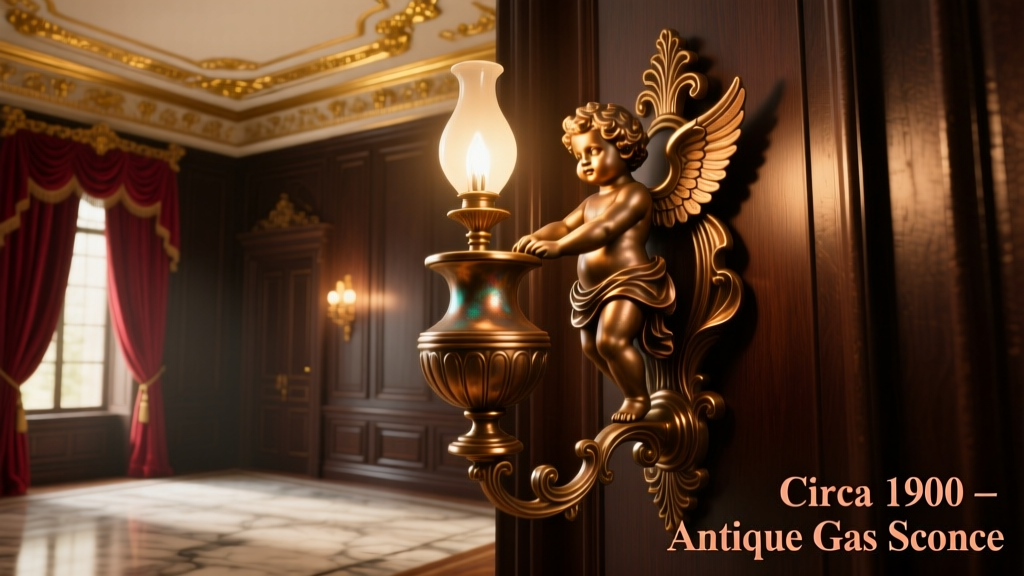
Gas Sconce with Putti and Urn Nozzle: A Bronze Masterpiece from c. 1900 — Technical, Historical, and Conservation Insights
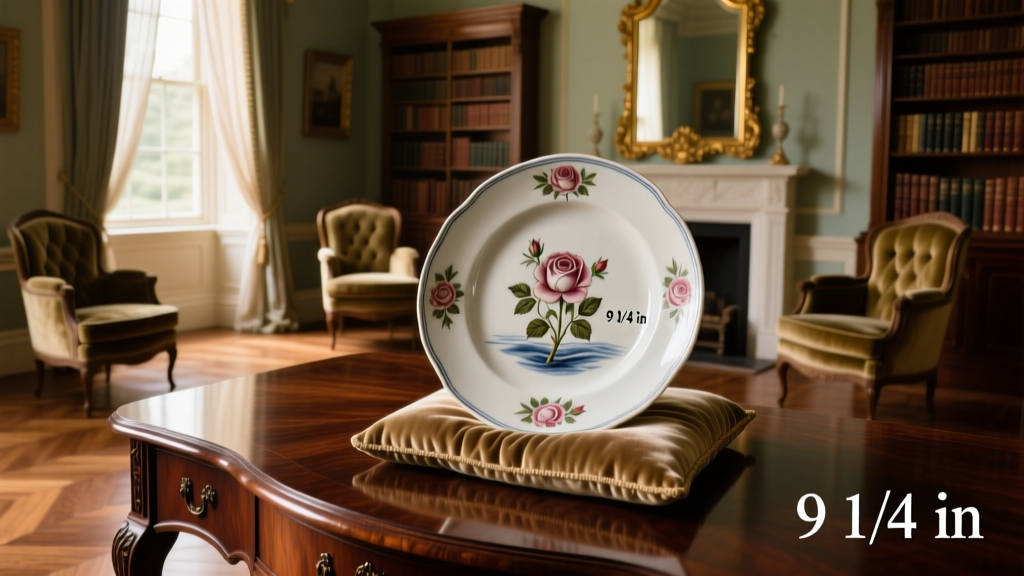
Copeland Spode Plate: Decoding the Maritime Rose Pattern and Its 9¼-Inch Impressed Mark

Eastlake Walnut Parlor Set: Authentic 1880s Upholstered Settee, Rocker, and Armchair Restoration & Identification Guide
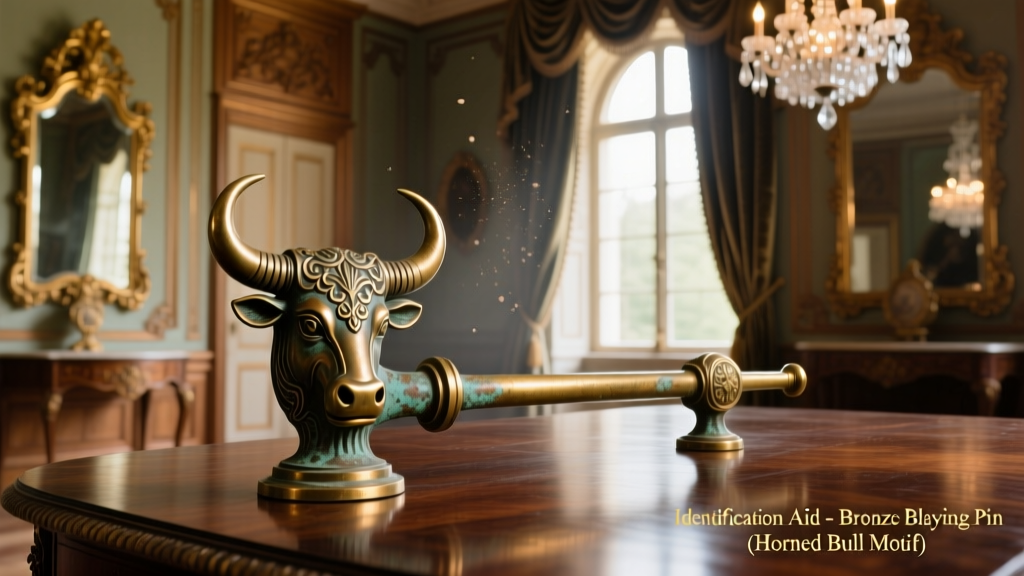
Identification Assistance: Bronze Belaying Pin Featuring a Decorative Horned Bull Motif
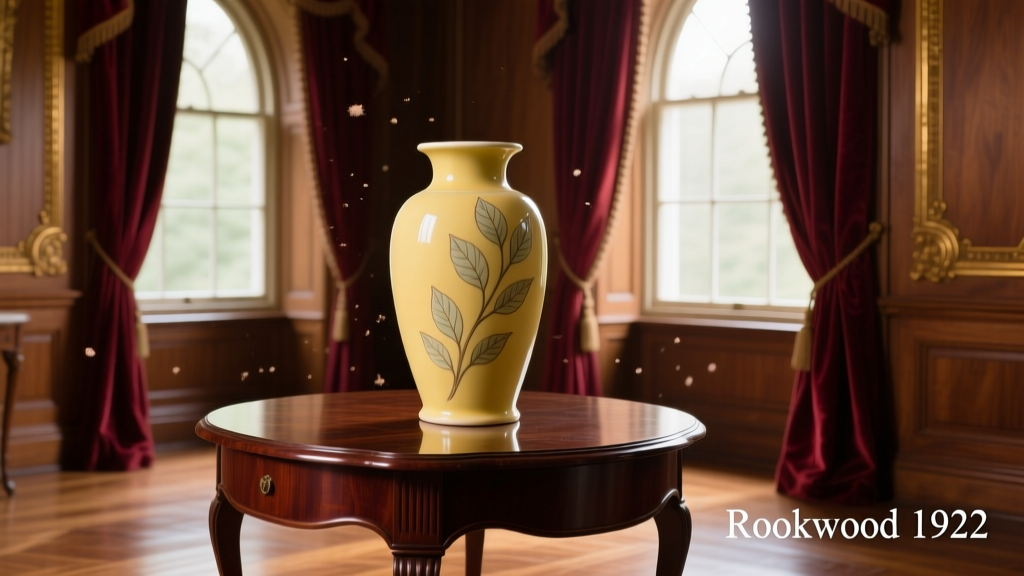
Rookwood Vase: Leaves and Berries in Yellow Matte Glaze, 1922, 7 Inches — A Collector’s Deep-Dive Analysis