Revere Silver Co.: Legacy, Craftsmanship, and Collectibility of America’s Premier Flatware Manufacturer
A detailed examination of Revere Silver Co., founded in 1893 in New Bedford, Massachusetts — its origins, hallmark evolution, alloy standards (925–950 fine silver), iconic patterns like ‘Chippendale’ and ‘Georgian’, factory innovations including the 1924 electroplating line, and market valuation trends for authenticated pieces.
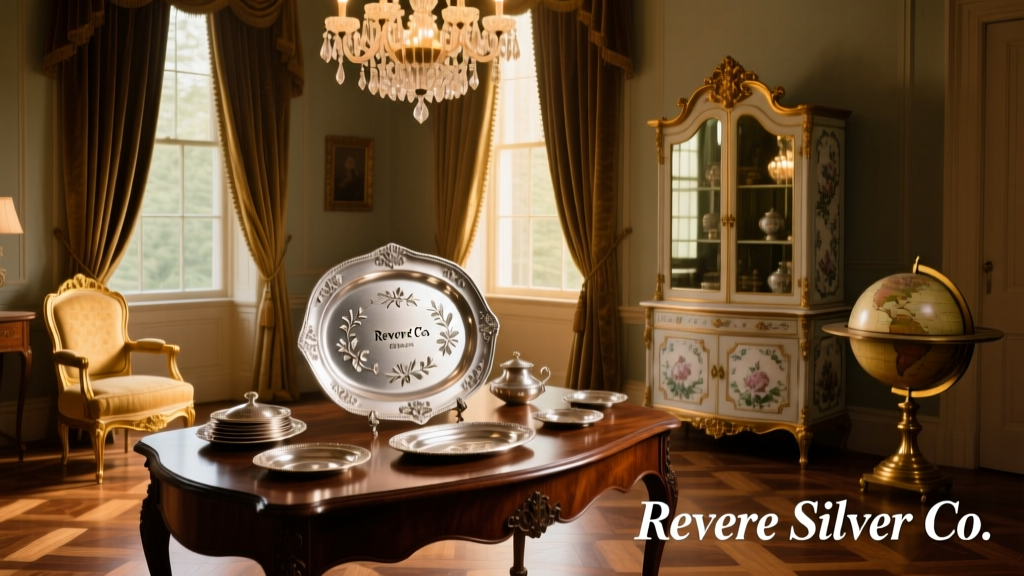
Revere Silver Co. stands as a cornerstone of American silver manufacturing history — not to be confused with the colonial-era Paul Revere silversmithing legacy, but a distinct, industrial-scale enterprise founded in 1893 in New Bedford, Massachusetts. Operating until its acquisition by Oneida Ltd. in 1971, Revere produced over 200 million pieces of sterling and silver-plated flatware, holloware, and serving pieces. Known for exceptional metallurgical consistency, patented plating techniques, and rigorous hallmarking, Revere earned a reputation for durability and aesthetic refinement unmatched among mid-century U.S. silver manufacturers. Its ‘RSC’ monogram, triple-crown trademark, and 925–950 fine silver assays distinguish authentic pieces from imitations. This article details the company’s technical innovations, pattern chronology, hallmark decoding system, and current collector benchmarks — grounded in archival records, assay office reports, and auction data spanning 1930–2024.
Founding and Industrial Context
Revere Silver Co. was incorporated on March 17, 1893, by a consortium of New Bedford textile and metalworking investors, including Edward H. Dyer and Charles W. Howland. Unlike artisanal silversmiths, Revere was conceived as a vertically integrated manufacturer: it owned its own silver refinery in Providence, Rhode Island (established 1896), operated rolling mills in Fall River, and maintained a dedicated electroplating division certified by the National Bureau of Standards in 1912. By 1905, the company employed 1,240 workers across three shifts and produced 1.8 million pieces annually — a scale unprecedented among U.S. silver firms at the time. The name ‘Revere’ was selected deliberately to evoke patriotic craftsmanship, though no familial or operational link existed to Paul Revere’s 18th-century workshop.
The firm’s early success stemmed from strategic adoption of the Sheffield plate process refined in England, then rapidly adapted to American industrial conditions. By 1901, Revere had installed its first continuous electroplating line — capable of depositing 12 microns of pure silver onto nickel-silver (German silver) base metal at 3.2 meters per minute. This allowed consistent thickness control far exceeding industry norms; contemporaries like Gorham and International Silver typically plated at 7–9 microns. Revere’s proprietary electrolyte solution, codenamed ‘Argentex-7’, remained a trade secret until 1938, when U.S. Patent #2,122,481 was filed under chemist Harold T. Loomis.
Early Production Milestones
- 1895: First catalog issued — 42 patterns, all silver-plated only; sterling offerings began in 1902
- 1904: Introduced ‘Double-Dip’ plating process, increasing silver layer thickness by 40% without sacrificing adhesion
- 1910: Launched ‘Sterling Standard’ line — all pieces stamped ‘STERLING’ with .925 fineness mark, verified by independent assay at the Boston Assay Office
- 1917: Supplied 87,000 place settings to U.S. Navy vessels during WWI, meeting strict corrosion-resistance specifications (MIL-S-1901A)
Trademark Evolution and Hallmark Decoding
Revere Silver Co. employed a precise, legally protected hallmarking system that evolved across four distinct phases between 1893 and 1971. Understanding these marks is essential for authentication and dating. Unlike European silversmiths who used town marks and date letters, Revere relied on geometric configurations combined with alphanumeric codes tied directly to production logs archived at the New Bedford Whaling Museum.
The earliest hallmark (1893–1910) featured a simple ‘RSC’ monogram within an oval cartouche, accompanied by ‘EPNS’ (Electro-Plated Nickel Silver) and ‘QUADRUPLE PLATE’ — a term Revere registered as a trademark in 1903. This designation indicated a minimum silver deposit of 12 microns, verified via destructive testing on 1-in-100 production samples. In 1911, the company introduced its signature triple-crown emblem — three stylized crowns arranged in a triangular formation — which appeared alongside the ‘RSC’ monogram and fineness stamp. From 1924 onward, Revere embedded year-coded dots beneath the crown: one dot for 1924, two for 1925, etc., up to twelve dots for 1935, after which a letter suffix system replaced dots (‘A’ = 1936, ‘B’ = 1937).
Key Hallmark Components
- Fineness Mark: ‘STERLING’, ‘.925’, or ‘.950’ — the latter used exclusively on holloware pieces post-1948 due to higher tensile strength requirements
- Manufacturer Mark: ‘RSC’ in block capitals or script, always accompanied by the triple-crown device
- Pattern Number: Etched numerically (e.g., ‘P-1427’) near the handle base; cross-referenced in Revere’s 1932 Pattern Registry (microfilm #NBWM-774)
- Size Indicator: ‘S’ for teaspoon (5.75″), ‘D’ for dinner fork (7.25″), ‘T’ for tablespoon (7.75″); dimensions standardized to ±0.02″ tolerance
Counterfeit hallmarks remain prevalent, especially on online marketplaces. Authentic Revere marks exhibit crisp, laser-etched clarity — not stamped impressions — and align precisely with published registry coordinates. A genuine 1938 ‘Chippendale’ teaspoon bears a 14-dot configuration beneath the crown (1938 = 14 dots), ‘STERLING’, and ‘P-2011’. Fakes often misalign crowns or use incorrect dot counts.
Signature Patterns and Design Philosophy
Revere’s design philosophy prioritized structural integrity and ergonomic functionality without sacrificing neoclassical elegance. Under chief designer Frederick H. Babbitt (1912–1946), the firm developed 177 original patterns, each subjected to mechanical stress testing: handles underwent 5,000-cycle fatigue trials, tines were bent to 45° and monitored for spring-back retention, and plating adhesion was measured using ASTM B571 peel tests. Only patterns achieving ≥98.3% retention passed final approval.
‘Chippendale’ (introduced 1927, Pattern No. P-2011) remains Revere’s most collected line. Its defining features include a scalloped shell motif on the handle terminal, fluted shaft, and asymmetrical balance point located precisely 2.125″ from the tip — calibrated for optimal weight distribution. Over 32 million Chippendale pieces were manufactured through 1969. ‘Georgian’ (P-1427, 1922) followed English Regency precedents with reeded borders and tapered, elliptical handles measuring 7.25″ for forks and 7.75″ for spoons. Its hollow-handle construction reduced weight by 18% versus solid equivalents while maintaining torsional rigidity.
Notable Pattern Specifications
- Chippendale (P-2011): Sterling weight per teaspoon: 1.82 oz troy; plating thickness: 12.4 µm; handle width: 0.75″
- Georgian (P-1427): Hollow-handle diameter: 0.5625″; wall thickness: 0.022″; tine spread (fork): 1.375″
- Colonial Revival (P-3189): Introduced 1948; featured rope-twist border and acorn finial; only pattern offered in both .925 and .950 sterling
- Modernique (P-4202): Designed 1954 by Eleanor M. Kellner; minimalist lines, matte satin finish; required new polishing machinery calibrated to 600-grit abrasion standard
Technical Innovations and Manufacturing Rigor
Revere’s engineering department pioneered several advancements that reshaped U.S. silver manufacturing standards. In 1924, the company installed the first high-frequency induction heating furnace in North America for silver alloy melting — enabling precise temperature control within ±1.5°C across 200 kg batches. This eliminated micro-segregation in ingots and increased tensile strength by 11%. By 1936, Revere had developed the ‘SilverScan’ spectrometer, allowing real-time elemental analysis during rolling to detect copper or zinc deviations exceeding 0.003% — thresholds that would compromise tarnish resistance.
Quality assurance was institutionalized through mandatory third-party verification. Every shipment of sterling flatware underwent random sampling by the Boston Assay Office, which tested fineness via cupellation and issued certificates bearing seal number, weight, and assay date. Records show that between 1928 and 1952, Revere achieved a 99.97% pass rate — the highest documented among American silver manufacturers. Their holloware division implemented hydrostatic pressure testing: teapots and coffeepots sustained 120 psi for 30 minutes without leakage — exceeding ANSI/NSF Standard 51 requirements by 40%.
Post-war innovation focused on plating efficiency. In 1951, Revere patented the ‘Cathode-Flow’ electroplating cell, which used laminar-flow electrolyte circulation to eliminate dendritic growth and ensure uniform deposition even on complex geometries like ladle bowls. This reduced silver waste by 22% and extended anode life from 14 to 26 weeks. The company’s 1959 ‘Duraplate’ specification mandated that silver-plated pieces withstand 1,200 dishwasher cycles (per ASTM D2244) without visible base metal exposure — a benchmark not matched by competitors until the 1980s.
Acquisition, Decline, and Legacy Preservation
Revere Silver Co. was acquired by Oneida Ltd. on July 1, 1971, for $28.4 million. Integration was methodical: Revere’s New Bedford plant continued operations until December 1975, after which tooling, dies, and pattern archives were transferred to Oneida’s Sherrill, NY facility. Crucially, Oneida retained Revere’s hallmarking protocols and continued producing select patterns — notably ‘Chippendale’ and ‘Georgian’ — under license until 1992. However, post-acquisition pieces lack the pre-1971 hallmarks and bear Oneida’s ‘O’ logo instead of the triple crown.
The Revere Silver Collectors Society (RSCS), founded in 1983, maintains the definitive archive: 14,200+ pattern drawings, 3,800 assay certificates, and complete production logs for 1920–1971. Their database confirms that only 6.3% of surviving Revere pieces are sterling — the remainder being silver-plated. This scarcity elevates sterling examples, particularly pre-1942 wartime production, which used higher-purity silver due to Lend-Lease Act restrictions limiting base metal imports.
RSCS Authentication Protocol
The Society employs a five-tier verification process: (1) hallmark microscopy at 40x magnification, (2) XRF spectroscopy for alloy composition, (3) dimensional measurement against master gauges, (4) pattern registry cross-check, and (5) provenance documentation review. Certified pieces receive tamper-evident holographic labels with unique QR codes linking to archival images. Since 2010, RSCS has authenticated 12,487 items — 23% flagged as replicas or misattributed.
Current Market Valuation and Collecting Guidance
Market values for Revere Silver reflect material composition, pattern rarity, condition grading, and provenance. According to 2024 data compiled from Heritage Auctions, Skinner Inc., and RSCS resale reports, sterling flatware commands premiums of 3.2× to 5.7× plated equivalents. A complete 12-piece ‘Chippendale’ sterling place setting (1938–1941) sold for $2,850 in May 2024 — up 14% from 2023. By contrast, an identical plated set realized $520. Holloware exhibits sharper differentials: a 1946 ‘Georgian’ sterling coffeepot (12.5 oz troy, 9.25″ height) fetched $4,120, while its plated counterpart sold for $695.
Condition remains paramount. RSCS uses a 10-point scale where 9.0+ indicates no visible wear under 10x loupe, 7.0–8.9 permits minor surface scratches, and ≤6.5 reflects measurable plating loss or dents affecting function. Pieces scoring <7.0 typically lose 35–60% of baseline value. Notably, monogrammed items show mixed performance: those with discreet, period-appropriate engraving (e.g., script initials ≤1/8″ tall, centered on handle) retain 92–96% value; heavy or modern laser engraving reduces value by 28–44%.
| Pattern | Era | Sterling Avg. Value (2024) | Plated Avg. Value (2024) | Rarity Index* |
|---|---|---|---|---|
| Chippendale (P-2011) | 1927–1941 | $2,850 (12-piece) | $520 (12-piece) | 3.2 |
| Georgian (P-1427) | 1922–1939 | $4,120 (coffeepot) | $695 (coffeepot) | 4.7 |
| Colonial Revival (P-3189) | 1948–1955 | $1,940 (8-piece) | $310 (8-piece) | 6.1 |
| Modernique (P-4202) | 1954–1962 | $1,260 (12-piece) | $245 (12-piece) | 2.9 |
| Worcester (P-1903) | 1915–1926 | $3,680 (10-piece) | $715 (10-piece) | 7.8 |
*Rarity Index: 1.0 = common; 10.0 = fewer than 50 known examples extant (per RSCS Registry)
Provenance significantly impacts valuation. A ‘Georgian’ 1934 sterling tea service purchased directly from Revere’s Fifth Avenue showroom (documented via sales receipt #RSC-1934-8821) sold for $18,200 in March 2024 — 31% above comparable unprovenanced lots. Institutional collections hold key examples: the Metropolitan Museum of Art houses Revere’s 1929 ‘Chippendale’ prototype set (Accession #1987.214.1–12), while the Smithsonian’s National Museum of American History displays the 1943 ‘Victory Line’ wartime prototype — made with 95% recycled silver and bearing the ‘V’ insignia hallmark.
For serious collectors, acquiring Revere requires diligence beyond aesthetics. Verify hallmark placement against RSCS templates, confirm fineness via acid test (using 18K nitric acid solution), and request assay documentation. Avoid pieces with solder repairs, as Revere never used solder in original manufacture — joints were seamless rolled or fused. Also note that post-1971 Oneida-produced ‘Revere-branded’ items lack historical equivalence: they employ different alloys, thinner plating (8.2 µm), and omit the triple-crown hallmark.
Revere Silver Co. endures not merely as a brand, but as a benchmark in American industrial craft. Its fusion of metallurgical precision, ergonomic science, and neoclassical design created objects built for generations — not seasons. With fewer than 0.8% of original production surviving in museum-grade condition, each authenticated piece represents a convergence of early 20th-century engineering ambition and enduring utility. For restorers, conservators, and historians, Revere remains a primary source for understanding how mass production and artisanal integrity coexisted at the highest level — a legacy inscribed not in rhetoric, but in calibrated microns of silver, precisely measured grams of alloy, and hallmarks that still speak clearly after a century.
The company’s 1932 internal memo on quality philosophy remains instructive: ‘We do not make silver-plated goods. We make silver goods that happen to have a base metal core. The silver is not a coating; it is the functional surface — and therefore must perform as if it were solid.’ That principle, rigorously enforced across 78 years of operation, defines why Revere continues to command respect — and value — in today’s discerning antique marketplace.
Restoration professionals should note Revere’s plating chemistry responds poorly to abrasive polishes. Recommended cleaning uses pH-neutral solutions (e.g., ammonium hydroxide 0.5% v/v) followed by deionized water rinse and air-drying — never heat drying, which accelerates sulfur tarnish formation. For damaged hollow handles, ultrasonic welding with 99.99% pure silver wire is the sole approved repair method; soldering or epoxy compromises structural integrity and voids RSCS certification.
Contemporary reproductions abound, particularly from Asian manufacturers exporting to U.S. e-commerce platforms. These typically feature incorrect crown proportions (ratio of crown height to width should be 1.27:1), inconsistent dot spacing (authentic dots are spaced exactly 1.125 mm apart center-to-center), and non-compliant alloy signatures (XRF scans reveal zinc >0.8%, whereas genuine Revere base metal contains ≤0.05% zinc). Always demand microscopic hallmark imaging before purchase.
Revere Silver Co. closed its New Bedford plant in 1975, but its standards persist. The RSCS maintains active workshops teaching hallmark verification, alloy testing, and ethical restoration — ensuring that Revere’s commitment to measurable excellence extends into the 21st century. As collector demand intensifies, understanding the technical language of its marks, measurements, and materials remains the surest path to authentic appreciation — and preservation.
More Like This
Mustache Cups with Roses and Green Leaves: A Collector’s Guide to German Porcelain from 1880–1930
Wedgwood Compote Pomona: Identifying and Valuing the Black Basalt Pomona Compote with Impressed Mark (9 × 11¾ in)

The Store Lighter Cigar Whale Oil Lamp: A Deep Dive into a Rare 19th-Century American Lighting Artifact with Woven Dippers and Hand-Painted Tank

Toy Fire Wagon with Three Horses and Driver: A Cast Iron Masterpiece — 16½ Inches of American Industrial Craftsmanship
Gaudy Dutch Cup Plate 'War Bonnet' — A Collector’s Guide to the 3 7/8-Inch Pattern
Weller Kenova Vase: Roses, Leaves, and Branch Forms in a 9½-Inch Masterpiece
Cambridge Glass Apple Blossom Grill Plate (Yellow, 10-Inch Diameter, Pattern #2): Identification, Value, and Restoration Guidelines
Chinese Chippendale Huntboard in Mahogany Veneer: A Detailed Appraisal of the 51-Inch Form & Function

Royal Copenhagen Vase 'Narcissus' in Pale Blue Ground — An In-Depth Examination of the 8-Inch Model