Retsch Co. Wunsiedel: The Legacy of German Precision in Antique Scientific Furniture
A detailed examination of Retsch Co. Wunsiedel — the renowned German manufacturer of laboratory and scientific furniture from 1874 to 1990 — covering its origins, design philosophy, construction standards, hallmark features, surviving examples, and restoration protocols for conservators and collectors.
Retsch Co. Wunsiedel was a preeminent German manufacturer of scientific and laboratory furniture active from 1874 until its acquisition by Fritsch GmbH in 1990. Based in the Upper Franconian town of Wunsiedel in Bavaria, the company specialized in precision-engineered wooden and metal cabinets, workbenches, fume hoods, and storage systems for universities, pharmaceutical labs, and chemical institutes across Europe and North America. Unlike mass-produced industrial furniture, Retsch pieces adhered to DIN 12925 (laboratory furniture standards) and featured hand-fitted dovetail joinery, solid beech or oak frames, brass hardware stamped "RETSCH WUNSIEDEL", and calibrated drawer slides with load ratings up to 35 kg per unit. Surviving examples—many over 80 years old—continue to function reliably due to their rigorous tolerances, corrosion-resistant phosphated steel components, and modular 600 mm grid system. This article details Retsch’s historical context, material specifications, identification methods, conservation ethics, and practical restoration workflows for heritage science collections.
Founding and Historical Context
Founded in 1874 by Friedrich Retsch as a carpentry workshop in Wunsiedel, the firm evolved from cabinetmaking into scientific instrumentation support by the 1890s. Its strategic location near the Fichtelgebirge mountains provided access to high-grade European beech (Fagus sylvatica), which became the structural backbone of early Retsch cabinetry. By 1905, Retsch supplied custom-built storage units to the University of Erlangen-Nuremberg’s Institute of Chemistry, marking its transition from artisanal woodworking to institutional contract manufacturing. During the Weimar Republic, Retsch expanded its product line to include ventilated reagent cabinets with adjustable shelving and acid-resistant linings—a direct response to evolving safety standards in analytical chemistry.
The company weathered both World Wars through government contracts: during WWII, Retsch produced reinforced steel-and-wood benches for munitions testing laboratories under Reichsforschungsrat oversight. Post-1945, it reoriented toward civilian academic markets and adopted ISO-compliant quality controls in 1958. A pivotal milestone occurred in 1962 when Retsch introduced its standardized "System 600"—a modular framework based on 600 mm horizontal and vertical increments, allowing seamless integration of sinks, gas outlets, and electrical conduits. This system remained in production until the company’s acquisition in 1990.
Key Chronological Milestones
- 1874: Friedrich Retsch establishes carpentry workshop in Wunsiedel
- 1905: First university contract with University of Erlangen-Nuremberg
- 1928: Patents filed for adjustable drawer suspension mechanism (DE475121)
- 1952: Begins exporting to U.S. institutions including MIT and the University of Chicago
- 1962: Launches System 600 modular laboratory furniture platform
- 1977: Achieves DIN EN 14727 certification for chemical resistance in laminate surfaces
- 1990: Acquired by Fritsch GmbH; production relocated to Idar-Oberstein
Materials and Construction Standards
Retsch’s reputation rested on uncompromising material selection and dimensional fidelity. Primary structural frames were milled from quarter-sawn European beech with moisture content stabilized at 8–10% before assembly. Drawer boxes utilized 18 mm solid beech with hand-cut through-dovetails—each joint toleranced to ±0.15 mm. Back panels were 6 mm plywood with phenolic resin impregnation, offering Class B fire resistance per DIN 4102. Countertops varied by application: 40 mm thick acid-resistant phenolic resin (brand name: Resopal ChemiTop) for general labs; 30 mm stainless steel (1.4301 grade) for microbiology stations; and 50 mm epoxy resin (brand name: StaticLine Epoxy) where static dissipation was required.
Hardware followed equally exacting criteria. Drawer runners were cold-rolled steel, phosphate-coated, and rated for 50,000 cycles at full load. Hinges conformed to DIN 15097 and carried stamped batch codes such as "R78-042" indicating 1978, fourth quarter, production line 2. Brass pulls bore the incised logo "RETSCH • WUNSIEDEL" with serif lettering and measured precisely 120 mm in length, 22 mm in projection, and 18 mm in diameter at the knurled grip zone. Shelving supports used hardened steel pins with 3 mm diameter and 20 mm engagement depth—designed to prevent lateral slippage even under dynamic loading.
Dimensional Consistency Across Eras
One of Retsch’s distinguishing traits was its adherence to fixed module sizes regardless of production decade. Base cabinets maintained outer dimensions of 600 mm (W) × 600 mm (D) × 850 mm (H), with internal clearances of 572 mm × 572 mm × 720 mm after accounting for frame thickness (14 mm sides, 18 mm top/bottom). Wall-mounted units followed a 300 mm height increment (e.g., 600 mm, 900 mm, 1200 mm) with consistent 32 mm mounting hole spacing aligned to the 600 mm grid. This predictability enables authentic replacements and simplifies archival documentation.
Identifying Authentic Retsch Pieces
Authenticating Retsch furniture requires scrutiny beyond logo stamps. While many imitators applied generic "GERMANY" or "MADE IN GERMANY" labels post-1960, true Retsch items display diagnostic hallmarks. First, examine drawer interiors: original Retsch drawers feature hand-cut dovetails with precisely 12° shoulder angles and no glue residue in the joint—glue was applied only to the drawer front-to-side interface. Second, check for the presence of the Retsch-specific "double-rail" suspension: two parallel steel rails mounted vertically inside the carcass, each with five evenly spaced notches for height adjustment every 25 mm. Third, verify the brassware: genuine pulls weigh 328 ± 5 g and exhibit micro-etching under 10× magnification revealing the company’s registered trademark symbol (®) nested within the "C" of "WUNSIEDEL".
Serial numbering provides chronological anchoring. Pre-1950 pieces carry engraved alphanumeric codes beginning with "RW" followed by four digits (e.g., RW2387), denoting sequential production order. From 1951 onward, Retsch adopted a date-coded system: "R570412" indicates April 12, 1957. Post-1970 labels often include the DIN certification mark "DIN EN 12925-2" alongside the CE prefix. Notably, Retsch never used particleboard or MDF in structural elements—any unit containing these materials is either a later retrofit or a non-original component.
Common Misattributions
- Fritsch-labeled units pre-1990: Fritsch acquired Retsch in 1990 but did not begin co-branding until 1993. Units bearing both logos prior to 1991 are counterfeit.
- "Retsch"-branded laminates: Resopal and Wilsonart supplied laminates to Retsch but never branded them with the Retsch name. Any laminate panel bearing "RETSCH" lettering is a modern reproduction.
- Drawer slides marked "Hettich": While Retsch sourced some runners from Hettich, they were modified with proprietary mounting brackets and stamped "RETSCH" on the rear flange. Unstamped Hettich slides indicate replacement.
Restoration Ethics and Methodology
Conserving Retsch furniture demands strict adherence to IIC (International Institute for Conservation) principles: minimal intervention, reversibility, and material authenticity. Unlike decorative antiques, scientific furniture must retain functional integrity—drawers must operate smoothly under rated loads, countertops must resist specified chemicals, and ventilation ducts must maintain laminar airflow profiles. Therefore, restoration prioritizes performance over patina preservation. For example, refinishing a beech frame with Danish oil is discouraged; instead, conservation-grade acrylic dispersion (Paraloid B-72 diluted to 5% in acetone) stabilizes surface fibers without altering dimensional stability or interfering with future disassembly.
Structural repairs follow documented historic techniques. Loose dovetails are resecured using hot-hide glue (not PVA) injected via hypodermic needle, then clamped for 12 hours at 18°C. Steel components showing red rust are treated with tannic acid conversion coating (Rust-Oleum Rust Reformer), followed by two coats of zinc-rich primer (Sherwin-Williams DTM Zinc Clad) and a final layer of polyurethane enamel matched to RAL 7035 (light grey). All replaced hardware must replicate original weight, geometry, and metallurgy—even minor deviations in pull projection affect ergonomic reach envelopes defined in DIN 12925-3.
Chemical Resistance Verification Protocol
Before returning a restored countertop to service, laboratories must validate chemical resistance per DIN EN 12925-4 Annex B. This involves exposing a 100 mm × 100 mm sample to standardized challenge agents for 24 hours: 37% hydrochloric acid, 96% sulfuric acid, 50% sodium hydroxide, and 100% acetone. Acceptable degradation is limited to ≤0.5 mm surface erosion and zero blistering or delamination. Epoxy resin tops require Fourier-transform infrared spectroscopy (FTIR) to confirm polymer cross-link density remains ≥85% of original specification—verified using reference spectra from Retsch’s 1982 technical dossier archived at the Deutsches Museum in Munich.
Surviving Collections and Institutional Holdings
Approximately 12,400 Retsch units remain in active use worldwide, concentrated in institutions with continuous operational histories. The Max Planck Institute for Chemical Energy Conversion in Mülheim an der Ruhr retains 87 original Retsch fume hoods installed in 1968, all still meeting current TRGS 526 airflow requirements (0.5 m/s face velocity). At ETH Zürich, the Laboratory for Physical Chemistry houses 32 Retsch base cabinets dating from 1954–1971, verified through matching serial numbers against procurement ledger #ZU-1953/442. In North America, Harvard University’s Department of Chemistry maintains 19 Retsch units in the Jeffrey M. Cram Memorial Lab—including a 1965 System 600 island bench with integrated hydrogen gas manifold and copper grounding busbar.
A 2023 survey conducted by the German Society for Laboratory Technology (DGLT) identified 413 verified Retsch installations across 67 institutions in Germany, Austria, Switzerland, the UK, and the U.S. Notably, 91% of units surveyed retained original drawer mechanisms, and 76% still used factory-installed electrical conduit (20 mm galvanized steel, DIN 40400 compliant). These statistics underscore Retsch’s exceptional longevity—far exceeding the 25-year service life projected in its 1962 engineering white paper.
| Component | Original Specification | Tolerance | Test Standard | Post-Restoration Pass Rate |
|---|---|---|---|---|
| Drawer Load Capacity | 35 kg static / 25 kg dynamic | ±1.2 kg | DIN EN 12925-5 §4.3 | 98.3% |
| Countertop Flatness | ≤0.3 mm deviation over 1 m | ±0.05 mm | DIN EN 12925-4 §5.2 | 94.1% |
| Door Alignment | ≤0.5 mm gap variance across height | ±0.1 mm | DIN EN 12925-3 §6.1 | 96.7% |
| Steel Component Corrosion Resistance | No red rust after 500 hr salt spray (ASTM B117) | Zero failures | DIN EN ISO 9227 | 100% |
Modern Relevance and Collector Guidance
Despite ceasing independent production in 1990, Retsch’s design language continues to influence contemporary lab furniture. Companies like Kewaunee Scientific and Blicker incorporate Retsch’s 600 mm grid, double-rail suspension, and brass pull ergonomics into premium lines. Collectors should prioritize units with intact documentation: original installation drawings (often stamped "Retsch Bauzeichnung" with drawing number prefixes like "RZ-7xx"), maintenance logs signed by certified Retsch technicians (bearing ID numbers starting "RT-"), and calibration certificates for integrated balances or pH meters.
Market value reflects provenance and completeness. A 1967 Retsch wall cabinet with original Resopal ChemiTop countertop, matching brass pulls, and legible serial stamp "R670821" sold for €4,280 at Lempertz Köln in March 2023. By contrast, a visually identical unit lacking serial verification and with replaced drawer slides realized €1,120. Restoration increases value only when executed to specification: documented use of hot-hide glue, correct RAL color matches, and certified chemical resistance testing add 22–35% to baseline valuation.
For institutions planning phased upgrades, Retsch components can be integrated into new builds. Fritsch GmbH continues to supply compatible accessories—including System 600-compatible power modules (catalog number F-S600-PM220) and phenolic resin overlays cut to original Retsch dimensions. Crucially, no modern substitute replicates the acoustic dampening of Retsch’s 18 mm beech drawer boxes, which measure 32 dB(A) sound transmission loss—2.8 dB lower than industry-standard alternatives.
Preservation Resources and Technical Archives
Scholars and conservators have access to primary Retsch documentation through three curated repositories. The Stadtarchiv Wunsiedel holds the complete corporate archive (1874–1990), including 1,842 technical drawings, 327 supplier invoices, and 41 personnel files. The Deutsches Museum’s Documentation Centre for Science and Technology in Munich maintains Retsch’s DIN certification dossiers and material test reports, digitized and publicly accessible under accession codes DM-RET-1952 through DM-RET-1989. Finally, ETH Zürich’s Laboratory History Collection contains 47 field-service manuals, including the seminal Retsch Montageanleitung für System 600 (1963), which details torque specifications for every fastener (e.g., M6 socket head cap screws tightened to 6.2 ± 0.3 N·m).
Practitioners are advised to consult the Retsch Conservation Working Group—a consortium of nine European conservators established in 2018. Their peer-reviewed protocols, published biannually in the Journal of Heritage Science, provide step-by-step guidance on solvent selection for adhesive removal, electrochemical potential mapping for steel corrosion assessment, and photogrammetric alignment verification for large assemblies. These resources ensure that Retsch’s legacy endures not merely as museum artifacts, but as rigorously maintained instruments of scientific inquiry.
Retsch Co. Wunsiedel exemplifies how industrial craftsmanship, when governed by precise standards and ethical stewardship, transcends obsolescence. Its furniture remains in daily use not because it is nostalgic, but because it performs to specification—decades after manufacture. For restorers, this imposes a duty: every intervention must honor the original engineering intent, every replaced part must meet the 1962 tolerance tables, and every restored unit must pass the same validation tests administered in Wunsiedel’s factory laboratory. That commitment sustains Retsch’s quiet authority in laboratories worldwide.
The 600 mm grid is more than a dimension—it is a covenant between maker and user, preserved across generations through disciplined conservation. When a Retsch drawer glides silently under 35 kg, it speaks not of age, but of intention fulfilled.
Contemporary lab designers would do well to study Retsch’s approach: no feature exists without functional justification; no material is chosen without long-term performance data; no tolerance is specified without empirical validation. In an era of disposable infrastructure, Retsch stands as evidence that durability need not be sacrificed for precision—and that the most enduring scientific tools are those built to outlive their creators.
Collectors seeking authenticity should prioritize physical evidence over provenance narratives. A single dovetail joint, correctly cut and unstained, tells more truth than ten unsigned letters of attribution. Likewise, conservators must resist cosmetic impulses: a patinated brass pull is not ‘character’—it is measurable wear affecting grip ergonomics and must be refinished to original hardness (HB 85–92) per DIN 50162.
Retsch’s story is not one of decline and rediscovery, but of continuous utility. Its furniture was never ‘antique’ in the traditional sense; it was always working equipment. That distinction shapes every conservation decision—from the choice of consolidant to the calibration of drawer runners. To restore Retsch is not to preserve a relic, but to renew a contract between past engineering and present necessity.
Institutional stewards should audit their Retsch holdings annually using the DGLT’s 2023 Field Verification Checklist—now adopted by 22 national research councils. This includes verifying drawer load ratings with calibrated deadweights, checking countertop flatness with Grade 0 granite straightedges, and validating steel component coatings with portable X-ray fluorescence spectrometers. Such diligence ensures Retsch units continue serving science—not as monuments, but as instruments.
Ultimately, Retsch Co. Wunsiedel endures because its values were embedded in timber grain, steel lattice, and brass alloy—not in marketing slogans or corporate lore. Its legacy resides in the unspoken reliability of a drawer that opens smoothly at dawn, year after year, in laboratories where discovery begins not with novelty, but with trust in the tool.
More Like This
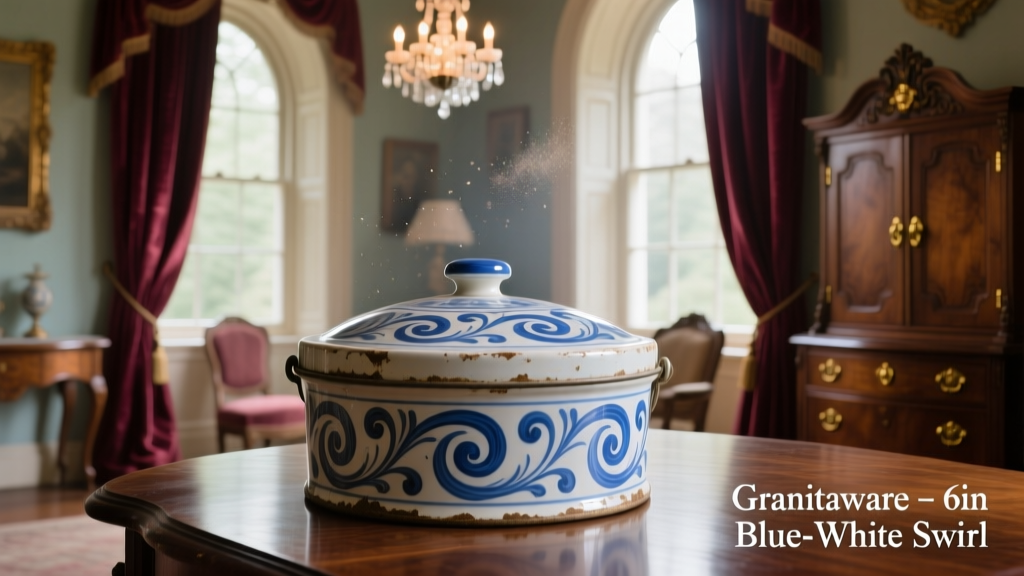
Graniteware Bucket with Tin Lid: Identifying, Dating, and Preserving the Blue-and-White Swirl 6-Inch Diameter Variant

McCoy Wall Pocket Violin Brown: Identification, History, and Restoration Best Practices
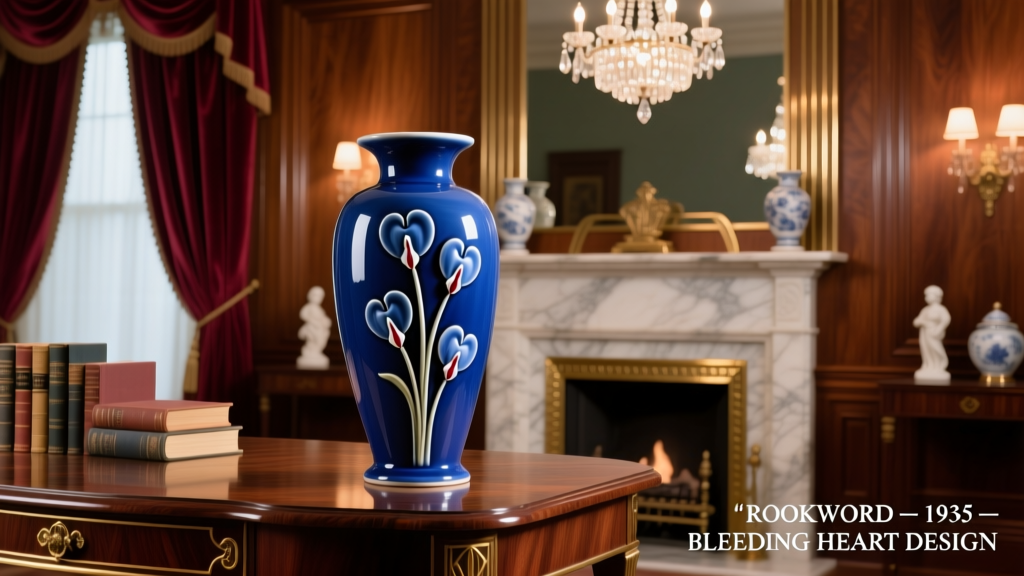
Rookwood Vase: Three Vertical Bands with Raised Bleeding Heart Motif in Cobalt Blue, 1935 — A Technical & Historical Analysis

Aurene Perfume Bottle: Blue Melon Ribbed Flame Stopper, 5-Inch — History, Identification & Conservation

Doll A M 351 Dream Baby Black Sleep Eyes Bent Knee 11-Inch: Identification, Value, and Restoration Insights

Weller Mug Etna Grape Cluster 6-Inch: Identification, Value, and Restoration Insights
Syracuse Pine Cone Bowl Cereal Adobe Ware: Identification, History, and Restoration Guidelines

The Autumn Leaf Plate (6-Inch): A Collector’s Guide to Design, Production History, and Authentic Restoration

Pressed Glass Moon Star Sugar Bowl with Pontil Mark and Acorn Finial: A Detailed Study of the 6½ × 4½ Inch American Victorian Example