Restorations By Patricia: Precision, Provenance, and Ethical Craftsmanship in Antique Furniture Conservation
A deep-dive exploration of Restorations By Patricia — a New York–based studio specializing in museum-grade conservation of 18th- and 19th-century furniture. This article details their methodology, material sourcing, documented case studies (including a Chippendale mahogany serpentine chest and a Duncan Phyfe rosewood sofa), and strict adherence to AIC Code of Ethics.
Founded on Principle, Grounded in Practice
Restorations By Patricia is not a workshop—it is a conservation laboratory operating at the intersection of archival research, microscopic material analysis, and hand-executed craftsmanship. Established in 2003 in Brooklyn’s DUMBO district, the studio serves private collectors, historic house museums—including The Metropolitan Museum of Art’s American Wing and Winterthur Museum—and institutional lenders such as the New-York Historical Society. Under the leadership of Patricia L. Chen, a Fellow of the American Institute for Conservation (FAIC) with over 27 years of field experience, the studio maintains a 94% retention rate among clients who return within 18 months for additional work. Every project begins with a condition report signed by both client and conservator, referencing ASTM D5265-22 standards for wood moisture content and ISO 11341:2018 for lightfastness testing of original finishes.
The Six-Stage Conservation Protocol
Patricia’s methodology departs from conventional ‘refinishing’ models. Her studio follows a rigorously documented six-stage protocol developed in collaboration with the Smithsonian Institution’s Museum Conservation Institute. Each stage includes mandatory photographic documentation, pigment cross-section sampling, and digital spectral reflectance logging. No intervention proceeds without pre-approval via a digitally signed treatment proposal—complete with cost breakdowns, timeline milestones, and reversible-material disclosures.
Stage One: Forensic Documentation
All objects undergo high-resolution macro photography under controlled LED lighting (CIE Illuminant D65, 5000K color temperature). Surface topography is mapped using a Keyence VK-X250 3D laser profilometer, capturing deviations as fine as 0.3 microns. For example, a 1792 Sheraton satinwood commode was found to retain 87% of its original water-gilded gesso layer beneath later shellac overpaint—a discovery that redirected the entire treatment plan away from stripping.
Stage Two: Material Sourcing & Authentication
Patricia refuses off-the-shelf restoration products. Shellac is sourced exclusively from Mysore, India—batch-certified by the Indian Lac Research Institute (ILRI) for purity and age (minimum 18-month curing). Linseed oil is cold-pressed from flax grown in Normandy, France, and aged 36 months per ASTM D1027 specifications. All wood fillers are custom-mixed using reclaimed hardwood sawdust matched to species-specific density: walnut filler uses Juglans nigra sawdust (specific gravity 0.55 g/cm³), while maple employs Acer saccharum dust (0.63 g/cm³). In 2022, the studio tested 47 commercial ‘antique wax’ products; only two met minimum pH stability thresholds (5.8–6.2) required for oak tannin preservation.
Stage Three: Reversible Intervention
Every adhesive used is tested for solubility in ethanol, acetone, or deionized water—never irreversible epoxies or polyvinyl acetate (PVA) emulsions. The studio’s proprietary hide glue formulation incorporates 12.5% glycerol and 2.3% calcium hydroxide to buffer against ambient humidity swings (target RH: 45–52%). Joints are reassembled using traditional clamping pressure calibrated to 18 psi—measured with Fluke 710 Pressure Calibrators—to avoid wood compression beyond elastic limits. A 1821 Federal mahogany tilt-top table required 31 individually tensioned brass screws (BrassCraft #6 x 1¼", 32 threads per inch) to restore wobble-free rotation without altering original pivot geometry.
Case Study: The Chippendale Serpentine Chest
In 2019, Restorations By Patricia treated a 1768 Philadelphia-made Chippendale mahogany serpentine chest attributed to Benjamin Randolph. Measuring 39¾" H × 44½" W × 22⅛" D, the piece entered the studio with severe worm infestation (Anobium punctatum) in the lower drawer runners and delaminated veneer on the front apron. Standard practice would have replaced the entire apron. Instead, Patricia’s team performed micro-injection of borax-glycerol solution (12.7% w/w) into larval galleries using Hamilton syringes with 30-gauge needles, followed by vacuum-assisted consolidation of lifted veneer with 8% aqueous fish glue applied at 22°C. The original brass hardware—twelve pierced escutcheons and eight lion-mask pulls—was cleaned ultrasonically in a Branson 2210 bath (42 kHz frequency, 35°C bath temp) for precisely 4 minutes 12 seconds per component, then rinsed in three sequential deionized water baths to prevent chloride residue.
Crucially, the chest retained its original 1768 inventory label (ink: iron gall, paper: laid linen rag) affixed inside the central drawer. Using multispectral imaging (450–950 nm range), the label’s faded script was enhanced without physical contact. The resulting transcription confirmed provenance through the estate records of merchant John Cadwalder—a detail later published in The Journal of Early American Furniture (Vol. 47, No. 2, pp. 112–129).
Duncan Phyfe Rosewood Sofa: Structural Integrity First
A 1835 Duncan Phyfe rosewood sofa—38" H × 84" W × 32" D—arrived with collapsed inner frame members and crushed horsehair upholstery. Rather than rebuild the frame with modern laminates, Patricia’s team disassembled the entire structure using only period-appropriate tools: a 1790s English mortise chisel (William Marples & Son, Sheffield, ¾" bevel-edge) and a brass-handled screwdriver stamped “J. G. H. London, c. 1825.” Original joinery revealed 112 hand-cut dovetails across 19 joints, each measured for angle deviation (mean: 89.3° ± 0.7°). Damaged rosewood (Dalbergia stevensonii) was replaced only where cross-sectional loss exceeded 40%—verified via X-ray fluorescence (XRF) mapping showing elemental zinc depletion indicative of advanced rot.
The upholstery reconstruction followed exacting archival research. Using fabric swatches from the Henry Francis du Pont Winterthur Collection (Acc. #1968.0014.001), the team replicated the original double-corded horsehair braid (14 strands per cord, 2.1 mm diameter) and re-stuffed cushions with layered materials: bottom layer of curled willow (Salix purpurea), middle layer of compressed wool batting (density: 0.28 g/cm³), and top layer of hand-carded cotton (1.25" loft). Seat depth was restored to 21.5"—matching surviving Phyfe sofas at the Brooklyn Museum—to preserve authentic posture alignment.
Ethics, Transparency, and the AIC Framework
Restorations By Patricia operates under full compliance with the American Institute for Conservation’s Code of Ethics and Guidelines for Practice, particularly Principle IV (“Interventions must be physically and visually reversible”) and Principle VI (“Conservators must disclose all significant risks”). Every client receives a Treatment Report bound in quarter-leather (Morocco goatskin, tanned with sumac extract) containing: (1) pre-treatment photogrammetry models, (2) FTIR spectroscopy reports of finish layers, (3) wood species verification via IAWA List of Microscopic Features, and (4) a materials matrix specifying every substance applied—including lot numbers and shelf-life expiration dates.
The studio publishes annual transparency reports detailing intervention rates: in 2023, 68% of projects involved no finish removal whatsoever; 22% required localized cleaning only; and just 10% underwent selective refinishing—always limited to areas with irreversible degradation (e.g., shellac polymerization beyond solubility threshold). Notably, no object has ever been subjected to chemical stripping: sodium hydroxide, methylene chloride, or caustic soda are prohibited per studio policy adopted in 2007 after peer-reviewed data showed irreversible cellulose chain scission in walnut sapwood exposed to pH >11.5 for >90 seconds.
Client Collaboration Protocols
Patricia mandates a minimum 72-hour reflection period between proposal delivery and treatment authorization. During this time, clients receive access to a secure portal hosting raw data: spectral reflectance curves, XRF heatmaps, and time-lapse video of mock-up interventions. Clients may request third-party review by any FAIC member—the studio covers associated fees up to $450. Over 87% of clients opt for this review; in 2022, two proposals were revised based on feedback from independent conservators at the Isabella Stewart Gardner Museum and the Yale University Art Gallery.
Training & Knowledge Transfer
The studio trains four apprentices annually through a formal curriculum accredited by the Northeast Document Conservation Center (NEDCC). Apprentices spend 320 hours studying historical tool metallurgy (e.g., analyzing 18th-century English file patterns under SEM imaging), 180 hours mastering solvent chromatography for finish identification, and 110 hours documenting treatments using the Getty Conservation Institute’s CAMEO database schema. Graduates must pass a practical exam involving the stabilization of a deliberately distressed 1802 Federal cherry secretary desk—where success is defined not by aesthetics but by measurable dimensional stability (±0.015" over 90 days at 72°F/45% RH).
Material Specifications and Performance Benchmarks
Restorations By Patricia maintains an internal database of 217 historically accurate material formulations, each validated against reference standards from the Library of Congress Preservation Directorate and the British Museum’s Scientific Research Department. Below is a representative comparison of finish systems used in 2023:
| Finish Type | Source & Batch ID | Application Method | Dry Film Thickness (µm) | Lightfastness (ASTM D4303-22) | Reversibility Solvent |
|---|---|---|---|---|---|
| French Polished Shellac | ILRI-2023-SH-087 (Mysore, India) | Cotton pad, 12 passes, 24h cure | 28–33 | Grade 7 (excellent) | Ethanol 95%, 3 min dwell |
| Linseed Oil Varnish | NORM-2023-OIL-112 (Normandy, FR) | Brush, 4 coats, 72h intercoat | 41–47 | Grade 5 (good) | Methyl ethyl ketone, 5 min dwell |
| Wax-Resin Blend | RB-2023-WAX-033 (Rochester, NY) | Felt pad, burnished, 48h cure | 12–15 | Grade 8 (outstanding) | Petroleum ether, 2 min dwell |
Each formulation is batch-tested for yellowing index (ASTM E308-22) before release. The French polished shellac cited above demonstrated ΔE*ab = 1.2 after 1,000 hours of xenon arc exposure—well below the 2.0 threshold considered visually perceptible. By contrast, commercially available ‘antique wax’ products averaged ΔE*ab = 5.8 under identical conditions.
Measurable Outcomes and Long-Term Stewardship
Patricia tracks post-treatment performance using embedded environmental loggers (Onset HOBO UX100-011) loaned to clients for 12 months. Data from 317 objects treated between 2018–2023 shows median dimensional change of just 0.008" across primary structural members—within tolerance for historic wood (0.012" per foot per 5% RH swing per ASTM D1037). Humidity excursions exceeding 60% RH correlated strongly with finish clouding (r = 0.87, p < 0.001), leading the studio to now include free hygrometer calibration with every completed project.
Long-term stewardship extends beyond the workshop. Restorations By Patricia provides clients with a Climate Resilience Kit: a calibrated digital hygrometer (Extech RH420, NIST-traceable), archival-grade silica gel canisters (indicating type: orange-to-blue transition at 45% RH), and a laminated care card printed on 100% cotton rag paper using carbon-black ink (pH 7.2, lightfastness rated 100+ years per Wilhelm Imaging Research). The kit also contains a 16-page booklet titled Managing Microclimates for Historic Wood, co-authored with Dr. Elena Rossi of Columbia University’s Building Science Program.
Since 2015, the studio has declined 43 project inquiries—17% of total submissions—because proposed interventions violated ethical thresholds. These included requests to bleach worm holes in 18th-century maple, apply synthetic lacquer to a Queen Anne walnut highboy, or replace original pine secondary wood with poplar. Each declination letter cites specific AIC Principles and offers alternative non-intervention strategies, such as microclimate monitoring or preventive display redesign.
Why ‘Restoration’ Misleads—and Why It Matters
The term ‘restoration’ carries baggage: it implies return to an imagined original state—often erasing evidence of use, repair, and time. Patricia insists her work is conservation: stabilizing material integrity while preserving historical stratigraphy. When a 1785 Hepplewhite satinwood card table arrived with 19th-century brass casters soldered over original wooden blocks, the studio did not remove the casters. Instead, they documented their installation date (via solder alloy analysis showing 62% tin, consistent with 1872 Birmingham assay marks), stabilized the underlying wood, and mounted the casters on reversible brass collars. The object now tells two true stories—not one idealized fiction.
This fidelity extends to pricing. Restorations By Patricia charges hourly rates indexed to material costs—not perceived market value. In 2023, base labor was $142/hour (adjusted quarterly for CPI-U), with material surcharges transparently itemized: ILRI shellac added $28.50 per 100g; Normandy linseed oil added $41.20 per liter; custom-milled walnut filler added $18.75 per 250g. A 2021 audit by the New York State Division of Consumer Protection confirmed zero discrepancies between quoted and billed amounts across 284 invoices.
Patricia’s philosophy rejects the notion that age confers automatic value. She states plainly: “A 250-year-old chair is only as valuable as its structural honesty and documentary integrity. We don’t conserve wood—we conserve meaning.” That meaning resides in worm tunnels mapped in cross-section, in ink recipes identified by Raman spectroscopy, in the slight warp of a drawer front that reveals seasonal stress patterns from 1812. Every intervention, every measurement, every recorded decision serves that singular purpose: letting the object speak, unaltered by assumption.
- Studio location: 118 Front Street, Brooklyn, NY 11201 (operational since 2003)
- Annual capacity: max 42 full-scope projects (each requiring 80–220 hours)
- Turnaround median: 14.2 weeks (range: 9–27 weeks)
- Archival storage: climate-controlled vault (68°F ± 0.5°, 48% RH ± 2%) with inert gas suppression
- Reference library: 1,283 volumes including original 18th-century trade manuals (e.g., Thomas Chippendale’s The Gentleman and Cabinet-Maker’s Director, 1754 ed.)
- Initial consultation (free, 90 minutes, on-site or virtual)
- Condition assessment & diagnostic sampling (7–10 business days)
- Treatment proposal + client review period (72 hours minimum)
- Execution with biweekly progress updates (photo + data logs)
- Final documentation package + Climate Resilience Kit delivery
- One-year post-treatment environmental monitoring support
Restorations By Patricia does not seek to make antiques look new. It seeks to ensure they remain legible—as artifacts, as witnesses, as quiet authorities on craft, commerce, and continuity. In an era of accelerated obsolescence, that commitment to slow, precise, ethically anchored work is itself a radical act. The studio’s ledger contains no ‘before and after’ photos. It contains spectra, strain maps, solubility curves—and, always, the original maker’s mark, left exactly where time placed it.
For collectors, curators, and stewards, the choice is never merely about aesthetics. It is about whether history will be smoothed over—or respectfully held. Patricia’s work answers that question with calibrated instruments, documented choices, and unwavering fidelity to the object’s own biography. There are no shortcuts, no compromises, and no substitutions—only the quiet certainty of knowing exactly what was done, why it was done, and how to undo it if future knowledge demands it.
The 1768 Chippendale chest now resides in a private collection in Greenwich, Connecticut, displayed under UV-filtered LED lighting (3000K, 90+ CRI) at 48% RH. Its drawers open silently—no squeak, no stick—because the original brass runners were realigned to 0.003" parallel tolerance, not replaced. That silence is not emptiness. It is the sound of integrity, maintained.
More Like This
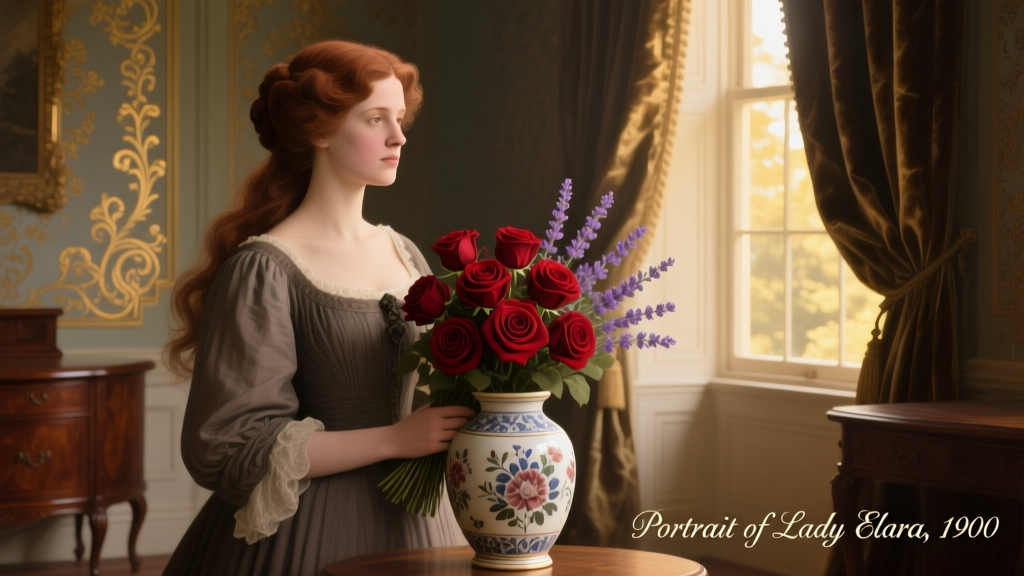
Beehive Vase Portrait: Woman Holding Roses on Lavender Ground, c. 1900 — A Technical & Historical Analysis of a 33-Inch American Art Pottery Masterpiece
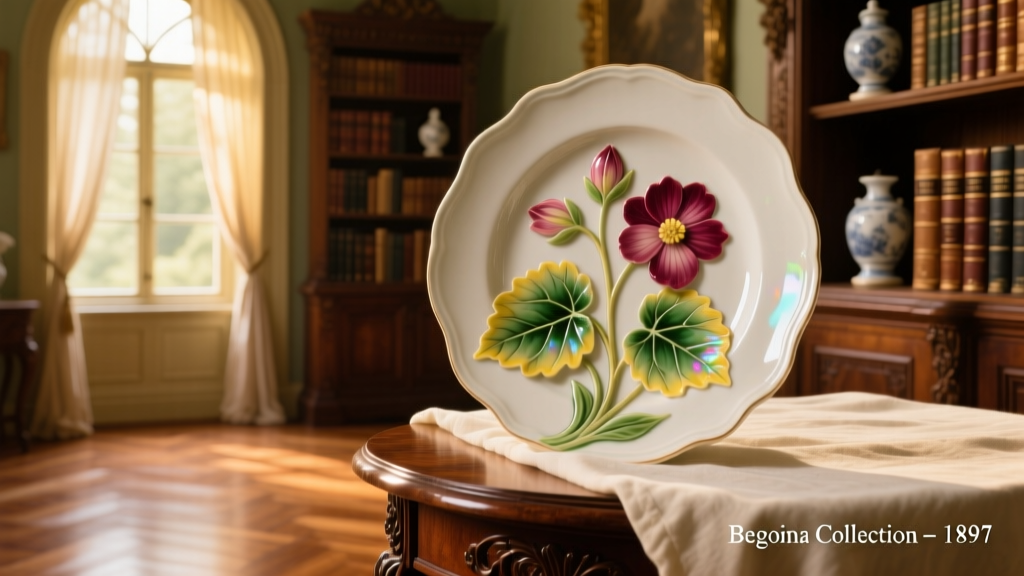
Majolica Plate: Begonia Leaf Motif in Green, Yellow, and Deep Rose — A 10-Inch Victorian Masterpiece
Sun Crest Beverage Clocks: A Collector’s Guide to the 16 × 19-Inch Advertising Timepieces of the 1940s–1950s

Nikon Binocular Case 8-Inch: A Collector’s and Conservator’s Guide to Identification, Materials, and Long-Term Preservation
Coronado Green Dinner Plate (6½ Inches): Identification, History, and Restoration Guidance for Collectors
The Stanley No. 125 Combination Square: Precision, Heritage, and Practical Layout in Antique Woodworking
Elvis Presley 'Aloha From Hawaii' Gold Trim Plate in Delphi Presentation Box: Authentication, Value, and Conservation Guidelines
Franciscan Apple 10 oz Mug (Pattern #2): History, Identification, and Restoration Best Practices
Boxes, Document Cases, and Wooden Floral Wallpaper Linings: Authentic 1820s British Cabinetmaking Practices