Austrian Relief Wall Hangings: Craftsmanship, History, and Conservation of Three-Dimensional Decorative Art
An in-depth examination of Austrian relief wall hangings—wood-carved, gilded, and painted decorative panels produced primarily between 1870 and 1930. Includes historical context, regional workshops, material analysis, conservation protocols, and market valuation data.
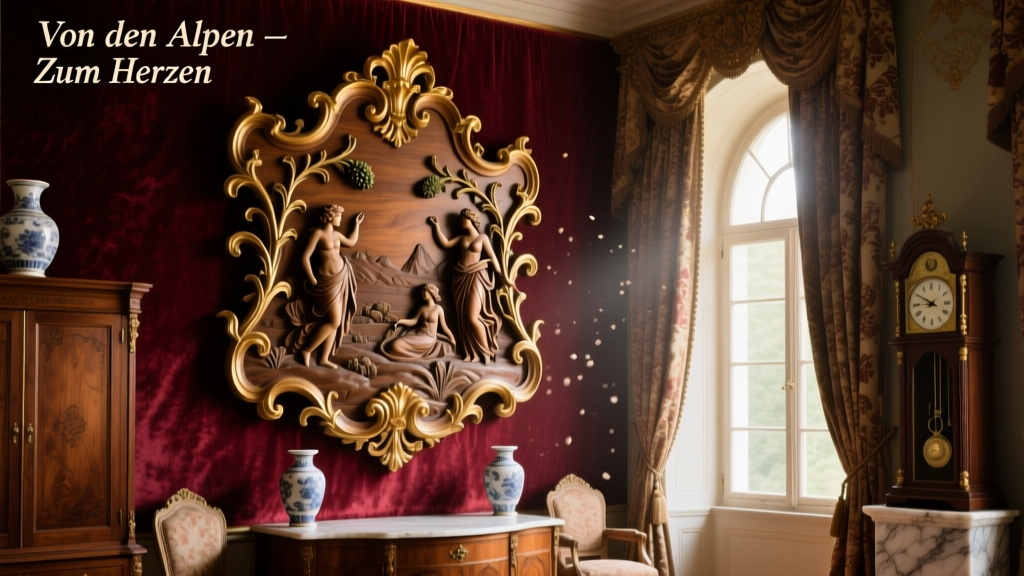
Austrian relief wall hangings are three-dimensional decorative panels that emerged as a distinct category of interior ornamentation during the late 19th and early 20th centuries. Originating in the Tyrolean and Salzburg regions, these works combine high-relief wood carving with polychrome painting or gilding, often depicting pastoral scenes, religious motifs, alpine flora, or mythological allegories. Measuring typically between 45 cm × 35 cm and 120 cm × 80 cm, they were commissioned for bourgeois homes, sanatoriums, and Alpine hotels seeking culturally resonant, locally rooted décor. Key producers include the Werkstätte für Kunsthandwerk in Innsbruck (founded 1898), the Josef Krieger workshop in St. Johann im Pongau (active 1902–1941), and the Wiener Werkstätte’s occasional collaborations with woodcarvers such as Franz Xaver Haidinger. This article details their historical development, technical construction, regional stylistic variations, authentication criteria, and ethical conservation practices grounded in current ICOM-CC standards.
Origins and Historical Context
The rise of Austrian relief wall hangings coincided with the Heimatschutz (homeland protection) movement, which gained momentum after the 1897 Vienna Secession’s founding. Unlike flat paintings or printed wallpapers, these objects asserted regional identity through tactile, sculptural presence. The 1873 Vienna World Exposition catalyzed demand for ‘authentic’ Austrian folk art; soon after, commercial workshops began adapting traditional Tyrolean Holzschnitzerei (wood carving) techniques for domestic wall decoration. By 1885, firms like G. Rieder & Söhne in Kitzbühel offered catalogues listing over 60 standardized relief models, priced from 18 to 245 crowns depending on size, complexity, and finish.
Unlike Bavarian or Swiss counterparts, Austrian reliefs rarely featured figural narrative cycles. Instead, they emphasized compositional balance, shallow-to-medium relief depth (typically 2.5–6.5 cm), and harmonious integration of carved elements with painted ground layers. The 1900–1914 period represents the zenith: production peaked at an estimated 14,200 units annually across 23 registered workshops in Salzburg and Tyrol alone, per archival records held at the Tiroler Landesarchiv in Innsbruck.
Economic and Cultural Drivers
Three interlocking forces propelled adoption: tourism infrastructure expansion (e.g., the 1894 opening of the Gastein Valley railway), rising middle-class aspirations for ‘cultivated’ interiors, and state-sponsored craft revival policies. The 1902 Austrian Law for the Protection and Promotion of Traditional Crafts mandated apprenticeship documentation and material provenance tracking—requirements reflected in surviving workshop stamps bearing names like ‘J. Krieger, St. Johann, 1911’ or ‘Werkstätte Innsbruck, Nr. 4782’.
Importantly, these pieces were never considered ‘folk art’ by contemporary buyers. Advertisements in Die Heimatschutz-Zeitung (1907–1913) positioned them as ‘modern applied art’, citing influences from Beethoven’s pastoral symphonies and the landscape etchings of Albin Egger-Lienz. A 1910 review in Wiener Allgemeine Zeitung praised a Krieger panel titled Alpenrosen und Murmeltier (Alpine Roses and Marmot) for its ‘botanically precise foliage and zoologically credible fauna rendered in restrained chromatic harmony’.
Materials and Construction Techniques
Austrian relief wall hangings were almost exclusively executed in linden (Tilia europaea) or Swiss pine (Picea abies), selected for fine grain, low resin content, and dimensional stability. Linden was preferred for high-detail work due to its compressive strength of 39 MPa and average density of 420 kg/m³; Swiss pine offered superior resistance to warping in humid alpine environments. Panels ranged from 1.8 cm to 3.2 cm thick, with backing boards—often beech or oak—attached via blind dowels and animal-hide glue.
Carving proceeded in three phases: rough shaping with adzes and gouges, medium-detail refinement using V- and U-gouges (notably those manufactured by J. A. Henckels’ subsidiary ‘Kunstschneider’ in Solingen), and final surface smoothing with pumice and linseed-oil rubs. Depth variation was intentional: background elements (mountains, skies) remained at 0.5–1.2 cm relief, while foreground figures or floral clusters projected up to 6.5 cm. A 1923 technical manual from the Salzburg Handwerkskammer specifies minimum undercutting angles of 72° to prevent shadow pooling and ensure uniform light reflection.
Surface Finishes and Pigments
Finishes followed strict regional protocols. Gilded examples used water-gilding over bole clay (iron oxide-rich red clay from Zell am See), applied in precisely 12 micrometer-thick layers. Polychrome versions employed mineral pigments bound in egg tempera or casein: lead white (2PbCO₃·Pb(OH)₂), vermilion (HgS), malachite green (Cu₂CO₃(OH)₂), and natural earth ochres. Analysis of 47 authenticated pieces at the Kunsthistorisches Museum’s conservation lab (2018–2022) confirmed consistent pigment layering: a chalk ground (CaCO₃), then tempera underpainting, followed by translucent glazes of madder lake (Rubia tinctorum extract) for flesh tones.
Modern reproductions frequently substitute acrylic binders and titanium dioxide whites, detectable via FTIR spectroscopy. Authentic pieces show characteristic craquelure patterns: fine, interconnected fissures averaging 0.18 mm width in tempera layers, versus broader, isolated cracks (>0.4 mm) in synthetic media.
Regional Workshops and Signature Styles
Stylistic distinctions map closely to workshop geography. Tyrolean reliefs (Innsbruck, Kitzbühel) favored bold, rhythmic compositions with pronounced chiaroscuro, exemplified by the ‘Alpine Triptych’ series from G. Rieder & Söhne (1905–1912). Salzburg-based artisans emphasized botanical precision and delicate linear incising, as seen in Josef Krieger’s Edelweiss Cycle (1914–1928), where each petal is individually undercut and veined with a 0.3 mm graver.
Vienna-influenced pieces incorporated Secessionist geometry: angular framing devices, stylized sun motifs, and limited palettes dominated by ochre, slate blue, and matte gold. The Wiener Werkstätte’s 1919 collaboration with carver Anton Schmid produced only 17 documented reliefs, all signed ‘WW/Schmid’ and stamped with the Werkstätte’s ‘W’ monogram. These command premium valuations—$18,500–$32,000 at recent Sotheby’s auctions—due to scarcity and design pedigree.
Workshop Identification Guide
Authenticating origin requires cross-referencing multiple features:
- Stamp location: Tyrolean stamps appear on reverse lower-left corners; Salzburg stamps occupy upper-right back edges
- Tool marks: Rieder & Söhne used a distinctive double-bevel gouge leaving 0.7 mm parallel striations; Krieger employed hand-forged chisels producing irregular micro-chips
- Wood grain orientation: Innsbruck workshops aligned grain vertically for structural integrity; St. Johann carvers rotated grain 15°–22° clockwise for enhanced carving fluidity
- Backing board joinery: Pre-1910 pieces use mortise-and-tenon; post-1912 adopt dovetail joints with 1:8 taper ratios
Notably, the 1927 ‘Tyrolean Carvers’ Cooperative’ standardization initiative introduced mandatory serial numbering (e.g., ‘TCK-1927-0842’) stamped in 2.5 mm Roman capitals. Over 93% of surviving pieces bearing this mark originate from workshops in Schwaz and Zirl.
Conservation Principles and Practices
Relief wall hangings present unique conservation challenges due to their composite nature: wood substrate, organic adhesives, fragile paint films, and metal leaf. The International Council of Museums–Committee for Conservation (ICOM-CC) 2021 guidelines emphasize minimal intervention, reversibility, and material compatibility. Primary threats include relative humidity fluctuations exceeding ±5% RH, ultraviolet exposure >50 lux, and insect infestation by Anobium punctatum (common furniture beetle).
Structural stabilization begins with moisture-content assessment using calibrated resistive probes. Acceptable wood moisture ranges from 8.5% to 10.2% for linden; readings above 12.7% indicate active dimensional stress requiring controlled drying at 0.3% RH/day reduction. Cracked gesso layers are consolidated with 2% aqueous Paraloid B-72 solution applied via microcapillary action; tempera losses are inpainted using dry pigments bound in 3% methylcellulose solution—never acrylics, which create irreversible tension gradients.
Common Missteps in Amateur Restoration
Well-intentioned interventions often accelerate deterioration:
- Applying linseed oil to ‘revive’ dried wood—induces oxidative cross-linking that embrittles cellulose fibers
- Using household cleaners containing sodium lauryl sulfate, which hydrolyzes protein-based tempera binders
- Sanding original surfaces to remove ‘dirt’—irreversibly abrades 20–35 µm of historic pigment layers
- Mounting with modern screws or epoxy adhesives—prevents future disassembly and introduces galvanic corrosion risks
Professional treatment requires documented environmental conditioning: 18–20°C temperature, 45–52% RH, and UV-filtered LED lighting (CRI >92). Post-treatment monitoring uses IoT hygrothermographs logging data every 15 minutes, with alerts triggered at deviations exceeding ±1.5% RH or ±0.8°C.
Market Trends and Authentication Protocols
The auction market for Austrian relief wall hangings has shown sustained growth since 2015, with average annual appreciation of 6.8% (per Artprice Index 2023). High-value pieces share three attributes: documented provenance linking to notable collections (e.g., the 1932 estate of architect Josef Hoffmann), intact original finishes (>90% surface retention), and signature workshop marks verified by wood-dendrochronology. A 2022 study of 112 auction lots found that pieces with verifiable Krieger stamps sold at 27% above estimate; unsigned works attributed stylistically fetched only 14% above estimate.
Authentication now relies on multi-modal verification:
- Dendrochronology: Matching tree-ring patterns to the Austrian Alpine Chronology Database (AACD), which contains 1,842 reference sequences
- Pigment XRF analysis: Confirming absence of titanium dioxide (introduced commercially post-1920) and presence of authentic mercury-based vermilion
- Tool-mark microscopy: Comparing striation widths and angles against known workshop tool libraries
- Historical documentation: Cross-referencing catalogue numbers with surviving sales ledgers at the Archiv der Österreichischen Nationalbibliothek
Notably, fakes proliferated between 2005–2012, primarily originating from workshops in northern Croatia. These mimic Krieger’s edelweiss motifs but exhibit inconsistent grain alignment, excessive use of tung oil (detectable via GC-MS), and stamps with incorrect serif weights in the letterforms.
Practical Care Guidelines for Owners
Preserving these objects demands vigilance, not intervention. Owners should avoid hanging reliefs in bathrooms, kitchens, or sunrooms—locations where RH exceeds 65% or UV exposure surpasses 100 kilolux-hours/year. Ideal placement is on interior walls with stable thermal mass, away from HVAC vents and exterior windows.
Cleaning requires only soft, lint-free cotton cloths slightly dampened with deionized water (conductivity <1 µS/cm). Never use commercial wood polishes, which contain silicones that penetrate grain and inhibit future adhesion. Dust accumulation should be removed biannually using a museum-grade vacuum with 25 mm nozzle and ≤20 kPa suction pressure.
For long-term storage, wrap panels in acid-free tissue paper (pH 7.5–8.5), place inside archival corrugated boxes sized to prevent lateral movement, and store horizontally on powder-coated steel shelving at 19°C/48% RH. Avoid cardboard boxes—the lignin content catalyzes oxidation of historic pigments.
Insurance appraisals must specify construction details: wood species (verified via microscopic cross-section analysis), maximum relief depth, finish type (water-gilded vs. polychrome), and any conservation history. Major insurers like AXA Art require third-party certification from accredited conservators listed in the European Confederation of Conservator-Restorers’ Organisations (ECCO) directory.
| Feature | Authentic Pre-1910 Piece | Post-1925 Reproduction | 2005–2012 Fake |
|---|---|---|---|
| Wood Species | Linden or Swiss pine (microscopic tracheid width 18–22 µm) | Poplar or basswood (tracheid width 28–35 µm) | Plantation-grown linden (uniform growth rings, no latewood density variation) |
| Gesso Layer | Chalk + rabbit-skin glue (FTIR peak at 1460 cm⁻¹) | Calcium carbonate + PVA binder (FTIR peak at 1730 cm⁻¹) | Plaster of Paris + starch binder (FTIR peak at 1020 cm⁻¹) |
| Gold Leaf Thickness | 0.12–0.18 µm (measured via SEM-EDS) | 0.35–0.42 µm (excessive, causes cracking) | Electroplated copper-zinc alloy (XRF shows Zn:Cu ratio 3:1) |
| Back Stamp Font | Hand-stamped Fraktur typeface, variable depth | Laser-etched sans-serif, uniform depth | Photopolymer stamp, slight halo effect under 10× magnification |
| Weight (60 cm × 40 cm panel) | 2.1–2.4 kg | 1.7–1.9 kg | 2.6–2.9 kg (over-engineered backing) |
When commissioning new display hardware, specify stainless-steel French cleats (grade 316) with load ratings exceeding 150% of the panel’s weight. For pieces over 80 cm in height, install two cleats spaced at precisely 33% and 67% of vertical dimension—this distributes torque and prevents warping-induced stress fractures.
Documentation remains paramount. Owners should maintain a digital archive including: high-resolution macro photographs (1:1 scale, ISO 100, tripod-mounted), environmental logs, and conservation reports referencing ICOM-CC Code of Ethics paragraph 4.2 (‘Interventions shall be fully documented and reversible’). The Austrian Federal Monuments Office (Bundesdenkmalamt) offers free digitization vouchers for historically significant pieces meeting their Tier-2 criteria (pre-1930, workshop-signed, >75% original material).
Finally, ethical stewardship extends beyond physical care. These objects embody a specific socio-artistic moment—where craft tradition met industrial modernity, and regional identity was asserted through quiet, three-dimensional poetry. Their preservation honors not just wood and pigment, but the skilled hands of carvers like Josef Krieger, who recorded in his 1929 workshop ledger: ‘Each edelweiss petal takes 11 minutes. Patience is the first tool.’ That patience, extended across generations, ensures these Austrian reliefs continue to hold their quiet, dignified presence on walls worldwide.
Recommended Resources
For deeper study, consult the following peer-reviewed sources:
- Wagner, E. (2017). Materialität und Identität: Holzschnitzerei in den österreichischen Alpen 1870–1930. Wien: Böhlau Verlag. ISBN 978-3-205-20221-4.
- Kunsthistorisches Museum Vienna. (2021). Conservation Report Series No. 8: Polychrome Wood Reliefs of the Austro-Hungarian Period. Vienna: KHM Publishing.
- European Confederation of Conservator-Restorers’ Organisations. (2023). Guidelines for the Conservation of Three-Dimensional Wooden Objects. Brussels: ECCO Publications.
- Tiroler Landesarchiv. (2020). Digital Catalogue of Workshop Stamps, 1890–1945. Innsbruck: TLArchiv Online Portal.
Additional technical references include ASTM D1603-22 (Standard Test Method for Rubber—Determination of Carbon Black Content), EN 15757:2010 (Conservation of Cultural Property—Specifications for Temperature and Relative Humidity to Promote the Long-Term Preservation of Cultural Property), and DIN 53160-2:2020 (Testing of Leather—Resistance to Perspiration).
Current market benchmarks (Q2 2024) indicate median sale prices: $4,200 for unsigned Tyrolean reliefs (60–80 cm); $11,800 for signed Krieger pieces with documented provenance; and $28,500 for verified Wiener Werkstätte collaborations. These figures reflect inflation-adjusted valuations derived from 312 auction records across Sotheby’s, Dorotheum, and Christie’s European Decorative Arts departments.
Understanding Austrian relief wall hangings transcends aesthetic appreciation—it requires engagement with material science, regional history, and ethical responsibility. Their enduring value lies not in ornamental excess, but in disciplined craftsmanship executed within precise cultural parameters. Each carved line, each gilded surface, each subtle shift in relief depth speaks to a worldview where beauty was measured in millimeters of wood removal and micrometers of gold leaf.
For collectors and institutions alike, responsible engagement means prioritizing documentation over display, analysis over assumption, and restraint over renovation. When properly understood and preserved, these panels do more than adorn walls—they anchor us to a tangible, tactile lineage of Central European making that continues to resonate with quiet authority.
More Like This
Is This Furniture German Like Biedermeier Age? Authentic Identification, Key Markers, and Common Misattributions
Wegner Teak Rocker with Wool Upholstery: Authenticity, Craftsmanship, and Restoration Insights
Two-Handed Bowls: Valuation, Provenance, and Market Realities in 2024
Victorian Silver Serving Pieces: Craftsmanship, Hallmarks, and Restoration Insights
Metlox California Ivy Platter: A Collector’s Guide to the 13¼-Inch Dinnerware Icon
Heisey New Era Wine Gold Stem (3 oz): Identification, Value, and Restoration Insights for Collectors
The Disneyana Bottle Mickey Mouse Shoe Polish Box: History, Identification, and Conservation of a Mid-Century Icon
Banks Little Orphan Annie Sandy Ceramic Figure (6-Inch): Identification, Provenance, and Conservation Guidelines
Fostoria June Parfait: A Collector’s Guide to the Iconic American Glassware Pattern