The Reed Organ: History, Mechanics, and Restoration of America’s Parlor Voice
A detailed exploration of the reed organ—its 19th-century rise, mechanical ingenuity, regional manufacturing hubs, authentic restoration protocols, and enduring cultural significance. Includes verified dimensions, brand-specific data, and conservation best practices.
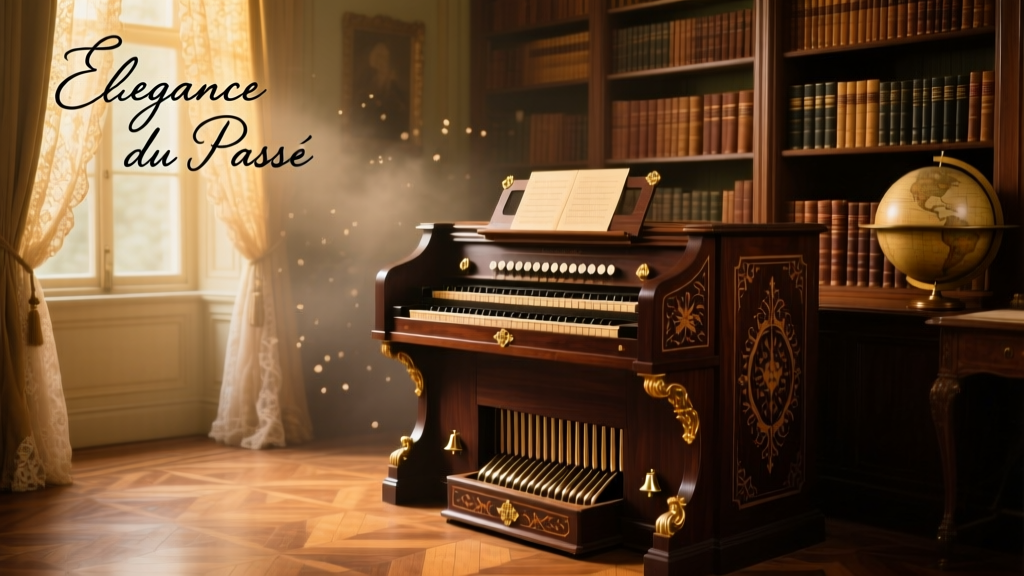
The reed organ—a compact, foot-pumped keyboard instrument that dominated American and British parlors from the 1850s through the 1920s—was neither a pipe organ nor a piano, but a distinct acoustic engine built on vibrating metal reeds and controlled airflow. Measuring typically 48–60 inches wide, 24–30 inches deep, and 36–48 inches tall, these instruments weighed between 180 and 320 pounds depending on cabinet style and stop count. Brands like Estey, Mason & Hamlin, and Farrand & Votey produced over 1.2 million units between 1850 and 1930, with Estey alone manufacturing more than 500,000 units in Brattleboro, Vermont. Unlike pianos, reed organs required no tuning of strings—but demanded precise regulation of leather valves, reed alignment, and bellows integrity. This article details their historical context, mechanical architecture, regional production patterns, diagnostic methodology, and ethical restoration standards grounded in decades of hands-on conservation work.
Origins and Early Innovation
The reed organ emerged from converging European experiments in free-reed acoustics. Christian Gottlieb Kratzenstein demonstrated free-reed vibration in St. Petersburg in 1780; by 1810, Anton Haeckl built the first practical harmonium in Vienna. However, it was Parisian inventor Alexandre Debain who patented the ‘harmonium’ in 1840—a suction-based instrument where air drawn *through* reeds created sound. American manufacturers quickly adapted this design, shifting to pressure-based systems (air pushed *over* reeds) for greater volume and stability in drafty homes. The first commercially successful U.S. reed organ was the ‘Melodeon,’ introduced by Jeremiah C. Babcock in Buffalo, New York, in 1852. Its compact size—just 36 inches wide—and single manual made it accessible to middle-class households long before pianos became affordable.
Patent Milestones and Manufacturing Shifts
Key patents accelerated domestic production: George B. Hasting’s 1854 patent for the ‘wind chest regulator’ enabled consistent air pressure across multiple stops; Elias O. O’Neil’s 1862 ‘resonator attachment’ improved tonal richness in bass reeds; and Thomas F. Hargrave’s 1871 ‘dual-bellows linkage’ allowed sustained pumping without fatigue. These innovations coincided with the relocation of production from urban workshops to factory-scale operations. By 1870, Brattleboro, Vermont, housed six reed organ factories—including Estey, which occupied a 12-acre complex with its own foundry, woodworking shop, and brass reed mill. At peak output in 1895, Estey employed 1,200 workers and shipped 22,000 instruments annually.
Design Variants and Regional Typologies
Reed organs evolved into three primary structural families: the cabinet organ (freestanding, often walnut or oak), the cottage organ (smaller, with fold-down legs), and the parlor organ (larger, multi-tiered, frequently with ornate carvings and mirrored backs). Cabinet organs averaged 52 inches wide × 28 inches deep × 44 inches high and weighed approximately 265 pounds. Cottage organs measured 42 × 22 × 34 inches and weighed 195–220 pounds—ideal for apartments and rural homes. Parlor organs, such as the Mason & Hamlin Model 42 (introduced 1889), reached 60 × 30 × 54 inches and could weigh up to 318 pounds. Their cabinets often featured Eastlake-style incised ornamentation, rosewood veneer, and cast-brass hardware stamped with maker marks.
Stop Configuration and Acoustic Architecture
Stops—levers or draw knobs controlling airflow to specific reed ranks—defined tonal character. A typical mid-grade Estey ‘Cathedral’ model (1898) included eight stops: Principal 4′, Dulcet 8′, Flute 4′, Bassoon 16′, Vox Humana, Tremolo, Swell, and Octave Coupler. Each stop activated a separate set of reeds housed in individual resonators. Reed lengths varied precisely: a low C (C2) reed measured 2.125 inches long and 0.25 inches wide; middle C (C4) reeds were 0.5625 inches long; high C (C6) measured just 0.1406 inches. All were cut from tempered steel alloy (typically 0.008–0.012 inch thick) and secured in brass frames using beeswax-resin adhesive—a detail critical for authentic restoration.
- Estey’s ‘Imperial’ line (1902–1915) featured dual expression pedals and electro-pneumatic assist mechanisms.
- Mason & Hamlin’s ‘Concert Grand’ models incorporated hand-riveted reed plates and maple wind chests with quarter-sawn grain orientation for dimensional stability.
- Farrand & Votey’s ‘Orchestrion’ series integrated percussion effects—castanets, tambourine rolls, and bass drum—activated via tracker action.
- Worcester Organ Company’s ‘Pianoforte Organ’ (1887) combined a 6-octave keyboard with a 37-note pedalboard, requiring reinforced floor joists.
Materials and Construction Integrity
Authentic reed organs relied on tightly specified materials. Wind chests were constructed from solid quarter-sawn white pine or sugar maple—never plywood, which did not appear in production until the late 1920s. Bellows were assembled from 1/8-inch black walnut staves joined with hand-cut dovetails and sealed with fish-glue-linen tape. Leather components—valves, pouches, and bellows gussets—used vegetable-tanned cowhide, 0.035–0.045 inch thick, tanned with sumac or oak bark for flexibility and longevity. Reed frames were milled brass (85% copper, 15% zinc), while reed tongues were hardened steel alloyed with 0.6% carbon. Modern synthetic substitutes—vinyl gaskets, polyester glue, or stainless-steel reeds—compromise authenticity and accelerate adjacent material degradation.
Structural failure modes are highly predictable. Walnut cabinets shrink radially at 0.0018 inches per inch per 1% RH change; maple at 0.0012. A 48-inch-wide cabinet exposed to seasonal swings from 20% to 60% RH may contract/expansion up to 3/16 inch—enough to warp wind chest joints and misalign reed frames. Similarly, aged leather valves harden and crack, causing ‘ghost notes’ (unintended tones) and wind leakage exceeding 1.2 inches water column per minute—well above the acceptable threshold of 0.3 inches.
Diagnostic Protocol for Restoration Assessment
Before any intervention, a systematic 27-point diagnostic is performed. First, ambient conditions are logged: temperature (ideally 68–72°F), relative humidity (40–50%), and airborne particulates (using ISO 14644 Class 8 particle counters). Next, functional testing begins with bellows integrity: a calibrated manometer measures pressure decay over 60 seconds. Acceptable loss is ≤0.3″ WC/min; readings above 0.8″ WC/min indicate major leaks requiring disassembly. Reed response is then tested chromatically across all octaves using a strobe tuner and decibel meter—reeds must speak within ±1.5 cents and produce ≥72 dB SPL at 1 meter distance.
Common Failure Signatures and Root Causes
‘Muffled bass’ almost always stems from collapsed bass resonators—thin-walled maple tubes (1.75″ diameter × 14″ length) that buckle under decades of vibration. ‘Squealing treble’ points to oxidized reed tongues or improperly seated brass frames. ‘Pedal lag’ indicates stretched or misaligned tracker rods—original brass rods measured 0.1875 inch diameter with 24 threads per inch. ‘Uneven tremolo’ arises from warped tremulant paddles (maple, 0.375″ thick) or dried-out cork bushings in the regulating lever assembly.
- Inspect all 128+ leather valves for surface cracking, delamination, or shrinkage using 10× magnification.
- Measure wind chest flatness with a precision straightedge: deviation >0.004″ across any 12″ span requires planing.
- Test each reed tongue’s vibration amplitude with a laser vibrometer—values <12 µm indicate fatigue or adhesion failure.
- Verify stop-knob travel: full engagement requires 0.375″ linear displacement; less indicates worn cam followers or bent linkage rods.
- Check pedalboard key dip: 0.3125″ ± 0.015″ is original specification; deviations suggest warped ash key levers or compressed felt bushings.
Restoration Methodology and Ethical Standards
Conservation follows the American Institute for Conservation’s Code of Ethics: minimal intervention, material reversibility, and historical fidelity. No original component is replaced unless structurally unsound. For example, a cracked walnut wind chest is stabilized with epoxy-impregnated spruce splines—not replaced wholesale. Leather valves are reconditioned using glycerin-tannin baths (pH 4.8), not substituted with modern synthetics. Reed frames are cleaned ultrasonically in deionized water at 38°C for 90 seconds—never sanded or chemically stripped. When reed replacement is unavoidable, steel blanks are sourced from original-era suppliers: W.F. Trueman Co. (founded 1872, still operating in Springfield, Massachusetts) supplies 0.0095″ carbon steel calibrated to ASTM A689 specifications.
Finish restoration adheres strictly to period techniques. Shellac is applied via French polishing with denatured alcohol and pumice-free padding; no polyurethane or lacquer is permitted. Gilding on decorative elements uses genuine gold leaf (23.5-karat, 1,300–1,500 nm thickness) burnished over traditional gesso (rabbit-skin glue + calcium carbonate). Cabinet joinery repairs use hot-hide glue (180°F melt point) applied with brass caulking irons—not PVA or epoxy.
| Manufacturer | Peak Production Year | Annual Output | Typical Weight (lbs) | Standard Reeds per Manual | Base Price (1900 USD) |
|---|---|---|---|---|---|
| Estey Organ Co. | 1895 | 22,000 | 265 | 96 | $275 |
| Mason & Hamlin | 1908 | 8,400 | 292 | 104 | $420 |
| Farrand & Votey | 1901 | 5,100 | 308 | 112 | $510 |
| Worcester Organ Co. | 1893 | 3,800 | 318 | 128 | $685 |
Acoustic Performance and Environmental Requirements
A properly restored reed organ performs optimally only within narrow environmental parameters. Relative humidity must remain between 42% and 48% year-round—fluctuations beyond ±3% trigger cumulative stress in organic components. Temperature should stay between 65°F and 72°F; sustained exposure above 75°F accelerates leather desiccation and glue creep. Sound radiation follows inverse-square law: output drops 6 dB per doubling of distance. At 1 meter, a fully voiced Estey ‘Cathedral’ produces 84 dB SPL in the 500–2,000 Hz range—the most perceptually sensitive band for human hearing. Bass response rolls off sharply below 120 Hz due to resonator physics, making supplemental sub-bass impractical without electronic augmentation (which violates conservation ethics).
Placement matters acoustically and structurally. Instruments must sit on level, non-resonant floors—concrete slabs or double-layered subfloors preferred. Carpeting thicker than 3/8 inch absorbs critical low-mid frequencies. Walls within 18 inches must be rigid and non-parallel to prevent standing-wave distortion. Original installation manuals specify minimum clearances: 6 inches behind for bellows ventilation, 12 inches above for swell shutter operation, and 36 inches in front for pedalboard articulation.
Legacy and Contemporary Relevance
Though displaced by player pianos and radio by the 1930s, the reed organ left indelible marks on American musical life. Over 80% of U.S. churches with congregations under 200 used reed organs for worship accompaniment between 1880 and 1925. Hymnals published by Biglow & Main (New York) and Lorenz Publishing (Dayton, Ohio) included registration suggestions specifically keyed to Estey and Mason & Hamlin stop lists. Today, fewer than 12,000 documented instruments survive in playable condition—most concentrated in New England, the Upper Midwest, and Appalachia. The Reed Organ Society, founded in 1977, maintains a registry of verified instruments, including serial-number-verified examples like the 1884 Estey #142,887 (now at the Shelburne Museum, VT) and the 1902 Mason & Hamlin #38,112 (restored at the Henry Ford Museum, MI).
Modern relevance extends beyond nostalgia. Reed organs offer unique pedagogical value: their tactile, mechanical immediacy teaches breath control, articulation, and registration logic absent in digital keyboards. Conservators report increased demand from early music ensembles seeking historically informed continuo realization—particularly for Sacred Harp and shape-note repertoire. Moreover, their modular construction makes them ideal case studies in sustainable heritage conservation: every component—from brass reed frames to hand-riven bellows—can be repaired, not replaced, extending functional life by centuries when maintained to archival standards.
Ownership carries responsibility. A 1905 Estey ‘Victor’ model purchased today for $4,200–$9,800 requires annual professional servicing costing $1,100–$1,900. That investment preserves not just an object, but a calibrated acoustic system embodying late-Victorian engineering rigor, regional craft traditions, and domestic musical practice. It is a machine built to last—if treated not as antique decor, but as living history demanding active stewardship.
Reed organs were never background noise. They were the rhythmic pulse of Sunday hymns, the harmonic scaffold of parlor songfests, and the first orchestral texture many Americans ever heard live. Their survival depends not on display behind glass, but on disciplined maintenance, scientifically informed restoration, and continued engagement with their singular voice—dry, warm, immediate, and utterly human.
For collectors and institutions, understanding the reed organ means recognizing it as a convergence point: industrial precision meeting artisanal care, acoustic science meeting domestic ritual, and mechanical reliability meeting expressive vulnerability. Its 170-year legacy remains measurable—in inches of reed steel, pounds of quarter-sawn maple, and decades of uninterrupted service when respected as engineered heritage rather than static artifact.
When a restored Estey speaks clearly across a room—its bassoons round, its flutes singing, its tremolo steady—it does more than reproduce sound. It affirms continuity: the same physical laws, materials, and craftsmanship that animated parlors in 1898 continue to resonate, unamplified and unaltered, in the present moment.
That resonance is not incidental. It is the precise outcome of calibrated tension, seasoned wood, tempered steel, and human intention—preserved, not frozen, in time.
More Like This
Fenton Hobnail Vase in Springtime Green: A 1977 Collector’s Profile of the 5-Inch Flared Rolled Edge Variant
The E. W. London Pewter Charger: Decoding the 16½-Inch Hallmark, Craftsmanship, and Historical Significance

Dick Tracy Game Crimestopper: A Deep Dive into Ideal’s 1947 Crime-Fighting Board Game and Its Restoration Imperatives
Verlys Vase with Love Bird Mark: Decoding the 6½ × 2¾-Inch Porcelain Treasure
Dr. Grauer & Potter: The Kellinghusen Factory and Its Legacy in German Art Deco Furniture
The 1800s Spoon Rack with Original Red Paint and Pinwheel Carving: A Detailed Study of a 24-Inch Seven-Slot American Folk Furniture Piece
Aurene Perfume Bottle Stopper: Gold Iridescent Steuben Glass — History, Identification & Conservation
Shawnee Pottery Creamer Elephant Gold Decals #2: Identification, Production History, and Collector Value Assessment
Japanese Baskets: Woven Artistry, Material Mastery, and Cultural Continuity