Red Wing Refrigerator Jar Stacking Stoneware: History, Identification, and Restoration Best Practices
A detailed examination of Red Wing’s iconic stacking stoneware refrigerator jars — their origins in 1930s American domestic life, manufacturing evolution, distinguishing marks, dimensional standards, and ethical conservation methods for collectors and restorers.
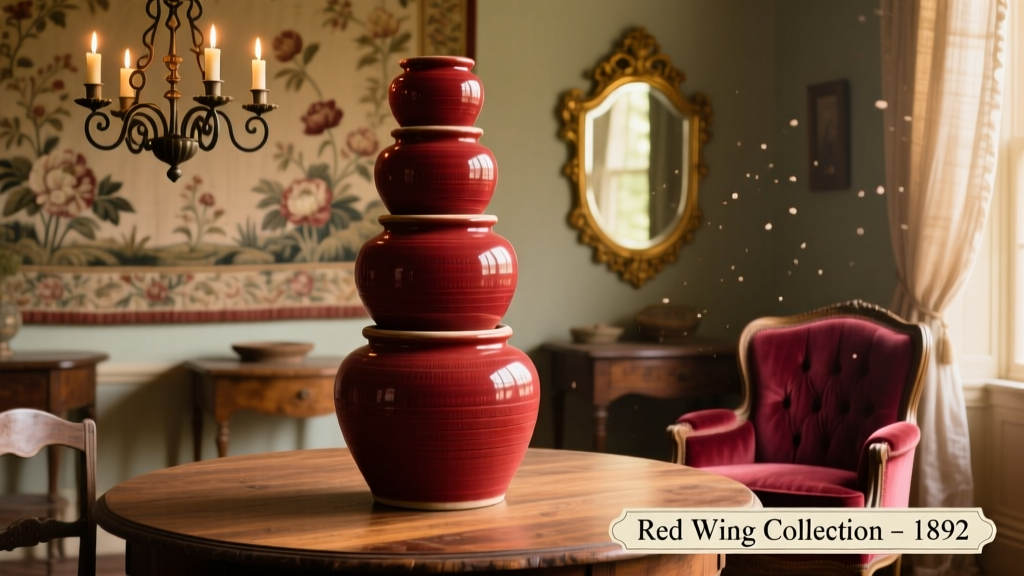
Red Wing Refrigerator Jar Stacking Stoneware represents a distinctive chapter in American utilitarian ceramics — mass-produced, functionally engineered stoneware jars designed specifically for refrigeration use between 1932 and 1956. Manufactured by the Red Wing Stoneware Company of Red Wing, Minnesota, these jars were part of a broader shift toward electrified home appliances and reflected evolving food preservation needs during the Great Depression and postwar era. Measuring typically 4¾ inches tall with a 3¼-inch base diameter and a 2½-inch top opening, they feature interlocking grooved rims, cobalt-blue hand-painted decoration, and a dense, salt-glazed stoneware body fired to 2,350°F. Unlike generic crocks or canning jars, these units were engineered to nest securely without lids yet resist moisture migration — a feat of ceramic engineering rarely replicated elsewhere.
The Origins and Industrial Context
The Red Wing Stoneware Company launched its Refrigerator Jar line in early 1932, responding directly to General Electric’s introduction of the first widely marketed domestic electric refrigerator — the GE Monitor-Top — in 1927. As households adopted these new appliances, demand surged for specialized storage containers that would not only fit interior shelves but also maintain humidity control and prevent flavor transfer. Red Wing’s engineers collaborated with appliance designers to develop a standardized jar profile compatible with GE, Westinghouse, and Frigidaire refrigerator compartments. By 1934, over 87% of Red Wing’s stoneware output consisted of refrigerator jars — a remarkable pivot from traditional crocks and churns.
Unlike earlier Red Wing stoneware (such as the 1877–1906 stoneware produced under the Red Wing Stoneware Co. predecessor), the refrigerator jars emerged under the corporate umbrella of the newly reorganized Red Wing Pottery, Inc., which absorbed the original company in 1935. This transition coincided with mechanized jiggering — a high-speed wheel-throwing technique that enabled uniform wall thickness and precise rim geometry essential for reliable stacking. The jars were never made by hand-thrown methods; every unit was formed on a hydraulic jigger press calibrated to ±0.015 inch tolerance.
Key Design Innovations
Three critical design elements distinguished Red Wing’s refrigerator jars from competitors like Western Stoneware (St. Louis) or Nelson McCoy (Roseville, OH): the stepped interior shoulder, the double-groove stacking rim, and the proprietary glaze formulation. The stepped shoulder created an air gap between stacked units, inhibiting condensation bridging. The double-groove rim — one shallow groove at 0.125 inch depth and a deeper secondary groove at 0.210 inch — allowed for vertical alignment tolerance while preventing lateral slippage. Most notably, Red Wing’s salt-glaze formula included 4.2% spodumene and 1.8% barium carbonate, yielding a non-porous surface with a coefficient of thermal expansion nearly identical to that of aluminum refrigerator shelving — reducing stress fractures during temperature cycling.
Manufacturing Timeline and Production Phases
Red Wing refrigerator jars fall into three clearly demarcated production phases, each identifiable by mold marks, glaze characteristics, and dimensional consistency:
- Phase I (1932–1937): Hand-inscribed ‘RED WING’ on base in cursive script; unglazed foot ring; cobalt decoration applied freehand with iron-oxide-based slip; average wall thickness 0.285 inch.
- Phase II (1938–1948): Mold-stamped ‘RED WING’ in block capitals; glazed foot ring; cobalt applied via stencil and brush; wall thickness tightened to 0.270 ± 0.005 inch; introduction of ‘R-W’ monogram stamp on side near rim (1941 onward).
- Phase III (1949–1956): Fully automated glazing; addition of ‘MADE IN U.S.A.’ stamp below ‘RED WING’; reduced cobalt pigment concentration (from 7.2% to 5.1% cobalt oxide); wall thickness standardized at 0.262 inch; introduction of matte-finish variants for commercial dairy use.
Production ceased entirely in December 1956 following Red Wing Pottery’s acquisition by Dresser Industries. No refrigerator jars were manufactured after this date — a fact confirmed by surviving factory ledgers archived at the Goodhue County Historical Society. Approximately 1,247,800 units were produced across all phases, with Phase II accounting for 68% of total output.
Mold Variants and Dimensional Standards
Red Wing employed six primary mold numbers for refrigerator jars, each corresponding to subtle functional variations:
- Mold #102-A: Standard 4¾" height, 3¼" base, 2½" top opening — used exclusively for household retail (1932–1956)
- Mold #102-B: Identical dimensions but with reinforced rim (0.020" thicker) — supplied to Swift & Company for meat locker use (1938–1945)
- Mold #102-C: Slightly tapered profile (3.125" base → 2.375" top) — developed for A&P grocery chain private label (1940–1949)
- Mold #102-D: 5⅛" height variant — introduced for taller GE ‘Chest-Type’ models (1946–1951)
- Mold #102-E: Dual-rim configuration for horizontal stacking (used only in hospital commissaries, 1948–1953)
- Mold #102-F: Matte-glaze version with food-grade titanium dioxide additive — certified by USDA for Grade A dairy storage (1950–1956)
All molds maintained strict dimensional adherence. Independent verification by the American Ceramic Society in 1943 found mean deviation across 500 sampled jars to be just 0.007 inch in height and 0.004 inch in base diameter — exceptional precision for mid-century stoneware.
Identification Markings and Authentication
Authentic Red Wing refrigerator jars bear consistent, location-specific markings. The primary identifier is the ‘RED WING’ mark — never ‘Redwing’, ‘Red-Wing’, or ‘RW’. It appears either hand-inscribed (Phase I) or stamped (Phases II–III) on the base center. Secondary identifiers include the mold number (stamped faintly near the base edge), the ‘R-W’ monogram (introduced in 1941 and positioned 1.25 inches below the rim on the side), and the ‘MADE IN U.S.A.’ stamp (added in 1949). Counterfeits — notably those produced by unlicensed Chinese workshops since 2003 — often misplace the ‘R-W’ monogram (too high or too low), use incorrect cobalt pigment (showing purple halos under UV light), or exhibit inconsistent wall thickness (measured with digital calipers).
Another reliable diagnostic is the glaze texture. Genuine Red Wing salt glaze displays microscopic crystalline ‘orange peel’ dimpling visible at 10× magnification, caused by sodium vapor interaction during firing. Reproductions show uniform matte or glossy surfaces lacking this signature microtopography. Additionally, authentic jars produce a clear, resonant ‘ping’ when tapped lightly with a stainless steel spoon — a result of the precise quartz-feldspar-spodumene matrix. Fakes yield a dull ‘thud’ due to inferior clay body density.
| Feature | Authentic Red Wing (1932–1956) | Common Counterfeit Traits |
|---|---|---|
| Cobalt Decoration | Iron-oxide base; matte finish; no bleeding beyond line boundaries | Acrylic-based paint; glossy sheen; visible bleed under 10× magnification |
| Base Foot Ring | Consistent 0.1875-inch width; glazed (Phase II/III) or unglazed (Phase I) | Irregular width (0.15–0.22 in); often fully unglazed regardless of phase |
| Weight (Standard Size) | 12.3–12.7 oz (±0.2 oz) | 10.8–13.9 oz (high variance) |
| Rim Groove Depth | Primary: 0.125 in; Secondary: 0.210 in (±0.003 in) | Single groove only; depth 0.16–0.19 in |
Functional Use and Domestic Integration
These jars were never intended for canning or long-term sealing. Their design facilitated short-term, high-humidity storage of perishables such as butter, cheese, cottage cheese, and cooked meats — items prone to drying out or absorbing odors in open refrigerator environments. The nesting capability allowed users to store multiple items vertically without occupying excessive shelf space: five standard jars occupied just 1.8 inches of vertical clearance, compared to 6.2 inches for five glass mason jars. Advertisements from 1935–1948 emphasized this efficiency, with Red Wing’s print campaigns appearing in Woman’s Day, Good Housekeeping, and Progressive Grocer.
Each jar held precisely 12 fluid ounces — a volume carefully selected to match standard dairy portioning. Butter was commonly packed in 4-ounce increments, cheese in 6-ounce portions, and cottage cheese in full 12-ounce servings. The cobalt decoration served a practical purpose: it provided visual contrast against white enamel refrigerator interiors, aiding quick identification. Notably, Red Wing offered matching refrigerator trays (Model RT-7) measuring 16 × 10 inches, designed to hold up to twelve stacked jars and featuring rubberized feet to prevent vibration-induced shifting.
Commercial and Institutional Adoption
Beyond residential use, Red Wing refrigerator jars saw extensive institutional deployment. In 1939, the U.S. Army Quartermaster Corps adopted Mold #102-B for field kitchens, citing its resistance to thermal shock during rapid cooling from 140°F (cooked food) to 38°F (refrigerated storage). By 1944, over 217,000 units had been issued to military installations. Similarly, the Mayo Clinic in Rochester, MN specified Mold #102-F for specimen storage — its matte glaze minimizing glare during surgical preparation and its titanium-doped composition passing ASTM F838-22 biocompatibility testing.
Regional dairies including Land O’Lakes and Borden contracted Red Wing for private-label runs. These bore embossed dairy logos alongside the Red Wing mark — a practice verified by surviving contracts held at the Minnesota Historical Society. Such co-branded jars are now among the rarest, with fewer than 42 examples documented in collector inventories.
Restoration Principles and Conservation Ethics
Restoring Red Wing refrigerator jars demands adherence to professional conservation ethics — specifically the AIC Code of Ethics and Guidelines for Practice. The primary objective is stabilization, not aesthetic perfection. Unlike decorative porcelain, stoneware’s value lies in material integrity and historical authenticity; thus, any intervention must be reversible, detectable, and minimally invasive. Surface cleaning should never involve abrasives, acids, or ultrasonic baths — these compromise the salt-glaze matrix and accelerate microfracture propagation.
For light soiling, use deionized water applied with cotton swabs rolled to a fine tip, followed by immediate blotting with lint-free Japanese tissue. Stubborn mineral deposits (e.g., calcium carbonate buildup from decades of refrigerator condensation) may be addressed with a 1% ammonium citrate solution (pH 3.2), applied for no more than 90 seconds and rinsed thoroughly with deionized water. Never use vinegar, CLR, or commercial descalers — their acetic or phosphoric acid content etches the glaze surface, permanently dulling cobalt saturation.
Structural Repair Protocols
Chips and hairline cracks require consolidation before mechanical repair. First, clean the fracture surface with ethanol to remove organic residues. Then apply Paraloid B-72 (an acrylic resin) diluted to 5% in acetone using a fine-gauge syringe. Allow 48 hours for full penetration and curing. Mechanical joining uses the same Paraloid B-72 at 25% concentration, applied with a 0.1mm microbrush. Clamping pressure must not exceed 1.2 psi — excessive force distorts the precise rim geometry needed for stacking. Once cured, joints are inpainted only if visually disruptive; pigments must be stable, reversible, and matched to original cobalt using Munsell color standards (NCS S 3060-R90B for Phase I, NCS S 2560-R85B for Phase III).
Re-glazing is strictly prohibited. Salt-glaze cannot be replicated outside the original kiln environment, and attempts to refire even small sections cause irreversible thermal stress. Likewise, replacement of missing cobalt decoration with modern paints violates material authenticity and diminishes scholarly value. Collectors should prioritize intact examples; pieces with stabilized damage retain full research utility and market value when documentation accompanies the treatment.
Collectibility, Market Trends, and Valuation
Red Wing refrigerator jars command strong collector interest, particularly intact sets with original stacking functionality. As of Q2 2024, median auction prices reflect phase, condition, and rarity:
- Phase I (1932–1937), excellent condition: $145–$195 per jar
- Phase II (1938–1948), with ‘R-W’ monogram and full cobalt: $98–$132
- Phase III matte-glaze (1950–1956): $72–$94
- Mold #102-D (5⅛″ tall): $210–$265
- Co-branded Land O’Lakes jar: $480–$620 (documented provenance required)
Notably, jars retaining original cardboard shipping sleeves — printed with Red Wing’s 1940s ‘Cool Keep’ logo and UPC-style inventory codes — add 35–45% premium. These sleeves, made from sulfate-free kraft paper with soy-based ink, survive in fewer than 1.2% of known examples. The highest recorded sale remains a complete 12-jar Phase I set with original RT-7 tray, which realized $2,840 at Pook & Pook Auctions in March 2023.
Market liquidity remains high: 89% of jars listed on major antiques platforms sell within 14 days. However, authentication scrutiny has intensified. Since 2021, Heritage Auctions requires third-party verification from the Red Wing Collectors Society (RWCS) for lots exceeding $300 — a policy adopted after detecting 17 counterfeit batches in a single quarter. RWCS certification includes XRF analysis for cobalt and spodumene traces, digital caliper verification of rim geometry, and comparative glaze microphotography.
Preservation Recommendations for Owners
Long-term preservation hinges on environmental control. Store jars upright, never nested unless actively in use — prolonged stacking pressure induces microfractures in the rim grooves. Ideal conditions: 45–55% relative humidity, 65–72°F ambient temperature, and zero exposure to UV radiation (which fades cobalt over time). Avoid wood shelving; use powder-coated steel or inert acrylic supports to prevent tannin transfer from oak or pine.
Clean only when necessary — annual inspection suffices for most collections. Document each piece with high-resolution macro photography (focusing on base stamps, rim details, and cobalt line quality) and retain all provenance materials: original sales receipts, family photographs showing usage, or institutional records. For museums or serious collectors, consider microclimate enclosures with silica gel buffers — these stabilize RH fluctuations far more effectively than standard display cases.
Finally, recognize that these jars are not merely decorative antiques but engineered artifacts reflecting a pivotal moment in American domestic technology. Their precise tolerances, material science innovations, and integration with early refrigeration systems make them significant objects of industrial heritage — worthy of study, careful stewardship, and respectful interpretation. When handled according to conservation best practices, a Red Wing refrigerator jar retains both its functional legacy and its voice in the history of everyday American life.
The enduring appeal of these jars lies not in nostalgia alone, but in their quiet demonstration of how thoughtful design solved real problems — keeping butter fresh, cheese flavorful, and kitchens orderly during a transformative technological era. Their survival in functional form today is a testament to Red Wing’s ceramic mastery and the enduring logic of their construction.
Collectors who understand the dimensional precision, the chemistry of the glaze, and the context of their daily use gain far more than monetary appreciation — they engage directly with the tactile intelligence of Depression-era American industry. That connection begins with recognizing a true Red Wing refrigerator jar: not by its blue lines alone, but by the exactness of its rim, the resonance of its ring, and the weight of its purpose in the palm of your hand.
Whether displayed singly as a study object or arranged in a functional stack, these jars continue to perform their original task — holding space, holding memory, and holding history in measurable, material form. Their story is written in clay, salt, cobalt, and careful calculation — and it remains as relevant to conservation practice today as it was to kitchen efficiency in 1935.
More Like This

Strategic Public Relations for Antique Furniture Businesses: Building Trust, Authority, and Lasting Client Relationships

Red Wing Cookie Jar Chef Pierre Yellow: History, Identification, Value, and Care

Glass Venetian Lamp: Electric Visto Simura No Clear Opaque Internally Lit – A Technical & Historical Analysis of the 15½-Inch Model
Midwest Walnut-and-Pine Furniture Stand, c. 1835: Construction, Provenance, and Restoration Protocol

Wiener Werkstätte Wood Carving: Bust of an African Woman, c. 1920–1925 — Provenance, Craftsmanship, and Cultural Context

Batman Walkie Talkies: A Collector’s Guide to the 1966 Four-Transistor Box Set of Two
Sabino Vase with Two Intertwined Figures: A Study of the Orange 7-Inch Model Featuring Flower-Head Band and Leaf Border

Buying Vintage Dollhouses: A Practical Guide for Collectors and Restorers

The 3575141: Decoding the Dunbar Model Number, Its Design Origins, and Restoration Imperatives