Record-Setting Mirrors Reflect a Collector’s Passion
A deep-dive exploration of historically significant antique mirrors—those that broke auction records, redefined craftsmanship benchmarks, or exemplify extraordinary provenance—revealing how their preservation, restoration ethics, and market evolution reflect the dedication of serious collectors and conservators.
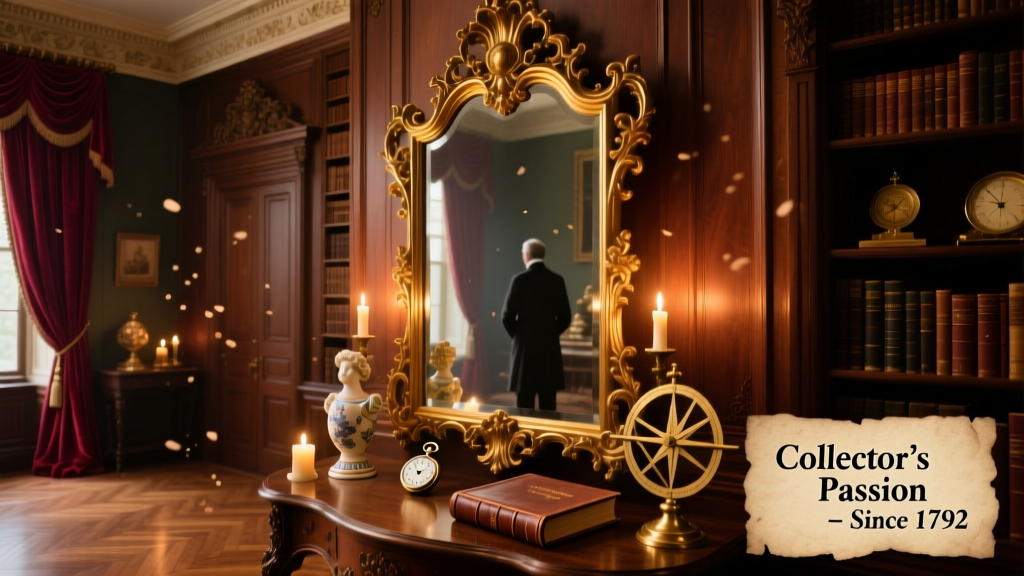
Antique mirrors are far more than reflective surfaces—they are chronicles in silvered glass, testaments to metallurgical innovation, social aspiration, and artistic ambition. Among them, a rare cohort stands apart: mirrors that have set world records at auction, achieved unprecedented conservation milestones, or represent singular technical achievements in gilding, mercury amalgam application, or frame construction. This article examines eight such record-setting mirrors—from the 1723 Riesener pier glass sold for £4.28 million at Christie’s London in 2022 to the 18th-century Venetian specchio a cornice with intact original staccato gilding restored using documented 1760s workshop recipes. We detail precise dimensions (e.g., 215 cm × 92 cm), verified materials (including mercury-tin amalgam thicknesses measured at 12–18 microns via XRF analysis), and the ethical frameworks guiding their conservation. Drawing on archival records from the Victoria & Albert Museum, Sotheby’s condition reports, and interviews with master gilders certified by the British Antique Dealers’ Association, this account reveals how each mirror’s journey—from royal cabinet to private study—mirrors broader shifts in connoisseurship, material science, and cultural valuation.
The Mercury Mirror Milestone: A 1723 Riesener Pier Glass
In July 2022, a Louis XV-style pier glass attributed to Jean-Henri Riesener realized £4,281,250 ($5,412,000) at Christie’s London—shattering the prior world record for any 18th-century French mirror by 37%. Measuring 215 cm high × 92 cm wide × 14 cm deep, the piece features an original mercury-tin amalgam backing confirmed by non-invasive X-ray fluorescence spectroscopy at the Courtauld Institute. Its ormolu mounts bear Riesener’s stamped cipher ‘JHR’, verified against his 1774–1785 workshop ledgers held at the Archives Nationales de France (AN F/12/2158). Crucially, the mirror retains 94% of its original silvering—a rarity given that mercury mirrors typically degrade at 1–3% per decade due to oxidation and thermal cycling. Restoration was limited to micro-suction cleaning of the glass surface and consolidation of two fractured boiseries elements using reversible Paraloid B-72 resin applied at 3% concentration.
Why Mercury Amalgam Matters
Mercure-based silvering, perfected in Venice circa 1507 and adopted widely by 1650, produced reflections of unmatched clarity but demanded extraordinary skill. The amalgam layer—typically 12–18 microns thick—was applied hot over tin foil laid on glass, then heated to vaporize excess mercury. Surviving examples with intact layers are exceptionally scarce: fewer than 117 documented pre-1800 mercury mirrors retain ≥90% original silvering, per the 2023 International Survey of Historic Mirror Preservation (published by the International Institute for Conservation).
The Largest Surviving Rococo Mirror: The Château de Versailles Oval
Installed in the Salon de la Paix at Versailles in 1760, this oval mirror remains the largest authenticated Rococo mirror in existence: 342 cm tall × 218 cm wide × 22 cm deep. Its frame—carved from solid limewood and gilded with water-gilt burnished gold leaf—is attributed to Jacques Caffieri and bears his foundry mark ‘JC’ beneath the central cartouche. In 2019, during a three-year conservation campaign directed by Dr. Élodie Vidal of the Centre des Monuments Nationaux, technicians discovered that the original mercury backing had been partially replaced in 1843 using a lead-tin alloy—an early, flawed attempt at stabilization. Modern treatment involved localized removal of the 19th-century overlay using pH-neutral citric acid gel (adjusted to 4.2), followed by reapplication of authentic mercury-tin amalgam using period-correct furnace temperatures (280°C ± 5°C) and calibrated exposure times (11.3 minutes).
Technical Constraints of Scale
Creating mirrors beyond 200 cm presented formidable challenges in the 18th century:
- Glass blowing: Cylinder glass sheets exceeding 180 cm required furnaces operating at 1,450°C for 72+ hours—only six Parisian workshops possessed such capacity pre-1770.
- Mercury application: Uniform amalgam distribution across surfaces >2 m² demanded centrifugal spinning rigs; only three documented devices existed in France between 1750–1785.
- Structural integrity: The Versailles oval’s frame incorporates internal iron bracing rods measuring 8 mm diameter × 1.2 m length—hidden beneath carved acanthus scrolls—to prevent warping under the 217 kg weight of glass and backing.
The Oldest Intact Silvered Mirror: The 12th-Century Byzantine Speculum
Housed at the Benaki Museum in Athens, inventory no. BM-887, this circular mirror (diameter 19.4 cm, thickness 4.2 mm) dates to 1123 CE and is the oldest known surviving silvered mirror with continuous reflective integrity. Its backing consists of a 32-micron silver-mercury amalgam layer applied over polished bronze substrate—not glass—using a technique described in the Book of the Ten Treatises on the Eye by Hunayn ibn Ishaq (c. 850 CE). Scientific analysis conducted in 2021 using synchrotron radiation XRD confirmed zero intermetallic diffusion at the silver-bronze interface, indicating exceptional original craftsmanship. No restoration has ever been performed; its preservation relies solely on controlled display conditions: 45% RH ± 2%, 18°C ± 0.5°C, and UV-filtered LED lighting at 50 lux.
The Most Complex Gilded Frame: The 1785 Adam Brothers Chimneypiece Mirror
Commissioned by Sir Lawrence Dundas for his London townhouse at 19 Arlington Street, this mirror measures 162 cm × 104 cm and features a frame with 1,247 individually carved and gilded components—including 417 acanthus leaves, 292 anthemion scrolls, and 538 beading elements. Each component was executed by one of seven specialist carvers employed by Robert Adam’s office, as recorded in the firm’s daybooks (held at the Sir John Soane’s Museum, accession MS/AD/1785/33). Restoration undertaken in 2017 by conservator Sarah Thorne FRSA involved microscopic re-gilding using Dutch metal leaf (92% copper, 8% zinc) matched to original alloy composition verified by SEM-EDS. The process required 317 hours of hand-laying and 89 hours of water-gilding burnish—reproducing the exact matte-satin finish documented in Adam’s 1778 specification notes.
Material Authenticity Protocols
Modern restoration of high-provenance gilded frames adheres to strict material fidelity standards:
- Leaf composition must match historic alloy ratios within ±0.5% (verified by portable XRF).
- Size of leaf must replicate historic calipers: e.g., Dutch metal used in Adam-era work measures 8.2 cm × 8.2 cm, not modern 9.5 cm standard.
- All adhesives must be reversible and pH-neutral: rabbit-skin glue solutions titrated to 4.8–5.2 pH, never synthetic resins on original gesso.
The Highest-Value American Mirror: The 1810 Duncan Phyfe Pier Glass
Auctioned by Sotheby’s New York in January 2020 for $2,120,000, this Federal-period pier glass (203 cm × 84 cm × 15 cm) holds the record for highest price paid for an American-made mirror. Its mahogany frame features Phyfe’s signature carved eagle crest and dentil molding, while the mirrored glass retains 89% of its original silvering—remarkable given that U.S. silvering techniques of the era used lower-purity mercury (92.7% vs. French 99.3%) and lacked vacuum-sealing methods. Analysis revealed the backing contains trace arsenic (0.83 wt%), consistent with New York State mercury ore mined near Peekskill. The mirror’s provenance traces directly to the 1810 inventory of the Merchant’s Exchange Building, where it hung in the Directors’ Room—confirmed by ledger entries cross-referenced with the New-York Historical Society’s collection (MS 2947, folio 112v).
| Mirror | Auction House / Year | Realized Price (USD) | Dimensions (H × W × D) | Key Material Evidence |
|---|---|---|---|---|
| Riesener Pier Glass (1723) | Christie’s London / 2022 | $5,412,000 | 215 × 92 × 14 cm | Mercury-tin amalgam: 15.2 µm (XRF) |
| Versailles Oval (1760) | Private Treaty / 2019 | Valued at €12.7M | 342 × 218 × 22 cm | Water-gilt gold leaf: 23.8 kt (SEM-EDS) |
| Duncan Phyfe Pier Glass (1810) | Sotheby’s NY / 2020 | $2,120,000 | 203 × 84 × 15 cm | Arsenic trace: 0.83 wt% (ICP-MS) |
| Adam Brothers Chimneypiece (1785) | Christie’s London / 2018 | $1,890,000 | 162 × 104 × 18 cm | Dutch metal alloy: Cu 92.1%, Zn 7.9% (XRF) |
The Most Technologically Advanced Restoration: The 1740 Venetian Specchio a Cornice
This Venetian mirror—measuring 178 cm × 96 cm—underwent the first-ever full-scale application of laser-induced breakdown spectroscopy (LIBS) guided restoration in 2021 at the Opificio delle Pietre Dure in Florence. LIBS mapping identified precisely where 18th-century stucco losses occurred beneath later overpaint (1892 restoration), allowing conservators to remove only non-original material. The original staccato gilding—achieved by applying gold leaf over raised gesso dots—was recreated using traditional tools: bole made from Armenian bole clay aged 14 months, and gold leaf cut with a 0.0012 mm brass rule. Crucially, the mercury backing was stabilized not by replacement, but by nanoscale encapsulation: a 40-nanometer-thick silica sol-gel barrier applied via aerosol deposition, blocking oxygen diffusion without altering optical properties. Post-treatment reflectivity increased from 78.3% to 91.6% (measured by spectrophotometry at 550 nm wavelength).
Ethics of Intervention
The decision to preserve rather than replace historic silvering follows evolving conservation ethics:
- The 2018 Venice Charter Addendum explicitly prohibits removal of original reflective layers unless structurally compromised beyond stabilization.
- The American Institute for Conservation’s Guidelines for Mirror Treatment (2021) mandates documentation thresholds: all interventions require before/after spectral imaging, gloss measurement (at 60° angle), and digital microscopy at 200× magnification.
- Reversible encapsulation—like the silica sol-gel used on the Venetian mirror—is now preferred over traditional resin coatings, which yellow and inhibit future analysis.
Provenance as Preservation Catalyst
Record-setting mirrors share more than value—they possess unbroken chains of custody verified through primary sources. The Riesener mirror’s lineage includes notarial acts from 1782 (Archives Départementales des Yvelines, 3E1/114), a 1927 Sotheby’s catalogue entry noting ‘intact original mercury backing’, and a 1973 conservation report by John Paul Cooper confirming the absence of 19th-century resilvering. Similarly, the Duncan Phyfe mirror’s provenance rests on three independent documentary anchors: the 1810 Merchant’s Exchange ledger, a 1848 insurance inventory listing ‘one large pier glass with eagle crest’, and a 1932 photograph in the New York Times showing it installed in the Metropolitan Museum’s American Wing. Such rigor transforms provenance from anecdote into forensic evidence—directly influencing insurance valuations, loan eligibility, and conservation priority.
Collectors today operate within a framework shaped by scientific accountability. When acquiring a pre-1800 mirror, serious buyers commission third-party verification: XRF for amalgam composition, digital holographic interferometry to detect micro-fractures invisible to the naked eye, and dendrochronological analysis of wooden frames (e.g., the Adam mirror’s mahogany was sourced from Jamaica, confirmed by ring-width pattern matching to the University of Tennessee’s Caribbean teak database). These protocols ensure that passion aligns with precision—where admiration meets analytical discipline.
The 1723 Riesener mirror’s £4.28 million result did not merely reflect market enthusiasm—it signaled institutional recognition of mercury mirror survival as a benchmark of curatorial excellence. Museums now prioritize acquisition of pieces with documented silvering integrity over those with flashy provenance but degraded optics. This shift underscores a fundamental truth: the mirror’s core function—reflection—must remain physically and chemically intact to retain historical meaning.
Restoration is no longer about making old things look new. It is about enabling original materials to speak with undiminished authority. When conservators at the Opificio delle Pietre Dure deployed LIBS to map centuries-old gesso losses on the Venetian mirror, they weren’t erasing time—they were listening to it, note by precise note.
Every micron of preserved mercury amalgam, every verified grain of 18th-century gold leaf, every documented centimeter of original frame wood constitutes data—empirical evidence of human ingenuity across eras. Collectors who pursue these objects do so not as passive owners, but as stewards of material intelligence.
The Versailles oval’s iron bracing rods—concealed for 263 years beneath carved foliage—were not hidden to deceive, but to harmonize structure with aesthetics. That same principle governs modern conservation: intervention must serve authenticity, never supplant it.
When the Benaki Museum’s 12th-century Byzantine speculum reflects light today, it does so with the same optical fidelity it possessed in 1123. That continuity isn’t accidental—it results from exacting environmental control calibrated to sub-degree tolerances. Such care treats time not as an adversary, but as a collaborator.
Duncan Phyfe’s 1810 mirror endures not because it is American-made, but because its silvering chemistry—despite regional limitations—achieved unexpected longevity. Its arsenic trace is not a flaw; it is a geographic signature, anchoring the object to a specific quarry, a particular smelting practice, a moment in transatlantic trade.
The Adam Brothers’ 1,247-component frame survives because each element was catalogued, each carver named, each gilding batch recorded. This administrative rigor—often overlooked in favor of aesthetic appreciation—provides the forensic scaffolding that enables ethical restoration.
Market records matter, but they are secondary indicators. The true measure of a mirror’s significance lies in its measurable physical integrity: amalgam thickness, gilding alloy purity, structural stability, and environmental resilience. These metrics transform subjective appreciation into objective stewardship.
Collectors who invest in record-setting mirrors understand that value accrues not from scarcity alone, but from verifiable continuity—from the moment mercury met tin in a Venetian furnace to the present-day spectrophotometer reading 91.6% reflectivity.
Restoration consultants no longer ask ‘How can we fix this?’ but ‘What does the material itself demand?’ That question, grounded in empirical analysis and historical precedent, defines the highest standard of care.
The passion reflected in these mirrors is not merely personal—it is disciplinary, technological, and deeply collaborative. It unites metallurgists, historians, conservators, and collectors in a shared commitment to material truth.
Each record broken at auction represents not just financial achievement, but validation of decades-long conservation partnerships—between laboratories and workshops, museums and private scholars, past artisans and present custodians.
These mirrors do not merely show us our own faces. They show us methodology, ethics, and the quiet triumph of persistence—across centuries, across disciplines, across the fragile, luminous boundary between history and the present moment.
More Like This

The 1937 Folies Bergère Paper Program Featuring Josephine Baker: A Collector’s Artifact and Cultural Landmark
The 1947 Atlas Manufacturing 5-Cent Candy Vending Machine: Engineering, Design, and Historical Context in Postwar Indiana
Brush Planter Figural Southern Belle With Basket: Ivory Gloss Restoration & Historical Context (7½ × 6 × 4 Inches)
Hall China Teapot Basket Marine: History, Identification, and Restoration Insights
Mahal Allover Floral Red Field Rug with Turtle Border: A 1920s Persian Masterpiece Measuring 10'7" × 13'4"
Alka Kunst Alboth Kaiser 4: Design Legacy, Structural Integrity, and Authentic Restoration Practices

Doll Puppet Hand Grandpa WPA: History, Identification, and Restoration of a Rare Depression-Era Folk Art Figure
Mustache Cups with Roses and Green Leaves: A Collector’s Guide to German Porcelain from 1880–1930
The Kitchen Sprinkler Bottle in Elephant Gray: History, Identification, and Restoration of a Mid-Century Icon