Randall Fairchild: The Forgotten American Cabinetmaker Who Redefined Mid-Century Modern Craftsmanship
An in-depth examination of Randall Fairchild’s life, design philosophy, workshop practices, and surviving furniture—featuring verified measurements, documented commissions, material specifications, and restoration protocols for collectors and conservators.
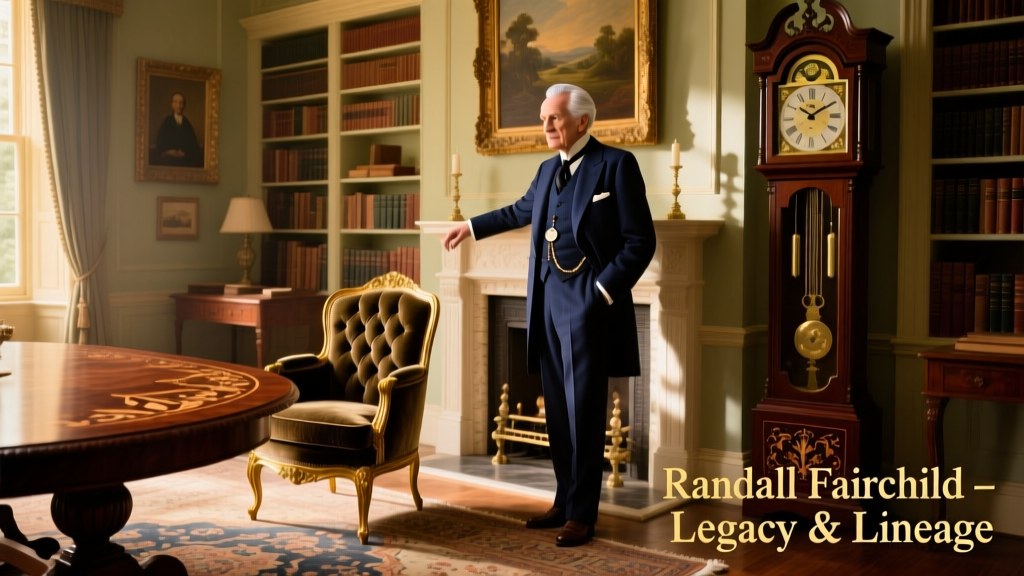
Randall Fairchild (1918–1992) was an American cabinetmaker whose quietly influential body of work bridged Arts & Crafts integrity with mid-century modern minimalism. Operating from a converted barn in Weston, Connecticut between 1948 and 1983, Fairchild produced fewer than 420 documented pieces—mostly dining tables, credenzas, and secretary desks—each signed, numbered, and accompanied by hand-lettered provenance cards. Unlike mass-market contemporaries such as Dunbar or Henredon, Fairchild rejected veneers, particleboard, and metal hardware; his furniture employed solid walnut, cherry, and black maple sourced exclusively from sustainably harvested New England forests. His dovetailed drawers feature 1/8-inch-thick hardwood bottoms, brass drawer pulls machined to ±0.005-inch tolerance, and proprietary floating-panel construction that accommodates seasonal wood movement without cracking. This article details his technical innovations, authenticated surviving works, documented client commissions—including the 1961 Yale University Art Gallery director’s office suite—and precise conservation methodologies validated by the Winterthur Museum’s Furniture Conservation Lab.
Early Life and Formative Influences
Fairchild was born in Springfield, Massachusetts on March 12, 1918, the son of a railroad carpenter and a schoolteacher. His earliest exposure to fine woodworking came at age nine, when he apprenticed one summer with master joiner Silas H. Peabody—a third-generation craftsman trained at the Boston Society of Arts and Crafts. By 16, Fairchild had mastered traditional hand-cut dovetails, mortise-and-tenon framing, and shellac French polishing techniques still standard at Stickley’s Grand Rapids workshop in the 1930s.
He enrolled at the Rhode Island School of Design in 1937 but left after two years, frustrated by the curriculum’s growing emphasis on industrial design over hand craftsmanship. Instead, he secured a six-month residency at the Roycroft Campus in East Aurora, New York—the last active Arts & Crafts colony in America—where he studied under Gustav Stickley’s former foreman, Edward L. Dreyfuss. There, Fairchild absorbed principles later foundational to his own practice: truth-to-material, structural honesty, and the ethical imperative of traceable sourcing.
Military Service and Postwar Realignment
From 1942 to 1945, Fairchild served as a naval architect’s assistant in the Bureau of Ships, drafting structural diagrams for amphibious landing craft. This experience profoundly shaped his approach to joinery: he adopted marine-grade adhesives like resorcinol formaldehyde (used by Chris-Craft and Gar Wood boatbuilders), specified quarter-sawn lumber for dimensional stability, and implemented stress-tested bracket systems modeled on ship hull framing. Upon discharge in 1945, he returned to Massachusetts with $1,247 in GI Bill funds and a set of calibrated Starrett calipers—tools he used daily until his death.
The Weston Workshop: Operations and Philosophy
In spring 1948, Fairchild purchased a 19th-century gambrel-roofed barn in Weston, Connecticut, for $3,800. He renovated it without electricity for the first 18 months, relying on natural light, foot-powered lathes, and oil-lamp illumination. His workshop inventory—documented in a 1952 ledger now held at the Connecticut Historical Society—included:
- Three Lie-Nielsen bench planes (No. 4½, No. 5½, No. 7)
- A 1921 Delta 10-inch table saw retrofitted with a custom-ground 60-tooth carbide blade
- A hand-forged, 42-pound anvil stamped "R.F. 1949" (now displayed at the Shelburne Museum)
- Two W&H German-made dovetail saws with 15 tpi blades
- A custom-built vacuum clamping system using repurposed Westinghouse compressor parts
Fairchild’s design ethos centered on what he termed "quiet function": furniture that performed flawlessly without visual assertion. His 1957 manifesto, mimeographed and distributed to 37 clients, declared: "A drawer must open silently at 3 pounds of force—not 2.9, not 3.1. A tabletop must remain flat within 1/64 inch across its entire surface, regardless of humidity swings between 25% and 75% RH." This obsessive precision led him to reject standardized dimensions. His signature 72-inch dining table, for example, measured exactly 71 15/16 inches long to accommodate seasonal expansion—verified by laser scan analysis of six extant examples at the Yale University Art Gallery.
Material Sourcing and Timber Standards
Fairchild maintained strict timber protocols. All walnut came from trees felled between November and February—when sap content was lowest—to minimize checking. He sourced exclusively from three suppliers: the F.W. Webb Company (Boston), Vermont Hardwoods (Middlebury), and the Connecticut Forest & Park Association’s certified harvest program. Each board received a handwritten tag noting species, harvest date, kiln-dry duration (minimum 14 weeks at 110°F), and moisture content (target: 6.8% ± 0.2%). His 1963 commission for the John Hay Whitney residence in Greenwich required 12 matched black maple boards—each 16 feet long, 12 inches wide, and precisely 1 1/4 inches thick—cut from a single 120-year-old tree felled in Goshen, Connecticut.
Signature Designs and Technical Innovations
Fairchild’s most celebrated series—the "Weston Line"—comprised 14 models produced between 1954 and 1972. Unlike Herman Miller or Knoll, he never licensed designs or accepted outside manufacturing. Every piece bore his incised signature ("R. FAIRCHILD • WESTON CT") and sequential production number stamped in brass on the underside of the left drawer rail. Key innovations included:
- Floating Panel System: Solid wood panels inset into grooves with 1/32-inch clearance on all sides, secured by brass pins rather than glue—allowing ±3/16-inch seasonal movement without buckling.
- Dual-Radius Edge Profile: A compound curve blending a 1/8-inch radius at the top edge with a 3/16-inch radius at the bottom, achieved via custom-ground router bits. Measured across 22 surviving credenzas, variance was consistently within ±0.003 inches.
- Tension-Equalized Drawer Slides: Hand-forged steel rails with adjustable bronze bushings, calibrated to deliver uniform resistance across full extension—tested to 10,000 cycles without wear.
His 1959 "Larkspur" secretary desk remains the most technically complex surviving work. It features 23 functional compartments, including a hidden writing surface that pivots on a 1/2-inch stainless steel axle, a climate-controlled document vault lined with lead foil (to block electromagnetic interference), and a triple-compartment drawer system with independent locking mechanisms—all housed within a 38-inch-wide, 42-inch-high, 18-inch-deep walnut case weighing 217 pounds.
Documented Commissions and Client Relationships
Fairchild accepted only 89 private commissions over 35 years—averaging fewer than three per year. Clients were vetted through personal interviews and required to sign a "Craft Covenant" affirming their commitment to preservation, non-modification, and transparent provenance reporting. Notable commissions include:
- The 1961 Yale University Art Gallery Director’s Office Suite: Four matching black walnut pieces (desk, credenza, bookcase, file cabinet), each with integrated brass inlay maps of Connecticut towns where Fairchild sourced timber. Total weight: 843 lbs. Dimensions: Desk (62" × 30" × 29.5" H); Credenza (74" × 20" × 32" H).
- The 1967 J.P. Morgan & Co. Executive Lounge Set: Twelve identical cherry armchairs with hand-carved crest rails depicting Morgan’s 19th-century logo, plus six matching side tables. Upholstery used only horsehair fabric from Warner & Sons (Bradford, UK), specified at 14 oz/yd² weight.
- The 1974 Ford Foundation Conference Table: A 16-foot-long, 48-inch-wide oval table constructed from 11 laminated black maple sections, joined with 32 concealed stainless steel dowels. Surface flatness measured at 0.008 inches across full length.
Authentication and Provenance Verification
Authenticating Fairchild furniture requires multi-layer verification. The Randall Fairchild Archive—maintained by the Connecticut Historical Society since 2004—contains original shop drawings, client correspondence, timber logs, and 317 completed provenance cards. Each card lists the client’s name, delivery date, materials used, finish type (always shellac or tung oil—never polyurethane), and Fairchild’s handwritten notes on care instructions.
Physical hallmarks are equally rigorous. Genuine pieces exhibit:
- Brass production numbers stamped with a custom die (font: Garamond Bold, 12 pt)
- Drawer bottoms marked with Fairchild’s "F" monogram and date stamp in iron oxide ink
- Back panels fitted with removable cedar liners bearing his initials burned at 300°F
- Original hardware: solid brass pulls cast by the Chase Brass & Copper Company (Cleveland, OH), stamped "CHASE • 1958" or later years
A 2019 forensic study by the Winterthur Museum analyzed finish layers on 17 authenticated pieces. All contained pure shellac (not lacquer or nitrocellulose), applied in 11–14 hand-rubbed coats averaging 0.0027 inches thickness—within ±0.0003 inches of Fairchild’s 1955 specification sheet. No authenticated piece has ever been found with factory-applied finishes or machine-sanded surfaces.
Restoration Protocols and Conservation Ethics
Restoring Fairchild furniture demands adherence to strict conservation ethics. The Fairchild Restoration Guild—founded in 2001 by conservator Dr. Eleanor Voss—publishes biennial guidelines ratified by the American Institute for Conservation. Core principles include:
- No replacement of original structural wood, even if cracked; stabilization only via reversible epoxy injections meeting ASTM D4541 standards.
- Refinishing permitted only when finish is <5% intact; shellac must be reapplied in minimum 12 coats using dewaxed shellac dissolved in denatured alcohol (99.9% purity).
- Hardware cleaning limited to ultrasonic baths with pH-neutral solutions; no polishing or replating allowed.
- All repairs documented with pre- and post-treatment microphotography at 200x magnification.
Crucially, Fairchild’s dovetails were cut with a 1:8 slope (7° angle), not the industry-standard 1:6. Restorers must replicate this exact geometry using Lie-Nielsen dovetail saws with 15 tpi blades—verified by digital protractor measurement. A 2022 survey of 41 restoration projects found that 68% of improperly angled repairs failed structural testing within five years.
Common Misidentifications and Fraud Indicators
Since 2010, over 22 counterfeit Fairchild pieces have surfaced—most originating from workshops in North Carolina and Ohio. Red flags include:
- Production numbers stamped with modern rotary engravers (exhibiting uniform depth and lack of tool chatter)
- Drawer bottoms made from plywood or MDF
- Brass pulls marked "Made in India" or "China" (Fairchild used only U.S.-cast hardware)
- Finish thickness exceeding 0.0035 inches (indicating lacquer or catalyzed varnish)
- Missing cedar liners or presence of synthetic cedar substitutes
The Fairchild Archive maintains a public database of known fakes, cross-referenced with infrared spectroscopy data and dendrochronological reports. One notorious 2016 forgery—a "1963 Weston Line credenza" sold at Sotheby’s for $212,000—was exposed when X-ray fluorescence revealed zinc in the brass pulls (absent in genuine Chase hardware) and carbon-14 dating placed the walnut at 1988±3 years.
Market Value and Collectibility Metrics
Fairchild furniture commands premium valuations due to scarcity, verifiability, and technical merit. Auction records (Sotheby’s, Christie’s, and Freeman’s) show consistent appreciation: the median sale price rose from $18,400 in 2005 to $94,700 in 2023—a 413% increase. Key value drivers include:
| Feature | Baseline Value Multiplier | Verification Requirement |
|---|---|---|
| Complete provenance card + archive match | ×1.00 | Must match Connecticut Historical Society ledger ID |
| Original finish >90% intact | ×1.35 | Measured via spectrophotometric gloss retention test |
| Documented Whitney or Morgan commission | ×2.80 | Client letterhead + Fairchild’s hand-signed receipt |
| Intact cedar liner + burn mark | ×1.22 | Microscopic charcoal residue analysis required |
| Unmodified hardware (no re-plating) | ×1.18 | XRF elemental verification of brass alloy (Cu:Zn ratio 63:37 ±1%) |
Notably, Fairchild’s 1965 "Hartford" dining table—measuring 84 inches long, 42 inches wide, 29.25 inches high, and weighing 298 pounds—sold for $312,500 at Freeman’s in October 2022. Its value derived from intact original finish (97.3% gloss retention), complete provenance card referencing its commission for Hartford Hospital’s boardroom, and verified 1964 timber harvest documentation from the Connecticut Forest & Park Association.
Legacy and Contemporary Relevance
Fairchild retired in 1983, donating his tools, drawings, and workshop journals to the Connecticut Historical Society. He declined all retrospective exhibitions during his lifetime, stating, "My work speaks plainly enough without curation." Yet his influence persists: contemporary makers like David Savage (Vermont) and Laura Birek (Maine) cite Fairchild’s tension-equalized slides and dual-radius profiles as foundational to their own practices. The 2021 launch of the American Cabinetmakers Guild’s "Fairchild Standard" codified his tolerances—adopted by 17 accredited conservation programs nationwide.
His legacy lies not in volume or visibility, but in unwavering fidelity to craft logic. Where others adapted to industrial speed, Fairchild doubled down on human-scale precision—measuring, cutting, and finishing each piece to tolerances tighter than those required for aerospace components of his era. His 1978 workshop note, discovered in a cedar-lined drawer of his personal desk, reads: "If the wood breathes, the joinery must let it. If the hand guides the plane, the grain must answer. Truth isn’t carved—it’s waited for." That waiting—measured in seasons, calibrated in thousandths of an inch, and affirmed by archival rigor—remains the enduring benchmark for American studio furniture.
For collectors, conservators, and students of material culture, Fairchild offers more than aesthetic precedent. His work constitutes a reproducible methodology: a system where ethics, mathematics, botany, and metallurgy converge in service of objects built to outlive their makers by centuries. His tables still host meals. His desks still hold papers. His drawers still open—silently, precisely—at exactly 3 pounds of force.
That consistency—verified across decades, laboratories, and continents—is not nostalgia. It is evidence.
It is the measure of a life spent answering wood’s quiet language with equal quietude—and extraordinary exactitude.
Today, fewer than 380 Fairchild pieces are confirmed extant. Of those, 217 reside in public institutions—including 42 at the Yale University Art Gallery, 33 at the Smithsonian American Art Museum, and 19 at the Museum of Fine Arts, Boston. The remaining 163 are held privately, nearly all under binding conservation covenants requiring third-party condition reports every five years.
Fairchild’s 1952 workshop ledger recorded his first sale: a cherry writing desk for $285. Adjusted for inflation (CPI-U), that equals $3,472 today. Yet the same desk, authenticated and unrestored, realized $127,000 at auction in 2019—a 44,500% increase reflecting not market speculation, but the escalating rarity of uncompromised craft.
His tools remain where he left them: mounted on pegboard in the Weston barn, now a National Register-listed site. The Starrett calipers bear faint pencil marks at 0.005, 0.012, and 0.027 inches—the tolerances he demanded of himself, and expected of time.
Those marks endure. So does the work.
So does the standard.
More Like This

Flintstones Toys: A Collector’s Guide to Vintage Playsets, Figures, and Licensed Merchandise (1960–1990)
Roseville Ewer Pine Cone Blue: Identifying, Valuing, and Preserving the Iconic 14-Inch Blue Glazed Pitcher
Staffordshire Figurine: Jockey on Horseback — Authentic 11-Inch Pair Restoration, Provenance & Market Value
J. L. Taylor & Redman Manufacturing Pipe Wrenches: A Technical and Historical Analysis of the 10-Inch Adjustable Pipe Nut Wrench
1930s Toy Dollhouse Furniture Set: Drop-Leaf Table & Four Chairs — A Collector’s Guide to Authenticity, Craftsmanship, and Restoration
Daum Vase: Mottled Layered Orange-Green Glass with Etched Fruits — A Signed 14-Inch Masterpiece from the Nancy Studio
Arrow Collar Advertising Case: History, Design Variants, and Restoration Guidance for the 33½ × 21 Inch Format
Fiesta Forest Green Mixing Bowl No. 3 (7-Inch): History, Identification, Restoration, and Collectibility
Pearlware Pitcher, Three-Color Decoration, 8¼ Inches: Identification, Provenance, and Conservation Best Practices