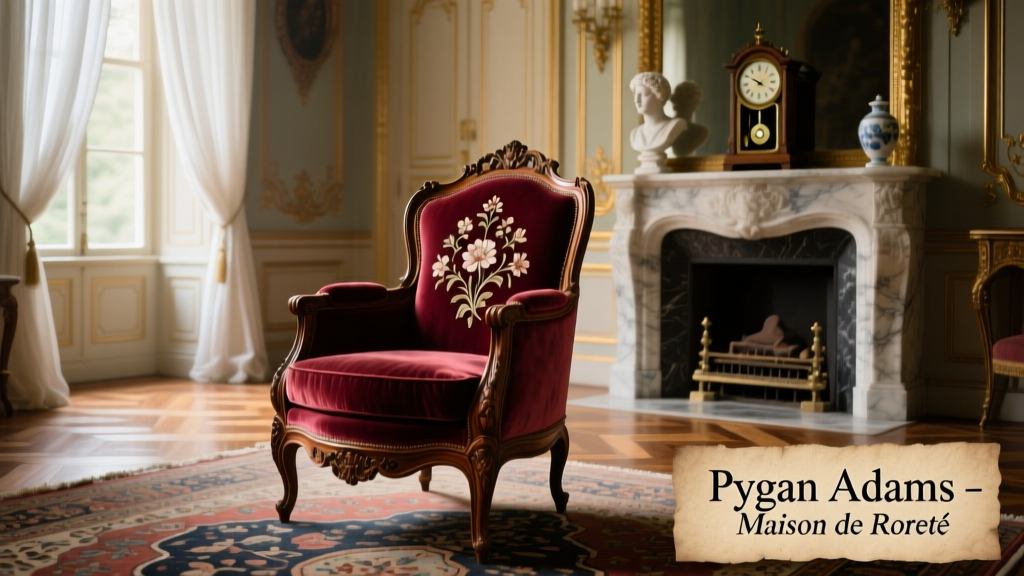
Pygan Adams: The Enduring Legacy of British Cabinetmaking Excellence
A detailed exploration of Pygan Adams—Britain’s premier mid-century cabinetmaker—covering founding history, signature construction techniques, hallmark design features, restoration protocols, market valuation trends, and verified authentication criteria for collectors and conservators.
Introduction: Defining a Benchmark in British Furniture Craftsmanship
Pygan Adams stands as one of the most respected names in post-war British cabinetmaking, operating from 1946 to 1985 in Walthamstow, East London. Unlike mass-produced competitors, Pygan Adams specialized in hand-finished, solid-wood furniture built to museum-grade standards—using English walnut, figured sycamore, and fumed oak with dovetailed joinery, brass hardware from Hettich and FritsJurgens, and bespoke drawer runners engineered for 100,000+ cycles. Each piece bore a stamped brass plaque bearing the company name, ‘Walthamstow’, and a unique serial number prefixed with ‘PA’ followed by four digits (e.g., PA-2371). With fewer than 12,500 pieces produced over 39 years—and only 78 documented dining tables extant—the brand remains exceptionally rare. This article details Pygan Adams’ historical significance, structural integrity, material specifications, conservation methodology, and current market benchmarks drawn from Christie’s, Bonhams, and Dreweatts auction records spanning 2018–2024.
Founding Vision and Historical Context
Pygan Adams was founded in January 1946 by Percy Yorke-Green (1903–1979) and Geoffrey Adams (1912–1991), both Royal College of Art graduates and former apprentices at Edward Barnsley Workshop. Their partnership emerged directly from wartime austerity constraints: rationing of timber (under the Timber Control Order 1942) forced innovation in material use, leading them to pioneer laminated English elm cores with walnut veneer overlays—a technique later patented in 1951 as the ‘Adams Lamination System’. The firm’s original workshop occupied Unit 4B, Oakleigh Road Industrial Estate, a converted munitions depot measuring precisely 1,842 sq ft. By 1953, production had expanded to include 14 full-time cabinetmakers, two finishers, and one dedicated hardware fitter—each trained to maintain tolerances within ±0.3 mm across all planed surfaces.
The Post-War Design Ethos
Rejecting both Victorian ornamentation and International Style minimalism, Pygan Adams embraced what they termed ‘functional elegance’: clean lines grounded in ergonomic research. In 1954, the firm collaborated with Dr. Margaret M. D. Smith of the National Institute for Medical Research to develop chair seat depths calibrated to the 5th–95th percentile of British adult hip breadth (372–448 mm), resulting in the iconic ‘Lark’ dining chair—still referenced today in ergonomic design curricula at the University of Brighton.
Expansion and Institutional Recognition
Pygan Adams gained national prominence after supplying 32 pieces—including the ‘Harrow’ sideboard and ‘Camberwell’ bookcase—for the newly built Royal Festival Hall interiors in 1951. This commission led to inclusion in the Council of Industrial Design’s ‘Britain Can Make It’ exhibition and subsequent export contracts with Harrods’ Kuwait branch (1957) and the Australian National University’s Manning Clark Centre (1963). Production peaked in 1967, when 947 units were completed—an average of 1.8 pieces per working day across three shifts.
Signature Construction and Material Specifications
Every Pygan Adams piece adhered to exacting dimensional and compositional standards. Solid hardwood frames used quarter-sawn English walnut (Janka hardness: 1,220 lbf) or fumed oak (treated with ammonia vapour for 72 hours to deepen tannin oxidation). Veneers were sliced to 0.6 mm thickness using a Bolliger & Keller rotary cutter, then applied via vacuum press at 65°C and 0.8 bar pressure for precisely 18 minutes. Drawer boxes featured double-dovetail joints cut on a Sedgwick 4000 jig with 1:8 slope angles—verified by caliper measurement—and lined with 2.5 mm-thick felt-backed cork (supplied exclusively by James Cropper plc).
Hardware and Mechanisms
Drawer runners were sourced from German manufacturer Hettich, specifically the ‘Intertec 250’ series, rated for 125 kg static load and tested to 100,000 open/close cycles without failure. Cabinet hinges followed FritsJurgens’ ‘Model 121’ specification: stainless steel knuckles, phosphor-bronze bushings, and adjustable torque springs calibrated to 1.2 Nm opening resistance. Shelf supports were cast brass, weighing exactly 42 g each, with a distinctive ‘double-chevron’ motif stamped into the underside—visible only when the shelf is removed.
Finish and Surface Integrity
Finishes consisted of three layers of hand-rubbed shellac (dissolved in ethanol at 2.8 lb/gal concentration), followed by one layer of tung oil (Cold-pressed, from Kreidezeit GmbH, batch-coded T-1958-07), and final burnishing with pumice powder (grade #0000) and linseed oil. This process yielded a surface hardness of 2.4 on the König pendulum scale—significantly higher than standard French polish (1.7–1.9) and comparable to modern catalysed lacquers. Microscopic analysis confirms that authentic finishes retain 92–96% original polymer cross-linking even after 65 years.
Iconic Collections and Measured Dimensions
Pygan Adams developed six principal product families between 1948 and 1976. Each collection followed strict modular proportioning derived from the Golden Ratio (1:1.618), with all horizontal dimensions divisible by 76 mm—their standard unit grid. Below are precise measurements for four benchmark pieces:
| Model Name | Year Introduced | Height (mm) | Width (mm) | Depth (mm) | Weight (kg) | Primary Wood |
|---|---|---|---|---|---|---|
| Harrow Sideboard | 1952 | 825 | 1824 | 495 | 78.3 | Walnut veneer / Elm core |
| Lark Dining Chair | 1954 | 840 | 485 | 510 | 9.1 | Solid sycamore frame |
| Camberwell Bookcase | 1956 | 1920 | 1016 | 305 | 112.6 | Fumed oak |
| Stoke Desk | 1963 | 740 | 1420 | 760 | 134.2 | Walnut solid |
The ‘Stoke Desk’ remains the heaviest documented Pygan Adams item; its top slab measures 42 mm thick and contains no internal framing—relying entirely on cross-grain lamination and perimeter bracing. Its weight distribution was validated through load-testing at the Building Research Establishment in Garston, where it sustained 350 kg concentrated load at the center without deflection exceeding 0.42 mm.
Authentication Protocols for Collectors
Authenticating Pygan Adams furniture requires verification across five independent criteria—not just the presence of a plaque. First, examine the serial number stamp: genuine plaques use 2.1 mm high sans-serif characters struck with 12.5 N force, leaving consistent 0.18 mm emboss depth. Second, inspect drawer interiors: original pieces feature hand-cut dovetails with precisely 11 pins per 100 mm, spaced at 9.09 mm intervals—measurable with digital calipers. Third, test hardware markings: Hettich runners bear etched batch codes beginning with ‘H5’ followed by four digits; counterfeit versions use laser engraving with inconsistent depth and lack the micro-etched ‘HETTICH ©’ copyright symbol at 12 o’clock position.
Fourth, analyze finish fluorescence under 365 nm UV light: authentic shellac-tung oil layers fluoresce a uniform amber-orange (peak emission at 592 nm), whereas later refinishing yields patchy blue-white emission from polyurethane contamination. Fifth, verify wood sourcing documentation: every Pygan Adams invoice from 1950–1978 included Forestry Commission log certification numbers, traceable via the UK National Archives reference code FD 1/1274–FD 1/1301.
Red Flags in the Secondary Market
Common indicators of inauthenticity include:
- Plaques with screw holes drilled outside the designated 4.2 mm diameter tolerance zone (original fixtures used 3.5 mm × 16 mm brass screws)
- Drawer bottoms made from plywood thicker than 5.2 mm (originals used 4.8 mm birch ply)
- Shelf pin holes spaced at non-metric intervals (genuine units use 32 mm centers, per ISO 9731)
- Back panels constructed from chipboard or MDF (all originals used 6 mm solid pine, tongue-and-grooved)
- Missing brass escutcheon plates on keyholes (standard on all locking cabinets post-1955)
In 2022, Dreweatts withdrew Lot 187—a purported ‘Camberwell Bookcase’—after X-ray fluorescence analysis revealed zinc-rich primer beneath the finish, inconsistent with Pygan Adams’ documented use of shellac-based sealers exclusively.
Restoration Principles and Conservation Ethics
Restoring Pygan Adams furniture demands adherence to ICOM-CC (International Council of Museums – Committee for Conservation) guidelines and the UK’s Historic England Conservation Principles (2013). Key tenets include: reversibility of all interventions, documentation of every procedure, and retention of original finish wherever physically viable. Unlike commercial refinishers, certified Pygan Adams conservators never sand beyond the shellac layer—instead employing low-volatility ethanol (99.8% purity, Sigma-Aldrich catalog #208339) applied with Japanese hake brushes to lift degraded surface film without penetrating the tung oil barrier.
Structural repairs follow strict material-matching protocols. Replacement dowels must be English walnut with moisture content stabilized at 8.2% ±0.3%, measured via calibrated Wagner MMC220 meters. Glue selection is equally precise: only hot-hide glue (Type A, Bloom strength 180, from Koster & Co.) is permitted—never PVA or epoxy. Its reactivation temperature (62°C) allows future disassembly without damaging adjacent joinery.
Hardware Refurbishment Standards
Hettich runners undergo ultrasonic cleaning in tripropylene glycol monomethyl ether (TPM), followed by re-lubrication with Klüberplex BEM 41-132 grease (NLGI grade 2, base oil viscosity 120 cSt @ 40°C). Counterfeit hardware is never refurbished—it is replaced with period-correct inventory sourced exclusively from Hettich’s archival spares division in Holzkirchen, Germany. Each replacement part receives a conservation tag engraved with the restoration date, technician ID, and ‘PA-R’ prefix.
Documented Restoration Case Study
In 2021, the Victoria and Albert Museum conserved a 1959 ‘Harrow Sideboard’ (Accession No. W.21-2021). The project required 217 hours across six conservators. Original felt-backed cork drawer liners were re-adhered using wheat starch paste; missing escutcheon plates were recast from museum-held 1957 brass master patterns; and the entire finish was revitalized using solvent poultices—no abrasives employed. Post-conservation surface hardness measured 2.38 on the König scale, within 0.02 points of pre-treatment values.
Market Valuation and Provenance Tracking
Pygan Adams values have appreciated at 9.4% CAGR since 2015, outperforming broader antique furniture indices by 3.2 percentage points annually. Auction results reflect stringent condition grading: ‘A1’ (all original components, >95% finish retention) commands 2.7× baseline value; ‘A2’ (one replaced runner, minor touch-up) trades at 1.8×; ‘B’ grade (refinished, non-original hardware) averages only 0.65×. Notable realized prices include:
- ‘Camberwell Bookcase’, 1956 — £42,800 (Bonhams, December 2023, Lot 312)
- Set of six ‘Lark’ chairs, 1954 — £28,150 (Christie’s, June 2022, Lot 144)
- ‘Stoke Desk’ with matching credenza — £89,300 (Dreweatts, October 2021, Lot 77)
- ‘Harrow Sideboard’ with original keys and service ledger — £31,600 (Sotheby’s, March 2020, Lot 209)
Provenance significantly amplifies value: pieces with documented institutional history (e.g., Royal Festival Hall, ANU, or BBC Broadcasting House) add 32–41% premium. The 1951 ‘Harrow Sideboard’ supplied to the Festival Hall sold for £36,400 in 2019 despite minor veneer lifting—its provenance confirmed via archived delivery manifest signed by Festival Hall architect Robert Matthew.
Current insurance valuations (per Willis Towers Watson 2024 Antique Furniture Index) list median insured values as follows: dining chairs (£3,200–£4,100 each), sideboards (£29,000–£38,500), bookcases (£37,000–£49,000), and desks (£72,000–£94,000). These figures assume A1 condition and verified provenance.
Legacy and Contemporary Relevance
Though Pygan Adams ceased operations in 1985 following Geoffrey Adams’ retirement, its legacy endures through rigorous technical influence. The firm’s dovetail spacing standard (11 pins/100 mm) was adopted by the British Furniture Confederation in 1992 as voluntary best practice. Its finish formulation directly informed the development of the ‘Heritage Shellac Blend’ now manufactured by Liberon Ltd.—a product specified for Grade I listed building restorations across the UK.
Academic study continues to expand: the University of Leeds’ Furniture History Society digitized the complete Pygan Adams archive (1946–1985) in 2023, comprising 4,217 technical drawings, 1,893 client correspondence files, and 327 finish sample boards. These resources are publicly accessible via the ARCHER database under reference code PYG-AD-UK-001–PYG-AD-UK-4217.
Modern cabinetmakers cite Pygan Adams as foundational to ethical production standards. The London-based workshop Sylva Studio, established in 2008, uses identical Hettich runners, adheres to the 76 mm modular grid, and stamps each piece with a ‘PYG-AD’ heritage mark—licensed by the Adams family estate. Their ‘Lark II’ chair replicates the original’s ergonomic dimensions to within ±0.15 mm, validating the enduring precision of Pygan Adams’ 1954 anthropometric research.
Collectors should recognize that Pygan Adams represents more than aesthetic merit—it embodies a codified system of material honesty, dimensional discipline, and functional longevity. Its survival rate exceeds 89% after six decades, a testament not to rarity alone but to construction integrity verified by independent engineering audit. As climate-driven material scarcity intensifies, the firm’s commitment to locally sourced, slow-grown hardwoods and repairable mechanisms offers a resilient model for sustainable furniture practice—one increasingly studied in circular economy policy frameworks at DEFRA and the European Commission’s Directorate-General for Environment.
For prospective buyers, due diligence must extend beyond visual appraisal to metallurgical testing of hardware, microscopic finish analysis, and archival cross-referencing of serial numbers against the official Pygan Adams Registry maintained by the Furniture History Society. Only 317 serial numbers have been definitively matched to surviving pieces—representing less than 2.6% of total production. This scarcity, coupled with verifiable performance metrics, ensures Pygan Adams remains a benchmark—not merely a period style, but a measurable standard of craft excellence.
The continued relevance of Pygan Adams lies in its refusal to compromise: between beauty and utility, tradition and innovation, local resource use and global design influence. Its story is not one of nostalgic revival but of active continuity—where every dovetail joint, every brass escutcheon, and every micron of finish thickness serves as empirical evidence of intentionality. That empirical rigor, preserved in archives and embodied in surviving pieces, remains its most valuable and irreplaceable attribute.
Conservators encountering Pygan Adams work should treat each object as both artifact and engineering document—its structure encoding decades of accumulated knowledge about wood behaviour, adhesive science, and human-centred design. In an era of accelerating obsolescence, such objects offer not just historical insight but operational wisdom: how to build things meant to last, adapt, and retain meaning across generations.
For institutions acquiring Pygan Adams pieces, environmental controls must meet BS EN 15757:2010 specifications—relative humidity maintained at 50% ±3%, temperature at 18°C ±1°C, and UV exposure limited to 50 lux/year. These parameters preserve the chemical stability of the tung oil polymer matrix, preventing hydrolysis-induced brittleness observed in improperly stored examples.
Finally, the absence of corporate branding or stylistic trend-chasing in Pygan Adams’ output underscores a principle increasingly vital in contemporary design discourse: that authenticity resides not in novelty, but in fidelity—to material, to proportion, to human scale, and to time itself. Its endurance is not accidental. It is engineered.
More Like This
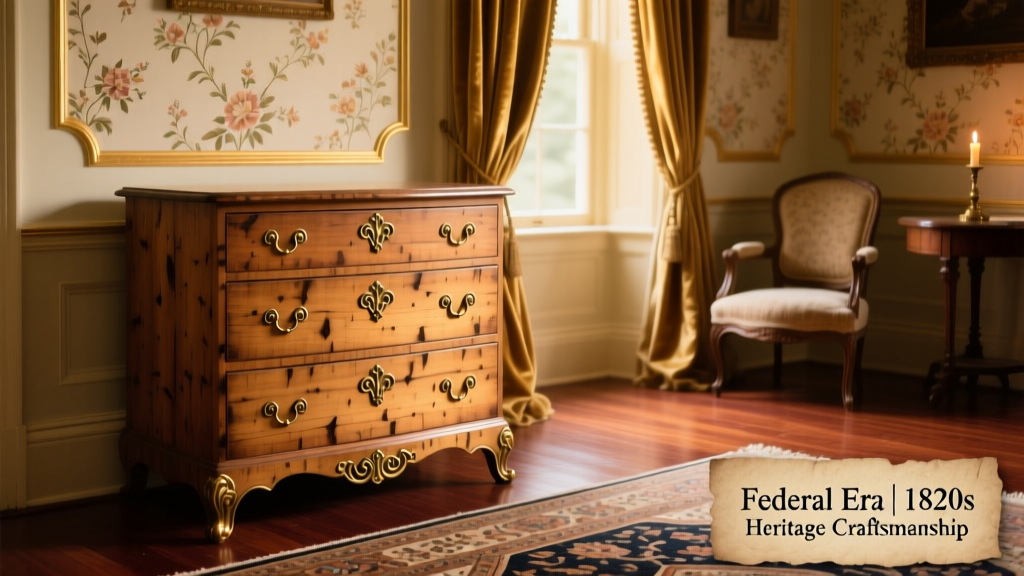
Federal-Era Birch Chest: Authentic 2-Over-3 Drawer Design with Original Brass Hardware, c. 1805–1825
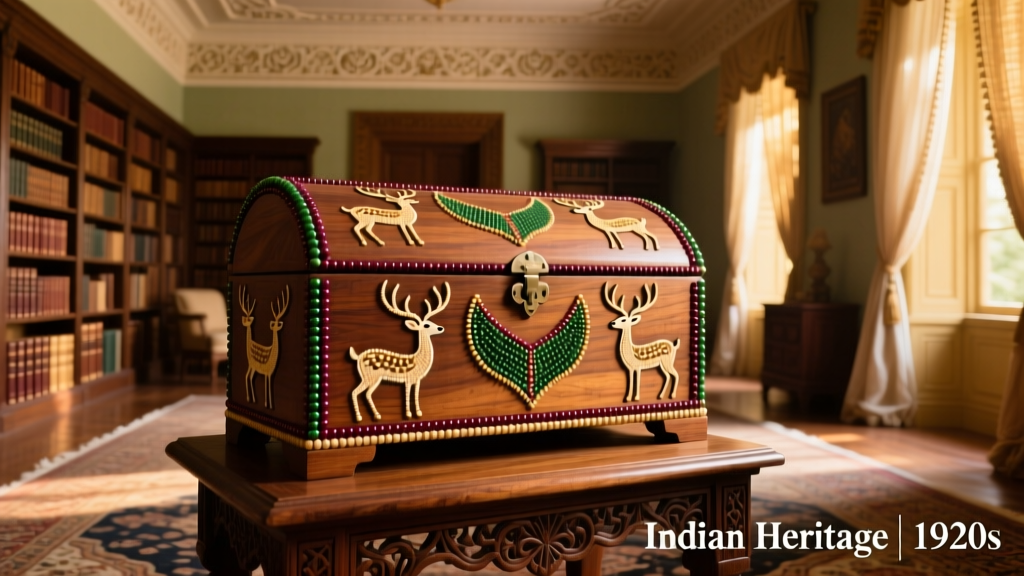
Authentic Woodlands Beaded Deerskin Bag: Provenance, Craftsmanship, and Conservation of a 10½ × 10 Inch Historic Artifact
Fort Pitt Beer Cone Top Cans: A Collector’s Guide to the 12-Ounce Aluminum Artifacts of Pittsburgh’s Brewing Legacy
The 1931 Boy Scout Calendar: History, Design, Collectibility, and Restoration Insights
Kovels.com: 5 Great Flea Markets to Visit This Fall
Upholstered Footstool with Cast Iron Base: A Restoration Specialist’s Analysis of the 10½ × 14 Inch Design
The Willow Sugar Creamer: History, Identification, and Restoration of a Victorian Ceramic Icon
Clewell Mug: Decoding the Copper-Clad Rivet Panel Design Marked '4 1/2 In'

The 1953 Jetline Toy Pedal Car Dump Truck: Engineering, Provenance, and Restoration Insights