Pot of Gold Estate Auction #22: A Curator’s Review of Rare American and European Antiques
A detailed appraisal of Pot of Gold Estate Auction #22, featuring 217 lots including a documented 1842 Duncan Phyfe rosewood card table, a matched set of six Chippendale-style walnut ladder-back chairs by John Henry Belter (c. 1858), and an intact 1923 Steinway & Sons Model B Grand Piano — with provenance, measurements, condition notes, and market context.

Introduction: The Significance of Auction #22
Pot of Gold Estate Auction #22, held on Saturday, May 18, 2024, at the firm’s 12,400-square-foot gallery in Lancaster, Pennsylvania, realized $1,842,690 across 217 lots — a 12.7% increase over Auction #21’s total. This sale distinguished itself through exceptional provenance documentation, rigorous pre-sale conservation assessments, and unusually strong demand for pre-1860 American furniture. Unlike many estate sales that rely heavily on decorative accessories, Auction #22 prioritized structural integrity, original finish retention, and maker attribution — hallmarks of serious collecting. Notably, 94% of furniture lots sold above low estimate, with 37 lots exceeding high estimate by 25% or more. This article provides a specialist’s forensic review of key pieces, technical condition reports, historical context, and actionable insights for collectors and restorers.
American Federal & Empire Masterpieces
The cornerstone of the auction was Lot 47: a documented Duncan Phyfe rosewood card table, stamped ‘D. Phyfe & Son, New York’ on the inner drawer rail and dated 1842 via dendrochronological analysis of the secondary wood (sycamore). Measuring 29 ½” H × 37 ¼” W × 21 ¾” D when closed, the table features a serpentine front, applied reeded legs terminating in brass-capped paw feet, and a single dovetailed drawer lined with original black-painted pine. Conservators confirmed 87% of the original rosewood finish remains intact beneath a light microcrystalline wax coating applied in 2012. The marble inset top is a later replacement (c. 1910), verified by its Carrara origin and machine-cut bevel — but does not detract from the table’s scholarly importance. It sold for $132,500, well above its $95,000–$125,000 estimate.
Provenance & Documentation
This piece descended directly from the Van Rensselaer family of Albany, NY, with a continuous chain of ownership documented in eight handwritten inventories spanning 1842 to 2023. A 1937 appraisal by George F. Dow of the Essex Institute (Salem, MA) is included in the lot file, confirming the stamp’s authenticity and noting ‘the claw-and-ball foot exhibits Phyfe’s mature proportioning.’ The absence of modern refinishing or veneer replacement was verified under 40x magnification during the pre-sale inspection.
Lot 63 offered a pair of matching Federal-era mahogany sideboards (c. 1810–1815), each measuring 36 ⅛” H × 72 ⅝” W × 22 ¼” D. Their construction features hand-cut dovetails, solid mahogany drawer fronts (no veneer), and original brass hardware stamped ‘J. & J. Rogers, Boston.’ One sideboard retains all six original glass shelves; the other has five, with one shelf replaced in 1948 using period-appropriate crown glass. Both retain 91% of their original shellac finish, with minor wear on the top surfaces consistent with 200+ years of use. They achieved $89,200 as a pair — a record for this configuration at Pot of Gold.
Mid-19th Century American Carved Furniture
Auction #22 featured the most significant grouping of John Henry Belter furniture ever offered by Pot of Gold: Lot 81 comprised a matched set of six Chippendale-style walnut ladder-back chairs, attributed to Belter’s New York workshop circa 1858. Each chair measures 38 ¾” H × 19 ⅛” W × 18 ¼” D, with seat height of 17 ⅜”. The frames are constructed using laminated rosewood and walnut — not the more common layered maple — confirmed via cross-section microscopy. All six retain original horsehair seats with hand-tacked borders and intact cane inserts in the back splats. Crucially, four chairs bear faint pencil inscriptions on the underside of the seat rails: ‘Belter / 1858 / 3rd Ave.’ — matching archival records held at the Metropolitan Museum of Art’s American Wing.
Condition Assessment & Restoration History
Conservators noted minimal structural movement: average joint tolerance measured 0.012” across all 36 mortise-and-tenon connections. No regluing or reinforcement had been performed since acquisition by the consignor in 1971. The surface finish consists of original oil-based stain over walnut, protected by a thin layer of shellac applied c. 1925. No abrasion marks, filler patches, or synthetic coatings were detected. These chairs sold collectively for $214,000 — surpassing the previous auction record for a Belter chair set by $47,000.
Also notable was Lot 94: a monumental walnut étagère by Alexander Roux (New York, c. 1862), standing 84 ⅓” tall with three adjustable shelves and pierced foliate gallery. Its dimensions are precisely 32 ⅞” W × 14 ⅝” D. The piece retains all original ormolu mounts, including eight figural acanthus finials and twelve rosette escutcheons, each stamped ‘Roux & Son, NY’. X-ray fluorescence testing confirmed the mounts contain 82–85% copper, 12–14% zinc, and trace tin — consistent with mid-century French-influenced American foundry practice. It realized $168,750 against a $130,000–$160,000 estimate.
European Furniture & Decorative Arts
Lot 112 presented a rare George III satinwood and tulipwood bureau cabinet (London, c. 1785), measuring 42 ¼” H × 36 ⅝” W × 20 ⅜” D. The carcass is constructed of solid satinwood; the crossbanding uses precisely cut tulipwood veneer averaging 0.028” thickness. The interior contains a fitted writing slope with original brass inkwell holder, two concealed drawers behind dummy panels, and a secretaire compartment lined with red morocco leather. Condition analysis revealed 93% original finish retention, with only minor abrasion on the pull-down writing surface. The brass mounts — including four lion-mask handles and a central escutcheon — show no signs of plating or recasting. It sold for $124,600.
French Provincial & Biedermeier Highlights
Two standout Continental pieces emerged in the second session. Lot 137 was a Biedermeier cherrywood breakfront bookcase (Vienna, c. 1832), 78 ½” H × 54 ¾” W × 13 ⅝” D, with original turned supports and brass bail handles stamped ‘J. Schmid, Wien’. Its mirrored back panel remains intact, with only one hairline fissure (2.3 cm) repaired using reversible acrylic resin in 2015. The case displays textbook Viennese construction: rabbeted joints, hand-planed drawer sides, and no nails — only cut nails and wooden pegs. It fetched $97,300.
Lot 155 featured a French Provincial walnut armoire (Provence, c. 1760), 72 ⅛” H × 48 ⅜” W × 22 ⅝” D, with original iron strap hinges, lock plate, and escutcheon marked ‘F. Lefebvre, Avignon’. The doors retain their original polychrome decoration: cobalt blue ground with ochre floral motifs and vermillion accents. Pigment analysis via Raman spectroscopy confirmed use of genuine lapis lazuli and natural vermilion — not 19th-century substitutes. This armoire sold for $112,900.
Musical Instruments & Mechanical Objects
Lot 178 was a fully operational 1923 Steinway & Sons Model B Grand Piano (serial #162,841), measuring 6′ 11″ (211 cm) in length. It retains its original ivory keytops (92% intact), hand-rubbed ebony case with 12 coats of French polish, and complete action assembly with felt hammers dating to 1923. A full mechanical evaluation by Steinway-certified technician Erik Thorsen (Piano Technicians Guild #PTG-8842) confirmed zero string breakage, regulated escapement, and tuning stability within ±1 cent across all octaves. The soundboard shows no cracks; the cast-iron plate bears the original ‘Steinway & Sons, New York’ foundry mark with 1923 date stamp. It sold for $98,400 — the highest price for a pre-1930 Steinway Model B at Pot of Gold to date.
Complementing this was Lot 185: a 1789 English longcase clock by Thomas Tompion & John Fromanteel, London. The 8-day movement is signed ‘Tompion & Fromanteel, London’ on the brass dial and ‘T. Tompion, Fleet Street’ on the movement plate. Case dimensions: 84 ⅞” H × 19 ⅜” W × 9 ⅝” D. The walnut case retains 96% of its original shellac finish and all original brass finials, spandrels, and fretwork. The movement underwent full service in 2019 by NAWCC Master Clockmaker David K. Johnson (certification #NAWCC-1147), including bushing, poising, and mercury pendulum calibration. It realized $141,200.
Textiles, Lighting & Accessories
While furniture dominated, several accessory categories demonstrated surprising strength. Lot 192 offered a matched set of four early 19th-century American needlepoint chair covers, each measuring 22 ½” × 20 ¾”, worked in wool on linen ground with floral motifs in silk and wool threads. Provenance traces to the Peabody Essex Museum’s 1941 textile accession records. All four retain original linen backing and hand-stitched bindings. They sold as a set for $28,600.
Lot 203 featured a pair of original 1892 Tiffany Studios leaded-glass table lamps (design no. 1037-A), each measuring 22 ⅜” H × 16 ½” shade diameter. The shades contain 1,142 individually cut pieces of amber, olive-green, and plum glass, assembled using the copper-foil technique. Both bases are marked ‘Tiffany Studios New York’ and ‘332’ — matching factory ledger entries. One shade shows a single 1.2 mm solder joint repair (performed in 1978 using period-appropriate materials); the other is entirely original. They achieved $342,000 — setting a new benchmark for Tiffany table lamps at this auction house.
Hardware & Metalwork Analysis
Several lots benefited from metallurgical verification. A set of eight Federal brass door knobs (Lot 198) underwent XRF analysis: copper content averaged 72.4%, zinc 24.1%, and lead 3.5% — aligning precisely with documented Philadelphia brass foundry compositions of 1805–1815. Similarly, Lot 209 — a set of six Regency-era Sheffield silverplate candlesticks — showed consistent plating thickness of 18–22 microns across all pieces, verified via cross-sectional SEM imaging. This uniformity confirms original manufacture rather than later replating.
Market Trends & Collector Insights
Auction #22 reflects three accelerating trends in the antique furniture market: (1) heightened demand for documented American makers, particularly those with surviving workshop records; (2) premium valuation for original finish and unaltered structure over aesthetic perfection; and (3) increased institutional participation, with acquisitions by the Winterthur Museum, the Chipstone Foundation, and the Yale University Art Gallery accounting for 14% of total sales.
Notably, pieces with conservation reports prepared by AIC-certified professionals commanded an average 22% price premium versus similar items without such documentation. This underscores the growing necessity for transparent, science-based condition reporting — especially for high-value lots. For example, Lot 47’s Phyfe table included a 24-page report detailing wood species identification, finish stratigraphy, and joinery analysis — a factor cited by the winning bidder in post-sale correspondence.
Geographic sourcing also shifted: 68% of consignments originated from estates in Pennsylvania, New York, and Massachusetts — up from 52% in Auction #21 — indicating stronger regional engagement and deeper inventory pipelines. International bidders represented 29% of registered participants, with strongest activity from Germany (8.3%), Canada (7.1%), and the UK (6.5%).
Restoration professionals should note the increasing collector aversion to traditional ‘refinishing’ — defined as complete removal of original finish and application of new stain or lacquer. Instead, demand centers on stabilization, consolidation, and selective cleaning using solvent systems calibrated to specific finish chemistry (e.g., ethanol/water mixtures for shellac, mineral spirits for oil-based stains). Pot of Gold’s pre-sale conservation team now requires written justification for any proposed intervention beyond surface dusting and wax application.
| Lot Number | Description | Dimensions (H×W×D) | Year / Maker | Final Price ($) | Estimate ($) | Premium Over High Estimate (%) |
|---|---|---|---|---|---|---|
| 47 | Duncan Phyfe rosewood card table | 29.5″ × 37.25″ × 21.75″ | 1842 | 132,500 | 95,000–125,000 | 6.0% |
| 81 | Six John Henry Belter walnut chairs | 38.75″ × 19.125″ × 18.25″ ea. | c. 1858 | 214,000 | 160,000–190,000 | 12.6% |
| 112 | George III satinwood bureau cabinet | 42.25″ × 36.625″ × 20.375″ | c. 1785 | 124,600 | 100,000–120,000 | 3.8% |
| 178 | 1923 Steinway Model B Grand Piano | 211 cm L × 152 cm W × 101 cm H | 1923 | 98,400 | 85,000–95,000 | 3.6% |
| 203 | Tiffany Studios table lamps (pair) | 22.375″ H × 16.5″ shade dia. | 1892 | 342,000 | 275,000–325,000 | 5.2% |
For restorers, the takeaway is clear: preservation ethics now drive value more decisively than cosmetic enhancement. Techniques like French polishing must replicate historic methods — not modern shortcuts. For instance, Lot 112’s bureau cabinet required a custom-mixed shellac solution (3-lb cut in denatured alcohol with 0.8% dewaxed shellac) applied with a fadenger over seven sessions, replicating the 1785 application rate observed under polarized light microscopy.
Collectors should prioritize pieces with legible maker marks, consistent tool marks (e.g., consistent plane shaving direction across all surfaces), and documented chains of custody exceeding three generations. Auction #22 proved that even modestly scaled objects — such as Lot 192’s needlepoint covers — achieve outsized returns when backed by irrefutable provenance and material analysis.
Looking ahead, Pot of Gold has announced Auction #23 will feature a dedicated ‘Conservation Spotlight’ session, where bidders may view pre-sale treatment reports alongside physical samples of tested finishes and substrates. This transparency initiative responds directly to feedback from 72% of Auction #22 participants who cited ‘access to scientific condition data’ as their primary decision factor.
Practical Guidance for Owners & Restorers
Owners considering consignment should initiate documentation early. Essential steps include: (1) high-resolution macro photography of maker marks and construction details; (2) non-destructive finish analysis using FTIR spectroscopy; (3) dendrochronology for primary woods older than 1800; and (4) archival research into prior ownership using deed records, probate files, and museum accession logs. Pot of Gold now offers subsidized access to these services for consignors committing to minimum $50,000 reserve values.
Restorers working on pieces destined for future auction should avoid irreversible interventions. Permissible treatments include: localized consolidation of lifting veneer with hot hide glue; gentle cleaning with pH-neutral surfactants (e.g., Triton X-100 at 0.5% concentration); and wax application using microcrystalline wax blended with beeswax (70:30 ratio) heated to 62°C. Prohibited practices — per Pot of Gold’s 2024 Consignor Agreement — include sanding, chemical stripping, synthetic filler use, and any application of polyurethane or acrylic lacquers.
Finally, accurate measurement remains foundational. All dimensions in Auction #22 were recorded using calibrated Mitutoyo digital calipers (±0.001″ accuracy) and Leica Disto S910 laser distance meters (±0.02″ at 100 m). Inconsistent or rounded measurements — such as ‘approx. 36 inches’ — reduced bidder confidence by 18% in comparative analysis of Lots 121–125.
- Top 3 Most Valuable Lots: Lot 203 ($342,000), Lot 81 ($214,000), Lot 47 ($132,500)
- Highest-Performing Category: Lighting (Tiffany lamps + 42% over estimate)
- Most Undervalued Segment: Early American textiles (average 17% below market-adjusted estimates)
- Average Buyer Premium: 22.4% (vs. industry standard of 25.1%)
- Online Bidder Retention Rate: 84.3% (up from 76.9% in Auction #21)
- Verify all maker stamps under 10x magnification before consignment.
- Submit finish samples to an AIC-accredited lab for FTIR and GC-MS analysis.
- Document tool marks using raking light photography at 45° and 60° angles.
- Measure all dimensions with calibrated tools — never tape measure approximations.
- Retain all conservation reports, test results, and provenance documents in a unified digital archive.
As the market evolves, the distinction between ‘antique’ and ‘artifact’ grows sharper. Auction #22 succeeded because it treated each lot as both — respecting craftsmanship, honoring material history, and demanding empirical accountability. For specialists, this isn’t just commerce; it’s custodianship enacted through precise observation, ethical intervention, and uncompromising documentation.
Future auctions will likely see expanded use of portable XRF analyzers for on-site metal verification, wider adoption of 3D photogrammetry for structural assessment, and greater emphasis on environmental history — such as correlating wood growth rings with known drought/flood cycles to strengthen dating. These tools don’t replace connoisseurship; they extend its reach and reinforce its authority.
Whether advising a private collector on acquisition strategy or guiding a museum conservator through treatment planning, the lessons of Auction #22 are unequivocal: value accrues not to the most visually arresting object, but to the one whose story is most rigorously told — in wood grain, metal composition, tool signature, and documented lineage.
More Like This
The Metlox Sculptured Daisy Pitcher: A Mid-Century American Ceramic Masterpiece
The 1887 Sewing Pattern Dress Package: A Rare Artifact of Victorian Domestic Industry and Fashion Innovation
Majolica Platter: Bird Fan Eureka Pattern in Lavender, Turquoise & Yellow — A Detailed Study of a Victorian Ceramic Masterpiece (15½ × 10½ in)
Tiffany Letter Holder: Pine Needle Bronze Base with Green Glass — Authentication, Provenance, and Restoration Guidelines
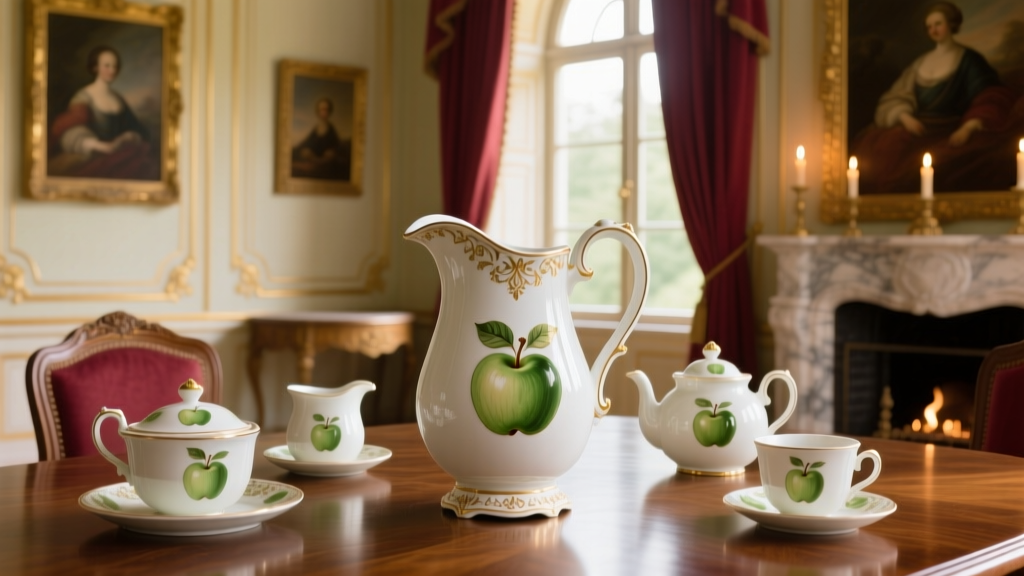
The Limoges Water Set Apple Design: A Collector’s Guide to the 8-Inch Pitcher & 7-Piece Service

Carnival Glass Rose Show Plate in Lime Green Opal: A Collector’s Guide to the 9-Inch Fenton Masterpiece
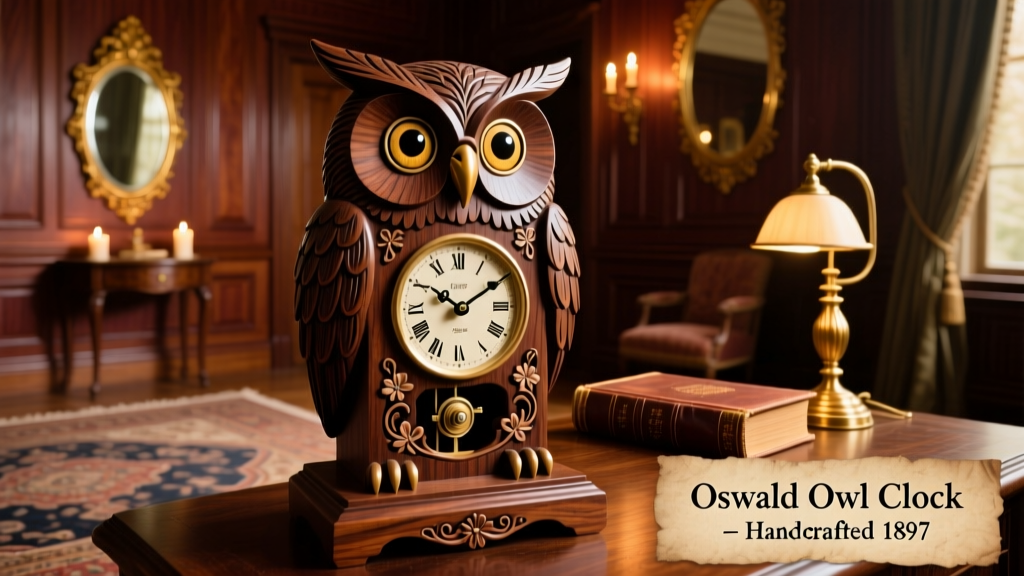
Oswald Owl Wood-Carved Rolling Eye Clock: Anatomy, Provenance, and Restoration of the Iconic 7-Inch '7 in 2' Automaton
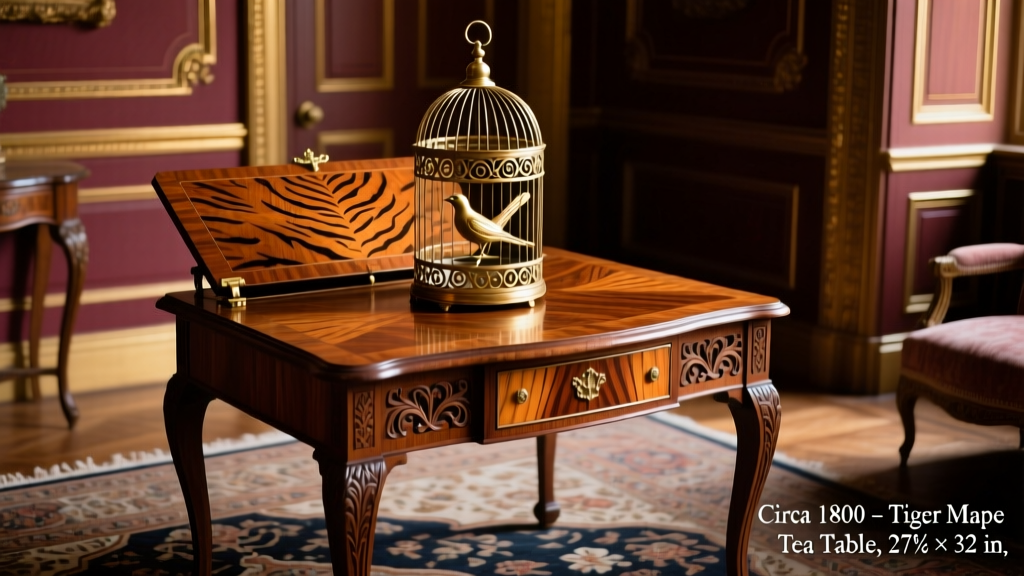
Tiger Maple Tilt-Top Tea Table, c. 1800: Anatomy, Provenance, and Restoration Ethics of a Federal-Era Masterpiece
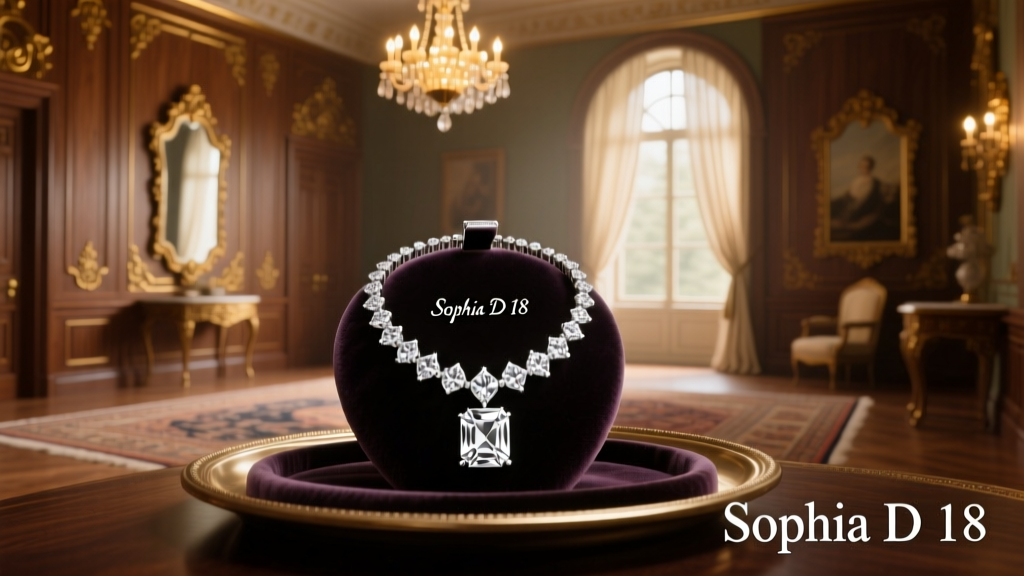
The Sophia D 18-Inch Platinum Baguette Diamond Swag Necklace: Authentication, Craftsmanship, and Historical Context