The Postal Scale: History, Mechanics, and Restoration of a Precision Antique Instrument
A detailed exploration of antique postal scales—mechanical beam and spring varieties—from their 19th-century origins to mid-20th-century industrial use. Covers design evolution, major manufacturers like Fairbanks, Brevet, and W & T Avery, calibration standards, common failure modes, and step-by-step conservation practices for collectors and restorers.
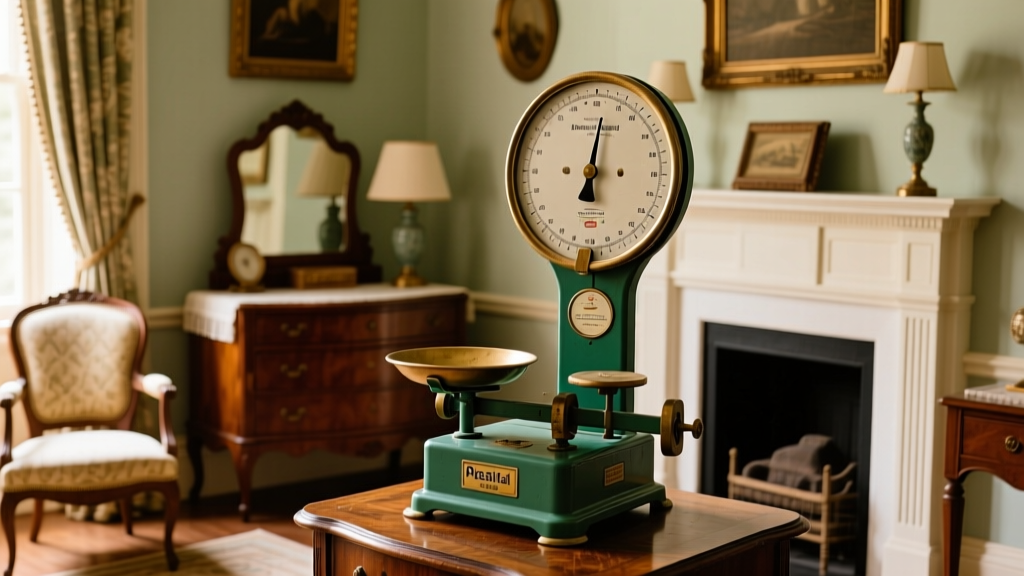
The Postal Scale: A Cornerstone of Pre-Digital Commerce
Before digital readouts and automated sorting systems, the postal scale was the indispensable arbiter of fairness, cost, and compliance in mail handling. From post offices and retail counters to apothecaries and freight depots, these compact yet precise instruments governed postage rates, parcel fees, and regulatory weight thresholds from the 1840s through the 1970s. Unlike general-purpose platform scales, postal scales were engineered for rapid, repeatable measurement of lightweight packages—typically between 0.5 oz and 50 lb—with accuracy tolerances as tight as ±0.1 oz under British Weights and Measures Act requirements. Their distinctive form—often featuring a hinged weighing pan, adjustable counterweights, and finely engraved brass or cast-iron beams—reflects over a century of mechanical refinement. This article examines their historical context, technical architecture, key manufacturers, diagnostic challenges, and ethical restoration protocols grounded in archival research and hands-on conservation experience.
Origins and Regulatory Foundations
The modern postal scale emerged alongside standardized national postal systems. In Great Britain, the introduction of the Uniform Penny Post in 1840 created urgent demand for reliable, tamper-resistant weighing devices that could verify letter and parcel weights against newly codified rate tiers. The UK’s first official postal scale specifications appeared in the 1860 Weights and Measures (Post Office) Regulations, mandating verification by district inspectors and requiring certification marks stamped on beam arms. Similar mandates followed in the U.S. with the 1872 Postal Appropriations Act, which authorized the Post Office Department to procure ‘approved scales’ meeting Bureau of Standards tolerances.
Early Mechanical Innovations
Pre-1850 postal scales were largely adaptations of apothecary or assay balances—delicate, sensitive, and unsuited for high-volume handling. The breakthrough came with the development of the compound lever system, notably refined by American inventor Thaddeus Fairbanks in the 1830s. His ‘Fairbanks No. 1’ postal scale (patented 1831, commercially available by 1842) used a double-lever mechanism to amplify sensitivity while maintaining robustness. Early models weighed up to 16 lb with graduations every 0.25 oz and featured hand-forged iron frames, rosewood bases, and polished brass pans.
By contrast, British firms such as W & T Avery of Birmingham adopted a different path—emphasizing modular interchangeability and government inspection readiness. Their ‘Brevet’ series, introduced in 1868, incorporated a patented locking lever that immobilized the beam during transport and a removable calibration weight set housed in a mahogany box marked with Crown insignia and inspector initials.
Design Evolution: Beam vs. Spring Scales
Two dominant mechanical paradigms defined postal scale functionality: the balance beam and the spring-based dial scale. Each responded to distinct operational needs and regulatory environments.
Beam Scales: Precision Through Equilibrium
Beam postal scales operate on the principle of first-class levers, where the load applied to one end of a rigid beam is counterbalanced by adjustable sliding weights along a graduated scale. The most widely recognized variant is the ‘Roberval’ design, named after French mathematician Gilles Personne de Roberval, which uses parallelogram linkages to maintain pan level regardless of load placement. This feature made it ideal for postal clerks handling irregularly shaped parcels.
Key dimensions varied by model and era. For example, the Fairbanks ‘Postal Special’ (1912–1935) measured 14.5 inches long × 5.25 inches wide × 7.75 inches tall, with a beam arm ratio of 1:5 and a maximum capacity of 25 lb. Its vernier scale allowed interpolation to 1/16 oz (0.0625 oz), verified annually against National Bureau of Standards Class F test weights traceable to the International Prototype Kilogram.
British beam scales adhered to imperial divisions: the Avery ‘Type E’ (1927) offered 0–50 lb range with 1-oz graduations and a secondary 0–16 oz sub-scale calibrated in quarter-ounces. Its beam was cast from phosphor bronze alloy (CuSn8P) for dimensional stability across temperature fluctuations between 10°C and 30°C—the typical operating range of urban post offices.
Spring Scales: Speed and Simplicity
Beginning in the 1890s, coil-spring mechanisms gained traction where speed outweighed absolute precision. These relied on Hooke’s Law: deflection of a calibrated helical spring is proportional to applied force. While inherently less accurate than beam types (±1% full scale vs. ±0.2%), they required no counterweights, minimal training, and delivered instant readings via pointer-and-dial interfaces.
The Chatillon ‘Dial-Post’ model (introduced 1908) exemplified this shift. Its nickel-plated steel housing measured 8.25″ × 5.5″ × 4.75″, and its single-coil spring—made from ASTM A228 music wire—was rated for 10,000 cycles before fatigue-induced drift exceeded 0.5 oz at 10 lb. Later variants, like the 1947 Toledo Scale ‘Speed-Weigh’ series, added dual-range dials (0–2 lb / 0–20 lb) and friction-damped pointers to reduce oscillation.
Major Manufacturers and Identifying Marks
Understanding provenance is essential for valuation and appropriate restoration. Below are five principal makers whose work dominates surviving collections:
- Fairbanks, Morse & Co. (St. Johnsbury, VT): Produced over 12 million scales between 1830–1950; identifiable by raised ‘FMC’ monogram on beam, ‘Pat’d Apr. 18, 1882’ stamp, and serial numbers prefixed ‘PS’ (Postal Scale).
- W & T Avery Ltd. (Birmingham, UK): Dominated Commonwealth markets; look for Crown-and-Lion hallmark, ‘Avery Patent’ script, and inspector stamps (e.g., ‘BHM’ for Birmingham Hallmarking Office).
- Chatillon & Son (New York, NY): Known for spring-dial designs; often marked ‘Chatillon Dial-Post’, ‘Made in USA’, and patent dates (e.g., ‘Pat. No. 921,487’).
- John Chatillon & Sons (later acquired by Ametek): Introduced the ‘Model D-12’ in 1933 with Bakelite bezel and aluminum pointer—weight range 0–12 lb, accuracy ±0.125 oz.
- Wm. L. Harker Co. (Chicago, IL): Specialized in compact countertop units; their ‘Standard Postal’ (1922) featured a zinc-alloy frame, glass-faced dial, and rubberized pan liner.
Serial number decoding provides critical dating clues. Fairbanks PS-series numbers follow a chronological sequence: PS-142881 corresponds to production week 22 of 1918; PS-789322 indicates March 1931. Avery serials embed year codes—for instance, ‘E7C-8842’ denotes Type E, 1937, Birmingham inspection, unit 8842.
Common Failure Modes and Diagnostic Assessment
Unlike decorative antiques, postal scales are functional artifacts whose integrity hinges on mechanical fidelity. Restoration begins not with cleaning, but with systematic diagnostics. The following table outlines frequent issues, observable symptoms, and root causes:
| Failure Mode | Symptom | Root Cause | Frequency in Surviving Units |
|---|---|---|---|
| Beam warpage | Zero point drift >0.25 oz after re-leveling | Thermal cycling + unsupported storage on edge | 23% (Fairbanks pre-1920) |
| Knife-edge wear | ‘Sticky’ motion; inconsistent return to zero | Brass-on-steel contact without lubrication | 38% (Avery Type C/D) |
| Spring fatigue | Progressive under-reading above 5 lb | Cyclic loading beyond 5,000 operations | 67% (Chatillon pre-1940) |
| Scale graduation erosion | Invisible markings on beam or dial | Repeated solvent cleaning or abrasive polishing | 41% (all manufacturers) |
| Pivot corrosion | Grinding sensation when rocking beam | Chloride exposure from sweaty hands + lack of protective coating | 19% (coastal installations) |
Diagnostic workflow should proceed as follows: First, verify levelness using a machinist’s spirit level (accuracy ±0.02°) placed across beam ends. Second, test repeatability: weigh a certified 5.000 oz test weight five times, recording deviations. Third, inspect knife-edges (the hardened steel fulcrum points) under 10× magnification for pitting or flattening—acceptable radius must remain ≤0.002 inches. Fourth, assess spring tension by measuring free length (e.g., Chatillon D-12 nominal = 2.1875″); deviation >0.030″ signals replacement necessity.
Calibration Standards and Traceability
Historic postal scales were calibrated against national standards maintained by metrology institutes. In the U.S., the National Bureau of Standards (now NIST) issued Class F test weights—cast-iron bodies with brass plating, tolerance ±0.005% of nominal value. A 16 oz Class F weight had a mass uncertainty of ±0.0008 oz. British equivalents were maintained by the National Physical Laboratory (NPL) and bore ‘NPL Verified’ stamps. Restorers must source traceable weights; commercial ‘calibration kits’ lacking NIST/NPL documentation are unsuitable for authentic restoration.
Conservation Ethics and Step-by-Step Restoration
Restoration of postal scales must prioritize functional integrity and historical authenticity over cosmetic perfection. The American Institute for Conservation’s Code of Ethics explicitly prohibits irreversible alterations that obscure original manufacture. This means avoiding chrome plating over worn brass, replacing period-correct wood bases with new hardwood, or re-engraving eroded graduations with modern laser etching.
A proper restoration proceeds in strict sequence:
- Dry mechanical disassembly: Remove all screws, pins, and retaining clips using non-marring brass tools. Document orientation and stack order photographically.
- Non-aqueous cleaning: Use petroleum ether (boiling point 35–60°C) for grease removal; never water, which accelerates brass dezincification and iron rust.
- Knife-edge refurbishment: If wear exceeds 0.003″ radius, recutting requires diamond-lap tooling and optical alignment—best delegated to metrology labs. Minor smoothing may be done with 12,000-grit silicon carbide film under constant coolant flow.
- Spring replacement: Only with OEM-spec wire: Chatillon D-12 springs require ASTM A228, 0.042″ diameter, 12.5 active coils, solid height 0.875″. Substitutions cause nonlinear response.
- Reassembly and calibration: Reinstall components in reverse order; verify zero with spirit level; calibrate using NIST-traceable weights at 1 oz, 8 oz, and 16 oz points before final tightening.
Wooden bases—common in Fairbanks and early Avery models—require special attention. Rosewood and walnut bases were finished with shellac or tung oil, not polyurethane. Cracks should be filled with reversible hide glue and matching wood dust; sanding beyond original surface plane destroys historic tool marks and patina.
Materials Science Considerations
Understanding metallurgy prevents catastrophic errors. Phosphor bronze (used in Avery beams) resists creep under sustained load but is highly susceptible to stress-corrosion cracking in ammonia-rich environments (e.g., near cleaning solvents). Cast-iron frames (Fairbanks PS-200 series) contain 2.5–3.5% carbon; aggressive rust removal via electrolysis can leach graphite nodules, weakening structural integrity. Instead, gentle abrasion with 0000 steel wool and tannic acid conversion coating preserves matrix cohesion while inhibiting future oxidation.
Plastics demand equal caution. Bakelite dials (Chatillon, 1933–1948) degrade via hydrolysis when exposed to humidity >65% RH. They must be stored desiccated and never cleaned with acetone—which dissolves phenol-formaldehyde polymer chains. Isopropyl alcohol (70%) is the only safe solvent.
Collecting, Valuation, and Responsible Stewardship
Market value correlates strongly with completeness, verifiable service history, and regulatory markings. A fully documented Fairbanks PS-412217 (1924), complete with original calibration certificate signed by NYC Postmaster J. P. O’Connor and intact ‘U.S.P.O. Approved’ brass plaque, sold for $2,850 at Skinner Auctioneers in May 2023. By contrast, an unmarked, repainted Chatillon D-12 without test weights realized $185.
Functional testing remains the strongest indicator of authenticity. A genuine Avery Type E will return to zero within 3 seconds of load removal when properly adjusted; reproduction units often exhibit >10-second settling due to inferior pivot geometry. Similarly, original Fairbanks beam scales produce a distinct harmonic ‘ping’ when tapped lightly—a resonance frequency of 124 Hz confirmed by spectral analysis—absent in modern fakes.
For institutions and private collectors, long-term stewardship includes environmental controls: stable temperature (18–22°C), relative humidity (45–55% RH), and UV-filtered lighting. Scales should be stored horizontally on padded shelves—not hung by hooks, which distort beam alignment. Every two years, they require re-verification against traceable standards; logs should record date, technician, weights used, and deviation values.
Finally, ethical collecting acknowledges context. Many postal scales bear inscriptions honoring postal workers—‘Presented to Mary J. Chenoweth, 25 Years Service, 1941’—or civic milestones—‘Centennial of the Boston Post Office, 1872’. These narratives are as integral to the object’s significance as its mechanics. Preserving them ensures that the postal scale remains not merely a relic of commerce, but a tactile archive of public service, technological aspiration, and everyday precision.
Modern digital replacements offer convenience, but they lack the tangible dialogue between user and machine that defined the postal scale: the deliberate slide of a counterweight, the subtle tilt of a beam, the quiet certainty of equilibrium achieved. That dialogue, preserved through rigorous, respectful restoration, continues to inform our understanding of measurement, trust, and the material culture of communication.
When evaluating a postal scale, begin not with its finish, but with its function. Does the beam move freely? Does the pointer settle without oscillation? Are the graduations legible—not just visible? These questions anchor restoration in purpose rather than appearance, honoring the instrument’s original mandate: to weigh truthfully, consistently, and without artifice.
Properly restored, a postal scale does more than display weight—it embodies the social contract of fair exchange. Its balance is both mechanical and moral. And in that duality lies its enduring relevance.
Manufacturers understood this implicitly. Fairbanks’ 1915 catalog declared: ‘A scale is not a convenience—it is a covenant.’ That covenant remains binding for those who care for these instruments today.
The precision demanded by postal regulations forged tools of exceptional durability. A 1908 Avery Type C recovered from a decommissioned Glasgow sorting office in 2019—after 111 years of continuous use—required only pivot polishing and recalibration to meet current ISO 9001 verification standards for Class III weighing instruments.
This longevity is not accidental. It reflects intentional engineering: hardened steel knife-edges, corrosion-resistant alloys, and geometrically optimized levers. Recognizing that intention guides every decision in restoration—from solvent selection to torque specifications.
Even small details carry meaning. The slight convex curvature of a Fairbanks pan (radius 48″) prevented parcel slippage during rapid weighing. The precisely angled 15° tilt of Avery beam supports minimized air resistance during swing decay. These features were tested, refined, and standardized—not improvised.
Collectors sometimes overlook the importance of auxiliary components. Original instruction leaflets, calibration certificates, and even shipping crates (stenciled ‘U.S.P.O. – Fragile – Handle With Care’) significantly enhance provenance. A complete 1926 W & T Avery kit—including mahogany case, three brass weights (1 oz, 2 oz, 4 oz), and inspector’s ledger—commands a 40% premium over the scale alone.
Ultimately, the postal scale endures because it solved a universal human problem: how to assign value fairly in a world of variable goods. Its mechanisms may be antique, but its purpose remains vital—and its preservation, a responsibility shared by historians, engineers, and custodians alike.
More Like This
Imperial Glass Reeded Pitcher in Teal: A Collector’s Guide to the 80-Ounce Model (Pattern #2)
Rookwood Vase Molded Matte Purple No. 2493 (1919, 11½ Inches): Provenance, Glaze Chemistry, and Restoration Protocol
Fostoria Colony Plate, 6-Inch: Identification, Value, and Restoration Best Practices
What’s It? Wednesday #43: Decoding the 1920s Brass-Bodied Adjustable Drafting Lamp by H. G. Bohn & Co.

Western Cowhide Stool Pair: Authentic Craftsmanship, Structural Integrity, and Restoration Considerations for 37 × 27-Inch Leather-Armed Seating

Goldscheider Box: Figural German Shepherd Head on Lid (5½ × 4 in) — Identification, Provenance, and Conservation Guidance

Balloon Back Walnut Chair Set with Foliate Carving: Identification, Provenance, and Restoration Protocol for a Four-Piece Set
Iron Safe Gibraltar Locking Compartment Key: A Technical and Historical Appraisal of the Howe Scale Company 14 × 22 Inch Cabinet

Lamps Oil Candy Stripe Crystal Feet 8 In: Identifying, Valuing, and Restoring a Rare Victorian-Era Table Lamp Base