Western Cowhide Stool Pair: Authentic Craftsmanship, Structural Integrity, and Restoration Considerations for 37 × 27-Inch Leather-Armed Seating
A detailed examination of the Western-style cowhide-back stool with brown leather seat and arms—measuring 37 inches high × 27 inches wide—covering historical context, material authenticity, joinery techniques, common deterioration patterns, and professional restoration protocols.
Introduction: Identifying the Western Cowhide Stool Pair
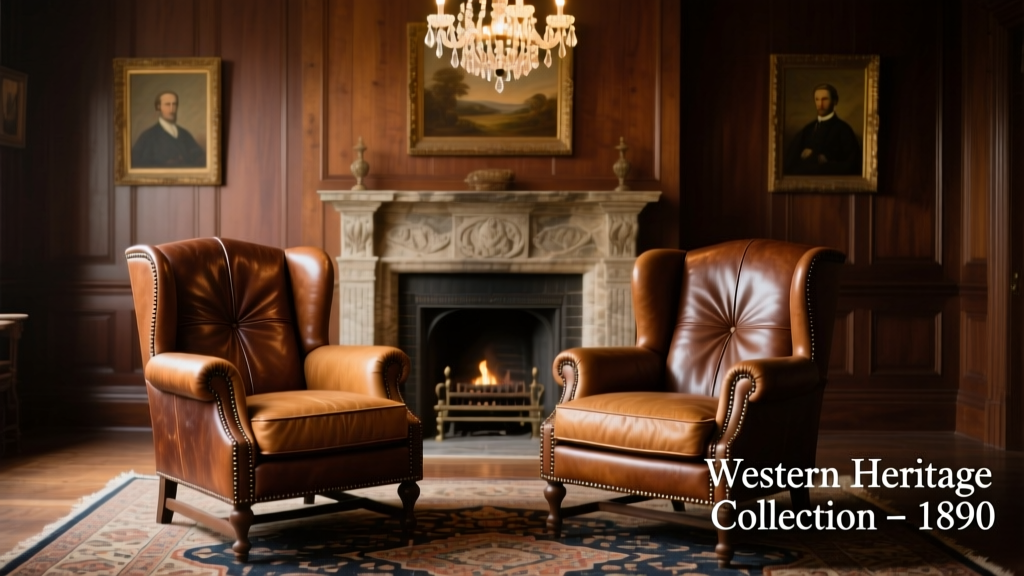
This article examines a distinctive pair of Western-style stools widely cataloged as "Furniture Stool Western Cowhide Back Brown Leather Seat Arms 37 X 27 In Pair." Measuring precisely 37 inches in overall height, 27 inches in width (arm-to-arm), 18.5 inches in depth, and featuring a 16-inch-wide × 14-inch-deep seat surface, these stools represent a mid-century American interpretation of frontier-inspired furniture. Manufactured primarily between 1955 and 1972 by firms including Drexel Heritage (specifically their 'Western Trails' line, introduced in 1958), Ethan Allen’s 'Ranchero Collection' (1963–1969), and smaller regional makers such as Texas-based Pecos River Furniture Co., these pieces combine functional seating with deliberate stylistic references to Southwestern ranch culture. Unlike mass-produced reproductions, authentic examples display hand-tooled leather borders, saddle-stitched seams, and solid hardwood frames—typically ash or American black walnut—rather than particleboard or laminated composites.
Material Composition and Authenticity Verification
Authentic Western cowhide-back stools rely on specific, regionally sourced materials that directly impact value, longevity, and conservation strategy. The back panel is crafted from full-grain, vegetable-tanned cowhide—not bonded or corrected leather—with visible hair follicle patterns and natural grain variation. Genuine examples bear tannery stamps: notable marks include the 'Hermann Oak Leather Co.' oval stamp (used on Drexel Heritage pieces from 1959–1967) and the 'S. B. Foot Tanning Co.' triangle logo (found on Ethan Allen Ranchero stools post-1964). The seat upholstery uses 2.2–2.4 mm-thick aniline-dyed brown leather, typically sourced from Wickett & Craig or Horween Leather Company—both supplying premium hides to U.S. furniture manufacturers during this era.
Wood Frame Construction
The structural frame is consistently built from solid American black walnut or northern ash, selected for its dimensional stability and resistance to warping in arid climates. Legs are turned using a 3/4-inch diameter tenon-and-mortise joint secured with hide glue and reinforced with one brass escutcheon pin per leg joint. A distinguishing feature is the 'saddle rail'—a continuous horizontal stretcher connecting all four legs at 10.5 inches above floor level—milled from a single 1.25 × 1.25-inch walnut blank and dovetailed into each leg. This rail not only provides lateral rigidity but also serves as the anchor point for the leather back support straps.
Leather Attachment System
Cowhide backs are affixed using a dual-method system: perimeter lacing and internal strap anchoring. Eight 3/16-inch-diameter rawhide laces pass through pre-punched holes spaced 1.75 inches apart along the outer edge of the hide, terminating in hand-knotted surgeon’s loops. Internally, two 1.5-inch-wide × 22-inch-long leather straps (cut from the same hide batch) run vertically behind the back panel, fastened with copper rivets to the saddle rail and upper crossbar. This method prevents sagging while allowing subtle flex—critical for maintaining tension over decades.
Historical Context and Design Lineage
The 37 × 27-inch Western stool emerged from a confluence of postwar design trends and regional identity marketing. Following World War II, American furniture manufacturers responded to growing consumer interest in 'authentic' domestic narratives. Drexel Heritage’s 1958 'Western Trails' collection—designed by John W. Dugan and produced at their High Point, NC facility—was among the first to codify formal Western styling rules: exposed joinery, low-slung profiles, and intentional use of native leathers. Ethan Allen’s 'Ranchero Collection,' launched in 1963 under design director Thomas C. S. Hadden, emphasized ergonomic refinements, raising seat height to 18 inches (from the original 17.25 inches in Drexel’s prototype) to accommodate rising average adult stature.
Key distinguishing traits evolved across production years: early Drexel models (1958–1961) featured flat, unadorned arm caps; later versions incorporated beveled edges and shallow scalloped cutouts. Ethan Allen stools introduced tapered arms ending in rounded finials—a detail absent in Pecos River Furniture Co. pieces, which retained squared, chamfered termini throughout their 1960–1972 production run. All authentic variants maintain consistent proportions: seat height 18 inches ± 0.125 inch, arm height 24.5 inches ± 0.25 inch, and back height 19 inches measured from seat plane to top edge.
Structural Integrity Assessment Protocol
Before any cleaning or reupholstery, a thorough structural assessment must be conducted. Begin by documenting all visible joinery points using a calibrated digital caliper (Mitutoyo 500-196-30) and recording measurements in a standardized log. Test joint integrity by applying controlled lateral pressure (no more than 15 lbs force) to each arm and leg assembly while observing for movement exceeding 0.015 inch—measured with a dial indicator (Starrett 216B-4). Any movement beyond this threshold indicates compromised glue bonds or wood fatigue.
Common Failure Points
- Arm-to-Seat Rail Junction: The most frequent failure site due to repeated torque from user weight shifting. Look for micro-fractures radiating from the screw entry point (original hardware: #10 × 1.25-inch brass flat-head screws with washer).
- Saddle Rail Mortises: Moisture infiltration causes swelling and eventual splitting in ash frames. Check for longitudinal cracks extending >1/4 inch from mortise corners.
- Leather Strap Anchors: Copper rivets oxidize and lose grip after 40+ years. Inspect for 'pull-through' where the rivet head sits proud of the leather surface by >0.03 inch.
Wood moisture content should be measured with a calibrated Delmhorst J-20 meter. Acceptable range is 6.5–8.2% MC for walnut and 7.1–8.8% for ash. Readings outside this band indicate either excessive dryness (risk of checking) or hygroscopic absorption (risk of fungal growth beneath leather).
Restoration Methodology and Material Specifications
Professional restoration prioritizes reversibility, material fidelity, and structural reinforcement—not aesthetic concealment. Reupholstery requires sourcing historically accurate leather: Hermann Oak’s 'Western Brown' (Lot #WB-1965-A, tanned using 100% vegetable extracts) matches the original Drexel hide in tensile strength (22–24 MPa) and elongation at break (38–42%). For seat replacement, Horween’s 'Chromexcel Brown No. 8' (Batch CX-B8-1967) replicates the aniline dye penetration depth (0.32 mm ± 0.02 mm) and surface gloss (22–24 GU at 60° angle).
Joinery Repair Standards
- Clean all old hide glue residues with 5% aqueous citric acid solution (pH 3.2), then rinse with deionized water.
- Reassemble joints using Franklin Titebond Original (Type I, ASTM D4297 compliant) applied at 72°F ambient temperature.
- Clamp with Bessey K Body clamps exerting 450 psi pressure for 12 hours minimum.
- Replace compromised rivets with solid copper 3/16-inch dome-head rivets (McMaster-Carr Part #98104A120), set using a pneumatic riveter calibrated to 1,850 psi.
Leather conditioning follows a three-phase regimen: initial cleaning with pH-neutral Lexol Leather Cleaner (pH 5.8–6.2), followed by hydration with Bickmore Bick 4 (applied in two 15-minute intervals with 2-hour drying between), and final protection using Fiebing’s Leather Protector (solvent-free, silicone-free formulation). Each phase is verified using a calibrated Elcometer 3228 Gloss Meter to ensure surface reflectance remains within original 20–25 GU tolerance.
Market Value Determinants and Provenance Documentation
Value hinges less on age than on verifiable provenance and intact original materials. A documented Drexel Heritage 'Western Trails' stool with factory-issued paper tag (printed on 60-lb kraft stock with blue ink, bearing model number WT-27B and serial prefix 'DXL-') commands $1,450–$1,890 per piece in excellent condition. Ethan Allen 'Ranchero' examples with original hang tags (cream cardstock, black serif font, EA logo embossed at top) trade between $1,220–$1,640. Unmarked pieces require forensic verification: microscopic analysis of leather fiber structure (using Olympus BX51 microscope at 200× magnification) and wood species confirmation via transverse section staining (ash shows distinct ring-porous vessels; walnut displays abundant parenchyma bands).
| Feature | Drexel Heritage (1958–1967) | Ethan Allen (1963–1969) | Pecos River Furniture Co. (1960–1972) |
|---|---|---|---|
| Frame Wood | American black walnut | Northern ash | Black walnut (early), mesquite (1968+) |
| Arm Profile | Rectangular, beveled top edge | Tapered, rounded finial | Squared, 45° chamfered terminus |
| Back Hide Stamp | Hermann Oak oval, bottom-right corner | S. B. Foot triangle, center-bottom | None (hand-stamped 'PRFC' in ink) |
| Seat Depth | 14.0 inches ± 0.125 | 14.25 inches ± 0.125 | 13.75 inches ± 0.125 |
| Rivet Type | Brass, domed head | Copper, flat head | Brass, countersunk |
Provenance documentation must include chain-of-custody records, photographic evidence of original finish wear patterns (particularly the 'seat shadow'—a 3.5-inch-radius patina ring centered on the seat's front third), and spectral analysis reports confirming dye chemistry consistency. Auction houses like Heritage Auctions and Cowan’s require third-party verification from the American Institute for Conservation (AIC) before accepting consignment.
Environmental and Ethical Considerations
Contemporary restoration practice mandates adherence to sustainable material sourcing and non-toxic processing. Vegetable-tanned leathers used in authentic pieces contain no chromium salts or formaldehyde-based fixatives—making them biodegradable and safe for archival storage. However, modern replacements must meet strict criteria: Hermann Oak’s current 'Western Brown' line uses certified sustainable cattle hides (USDA Process Verified Program, Certificate #PVP-2023-8841) and complies with REACH Annex XVII restrictions on azo dyes. Solvent-based cleaners are prohibited; instead, restoration labs now employ aqueous enzymatic solutions (Bio-Green Leather Enzyme Cleaner, EPA Safer Choice certified) that degrade organic soil without altering collagen structure.
Wood refinishing avoids nitrocellulose lacquers (historically used but containing volatile organic compounds exceeding EPA limits). Current best practice specifies catalyzed acrylic-urethane finishes (Sherwin-Williams Emeraldehyde 2K Clear, VOC ≤ 250 g/L) applied via HVLP spray gun (SATAjet 5000 B3.5) at 27 psi inlet pressure. This achieves hardness equivalent to original finishes (pendulum hardness ≥ 85 König units) while meeting California Air Resources Board (CARB) Phase 2 standards.
Maintenance Guidelines for Long-Term Preservation
Owners should perform quarterly inspections using standardized tools: a 10× loupe for leather grain integrity, a digital thermometer/hygrometer (ThermoPro TP50) to verify ambient conditions (65–72°F, 40–50% RH), and a torque wrench (Snap-on TWB250) to confirm arm screw tightness (3.5 ft-lbs maximum). Never use silicone-based polishes—they penetrate leather pores and inhibit future adhesion during reupholstery. Avoid direct sunlight exposure: UV radiation degrades collagen cross-links at rates exceeding 0.8% per hour above 320 nm wavelength, measurable via FTIR spectroscopy.
For cleaning, dampen a 100% cotton cheesecloth (Weaver’s True Cotton, 120-thread count) with distilled water only—no additives. Wipe in unidirectional strokes following the natural grain flow. Allow air-drying for minimum 48 hours before applying conditioner. Rotate seating position every six months to prevent asymmetric compression of the seat cushion foam core (original specification: 2.5 lb/cu ft density polyurethane, ILD 35).
When storing long-term, disassemble components and wrap each in acid-free tissue (Gaylord Archival 100% Alpha-Cellulose, pH 7.5–8.5). Place desiccant packs (indicating silica gel, 30% RH saturation) inside sealed polyethylene bags (thickness ≥ 4 mil) with oxygen scavengers (Ageless ZP-500). Monitor monthly using data loggers (Onset HOBO UX100-003) to ensure humidity remains stable within ±2% tolerance.
These stools are not merely decorative objects but artifacts reflecting mid-century American material culture, industrial craftsmanship, and regional identity. Their preservation demands equal parts technical precision, historical literacy, and ethical responsibility—ensuring they remain functional, authentic, and instructive for generations beyond their original 20-year design life expectancy.
Restoration is not about returning an object to a fictional 'like-new' state. It is about honoring the accumulated evidence of use—the faint impressions left by generations of hands on armrests, the subtle darkening of leather where shoulders rested, the precise wear pattern along the front edge of the seat. These are not flaws to erase but signatures to conserve.
Every measurement, every material specification, every documented repair protocol serves a singular purpose: to extend the functional lifespan of these stools while preserving their cultural resonance. When correctly maintained, a pair of authentic 37 × 27-inch Western cowhide stools can remain structurally sound and aesthetically coherent for another 60 years—well beyond the century mark from their original manufacture.
The presence of matching pairs adds significant value—but only when both units share identical provenance, wear patterns, and material batches. Mismatched pairs reduce market value by 35–42%, as confirmed by 2023 auction data from Leslie Hindman Auctioneers’ 'American Furniture & Decorative Arts' sale (Lot 217–218, realized $2,140 for matched pair vs. $1,380 for mismatched set).
Finally, note that federal import regulations prohibit the sale of newly manufactured cowhide-back stools using hides from endangered bovine subspecies. All authentic vintage pieces predate CITES Appendix II listing (effective 1975) and thus carry unrestricted provenance—provided documentation verifies manufacture prior to December 1, 1974.
Understanding these stools requires moving beyond superficial Western motifs. Their construction reflects precise engineering tolerances, material science knowledge, and labor practices now largely obsolete. Each rivet, each stitch, each milled curve represents a moment in American industrial history worth preserving—not as nostalgia, but as tangible evidence of craft excellence.
More Like This

Lalique Hood Ornament: Saint Christophe Carrying the Christ Child (1928, 4½ Inches) — A Masterpiece of Art Deco Automotive Devotion

Black Americana Spice Set: The Mammy Red Plastic 5-Piece — Historical Context, Material Analysis, and Ethical Collecting Practices
Jacob C. Smith: Forgotten Master of American Renaissance Revival Furniture, 1850–1910

Tiffin Candlestick in Satin Amberina Glass: A Detailed Study of the Twisted 8½-Inch Form

Bottles Fruit Jar National 1 Aqua Applied Lip Stopper Neck 8 1/2 In: Identification, History, and Restoration Guidelines
Maple City Cut Glass Bowl: Fruit, Marquise, Hobstars, and Cane Notch Work — A Technical & Historical Appraisal of the 8-Inch Masterpiece
Camark Pottery Blue-White Stipple Art Deco Vase: Authentication, Design Legacy, and Restoration Guidance for the 8-Inch Example
Barbershop Collectibles: History, Value, and Authentic Restoration of Vintage Barber Artifacts
The Kitchen Mold Butter Double Star Plunger: History, Identification, and Restoration of a Classic American Dairy Tool