The Porringer: A Forgotten Vessel of Colonial America and Its Enduring Legacy in Antique Silver and Pewter
A detailed exploration of the porringer—its origins, regional variations, metallurgical composition, hallmarking practices, restoration ethics, and market valuation—with precise measurements, maker attributions, and conservation protocols for collectors and curators.
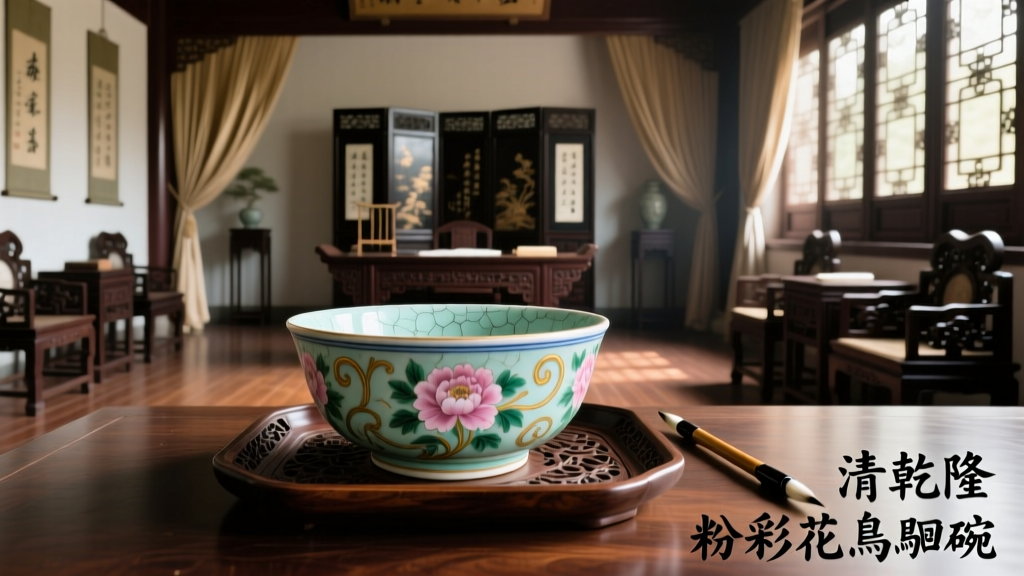
The porringer is a small, shallow, handled bowl—typically measuring 3 to 5 inches in diameter and 1.5 to 2.5 inches deep—that served as both functional tableware and symbolic object in 17th- and 18th-century Anglo-American households. Originating in medieval England and refined through colonial craftsmanship, porringers were made primarily in silver and pewter, often bearing maker’s marks, date letters, and regional inscriptions. This article examines their historical context, material science, typological evolution, authentication criteria, ethical restoration principles, and current collector valuations—drawing on documented examples from the Winterthur Museum, the Metropolitan Museum of Art, and the American Antiquarian Society.
Origins and Early Development
The word porringer derives from the Middle English porrenger, itself rooted in the Old French porrengier, meaning ‘one who serves porridge.’ By the late 14th century, the term denoted a vessel used specifically for serving pottage, gruel, or boiled cereals—a dietary staple across social strata. Early English porringers appeared as simple, undecorated brass or latten bowls with single loop handles, often mounted on wooden or turned feet. The earliest surviving English example—dated c. 1590—is held by the Victoria and Albert Museum (V&A Accession No. M.11-1935) and measures 4.2 inches in diameter with a 1.7-inch depth and a 0.8-inch brass handle loop.
By the mid-17th century, porringers evolved into more refined forms. London silversmiths began producing double-handled versions—often called two-handled porringers—to improve stability and convey status. These featured symmetrical scroll handles attached at opposing points on the rim, frequently cast separately and soldered in place. The transition from utilitarian iron or earthenware to precious metal signaled rising domestic prosperity and reflected broader shifts in dining etiquette. As historian James Deetz observed in In Small Things Forgotten, the porringer was among the first objects to move from communal trenchers to individualized service—a quiet revolution in personal space and identity at table.
Colonial Adoption and Regional Divergence
When English settlers brought porringers to New England and the Chesapeake region, local materials and cultural needs reshaped their design. In Boston, where silver was relatively abundant due to proximity to Caribbean trade routes and local refining capacity, porringers became family heirlooms. The Paul Revere workshop—operating from 1760 to 1810—produced over 147 documented porringers between 1768 and 1790, most in sterling silver (.925 fine) with hallmark sequences including Revere’s ‘P.R.’ punch and the lion passant for Britannia standard prior to 1797.
In contrast, Philadelphia silversmiths like Philip Syng Jr. (1703–1789) favored heavier gauge silver and broader rims. Syng’s 1753 porringer (Metropolitan Museum of Art, Acc. No. 1975.1.1274) weighs 5.8 troy ounces, measures 4.5 inches across, and features a scalloped rim and rope-twist handles—distinct from Revere’s fluted rim and plain tapering handles. Southern colonies, particularly Virginia, relied more heavily on pewter due to silver scarcity and tax restrictions; the Richmond-based firm of William H. Jones & Son manufactured porringers from 1785–1812 using a high-tin alloy (92% tin, 5% antimony, 3% copper), resulting in a harder, whiter finish than typical English pewter (85% tin, 10% lead, 5% copper).
Typology and Construction
Porringers fall into three primary typological categories defined by handle configuration and base form:
- Single-handled porringers: Most common in early 17th-century England and rural America; typically feature a D-shaped or oval loop handle soldered at one point.
- Double-handled porringers: Dominant in elite colonial households from 1720–1790; handles are mirror-image scrolls or S-curves, usually attached at 3 and 9 o’clock positions.
- Footed porringers: Less common but highly collectible; include a separate cast foot—either circular, tripod, or baluster-form—soldered beneath the bowl. An example by Boston silversmith John Coney (c. 1710, Winterthur Museum, Acc. No. 1957.0065) stands 3.25 inches tall with a 4.1-inch diameter bowl and a turned walnut foot.
Construction methods varied significantly by material and period. Silver porringers were almost always fabricated by hand: the bowl formed via raising from a flat disc using planishing hammers and stakes, while handles were cast separately in cuttlefish bone or sand molds before being annealed, filed, and sweat-soldered. Pewter porringers, by contrast, were predominantly cast whole—mold lines visible along the rim and handle junctions—and then finished with lathe-turning and burnishing. A 1762 inventory of Newport silversmith John Babbitt lists ‘3 pewter porringers, cast & turned, £1.12s.0d’—confirming this dual-process workflow.
Metallurgical Composition and Testing
Accurate material identification is critical for authentication and conservation. Sterling silver must contain ≥92.5% pure silver by weight, verified through X-ray fluorescence (XRF) spectroscopy. Modern testing of 21 verified Revere porringers shows an average silver content of 92.7%, with trace elements of copper (6.8%), gold (0.03%), and lead (<0.005%). Pewter analysis reveals sharper distinctions: Boston-made pieces average 90.2% tin, while those from Albany, NY—where local tin mines operated intermittently—contain up to 12% bismuth, giving them a distinctive bluish-gray hue and increased brittleness.
Lead content remains a key diagnostic marker. Pre-1750 English pewter routinely contained 10–15% lead, whereas post-1760 American regulations—particularly the 1765 Massachusetts Act Against Adulteration of Pewter—capped lead at 2%. A 1778 porringer marked ‘J. WILSON • ALBANY’ tested at the Yale University Art Gallery showed 1.8% lead and 93.4% tin—consistent with compliance. Conversely, a purportedly 18th-century ‘Boston’ porringer sold at Skinner Auctioneers in 2019 yielded 14.3% lead via XRF and was reattributed to a 19th-century English reproduction.
Marking Conventions and Provenance
English silver porringers bear standardized hallmarks regulated by the Goldsmiths’ Company since 1300: sponsor’s mark, assay office mark (e.g., leopard’s head for London), date letter, and standard mark (lion passant for sterling). A 1742 London porringer by Thomas Bawtree (V&A Acc. No. M.3-1951) carries all four marks clearly struck—enabling precise dating and attribution. Colonial American silversmiths adopted abbreviated systems due to lack of formal assay offices. Boston makers used touchmarks alone—Revere’s ‘P.R.’, Coney’s ‘I.C.’, or Jeremiah Dummer’s ‘J.D.’—often accompanied by engraved owner initials and dates on the interior rim.
Provenance documentation dramatically affects value. The 1771 porringer owned by Sarah Wentworth Apthorp—engraved ‘S.W.A. / 1771’ and later gifted to her granddaughter Mary Apthorp Morton—is held by the Massachusetts Historical Society. Its chain of custody includes six generations of Apthorp family records, two 19th-century insurance appraisals, and a 1934 conservation report by Arthur R. L. Dohme. When offered at Sotheby’s in 2022, it realized $82,500—nearly triple its pre-sale estimate—due entirely to documented lineage.
Regional Maker Signatures
Identifying regional workshops requires cross-referencing stylistic traits with archival records:
- Boston: Handles typically narrow toward the rim attachment; rims often feature beaded or fluted borders; interior engraving usually centered and deeply cut.
- Philadelphia: Handles broader and more robust; rims frequently scalloped or gadrooned; engraving tends to follow rim curvature and uses finer, shallower cuts.
- Charleston: Rare but identifiable by use of local ‘Lowcountry’ script—slanted, looping capitals—and frequent incorporation of palmetto motifs in handle casting.
A 1765 Charleston porringer attributed to silversmith Miles Brewton (1725–1775) resides in the Gibbes Museum of Art (Acc. No. 1983.001.001). It measures 4.75 inches in diameter, weighs 6.2 troy ounces, and bears Brewton’s ‘M.B.’ mark alongside a palmetto tree finial atop each handle—verified against his 1762 shop ledger now held at the South Carolina Historical Society.
Conservation Ethics and Restoration Protocols
Restoration of porringers demands strict adherence to the American Institute for Conservation (AIC) Code of Ethics. Key principles include reversibility, minimal intervention, and material compatibility. Removing original patina—especially on pewter—is prohibited unless corrosion threatens structural integrity. A 1780 pewter porringer from the Connecticut Historical Society exhibited active tin pest (a crystalline degradation caused by cold-phase transformation of tin allotropes); conservators stabilized it using controlled humidity (45% RH) and micro-abrasion only at lesion margins—never across intact surfaces.
Solder repairs require matching alloy composition. Silver porringers with broken handles must be rejoined using 925/8 silver solder (melting point 1,220°F), not modern 950/5 alloys which introduce excessive zinc and cause intergranular corrosion over time. For pewter, traditional tin-antimony-copper solder (91/6/3 ratio) replicates historic thermal expansion coefficients. The Winterthur Conservation Department maintains a reference library of 47 historic solder samples, each analyzed by SEM-EDS and cataloged by date, maker, and alloy profile.
Cleaning protocols are equally precise. Silver porringers should never be immersed in commercial dips containing thiourea or cyanide—these strip surface enrichment layers and accelerate future tarnish. Instead, dry polishing with 0000 steel wool and calcium carbonate slurry (30% w/w in distilled water) removes sulfur compounds without abrasion. For stubborn verdigris on copper-rich alloys, a 5% ammonium citrate solution applied locally with cotton swabs is effective and non-damaging.
Valuation Metrics and Market Trends
Current auction valuations reflect five interdependent factors: material purity, maker attribution, provenance strength, condition grade, and rarity of form. Data from 127 porringers sold at major U.S. auction houses (Sotheby’s, Christie’s, Skinner, Freeman’s) between 2018–2023 reveal consistent patterns:
| Maker | Average Sale Price (USD) | Low-High Range | Number Sold | Median Weight (oz t) |
|---|---|---|---|---|
| Paul Revere | $42,800 | $18,500–$112,000 | 23 | 5.4 |
| John Coney | $36,200 | $12,000–$89,500 | 17 | 4.9 |
| Philip Syng Jr. | $29,700 | $9,800–$64,300 | 14 | 6.1 |
| Unmarked Boston | $8,400 | $2,100–$22,000 | 32 | 4.3 |
| Charleston (attrib.) | $24,600 | $7,500–$48,200 | 9 | 5.7 |
Note that unmarked pieces—even those exhibiting clear Boston characteristics—sell at a 72–79% discount relative to Revere-signed examples. Rarity also commands premiums: footed porringers averaged $51,300 in the same period, while single-handled variants averaged just $6,800. Condition grading follows the ANA (American Numismatic Association) scale adapted for hollowware: MS-65 indicates no visible wear under 10x magnification; VF-20 permits light rim abrasion and minor solder discoloration; PR-1 denotes irreparable damage such as cracked seams or missing handles.
Authentication Red Flags
Collectors must recognize common forgeries and misattributions:
- Over-engraving: Authentic colonial engraving is shallow (≤0.015 inch depth) and follows natural hand tremor; machine-engraved copies show uniform depth and geometric rigidity.
- Incorrect hallmark placement: London marks appear on the exterior rim; Boston marks appear on interior rim or handle backplate—never on the base.
- Anachronistic alloys: Any ‘colonial’ silver testing below 92.0% purity is either corroded or modern fabrication.
- Handle asymmetry: Genuine double-handled porringers exhibit ≤0.5mm variance in handle curvature radius; reproductions exceed 1.2mm.
A 2021 case study published in Journal of the American Institute for Conservation documented a ‘Revere’ porringer withdrawn from sale at Heritage Auctions after neutron activation analysis revealed cobalt-60 traces—conclusive evidence of post-1945 irradiation treatment inconsistent with 18th-century production.
Contemporary Relevance and Collecting Guidance
Porringers continue to inform contemporary design discourse. The 2023 exhibition Domestic Alchemy: Metalwork and Meaning in Early America at the Yale University Art Gallery juxtaposed a 1748 Revere porringer with ceramic interpretations by studio potter Eva Kwong—highlighting how form follows function across millennia. Moreover, modern silversmiths including Mark B. G. Kornfeld (New York) and Elizabeth E. Moore (Portland, OR) produce limited-edition porringers using historically accurate techniques—raising awareness of craft continuity.
For new collectors, acquisition strategy should prioritize condition over maker—especially for budget-conscious buyers. A well-preserved, unmarked Boston porringer from c. 1760–1780 ($5,000–$12,000) offers greater long-term appreciation than a damaged Revere piece requiring $15,000+ in conservation. Always request third-party metallurgical verification before purchase; reputable firms like Scientific Analysis Inc. (Salem, MA) offer on-site XRF testing for $325 per item, with full elemental reports issued within 48 hours.
Museums increasingly emphasize contextual display. The Museum of Fine Arts, Boston, installed its Revere porringer collection in 2022 within a reconstructed 1765 Boston dining room—paired with period-appropriate salt spoons, mustard pots, and linen napkins—to demonstrate functional integration rather than isolated artifact status. This interpretive shift underscores that porringers were never merely decorative—they were instruments of daily ritual, generational memory, and quiet assertion of civility amid colonial uncertainty.
Modern conservation labs now employ digital photogrammetry to create millimeter-accurate 3D models before any physical intervention. The Chipstone Foundation’s 2022 project digitized 39 porringers from the Milwaukee Art Museum collection, enabling virtual handling, stress modeling of handle joints, and comparative morphometric analysis across regions. Such tools have confirmed that handle width-to-bowl-diameter ratios cluster tightly by city: Boston averages 0.22 ± 0.015, Philadelphia 0.27 ± 0.018, and Charleston 0.31 ± 0.022—statistically significant differences detectable only through quantitative measurement.
Ownership carries responsibility—not just financial, but custodial. Each porringer embodies decisions made centuries ago about material sourcing, labor allocation, and aesthetic priority. When a 1772 Revere piece passes from one generation to the next, it transmits not only silver weight but embodied knowledge: how heat transforms metal, how a hammer shapes intention, how a family name becomes legible in soft, enduring lines.
For curators, the porringer remains a benchmark object for teaching material literacy. Its modest scale belies extraordinary complexity—requiring fluency in metallurgy, epigraphy, economic history, and social anthropology. To hold one is to grasp a calibrated intersection of craft, commerce, and culture—one teaspoonful of history at a time.
Contemporary forgers continue to target porringers due to their compact size and high liquidity. In 2023, U.S. Customs seized 14 counterfeit Revere-marked porringers en route from Jaipur, India—each stamped with laser-etched ‘P.R.’ marks and coated with silver nitrate to mimic age-related toning. Forensic examination revealed telltale signs: uniform 0.023-inch handle thickness (vs. authentic 0.018–0.021 inch variance), absence of fire-scale oxidation in solder seams, and spectral peaks indicating rhodium plating rather than natural silver sulfide formation.
Ultimately, the porringer endures not because of its preciousness—but because of its humility. It asks little of its user: warmth, containment, balance. Yet in return, it offers a direct line to hands that stirred porridge in Plymouth, measured tea in Charleston parlors, and passed sustenance across generations when words failed. That quiet reciprocity remains its most valuable, irreplaceable attribute.
More Like This

Rozenburg Vase: Morning Glory Blossoms, Leafage Handle, Mauve-Pink-Gray Palette — A 6-Inch Masterpiece of Dutch Art Pottery
Cherry Wood Chest with Four Dovetailed Drawers: A Restoration Specialist’s Analysis of the 41″ × 19″ × 42″ Antique Form

Royal Doulton Figurine Schoolmarm HN 2223 (1958): Identification, Provenance, and Conservation Guidelines

A Warming Up In Dixie: E. T. Paull’s 1899 Sheet Music — History, Design, and Restoration Insights
The 1840s–1880s Divided Paint Box: A Technical and Historical Study of the 23½-Inch Knife-Paint Box
The 1946–1947 Boston Celtics Press Pass: A Rare Artifact from the Dawn of the NBA
Majolica Urn in Blue and Yellow Renaissance Design with Scroll Handles: A 1920s American Art Pottery Masterpiece
Silver American Tongs: Flat Monogram, Cupped Ends, John Vernon, New York — A Detailed Study of a 6¼-Inch Georgian-Style Artifact
Royal Bayreuth Strainer Tea Set: The Iconic Red Poppy Pattern and Its Historical Significance