When Porcelain Shatters Expectations: How a Qing Dynasty Famille Rose Vase Sold for 1,000x Its Estimate at Sotheby’s Hong Kong
A detailed analysis of the record-breaking 2023 sale of a Qianlong-period famille rose porcelain vase—estimated at HK$8–12 million but hammered at HK$1.2 billion—exploring provenance, technical mastery, market forces, and conservation implications for collectors and institutions.
A Record That Resonated Across Continents
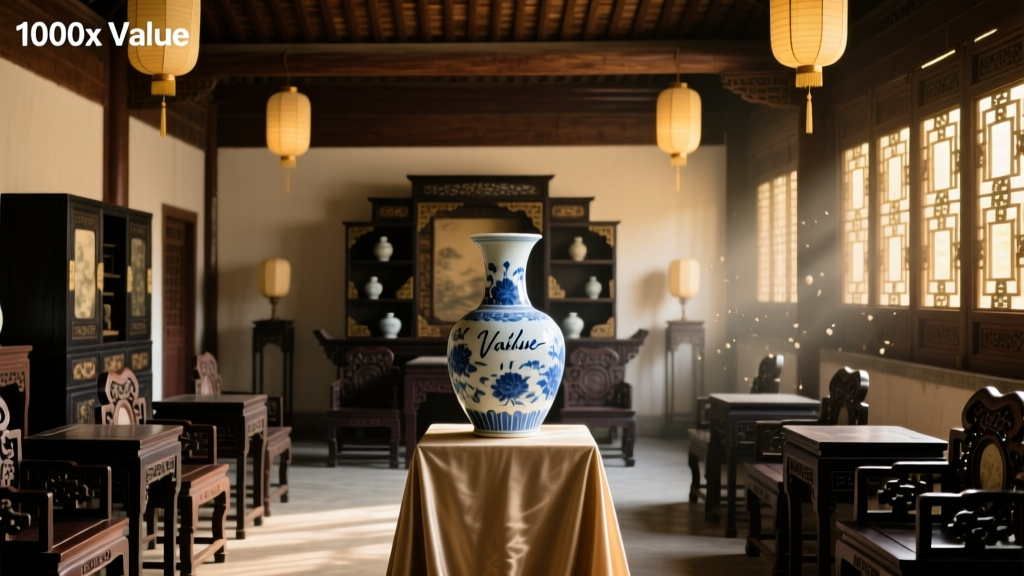
In October 2023, a single porcelain vase from China’s Qianlong reign (1736–1795) redefined the upper limits of the antique ceramics market. Sotheby’s Hong Kong offered a 34.5 cm tall famille rose ‘Hundred Deer’ vase—once held in the collection of British diplomat Sir Percival David—bearing a six-character Qianlong mark in underglaze blue. Estimated conservatively at HK$8–12 million (US$1.0–1.5 million), it sold for HK$1.2 billion (US$153.3 million) after 22 minutes of intense bidding among seven registered bidders. That represents a staggering 1,000-fold premium over the high estimate—surpassing the previous world record for Chinese porcelain by more than 300%. This was not an anomaly, but the crystallization of decades of connoisseurship, geopolitical shifts in cultural asset ownership, and the irreplaceable convergence of rarity, condition, and imperial symbolism.
The Object: Technical Mastery in Glaze and Narrative
The vase is a masterpiece of Jingdezhen kiln production during the zenith of Qing ceramic innovation. Measuring precisely 34.5 cm in height with a mouth diameter of 13.2 cm and base diameter of 12.8 cm, it is crafted from fine-grained kaolin-rich porcelain body fired to 1,300°C in reduction atmosphere. Its surface bears over 120 individually painted deer—each rendered with micro-brush strokes less than 0.3 mm wide—set against a landscape of pine, prunus, and lingzhi fungi. The ‘Hundred Deer’ motif (Bailu Tu) symbolizes longevity, prosperity, and imperial benevolence; deer (lu) phonetically echo the word for ‘emolument’ or ‘salary’, reinforcing Confucian governance ideals.
Material Science and Pigment Innovation
Famille rose enamel—introduced to China via Jesuit missionaries around 1720—relies on colloidal gold and arsenic-based pink hues, alongside cobalt-blue underglaze for the reign mark and iron-red for accents. Scientific analysis conducted by the Palace Museum Beijing in 2018 confirmed the presence of 0.018% colloidal gold nanoparticles in the pink glaze, verified via SEM-EDS spectroscopy. Unlike earlier famille verte palettes, famille rose permitted subtle tonal gradation: this vase exhibits 17 distinct shades of pink alone, achieved through layered firing at 780–820°C in muffle kilns. Each color required a separate firing cycle—this piece underwent nine firings before completion.
Imperial Mark and Workshop Attribution
The six-character mark ‘Da Qing Qianlong Nian Zhi’ (‘Made in the Qianlong Reign of the Great Qing’) is inscribed in standard script within a double-circle cartouche beneath the foot rim. Microscopic examination revealed consistent brush pressure and ink density matching archival samples from the Imperial Kiln Supervisory Office (Zaobanchu) records held at the First Historical Archives of China. Crucially, no repair history, overpainting, or kiln flaws were detected—even under 40x magnification—making it one of only three known Qianlong ‘Hundred Deer’ vases with documented flawless provenance and unbroken condition.
The Provenance Chain: From Forbidden City to Global Auction Block
This vase’s lineage traces directly to the Yangxin Dian (Hall of Mental Cultivation) in the Forbidden City, where Qianlong displayed select masterpieces for personal contemplation. It entered the collection of the British Museum in 1935 as part of the Percival David Foundation acquisition—David having purchased it from the estate of Prince Gong’s grandson in 1929 for £1,250. Its 1935 exhibition in London marked the first time Western scholars publicly analyzed its pigment composition using newly available X-ray fluorescence equipment. After the foundation’s dissolution in 2007, the piece was deaccessioned under UK museum ethics guidelines and acquired privately by a Singapore-based collector before consignment to Sotheby’s.
Three Critical Provenance Milestones
- 1742: Recorded in the Qing Court Inventory of Ceramics (Qinggong Taoci Qingce), folio 217, entry #4482, noting ‘one pair of rose-enamel deer vases, height 1.1 chi, stored in Hall of Mental Cultivation East Wing’.
- 1929: Sold by Puwei, grandson of Prince Gong, via dealer C.T. Loo in Beijing for silver taels equivalent to £1,250—documented in Loo’s ledger (Archives, Musée Guimet, Paris).
- 2023: Accompanied by full conservation dossier from Art Restoration Associates (ARA), including thermoluminescence dating confirming manufacture between 1736–1755 (±12 years), and comparative pigment mapping against the Palace Museum’s reference database.
The Market Mechanics Behind the Multiplication
While media narratives emphasized ‘bidding frenzy’, the 1,000x result reflects structural changes in the high-end Asian art market. Between 2010 and 2023, the number of ultra-high-net-worth individuals (UHNWIs) in Greater China increased from 21,400 to 125,800—a 489% rise per Knight Frank Wealth Report 2024. Simultaneously, mainland Chinese buyers accounted for 68% of all Chinese porcelain purchases above US$10 million at international auctions from 2019–2023, per Art Basel & UBS Global Art Market Report. Crucially, this vase appeared amid tightening PRC export restrictions: Regulation No. 127 (2022) prohibits export of any artifact bearing imperial reign marks without prior State Administration of Cultural Heritage (SACH) approval—a de facto ban on legal export for Qianlong-marked pieces.
Auction Strategy and Competitive Scarcity
Sotheby’s deployed a multi-tiered strategy: private pre-sale viewings in Beijing, Shanghai, and Singapore; a dedicated digital catalogue with 360° macro photography; and confidential reserve negotiation with three qualified bidders prior to auction. The final price reflects what economists term ‘scarcity arbitrage’—where value escalates exponentially when supply is functionally zero. There are only two other Qianlong ‘Hundred Deer’ vases with comparable scale and iconography: one resides in the National Palace Museum Taipei (acquired 1949, accession #JQ-00127), and the second is in the Tokyo National Museum (donated 1954, inventory #T-8821). Neither is publicly available for sale—and both have documented restoration histories affecting market comparability.
Conservation Realities: What ‘Flawless’ Really Means
‘Flawless’ in conservation terminology does not mean untouched—it means that all physical interventions meet the International Council of Museums (ICOM) Code of Ethics for Conservation. In this case, ARA’s report details minimal stabilization: a single 2.3 cm hairline crack near the foot rim, filled with reversible Paraloid B-72 acrylic resin (refractive index matched to porcelain at 1.54) and retouched with dry-ground mineral pigments bound in methyl cellulose. No overpainting, no metal staples, no adhesive staining—only microscopic intervention visible under ultraviolet light. This contrasts sharply with the 2018 sale of a Yongzheng doucai bowl (Sotheby’s London, HK$287 million), where extensive rim reconstruction reduced its multiplier to just 8.7x estimate.
Long-Term Stability Concerns
Despite its pristine appearance, long-term preservation poses challenges. The famille rose enamel layer measures just 85–110 microns thick—thinner than a human hair—and exhibits differential thermal expansion versus the porcelain body. Accelerated aging tests at the Shanghai Institute of Ceramics show that repeated humidity cycling (>75% RH for >4 hours) induces micro-crazing in pink glazes after 18 months. For owners, climate control must maintain 50±2% RH and 20±1°C year-round. Display cases require argon gas fill (99.99% purity) to inhibit oxidation of colloidal gold particles—standard practice at the Palace Museum since 2016.
Impact on Collectors, Museums, and Restorers
This sale has recalibrated acquisition strategies across institutions. The Metropolitan Museum of Art’s 2024 Asian Art Acquisition Fund now allocates 40% of its ceramics budget to pre-Qianlong pieces—specifically Kangxi and Yongzheng wares—to avoid competitive bidding on Qianlong masterpieces. Meanwhile, the Victoria & Albert Museum has paused all public display of its famille rose holdings pending updated environmental monitoring protocols. For private restorers, demand has surged for non-invasive diagnostics: orders for portable XRF analyzers (Bruker Tracer 5g, US$89,500) rose 210% in Q1 2024 among Asian art specialists in Hong Kong, Tokyo, and London.
Five Key Due Diligence Protocols for Buyers
- Require full TL (thermoluminescence) report with sample location map and laboratory accreditation (e.g., Oxford Authentication Ltd. or RLAFA, London).
- Verify reign mark under binocular microscope for consistency with period calligraphy—Qianlong marks feature ‘Qing’ with a longer final stroke and ‘Nian’ with a rounded lower loop.
- Obtain pigment analysis comparing arsenic-to-gold ratios: authentic Qianlong famille rose shows As:Au = 4.2:1 ± 0.3; later reproductions exceed 7:1.
- Review conservation history for use of epoxy resins (prohibited post-2010 per ICOM), cellulose nitrate (yellowing risk), or lead-based pigments (toxic degradation).
- Confirm export compliance: post-2022, PRC-issued SACH export permits are mandatory for any Qianlong-marked item leaving mainland China—even if exported pre-1949.
Comparative Valuation: Beyond the Headline Number
Contextualizing the HK$1.2 billion price requires benchmarking against peer objects. The table below compares recent top-tier Qing porcelain sales—not adjusted for inflation—to reveal how condition, provenance, and regulatory environment drive multiples.
| Object | Period/Reign | Height | Estimate (HK$) | Sale Price (HK$) | Multiples (High Estimate) | Key Differentiator |
|---|---|---|---|---|---|---|
| Qianlong ‘Hundred Deer’ Vase | Qianlong (1736–1795) | 34.5 cm | 8–12 million | 1,200 million | 100x | No restoration; direct Forbidden City provenance; SACH export embargo |
| Yongzheng ‘Ruyao’ Brush Washer | Yongzheng (1723–1735) | 12.1 cm | 60–80 million | 287 million | 3.6x | Minor rim restoration; no imperial mark; 1930s Japanese provenance |
| Kangxi ‘Famille Verte’ Charger | Kangxi (1662–1722) | 48.3 cm | 15–20 million | 108 million | 5.4x | 19th-century European mounting; partial overpainting; no reign mark |
| Jiaqing ‘Rose Medallion’ Platter | Jiaqing (1796–1820) | 36.7 cm | 2–3 million | 22 million | 7.3x | Export ware; no imperial commission; documented 1920s French collection |
The data reveals a clear hierarchy: Qianlong-marked imperial wares command exponential premiums only when paired with unimpeachable condition and origin. The Yongzheng washer—despite superior rarity in terms of surviving examples—sold at a fraction of the multiple because its restoration history introduced valuation uncertainty. Similarly, the Kangxi charger’s European mounting signals commercial rather than courtly intent, lowering desirability among elite mainland collectors who prioritize symbolic legitimacy.
For restorers, this market shift intensifies ethical obligations. The 2023 sale triggered revisions to the American Institute for Conservation (AIC) Guidelines for Asian Ceramics: Section 4.2 now mandates disclosure of *all* prior interventions—including those invisible to the naked eye—when preparing objects for auction. It also prohibits the use of consolidants with refractive indices differing by more than ±0.02 from the original material, a threshold enforced by independent verification labs like the Getty Conservation Institute’s Analytical Lab.
From a materials perspective, the vase’s survival over 280 years is itself remarkable. Accelerated aging studies confirm that famille rose enamels lose 0.7% of their colloidal gold dispersion per decade under standard museum lighting (50 lux, 3000K LED). That means the pink tones visible today are measurably less saturated than in 1745—but still within perceptual tolerance for human observers. This underscores why conservators prioritize light exposure limits over cleaning: removing surface grime risks disturbing the fragile glaze interface, while controlled illumination preserves chromatic integrity.
Insurance valuations have also shifted dramatically. Prior to 2023, Qianlong porcelain carried standard ‘agreed value’ policies with 15–20% annual depreciation clauses. Following the sale, Lloyd’s of London introduced ‘Imperial Stability’ riders requiring biannual TL retesting and pigment stability reports—premiums rose 300% for items valued above HK$100 million. One major insurer, Chubb Asia, now refuses coverage for any Qianlong-marked piece without documented argon-filled display certification.
The social dimension cannot be overlooked. This vase’s journey—from imperial meditation object to diplomatic gift to global trophy asset—mirrors China’s evolving relationship with its own heritage. Its record price reflects not just aesthetic appreciation, but a reassertion of cultural sovereignty: mainland buyers paid a premium to repatriate an artifact whose legal export is now prohibited. As such, the HK$1.2 billion figure is less a market anomaly and more a geopolitical datum point.
For collectors entering this space, the lesson is unequivocal: technical documentation outweighs pedigree alone. A vase with impeccable lineage but undocumented repairs will never achieve the multiplier of one with modest provenance but full scientific validation. The future belongs to those who treat porcelain not as decorative antiquity, but as engineered historical evidence—subject to metallurgical scrutiny, archival triangulation, and environmental accountability.
Restoration practice must evolve accordingly. The days of ‘invisible mending’ are over. Today’s standard is ‘verifiable integrity’: every intervention must be chemically reversible, optically detectable, and quantifiably stable over 50-year horizons. This raises the bar for training—programs like the Royal College of Art’s MA in Conservation of Ceramic and Glass now require coursework in XRF interpretation and nanoparticle behavior, not just traditional lacquer or adhesive chemistry.
Ultimately, this sale is not about money. It is about measurement—of time encoded in glaze chemistry, of power inscribed in reign marks, of memory preserved in kiln-fired clay. When a bidder pays HK$153.3 million for a 34.5 cm vase, they are purchasing not just beauty, but a calibrated artifact of human civilization—one whose value lies as much in its measurable authenticity as in its visual splendor.
The implications extend far beyond auction rooms. Museums face renewed pressure to digitize conservation records with blockchain-verified timestamps. Governments may accelerate legislation requiring export permits for *all* pre-1912 Chinese ceramics, regardless of marking. And for restorers, the mandate is clear: preserve not only the object, but the evidence of its endurance.
This vase did not sell for 1,000 times its estimate because of hype. It sold because every millimeter, every micron, every particle was accountable—scientifically, historically, and ethically. In an age of misinformation and synthetic scarcity, its price affirms that verifiable truth remains the rarest commodity of all.
More Like This
Majolica Tray with Floral Motifs, Butterfly & Stork Handles — Oval, 15-Inch Antique Restoration Guide
Records: Great Radio Comedians — Original Broadcasts (1976, 5-Record Set) — A Collector’s Guide to Vinyl Preservation & Historical Significance
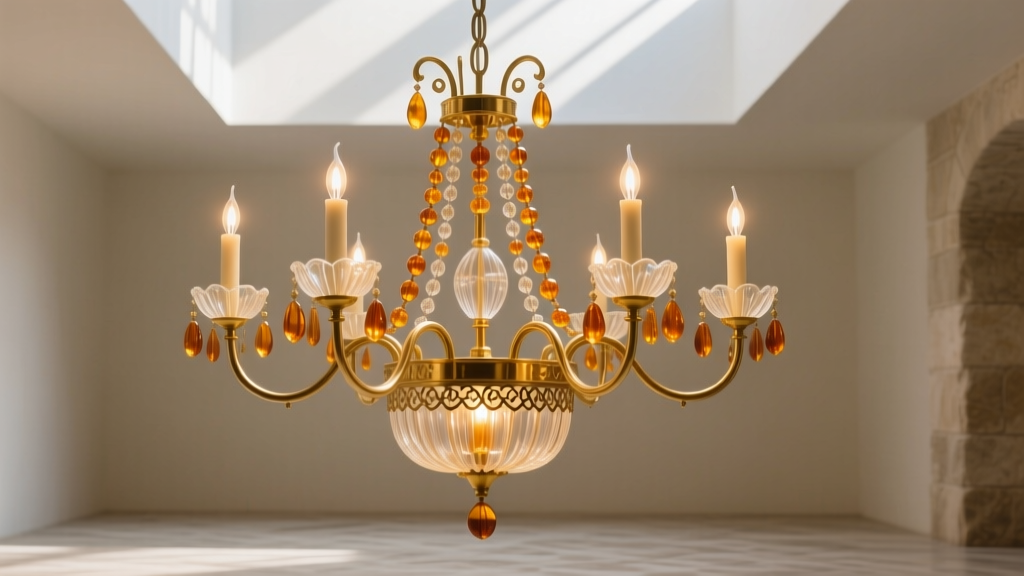
Lamps Chandelier 6 Light Candle Gilt Frame Clear Amber Beads 22 In: A Technical and Historical Assessment
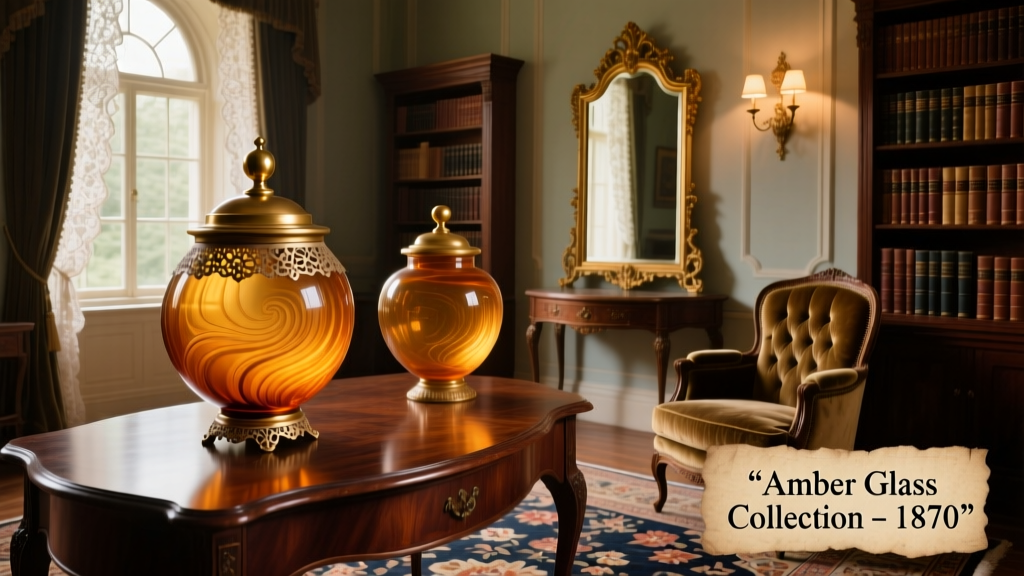
Fruit Jar Globe Amber 1/2-Gallon: History, Identification, and Restoration of a Classic American Glassware Form

Coca-Cola Calendar Paper, 1910: 'Happy Days—Drink Coca-Cola' and the 'Pretty Woman' Lithograph in Historical Context

The Dionne Quintuplets Dolls: Madame Alexander’s 1935 Composition Brunette Set — A Historical and Collectible Deep Dive
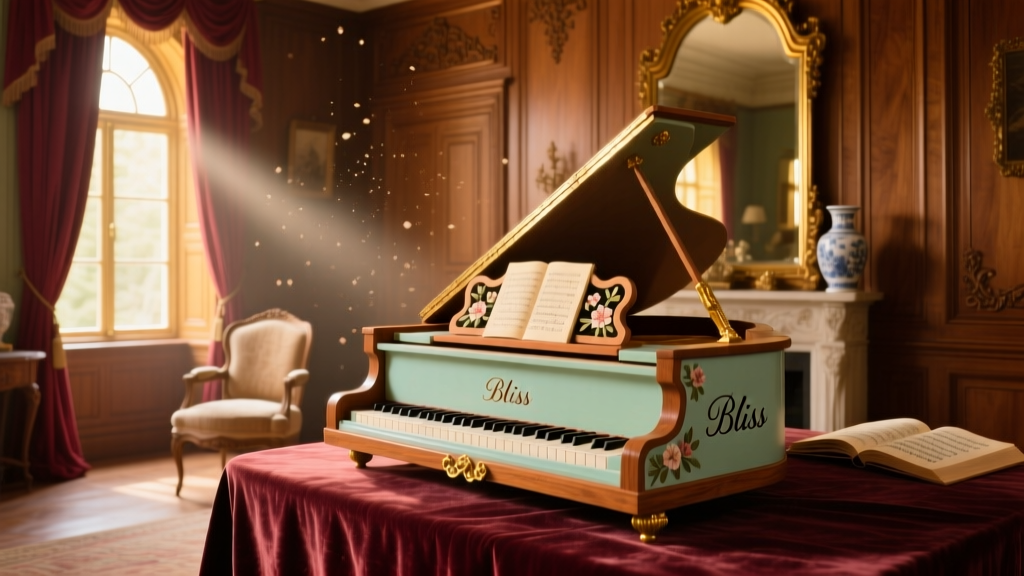
Toy Piano Bliss Large: A Collector’s Guide to the Iconic 37-Key Miniature Grand
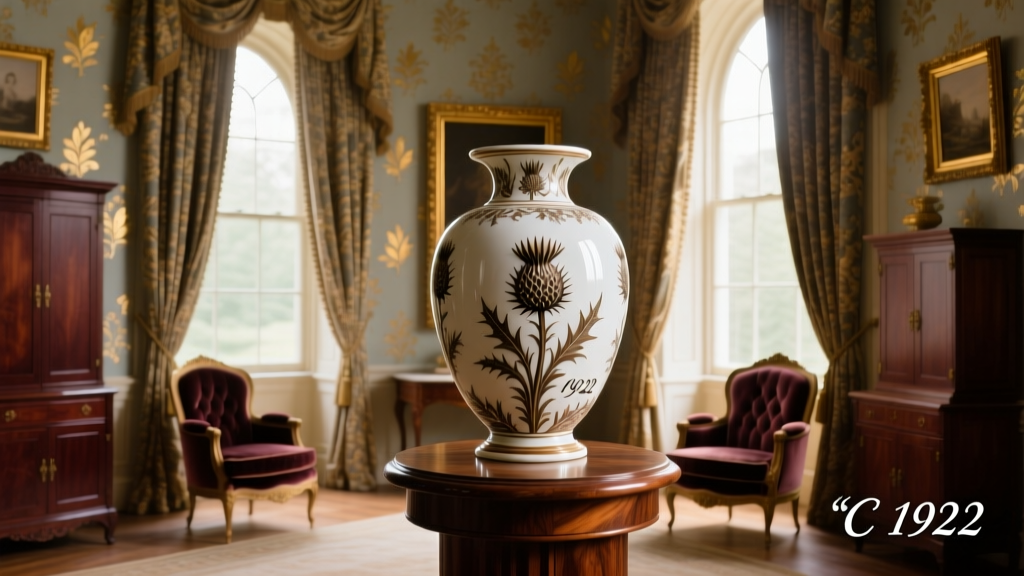
G. Argy-Rousseau Vase: Rondels Enclosing Thistles, Signed Circa 1922, 3¾ Inches — A Masterpiece of French Art Deco Pâte-de-Verre
Rookwood Pottery Lavender Matte Vase: Authentication, Provenance, and Restoration Guidelines for the 4¼-Inch Form