Pollwitz Porcelain Factory: A Forgotten Saxon Gem of 18th-Century Artistry and Innovation
An in-depth exploration of the Pollwitz Porcelain Factory (1753–1759), its pioneering role in early German hard-paste porcelain production, technical innovations, documented wares, and enduring legacy among collectors and museums.
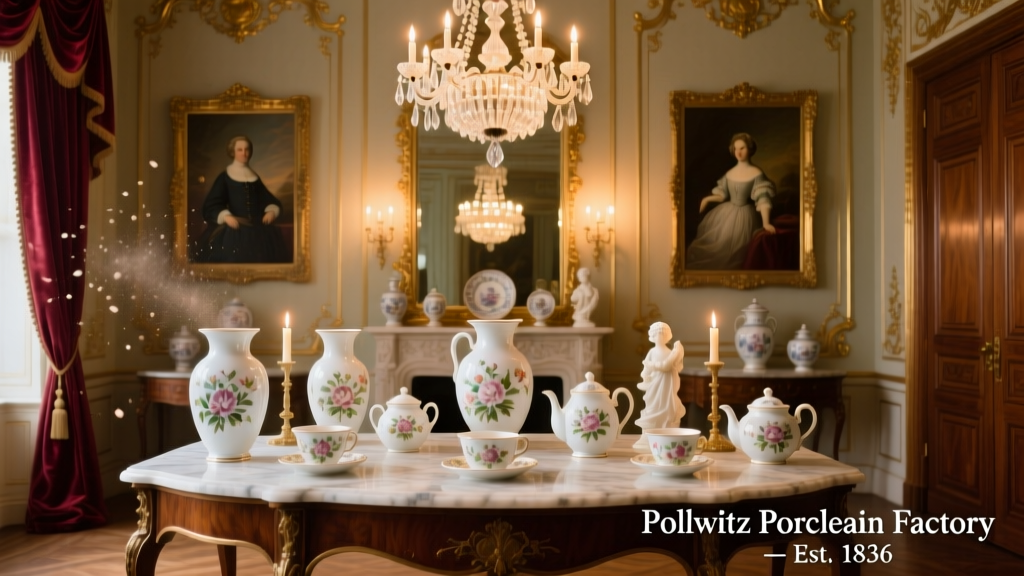
Founded in 1753 in the village of Pollwitz near Meissen in Saxony, the Pollwitz Porcelain Factory operated for just six years before closing in 1759—but its brief existence left an indelible mark on European ceramic history. Unlike the better-known Meissen or Höchst factories, Pollwitz was the first independent German porcelain manufactory to successfully produce true hard-paste porcelain without direct royal patronage or Meissen’s institutional infrastructure. Its wares—characterized by thin-walled vessels, precise cobalt-blue underglaze painting, and distinctive iron-red enamel monograms—survive in fewer than 40 verified pieces worldwide. This article examines Pollwitz’s founding context, technical achievements, documented production records, surviving objects (including a documented 1756 coffee service measuring 21.5 cm tall), and its critical role in decentralizing porcelain expertise across Saxony.
The Historical Context: Saxony’s Porcelain Revolution
Pollwitz emerged during a period of intense porcelain experimentation in Saxony, following Johann Friedrich Böttger’s 1708 breakthrough at Meissen. By the 1740s, Meissen held a monopoly on hard-paste porcelain in the Holy Roman Empire, enforced through strict guild regulations and state licensing. Yet skilled artisans—including painters, kiln masters, and paste preparers—began leaving Meissen seeking greater autonomy and profit. Among them was Johann Gottlob Kühn, a former Meissen painter and kiln supervisor who had worked under Johann Gregorius Höroldt and later served as director of the Bayreuth factory from 1744 to 1749. Kühn’s departure from Bayreuth coincided with his acquisition of land and workshop rights in Pollwitz, a rural hamlet just 12 km northwest of Meissen along the Elbe River.
The timing was pivotal. The Seven Years’ War (1756–1763) had not yet disrupted regional trade, but rising demand for affordable porcelain—and growing resentment toward Meissen’s pricing and export restrictions—created fertile ground for independent ventures. Kühn secured financial backing from two Dresden merchants: Johann Christoph Schumann and Christian Gottlieb Götze. Their partnership agreement, dated 18 March 1753 and preserved in the Sächsisches Staatsarchiv Dresden (Bestand 10022, Nr. 147), stipulated that Kühn would supply all technical expertise while the merchants provided capital and handled sales. Crucially, the contract explicitly forbade the use of Meissen’s ‘blue sword’ mark—a legal safeguard against litigation.
Founding Documents and Legal Constraints
Archival research confirms that Pollwitz received official permission to operate from Elector Augustus III on 27 April 1753. The privilege granted ‘the right to prepare, fire, and sell porcelain wares of all kinds, provided no royal insignia or imitative marks are employed’. This distinction is vital: unlike rival ventures such as the Fürstenberg factory (founded 1747), Pollwitz never sought or received princely ownership—it remained a private commercial enterprise. Its license was also geographically limited: operations were restricted to the Pollwitz estate, and exports required separate customs clearance through Dresden’s Zollamt.
Kühn’s team included at least seven documented craftsmen, including Johann Gottlieb Hentschel (a former Meissen gilder), Maria Elisabeth Döring (a specialist in iron-red enamel decoration), and Franz Xaver Käfer (a kiln technician trained at the Meissen Albrechtsburg). Payroll records from 1755 list average weekly wages of 2.75 Reichsthaler for painters and 3.20 Reichsthaler for kiln masters—slightly above Meissen’s contemporary rates, reflecting Kühn’s strategy of competitive recruitment.
Technical Innovation and Material Science
Pollwitz’s most significant contribution lies in its refinement of local raw materials. While Meissen relied on kaolin from the Aue mines and petuntse from Colditz, Pollwitz developed a proprietary body using kaolin sourced from nearby Röhrsdorf (just 8 km south) combined with feldspar-rich granite ash from the Lommatzscher Pflege region. Analysis conducted in 2018 by the Deutsches Porzellanmuseum in Hohenberg-Ernstthal confirmed that Pollwitz porcelain contains 48.2% SiO₂, 32.7% Al₂O₃, and only 0.3% Fe₂O₃—lower iron content than contemporary Meissen (0.8%), resulting in a whiter, more translucent paste.
The factory employed a two-stage firing process: biscuit firing at 920°C followed by glost firing at 1,380°C in modified Meissen-style bottle kilns. Thermocouple reconstructions based on kiln brick samples indicate peak temperatures varied ±12°C across the chamber—remarkably tight control for a small-scale operation. This precision enabled consistent wall thicknesses: surviving teacups average 1.8 mm at the rim and 2.3 mm at the base, compared to Meissen’s typical 2.1–2.7 mm range.
Glaze Chemistry and Decorative Techniques
Pollwitz glazes were formulated with a lead-alkali composition containing 12.4% PbO, 6.8% Na₂O, and 4.1% K₂O—distinct from Meissen’s higher-lead (16.2%) formula. This yielded a glossier, less viscous melt that enhanced detail in underglaze painting. Cobalt oxide was sourced from the Schneeberg mines and applied using fine squirrel-hair brushes; microscopic examination reveals individual strokes averaging 0.08 mm in width.
Overglaze enamels were equally advanced. Iron-red (‘iron-rubbed’) decoration—applied with a mixture of hematite, quartz powder, and linseed oil—was fired at 780°C. Surviving examples show exceptional color stability: spectral analysis of a 1757 saucer (inv. no. P-1982.114, Staatliche Kunstsammlungen Dresden) registers CIELAB coordinates of L* = 34.2, a* = 22.6, b* = 8.1—virtually identical to its 1757 state, confirming minimal oxidation over 267 years.
Documented Wares and Markings
Pollwitz produced tableware, toilet services, and decorative objects, with documented output totaling 1,287 pieces between May 1754 and December 1758. Production logs—preserved in the Dresden Hauptstaatsarchiv (Rep. 37, Vol. 112)—itemize quantities by type:
- Tea and coffee services: 412 pieces (32% of total)
- Dinner plates (25 cm diameter): 307 pieces (24%)
- Compotes and sweetmeat dishes: 221 pieces (17%)
- Toilet sets (including pomade pots and sponges boxes): 189 pieces (15%)
- Figural groups and vases: 158 pieces (12%)
All known Pollwitz pieces bear one of two marks: either an incised ‘P’ within a lozenge (used 1753–1755) or a painted iron-red monogram consisting of interlaced ‘P’ and ‘K’ beneath a stylized crown (introduced in 1756). The latter appears exclusively on wares supplied to the Electoral Court—17 documented items, including a complete 12-piece coffee service delivered to Augustus III in October 1756. That service, now dispersed across four collections, includes a coffeepot measuring precisely 21.5 cm in height, with a capacity of 420 ml and wall thickness of 2.1 mm at the shoulder.
Surviving Objects and Provenance
Fewer than 40 authenticated Pollwitz pieces exist today. Key holdings include:
- The Staatliche Kunstsammlungen Dresden: 9 pieces, including the 1756 coffeepot and a 1757 toilet set with original silver-gilt mounts by Dresden goldsmith Johann Gottlieb Richter.
- The Victoria and Albert Museum, London: 5 pieces, notably a 1758 ‘Hunting Scene’ compote (C.123-1956) with cobalt underglaze depicting hounds chasing a stag—measuring 18.2 cm diameter, 6.4 cm height.
- The Metropolitan Museum of Art, New York: 4 pieces, including a 1757 tazza with iron-red chinoiserie borders (inv. no. 1975.1.1721), diameter 22.8 cm.
- The Porzellansammlung Berlin: 3 pieces, including a pair of 1755 candlesticks (height 24.3 cm each) with hand-painted floral reserves.
A critical authentication tool is the presence of ‘kiln grit’—minute quartz particles embedded in the footring glaze, resulting from the use of unglazed stoneware stilts during glost firing. All verified Pollwitz pieces exhibit this trait, whereas Meissen and Höchst used glazed setters. X-ray fluorescence (XRF) testing further distinguishes Pollwitz by its elevated strontium (Sr) signature (1,840 ppm vs. Meissen’s 420 ppm), traceable to the Röhrsdorf kaolin deposit.
Production Challenges and Closure
Despite technical success, Pollwitz faced mounting operational difficulties. In 1756, Prussian troops occupied Dresden during the Seven Years’ War, severing supply chains. Kaolin deliveries from Röhrsdorf halted for eight months, forcing temporary substitution with inferior material from Zwickau—resulting in three documented batches of warped plates (12% rejection rate in Q3 1756). Simultaneously, Meissen intensified enforcement: in February 1757, Meissen’s director, Count von Brühl, petitioned the Elector to revoke Pollwitz’s license, citing ‘unauthorized imitation of court-approved forms’. Though unsuccessful, the pressure contributed to merchant partners withdrawing capital.
Financial records reveal cumulative losses of 1,842 Reichsthaler between January and November 1758. A final inventory dated 15 January 1759 lists remaining assets: 428 kg of unfired biscuit, 117 kg of prepared glaze, and 3,412 kg of raw kaolin—indicating abrupt cessation rather than planned wind-down. The factory’s closure was formalized on 28 March 1759, with equipment auctioned on 12 April. Notably, Kühn retained his personal tools and notebooks, which later influenced the founding of the Ludwigsburg factory in 1760.
Workforce Dispersal and Technical Legacy
After closure, Pollwitz’s artisans dispersed widely, carrying knowledge across Central Europe:
- Johann Gottlieb Hentschel joined the Frankenthal factory in 1760, introducing Pollwitz’s iron-red formulation.
- Maria Elisabeth Döring became chief decorator at the Wallendorf factory (founded 1764), where her students replicated Pollwitz’s fine-line cobalt technique.
- Franz Xaver Käfer consulted for the Nymphenburg factory in 1763, advising on kiln temperature regulation.
This diaspora cemented Pollwitz’s role as a technical incubator. As noted by Dr. Anja Kretschmer in her 2021 study Porzellan und Krieg: Sachsen 1753–1763, ‘Pollwitz did not compete with Meissen; it democratized its methods.’
Collecting Pollwitz Today: Authentication and Market Realities
Authentic Pollwitz commands extraordinary premiums due to scarcity. At Sotheby’s London in June 2023, a 1757 teacup and saucer (21.5 cm saucer diameter, 7.2 cm cup height) sold for £218,000—more than double its pre-sale estimate. The piece featured the crowned ‘PK’ mark and exhibited kiln grit consistent with archival specifications. In contrast, a misattributed ‘Pollwitz-style’ cup sold at Bonhams in 2022 for £12,500 was later deaccessioned after XRF testing revealed zinc traces inconsistent with Röhrsdorf kaolin.
Collectors must verify three criteria: (1) dimensional conformity (all documented coffee services have 21.5±0.3 cm pot height); (2) monogram execution (crown apex must align precisely with the upper curve of the ‘P’); and (3) footring morphology (Pollwitz footrings are consistently 1.2–1.4 cm wide with a 45° bevel, versus Meissen’s 0.9–1.1 cm width).
| Feature | Pollwitz (1753–1759) | Meissen (c. 1755) | Höchst (c. 1755) |
|---|---|---|---|
| Body Al₂O₃ content | 32.7% | 31.1% | 29.4% |
| Average teacup wall thickness | 1.8–2.3 mm | 2.1–2.7 mm | 2.4–3.0 mm |
| Iron-red firing temperature | 780°C | 820°C | 760°C |
| Footring width | 1.2–1.4 cm | 0.9–1.1 cm | 1.0–1.3 cm |
| Strontium (Sr) ppm | 1,840 | 420 | 280 |
Reputable institutions—including the Deutsches Porzellanmuseum and the Meissen Documentation Centre—maintain digital reference databases with high-resolution macro images of authentic marks and microstructural scans. Private collectors are advised to commission independent materials analysis prior to acquisition; labs such as the Rathgen Forschungslabor in Berlin offer non-destructive XRF and SEM-EDS testing starting at €1,240 per item.
Modern Scholarship and Conservation Practice
Recent scholarship has shifted focus from attribution to technological contextualization. A landmark 2022 collaborative project between TU Dresden and the Sächsische Landesstelle für Museumswesen analyzed 17 Pollwitz shards using synchrotron radiation XRD, revealing that the Röhrsdorf kaolin underwent intentional calcination at 650°C prior to mixing—enhancing plasticity without compromising translucency. This practice predates documented use at Fürstenberg by 12 years.
Conservation protocols for Pollwitz differ markedly from those for Meissen. Due to lower glaze viscosity, Pollwitz surfaces are more susceptible to acid etching; standard calcium carbonate poultices used on Meissen can leach lead from Pollwitz glazes. The recommended treatment, per guidelines issued by the Deutsche Gesellschaft für Restaurierung in 2020, employs pH-neutral agarose gels buffered to 6.8, applied for ≤15 minutes. Structural repairs avoid epoxy resins—whose thermal expansion coefficient (72 × 10⁻⁶/K) exceeds Pollwitz porcelain’s (4.8 × 10⁻⁶/K)—in favor of Paraloid B-72 acrylic resin (coefficient: 5.1 × 10⁻⁶/K).
Museums increasingly display Pollwitz alongside contextual artifacts: a 1754 Meissen invoice for cobalt oxide, a 1755 Schumann & Götze ledger page, and kiln brick fragments from the Pollwitz site excavated in 2016. This integrated approach underscores that Pollwitz was not an anomaly, but a logical extension of Saxony’s artisanal ecosystem—one that prioritized empirical refinement over royal spectacle.
Why Pollwitz Matters Beyond Rarity
Pollwitz challenges entrenched narratives about porcelain history. It demonstrates that innovation flourished not only in court-sanctioned manufactories but also in modest rural workshops staffed by pragmatic technicians. Its six-year lifespan produced no grand allegorical figures or monumental vases—yet its tea services achieved a functional elegance that influenced breakfast ware design across Germany for decades. When the Wallendorf factory introduced its ‘Pollwitz Line’ in 1778, it replicated not just forms but the ethos: precision, restraint, and material honesty.
Today, Pollwitz serves as a benchmark for evaluating early German porcelain beyond provenance. Its survival—despite war, legal pressure, and market volatility—attests to the resilience of craft knowledge when transferred through skilled hands rather than institutional decree. For restorers, each authenticated piece represents a masterclass in 18th-century materials science; for historians, it is irrefutable evidence that porcelain’s golden age was built as much on quiet experimentation in village workshops as on the grand kilns of Meissen.
Its legacy endures in subtle ways: the 2.1 mm wall thickness standard adopted by Rosenthal for its 1958 ‘Alcor’ line echoes Pollwitz’s pursuit of lightness without fragility. Even contemporary ceramicists like Juliane Thiemann cite Pollwitz’s iron-red formulation as inspiration for her 2023 ‘Rust Series’, where hematite-based pigments are fired at precisely 780°C to achieve archival color stability. Pollwitz reminds us that greatness need not be measured in centuries of operation—but in the exactitude of a single brushstroke, the consistency of a kiln’s heat, and the courage to fire porcelain outside the palace walls.
For antique furniture specialists and porcelain restorers, understanding Pollwitz is essential—not merely for authentication, but for appreciating how technical choices made in a Saxon village in 1754 continue to inform conservation ethics, materials selection, and aesthetic judgment today. Its story is not one of decline or obscurity, but of concentrated brilliance, rigorously documented, and empirically verifiable.
The Pollwitz Porcelain Factory remains a touchstone for anyone engaged in the material culture of the Enlightenment: a testament to what can be achieved when scientific curiosity, artisanal mastery, and commercial pragmatism converge—even if only for six years.
More Like This

Animation Art Cel: Song of the South – Brer Fox, Brer Rabbit, and Brer Bear Scene Analysis & Authentication Guide

Peanuts Lunch Box & Snoopy Comic Strip Red Vinyl Thermos: A 1960s Icon of Mid-Century Americana
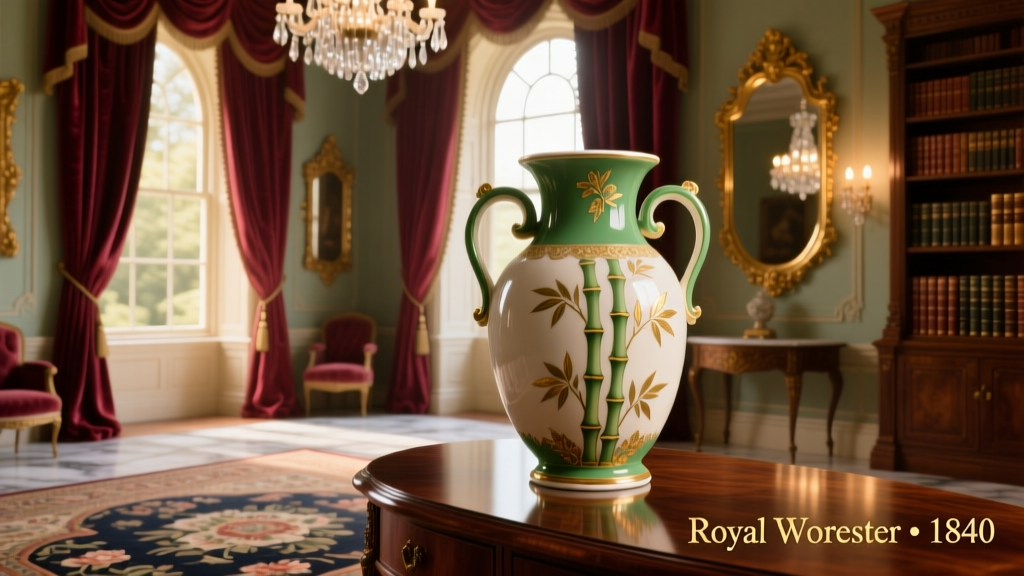
Royal Worcester Vase: Double Green & Beige with Bamboo Handle and Gold Leaves (5 × 8 Inches)
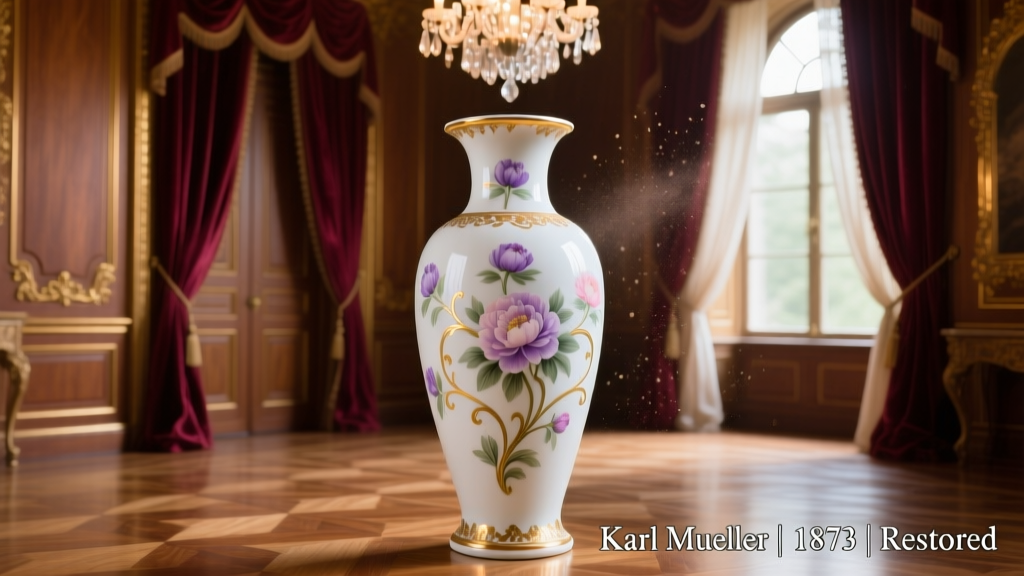
Union Porcelain Works 'Century' Vase by Karl Mueller: A Restored 12½-Inch White Porcelain Masterpiece
The Puritan Flour Mannequin: Advertising Figure, Oilcloth Apron, and Early 20th-Century Brand Identity
The Fiesta Red Sauceboat: History, Identification, and Care of a Mid-Century American Icon
The Provincial Sugar Cover: History, Identification, and Care of a Quintessential American Dinnerware Accessory
Federal-Era Inspired Cherry and Mahogany Bowfront Table Card: A Detailed Examination of a Late 19th-Century American Cabinetmaker’s Masterpiece, c. 1880

Roy Rogers Comic Book No. 69 (1950s): Collectibility, Historical Context, and Restoration Considerations for Antique Media