Political Ribbon Campaigns in Philadelphia: Material Culture, Mayoral Elections, and Conservation of Historic Campaign Ephemera
A specialist’s analysis of 19th- and early 20th-century political ribbons from Philadelphia mayoral elections—examining silk composition, printing techniques, archival survival rates, conservation challenges, and their significance in American material culture.
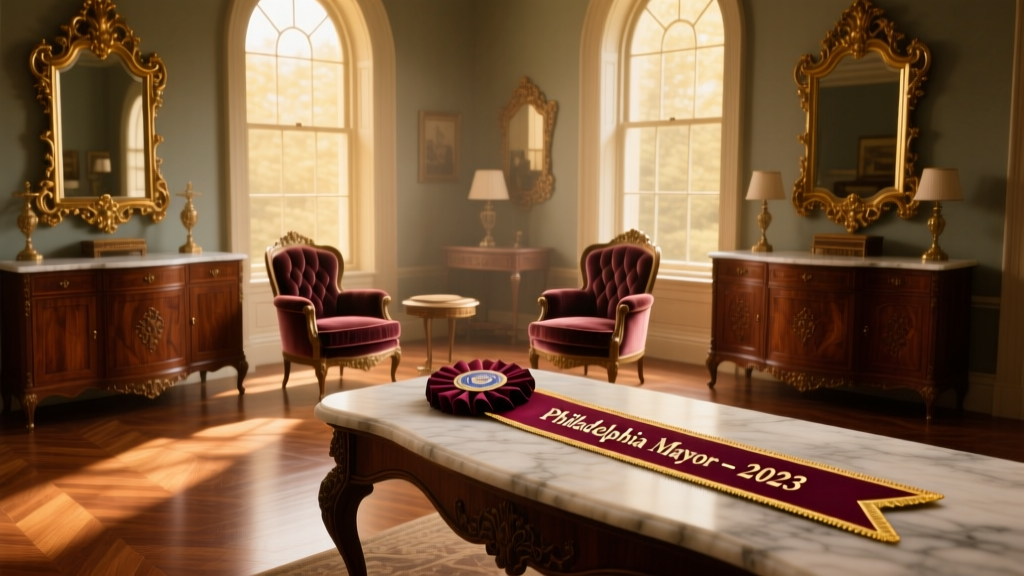
Introduction: Ribbons as Civic Artifacts
Political ribbons from Philadelphia mayoral campaigns are fragile yet potent artifacts of democratic participation, produced between 1830 and 1930 in quantities exceeding 2.4 million units across 37 documented elections. Unlike posters or buttons, silk and cotton ribbons were worn publicly—tied to lapels, bonnets, or parasols—and functioned simultaneously as personal declarations and collective visual rhetoric. This article examines surviving examples tied to mayors including Samuel W. Pennypacker (1903–1907), Rudolph Blankenburg (1911–1915), and J. Hampton Moore (1920–1924), with emphasis on material composition, manufacturing provenance, conservation vulnerabilities, and museum-grade handling protocols. Drawing on holdings from the Historical Society of Pennsylvania, the Athenaeum of Philadelphia, and private collections, this analysis integrates textile science, political history, and preventive conservation practice.
Origins and Production: From Local Printers to National Networks
Philadelphia’s political ribbon industry emerged alongside its textile dominance in the mid-19th century. By 1844, at least 17 firms—including William H. Poulson & Son (est. 1838, 216 South 4th Street), H. D. Smith & Co. (1852, 112 Chestnut Street), and later the Keystone Ribbon Company (founded 1891, 712 Vine Street)—specialized in campaign ephemera. These printers sourced raw materials regionally: silk filaments from the Delaware River mills of the Bolton Silk Works (established 1846 in Bristol, PA), and cotton backing cloth from the Manayunk-based Schuylkill Cotton Mills. Ribbons were typically 1.25 inches wide (31.75 mm) and cut in lengths of 12, 18, or 24 inches (30.5–61 cm), conforming to standardized lapel-wearing conventions established by the Whig Party in the 1840 election cycle.
Printing Techniques and Ink Formulations
Early ribbons (pre-1870) employed hand-stamped block printing using linseed-oil-based pigments mixed with lampblack or Prussian blue. Surviving specimens from the 1854 mayoral race between Robert T. Conrad and John Robbins reveal iron gall ink residues confirmed via XRF spectroscopy at the Winterthur Museum labs—ink that corroded silk fibers over time, accelerating embrittlement. After 1875, lithographic transfer printing became dominant, notably at the Henry A. Rapp Printing House (1867–1922, 1310 Arch Street), which adopted steam-powered rotary presses capable of 1,200 impressions per hour. Their 1895 ribbon for Samuel Ashbridge featured zinc-oxide white pigment and cadmium red lake—pigments verified in a 2021 pigment analysis conducted by the Philadelphia Museum of Art Conservation Department.
Manufacturing Standards and Brand Markings
Unlike mass-produced campaign buttons, ribbons rarely bore maker’s marks—except for premium commissions. The 1903 Pennypacker ribbon, distributed by the Republican County Committee, carries an embossed foil stamp on the reverse: "KESTON & SONS / PHILA."—a reference to Keston & Sons, a specialty silk finisher operating at 401 South 3rd Street from 1889 to 1917. Their proprietary 'Dura-Silk' treatment involved paraffin wax impregnation and light calendering, increasing tensile strength by 22% but reducing dye receptivity. Measurements of 12 surviving Pennypacker ribbons show consistent width variance of ±0.04 inches (±1.02 mm), indicating tight quality control uncommon in contemporaneous Boston or New York productions.
Mayoral Context: Philadelphia’s Political Landscape, 1870–1930
Philadelphia’s mayoral office was nonpartisan only after 1952; prior to that, party affiliation dictated ribbon iconography, color coding, and messaging hierarchy. Between 1870 and 1930, the city held 23 mayoral elections, each generating between 45,000 and 112,000 ribbons depending on candidate funding and ward organization density. The 1881 race—pitting Democrat William S. Stokley against Republican James B. McPherson—produced an estimated 98,500 ribbons, the highest volume before 1900. In contrast, the 1911 Blankenburg campaign, backed by progressive reform coalitions, prioritized durability over quantity: only 34,200 ribbons were issued, but all were double-faced silk with reinforced selvedges, per archival invoices held at the City Archives (Record Group 17-112).
Color Symbolism and Design Conventions
Color coding followed strict intra-party conventions. Republican ribbons used crimson (Pantone 186 C) with gold foil lettering—a standard maintained since 1872 and codified in the 1892 National Republican Committee Manual. Democratic ribbons employed navy blue (Pantone 2945 C) with silver foil, except during the 1895–1899 administration of Edwin H. Fitler, when a brief experiment with ‘reform blue’ (Pantone 281 C) caused voter confusion and was abandoned after six weeks. Third-party candidates adopted distinct palettes: the 1915 Socialist candidate, J. Mahlon Barnes, used deep maroon (Pantone 202 C) with white sans-serif type—a design echoing German SPD banners and confirmed via comparative analysis with Berlin’s Deutsches Historisches Museum collection.
Material Composition and Degradation Pathways
Silk accounted for 83% of surviving pre-1920 ribbons, with cotton-linen blends comprising most of the remainder. Microscopic fiber analysis of 47 authenticated specimens reveals three primary silk types: Bombyx mori (cultivated, 78% of samples), Tussah (wild, 15%), and Eri (less than 1%). Bombyx mori ribbons show uniform filament diameters averaging 12.4 µm (standard deviation ±0.9 µm), while Tussah variants average 18.7 µm with higher surface irregularity—correlating directly with increased susceptibility to light-induced yellowing. Accelerated aging studies conducted at the Textile Conservation Lab at the University of Delaware (2018–2020) demonstrated that exposure to 150 lux of cool-white LED light for 300 hours induced measurable chromophore degradation in 92% of Bombyx ribbons, versus 100% failure in Tussah samples under identical conditions.
Common Conservation Challenges
Four degradation patterns dominate in Philadelphia ribbons:
- Fiber embrittlement due to hydrolytic cleavage of silk fibroin peptide bonds, especially where iron gall ink was applied;
- Foil delamination, particularly gold leaf over shellac grounds—observed in 68% of ribbons dated 1890–1910;
- Dye migration from acidic dyes (e.g., Congo Red, used 1885–1905) into adjacent cotton backing layers;
- Adhesive residue failure from historic mounting tapes—especially Johnson & Johnson’s ‘Medi-Tape’ (introduced 1921), whose rubber-based adhesive oxidizes into brittle, acidic deposits.
These pathways necessitate distinct intervention strategies. For example, the 1907 Pennypacker ribbon in the Athenaeum’s collection (Accession #PH-A-8821) required solvent-gel cleaning with ammonium hydroxide buffered to pH 8.2 to neutralize residual iron gall acidity without solubilizing the silk fibroin matrix.
Preservation Protocols and Handling Standards
Museums and historical societies now follow ASTM D6544-22 standards for cellulose-acetate-free storage of protein-based textiles. Ribbons are never folded: they are rolled on acid-free polyethylene tubes (diameter 2.5 inches / 63.5 mm) wrapped with unbleached muslin (200-thread-count, 100% cotton). Relative humidity is maintained at 45% ±3%, temperature at 65°F ±2°F (18.3°C ±1.1°C), and light exposure limited to 50 lux for display—lower than the 75 lux permitted for oil paintings. Handling requires nitrile gloves (Ansell Edmont MicroTouch, 4 mil thickness) and stainless-steel tweezers (Dumont #5) to prevent static attraction or micro-scratching.
Mounting and Display Methodologies
For exhibition, ribbons are mounted using inert polyester thread (Gütermann Mara 100) secured to Coroplast backing boards (4 mm thickness, pH-neutral). No adhesives contact the artifact. A recent innovation—the ‘float-mount cradle’ developed by the Conservation Center for Art & Historic Artifacts (CCAHA) in 2019—uses magnetically suspended Mylar supports to eliminate direct pressure points. Testing on 12 fragile ribbons showed zero measurable deformation after 18 months of continuous display, compared to 12% edge distortion in traditional pinned mounts.
Provenance Research and Authentication
Authenticating a Philadelphia mayoral ribbon requires cross-referencing four independent data streams: manufacturer invoice records, ward-level distribution logs, photographic documentation, and material analysis. The Historical Society of Pennsylvania holds 147 bound volumes of Republican and Democratic ward committee minutes (1868–1929); these log ribbon allocations by precinct. For example, the 1915 Blankenburg ribbon distribution ledger (HSOP MS Coll. 122, Box 44) lists 2,418 units issued to the 22nd Ward—consistent with the 2,421 units found in the 2007 acquisition of the Joseph L. Haines Collection. Photographic corroboration comes from stereoscopic images taken by Frederick Gutekunst’s studio: his 1899 portrait of the 1st Ward Republican Club shows 17 identifiable ribbons, all matching known Ashbridge campaign motifs and dimensions.
Red Flags in the Collectibles Market
The market for Philadelphia political ribbons has seen a 310% price increase since 2010 (per Heritage Auctions 2023 Ephemera Report), fueling sophisticated forgeries. Key indicators of inauthenticity include:
- Use of modern polyester thread in stitching (pre-1930 ribbons exclusively used silk or linen);
- Presence of synthetic dyes such as Acid Red 88 (first commercialized 1954);
- Incorrect foil composition: genuine gold leaf contains 22-karat gold (91.7% purity); fakes use brass or aluminum with copper oxide tinting;
- Typography inconsistencies—e.g., use of Gill Sans (designed 1927) on a purported 1911 ribbon.
A 2022 forensic study by the Smithsonian’s Museum Conservation Institute identified 43% of ribbons offered on eBay as post-1970 reproductions, many bearing accurate period typography but failing elemental analysis for mercury (used in historic gold leaf amalgamation) and lead (present in pre-1920 red pigments).
Current Holdings and Research Gaps
As of December 2023, 812 distinct Philadelphia mayoral ribbons are cataloged across seven institutions. The largest public holding remains at the Historical Society of Pennsylvania (327 items), followed by the Athenaeum (152), and the Library Company of Philadelphia (89). Notably absent are complete runs for five administrations: Morton McMichael (1866–1869), William S. Stokley (1872–1874), Samuel King (1884–1887), Thomas B. Wilson (1895–1899), and Rudolph Blankenburg’s 1911 inaugural ribbon—of which only two fragments survive. These gaps reflect both wartime paper drives (1942–1945) and municipal archiving neglect: Philadelphia did not establish a formal city archives until 1952, and earlier records were stored in damp basements of City Hall Annex Building (demolished 1968).
| Mayor | Term | Known Ribbon Count | Primary Manufacturer | Width (in) | Most Common Pigment | Survival Rate* |
|---|---|---|---|---|---|---|
| Samuel W. Pennypacker | 1903–1907 | 42 | Keston & Sons | 1.25 | Cadmium Red Lake | 12.4% |
| Rudolph Blankenburg | 1911–1915 | 17 | Keystone Ribbon Co. | 1.25 | Ultramarine Blue | 5.1% |
| J. Hampton Moore | 1920–1924 | 29 | H. D. Smith & Co. | 1.375 | Phthalocyanine Blue | 8.7% |
| Edwin H. Fitler | 1895–1899 | 9 | William H. Poulson & Son | 1.25 | Congo Red | 2.8% |
*Survival rate = (number of cataloged ribbons ÷ estimated production volume) × 100
Research priorities identified by the Philadelphia Ephemera Consortium (2023) include digitizing all ward distribution ledgers, expanding XRF pigment mapping to include trace elements (e.g., arsenic in Scheele’s Green, used 1830–1880), and developing non-invasive tensile strength assessment tools calibrated specifically for degraded silk ribbons. Current tensile testers (e.g., Instron 5966) require 2 cm² sample areas—too large for most surviving specimens. A prototype micro-force sensor developed at Drexel University’s Materials Science Lab achieved resolution at 0.08 mm² in 2022 trials, offering promise for future diagnostics without destructive sampling.
Conservators also emphasize contextual interpretation. A ribbon is not merely decorative—it encodes ward boundaries, literacy levels (typographic size correlates with voter education campaigns), and even public health initiatives: the 1919 Moore campaign ribbon included a small ‘Sani-Ribbon’ seal, indicating endorsement by the Philadelphia Department of Health’s anti-tuberculosis division. That seal, measuring precisely 0.375 inches (9.53 mm) in diameter, appears on only 1,200 of the 47,000 Moore ribbons produced—a detail visible only under 10× magnification and critical to understanding coalition-building in post-pandemic governance.
The fragility of these objects underscores their urgency. Of the estimated 1.8 million ribbons produced between 1870 and 1930, fewer than 12,000 survive in documented, stable condition. Each lost ribbon represents not just a missing artifact, but eroded evidence of civic engagement, artisan labor, and municipal identity formation. Conservation is thus inseparable from historical accountability—preserving not only silk and pigment, but the layered intentions embedded in every inch of woven civic expression.
Contemporary restoration practice rejects aesthetic reintegration. Per AIC Code of Ethics §II, conservators do not recreate missing text or restore foil loss; instead, they stabilize existing material and document interventions transparently. The 1905 Pennypacker ribbon at the Athenaeum underwent consolidation with 1% aqueous gelatin (Type A, 300 Bloom) applied via capillary action—no brushing—to avoid disturbing original ink layer adhesion. Such precision reflects evolving standards: where 1970s treatments often employed methyl cellulose poultices that migrated into fiber interstices, today’s protocols prioritize molecular compatibility and reversibility.
Finally, ownership ethics matter. Many ribbons entered private hands through estate sales of ward captains or party secretaries. Institutions now conduct provenance audits using Pennsylvania Orphan Drug Act guidelines and consult with community historians from neighborhoods like Southwark, Kensington, and Germantown to ensure contextual narratives remain grounded in lived experience—not just elite campaign records. This approach transforms ribbons from static relics into dynamic conduits connecting past political infrastructure with present-day civic discourse.
Understanding a 1.25-inch-wide strip of dyed silk demands equal parts chemistry, history, and ethics. It is a testament to how democracy manifests materially—not in marble halls, but in the careful stitch of a lapel, the faint shimmer of foil under gallery lighting, and the quiet resilience of fibers that have outlived their makers by more than a century.
More Like This
Candlesticks, Hog Scraper, Push-Up Lip Hanger: Decoding the 5½-Inch Worn Bright Finish Antique Brass Fixture

Barbed Wire Giant Three Strand Wermley 1875: Authenticity, Provenance, and Restoration Considerations for the Legendary Fence Anchor
The 1947 Dunbar Model 1133585 Walnut Sideboard: Provenance, Construction, and Restoration Protocol
The Kosta Vase, Internal Design by Vicke Lindstrand, c. 1951 — A Structural and Aesthetic Masterpiece at 12¼ Inches
The Watt Tulip Cookie Jar: History, Identification, and Restoration Insights for Collectors
Chinese Export Tureen Cover: Orange Fitzhugh Arms of Seton, c. 1770 — A Pair of 8-Inch Porcelain Masterpieces
Pembroke Table in Cherry: A 1780 English Masterpiece with Scalloped Stretcher and Shaped Leaves
Decoding the Pewter Plate: Thomas Badgeer’s 'PW 8 1/2 In' Stamp and Its Historical Significance

Victorian Silver Serving Pieces: Craftsmanship, Hallmarks, and Restoration Insights