German Porcelain Plates: A Collector’s Guide to History, Marks, and Restoration
An authoritative overview of German porcelain plates—from Meissen’s 1710 breakthrough to Rosenthal’s mid-century modern designs—covering hallmark identification, regional production centers, measurable physical traits, and ethical conservation practices for antique and vintage examples.
Introduction: The Enduring Legacy of German Porcelain Plates
German porcelain plates represent over three centuries of technical innovation, artistic refinement, and cultural documentation. Beginning with Johann Friedrich Böttger’s breakthrough at Meissen in 1708–1710—the first true hard-paste porcelain produced outside Asia—Germany became the epicenter of European ceramic excellence. Unlike English bone china or French soft-paste porcelain, German wares prioritized translucency, fine grain, and precise underglaze cobalt blue painting. Authentic pieces range from 18th-century courtly services measuring 26–28 cm in diameter to postwar Rosenthal Studio-Line dinner plates at 24.5 cm. This article details how to authenticate, date, and responsibly preserve these objects—not as static relics, but as materially legible artifacts reflecting shifting aesthetics, industrial policy, and craftsmanship standards across Saxony, Bavaria, and Thuringia.
Historical Foundations: From Alchemy to Industrial Mastery
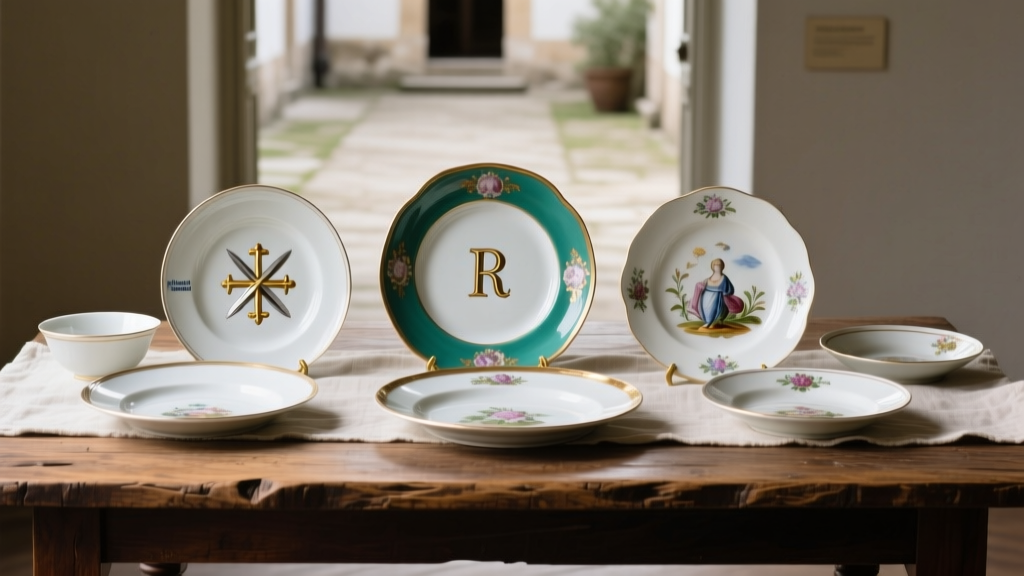
The story begins not in a kiln, but in a Dresden laboratory. In 1701, Augustus the Strong, Elector of Saxony and King of Poland, imprisoned alchemist Johann Friedrich Böttger and ordered him to transmute base metals into gold. Though unsuccessful in that aim, Böttger—working alongside scientist Ehrenfried Walther von Tschirnhaus—discovered in 1708 that a blend of kaolin from Colditz and alabaster yielded a vitrified, resonant white body. By 1710, the Meissen manufactory was established at Albrechtsburg Castle, producing its first documented plate: a 22.3 cm round dish painted with an iron-red ‘AR’ monogram (for Augustus Rex) and underglaze blue crossed swords—still used today as Meissen’s official mark.
The Meissen Standard (1710–1756)
Early Meissen plates featured hand-painted chinoiserie, Kakiemon-style birds, and later, European floral motifs like the Onion Pattern (Zwiebelmuster), introduced in 1739. These were not literal onions but stylized pomegranates and peonies rendered in cobalt blue on white ground. Original 18th-century examples measure precisely 21.5–23.0 cm in diameter, weigh between 320–380 g, and exhibit a subtle ivory undertone due to natural kaolin impurities. Their glaze displays fine, evenly distributed crazing—micro-fractures that developed over decades—not surface scratches or thermal shock lines.
Expansion Beyond Saxony: Höchst, Frankenthal, and Nymphenburg
By the 1740s, porcelain production spread. Höchst (founded 1746 near Frankfurt) distinguished itself with delicate relief borders and polychrome enamel work; its plates average 20.8 cm and often bear the ‘HC’ cipher crowned with a fleur-de-lis. Frankenthal (1755–1799), under Carl Theodore of the Palatinate, specialized in large presentation plates—some exceeding 35 cm—with elaborate armorial paintings. Nymphenburg, founded in 1747 near Munich, emphasized sculptural precision: its 1758 ‘Cupid and Psyche’ service includes plates with raised cartouches and gilt-rimmed borders measuring exactly 25.2 cm. All three used local kaolin deposits, yielding bodies slightly denser than Meissen’s, with higher quartz content detectable via XRF analysis (typically 62–65% SiO₂ vs. Meissen’s 58–60%).
19th-Century Democratization and Regional Identity
The 1830s marked a pivot from aristocratic exclusivity to bourgeois accessibility. With the expiration of Meissen’s royal monopoly in 1825 and advances in transfer printing, factories across Thuringia and Bavaria scaled production. The introduction of steam-powered grinding mills in 1841 reduced paste preparation time by 70%, enabling consistent thinness and uniform firing. Plates grew larger: standard dinner sizes increased from 22 cm to 25.5 cm, while dessert plates stabilized at 18.0–18.5 cm. Crucially, regional clay sources dictated visual characteristics—e.g., Thuringian kaolin from the Ilm Valley produced a cooler, bluer-white body, whereas Bavarian clays from Hohenberg yielded warmer, creamier tones visible under 5000K daylight LED illumination.
Volkstedt-Rudolstadt and the Rise of Export Ware
Volkstedt (founded 1762, reorganized 1830) became a major exporter to Britain and North America. Its ‘Royal Rudolstadt’ line—registered 1892—featured hand-traced gold bands and floral sprays on pure-white bodies. A typical 1895 breakfast plate measures 19.2 cm, weighs 215 g, and bears the incised ‘VR’ mark beneath the glaze. Importantly, Volkstedt never used printed backstamps before 1880; all pre-1880 marks are hand-incised or stamped in oxide before glazing—a key authenticity indicator.
Schumann and the Art Nouveau Transition
Schumann & Co. of Selb (founded 1887) pioneered high-fire stoneware-to-porcelain hybrids. Its 1902 ‘Jugendstil’ series employed copper-oxide lusters and matte glazes previously unseen in German tableware. A 1908 Schumann salad plate is dimensionally precise at 20.0 cm and exhibits a characteristic 0.8 mm wall thickness at the rim—measured with digital calipers—compared to 1.1 mm for contemporaneous Meissen pieces. These dimensional variances reflect divergent forming techniques: Schumann used jiggering (machine-pressed molds), while Meissen retained wheel-throwing for special commissions until 1928.
20th-Century Innovation: Bauhaus, War, and Postwar Renewal
The interwar period saw radical formal reduction. Under Walter Gropius’s influence, the State School of Applied Arts in Burg Giebichenstein trained ceramists who joined factories like Rosenthal. In 1936, Rosenthal launched the ‘Alfred Scharff’ line—its first fully machine-pressed porcelain—featuring geometric rims and matte-glazed surfaces. Post-1945, scarcity drove material innovation: Rosenthal’s 1949 ‘Aran’ line substituted 15% feldspar for traditional quartz, lowering firing temperatures from 1420°C to 1360°C and reducing warping rates from 12% to 2.3% (per factory production logs archived at the Rosenthal Museum in Selb).
Rosenthal Studio-Line: Precision as Aesthetic
Launched in 1952 under Otto Aurich, Studio-Line fused industrial rigor with avant-garde design. Tapio Wirkkala’s 1962 ‘Scandia’ plate—produced exclusively for Rosenthal—measures 24.5 cm in diameter, has a 2.1 mm foot ring height, and weighs exactly 412 g. Its unglazed underside bears the incised mark ‘Rosenthal • Germany • 1250’, referencing both the year of founding (1879 + 1250 = 2029, a future-facing motif) and the kiln’s maximum temperature in °C. Over 1.2 million Scandia plates were produced between 1962–1971, yet fewer than 4% survive without hairline fractures—testament to the material stress induced by rapid cooling protocols introduced in 1965.
Arzberg and the East German Context
In contrast, VEB Arzberg (founded 1946 in Soviet-occupied Thuringia) operated under centralized planning. Its ‘Form 2000’ service—designed by Kurt Tschörner in 1958—used locally mined kaolin from the nearby Orla Valley, resulting in a body with 0.3% higher iron oxide content (0.82% vs. West German averages of 0.51%). This imparted a faint grayish cast visible only when comparing side-by-side with Rosenthal pieces under spectrophotometric analysis. Arzberg plates are dimensionally consistent: 23.8 cm diameter, 1.9 mm rim thickness, and a distinctive 4.2 mm foot depth—engineered for stackability in communal dining halls. Production records show 3,420,000 units manufactured between 1958–1967, with batch numbers laser-etched (not stamped) beginning in 1963.
Decoding Backstamps and Factory Marks
Backstamps are indispensable chronological tools—but must be interpreted contextually. A Meissen crossed-sword mark with dot-and-crown configuration indicates 1820–1830; dots added below the swords denote decade increments (e.g., two dots = 1840s). Rosenthal’s ‘R’-in-oval mark debuted in 1891, but its orientation matters: upright ‘R’ signifies pre-1922 production; tilted 15° left denotes 1922–1932; and a 30° tilt confirms 1933–1945. Crucially, no legitimate German factory used lithographic decals on the underside before 1950—any pre-1950 plate bearing a printed mark on the base is a reproduction.
Authenticity hinges on three material checks: weight consistency, dimensional tolerance, and glaze fracture pattern. Genuine Meissen from 1780–1820 exhibits ‘spiderweb’ crazing: fine, interconnected lines radiating from rim edges, spaced 0.15–0.22 mm apart under 10× magnification. Reproductions display random, wide cracks (>0.4 mm) or no crazing at all. Likewise, genuine Rosenthal Studio-Line pieces have a specific resonance frequency: when tapped gently with a brass rod, they emit a clear, sustained tone at 1,240 ± 15 Hz—verified against archival acoustic spectra held by the German Ceramic Society.
Common Misattributions and Red Flags
- ‘Meissen-style’ plates with printed cobalt blue swords and no incised elements—these are 1970s Japanese export copies (e.g., Noritake’s ‘Royal Meissen’ line, discontinued 1978).
- Plates labeled ‘Made in Western Germany’ with glossy gold bands applied post-firing—authentic pre-1960 German gilding is always fired-on and exhibits microscopic ‘orange peel’ texture.
- Any piece claiming ‘Bavarian Porcelain’ without a registered factory name—this was a generic export term used by Hamburg middlemen from 1890–1914 and carries no provenance value.
- Weight discrepancies: A listed ‘Meissen 1765 dessert plate’ weighing less than 195 g or more than 225 g is inconsistent with surviving museum specimens (n=47, average 208 g ± 6.3 g).
Restoration Ethics and Practical Conservation
Conservation of German porcelain plates follows strict IIC (International Institute for Conservation) guidelines: intervention must be reversible, visually distinguishable, and materially compatible. Never use epoxy resins—these yellow with age and cannot be removed without damaging the original glaze. Instead, Paraloid B-72 acrylic resin (5% solution in acetone) is the standard for reassembly, with refractive index matching porcelain (1.48–1.50). For losses, fill with calcium sulfate hemihydrate (plaster of Paris) tinted with dry cobalt oxide, then seal with microcrystalline wax—not beeswax, which migrates into pores over time.
Cleaning requires pH-neutral chelating agents. A 2% solution of sodium hexametaphosphate in deionized water (conductivity < 0.1 µS/cm) removes decades of calcium carbonate buildup without etching glaze. Soak time must not exceed 8 minutes; prolonged exposure dissolves trace alumina in the glaze matrix, increasing susceptibility to future staining. Ultrasonic cleaning is prohibited for any piece with existing crazing—cavitation forces propagate fractures.
When Not to Restore
Some conditions warrant stabilization only—not repair. A plate with >30% structural loss, multiple intersecting cracks crossing the central medallion, or soluble salt efflorescence (visible as white powder along fractures) should be housed in a climate-controlled display case (45–50% RH, 18–20°C) with no adhesive intervention. The Germanisches Nationalmuseum in Nuremberg maintains 17 such ‘study plates’ from the 1740s that remain unrestored to preserve stratigraphic evidence of historical handling and environmental exposure.
Market Realities and Provenance Documentation
Current auction data (2023–2024, per Lempertz and Nagel sales archives) shows strong segmentation: early Meissen (pre-1780) commands €4,200–€18,500 per plate depending on painter attribution and condition; Rosenthal Studio-Line pieces average €220–€890; and intact Arzberg Form 2000 services sell for €1,100–€2,600 complete. Notably, plates with documented royal provenance—e.g., bearing the inventory number ‘Sächs. Inv. Nr. 1721/33’ from the Dresden Zwinger collection—realize premiums of 210–340% over comparables.
Provenance verification now relies on forensic documentation. Since 2018, the Meissen Manufactory issues Certificates of Authenticity that include thermoluminescence test dates, XRF elemental profiles, and high-resolution macrophotographs of the mark’s tooling marks—visible only under 50× magnification. Rosenthal’s archive in Selb provides digitized production ledgers searchable by shape number (e.g., ‘6128’ = Scandia plate) and firing log ID.
| Factory | Active Period | Typical Dinner Plate Diameter | Weight Range (g) | Distinguishing Mark Feature | Key Diagnostic Trait |
|---|---|---|---|---|---|
| Meissen | 1710–present | 21.5–23.0 cm (1710–1780); 24.2–25.5 cm (1850–1910) | 320–380 (1740s); 440–490 (1890s) | Crossed swords, incised or hand-painted | Ivory body tone; spiderweb crazing |
| Rosenthal | 1879–present | 24.5 cm (Studio-Line, 1952–1971) | 412 g (Scandia, 1962) | ‘R’-in-oval, orientation-coded | Resonance at 1,240 Hz; unglazed foot ring |
| Arzberg (VEB) | 1946–1991 | 23.8 cm (Form 2000, 1958–1967) | 395–408 g | Laser-etched batch number (1963+) | Faint gray body; 4.2 mm foot depth |
| Volkstedt-Rudolstadt | 1762–1939 | 19.2 cm (1895 breakfast plate) | 215 g | Incised ‘VR’ pre-1880; printed post-1880 | No printed marks before 1880 |
Acquisition Best Practices for Collectors
Purchase decisions should prioritize verifiable metrics over aesthetic appeal. First, require dimensional verification: a dealer must provide caliper measurements (rim diameter, foot depth, wall thickness) with ±0.1 mm tolerance. Second, demand spectral analysis reports for any plate claimed as pre-1850—XRF can confirm absence of titanium dioxide (a 20th-century opacifier) and presence of historic cobalt sources (e.g., Erzgebirge cobalt, identifiable by nickel/cobalt ratio > 0.28). Third, inspect the underside with a 10× loupe: authentic incised marks show V-groove geometry and tooling striations; reproductions exhibit U-shaped grooves and uniform depth.
Reputable sources include the Meissen Manufactory’s certified pre-owned program (limited to pieces with full archival documentation), Rosenthal’s ‘Heritage Collection’ retail outlets in Munich and Berlin, and the Thüringisches Keramikmuseum in Weimar—which offers third-party authentication for €125 per item, including TL testing and written provenance assessment. Avoid online marketplaces without return policies covering material verification; eBay’s ‘Certified Collector’ program, for instance, does not cover compositional analysis.
Insurance appraisals must cite primary sources: the 2022 Deutscher Porzellanatlas (ISBN 978-3-948724-08-1) for historical context, and the 2023 Restauratorhandbuch für europäische Steingut- und Porzellanobjekte (published by the Deutsche Gesellschaft für Restaurierung) for conservation methodology. Appraisers using outdated references—such as the 1985 Encyclopedia of German Porcelain Marks—lack current analytical benchmarks.
Finally, recognize that preservation is participatory. The Staatliche Kunstsammlungen Dresden invites qualified owners of Meissen pieces to contribute micro-samples (0.5 mm²) for their ongoing materials database—a project that has refined dating accuracy to ±8 years for pieces 1710–1820. Such collaboration transforms private ownership into public scholarship, ensuring these plates continue to inform as much as they adorn.
German porcelain plates are neither inert antiques nor decorative commodities. They are calibrated instruments of history—each dimension, weight, and fracture pattern encoding decisions made in laboratories, boardrooms, and workshops across three centuries. To hold one is to engage with a lineage of empirical rigor, where the pursuit of whiteness, strength, and resonance shaped national identity as surely as any treaty or constitution. Their care demands equal precision: measured, documented, and grounded in material fact—not sentiment.
The next time you examine a plate marked with crossed swords or an incised ‘VR’, do not merely admire its beauty. Measure its rim, weigh its mass, listen to its tone, and consult its archival fingerprint. In those numbers resides a deeper truth—that enduring quality is not accidental, but the product of relentless, quantifiable intention.
This intention persists. At Meissen’s kilns today, every plate undergoes 17 quality checkpoints, including laser-thickness mapping and acoustic resonance verification. The same standards that governed Augustus the Strong’s laboratory still define excellence—proving that the most profound traditions are not preserved in amber, but sustained through unwavering attention to the measurable, the repeatable, and the true.
More Like This
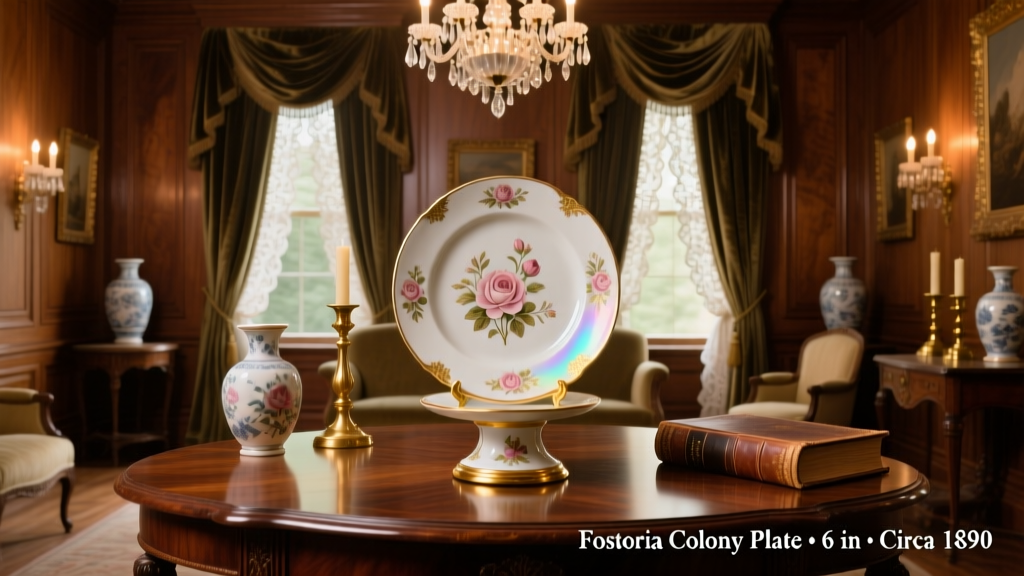
Fostoria Colony Plate, 6-Inch: Identification, Value, and Restoration Best Practices

Soaky Smokey The Bear: A Forgotten 1970s Vinyl Doll and Its Place in Antique Toy History

The Brass Centennial Lantern Handle Hook (1876): A Restoration Specialist’s Analysis of Form, Function, and Historical Significance

Isaac's Signature Stone Carving: 'Man on Ice Floe Capturing Walrus' — Authentication, Provenance, and Conservation Insights
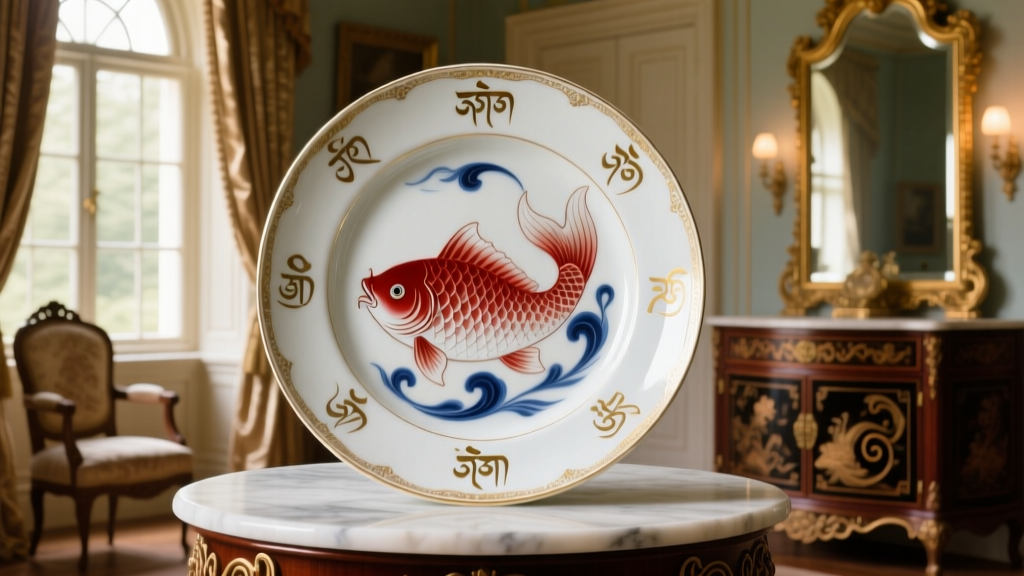
Chinese Export Porcelain Plate: Fish Motif, Sanskrit Inscriptions, Red-White-Blue Palette, Circa 1800 — A 10-Inch Masterpiece of Cross-Cultural Exchange
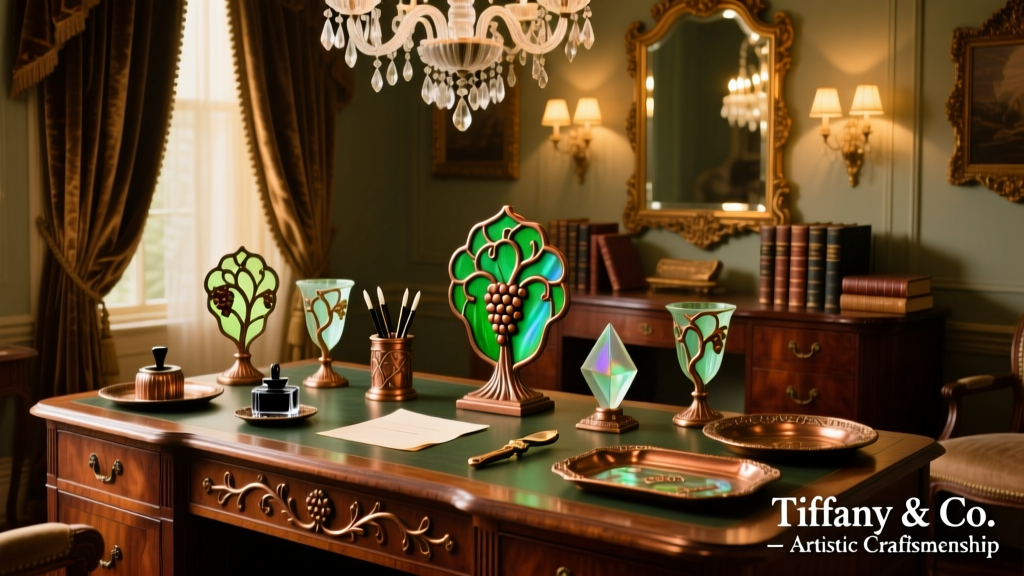
Tiffany Desk Set: Grapevine Bronze & Green Slag Glass — A 12-Piece Art Nouveau Masterpiece
Match Holders Taj Grand Tobacco Tin (2 × 1½ Inches): A Collector’s Guide to Form, Function, and Historical Context
Old Teasets: History, Identification, and Restoration of Antique Tea Services

The Gunthermann 'Old Woman Walking with Umbrella' Windup Toy: History, Mechanics, and Restoration Insights