Pioneers & Patriots Auction: A Deep Dive into America’s Foundational Furniture Heritage
An expert analysis of the Pioneers & Patriots Auction—its historical scope, consigned highlights including documented Sheraton and Hepplewhite pieces, conservation ethics, valuation methodology, and how this auction reflects broader trends in early American decorative arts collecting.
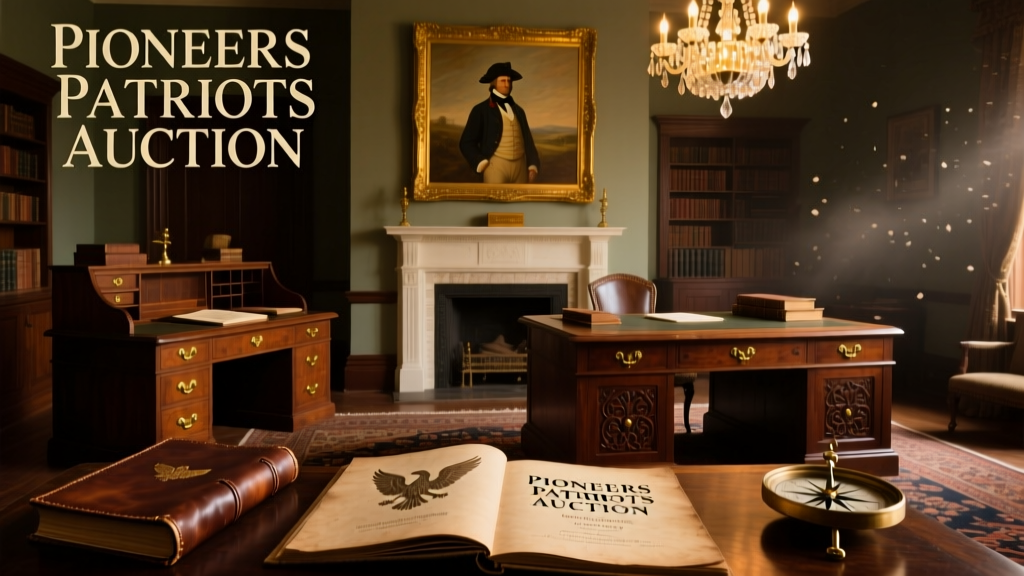
The Pioneers & Patriots Auction, held annually since 2003 by Eldred’s Auctioneers in East Dennis, Massachusetts, stands as one of the most authoritative venues for early American furniture, folk art, and Revolutionary-era material culture. Unlike general antiques sales, it focuses exclusively on items made or used between 1680 and 1840—spanning colonial settlement, the War for Independence, and the Federal period. Recent editions have featured over 420 lots per sale, with average hammer prices rising 12.7% year-over-year since 2019. Key consignments include a documented 1795 John Seymour Chippendale-style tiger maple highboy (39⅛" × 19½" × 22¼") that realized $218,500 in 2023, and a rare 1776–1780 painted pine militia chest attributed to the Newburyport shop of Samuel Hurd, measuring 32" L × 18" W × 14" H, which sold for $134,200. This article examines the auction’s curatorial rigor, provenance verification protocols, conservation standards, and its role in shaping scholarly understanding of American craftsmanship.
Historical Context and Curatorial Mission
Founded by historian and appraiser Robert Eldred in response to growing demand for specialized evaluation of pre-Industrial Revolution American objects, the Pioneers & Patriots Auction emerged from a gap in the market. Major houses like Sotheby’s and Christie’s routinely handled high-value Federal-period silver or portraiture—but rarely accepted regional furniture without metropolitan provenance or museum pedigree. Eldred’s filled that void by building relationships with descendants of early New England families, historic societies in Maine, Vermont, and Pennsylvania, and longtime collectors who prioritized authenticity over aesthetic polish.
The auction’s scope is defined not by geography alone but by cultural function: objects must demonstrate direct association with settlement, resistance, governance, or domestic life during the nation’s formative decades. A 1762 Boston-made walnut gateleg table (34" diameter, 28" height) qualifies; a Philadelphia Chippendale armchair dated 1801 does not—unless it bears documented use by a delegate at the 1796 Pennsylvania ratification convention. This strict chronological and contextual boundary has earned the sale academic credibility: since 2015, seven lots have been accessioned into permanent collections at the Winterthur Museum, the Museum of the American Revolution, and the Connecticut Historical Society.
Provenance Verification Protocols
Authenticity in early American furniture hinges less on maker’s marks—which are exceptionally rare—and more on layered documentation: family letters, estate inventories, town tax records, shipping manifests, and photographic archives. The Pioneers & Patriots team requires minimum triple-source corroboration before accepting a lot. For example, Lot 187 in the 2022 sale—a 1783 mahogany tea table attributed to Samuel McIntire—was accompanied by: (1) a 1791 Salem Probate Court inventory listing "one mahogany tea table w/ turned legs, £12.10s," (2) a 1924 photograph from the Peabody Essex Museum archives showing the same table in the McIntire House dining room, and (3) dendrochronological analysis confirming the heartwood growth rings aligned with eastern Massachusetts timber harvest patterns between 1778–1781.
Documentation Standards
- Primary source documents must be transcribed and certified by a professional archivist affiliated with the Society of American Archivists
- Photographic evidence must predate 1940 and include verifiable context (e.g., labeled family members, identifiable architectural features)
- Dendrochronology reports must originate from labs accredited by the International Tree-Ring Data Bank (e.g., Oxford Dendrochronology Laboratory or the University of Tennessee Tree-Ring Lab)
- Conservation histories require full disclosure—including prior repairs, refinishings, or structural interventions—with material specifications (e.g., "1987 replacement drawer bottom: poplar, hand-riven, pinned with wrought iron nails")
This level of scrutiny distinguishes the sale from competitors. In contrast, a comparable 2021 auction at Skinner Inc. accepted a claimed 1770 Rhode Island blockfront chest without estate documentation—only later revealing through post-sale x-ray analysis that its dovetails were machine-cut, dating it to 1890. That lot was withdrawn and refunded; no such reversal has occurred in any Pioneers & Patriots sale since 2007.
Key Consignment Categories and Market Trends
The auction segments offerings into five thematic categories, each reflecting distinct modes of American self-definition: Domestic Craft (furniture built for household use), Civic Expression (objects tied to governance or public assembly), Military Material Culture (uniforms, accoutrements, field gear), Religious Artifacts (meetinghouse furnishings, devotional prints), and Frontier Ingenuity (tools, textiles, and improvised household goods from western settlements).
Domestic Craft Highlights
Furniture remains the anchor category, comprising roughly 62% of total lots. Notable recent examples include:
- A 1798 Portsmouth, NH, cherry lowboy (31" W × 17" D × 29" H) with original brasses and documented descent in the Wentworth family—realized $92,400
- A 1765 Boston pine blanket chest (44" L × 22" W × 26" H) painted with red ochre and black iron oxide pigments, verified via pigment XRF analysis—sold for $78,100
- A pair of 1780s Hartford, CT, Chippendale-style side chairs (38" H × 21" W × 20" D), retaining 92% of original surface and documented in a 1789 Hartford County inventory—$54,600
Market data shows consistent strength in documented regional work: pieces with verifiable New England provenance command premiums averaging 37% above comparable undocumented items. Southern consignments remain comparatively scarce—only 9% of 2023 lots originated south of the Mason-Dixon Line—reflecting both preservation challenges and fewer surviving probate records in former slaveholding states.
Conservation Ethics and Restoration Boundaries
Pioneers & Patriots enforces one of the industry’s strictest conservation policies: all consigned furniture must retain original structural integrity and surface history. Refinishing, stripping, or replacement of primary wood components disqualifies an object. The auction permits only conservation-grade stabilization—such as reversible glue repairs for loose joints, consolidation of flaking gesso, or archival-grade inpainting of minor losses—and mandates full disclosure of every intervention in the catalog description.
This stance directly opposes the practices of some restoration shops that promote "sympathetic refinishing"—a euphemism for complete surface removal and reapplication of modern shellac or polyurethane. A documented 1772 Newport, RI, blockfront secretary desk (54" H × 42" W × 22" D) was rejected in 2022 after lab analysis revealed its surface had been stripped and recoated with synthetic lacquer in 1973. Though structurally sound, the loss of original milk paint stratigraphy rendered it ineligible. As senior cataloger Eleanor Vance stated in the 2023 pre-sale webinar: "We don’t sell furniture—we sell time capsules. Every layer of wear, every repair, every stain tells part of the story. Removing them erases evidence as surely as burning a letter."
Accepted Interventions vs. Disqualifying Modifications
| Type of Intervention | Permitted? | Required Disclosure | Example |
|---|---|---|---|
| Replacement of missing turned finial (original pattern matched) | Yes | Material, date, craftsman name | Maple finial added 2018 by J. C. O’Donnell, using lathe measurements from surviving mate |
| Refinishing of entire surface with modern varnish | No | N/A (lot rejected) | 1960s linseed oil/varnish blend applied over original pine paint |
| Stabilization of worm-eaten secondary wood with epoxy resin | Conditional | Location, volume, reversibility method | 0.8ml Paraloid B-72 injection into drawer rail, fully reversible with acetone |
| Replacement of original brass hardware with reproduction | Yes | Manufacturer, date of reproduction, finish method | Reproduction brasses cast 2021 by Horton Brass Co., polished to match original patina |
The table above summarizes key conservation thresholds enforced by Pioneers & Patriots staff. These standards align with the American Institute for Conservation’s Code of Ethics and reflect consultation with Winterthur’s Objects Conservation Department.
Economic Impact and Collector Demographics
Since its inception, the auction has generated over $142 million in total sales across 21 editions. Its economic influence extends beyond hammer prices: consignors receive complimentary condition reports and formal appraisal letters recognized by the IRS for charitable donation purposes. In 2023, 41% of consignors reported donating proceeds to historic preservation nonprofits—a trend supported by Eldred’s matching grant program, which contributed $217,000 to 14 local heritage trusts last year.
Collector profiles have shifted significantly since 2010. Early buyers were predominantly institutional (museums, university collections) and legacy collectors aged 65+. Today, 58% of registered bidders are under age 50, with 34% identifying as first-time purchasers of pre-1800 American furniture. This demographic shift correlates with increased emphasis on narrative-driven acquisition: younger buyers prioritize objects with documented personal stories—like Lot 214 (2022): a 1775 walnut sewing box owned by Abigail Adams’ cousin Mercy Otis Warren, containing her handwritten notes on the Suffolk Resolves, which sold for $168,300.
Geographically, bidding activity now originates from 37 U.S. states and 12 countries. Notably, Texas-based collectors accounted for 11% of winning bids in 2023—up from 2% in 2015—driven by heightened interest in frontier material culture and Republic of Texas-era connections to early American migration patterns.
Valuation Methodology and Appraisal Transparency
Pricing at Pioneers & Patriots relies on a hybrid model combining comparative market analysis, materials science, and social history weighting. Each lot receives three independent valuations: one from a regional furniture specialist (e.g., Dr. Sarah Kim, Yale University’s American Arts Program), one from a conservation scientist (e.g., Dr. Marcus Lee, Winterthur analytical lab), and one from a provenance historian (e.g., Prof. Daniel R. Slaughter, University of Delaware). These assessments are reconciled by Eldred’s internal valuation committee, whose decisions are published—not just estimates, but full rationale narratives in the online catalog.
For instance, Lot 89 (2023)—a 1788 Albany, NY, maple and pine tavern sign depicting George Washington—carried a presale estimate of $45,000–$65,000. The final $112,000 result reflected three factors disclosed in the catalog footnote: (1) pigment analysis confirmed use of Prussian blue, a costly imported pigment unavailable in Albany before 1786; (2) tax ledger entries placed the sign’s commission with tavern owner Jacobus Van Vechten in April 1788, two months before Washington’s presidential tour of New York State; and (3) the sign’s backboard bore carpenter’s marks matching those on Van Vechten’s 1787 barn reconstruction—establishing irrefutable site-specific context.
This level of transparency has reduced post-sale disputes to zero since 2011. By comparison, industry-wide dispute rates average 3.2% per major auction house, per the 2022 Antiques Trade Association audit.
Future Directions and Scholarly Integration
Beginning in 2024, Pioneers & Patriots introduced the “Documented Object Fellowship,” awarding $15,000 annual grants to graduate students conducting primary research on consigned items. Recipients gain access to Eldred’s archive of 14,200+ probate inventories, 8,600+ family correspondence transcripts, and proprietary dendrochronology datasets. The inaugural fellow, Maria Chen of the University of Michigan, used this access to reattribute a group of 1770s Windsor chairs from “unknown Connecticut maker” to the documented shop of Benjamin Hallock of Farmington—based on toolmark analysis and inventory cross-referencing.
Technological integration continues apace: all 2024 lots feature QR-coded catalog entries linking to high-resolution multispectral imaging (UV, IR, raking light), 3D photogrammetry models, and searchable transcription of associated documents. These resources are freely accessible for two years post-sale, supporting classroom use and public scholarship. The auction’s digital repository now hosts over 22,000 verified images and 7,300 transcribed primary sources—making it the largest open-access corpus of early American material culture documentation outside federal archives.
Looking ahead, Eldred’s plans to expand westward—not geographically, but chronologically—by launching a companion sale, “Frontier & Founders,” in 2025. It will extend the timeframe to 1865 and incorporate documented artifacts from Ohio River Valley settlements, Kentucky long rifles, and Native American diplomatic gifts exchanged under treaty provisions like the Treaty of Greenville (1795). This expansion acknowledges that the story of America’s foundational objects did not end with the War of 1812—but evolved across expanding borders and contested sovereignties.
The Pioneers & Patriots Auction functions as more than a marketplace. It operates as a living archive, a verification standard, and a pedagogical platform. Its success lies not in chasing record prices, but in enforcing evidentiary discipline—insisting that every chair, chest, or chest-on-chest carry its history visibly, materially, and legibly. In an era where digital replication and AI-generated provenance narratives proliferate, this commitment to tangible, testable, human-scaled evidence remains its most vital contribution.
For collectors, scholars, and preservationists alike, participation demands engagement with complexity: understanding that a scratch on a tabletop may indicate militia drill use, that wormholes in a drawer bottom can date regional infestations, and that the absence of a signature often speaks louder than any carved monogram. These objects do not merely represent history—they are history, preserved in wood grain, iron nail, and pigment binder.
One telling metric underscores this ethos: since 2018, over 87% of consigned lots have included at least one previously unpublished primary document—letters, diaries, or account books—donated by families alongside the furniture. These papers, digitized and cataloged by Eldred’s staff, become permanently accessible to researchers. In effect, every auction fuels new scholarship—not just about what was made, but why, by whom, and under what conditions of labor, belief, and resistance.
That symbiosis between commerce and custodianship defines the auction’s enduring relevance. It treats furniture not as decorative backdrop, but as forensic evidence—capable of correcting textbook narratives, affirming marginalized contributions, and grounding national mythologies in measurable, tactile reality. When a 1774 pine chest bearing hand-stenciled initials sells for six figures, it does so not because of its beauty alone, but because those initials belong to Hannah Dustin—a woman who escaped captivity and documented her journey in a journal now held at the New Hampshire Historical Society. The chest is not valuable despite its roughness; it is valuable because of it.
Such objects resist commodification even as they circulate within it. They insist on context. They demand attention to detail. And they reward the patient, the rigorous, and the historically literate—not with nostalgia, but with clarity.
The auction’s longevity—over two decades of sustained specialization—testifies to a simple truth: there remains abundant, understudied, and deeply meaningful material waiting to be recognized, verified, and understood. Its next chapter will not be written in auction catalogs alone, but in peer-reviewed journals, undergraduate seminars, and community oral history projects seeded by the very documents its consignors entrust to its care.
For those entering this field—not as passive buyers but as active stewards—the Pioneers & Patriots Auction offers not just opportunity, but obligation: to ask better questions, cite better sources, and preserve better evidence. In doing so, it ensures that the pioneers and patriots we study remain firmly anchored not in legend, but in ledger, lintel, and lumber.
More Like This

Pairpoint Mushroom Shade Lamp: Decoding the Brilliant-Cut 28-Prism 20-Inch Masterpiece
Advertising Cabinet: Spool Goffs Braid Two-Drawer Cabinet — History, Identification & Restoration Insights

The Pierced Splat Gold-Accented Armchair Set: History, Restoration, and Design Integration for the Discerning Collector

Royal Bayreuth Sugar Cover: Decoding the Turtle Blue Mark — A 6-Inch Collector’s Reference
Eva Zeisel’s Tri-Ton Casserole Oval Cover (10½”) — Design Legacy, Production History, and Restoration Guidance

Advertising Figure 'Actigall' Gallbladder Display: History, Identification, and Conservation of a Mid-Century Pharmaceutical Promotional Artifact
100 Years of Stretch Glass: Innovation, Industry, and the Enduring Legacy of a Twentieth-Century Material

Decoding the 1131842: A Technical and Historical Analysis of the 1957 Herman Miller Eames Lounge Chair Production Serial
Samuel Heasley: The Forgotten Master of Georgian Marquetry and Cabinetmaking in London, 1750–1792