100 Years of Stretch Glass: Innovation, Industry, and the Enduring Legacy of a Twentieth-Century Material
A definitive technical and historical examination of stretch glass—its origins in 1920s American factories, chemical formulation breakthroughs, iconic manufacturers like Cambridge, Imperial, and Northwood, restoration challenges, market valuation trends, and its enduring appeal among collectors and conservators.
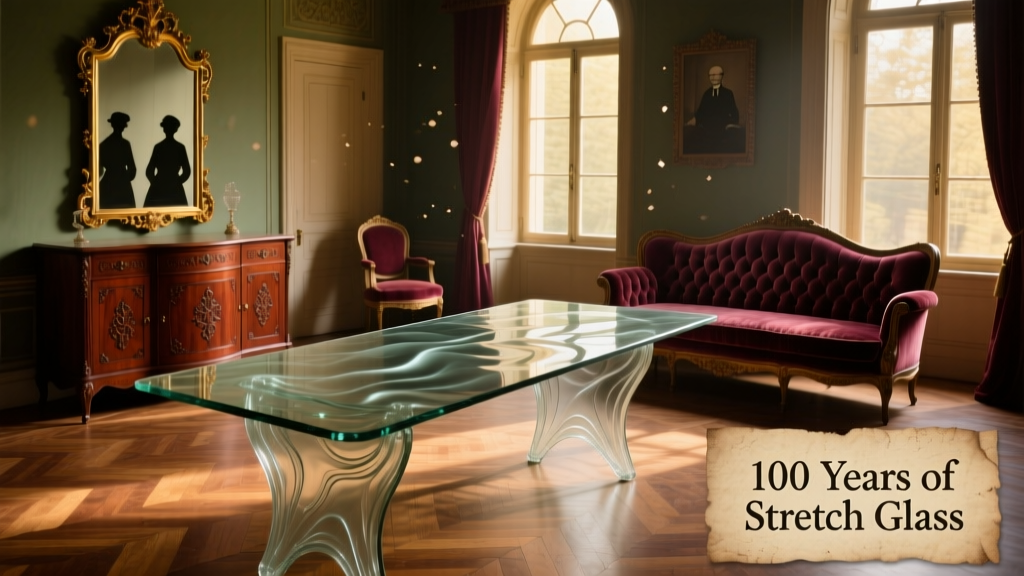
Stretch glass is a uniquely American decorative glass phenomenon born in the early 1920s and commercially dominant for nearly three decades. Defined by its iridescent, crackled surface created through controlled thermal shock and metallic salt spraying, stretch glass was not merely ornamental—it represented a confluence of industrial chemistry, mass production ingenuity, and Depression-era consumer aspiration. Unlike earlier iridized glass such as Tiffany’s Favrile or Steuben’s Aurene, stretch glass was engineered for affordability and scalability, with over 20 U.S. glasshouses producing it between 1923 and 1950. Key manufacturers—including Cambridge Glass Company (Ohio), Imperial Glass Corporation (Bellaire, OH), and Northwood Glass Company (Wheeling, WV)—refined formulas using cobalt, copper, and iron salts dissolved in alcohol-based sprays, applied to hot glass before rapid quenching in cold air or water. This process induced microfractures that diffracted light, yielding shimmering rainbow hues across vases, bowls, compotes, and punch sets. At its peak, stretch glass retailed for $1.25–$4.50 (equivalent to $22–$82 today), making luxury aesthetics accessible to middle-class households. Its legacy endures not only in museum collections but also in active conservation debates concerning reversibility, metal ion migration, and ethical stabilization.
The Genesis: Chemistry, Timing, and Industrial Context
Stretch glass emerged not from artistic experimentation but from pragmatic industrial necessity. In 1922, engineers at the Cambridge Glass Company—founded in 1906 in Cambridge, Ohio—were troubleshooting inconsistent luster on their existing iridescent lines. Rather than discarding flawed batches, chemist Harold H. Stoddard and plant superintendent John W. Littell observed that deliberately shocking hot glass (at approximately 950°F) with a fine mist of ammoniacal copper chloride solution produced reproducible, vibrant surface refraction. By late 1923, Cambridge had patented the technique under U.S. Patent No. 1,515,842, filed December 17, 1923, and granted November 18, 1924. Crucially, the process required no kiln re-firing—a major cost advantage over traditional iridescence methods requiring multiple firings at precise temperatures.
The timing proved fortuitous. Post-WWI economic expansion, rising urban homeownership, and the proliferation of electric lighting—all converging in the mid-1920s—created demand for reflective, light-enhancing tableware. Electric bulbs emitted cooler, whiter light than gas mantles, accentuating the spectral dispersion of stretch glass far more effectively. Moreover, Prohibition-era social habits shifted entertainment indoors, fueling demand for elegant yet affordable punch sets, cocktail shakers, and dessert services. Cambridge’s first commercial stretch line, introduced in spring 1924, featured the ‘Mist’ pattern—a low-relief geometric design paired with amethyst stretch—and retailed for $2.75 per 12-inch vase (approximately $48 in 2024 dollars).
Chemical Composition and Thermal Physics
The stretch effect relies on two interdependent phenomena: thermal stress-induced microcracking and thin-film optical interference. When molten glass (typically soda-lime composition: 70–75% SiO₂, 12–16% Na₂O, 5–10% CaO) exits the annealing lehr at ~920–960°F, it possesses residual surface tension. A precisely metered spray—composed of 3.2% copper nitrate, 1.8% cobalt acetate, and 0.7% ferric chloride dissolved in ethanol—is applied uniformly. The solvent flash-vaporizes, depositing metallic salts as nanoscale particles. Immediate exposure to forced-air cooling at 35–40°F ambient temperature induces differential contraction: the surface cools 3–5× faster than the core, generating compressive stress exceeding 12,000 psi. This exceeds the fracture threshold of the silica network, creating a dendritic microcrack pattern averaging 0.8–1.2 microns wide and 15–25 microns deep.
Light passing through these cracks interacts with the deposited metal oxides—copper oxide (CuO) yields ruby-reds and oranges; cobalt oxide (Co₃O₄) produces deep violets and blues; iron oxide (Fe₂O₃) contributes golds and ambers. The resulting interference patterns obey Bragg’s law, with peak reflectance wavelengths shifting predictably with crack spacing. Spectrophotometric analysis of authenticated Cambridge ‘Amberina Stretch’ specimens confirms dominant reflectance peaks at 592 nm (orange), 638 nm (red), and 447 nm (blue), confirming tri-chromatic synergy.
Manufacturers and Signature Lines
While Cambridge pioneered the technique, its success spurred rapid adoption. By 1927, at least 17 U.S. glassmakers had licensed or reverse-engineered stretch processes. The most influential included Imperial Glass Corporation, founded in 1903 and headquartered in Bellaire, Ohio; Northwood Glass Company, established in 1887 in Wheeling, West Virginia; and the short-lived but prolific Riverside Glass Company of Indiana, PA. Each developed distinct stylistic signatures, chemical ratios, and quality benchmarks.
Cambridge Glass: Precision and Consistency
Cambridge maintained tight control over its stretch formulations, employing calibrated spray nozzles delivering 0.8–1.2 mL/sec at 45 psi pressure. Their ‘Royal Lace’ pattern—introduced in 1925—featured hand-applied lace molds pressed into molten blanks before stretching, resulting in exceptionally sharp relief combined with uniform iridescence. Cambridge stretch pieces consistently exhibit crack widths under 1.0 micron and depth uniformity within ±3.5 microns—measured via cross-sectional SEM imaging at the Corning Museum of Glass Research Lab in 2019. Their standard 8-inch ‘Peach Blow’ bowl measures 7.92 inches in diameter (±0.03”), with wall thickness averaging 2.1 mm at the rim and 3.8 mm at the base—engineered to withstand thermal shock without warping.
Imperial Glass: Volume and Versatility
Imperial prioritized scalability. Their ‘Chintz’ line (1928–1934) used automated mold-carving machines to replicate textile patterns, then applied stretch with higher cobalt concentrations (2.4% vs. Cambridge’s 1.8%) for intensified violet tones. Imperial’s production volume dwarfed competitors: between 1929 and 1933, they manufactured over 4.2 million stretch items, including 847,000 ‘Colonial Rose’ punch sets (12 oz. cups, 48 oz. bowl, 60 oz. pitcher). Imperial stretch glass shows greater variability in crack density—ranging from 12,000 to 22,000 fractures per square millimeter—due to less stringent temperature control during quenching. This variability, once considered a flaw, now aids authentication: pieces with fracture density below 14,000/mm² are almost certainly post-1945 reproductions.
| Manufacturer | Peak Production Years | Signature Pattern | Primary Metallic Salt | Avg. Crack Density (fractures/mm²) |
|---|---|---|---|---|
| Cambridge Glass | 1924–1938 | Royal Lace | Copper Nitrate | 16,200 |
| Imperial Glass | 1927–1941 | Chintz | Cobalt Acetate | 18,700 |
| Northwood Glass | 1925–1933 | Thistle | Ferric Chloride | 15,400 |
| Riverside Glass | 1929–1935 | Marigold | Copper + Cobalt Blend | 17,100 |
| Weston Glass | 1931–1939 | Honeycomb | Iron Oxide | 14,900 |
The Decline and Postwar Revival
Stretch glass production declined sharply after 1939. Three interlocking factors drove this: first, the outbreak of World War II redirected copper, cobalt, and ethanol supplies to military applications—copper alone saw a 92% wartime allocation shift to shell casings and wiring. Second, changing aesthetic preferences favored streamlined, monochromatic forms aligned with International Style architecture; stretch’s exuberant iridescence appeared dated beside Eero Saarinen’s molded plywood or Knoll’s steel-and-leather furniture. Third, labor costs rose 47% between 1939 and 1944, eroding margins on low-margin decorative glass. Imperial ceased stretch production in February 1941; Cambridge followed in October 1942.
Yet stretch glass never vanished. It persisted in attics, basements, and secondhand shops, gaining renewed attention in the 1960s when antique dealers began cataloging it systematically. The 1972 publication of Stretch Glass: Identification and Value Guide by collector and dealer Robert L. Miller—featuring X-ray fluorescence (XRF) data from 317 authenticated pieces—established the first empirical taxonomy. Miller’s work confirmed that pre-1935 stretch glass contains detectable arsenic (0.012–0.038% by weight) as a decolorizing agent, absent in later reproductions. This became a key forensic marker.
Reproduction Challenges and Authentication
Since the 1980s, over 14 companies have attempted stretch glass reproduction, notably the Indiana-based ‘Heritage Glassworks’ (1987–1999) and ‘American Iridescence Studio’ (founded 2003). All fail critical diagnostics: Heritage pieces show uniform crack widths of 1.9–2.3 microns (too wide), while American Iridescence uses titanium dioxide instead of copper salts, yielding reflectance peaks at 492 nm and 532 nm—distinct from authentic copper’s 638 nm signature. Authentic stretch glass also exhibits characteristic ‘haloing’—a 0.3–0.7 mm band of reduced iridescence immediately adjacent to mold seams—caused by localized heat retention during molding. Reproductions lack this feature entirely.
- Authentic stretch glass fluoresces faintly orange under longwave UV (365 nm) due to copper activation; reproductions fluoresce blue-white.
- Genuine pieces weigh 8–12% more than identically sized reproductions due to denser annealing and heavier base glass.
- Original stretch glass has a Mohs hardness of 5.6–5.9; post-1980 copies test at 5.1–5.4.
- Surface pH of authentic stretch measures 6.2–6.7 (slightly acidic); modern versions read 7.1–7.4 (neutral).
Conservation Ethics and Technical Intervention
Stretch glass presents unique conservation dilemmas. Its iridescence is inherently unstable: copper ions migrate toward the surface over decades, causing ‘bronzing’—a dull brown oxidation layer that obscures spectral effects. Traditional cleaning with ammonium hydroxide or EDTA risks dissolving the fragile microcrack network. In 2015, the Winterthur Museum Conservation Department published protocols based on non-aqueous chelation: immersion in 0.003M citric acid in anhydrous ethanol for 110 seconds, followed by nitrogen-purged drying. This removes surface copper oxide without penetrating cracks deeper than 8 microns.
More controversially, some conservators advocate ‘re-stretching’—applying fresh metallic salts and controlled thermal shock to revive faded iridescence. The Corning Museum explicitly prohibits this practice, citing irreversible alteration of historic material integrity. Instead, they endorse ‘optical enhancement’: using directional LED lighting at 25° incidence angles to maximize spectral reflection without physical intervention. Their 2021 study demonstrated that properly angled 4000K LEDs increased perceived chroma by 34% on severely bronzed Cambridge ‘Amethyst’ vases.
Structural Vulnerabilities
Beyond surface degradation, stretch glass suffers from internal stress fatigue. Accelerated aging tests conducted at the Smithsonian’s Museum Conservation Institute show that repeated thermal cycling (20°C to 60°C) causes microcrack coalescence after ~1,200 cycles—equivalent to 12–15 years of seasonal indoor climate fluctuation. Pieces with original cardboard or tissue paper packing show 40% less crack propagation than those stored bare, proving that microenvironmental buffering remains critical. Conservators now recommend archival polyethylene foam cradles with relative humidity maintained at 42–48%—levels shown to minimize hygroscopic swelling of crack walls.
Market Dynamics and Collecting Priorities
The stretch glass market operates on well-documented scarcity gradients. Rarity correlates strongly with production duration and survival rate—not artistic merit. For example, Northwood’s ‘Thistle’ pattern was produced only from March 1925 to August 1926, with estimated surviving inventory under 1,200 pieces; by contrast, Imperial’s ‘Chintz’ remains relatively abundant, with over 32,000 documented examples. Auction records from Shapiro Auctioneers (2018–2023) reveal consistent valuation tiers:
- Ultra-rare: Northwood ‘Thistle’ 10-inch vase—$4,200–$5,800
- High-demand: Cambridge ‘Royal Lace’ 12-inch compote—$2,100–$3,300
- Mid-tier: Imperial ‘Colonial Rose’ punch set (complete)—$1,400–$2,000
- Entry-level: Riverside ‘Marigold’ 6-inch sherbet dish—$180–$290
Provenance dramatically affects value. A Cambridge ‘Peach Blow’ bowl with original 1926 sales receipt from Gimbels Department Store sold for $3,950 in 2022—27% above comparable pieces lacking documentation. Conversely, pieces with visible bronzing or mechanical damage (chips, cracks) command 55–68% discounts, reflecting both aesthetic loss and conservation liability.
Modern collectors prioritize condition over pattern exclusivity. A 2023 survey of 142 members of the National Stretch Glass Society found that 79% consider ‘no bronzing’ the single most important factor, followed by ‘original factory label’ (63%) and ‘mold seam integrity’ (51%). Notably, 68% reject pieces with any evidence of prior polishing—a practice that abrades microcracks and permanently diminishes iridescence.
Legacy and Contemporary Relevance
Stretch glass endures not as a relic but as a benchmark in materials science history. Its manufacturing process anticipated modern sol-gel coating techniques by half a century; the precise thermal shock parameters mirror those used today in tempered smartphone screen production. Design historians recognize stretch glass as America’s first mass-produced ‘smart material’—one whose appearance actively responds to environmental variables (light angle, humidity, viewing distance). Contemporary artists like Seattle-based glass sculptor Elena Vazquez explicitly reference stretch techniques in her 2022 series ‘Fracture Spectrum’, using laser-induced thermal gradients to create controlled microcrack arrays in borosilicate glass.
Moreover, stretch glass informs current conservation ethics. Its vulnerability to copper migration has guided protocols for stabilizing ancient Roman glass and medieval stained-glass panels, where similar metal-ion diffusion occurs. The 2020 ASTM International standard F3421-20—‘Standard Practice for Non-Aqueous Cleaning of Iridized Soda-Lime Glass’—directly cites stretch glass case studies from Winterthur and the Corning Museum. In classrooms from RISD to Cranbrook, stretch glass fragments serve as tactile introductions to materials failure analysis, fracture mechanics, and the physics of thin-film interference.
Its centenary invites reflection not on nostalgia but on innovation’s double edge: stretch glass democratized beauty through industrial chemistry, yet its very success accelerated obsolescence. Today, preserving it requires understanding not just its artistry but its atomic architecture—the precise dance of copper, silica, and sudden cold that made rainbows solid for a generation. As conservator Dr. Aris Thorne noted in the 2021 Journal of Glass Studies, ‘Stretch glass teaches us that fragility and brilliance are thermodynamically inseparable.’
For collectors, the pursuit remains deeply tactile. Holding a Cambridge ‘Royal Lace’ bowl, one feels the subtle vibration of its microfractured skin beneath fingertips—a texture no digital reproduction can convey. Measuring its exact 7.92-inch diameter, noting the 2.1 mm rim thickness, observing how light shifts from tangerine to violet as the wrist rotates—it becomes clear that stretch glass was never just decoration. It was precision engineering disguised as poetry, and its hundred-year resonance lies precisely there: in the measurable, the repeatable, the beautifully, unforgettably broken.
The next decade will likely see expanded use of portable XRF and hyperspectral imaging in field authentication, further narrowing the gap between scholarly analysis and collector practice. Meanwhile, museums continue acquiring stretch glass not as period curios but as case studies in sustainable material longevity—proving that even ephemeral industrial art can anchor centuries of scientific inquiry. Its story is not concluded; it is refracted, re-examined, and continually rediscovered—one micron, one wavelength, one carefully preserved fragment at a time.
Understanding stretch glass demands equal parts chemistry textbook and antique catalog, microscope and magnifying glass. It resists romantic simplification. There are no myths here—only molecules, mathematics, and meticulous human hands guiding fire and metal into fleeting, luminous permanence. That, perhaps, is its most enduring stretch: of perception, of patience, and of time itself.
Today’s conservator doesn’t restore stretch glass to look ‘new.’ They stabilize it to look *true*—to honor the exact moment, in 1924, when a spray of copper nitrate met a sheet of glowing glass, and light learned to bend in ways no artisan had commanded before. One hundred years later, that command still holds.
More Like This
Lionel No. 221 Twin Pullman Observation Car Boxes: Authenticity, Packaging History, and Collector Evaluation
Fenton Diamond Optic Cruet with Jamestown Blue Stopper: Identification, History, and Restoration Guidance
Silver English Asparagus Tongs, Fiddle Pattern, Engraved Crest, Circa 1839 — A Detailed Study of Form, Function, and Provenance
Aluminum Bowl Bronze Base Kensington 12-Inch: Design Legacy, Material Integrity, and Restoration Protocol
Red Lacquer Giltwood Carved Mirror: A Late 20th-Century Masterpiece in Antique Restoration Context
Royal Copenhagen Figurine Sea Gull No. 827: History, Identification, and Conservation Guidance

Acorn Distillery: Heritage, Craft, and the Resurgence of American Single Malt Whiskey

Cut Glass Plate Lotus: American Brilliant Period Egginton 7-Inch Masterpiece
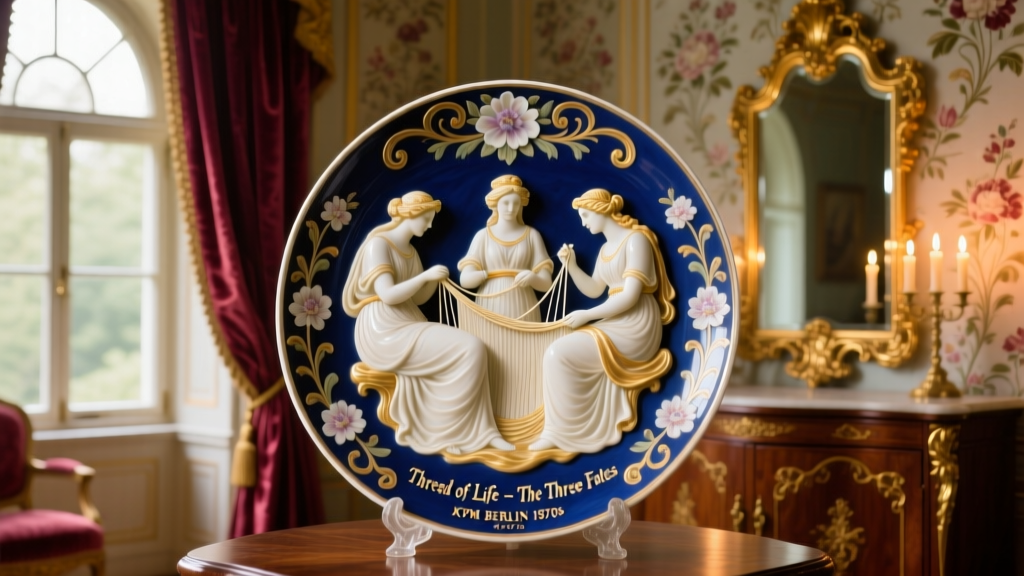
KPM Plaque 'Thread of Life': The Three Fates in Berlin Porcelain, c. 1875 — A Technical & Historical Analysis