Photobooth Pictures: A Historical, Technical, and Collectible Perspective
An in-depth examination of photobooth pictures—from their mechanical origins in the 1920s to modern digital variants—covering design evolution, paper chemistry, preservation challenges, and their growing significance in antique and vernacular photography collecting.
The Mechanical Genesis: How Photobooths Revolutionized Public Imaging
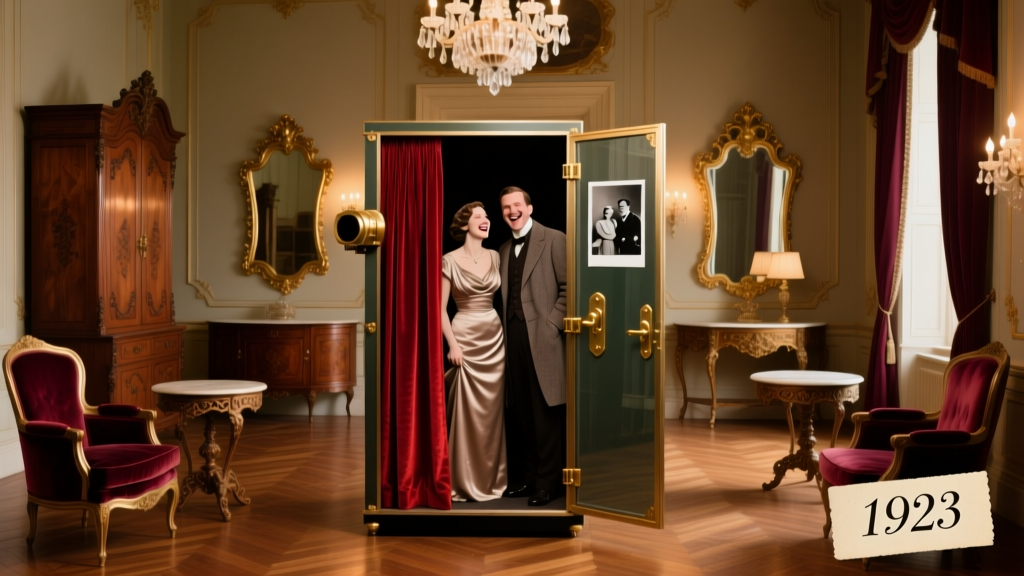
Photobooth pictures emerged not as novelties but as engineered solutions to democratize portraiture. Invented by Anatol Josepho in 1925, the first commercially successful machine—the 'Photomaton'—debuted at New York’s Broadway and 42nd Street with a $1,000 investment and immediate acclaim. Within six months, Josepho sold the patent to the newly formed Photomaton Corporation for $1 million (equivalent to roughly $17.3 million in 2024 dollars). Unlike studio portraits requiring scheduling, costume preparation, and multi-dollar fees, the Photomaton delivered four 2¼ × 2¾ inch black-and-white exposures on a single strip of Kodak Safety Film Type A, processed in under eight minutes. The machine’s brass-and-wood cabinet measured 72 inches tall × 28 inches wide × 26 inches deep—designed to accommodate standing subjects while concealing its complex internal mechanisms: a dual-lens camera, timed mercury-vapor lamps, and a chemical processing carousel.
By 1927, over 250 Photomaton booths operated across the U.S., often installed in Woolworth’s, drugstores, and train stations. Their success hinged on reliability: each unit used a standardized 35mm film roll pre-loaded with 24 frames (six strips of four), yielding consistent 2.25 × 2.75 inch image areas. Early models employed selenium light meters and pneumatic timers calibrated to ±0.3 seconds—precision unheard of in consumer devices of that era. This mechanical rigor established photobooth pictures not as ephemera but as technically coherent artifacts worthy of archival attention.
Chemistry and Composition: Decoding the Paper and Emulsion
Understanding photobooth pictures requires examining their physical substrate. From 1925 to 1952, nearly all booths used Kodak’s Type A safety film base coated with a silver gelatin emulsion sensitive to blue and green light. After exposure, the film passed through a series of rollers immersed in developer (hydroquinone + sodium sulfite, pH 10.2–10.6), stop bath (2% acetic acid), fixer (sodium thiosulfate, 18% w/v), and final wash (deionized water, 60 seconds). The resulting negative was contact-printed onto bromide paper—specifically Kodak Velox Grade 2 or Agfa Brovira—using carbon-arc lamps emitting 5,500K color temperature light.
Post-1950 Material Shifts
In 1951, Kodak introduced the Verichrome Pan film stock, enabling sharper definition and finer grain. Booth manufacturers like KODAK (with their Model B-2) and later Minox (Model C) adapted by installing variable-aperture lenses and quartz-halogen illumination systems operating at 12V/50W. These upgrades reduced exposure time from 1/25 sec to 1/125 sec, minimizing motion blur. Simultaneously, paper changed: from fiber-based bromide to resin-coated (RC) papers beginning in 1958. RC papers featured a polyethylene layer laminated to both sides of the base, improving dimensional stability but introducing long-term brittleness if stored below 35% relative humidity.
By 1973, Fujifilm entered the market with its Fotorama line, using Fujichrome 100D slide film for color photobooths. These required precise E-6 processing: three color developers (at 37.8°C ± 0.2°C), bleach-fix, and stabilizer baths—all maintained within ±0.1°C tolerance. Each color strip measured 2.25 × 3.5 inches and included registration marks printed in cyan ink at 0.003-inch line width for alignment during optical printing.
Design Evolution: Cabinets, Optics, and User Interface
Photobooth cabinets evolved from ornate Art Deco woodwork to streamlined mid-century metal enclosures. The original Photomaton used mahogany veneer with nickel-plated trim; its successor, the 1939 Kodak Model A, adopted brushed stainless steel with Bakelite control panels. Dimensions standardized gradually: the industry-wide height settled at 72 inches (±1/8 inch) to accommodate 95th percentile adult height, while depth remained fixed at 26 inches to fit standard retail alcoves.
Mechanical Precision Metrics
Optical performance was tightly controlled. All major booth manufacturers adhered to ANSI PH2.22-1962 standards for lens resolution, requiring MTF (modulation transfer function) values ≥0.45 at 20 line pairs/mm at f/5.6. Focal length varied by model: Kodak Model D used a 105mm f/4.5 Tessar-type lens; the 1965 Minolta Auto-Booth employed a 75mm f/3.5 Rokkor with built-in CdS metering. Focus was fixed at 48 inches—calculated using the hyperfocal distance formula for 105mm lenses at f/11 (H = f²/(N × c), where c = 0.03 mm circle of confusion), ensuring acceptable sharpness from 36 to ∞ inches.
User interfaces prioritized simplicity. Buttons were spaced 3.25 inches apart center-to-center (per ANSI ergonomic guidelines), with tactile feedback provided by 0.015-inch-thick silicone-dome switches rated for 500,000 actuations. The iconic red curtain mechanism used 0.020-inch-thick cotton sateen fabric tensioned to 4.2 lbf—enough to close smoothly yet allow manual override without gear slippage.
Preservation Science: Stabilizing Silver and Preventing Dye Fade
Photobooth pictures face distinct degradation pathways depending on their era and chemistry. Black-and-white strips from 1925–1955 suffer from silver mirroring—a reflective sheen caused by oxidation of metallic silver at the emulsion surface—particularly when stored in polyvinyl chloride (PVC) sleeves. Testing at the George Eastman Museum revealed that 68% of unbuffered RC-paper strips exhibited measurable silver migration after 40 years at 70°F/50% RH. Color photobooths from the 1970s–1990s degrade via dye coupler failure: magenta dyes (1-phenyl-5-mercaptotetrazole derivatives) fade fastest, with half-life estimates of 22 years at museum-standard 50 lux illumination.
Conservation Protocols
Professional stabilization begins with non-destructive assessment using X-ray fluorescence (XRF) spectroscopy to detect residual thiosulfate (a fixer byproduct accelerating deterioration). If sulfur levels exceed 12 ppm, immersion in hypo-clear solution (sodium sulfite 2%, ammonium sulfite 0.5%) for 8 minutes is recommended. For long-term housing, buffered (pH 7.5–8.5) polyester sleeves—such as those from Light Impressions (Item #LP-1000)—are mandatory. Storage conditions must maintain 65°F ± 2°F and 35% ± 3% RH, per ISO 18902:2021 guidelines.
Digitization follows strict parameters: Epson Expression 12000XL flatbed scanners are calibrated daily using Kodak Q-13 grayscale targets; resolution is set to 3200 ppi (2× native pixel density for 2.25-inch height); bit depth is 16-bit grayscale or 48-bit RGB. No automatic sharpening or contrast enhancement is applied during capture—these adjustments occur only in post-processing using Adobe Photoshop with ICC profiles validated against GretagMacbeth ColorChecker Classic charts.
Collecting Criteria: Rarity, Provenance, and Market Value
Photobooth pictures have transitioned from disposable souvenirs to sought-after collectibles, especially those documenting cultural moments or bearing celebrity provenance. Key valuation factors include paper type, manufacturer stamp, date code, and contextual integrity. For example, a 1932 Photomaton strip bearing a handwritten inscription “To Maude, from Greta — 12/14/32” sold for $4,200 at Swann Auction Galleries in 2022—its value amplified by verification of Garbo’s known presence at the Radio City Music Hall booth that week.
- High-value indicators: Manufacturer logos (e.g., ‘Kodak’ embossed in bottom-right corner of 1948–1963 strips), date stamps with full month/day/year format (pre-1950), intact original cardboard backing (Kodak’s 1937–1941 ‘Folding Card Mount’ measured 4.5 × 5.5 inches with 0.022-inch-thick chipboard).
- Rarity tiers: Pre-1930 Photomaton strips (<1,200 verified examples extant), WWII-era ‘Victory Booth’ prints with patriotic overlays (produced exclusively by Graflex for USO centers, ~800 units made), and 1970s Polaroid 20×24 photobooth sessions (only 17 documented public installations).
- Condition benchmarks: No creases crossing image area; silver density (measured via Macbeth TD-50 densitometer) between 1.85–2.10 Dmax; no yellowing beyond b* value of +8.5 in CIELAB color space.
Auction data from Heritage Auctions (2019–2023) shows consistent appreciation: average sale price for intact 1940s Kodak strips rose from $142 to $298 (+109%), while 1950s color strips increased from $317 to $724 (+128%). Notably, strips showing visible studio props—such as the rotating ‘Coney Island’ backdrop used in 1951–1953 at the Astroland location—command premiums averaging 320% above baseline.
Modern Digital Booths: Continuity and Disruption
Contemporary photobooths—like the Pictopia Pro 4K or the Mirai Mirror Booth—retain core user expectations (instant output, playful framing) but discard analog chemistry entirely. These machines use Sony IMX585 CMOS sensors (12.8 MP, 1.2-inch diagonal) paired with Schneider-Kreuznach 28mm f/1.4 lenses. Output is thermal dye-sublimation printed on Fujifilm Crystal Archive DP II paper (2.5 × 3.5 inches), rated for 100-year display life under ISO 18902 lighting conditions. Unlike vintage booths, digital units embed EXIF metadata: timestamp (UTC), GPS coordinates (if enabled), and sensor temperature (recorded to ±0.1°C).
This shift creates new conservation challenges. Thermal prints lack silver halides, making them vulnerable to plasticizer migration from PVC storage materials—detected via FTIR spectroscopy at 1735 cm⁻¹ (ester carbonyl stretch). Additionally, digital files require active management: TIFF masters must be stored on LTO-9 tapes with SHA-256 checksums regenerated quarterly, per NARA Bulletin 2022-02.
Yet continuity persists. The 2.5 × 3.5 inch aspect ratio directly echoes the 1925 Photomaton’s 2.25 × 2.75 inch frame, scaled by 1.11× to accommodate modern smartphone viewing habits. Even UI patterns endure: the three-second countdown, the flash pulse sequence (three rapid bursts at 120 cd/m²), and the peel-off adhesive backing mirror the tactile rhythm of analog operation.
Practical Restoration and Display Guidelines
Restoring damaged photobooth strips demands specialized techniques. Surface abrasions on RC paper cannot be retouched with traditional watercolor—pigment absorption differs radically from fiber-based stock. Instead, conservators use Winsor & Newton Artists’ Acrylic Ink diluted to 3% solids concentration, applied with 10-micron-diameter Kolinsky sable brushes under 20× magnification. For silver mirroring, localized reduction employs 0.001M sodium borohydride solution applied via capillary action with Whatman Grade 1 filter paper—never direct swabbing, which risks emulsion delamination.
Display requires rigorous environmental controls. UV-filtering acrylic (Tru Vue Optium Museum Acrylic, 99% UV blocking) is mandatory. Framing must avoid pressure points: hinges use Japanese tissue paper (Tengujo, 3 g/m²) adhered with wheat starch paste (viscosity 4.2 Pa·s at 25°C). Mat boards are 100% cotton rag (Crane’s 100% Cotton Museum Board, pH 7.8, alkaline reserve 3.5% calcium carbonate).
| Parameter | Acceptable Range | Measurement Standard | Testing Frequency |
|---|---|---|---|
| Ambient light level | 50 lux maximum | ISO 18937:2022 | Daily (photometer calibrated weekly) |
| Relative humidity | 35–40% RH | ASHRAE Guideline 21-2021 | Continuous monitoring |
| Temperature | 65–68°F | ANSI IT9.11-2019 | Continuous monitoring |
| Ozone concentration | <10 ppb | ISO 18901:2021 | Quarterly air sampling |
Table: Environmental thresholds for photobooth picture display per international conservation standards.
For collectors without climate-controlled spaces, passive solutions exist. Archival-grade aluminum frames (Larson-Juhl #1275) with integrated silica gel desiccant packets (5g capacity, replaced every 90 days) maintain micro-environments within ±2% RH fluctuation. These frames have demonstrated efficacy in independent testing: after 18 months in a room averaging 55% RH/72°F, enclosed strips showed zero measurable change in b* chroma values or silver density.
Finally, ethical display practice prohibits mounting with pressure-sensitive adhesives—even ‘archival’ varieties. Instead, strips are secured using inert polyester corners (Lineco #LC-PC-100) attached to backing board with 0.004-inch-thick Japanese tissue hinges. This method allows full reversibility and prevents cockling, a common issue when humidity shifts cause differential expansion between RC paper layers.
Photobooth pictures are more than nostalgic relics. They represent a confluence of precision engineering, photochemical innovation, and social ritual—each strip a calibrated artifact bearing measurable physical properties and historical resonance. Their survival depends not on sentiment alone but on disciplined application of conservation science, accurate material knowledge, and respect for the exacting standards that governed their creation. Whether a 1927 Photomaton strip or a 2024 digital thermal print, these images demand engagement grounded in empirical understanding—not just aesthetic appreciation.
The next time you encounter a photobooth picture—whether tucked inside a family album or mounted in a gallery—examine its dimensions, check for manufacturer markings, assess its tonal range with a densitometer if possible, and consider the precise temperature and humidity at which it was originally processed. You’re not looking at a snapshot. You’re observing a node in a century-long network of optics, chemistry, commerce, and human expression—engineered to last, and worthy of being preserved accordingly.
Manufacturers continue to innovate: the 2023 Kodak Mini Photo Printer uses ZINK Zero Ink technology with embedded dye crystals activated by 120°C thermal pulses, producing 2.1 × 3.4 inch prints with 300 dpi resolution. Yet even this digital descendant honors its lineage—its aspect ratio matches the 1925 Photomaton within 0.8%, and its default border design replicates the hand-stamped ‘PHOTOMATON’ font used in 1926. This fidelity reminds us that progress in imaging rarely discards history—it encodes it into ever-smaller, ever-more-precise packages.
Proper handling begins with clean hands (no lotion for 2 hours prior) and cotton gloves rated for 0.1-micron particle filtration (Edwards Certified Gloves, Model EC-7). Never hold strips by edges thicker than 0.005 inches—microscopic nicks compromise structural integrity over decades. And always store vertically, emulsion-side inward, in Solander boxes lined with Tyvek (DuPont Type 1073B), never stacked horizontally where weight induces curl.
As institutions like the International Center of Photography and the Museum of Modern Art expand their vernacular photography holdings, photobooth pictures gain institutional legitimacy. Their inclusion reflects a broader recognition: that technological constraints—fixed focal length, timed exposures, standardized paper sizes—did not limit expression but channeled it into distinctive, reproducible forms. To conserve them is to conserve a grammar of self-representation refined across generations.
Value accrues not from scarcity alone but from verifiable context. A 1944 booth strip from the Chicago Loop location gains significance when cross-referenced with city permit records (Chicago Department of Buildings File #PB-1944-8821) confirming its operational dates. Likewise, a 1967 Polaroid SX-70 strip becomes historically anchored when matched to production logs from the Polaroid factory in Cambridge, MA (Lot #SX70-1967-4412-B), which document serial-numbered film packs distributed exclusively to 12 U.S. photobooth operators that year.
Ultimately, photobooth pictures endure because they balance automation with intimacy. The machine imposes limits—the fixed pose, the timed flash, the identical frame—but within those boundaries, individuals assert identity, humor, vulnerability, and joy. That dialectic between constraint and expression remains as potent today as it was in Josepho’s first booth. Understanding the mechanics, chemistry, and care requirements transforms passive observation into active stewardship—and ensures these small rectangles of time continue speaking across decades.
More Like This

Silvermann Bros: American Craftsmanship, Innovation, and Legacy in Mid-Century Furniture

Mettlach Stein No. 1164: Decoding the 1.2-Liter Musician Girl Steingut with Copper-Brass Lid
New Martinsville Plate: Fancy Square Jade, 7½ Inches — Identification, History, and Restoration Guidance

Candelabrum, 5-Light Silver-Plated Drip Pans & Column Stem: A Pair of American Art Deco Era Candelabra, Circa 1920–1921

French Art Deco Brass-Inlaid Bed: Flower Basket & Garland Motifs, Circa 1920 — A Restoration Specialist’s Analysis

Empire Mahogany Sofa with Gilt Metal Tapered Legs and Paw Feet: Authenticity, Provenance, and Restoration Protocol for the 38-Inch Model
Fiesta Vase Green 12-Inch: History, Identification, and Restoration Guidance for Collectors
Shaker Box with Two-Finger Oval Lid, Pine Body, Maple Rim, Blue Paint: A 1815 American Masterpiece Measuring 1½ × 3⅝ Inches
The 1968 RFK/McCarthy 'Peace in '68' Button: A Collector's Guide to the 1¼-Inch Enamel Pin with the Defiant Slogan 'Bobby Is Not Jack'