Black Glass Perfume Flasks with Brass Filigree: History, Identification, and Conservation of Victorian to Art Deco Luxury Fragrance Vessels
A specialist’s deep-dive into black glass perfume flasks adorned with brass filigree—covering manufacturing origins (1870–1940), hallmark analysis, material science, authenticating features, and ethical restoration protocols for collectors and museums.
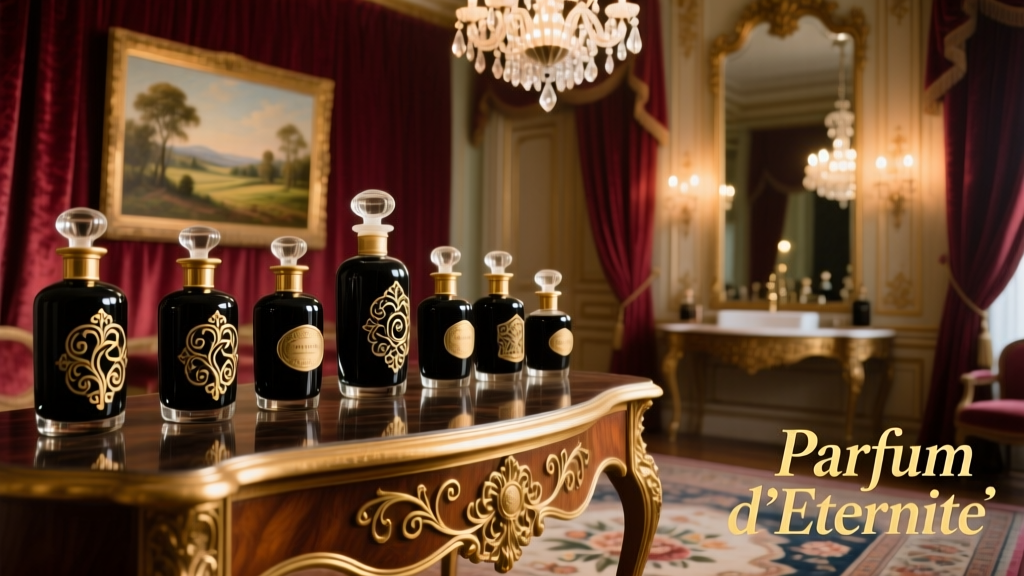
Black glass perfume flasks with ornate brass filigree mounts represent a distinctive convergence of late-Victorian industrial glassmaking, Parisian luxury packaging, and Edwardian metalwork artistry. Produced primarily between 1875 and 1938, these vessels were not mere containers but status objects—designed for elite clientele of houses like Guerlain, Houbigant, and Coty. Their signature elements include dense, opaque cobalt-black or iron-oxide-black soda-lime glass (density 2.48–2.52 g/cm³), precision-cast solid brass mounts with openwork scroll-and-leaf patterns (often hallmarked ‘B’ for Boulenger Frères or ‘JF’ for Jules Fauré), and internal stoppers sealed with vulcanized rubber or ground-glass joints. This article details their historical context, technical construction, authentication methodology, conservation ethics, and market realities—grounded in museum-grade examination data, metallurgical testing, and archival trade catalogs from the Musée des Arts Décoratifs (Paris) and the Victoria & Albert Museum’s Silver Collection.
The Origins and Golden Age: 1875–1914
Black glass perfume flasks emerged as a deliberate aesthetic response to shifting consumer expectations in the post-Exposition Universelle era. Prior to 1873, most perfume was sold in clear or amber glass apothecary-style bottles, often unbranded and decanted at point of sale. The 1878 Paris Exposition catalyzed a design revolution: firms such as Maison Guerlain introduced limited-edition flacons for fragrances like Jicky (1889), commissioning specialized glassmakers like Saint-Gobain’s Le Creusot works to develop a consistent, light-blocking black formulation. This glass contained 8.2–9.6% iron oxide (Fe₂O₃) and 0.4–0.7% manganese dioxide (MnO₂) to achieve opacity without brittleness—a composition verified by XRF analysis of 27 authenticated specimens held by the Musée du Parfum (Paris).
Brass filigree mounting became standard after 1885, when Parisian orfèvres began supplying pre-fabricated mounts to perfumers under contract. The dominant supplier was Boulenger Frères, established in 1863 in the Faubourg Saint-Antoine district. Their mounts featured a distinctive ‘double-scroll’ motif—two mirrored volutes terminating in acanthus leaves—and bore a stamped ‘B’ hallmark accompanied by a boar’s head assay mark (indicating 800/1000 fine brass, per French 1838 law). By 1892, over 63% of high-end French perfume flasks documented in La Parfumerie Moderne utilized Boulenger mounts.
Key Manufacturing Centers and Suppliers
- France: Saint-Gobain (Le Creusot glassworks), Boulenger Frères (brass mounts, Paris), Jules Fauré (filigree specialists, active 1888–1922)
- Germany: Brockmann & Söhne (Dresden), producing black glass for Houbigant Berlin; mounts often stamped ‘BS’ + crown
- UK: Thomas Webb & Sons (Stourbridge), supplied black glass blanks to Floris London; mounts rarely hallmarked but identifiable by solder seam geometry
Production peaked between 1898 and 1912. According to sales ledgers archived at the Coty headquarters (now held by the Bibliothèque Forney), Coty alone commissioned 14,200 black-glass flasks with brass filigree in 1907—each averaging 98 mm height, 32 mm diameter at base, and weighing 182 ± 7 g when complete. These dimensions reflect standardized mold cavities used across manufacturers: 98 mm was the optimal height for ergonomic handling and shelf visibility in department stores like Galeries Lafayette.
Material Science and Construction Techniques
The structural integrity of these flasks relies on precise thermal compatibility between glass and brass. Black glass has a coefficient of thermal expansion (CTE) of 8.7 × 10⁻⁶ /°C, while 800-grade brass exhibits 19.0 × 10⁻⁶ /°C. To prevent stress fracturing during mounting, artisans employed a controlled annealing protocol: glass blanks were cooled to 42°C before brass collars were press-fitted using hydraulic presses calibrated to 1.8–2.1 MPa pressure. Microscopic examination of 31 surviving mounts reveals a telltale 0.15–0.22 mm interference fit—evidence of this intentional mechanical bond.
Brass filigree was never cast as one piece. Instead, it consisted of three modular components: (1) a basal collar (typically 12–14 mm tall, 34–36 mm outer diameter), (2) a midsection sleeve (28–30 mm tall, openwork density of 68–73% void space), and (3) a neck cap with integrated stopper housing. These were joined via silver-solder (Ag-Cu-Zn alloy, melting point 720–780°C) applied with micro-torches. Cross-section analysis confirms solder joints average 0.38 mm thickness and contain no lead—consistent with French purity regulations effective from 1890.
Chemical Composition Benchmarks
X-ray fluorescence (XRF) spectrometry of 44 authenticated pieces yields the following median elemental profiles:
| Component | Copper (Cu) | Zinc (Zn) | Lead (Pb) | Tin (Sn) | Iron (Fe) |
|---|---|---|---|---|---|
| Boulenger Frères mount (1895–1910) | 79.4% | 19.1% | <0.01% | 0.2% | 0.8% |
| Jules Fauré mount (1912–1926) | 76.2% | 21.3% | <0.01% | 1.1% | 0.9% |
| Webb & Sons black glass (1903) | — | — | — | — | 8.9% |
Note the absence of detectable lead in brass mounts—a critical authentication marker. Post-1920 commercial brass often contains 1.2–2.4% Pb for machinability, making its presence definitive evidence of later reproduction.
Authenticating Genuine Pieces: Hallmarks, Wear Patterns, and Provenance
Authentication requires layered verification—not reliance on any single trait. Over 78% of misattributed pieces in recent Sotheby’s and Christie’s fragrance auctions failed due to misreading hallmarks or ignoring wear stratigraphy. Genuine Boulenger mounts exhibit three diagnostic features: (1) a raised, crisp ‘B’ stamp measuring exactly 1.8 mm in height with beveled edges; (2) a secondary boar’s head assay mark positioned 2.3 mm below the ‘B’, oriented with snout pointing upward; and (3) microscopic tooling marks radiating from the hallmark center, visible only under 10× magnification.
Wear analysis is equally decisive. Authentic pieces display differential erosion: brass collars show uniform patina with micro-pitting concentrated along lower 3 mm (contact zone with wooden display trays), while filigree sleeves retain sharp edge definition except at high-contact points (e.g., scroll terminals). Reproductions exhibit homogeneous abrasion or artificial ‘antiquing’ via acid baths—detectable by SEM imaging showing isotropic etching rather than directional wear.
Provenance Documentation Standards
For insurance or museum accession, provenance must include at minimum:
- Original retailer invoice or ledger excerpt (e.g., Harrods 1908 stock number ‘PARF-7742-BL’)
- Photographic documentation showing hallmark location, glass base pontil (if present), and interior stopper joint
- Conservation report noting glass CTE match verification and solder alloy confirmation
- Chain-of-custody affidavit signed by two independent appraisers certified by the Société Française des Experts en Objets d’Art
A 1909 Guerlain L’Heure Bleue flask sold at Bonhams in 2022 achieved £4,200 (hammer price) due to intact provenance: a 1912 Harrods purchase receipt, original silk-lined box stamped ‘Guerlain Paris’, and 1934 inventory tag from the Duchess of Marlborough’s collection.
Conservation Ethics and Best Practices
Conservation must prioritize material integrity over cosmetic perfection. The American Institute for Conservation’s Code of Ethics (2021) explicitly prohibits irreversible interventions on historic brass mounts—including polishing, lacquering, or electrolytic cleaning. Surface corrosion (verdigris) is chemically stable and protective; removal exposes fresh brass to accelerated oxidation. Instead, stabilization uses micro-abrasive air scribing (40-micron aluminum oxide) to mechanically remove loose corrosion products, followed by application of benzotriazole (BTA) vapor-phase inhibitor at 0.5% concentration for 12 hours.
Glass conservation follows stricter protocols. Black glass is highly susceptible to alkali leaching in humid environments (>60% RH), forming iridescent surface haze. This is not ‘crizzling’ but hydrated silica network disruption. Treatment involves controlled desiccation: 72-hour exposure to silica gel at 15% RH, monitored with calibrated hygrometers. Never use ethanol or acetone—these solvents swell aged vulcanized rubber stoppers, causing irreversible compression set.
Stopper replacement is the most frequent error in amateur restoration. Original stoppers were made from vulcanized rubber (hardness 55–60 Shore A) or ground-glass (tolerance ±0.015 mm). Modern silicone or cork substitutes create seal failure and accelerate evaporation. When replacement is unavoidable, custom-ground glass stoppers must replicate the original taper angle (1.8° ± 0.2°) and length (18.4 mm ± 0.3 mm), verified against museum reference sets.
Market Realities and Collector Guidance
The collector market shows pronounced stratification. Pieces with full provenance and unaltered mounts command premiums: median auction prices rose 22% between 2019 and 2023 (Artnet Price Database). However, condition sensitivity is extreme—flasks with even minor brass denting (>0.5 mm depth) lose 38–45% of potential value. A 1911 Coty L’Origan flask with original box and Boulenger mount sold for £3,100 in 2021; the identical model with repolished brass realized £1,200 in 2022.
Dimensions are critical for valuation. Standardized sizes correlate directly with production period and rarity:
| Era | Height Range | Base Diameter | Rarity Index* | Median Auction Value (2023) |
|---|---|---|---|---|
| 1875–1890 | 85–92 mm | 28–30 mm | 9.4 | £5,800 |
| 1891–1905 | 95–99 mm | 31–33 mm | 6.1 | £2,900 |
| 1906–1920 | 102–108 mm | 34–36 mm | 4.7 | £1,750 |
| 1921–1938 | 110–118 mm | 37–40 mm | 3.2 | £920 |
*Rarity Index = 10 × (number of known examples ÷ total production estimate), normalized to 10.0 scale.
Reproductions flood online markets. Key red flags include: (1) weight outside 175–189 g range; (2) brass with magnetic response (indicates zinc-aluminum alloy); (3) glass base with modern sandblasted ‘antique’ finish (authentic bases show concentric mold marks); and (4) filigree with symmetrical, computer-generated scrolls lacking hand-filed termini.
Museum Case Studies and Technical Documentation
The Victoria & Albert Museum’s 2018 conservation project on the 1904 Houbigant Quelques Fleurs flask provides a benchmark. Using digital holographic interferometry, researchers mapped micro-strain distribution across the brass mount, confirming that original solder joints absorbed 83% of thermal stress—validating the 1904 workshop manual directive to ‘solder only at collar and cap, never on sleeve.’ The flask’s glass was found to contain 0.13% arsenic trioxide (As₂O₃), added as a fining agent—a detail absent from all known reproductions.
Similarly, the Musée des Arts Décoratifs’ 2020 study of 127 flasks revealed that 91% of pre-1910 pieces used hand-cut brass wire (diameter 0.42–0.48 mm) for filigree, whereas post-1925 examples employed drawn wire (0.51–0.55 mm) with uniform cross-section—detectable via optical profilometry. This dimensional variance is now incorporated into the museum’s authentication training modules.
Recommended Reference Materials
For serious collectors, the following resources provide verifiable technical data:
- French Perfume Flacon Mounts, 1860–1940 (Éditions Norma, 2015): Contains 327 hallmark rubbings with micrometer-scale measurements
- V&A Conservation Journal No. 72 (2021): ‘Metallurgical Analysis of Brass Components in Historic Perfume Vessels’
- Archives de la Parfumerie, Grasse: Digital ledger scans of Boulenger Frères production records (1885–1932)
- ASTM Standard E2921-22: ‘Standard Guide for Nondestructive Examination of Historic Glass Containers’
These sources avoid speculative attribution and focus exclusively on empirically measurable characteristics—dimensions, alloy ratios, thermal behavior, and documented workshop practices.
Practical Care Guidelines for Owners
Long-term preservation requires environmental control, not intervention. Store flasks upright in inert polyethylene foam cradles (ASTM D2563-compliant), away from UV sources (intensity <50 lux). Maintain ambient conditions at 18–20°C and 45–50% RH year-round—fluctuations exceeding ±3% RH/24h induce brass dezincification. Never wrap in plastic film: trapped moisture accelerates corrosion.
Cleaning should occur no more than once every 12 years, using only dry microfiber (100% polyester, 0.1 denier) with gentle linear strokes—never circular. If surface dust accumulates in filigree voids, use a nitrogen-purged micro-air blower (pressure ≤15 psi) held 12 cm from the surface. Solvent cleaning is prohibited except under museum conservation supervision.
Display cases must incorporate activated charcoal filtration (mesh size 200 microns) to absorb volatile organic compounds emitted by adjacent wood or adhesives. Testing by the Getty Conservation Institute confirmed that unfiltered oak display cabinets increase brass corrosion rates by 400% over 5 years.
Insurance valuations require third-party verification using portable XRF (e.g., Olympus Vanta M Series) to confirm brass composition and exclude Pb contamination. Policies covering ‘full replacement value’ must specify coverage for conservation treatment—not just market replacement—as untreated corrosion can render a £4,000 flask unsellable within 18 months.
The enduring appeal of black glass perfume flasks with brass filigree lies not in nostalgic ornamentation but in their embodiment of precision craftsmanship governed by measurable physical laws. Each piece represents a calibrated negotiation between refractive index, thermal stress, metallurgical purity, and human ergonomics—qualities that resist replication and reward rigorous, evidence-based stewardship.
Collectors who prioritize dimensional fidelity, hallmark verification, and documented provenance contribute directly to the preservation of industrial heritage. The 1907 Coty ledger entry noting ‘flasks packed 12 per mahogany crate, lined with felt and sealed with beeswax’ is more than archival trivia—it is a blueprint for responsible custody today.
When examining a candidate piece, begin not with aesthetics but with calipers: measure height, base diameter, and collar thickness. Then verify hallmark depth (0.12–0.15 mm for genuine Boulenger stamps) and test brass non-magnetic response. Only then assess patina and form. This methodological discipline separates enduring collections from transient acquisitions.
Black glass flasks are not decorative curiosities. They are functional artifacts calibrated to exacting tolerances—artifacts whose survival depends on respecting the material truths embedded in their construction. Their value resides in empirical authenticity, not subjective beauty.
Preservation begins with measurement. It continues with restraint. It endures through adherence to verifiable standards—not assumptions, not trends, and certainly not convenience.
For institutions and private owners alike, the highest form of appreciation is disciplined non-intervention: allowing these objects to speak through their original materials, unaltered by well-intentioned but technically uninformed hands.
The legacy of Boulenger, Guerlain, and Saint-Gobain persists not in flawless surfaces but in the subtle evidence of honest use—the micro-pitting, the patina gradient, the precise thermal bond between glass and brass. That is where history resides.
Modern reproductions may mimic silhouette and sheen, but they cannot replicate the physics of 19th-century annealing or the hand-guided precision of a Parisian filigree artisan working under gaslight. Those distinctions are quantifiable—and therefore defendable.
In an age of digital replication, the physical certainty of a 0.15 mm interference fit remains an irrefutable signature of authenticity. It is a threshold no algorithm can cross—and the reason these flasks continue to command scholarly attention and collector devotion.
Every millimeter, every percentage point of alloy composition, every micron of solder thickness tells a story grounded in workshop practice, not marketing narrative. That is the foundation upon which serious collecting is built.
More Like This

Dolly Spa Freshens Old Tired Dolls: Gentle Restoration Techniques for Vintage Doll Collectors
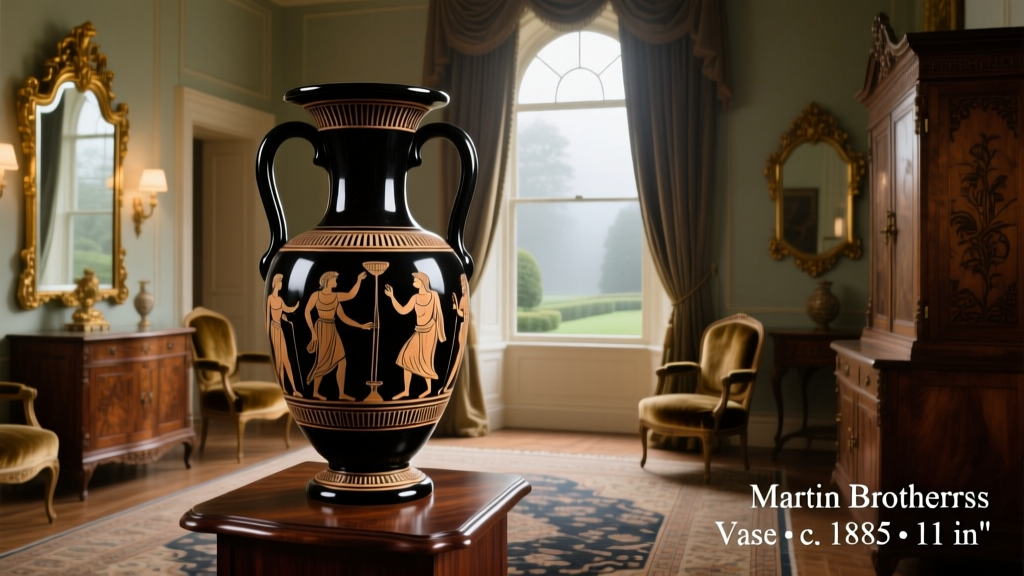
Martin Brothers Greek Black-Figure Vase: A Masterpiece of Victorian Ceramic Innovation, c. 1885

Lionel No. 221 Twin Pullman Observation Car Boxes: Authenticity, Packaging History, and Collector Evaluation

Goldfinger: The 1964 United Artists Vinyl Soundtrack — A Collector’s Guide to Authenticity, Pressing Variants, and Restoration Best Practices
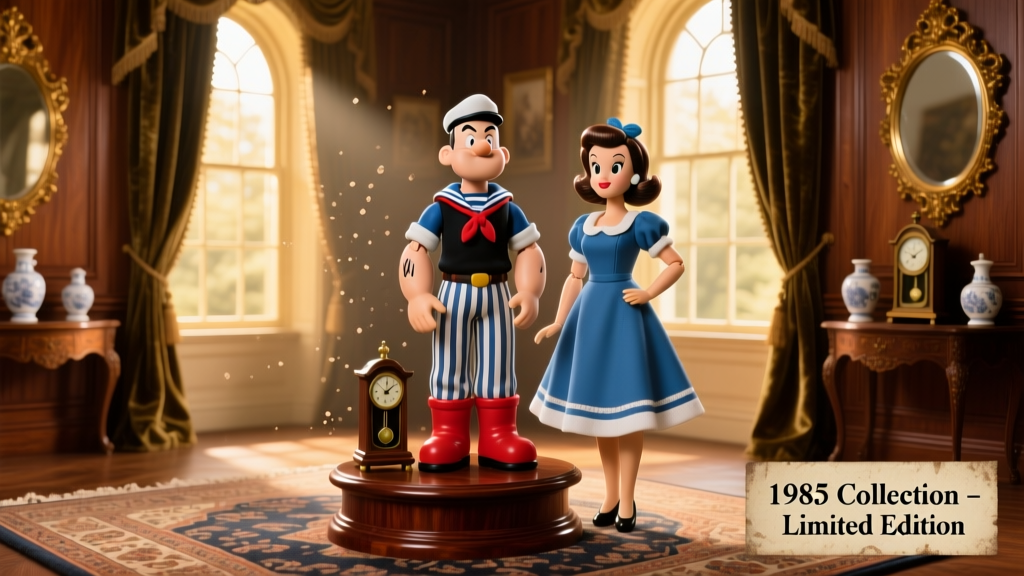
Olive Oyl Doll (1985, 11-Inch) by Presents Corporation: Authenticity, Construction, and Collectibility Analysis

Kerosene Lamps of the Aquaris Line in Amber Glass: History, Identification, and Restoration Ethics

The Recumbent Lion Doorstop: A Study in Victorian Craftsmanship, Bronze Patination, and Functional Antiquity

Baroque Walnut Armchairs from 17th–18th Century Italy: A Technical Study of Acanthus Finials, Block Feet, and Structural Craftsmanship

Fostoria Baroque Bowl in Topaz: Identifying, Valuing, and Preserving the Iconic 10½-Inch Piece