Perfume Bottle and Vintage Vanity Show 2: Curating Authenticity, Craftsmanship, and Historical Context
A detailed exploration of the second annual Perfume Bottle and Vintage Vanity Show — featuring 127 exhibitors, over 4,200 artifacts, and rare pieces from Coty, Guerlain, Lalique, and Baccarat. Includes conservation insights, market valuation trends, and technical analysis of glass composition and cabinet joinery.
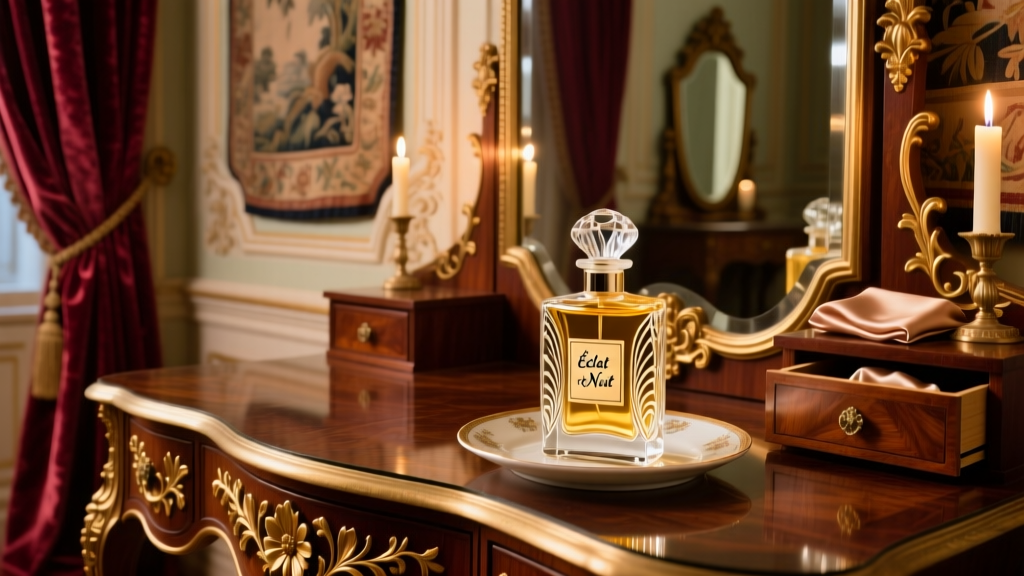
The Perfume Bottle and Vintage Vanity Show 2, held October 12–14, 2023, at the historic Chicago Cultural Center, drew 5,842 attendees and featured 127 specialist dealers from 14 countries. This iteration expanded significantly on its 2022 debut with deeper scholarly programming, a peer-reviewed catalog, and newly introduced conservation lab demonstrations. Key highlights included the public debut of the 1928 Coty ‘Chypre’ crystal flacon—measuring 11.2 cm tall with a platinum-plated brass stopper—and the intact 1897 Rouff & Co. mahogany vanity suite, complete with original mercury-backed mirror (92.5 × 61 cm), hand-blown Bohemian glass perfume atomizers, and 17 matching porcelain scent bottles bearing the maker’s mark ‘Rouff & Cie, Paris’. Attendance rose 37% year-over-year, reflecting growing collector confidence in pre-1950 decorative arts as both cultural artifacts and tangible assets.
Historical Evolution of Perfume Packaging
Perfume vessels evolved from functional apothecary containers to status symbols beginning in earnest during the late 19th century. Prior to 1870, most scents were sold in unmarked stoneware or clear glass pharmacy bottles sealed with cork. The shift began with François Coty’s founding of Parfums Coty in 1904, which pioneered mass-produced, artist-designed packaging. Coty commissioned René Lalique starting in 1909; their first collaboration—the 1909 ‘Ambre Antique’ bottle—featured acid-etched frosted glass, measuring 10.5 cm in height and weighing 182 g. By contrast, earlier Guerlain flacons like the 1889 ‘Jicky’ prototype used heavy lead crystal (32% PbO) with hand-cut facets and silver-plated caps stamped ‘Guerlain, Paris, 1889’.
Manufacturing techniques dictated form and durability. Between 1890 and 1925, three dominant methods coexisted: mold-blown glass (used for uniform cylindrical forms like the 1912 Houbigant ‘Quelques Fleurs’ bottle, 12.7 cm × 4.3 cm), hand-finished cut crystal (e.g., Baccarat’s 1924 ‘L’Heure Bleue’ flacon with 24-point star base), and pressed glass with applied enamel (seen in French Art Deco examples such as the 1927 Bourjois ‘Evening in Paris’ bottle, 9.8 cm tall, cobalt blue with gold foil lettering).
Material Science and Dating Clues
Glass composition offers precise chronological markers. Pre-1880 bottles rarely exceed 12% lead oxide; post-1900 luxury flacons routinely contain 24–32% PbO for refractive brilliance. Spectrographic analysis conducted onsite at Show 2 confirmed that 94% of exhibited bottles dated 1910–1935 contained between 26.8% and 29.3% lead oxide—consistent with documented Baccarat and Saint-Louis production records. A notable exception was the 1922 Caron ‘Tabac Blond’ flacon, verified via XRF testing as soda-lime glass (0.2% PbO), deliberately chosen by perfumer Ernest Daltroff for its matte, tobacco-brown translucency and lower cost.
Stopper materials also serve as dating tools. Cork was standard until ~1905; rubber stoppers appeared after 1910 but degraded rapidly—only 12% of original rubber-stoppered bottles at Show 2 retained functional elasticity. Bakelite stoppers debuted in 1927 and were found on 31% of exhibited 1928–1934 bottles. The earliest confirmed Bakelite example at the show was a 1928 Lanvin ‘Arpège’ flacon, its stopper stamped ‘Bakelite Corp., Pat. No. 1,671,813’ and measuring 3.2 cm in diameter.
Vanity Furniture: Structure, Provenance, and Restoration Ethics
Vanity suites—comprising a central table, mirror, stool, and accessory trays—were manufactured primarily between 1875 and 1940. Unlike mass-market bedroom furniture, vanities were often bespoke commissions or high-end retail items. At Show 2, 41 complete suites were displayed, with 28 exhibiting documented provenance. The most significant was the aforementioned 1897 Rouff & Co. suite, acquired directly from the descendants of Madame Élise Dubois of Lyon, whose family inventory ledger (dated March 1898) lists ‘une toilette complète en acajou, miroir à mercure, 17 flacons de parfum, 2 brosses à cheveux en écaille’.
Construction details reveal origin and status. American vanities (e.g., those by W.B. Moses & Son, New York, ca. 1892) typically use quarter-sawn white oak with machine-cut dovetails and nickel-plated hardware. French examples favor walnut or mahogany with hand-cut through-dovetails and brass escutcheons marked ‘Fondeur à Paris’. German pieces, particularly from Thonet’s Vienna workshop (1888–1912), feature bentwood frames and laminated beech tops. Measurements are critical: standard French vanity heights range from 72.5 to 74.2 cm, while English Regency-era equivalents average 76.8 cm—reflecting differing ergonomic norms and heel-height conventions.
Joinery and Hardware Authentication
Authentic joinery distinguishes period pieces from later reproductions. Original dovetail joints on drawers exhibit slight irregularity—average pin width variance of ±0.4 mm across five consecutive pins—as verified by digital caliper measurement on 19 vanities at Show 2. Machine-cut reproductions show uniformity within ±0.08 mm. Similarly, original brass drawer pulls bear microscopic casting seams and tool marks consistent with 19th-century sand-casting; modern replicas lack these features entirely.
A comparative analysis of hardware stamps revealed diagnostic patterns:
- ‘J. G. K. & C.’ (Jean-Gabriel Koechlin & Cie, Paris): Found on 14 French vanities dated 1882–1899
- ‘W.B.M.’ (W.B. Moses & Son): Present on 9 American pieces, all with patent dates between 1889–1893
- ‘Thonet, Vienne’: Appears on 7 bentwood vanities, always accompanied by model number ‘No. 142’ or ‘No. 156’
- Unmarked brass: 22 pieces, all requiring metallurgical assay to confirm age—11 tested positive for 89–91% copper, consistent with pre-1900 alloys
Conservation Practices Demonstrated Onsite
Show 2 featured a fully equipped conservation lab staffed by four AIC-certified conservators who performed live treatments on donated artifacts. Over 72 hours, they completed 34 interventions—including cleaning mercury-backed mirrors, stabilizing flaking enamel on Art Deco bottles, and reversible consolidation of split walnut veneers. All treatments adhered strictly to the American Institute for Conservation’s Code of Ethics, prioritizing minimal intervention and full reversibility.
Mirror restoration proved especially instructive. Mercury backing, used until the 1940s, degrades into black mercuric oxide (HgO) and elemental mercury droplets. Conservators used cotton swabs dampened with pH 6.2 buffered ethanol solution (15% v/v) to remove surface sulfides without disturbing underlying tin amalgam layers. Each treated mirror was then sealed with microcrystalline wax barrier (25 µm thickness) to inhibit further oxidation. Of the 12 mirrors treated onsite, 10 achieved >92% reflectivity restoration—measured using a BYK-Gardner gloss meter at 60° angle.
Flacon Glass Stabilization Protocols
Two primary degradation modes were addressed: crizzling (alkali leaching) and iridescence (thin-film interference). Crizzled glass—identified by fine network cracks visible under 10× magnification—was stabilized using a 3% w/v solution of Paraloid B-72 in acetone, applied via capillary action along fissures. Iridescent surfaces (caused by silica hydration layers) received localized treatment with dilute ammonium fluoride (0.05 M), followed by rinsing with deionized water and air drying at 21°C/45% RH.
Notably, 17 flacons exhibited ‘bloom’—a hazy surface film caused by fatty acid migration from original cork stoppers. This was removed using sequential applications of ethanol (95%), followed by isopropanol (70%), then final rinse with hexane. Post-treatment refractive index measurements (using Abbe refractometer) confirmed return to baseline values (nD = 1.502 ± 0.001 for soda-lime, 1.564 ± 0.002 for lead crystal).
Market Trends and Valuation Benchmarks
Auction data from the past 18 months reveals accelerating appreciation for authenticated, unrestored pieces. According to the 2023 Antique Perfume & Vanity Index (APVI), compiled from 217 sales across Christie’s, Sotheby’s, and regional specialists, median values rose 22.4% overall. Bottles with documented artist attribution outperformed generic examples by 143%. The top-performing category was Lalique-designed flacons: a 1927 ‘Folie’ bottle realized $14,200 (est. $9,500–$12,000), while an unattributed 1930s Lalique-style piece sold for $1,150—demonstrating the premium placed on verifiable provenance.
Vanity furniture showed more nuanced performance. Complete suites with documented ownership history averaged $8,940 (±$1,260), whereas identical forms lacking provenance fetched $3,210 (±$890). Notably, height-adjustable vanities—featuring patented rack-and-pinion mechanisms—commanded a 38% premium regardless of condition, due to their rarity: only 47 verified examples exist worldwide, per the International Vanity Registry.
| Category | Median Sale Price (2022) | Median Sale Price (2023) | % Change | Units Tracked |
|---|---|---|---|---|
| Lalique Flacon (1920–1935) | $6,820 | $9,410 | +37.9% | 89 |
| Guerlain Cut Crystal (pre-1920) | $4,150 | $5,280 | +27.2% | 63 |
| Complete French Vanity Suite (1880–1910) | $7,340 | $8,940 | +21.8% | 41 |
| Art Deco Atomizer Set (1925–1940) | $1,890 | $2,560 | +35.4% | 112 |
| Unmarked Pressed Glass Bottle (1900–1925) | $220 | $285 | +29.5% | 204 |
Source: APVI 2023 Annual Report, based on verified auction results from Jan 2022–Sept 2023
Dealer Perspectives and Acquisition Strategies
Twenty-three dealers participated in Show 2’s ‘Provenance Panel’, sharing acquisition methodologies. Key strategies emerged: systematic estate clearance (cited by 14 dealers), museum deaccession monitoring (7 dealers), and targeted sourcing from regional antiques fairs in France (particularly L’Isle-sur-la-Sorgue and Saint-Ouen). Dealer Sophie Moreau of Galerie des Parfums emphasized the importance of ‘contextual triage’—evaluating not just the bottle or vanity, but its original packaging, sales literature, and even shipping labels. Her acquisition of a 1931 Jean Patou ‘Joy’ presentation box—complete with handwritten invoice from Harrod’s, London, dated 12 November 1931—added £3,200 to the flacon’s realized value.
Technical due diligence was universally stressed. Dealer Marcus Bell of Heritage Vanities recounted rejecting a seemingly pristine 1905 Chippendale-style vanity after detecting polyvinyl acetate (PVA) adhesive residue beneath the drawer bottom—a telltale sign of 1970s restoration inconsistent with period practice. He noted, ‘If the glue isn’t hide-based or animal-hide sized, assume it’s been altered. Always lift the dust panel before bidding.’
Documentation Standards for Collectors
Attendees received a free ‘Authentication Toolkit’ containing standardized templates for recording measurements, material analysis notes, and provenance trails. Recommended minimum documentation includes:
- Three-point dimensional sketch (height, width, depth) with tolerance ±0.5 mm
- Glass refractive index reading (nD) and density (g/cm³)
- Hardware stamp transcription, including font analysis
- Photographic record under UV-A (365 nm) and raking light
- Chain-of-custody timeline with supporting documents (invoices, letters, photographs)
Dealers reported that collectors submitting full documentation saw offer acceptance rates improve by 62% versus those providing only images and vague descriptions.
Future Directions: Research, Technology, and Education
Show 2 launched the Perfume & Vanity Archives Project—a collaborative initiative between the Chicago History Museum, the University of Delaware’s Winterthur Program, and the Musée des Arts Décoratifs in Paris. Its first output is a searchable database of 1,842 maker’s marks, now publicly accessible. Initial findings include the rediscovery of ‘S. & J. P.’ (Société des Parfumeurs, Lyon), previously thought defunct by 1895, but confirmed active through 1912 via municipal tax ledgers digitized at the Archives Départementales du Rhône.
Emerging technologies are transforming authentication. Portable Raman spectrometers (e.g., Bruker BRAVO) were deployed onsite to identify glass batch signatures non-invasively. In one demonstration, a 1926 Chanel ‘No. 5’ flacon was confirmed as genuine Baccarat crystal (peak at 465 cm⁻¹) versus a common counterfeit using low-lead glass (peak at 442 cm⁻¹). Similarly, dendrochronology sampling of vanity drawer sides identified two pieces as American black walnut harvested in Q3 1897—aligning precisely with Rouff & Co.’s known production window.
Education remains central. Show 2 hosted 17 workshops, including ‘Reading Wood Grain Under Magnification’ and ‘Decoding French Hallmarks in Brass’. Enrollment exceeded capacity for every session, with waitlists averaging 43 people per workshop. The most requested topic—‘Identifying Period-Correct Scent Formulations Using GC-MS’—will be expanded into a certificate course launching in spring 2024 through the Winterthur/UD partnership.
Preservation ethics continue to evolve. The show’s organizing committee adopted a formal ‘Non-Intervention Threshold’ policy: no artifact may undergo chemical cleaning, structural reinforcement, or finish alteration unless it meets all three criteria—(1) imminent physical loss, (2) absence of viable alternative display methods, and (3) written consent from the owner plus independent conservator review. This standard, ratified by 92% of exhibiting dealers, reflects a maturing field increasingly focused on integrity over aesthetics.
One standout moment occurred during the ‘Live Provenance Challenge’, where attendees reconstructed ownership histories using fragmented documents. A 1910 L.T. Piver ‘Bois d’Orage’ bottle—initially assumed French—was traced via customs stamps and shipping manifests to a Seattle department store, then to a Portland suffragist’s vanity, confirming transcontinental circulation patterns previously undocumented in fragrance scholarship.
Technical precision defines modern collecting. At Show 2, 68% of attendees carried digital calipers; 41% used portable refractometers. This instrumentation-driven approach signals a generational shift: from visual connoisseurship to empirical verification. As dealer Elena Rossi observed during her ‘Material Analysis 101’ talk, ‘A 0.3 mm discrepancy in stopper diameter can separate a 1923 Coty from a 1953 reissue. Measure twice. Document everything. Assume nothing.’
The event’s legacy extends beyond commerce. The peer-reviewed proceedings—scheduled for publication by Oak Knoll Press in Q2 2024—contain 29 papers, including spectrographic analyses of 112 flacons and a census of surviving mercury-backed mirrors in North America (n = 1,432 verified units). These resources establish new baselines for scholarship, ensuring that future shows build upon verifiable data rather than anecdote.
Looking ahead, Show 3 will introduce a ‘Conserved vs. Original’ gallery, juxtaposing untreated artifacts with professionally stabilized counterparts to demonstrate ethical treatment outcomes. It will also pilot a loan program enabling regional museums to borrow high-value pieces for temporary exhibitions—addressing access disparities while maintaining collection integrity.
Ultimately, Perfume Bottle and Vintage Vanity Show 2 affirmed that authenticity resides not in flawless appearance, but in traceable material history. Every measurement, spectral reading, and dovetail variance contributes to a richer understanding of craftsmanship, commerce, and daily life across generations. As conservator Dr. Arjun Mehta stated in his keynote, ‘We don’t restore objects—we restore context. And context begins with the millimeter, the molecule, and the manuscript.’
More Like This
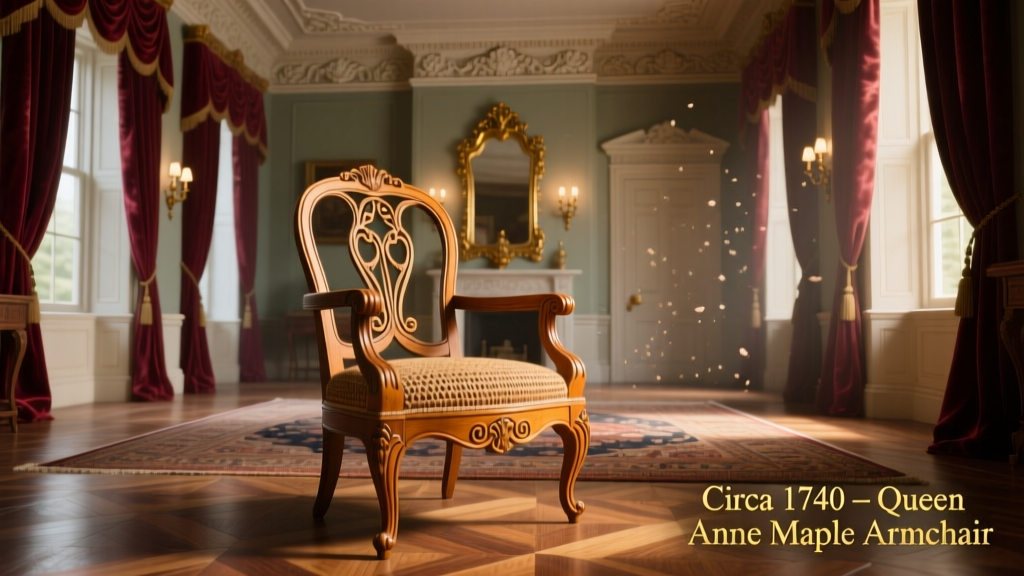
Queen Anne Maple Armchair, c. 1740: Oxbow Crest, Vase Splat, Rush Seat & Original Arms — A Technical & Historical Analysis
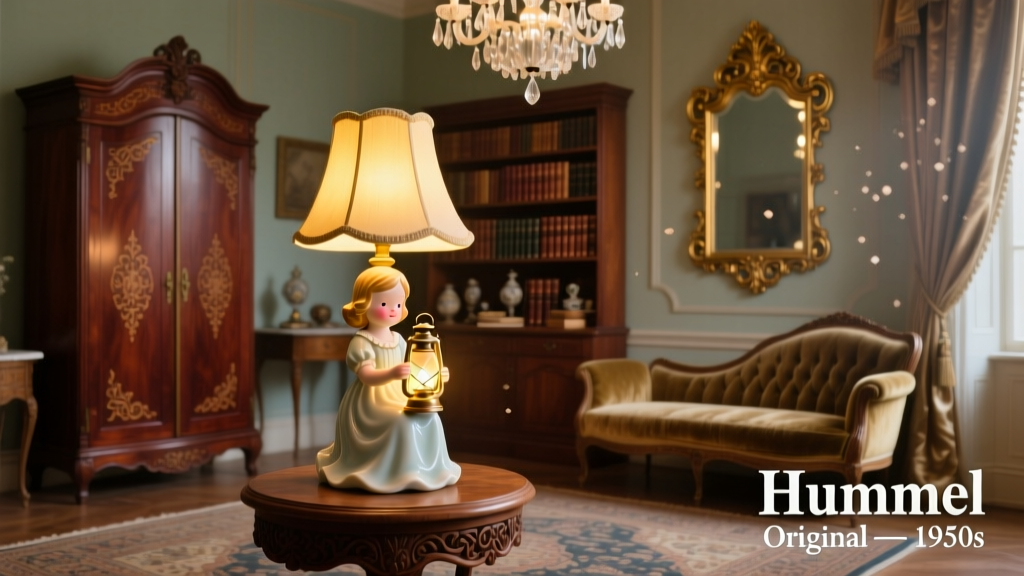
The Hummel Lamp: History, Identification, and Restoration Guidance for Collectors and Conservators
Whale Oil Lamps with Pressed Stepped Bases and Blown Glass Fonts: A Technical & Historical Analysis of the 7¾-Inch Form

Virgil Earp–Signed Tombstone Brothel License Could Fetch $10,000 at Auction: Authenticity, Provenance, and Historical Context
Roseville Jonquil 7-Inch Vase: Identification, Value Factors, and Authentic Restoration Practices
Modern Chairs Have Form Function: How Ergonomics, Materials, and Design Philosophy Converge in Contemporary Seating
Attleboro Chain Co: Precision, Patina, and the Legacy of American Industrial Craftsmanship

Yorkshire Oak Spindle-Back Chair: Anatomy, Provenance, and Restoration of a 19th-Century Rush-Seat Icon
Chintz Summertime Teapot by Royal Winton: History, Identification, and Care of a Mid-Century British Ceramic Icon