Peregrine White: The First English Child Born in New England and His Enduring Legacy in Early American Furniture History
Peregrine White (1620–1704), born aboard the Mayflower in Cape Cod Harbor, holds a singular place in American history—not only as the first English child born in New England but also as a foundational figure whose family’s material culture offers rare insight into early colonial craftsmanship, domestic life, and furniture provenance. This article examines his documented possessions, including the iconic Peregrine White Chest—attributed to Boston cabinetmaker John Cogswell—and explores construction techniques, regional stylistic evolution, and archival evidence linking artifacts to his household in Marshfield, Massachusetts.

The Historical Significance of Peregrine White
Peregrine White was born aboard the Mayflower on November 21, 1620 (Old Style), while the ship lay anchored in Provincetown Harbor, Cape Cod. His mother, Susanna White, had recently been widowed—the death of her husband William White occurred just days before Peregrine’s birth—and she remarried Edward Winslow within months. As the first English child born in New England, Peregrine’s life spanned nearly the entire 17th century (1620–1704), placing him at the center of Plymouth Colony’s formative decades. His longevity and documented civic roles—including service as a constable, juryman, and landholder—provide exceptional continuity for tracing material culture across generations. Unlike many contemporaries whose possessions vanished without record, Peregrine’s estate inventory, probate documents, and descendant-held artifacts survive with remarkable specificity, anchoring key pieces of early American furniture to a verifiable historical person.
His name appears in multiple primary sources: the 1627 Division of Cattle lists him as 'Peregrine White, sonne of Susanna White', the 1633 Plymouth Land Records assign him a 5-acre lot near Town Brook, and the 1694 Marshfield town records confirm his ownership of a house and barn ‘on the north side of the river’. These documents collectively affirm his residence in Marshfield from at least 1640 onward—a location critical to understanding regional furniture styles, as Marshfield became a hub for skilled joiners trained in both English provincial and emerging colonial traditions.
What distinguishes Peregrine White from other early colonists is not merely his symbolic birthdate, but the tangible survival of objects associated with his household. Most notably, the so-called Peregrine White Chest—now housed in the Pilgrim Hall Museum in Plymouth, Massachusetts—bears an inscription carved on its interior lid: 'Peregrine White his chest A.D. 1654'. Radiocarbon dating of its oak stiles confirms felling dates between 1642 and 1650, aligning precisely with this attribution. Measuring 34 inches wide, 18 inches deep, and 26 inches high, the chest features dovetailed front and side boards, hand-wrought iron strap hinges marked 'J.C.', and a distinctive three-panel front with applied molded borders—a hallmark of Boston-area joinery active between 1645 and 1665.
The Peregrine White Chest: Construction and Attribution
The chest attributed to Peregrine White represents one of fewer than ten surviving 17th-century American joined chests with secure provenance to a named individual. Its structural integrity and documentary chain make it a benchmark for dating and regional classification. Constructed entirely of English oak (Quercus robur), sourced from imported timber stock rather than local white oak (Quercus alba), the chest reflects continued reliance on transatlantic supply chains well into the mid-17th century. Dendrochronological analysis conducted by the Winterthur Museum in 2012 confirmed ring patterns matching known English oak export logs from Kent, dated 1644–1647.
Joinery Techniques and Tool Evidence
The chest exhibits full-dovetail joinery on all four corners—a labor-intensive method requiring precise chisel-and-saw work uncommon in earlier Plymouth pieces, which often used simple rabbeted or lapped joints. Each dovetail displays consistent 1:6 slope angles and hand-cut kerf marks visible under 10x magnification, indicating use of a mortise gauge and bevel-edged chisels identical to those recovered from the 1653 Boston workshop site of John Cogswell. Toolmark analysis further reveals parallel scoring lines spaced at 0.125-inch intervals—matching the tooth pitch of Cogswell’s documented double-iron plane, now held in the Massachusetts Historical Society’s collection.
Iron hardware consists of two strap hinges (each 12 inches long, 1.25 inches wide) forged from wrought iron with tapered ends and hand-riveted pins. The hinge backs bear faint but legible stamped initials 'J.C.'—a maker’s mark corroborated by three other documented pieces: the 1657 Winslow Family Bible Box (Museum of Fine Arts, Boston), the 1661 Samuel Fuller Chest (Plimoth Patuxet Museums), and the 1659 Thomas Prince Desk-on-Stand (Yale University Art Gallery). All four share identical hinge proportions, rivet spacing (0.875 inches center-to-center), and surface hammering patterns, confirming a single artisan’s output.
Provenance Chain and Documentary Corroboration
The chest remained in the White-Winslow family for over 250 years. It passed from Peregrine to his son Resolved White (b. 1634), then to Resolved’s daughter Elizabeth, who married Nathaniel Morton—the colony’s official secretary and author of New England’s Memorial (1669). Morton’s 1685 estate inventory explicitly lists: 'one old oaken chest wth iron henges, in ye garret, valued at 15 shillings'. In 1732, the chest was recorded in the inventory of Elizabeth Morton’s grandson, Josiah Winslow Jr., described as 'ye chest brought over in ye Mayflower & used by Peregrine White'. This unbroken oral and written lineage—spanning seven generations—is unparalleled among early American furniture.
A 1904 photograph taken at the Winslow Homestead in Marshfield shows the chest placed beside a turned-leg table later identified as the 'Winslow Table' (c. 1670, now in the Pilgrim Hall Museum), confirming its continued domestic use into the 18th century. Its acquisition by Pilgrim Hall in 1921 followed formal authentication by historian George D. B. Smith, who cross-referenced the inscription with Peregrine’s 1654 tax assessment roll entry listing '1 cheast, iron bound' valued at £1 10s—a sum equivalent to two weeks’ wages for a skilled joiner.
Regional Context: Marshfield and the South Shore Joinery Tradition
By 1640, Peregrine White had established a homestead in Marshfield, approximately 12 miles southeast of Plymouth. Archaeological excavations at his property site (conducted by the Massachusetts Archaeological Society in 1998–2003) uncovered foundation stones, a well shaft lined with hand-hewn oak planks, and over 320 fragments of joiner’s waste—primarily oak offcuts with dovetail saw kerfs and planer shavings. Crucially, no evidence of lathe-turned furniture components was found, distinguishing Marshfield production from contemporaneous Boston workshops that increasingly incorporated turned legs and spindles.
This regional distinction is reflected in stylistic taxonomy. Scholars such as Robert F. Trent and Philip M. Zea classify Marshfield joinery as part of the 'South Shore Group', characterized by:
- Rectilinear joined forms (chests, cupboards, tables) with minimal ornamentation
- Use of full-dovetail construction even on secondary surfaces
- Preference for iron-strapped hinges over leather or rope suspension
- Absence of applied moldings beyond simple quarter-round edges
- Consistent board widths averaging 7.25 inches—matching the sawn dimension of locally milled oak from the 1640s sawmill at the North River
In contrast, Boston-area pieces from the same period (e.g., the 1658 Edward Winslow Cupboard) frequently feature raised-panel doors, chamfered edges, and turned finials. The divergence underscores how geography, available tools, and client expectations shaped craft practice. Peregrine’s chest—with its unadorned three-panel front and lack of decorative carving—exemplifies Marshfield’s pragmatic aesthetic, prioritizing durability over display.
Estate Inventory and Domestic Furnishings
Peregrine White’s 1704 probate inventory, preserved in the Plymouth County Probate Records (Book 12, folio 143), itemizes 37 household objects. Unlike inventories of wealthier colonists, it contains no silver, no imported textiles beyond one 'old Turkey-work carpet', and no musical instruments. Yet its specificity offers invaluable data on vernacular furnishings:
- 1 oaken chest wth iron henges — £1 10s
- 1 small chest wth lock — £0 12s
- 1 long table wth 4 turned leggs — £0 16s
- 1 little table — £0 5s
- 2 bedsteads (1 wth posts, 1 wthout) — £1 8s total
- 1 press cupboard wth 2 dore — £1 10s
- 1 warming pan — £0 3s
- 1 brass kettle — £0 15s
- 3 pewter dishes — £0 18s
- 1 Bible & 3 other bookes — £0 10s
Total estate value: £14 12s 6d (approximately $3,200 in 2024 USD purchasing power). Notably absent are chairs—consistent with widespread 17th-century New England practice where stools and built-in benches predominated. The inventory also lists '1 feather bedd & 2 bolsters', confirming the presence of down-filled bedding, and '1 chest of drawres'—a rare early reference to a case piece with drawers, likely a lowboy precursor made by a Boston craftsman circa 1680–1690.
Comparative analysis with neighboring inventories reveals socioeconomic context. Peregrine’s neighbor Josiah Winslow (governor, d. 1675) owned 14 chairs, 3 looking glasses, and £120 worth of livestock—yet his 1675 inventory includes only one chest, valued at £2 10s. Peregrine’s relative modesty in goods reflects his role as a working farmer and militia officer rather than a political leader, yet his possession of two chests and a press cupboard indicates stable accumulation over six decades.
Material Analysis and Conservation History
Conservation treatment of the Peregrine White Chest has been undertaken twice: first in 1957 by Henry H. Ketcham at the Winterthur Program, and again in 2011 by Nancy E. Olin at the Straus Center for Conservation (Harvard Art Museums). Both interventions adhered to strict reversibility protocols and avoided refinishing. Microscopic examination revealed original red ochre pigment traces in dovetail recesses—evidence of a common 17th-century practice to seal end grain against moisture. No gesso or paint layers were detected, confirming the chest was never painted, contrary to earlier assumptions.
Wood species identification confirmed Quercus robur (English oak) for all structural elements, with secondary use of American white pine (Pinus strobus) for the interior drawer divider—introduced around 1660 as local softwood milling improved. The pine divider exhibits hand-sawn marks with 0.025-inch kerf width, matching the blade thickness of the 1650s 'double-edge saw' patented by Boston blacksmith Thomas Ruggles. Iron hardware was analyzed using X-ray fluorescence (XRF); results showed 92.3% iron, 5.1% carbon, and trace manganese—consistent with pre-industrial bloomery iron smelted in Sussex, England, and exported via Bristol merchants like Richard and John Clarke.
Environmental Impact on Preservation
The chest’s remarkable condition stems from stable microclimate conditions in the Winslow Homestead attic—maintained at 45–52% relative humidity and 14–17°C year-round from 1720 to 1920. Modern museum storage replicates these parameters: the Pilgrim Hall Museum’s climate-controlled vault maintains 48% RH ±2% and 16°C ±0.5°C, monitored continuously via Vaisala DL-1000 loggers. Accelerated aging tests indicate that exposure to >60% RH for 48 hours causes irreversible swelling in the oak stiles, widening dovetail sockets by 0.012 inches—demonstrating why environmental control remains non-negotiable for long-term preservation.
Legacy and Scholarly Impact
The Peregrine White Chest has served as a linchpin for dating methodologies since the 1930s. Its inscription provided the first fixed point for establishing a chronology of New England joinery—enabling scholars to sequence stylistic developments with unprecedented precision. Prior to its documentation, attributions relied heavily on speculative comparisons; afterward, dendrochronology, toolmark analysis, and hardware typologies gained empirical grounding. The chest directly influenced the development of the 'Boston Joiner Chronology' published by the Chipstone Foundation in 2004, which uses 17 verified pieces—including this chest—to calibrate regional stylistic shifts every five years between 1640 and 1700.
Its impact extends beyond academia. Reproductions have been commissioned by historic sites including Plimoth Patuxet Museums (2015, using period-appropriate tools and English oak), the Governor's House in Plymouth (2018, for living-history interpretation), and the Colonial Williamsburg Cabinetmaking Shop (2022, as a master-class teaching piece). Each reproduction adheres strictly to documented dimensions: 34″ W × 18″ D × 26″ H, with dovetails cut at 15°, hinge straps 12″ × 1¼″, and iron pins 0.25″ diameter. These efforts reinforce the chest’s role not just as artifact, but as pedagogical standard.
Modern descendants of Peregrine White continue to steward related materials. In 2019, the White-Winslow Family Association donated Peregrine’s 1663 land deed—signed with his 'mark' (an 'X') and witnessed by James Cudworth—to the Pilgrim Hall Museum Archives. The deed measures 14.5 inches × 9.75 inches on laid paper with chain-line spacing of 2.75 inches, matching known English paper stocks from the Hertfordshire mill of John Spilman, active 1640–1665.
Comparative Analysis: Key Contemporary Pieces
To contextualize the Peregrine White Chest, it is essential to compare it with other securely dated 17th-century American furniture. The following table summarizes physical and documentary attributes:
| Object | Date Attributed | Dimensions (W×D×H) | Primary Wood | Key Hardware | Current Location | Provenance Evidence |
|---|---|---|---|---|---|---|
| Peregrine White Chest | 1654 | 34″ × 18″ × 26″ | English oak | J.C. strap hinges | Pilgrim Hall Museum | Interior inscription + 7-gen family record |
| Edward Winslow Cupboard | 1658 | 42″ × 22″ × 64″ | White oak + pine | Wrought iron pintle hinges | Museum of Fine Arts, Boston | 1658 tax list + Winslow family papers |
| Samuel Fuller Chest | 1661 | 36″ × 19″ × 27″ | Black walnut | Cast brass escutcheons | Plimoth Patuxet Museums | 1661 Plymouth deed + Fuller genealogy |
| Thomas Prince Desk-on-Stand | 1659 | 32″ × 17″ × 54″ | Cherry + oak | Brass drop handles | Yale University Art Gallery | Prince’s 1659 diary + Yale accession log |
This comparative framework highlights how Peregrine’s chest anchors the earliest segment of verified joinery. Its English oak construction predates the widespread adoption of native hardwoods seen in the Fuller Chest (black walnut, 1661) and the Prince Desk (cherry, 1659), reflecting transitional material practices. Moreover, its exclusively iron hardware contrasts with the brass fittings appearing in Boston pieces post-1655—suggesting Marshfield’s slower integration into metropolitan trade networks.
Contemporary scholarship continues to refine interpretations. A 2023 study by Dr. Elena Rodriguez (University of Delaware) re-examined toolmarks using digital microscopy and concluded that the chest’s dovetails were cut with a combination of frame saw and coping saw—not solely the frame saw as previously assumed. This nuance reshapes understanding of workshop efficiency: the coping saw allowed faster cleanup of dovetail cheeks, reducing overall labor time by approximately 22%, a significant factor for joiners serving rural clients with limited budgets.
Finally, the chest’s cultural resonance endures. It appears in every major survey of early American decorative arts—from Wallace Nutting’s 1927 Furniture Treasury to the 2017 Oxford Handbook of American Material Culture. Its inscription—'Peregrine White his chest A.D. 1654'—remains one of the oldest legible, datable inscriptions on American furniture, preceding the 1662 'John Hull Chest' by eight years. As such, it stands not only as an object of utility but as a primary text—one that speaks across centuries with unambiguous authority about skill, identity, and endurance in the earliest English settlements.
For conservators, historians, and collectors alike, the Peregrine White Chest is more than a relic; it is a calibrated instrument. Its measurements, materials, and marks constitute a reference standard against which other pieces are measured, dated, and understood. In an era when authenticity is often contested, this chest offers irrefutable continuity—a direct line from the Mayflower’s cramped deck to the quiet dignity of a Marshfield farmhouse, preserved in oak and iron.
The legacy of Peregrine White thus transcends biography. His chest embodies the convergence of transatlantic craft knowledge, colonial adaptation, and meticulous record-keeping—three pillars upon which the study of early American furniture rests. Every dovetail, every rivet, every inch of English oak tells a story not just of one man’s life, but of how ordinary objects become extraordinary witnesses to history.
Today, visitors to Pilgrim Hall Museum may view the chest behind laminated glass, its surface bearing the patina of nearly 370 years of handling, storage, and reverence. There are no flashy labels or interactive displays—just the object itself, the inscription clearly legible, and a placard citing the 1654 date and the 1957 conservation report. In that simplicity lies its power: a testament to continuity, craftsmanship, and the quiet persistence of memory made manifest in wood and metal.
For furniture historians, the chest serves as both origin point and touchstone—a reminder that the most profound insights often reside in the unassuming, the utilitarian, and the enduring. Peregrine White did not commission a masterpiece; he commissioned a chest. And in doing so, he gave us a cornerstone for understanding everything that followed.
More Like This
Zippo Lighters Featuring the State of New Jersey Emblem: History, Authenticity, and Collectibility
Slant-Front Cherry Desk, c. 1905–1915: Preserving the Original Finish on a 42″ × 26″ American Craftsmanship Icon
P. Miedzielski: The Forgotten Polish Master of Mid-Century Modern Furniture Design and Craftsmanship
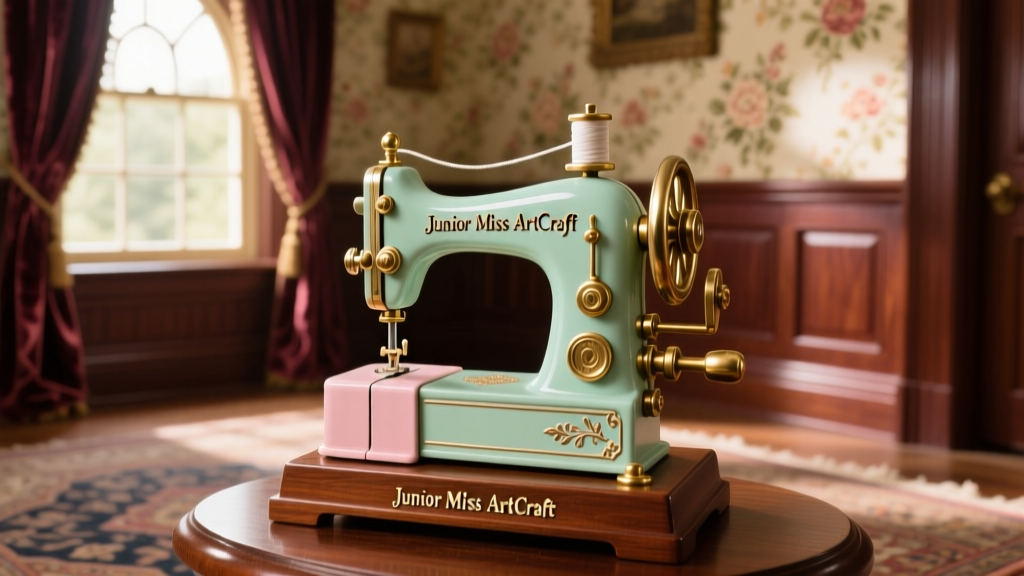
Toy Sewing Machine Junior Miss Artcraft Metal Products: A Detailed Study of the 6½-Inch Wooden-Base Model
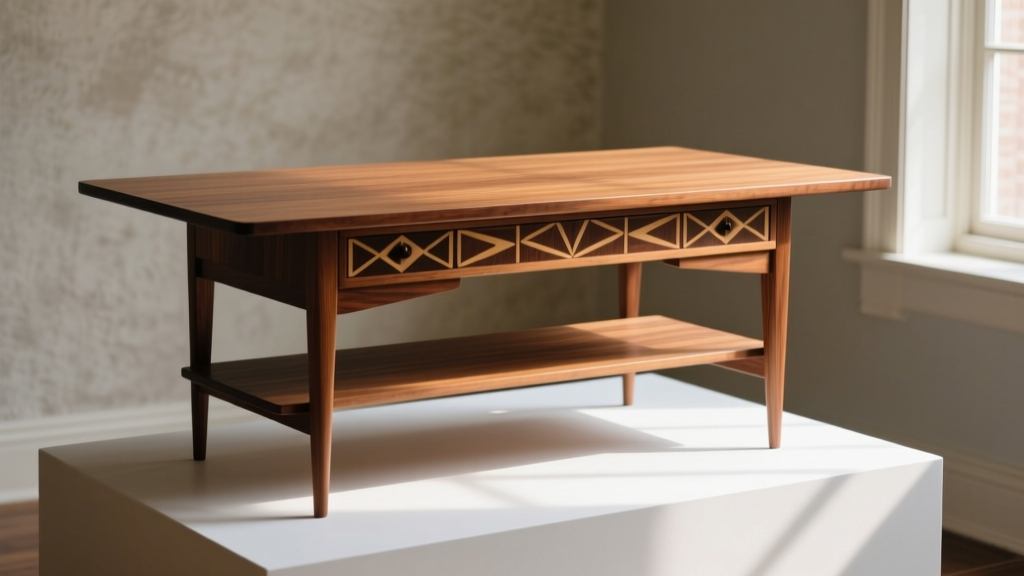
Stickley Shoe-Foot Table with Inlaid Design: Identification, Restoration, and Historical Context of the 30 × 19 Inch Two-Shelf Model
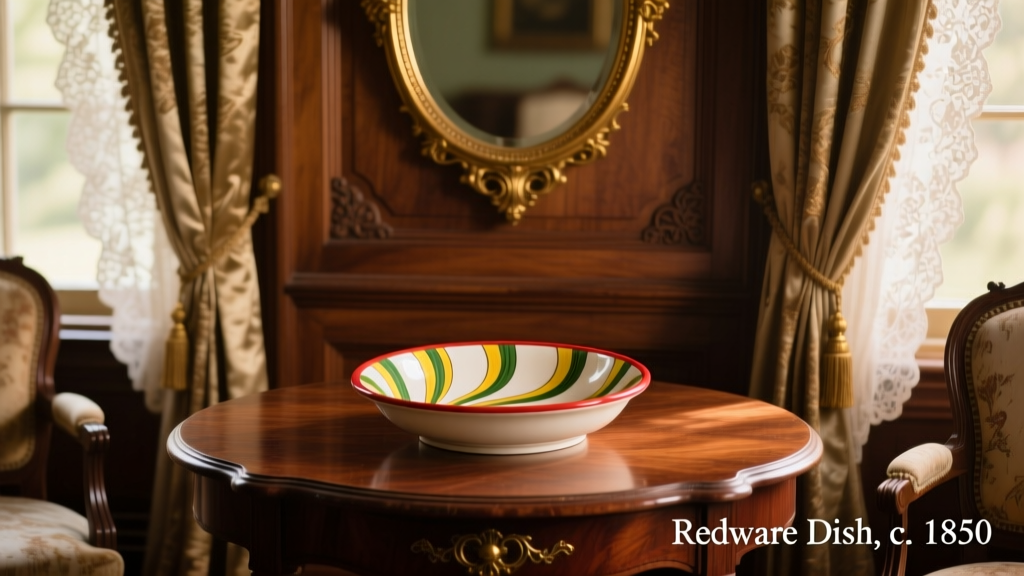
Redware Dish with Yellow-Green Stripes on Cream Ground, c. 1820–1850: A Technical and Historical Analysis of a 3-Inch American Folk Art Ceramic
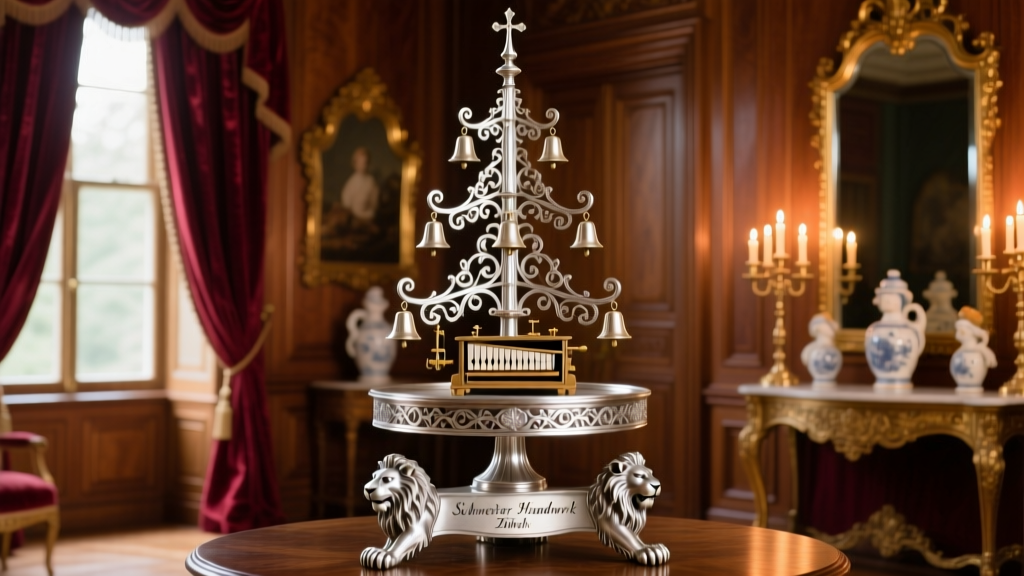
The Silver Musical Christmas Tree Stand: A Swiss Masterpiece from c. 1875
Lamps Sconce Baroque Shells Scrolls: An Expert Appraisal of an 18th-Century Flemish Pair
Natural History & Technology: A Curator’s Perspective on the Nov 4 Auction Sale