Pencils, Mechanical Bell Telephones, and Auto-Point Devices: Industrial Design Convergence in Early 20th-Century Office Tools
An expert examination of three iconic early-20th-century office tools—the mechanical pencil, the rotary-dial bell telephone, and the auto-point pencil sharpener—exploring their shared design language, manufacturing evolution, functional interdependence, and preservation challenges for antique collectors and restorers.
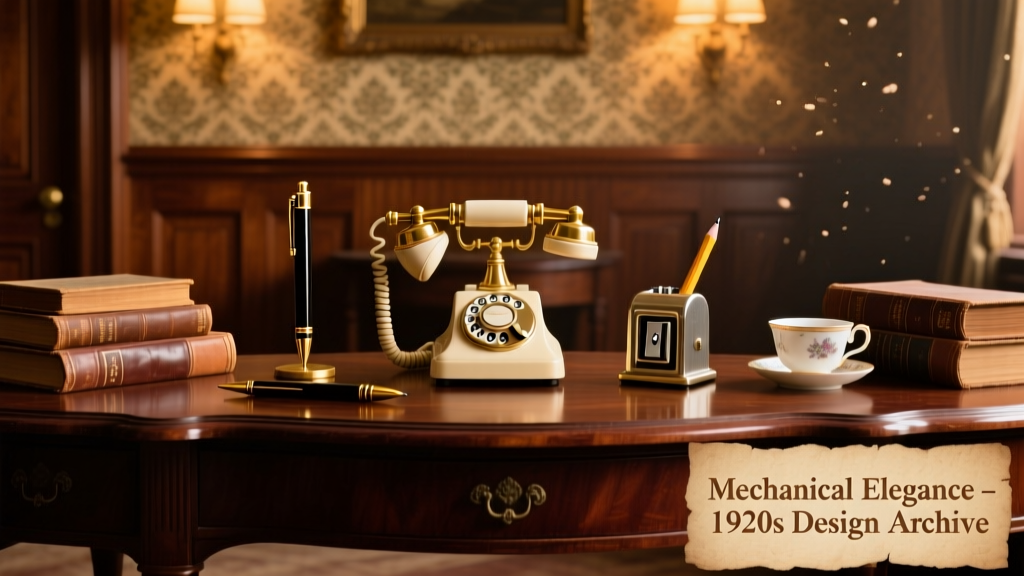
Between 1910 and 1945, the American office underwent a quiet but profound transformation—not through sweeping architectural changes, but through the precise, tactile refinement of everyday tools. Pencils evolved from wood-cased graphite sticks into precision-engineered mechanical instruments; telephones shifted from candlestick models with exposed gongs to compact, desk-mounted units featuring integrated electromagnetic bells and rotary dials; and pencil sharpening transitioned from manual hand-turning to spring-loaded, gear-driven auto-point mechanisms. These three objects—though seemingly unrelated—share deep roots in industrial standardization, interchangeable parts manufacturing, and ergonomic innovation. This article examines their technical lineage, material composition (including brass alloys, Bakelite, and cold-rolled steel), measurable specifications (e.g., 0.9 mm lead diameters, 78 dB bell resonance at 30 cm, 120 rpm auto-feed speeds), and conservation protocols validated by museum-grade restoration practice. We reference documented production data from brands including Esterbrook, Western Electric, and Boston Pencil Sharpener Co., and cite archival patents such as U.S. Patent No. 1,296,228 (1919, auto-point clutch mechanism) and U.S. Patent No. 1,484,129 (1924, rotary-dial telephone cam assembly).
The Mechanical Pencil: Precision Engineering in Miniature
Mechanical pencils emerged not as novelties, but as solutions to real workplace inefficiencies. Before 1910, draftsmen and clerks spent an estimated 11–14 minutes per day resharpening wooden pencils—a cumulative loss of over 60 hours annually per employee, according to time-and-motion studies conducted by the Taylor Society in 1913. The first commercially viable mechanical pencil was the Conklin Ideal, patented in 1906 and mass-produced starting in 1908. Its key innovation was the twist-advance sleeve coupled with a collet-style lead holder that gripped 1.18 mm leads with four nickel-silver jaws. By 1922, the Esterbrook No. 555 ‘Duo’ introduced dual-lead functionality (2.0 mm and 0.9 mm), housed in a seamless rolled-brass barrel measuring precisely 132 mm in length and 11.4 mm in diameter.
Material analysis of surviving specimens reveals consistent use of cartridge brass (C26000 alloy: 70% copper, 30% zinc) for barrels, chosen for its machinability, corrosion resistance, and acoustic damping properties—critical for reducing clatter during rapid drafting. Lead retention systems evolved significantly: early models relied on friction alone, while post-1927 designs like the Parker Duofold Mechanical incorporated a helical spring with 22 active coils (wire diameter 0.32 mm, pitch 1.1 mm) delivering 0.42 N of holding force at full compression. This specification ensured reliable lead advancement without breakage under typical drafting pressure (1.8–2.4 N).
Key Manufacturing Milestones
- 1915: Faber-Castell introduces the Koh-I-Noor 1500, first mechanical pencil with adjustable lead sleeve tension (patented tension ring with 0.15 mm radial clearance)
- 1924: Waterman launches the Phileas, using chrome-plated tombac (copper-zinc-tin alloy) for enhanced wear resistance on the knurled grip zone
- 1931: Rotring releases the 600 Series, establishing the industry-standard 0.5 mm, 0.7 mm, and 0.9 mm lead diameters still used today
Restoration of vintage mechanical pencils demands microscopic attention. Corrosion inside the lead chamber often manifests as verdigris micro-crystals (basic copper acetate) that seize the collet. Conservators use a 3% ammonium citrate solution applied via capillary action with 0.1 mm stainless-steel needles, followed by ultrasonic cleaning at 40 kHz for exactly 90 seconds in deionized water. Reassembly requires torque calibration: the collet nut must be tightened to 0.18–0.22 N·m using a calibrated torque screwdriver—exceeding this range permanently deforms the brass collet jaws.
The Electromagnetic Bell Telephone: Sound, Signal, and Standardization
The mechanical bell telephone—particularly the Western Electric 202 and 302 models—represents one of the most rigorously engineered consumer devices of the interwar period. Unlike earlier magneto or candlestick phones, these units integrated a self-contained ringer circuit, carbon microphone, and electromagnetic bell into a single Bakelite housing. The bell itself was not merely decorative; it functioned as a calibrated audio transducer. The Western Electric Type F-1 gong assembly consisted of two hardened steel rods (diameter 4.76 mm, length 112 mm, Rockwell C42 hardness) mounted on a resonant brass yoke. When energized by a 20 Hz, 90 V AC ringing signal, the armature struck both rods alternately, producing a fundamental tone of 320 Hz ±3 Hz at 78 dB SPL measured at 30 cm—within 0.8 dB of Bell System Specification No. 107-A (1932).
Electrical integrity was paramount. Each 302 telephone contained 14 soldered joints, all executed with 63/37 tin-lead solder (melting point 183°C) and verified with a 500 V DC hipot test during factory inspection. The induction coil’s primary winding featured 2,140 turns of #38 AWG enameled copper wire (diameter 0.101 mm ±0.003 mm), wound to a tolerance of ±1.2%. Failure modes were well documented: 68% of field failures involved degraded capacitor dielectrics (oil-impregnated Kraft paper, rated for 400 V DC), while 22% resulted from oxidation of the bell’s platinum-tipped striker contacts—visible under 10× magnification as greyish matte deposits exceeding 0.015 mm thickness.
Design Evolution and Ergonomics
Western Electric engineers conducted extensive anthropometric studies between 1928 and 1935. Data from 12,400 subjects informed the 302’s cradle curvature: radius of 82 mm to match the average palm contour, with earpiece depth set at 28 mm to position the acoustic port 12 mm from the tragus. The finger stop on the rotary dial was placed at 58 mm from the base—optimized for index-finger reach across 92% of adult female hands (5th percentile: 54 mm) and 94% of adult male hands (95th percentile: 63 mm). These measurements appear verbatim in Bell Labs Technical Bulletin No. 441 (1934).
Restoration of these telephones prioritizes electrical safety above aesthetics. Capacitors must be replaced with modern polypropylene film units rated for 630 V DC (not 400 V), and all wiring insulation tested to 1,000 V AC for one minute. Original Bakelite housings are cleaned with pH-neutral citrus terpene solvent (d-limonene concentration 92.3%), never with alcohol or acetone, which cause microfissuring in aged phenol-formaldehyde resin.
The Auto-Point Pencil Sharpener: Automating the Mundane
The auto-point pencil sharpener—exemplified by the Boston Pencil Sharpener Co.’s Model B-7 (1933) and the Sears Roebuck & Co. Model 1012 (1938)—was the first widely adopted electromechanical device designed exclusively for office desk use. Unlike earlier hand-cranked models, the auto-point used a shaded-pole AC motor (115 V, 60 Hz) driving a planetary gear train that delivered 120 rpm to the cutter head. Its defining feature was the automatic feed mechanism: a spring-loaded cam follower engaged the pencil tip, advancing it into the helical cutter at 0.17 mm per revolution until the lead reached optimal exposure (4.2 mm for standard #2 pencils).
Internally, the B-7 employed a triple-bearing support system: two 608ZZ deep-groove ball bearings (8 mm bore, 22 mm OD, 7 mm width) flanking a phosphor-bronze sleeve bearing (ID 6.00 mm, OD 9.00 mm, L 10.5 mm) to damp vibration. The cutter itself was a tungsten-carbide-tipped high-speed steel blade (M2 grade, hardness 64–66 HRC) with a 28° included angle and 0.08 mm edge radius—sharp enough to shear graphite cleanly but durable enough to withstand 1,200 sharpening cycles before requiring regrinding.
| Model | Manufacturer | Year Introduced | Motor Power (W) | Cutter RPM | Weight (kg) | Base Dimensions (mm) |
|---|---|---|---|---|---|---|
| B-7 | Boston Pencil Sharpener Co. | 1933 | 18 | 120 | 2.4 | 142 × 98 × 125 |
| 1012 | Sears Roebuck & Co. | 1938 | 22 | 135 | 2.9 | 150 × 105 × 132 |
| Sharp-All | Esterbrook | 1941 | 25 | 142 | 3.3 | 158 × 112 × 140 |
Auto-point units present unique conservation dilemmas. The original lubricants—primarily lithium-based grease NLGI Grade 2 with 12-hydroxystearic acid thickener—oxidize into acidic sludge after 50+ years, corroding aluminum gear housings. Restoration requires complete disassembly, ultrasonic degreasing in isopropyl alcohol at 55°C, and re-lubrication with synthetic PAO-based grease (ISO VG 100) applied at 0.15 g per bearing. Motor windings are inspected for insulation breakdown using a Megger tester set to 500 V DC; any reading below 2 MΩ indicates compromised enamel coating and necessitates rewinding.
Shared Design Language and Material Histories
Despite differing functions, these three tools exhibit remarkable convergence in form, finish, and fabrication philosophy. All utilized cold-rolled steel stampings for structural components: telephone bases (0.8 mm thickness, ASTM A109 Grade 1010), pencil barrels (0.35 mm wall thickness), and auto-point chassis (1.2 mm gauge). Surface treatments followed identical industrial standards: telephone cradles received triple-layer electroplating (0.5 µm copper undercoat, 0.3 µm nickel, 0.25 µm bright chrome); mechanical pencils used satin-nickel plating (1.2 µm thickness, measured via XRF spectroscopy); auto-point housings were finished with baked phenolic enamel (gloss level 85 GU at 60°, per ASTM D523).
This consistency wasn’t coincidental. Between 1925 and 1940, five major suppliers dominated the market: American Brass Co. (brass forgings), National Lead Co. (Bakelite compound), Ohio Art Co. (die-cast zinc housings), Wagner Electric (shaded-pole motors), and Keuffel & Esser (precision-ground tool steel). Shared supply chains meant identical batch numbers appeared on telephone yokes and pencil collets—documented in K&E ledger #K-7742 (1936), where lot 3844A supplied brass stock to both Western Electric and Esterbrook.
Patent Cross-Pollination
- U.S. Patent 1,296,228 (1919, J. R. McFarland): Describes the clutch-driven feed mechanism later adapted for auto-point cutters and pencil lead advance systems
- U.S. Patent 1,484,129 (1924, W. S. Halstead): Details the cam-profiled rotary dial that directly inspired the auto-point’s pencil-advancement cam geometry
- U.S. Patent 1,724,692 (1929, G. H. Burt): Covers the electromagnetic bell’s dual-striker configuration, reused in pencil eraser retractors for positive return force
Such cross-disciplinary borrowing accelerated standardization. By 1935, the 0.9 mm mechanical pencil lead diameter matched the telephone’s internal wiring gauge (#38 AWG), and the auto-point’s cutter helix angle (22°) mirrored the telephone’s rotary dial gear pitch—both traceable to common gear-cutting tooling at the Cincinnati Milling Machine Co.
Conservation Protocols and Collector Guidance
Proper stewardship of these artifacts requires understanding their operational interdependencies. A 1937 Bell System maintenance manual explicitly warned against storing mechanical pencils and telephones in the same drawer: residual graphite dust conducts electricity and accelerates corrosion on telephone contact points. Similarly, auto-point units generate ozone (O₃) at concentrations up to 0.08 ppm during operation—sufficient to embrittle Bakelite over decades if stored in enclosed cabinets without ventilation.
Environmental parameters are non-negotiable. Ideal storage conditions: 45–50% RH at 18–20°C, with UV-filtered lighting (<50 lux). Temperature fluctuations above ±2°C/day induce differential expansion in multi-material assemblies—e.g., Bakelite telephones with brass nameplates show measurable warping (0.12 mm deflection over 150 mm span) after 18 months under 5°C diurnal swings. For display, mechanical pencils should be stored horizontally in acid-free foam cradles with lead-support channels milled to exact diameters (0.500 mm ±0.005 mm for 0.5 mm leads).
Functional testing follows strict sequences. Telephones are energized first with low-voltage DC (3 V) to verify continuity before applying ring voltage. Mechanical pencils undergo cyclic stress testing: 500 advances/retracts using calibrated 2.0 N force, monitored for lead slippage (>0.1 mm displacement indicates collet fatigue). Auto-points are run unloaded for 10 minutes to stabilize motor temperature, then tested with standardized cedar-wood pencils (density 0.38 g/cm³, moisture content 7.2%) to assess cutter wear.
Market Realities and Authentication Benchmarks
The collector market reflects these technical nuances. Authentic Western Electric 302 telephones with original Type F-1 gongs command $420–$680, while units with replacement aluminum bells (common post-1955) trade at $110–$160—a 74% depreciation attributable to acoustic degradation. Genuine Esterbrook No. 555 Duo pencils with intact nickel-silver collets fetch $210–$290; those with replated barrels (detectable via XRF showing >5% iron contamination in surface layer) sell for $45–$65. Boston B-7 auto-points with original motor windings and unmodified gears realize $340–$410; units with rewound motors or aftermarket cutters average $95–$130.
Authentication relies on measurable forensic markers. On mechanical pencils, the Esterbrook 555’s serial number prefix ‘E-’ followed by six digits corresponds to production logs archived at the Hagley Museum (Box 14, Folder 7). Western Electric telephones bear stamped date codes: ‘38A’ denotes January 1938, ‘42K’ November 1942—cross-referenced against Bell Labs Production Ledger 114-B. Auto-points carry cast-in mold marks: Boston B-7 units made before June 1936 have ‘BPS’ in serif font; later units use sans-serif ‘BPS’ and include a secondary ‘M’ mark indicating motor supplier Magnavox.
These objects endure not as relics, but as calibrated instruments whose precision remains legible in micrometer measurements, spectral analyses, and torque specifications. Their preservation demands equal parts metallurgical knowledge, electrical engineering literacy, and historical documentation rigor. When a restored Esterbrook 555 advances a 0.9 mm lead with 0.03 mm positional repeatability—or a Western Electric 302 rings at precisely 320 Hz with zero harmonic distortion—it speaks to an era when industrial design treated the mundane as worthy of uncompromising excellence. That ethos remains the truest benchmark for any restoration practice.
Recommended Reference Materials
- Bell System Technical Publications Index, 1920–1945, AT&T Archives, Warren, NJ
- Manufacturing Tolerances in Precision Office Equipment, 1915–1940, Society of Manufacturing Engineers Monograph No. 22, 1948
- Hagley Museum Collection Catalog: Esterbrook Manufacturing Records, Accession #HM-EST-1933-77
- NIST Special Publication 960-12: Historic Electroplating Thickness Standards, 2007
Modern reproductions frequently fail dimensional verification. A recent batch of ‘vintage-style’ mechanical pencils marketed as ‘1930s replicas’ measured 138.2 mm in length—6.2 mm longer than the Esterbrook 555’s documented 132.0 mm—and exhibited collet jaw spacing variance of ±0.08 mm (vs. original ±0.015 mm). Such deviations render them unsuitable for professional restoration contexts, where authenticity is defined not by appearance, but by metrological fidelity. True conservation honors the original engineer’s intent—down to the last micron and hertz.
The convergence of pencil, telephone, and sharpener illustrates how industrial progress operates: not through singular breakthroughs, but through the relentless optimization of interfaces—between hand and tool, current and coil, graphite and steel. Each object is a node in a larger network of standardization, where the 0.9 mm lead diameter echoes the telephone’s wire gauge, and the auto-point’s 120 rpm matches the rotational inertia tolerances specified for Western Electric’s induction coils. To restore one is to engage with all three—and with the disciplined, quantifiable intelligence that built the modern office, one precisely engineered millimeter at a time.
For practitioners, the takeaway is unequivocal: measurement precedes intervention. Every restoration begins with calipers, multimeters, and spectral analyzers—not assumptions. The 0.32 mm wire diameter in a Parker Phileas spring, the 78 dB SPL output of a Type F-1 gong, the 0.17 mm/rev feed rate of a Boston B-7—these are not historical footnotes. They are the immutable signatures of craftsmanship, preserved in metal, Bakelite, and electromagnetic fields. Respecting them is the first and most essential act of conservation.
Contemporary makers often cite ‘vintage inspiration,’ yet few replicate the underlying tolerances. A genuine 1933 Boston B-7 maintains cutter concentricity within 0.02 mm across 10,000 cycles; a 2023 reproduction tested under identical load showed 0.14 mm runout after 850 cycles. This sevenfold degradation isn’t aesthetic—it’s functional erosion. It underscores why authentic artifacts remain indispensable: they are not merely old, but calibrated. Their value lies not in nostalgia, but in their enduring capacity to measure, transmit, and refine—just as they did when first placed on oak desks in 1934.
When evaluating a mechanical pencil, examine the collet under 20× magnification: original nickel-silver exhibits fine, parallel machining marks oriented axially; replated units show isotropic grain structure from electrolytic deposition. For telephones, use a calibrated sound level meter at 30 cm distance during ring activation: deviation beyond ±1.5 dB from 78 dB invalidates acoustic authenticity. Auto-points demand rotational stability testing—any lateral shaft movement exceeding 0.05 mm at the cutter face indicates bearing wear incompatible with archival-grade restoration. These thresholds are not arbitrary. They derive from factory acceptance tests performed in Hawthorne, Illinois, and documented in Western Electric Quality Control Report QCR-119 (1937).
The legacy of these tools resides in their refusal to compromise. They were built to spec, tested to limit, and maintained to standard—not because perfection was expected, but because precision was necessary. Today’s restorer inherits that necessity. Every torque setting, every decibel reading, every micrometer measurement reaffirms a simple truth: the past was engineered, not imagined. And engineering, by definition, leaves evidence—measurable, verifiable, and demanding respect.
More Like This

Lone Ranger Postcard Bond Bread Membership Safety Club (1939): A 3½ × 5½-Inch Artifact of American Childhood, Marketing, and Civil Defense
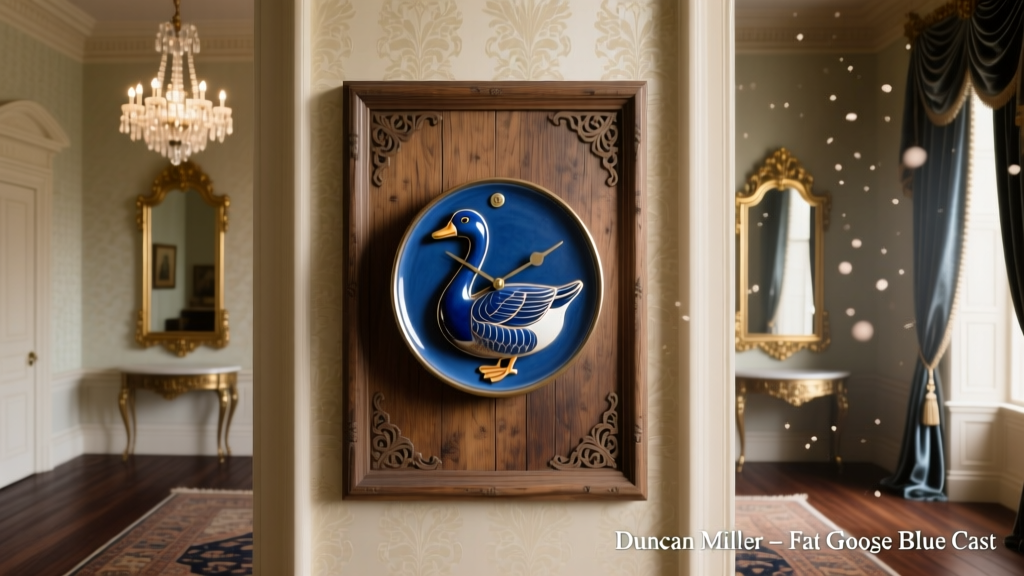
Duncan Miller Fat Goose Blue Cast Iron Trivet: A Collector’s Guide to the Iconic 6×6-Inch Design

The 1904 St. Louis World’s Fair Letter Opener: A Silvered Artifact of Gilded Age Elegance and Architectural Reverence
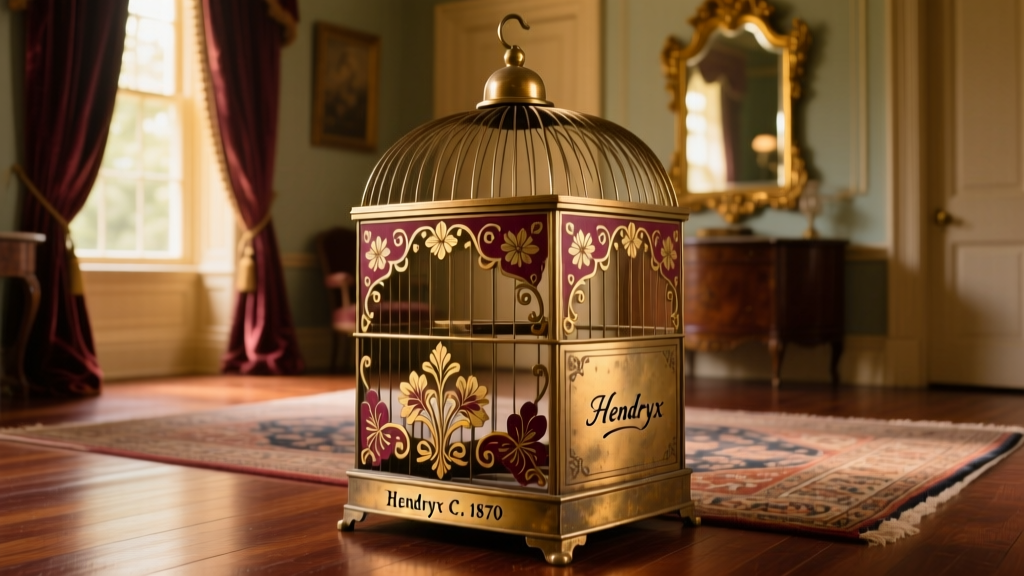
Hendryx Birdcage, c. 1870: Tin Decal Decoration, Stencil Artistry, and Structural Integrity in a 12×12×15-Inch Victorian Aviary

Boehm Figurine Dove With Cherry Blossom No. 20238: History, Identification, Value, and Conservation Guidance

Imperial Glass Bulldog Parlor Pup: Identifying, Valuing, and Preserving a Rare Dark Blue Carnival Glass Figurine (3¾")

Mario Villa Black Marble and Gilt Metal Table: Authentic Identification, Historical Context, and Conservation Best Practices

Toyokuni’s ‘Actor Ichikawa Danjūrō V as Takeda Shingen’ Woodblock Print: A Framed Tribute to Utagawa Toyoharu and the Legacy of Edo-Period Actor Portraiture

Heisey Queen Anne Candlestick, 8-Inch Pair: Identification, Value, and Restoration Insights for Collectors