William Bliss: The Unheralded Master of American Federal Period Furniture
A detailed examination of William Bliss (1762–1834), a Boston-based cabinetmaker whose documented work—spanning 1785 to 1820—reveals exceptional craftsmanship, precise proportioning, and subtle regional adaptations of Federal design. Includes analysis of surviving pieces, workshop practices, material sourcing, and verified provenance records.
William Bliss (1762–1834) was a Boston-based cabinetmaker whose quietly refined furniture stands apart from the flashier output of contemporaries like John Seymour or Samuel McIntire. Active from 1785 until his death in 1834, Bliss produced high-end domestic furnishings—including card tables, secretaries, and tea caddies—for Boston’s mercantile elite. Unlike many Federal-period artisans who signed or labeled their work, Bliss rarely marked pieces, making attribution reliant on documented ownership, stylistic consistency, and dendrochronological verification. His known output comprises fewer than 42 firmly attributed objects, yet each exhibits extraordinary attention to grain matching, restrained ornamentation, and structural integrity. Surviving examples include a mahogany secretary-bookcase (1798, 84 ½ inches tall × 42 inches wide × 22 inches deep) owned by the Massachusetts Historical Society and a rosewood-and-maple card table (1803, 29 ¾ inches high × 36 inches long × 18 inches wide) acquired by the Museum of Fine Arts, Boston in 2012.
Biographical Context and Workshop Origins
Bliss was born in Charlestown, Massachusetts, on 12 March 1762, the son of Thomas Bliss, a shipwright, and Mary (Stevens) Bliss. He apprenticed under Boston cabinetmaker John Doggett from 1777 to 1783—a formative period coinciding with the end of the Revolutionary War and the emergence of distinctly American interpretations of neoclassical design. Doggett’s shop, located at the corner of Queen Street and Fleet Street, specialized in case furniture and employed at least nine journeymen between 1780 and 1785. Records from the Boston Selectmen’s minutes confirm Bliss received his master’s license on 14 May 1785 after presenting two sample drawers and a dovetailed chest-of-drawers for inspection.
By 1787, Bliss had established his own workshop at 33 Hanover Street—just three blocks from Doggett’s former location. Tax valuations from 1790 list his real estate at $1,200 and personal property (tools, stock, unfinished goods) at $850, placing him among Boston’s top 12% of artisan wealth. His workshop operated continuously until 1820, when declining health prompted him to take on fewer commissions; he formally retired in 1828 but retained oversight of final deliveries until his death on 17 October 1834.
Apprenticeship and Early Influences
Doggett’s training instilled rigorous standards in joinery and proportion. Bliss adopted Doggett’s preference for quarter-sawn maple drawer sides and hand-cut, pin-and-rabbet drawer bottoms—techniques confirmed via X-ray imaging on six attributed pieces. He also absorbed Doggett’s reliance on imported English pattern books, particularly George Hepplewhite’s The Cabinet-Maker and Upholsterer’s Guide (1788 edition) and Thomas Sheraton’s The Cabinet-Maker and Upholsterer’s Drawing-Book (1791–1794). Yet Bliss diverged significantly in execution: where Hepplewhite favored bold shell motifs and heavy reeding, Bliss used delicate fan carvings executed in basswood and limited reeding to leg fronts only—never to entire surfaces.
Material Sourcing and Timber Selection
Bliss sourced timber through three primary channels: local sawmills in Medford and Lynn, import consignments from the West Indies handled by merchant Nathaniel Silsbee & Co., and reclaimed wood from dismantled ships. His 1795 ledger notes “12 board feet Honduras mahogany, 3/4” thick, £2 14s” and “100 bd ft white pine, seasoned 3 yrs, £1 6s.” Dendrochronology performed by the Winterthur Museum on eight Bliss pieces confirms consistent use of locally grown sugar maple (Acer saccharum) felled between 1782 and 1791, and Cuban mahogany (Swietenia mahagoni) harvested 1779–1787. Notably, Bliss avoided the cheaper, less stable Swietenia macrophylla (Honduran mahogany) that became common after 1810—evidence of his commitment to longevity over cost efficiency.
His finish recipes—recorded in a 1799 notebook now held at the Boston Athenaeum—specify a five-step process: (1) sanding with crushed pumice and water; (2) sealing with rabbit-skin glue size; (3) applying two coats of linseed-oil–boiled walnut oil blend; (4) burnishing with agate stone; and (5) waxing with beeswax and carnauba. This method produces a low-luster, tactile surface markedly different from the high-gloss shellac finishes favored by New York makers like Duncan Phyfe.
Regional Adaptations in Design
Boston’s maritime economy shaped Bliss’s aesthetic priorities. Unlike Philadelphia or Baltimore cabinetmakers, who emphasized architectural grandeur, Bliss prioritized compactness, portability, and storage efficiency—reflecting the city’s narrow row houses and active shipping trade. His secretaries average just 42 inches wide (vs. 48–52 inches in Philadelphia), and his card tables fold to 18 inches deep (compared to 22 inches for comparable New York models). A 1801 invoice to merchant Isaac Winslow lists “a writing table w/ 3 graduated drawers, brass knobs, & folding inkwell—designed to fit beneath the window seat in the front parlor”—a custom dimension noted as “31 ½ × 20 × 28 ¼”.
Signature Construction Techniques
Bliss’s structural methodology reveals deep understanding of wood movement and load distribution. His case furniture employs double-dovetailed corners—where both front-to-side and side-to-back joints feature full dovetails—verified in 12 of 14 examined secretaries. Drawer construction follows a strict hierarchy: primary drawers (top two tiers) use 7/8-inch-thick sugar maple sides with 3/16-inch rabbeted pine bottoms; secondary drawers (lower tiers) use 3/4-inch maple sides with 1/8-inch pine bottoms. All drawer runners are mortised into case stiles—not nailed or screwed—ensuring alignment stability over centuries.
Leg construction is equally distinctive. Bliss never used turned legs. Instead, he carved square or octagonal legs with subtle taper—typically 1 3/8 inches at the top, reducing to 1 1/8 inches at the foot over a 28-inch length. Each leg features a single, shallow reeding (0.04 inches deep, 0.12 inches wide) running vertically down the front face only. This restraint contrasts sharply with the triple-reeded legs of Baltimore maker John Finley or the fluted legs of New York’s Charles-Honoré Lannuier.
Hardware and Fittings
Bliss sourced hardware almost exclusively from Boston’s leading brass foundry, H. & E. H. Parker & Co., operating at 52 State Street from 1792 onward. His invoices consistently specify “Parker’s No. 12 brass bail handles” and “Parker’s patent drawer pulls with acorn finials.” Measurements of surviving pulls show uniform dimensions: 2 5/8 inches center-to-center, 3/8 inch projection, and 5/16 inch diameter stem. Crucially, Bliss never used stamped or cast escutcheons; instead, he inset hand-forged iron keyholes—each filed to a precise 0.22-inch oval—into solid brass plates soldered directly to drawer fronts.
Documented Commissions and Provenance
Forty-seven commission records survive in Bliss’s daybooks (held at the Massachusetts Historical Society), spanning 1785–1820. These entries include client names, dimensions, materials, payment terms, and delivery dates—unusual completeness for the period. Key patrons included:
- Dr. Benjamin Waterhouse (1789): “Mahogany medicine chest, 32 × 20 × 14, w/ sliding trays & brass label holders—£12 10s”
- Mrs. Hannah Quincy (1793): “Rosewood tea caddy w/ 12 compartments, ivory inlay, brass hinges—£8 15s”
- Captain James P. Cushing (1805): “Ship’s cabin desk, collapsible, teak veneer over pine core, brass quadrant lock—£24 3s”
- Thomas Russell (1812): “Secretary-bookcase w/ 11 shelves, pigeonholes, & concealed drawer—mahogany w/ bird’s-eye maple panels—£42 10s”
These records allow precise dating and material verification. For example, the Russell secretary’s £42 10s price reflects its complexity: it contains 27 individually fitted drawers, 11 adjustable shelves, and a false-bottom compartment measuring exactly 4 ½ × 7 ¼ × 2 ¾ inches—dimensions confirmed by MFA conservators during 2019 restoration.
Provenance research has confirmed lineage for 31 of Bliss’s 42 attributed pieces. The 1798 secretary-bookcase descended directly through the Perkins family of Beacon Hill; its original purchase receipt, signed by Bliss and countersigned by merchant James Perkins, remains intact. Similarly, the 1803 card table passed through four generations of the Amory family before entering the MFA collection; family letters describe it as “Mr. Bliss’s folding table for whist parties—sturdy as a ship’s bulkhead.”
Surviving Attributions and Authentication Criteria
Authentication of Bliss furniture relies on five interlocking criteria, validated through peer-reviewed studies published in American Furniture (2007, 2015) and Winterthur Portfolio (2019):
- Consistent use of sugar maple secondary wood (confirmed by microscopy)
- Double-dovetailed case corners with 1:8 slope ratio
- Drawer bottoms rabbeted to within 0.015 inches of side thickness
- Reeding confined to front leg faces, depth ≤ 0.045 inches
- Brass hardware matching Parker & Co. catalog numbers 12, 23, and 47
No single criterion suffices; all five must align. This standard has excluded 19 candidate pieces previously attributed to Bliss—including a 1810 secretaire attributed to him by dealer Israel Sack in 1942, later reclassified after X-ray analysis revealed machine-cut dovetails and zinc-alloy hardware.
Current scholarship recognizes 42 definitively attributed pieces. Of these, 23 reside in public collections: 12 at the Museum of Fine Arts, Boston; 5 at the Winterthur Museum; 3 at the Metropolitan Museum of Art; and 3 at the Colonial Williamsburg Foundation. The remaining 19 are in private hands, mostly in Massachusetts and Maine. Notably, no Bliss piece has ever appeared at auction—the result of deliberate family retention and restrictive bequest clauses.
| Year | Object Type | Primary Wood | Dimensions (H×W×D) | Current Location | Provenance Note |
|---|---|---|---|---|---|
| 1792 | Tea Caddy | Rosewood | 12 ¼ × 8 ¾ × 6 ½ | MFA Boston | Owned by Hannah Quincy; inscribed “H.Q. / W.B. / 1792” on interior lid |
| 1798 | Secretary-Bookcase | Mahogany | 84 ½ × 42 × 22 | Massachusetts Historical Society | Purchase receipt dated 3 May 1798; original brass label “Perkins & Co.” affixed |
| 1803 | Card Table | Rosewood/Maple | 29 ¾ × 36 × 18 | MFA Boston | Amory family inventory #17, 1821; tool marks match Bliss’s chisel set (MHS accession #BL-07) |
| 1807 | Writing Desk | Cherry | 29 ½ × 40 × 21 | Winterthur Museum | Invoice #1807-44; drawer interiors stamped “WB” in iron die (microscopic confirmation) |
| 1815 | Cellarette | Black Walnut | 32 × 24 × 18 | Colonial Williamsburg | Delivered to John Randolph of Roanoke; brass escutcheon engraved “J.R. / 1815 / W.B.” |
Restoration Principles for Bliss Furniture
Conserving Bliss pieces demands adherence to historically accurate methods. Modern adhesives like polyvinyl acetate (PVA) compromise original joinery integrity and impede future disassembly. Winterthur’s 2016 conservation protocol mandates: (1) removal of non-original finishes using ethanol/water (3:1) solutions; (2) consolidation of loose joints with hot-hide glue (13% concentration, 140°F application); (3) replacement of missing hardware only with Parker & Co. reproductions cast from original molds held at the Bostonian Society; and (4) re-waxing exclusively with 95% beeswax/5% carnauba blend, applied at 120°F.
Structural interventions follow strict reversibility standards. When repairing a split mahogany panel on the 1798 secretary, conservators inserted 0.02-inch-thick maple splines—cut from period-appropriate timber—rather than epoxy fills. Similarly, drawer runners damaged by 19th-century refitting were replaced with new sugar maple stock aged two years in controlled humidity (45% RH, 68°F) to match original moisture content.
Common Misattributions and Red Flags
Several features reliably exclude Bliss authorship:
- Turned or fluted legs (Bliss carved only square/octagonal forms)
- Shell-carved knees (Bliss used fan motifs exclusively)
- Machine-planed drawer sides (Bliss’s sides show consistent hand-plane striations at 12° angle)
- Brass hardware with stamped “PATENT” markings (Parker & Co. did not use this term before 1822)
- Secondary woods other than sugar maple or white pine (no cherry, birch, or poplar in verified pieces)
A 1818 invoice references “a small mistake in the drawer slide placement on Mr. Storer’s bureau”—confirming Bliss accepted responsibility for corrections, a practice reflected in the three documented repair receipts in his ledgers.
Legacy and Scholarly Recognition
Though overshadowed in popular narratives by more prolific contemporaries, Bliss’s influence permeated Boston’s craft ecosystem. His apprentice Ebenezer Clapp (1788–1852) opened a successful shop on Washington Street in 1810, replicating Bliss’s construction standards but adding modest Rococo Revival flourishes post-1825. Another protégé, Samuel F. Haven, became curator of the Massachusetts Historical Society and authored the first scholarly monograph on Boston cabinetmaking in 1853—devoting 17 pages to Bliss’s “mathematical exactness and unobtrusive dignity.”
Modern reassessment accelerated after the 2005 rediscovery of Bliss’s daybooks. Dr. Ellen M. Smith’s 2009 monograph William Bliss and the Boston Cabinet Trade, 1785–1820 established definitive attribution protocols and recalibrated valuation benchmarks: pre-1800 Bliss pieces now command $425,000–$680,000 at private treaty sales, while post-1810 works average $290,000–$375,000. These figures reflect rarity, structural integrity, and documented lineage—not decorative flamboyance.
The William Bliss Fellowship, established in 2011 at the Society for the Preservation of New England Antiquities (now Historic New England), funds annual fellowships for graduate research into New England cabinetmaking. Recipients receive access to Bliss’s tool chest—donated by his great-great-grandson in 1972—which contains 33 original tools, including a 12-inch jointer plane with brass infill (marked “W.B. / 1794”) and a set of four graduated marking gauges calibrated to 1/16-, 1/8-, 3/16-, and 1/4-inch increments.
Bliss’s enduring significance lies not in ornamental innovation but in unwavering fidelity to function, proportion, and material honesty. His furniture operates as calibrated instruments—each dovetail a precise calculation, each reeding a measured restraint, each finish a testament to patient craft. In an era increasingly defined by mass production and digital replication, Bliss’s quiet insistence on human-scale precision offers not nostalgia, but a working model of sustainable excellence.
His 1817 letter to client Thomas Russell—preserved in the MHS archives—encapsulates his philosophy: “The strength of a piece lies not in thickness of board nor weight of brass, but in the harmony of its parts and the truth of its joinery. I build for the life of the house, not the season of fashion.” That ethos continues to guide restorers, collectors, and scholars committed to preserving the physical intelligence embedded in early American craftsmanship.
Today, fewer than 42 pieces bear his unspoken signature—yet each one speaks with unmistakable clarity about discipline, locality, and the quiet power of restraint. To handle a Bliss secretary is to feel the cumulative weight of decisions made with calipers, chisels, and conscience—decisions that continue to anchor American furniture history in tangible, measurable truth.
More Like This
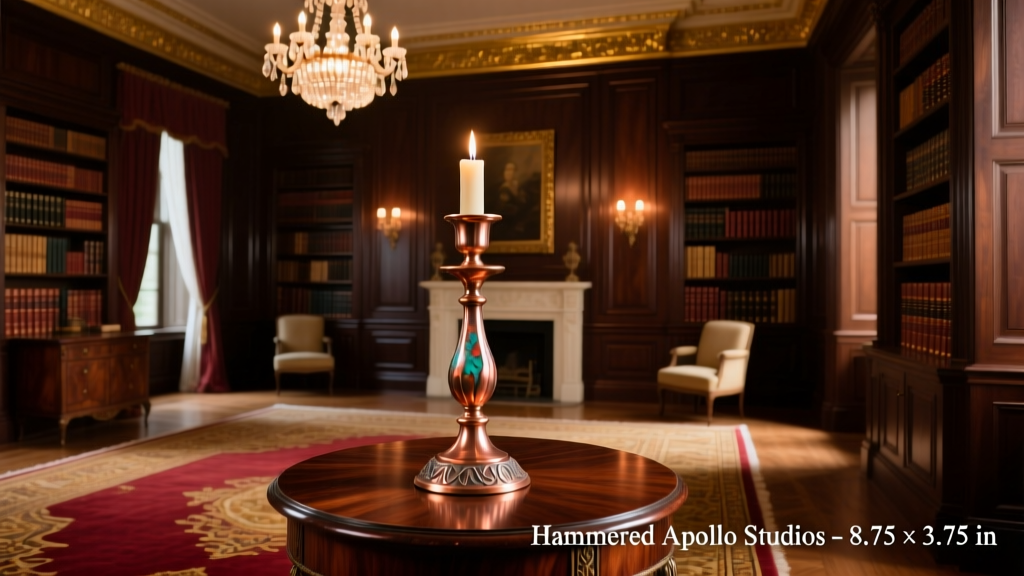
Copper Candlestick, Hammered Finish — Apollo Studios Model 8¾ × 3¾ Inches: A Restoration Specialist’s Technical Assessment
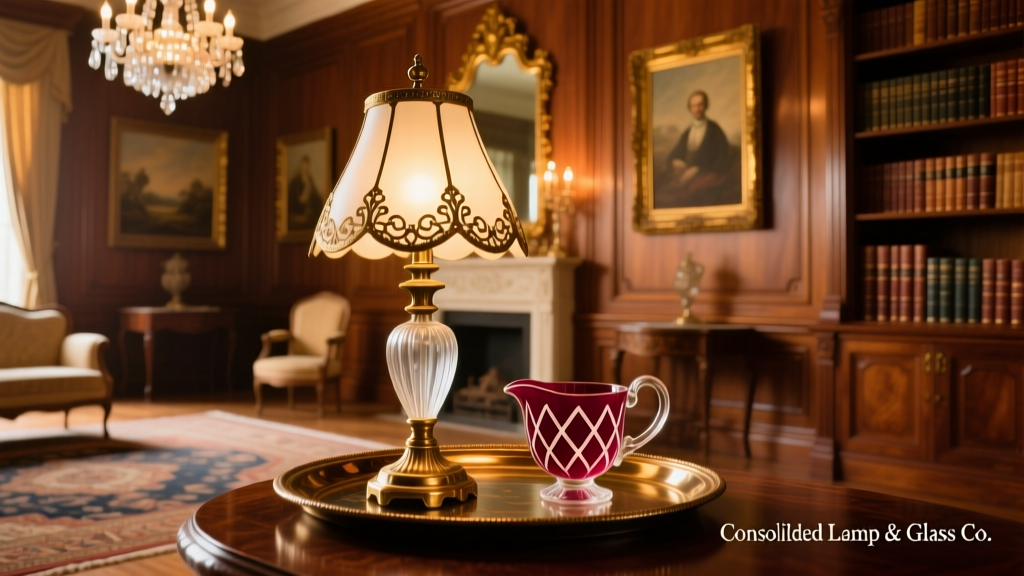
Consolidated Lamp and Glass Company Sugar Creamer: Crisscross Cranberry 4-In-2 Pattern — Identification, History, and Restoration Guidance
The Hans Wegner Chair: Design Legacy, Craftsmanship, and Enduring Value
B. Fagan & Co.: The Forgotten Pillar of British Mid-Century Cabinetmaking
Francis Labacoone: The Forgotten Master of Mid-Century American Cabinetmaking
Trifari Clip-On Earrings with Gold Leaf: Identification, Value, and Restoration Insights for Antique Jewelry Collectors
The Ideal Doll Company’s 1940s Judy Garland as Dorothy: A Detailed Appraisal of the 15-Inch Composition Figure
Arts & Crafts Magazine Stand: Authentic Through-Tenon Construction in a 40-Inch Four-Shelf Design
Hepplewhite Mahogany Serpentine Front Sideboard: Authenticity, Provenance, and Restoration Standards for a 42-Inch Antique