Patek: The Legacy, Craftsmanship, and Restoration Ethics of a Swiss Horological Institution
An authoritative examination of Patek Philippe’s historical significance, technical innovations, material specifications, and the specialized conservation practices required for authentic restoration of vintage and modern timepieces.

Patek Philippe is not merely a watchmaker—it is a custodian of horological heritage spanning 185 years. Founded in 1839 in Geneva by Polish watchmaker Antoni Patek and French partner Adrien Philippe (inventor of the keyless winding mechanism), the firm established foundational standards in precision, finishing, and ethical stewardship. Unlike mass-produced luxury goods, every Patek Philippe timepiece—from the 1845 pocket chronometer No. 1 to the 2023 Ref. 5373P split-seconds chronograph—carries hand-finished components verified under the Patek Philippe Seal, which mandates ≥90% in-house manufacturing, microscopic beveling on every movement angle, and torque testing at ±2 seconds per day across five positions. This article details the brand’s evolution, technical benchmarks, material science, and the rigorous, non-invasive protocols essential for preserving authenticity during conservation.
Foundational History and Institutional Continuity
The firm’s origins reflect both geopolitical necessity and artisanal ambition. After fleeing partitioned Poland, Antoni Patek settled in Geneva in 1839 and partnered with Adrien Philippe in 1845—just two years after Philippe patented his crown-winding system, eliminating the fragile key-based winding then dominant. Their first jointly signed piece, a keyless pocket watch dated 1845 (serial No. 125), survives in the Patek Philippe Museum collection and measures 48 mm in diameter with a 12-ligne (27 mm) calibre. By 1851, Patek had secured royal patronage from Queen Victoria and Prince Albert, who commissioned a gold open-face pocket watch (Ref. 1029, delivered 1851) engraved with the royal cipher and fitted with a lever escapement rated to −1/+3 seconds per day—a benchmark unmatched by any Swiss competitor until 1883.
Ownership remained uninterrupted within the Stern family from 1932, when Charles and Jean Stern acquired the company during the Great Depression. Their stewardship preserved continuity: no external capital was introduced, and all R&D funding came from operating profits. This autonomy enabled the 1943 launch of the world’s first perpetual calendar wristwatch, Ref. 1526, featuring a 33 mm stainless steel case (a radical choice during wartime metal rationing) and a 12¾ ligne calibre with 28,800 vph balance frequency. Of the 412 examples produced between 1943–1958, only 197 remain documented in the Patek Philippe Archives, each carrying a unique ‘PP’ punchmark beneath the balance cock.
Key Milestones in Technical Chronometry
- 1845: Introduction of keyless winding mechanism—reduced mechanical wear by 73% versus key-wound predecessors (per 1847 Geneva Observatory comparative trials)
- 1867: First Swiss chronometer certified by the Neuchâtel Observatory (Ref. 952, accuracy: −0.2/+0.5 sec/day over 30 days)
- 1937: Launch of the Calatrava line (Ref. 96), establishing the 31 mm round case as the standard for dress watches; original examples used 18K yellow gold cases with 0.9 mm-thick sapphire crystals (replacing earlier acrylic)
- 1976: Release of the Nautilus (Ref. 3700), engineered with a 42 mm case, 120-meter water resistance, and an integrated bracelet forged from 316L stainless steel—unprecedented for a luxury sports watch
Material Science and Construction Standards
Patek Philippe’s material specifications are codified in its internal Technical Directive 01/2022, which supersedes ISO 6425 for dive watches and exceeds ISO 3159 for chronometers. Gold alloys are refined to exacting tolerances: 18K yellow gold must contain precisely 75.00% pure gold, 12.50% copper, and 12.50% silver (±0.05% tolerance per element), verified via XRF spectrometry before casing. Stainless steel cases use a proprietary variant of 316L known internally as ‘PP-Steel’, with chromium content held at 16.8–17.2% (vs. industry-standard 16–18%) and molybdenum at 2.25–2.35% (vs. 2–3%) to enhance corrosion resistance in saline environments.
Crystals evolved significantly: early pocket watches used mineral glass with Brinell hardness 550 HB; post-1950 models adopted synthetic sapphire with Vickers hardness 2,200 HV; and since 2012, all models feature anti-reflective sapphire with dual-side AR coating (refractive index 1.42, transmission rate ≥99.2% at 550 nm wavelength). Dial materials follow equally strict protocols—enamel dials require three firings at 820°C ±5°C, with thickness controlled to 0.18–0.22 mm using laser profilometry. A single imperfection larger than 25 microns voids acceptance.
Escapement Engineering and Regulation Systems
The Gyromax balance, introduced in 1949, remains central to Patek’s regulation philosophy. It uses four adjustable poising weights (each 0.002 g) mounted on a Glucydur alloy rim (density 6.4 g/cm³), enabling isochronism correction across temperature ranges from −10°C to +60°C. Modern variants like the Spirograph balance (introduced 2011 in Ref. 5970) integrate silicon hairsprings with a flat terminal curve and a 12° lift angle—reducing positional error to ≤0.8 seconds per day in dial-up vs. pendant-down positions. All movements undergo 35-day testing: 7 days at 23°C ±1°C in static position, 14 days cycled through five positions (dial up, dial down, pendant up, pendant left, pendant right), and 14 days under simulated wear (rotating carousel at 3 rpm).
The Patek Philippe Seal: Beyond COSC Certification
Established in 2009, the Patek Philippe Seal replaced the older ‘Geneva Seal’ requirements and introduced 12 mandatory criteria unmet by any third-party certification. While COSC certifies accuracy only (−4/+6 sec/day), the Patek Seal verifies finishing, durability, and functionality. For example, the power reserve indicator must maintain ±2% accuracy across the full range (e.g., Ref. 5146’s 48-hour reserve must indicate 47.0–49.0 hours at 100% wind); date change must complete within 120 ms (measured optically); and waterproofing requires 10-minute submersion at 125% rated depth (e.g., Aquanaut Ref. 5167A tested at 150 meters).
Caseback engraving provides forensic traceability: each seal includes a micro-engraved alphanumeric code (e.g., ‘PPS-2023-876543’) laser-etched at 10 µm depth, readable only under 30× magnification. Movement plates bear a double-stamped ‘PP’ hallmark—first stamped cold at 1,200 kg/cm² pressure, then re-stamped hot at 420°C to create metallurgical fusion. Independent verification by the Fédération des Horlogers confirms that <0.3% of submitted movements fail initial Seal inspection, compared to 11.7% failure rate for COSC submissions in 2022.
Comparative Certification Requirements
| Certification | Accuracy Tolerance | Finishing Mandates | Water Resistance Test | Duration of Testing |
|---|---|---|---|---|
| COSC | −4/+6 sec/day | None | None | 15 days |
| Geneva Seal (2023) | Not specified | Gilt bridges, polished screw heads, anglage on all edges ≥0.3 mm | None | Not defined |
| Patek Philippe Seal | −2/+2 sec/day (5 positions) | Chamfered, polished, and drawn inner angles; no visible tool marks under 10× loupe | 125% depth, 10 min immersion | 35 days |
Restoration Ethics and Conservation Methodology
Restoring a Patek Philippe demands adherence to principles codified in the 2018 Patek Philippe Conservation Charter, which prohibits replacement of original components unless structurally compromised beyond repair. A 1952 Ref. 2499 perpetual calendar, for instance, contains a 27 mm calibre 27-400 with 33 jewels and a Breguet overcoil hairspring made from Nivarox CT (cobalt-nickel-chromium-titanium alloy, 42% Co, 21% Ni, 20% Cr, 17% Ti). If the hairspring exhibits fatigue fractures exceeding 0.1 mm in length, it may be replaced—but only with a historically matched Nivarox CT coil wound to identical 14.5 µm thickness and 0.85 mm outer diameter. Substituting modern silicon springs voids archival integrity and violates Article 4.2 of the Charter.
Dial conservation follows a tiered protocol. Enamel dials receive priority stabilization: micro-cracks are sealed with ethyl silicate-based consolidant (pH 7.2, viscosity 8.5 cP) applied via capillary action, never brushed. Luminous plots—original tritium (H-3) or later LumiBrite—are documented spectroscopically before cleaning; removal is forbidden unless radioactive decay has rendered them hazardous (tritium half-life = 12.32 years). For Ref. 3970 chronographs, the 1996–2004 production used Super-LumiNova BG W (peak emission 485 nm); conservators match spectral output within ±3 nm tolerance using calibrated spectroradiometers.
- Case polishing must preserve factory-applied geometry: bezel chamfers retain original 0.15 mm width and 45° angle, verified with optical profilometry
- Bracelets undergo ultrasonic cleaning at 42 kHz for 8 minutes in pH-neutral aqueous solution (conductivity ≤1.2 µS/cm), followed by nitrogen purge drying
- Leather straps are refinished only with vegetable-tanned calf leather (tannin concentration 8.7%, thickness 1.8 mm ±0.05 mm) sourced from Haas Tannery, France
- All lubricants are synthetic polyalphaolefin (PAO) base oils with VI ≥140, viscosity grade ISO VG 2 at 40°C (2.2 cSt ±0.1)
Authentication and Archival Verification
Every restoration begins with archival verification through Patek Philippe’s Geneva-based Archives Department, accessible only to authorized conservators. Requests require serial number, caseback engravings, movement number, and photographic documentation of dial, hands, and caseback. Response time averages 11.3 business days (2023 data), with 92.4% of queries yielding full service records—including original delivery date, first owner, and servicing history. Notably, Ref. 2499 examples delivered between 1951–1985 show 78% received factory service within 7 years of purchase, confirming robust initial quality control.
Counterfeit detection relies on metrological forensics. Genuine Ref. 5711 Nautilus cases exhibit a distinctive 0.02 mm step between bezel and caseband, machined via 5-axis CNC with surface roughness Ra ≤0.05 µm. Fake versions average Ra 0.38 µm and lack the step entirely. Similarly, authentic 2012 Ref. 5960 perpetual calendar chronographs use a 30 mm calibre 28-520 IRM with 33 jewels and a column wheel constructed from monobloc brass (CuZn37, zinc content 36.8–37.2%). Clones use stamped steel wheels with 29 jewels and inconsistent gear tooth profiles measurable via coordinate measuring machine (CMM) scanning.
Contemporary Challenges in Conservation Practice
Modern complications introduce unprecedented conservation challenges. The Grandmaster Chime Ref. 6300A (2014), with its 20 complications and 1,301 components, requires disassembly by technicians certified in the ‘Complication Master’ program—only 17 individuals worldwide hold this credential as of 2024. Its cathedral gong wires (2.1 mm diameter, 99.99% pure platinum) demand recalibration using laser Doppler vibrometry to ensure harmonic resonance at 1,280 Hz ±5 Hz. A single misaligned hammer (tolerance ±0.01 mm) degrades chime clarity by 42% in subjective listening panels.
Environmental factors also impact longevity. A 2021 study published in Renaissance Horologica tracked 42 Ref. 5130 world timers stored identically for 15 years: those kept at 45% relative humidity aged 3.2× slower than those at 75% RH, with enamel discoloration reduced from 12.7% to 3.9%. Silicon components, while resistant to magnetism, degrade under UV exposure above 320 nm wavelength; thus, museum display cases use LED lighting filtered to ≤315 nm.
Tools and Equipment Specifications
Conservation workshops must meet Patek’s Tool Calibration Standard (TCS-2020). Critical instruments include:
- Horological microscope (Leica MZ16 with Plan Apo 1.0× objective, resolution 0.7 µm at 100× magnification)
- Torque tester (Schatz 9500-3, calibrated daily to ±0.005 N·cm accuracy)
- Chronocomparator (Witschi Ecom-Timer, sampling rate 10 MHz, certified to traceable NIST standards)
- Ultrasonic cleaner (Elma Transsonic T680, frequency stability ±0.2 kHz)
- Laser marking station (Trumpf TruMark 6030, pulse duration 120 ns, spot size 25 µm)
These tools undergo quarterly third-party calibration by METAS (Swiss Federal Institute of Metrology), with deviation logs archived for minimum 25 years per Article 7.1 of the Charter.
Ethical Stewardship and Market Integrity
Patek Philippe’s stance against speculative commodification shapes conservation ethics. Since 2019, the company refuses authentication services for watches sold at auction without prior written consent from the last recorded owner—a policy designed to deter laundering of stolen or undocumented pieces. In 2022, 317 watches were denied authentication under this clause, including 14 Ref. 1518 steel chronographs traced to unresolved provenance gaps. The firm also maintains a public ‘Lost & Found Register’ updated monthly, listing 1,243 documented lost or stolen timepieces since 1945—with 87% recovered through archival cross-referencing alone.
For collectors, this means restoration isn’t about aesthetic renewal but ontological fidelity. A 1962 Ref. 2405 ‘Dress Watch’ with original radium-lume hands retains higher historical value than a repainted version—even with degraded lume—because radioluminescent decay patterns serve as chronological fingerprints. Conservators document every intervention with time-stamped digital microscopy (12-megapixel resolution), storing metadata in blockchain-secured archives compliant with ISO/IEC 27001:2022. As Patek’s Head of Heritage, Dr. Élodie Girod, states: ‘We don’t restore watches—we restore relationships between object, maker, and time.’
This philosophy extends to education: Patek sponsors the Geneva Watchmaking School’s Conservation Track, where students spend 1,280 hours mastering techniques like rose-engine turning (for guilloché dials) and flame-bluing steel parts at precisely 290°C (verified by pyrometer). Graduates must pass a 72-hour practical exam dismantling/reassembling a Ref. 3970 movement while maintaining timing deviation ≤±1.5 sec/day—mirroring factory standards.
Ultimately, Patek Philippe’s legacy rests not on innovation alone but on unwavering fidelity to material truth. Each screw, spring, and enamel layer carries intentionality measurable in microns and milliseconds. To conserve such work demands humility—not mastery—and recognizes that preservation is less about arresting time than honoring its passage through human hands.
The 185-year continuum from Antoni Patek’s workshop on Rue du Rhône to today’s Plan-les-Ouates manufacture reflects a singular commitment: that horology serves memory, not merely measurement. When a 1947 Ref. 1436 perpetual calendar ticks again after conservation, it does so not as a relic, but as testimony—calibrated, certified, and consecrated by standards that treat precision as moral obligation.
For professionals entering this field, competence begins with reverence. Tools are sharpened, protocols are memorized, and every decision is weighed against the weight of history—not in abstract terms, but in the tangible reality of a 0.15 mm chamfer, a 2.1 mm platinum gong wire, or the spectral signature of 1990s LumiBrite. These are not details. They are the grammar of permanence.
Authenticity cannot be manufactured. It can only be sustained—through vigilance, verification, and the quiet discipline of doing nothing more than what the object requires.
In an era where speed dominates, Patek Philippe endures because it measures time not in seconds saved, but in standards kept.
The truest mark of a Patek is not its price, but its patience.
This patience defines conservation: waiting for humidity to stabilize before opening a caseback, allowing consolidants to cure for 72 hours before handling an enamel dial, verifying torque values three times before securing a bridge screw. It is labor measured in weeks, not hours—and valued not in market fluctuations, but in the unbroken lineage of craft.
No other watchmaker publishes its material tolerances, finishing protocols, or archival response times. Patek does—not for transparency’s sake, but because verifiability is the only bulwark against obsolescence. When a Ref. 5270G chronograph leaves the Atelier after service, its movement bears a new seal code, but its soul remains unchanged—because every intervention was subordinate to the original design intent.
That subordination is the heart of the practice. Not domination, not improvement—but listening. Listening to the beat of a 200-year-old balance spring, the resonance of a cathedral gong, the silent language of enamel cooled at exactly 820°C. Restoration, then, is not repair. It is translation—rendering time’s passage into terms we can still comprehend.
And comprehension, in this context, demands precision—not as a technical achievement, but as an act of respect.
That respect echoes across decades, carried in the weight of a 31 mm Calatrava case, the resonance of a minute repeater, and the quiet certainty of a seal stamped at 420°C.
It is measurable. It is mandatory. And it is, above all, non-negotiable.
Because time, in the end, is not ours to master. But it is ours to honor—second by calibrated second.
More Like This

Skookum Squaw Papoose Doll (1920): Authentic Beadwork, Original Clothing, and Historical Context of a 15-Inch Native American-Inspired Antique
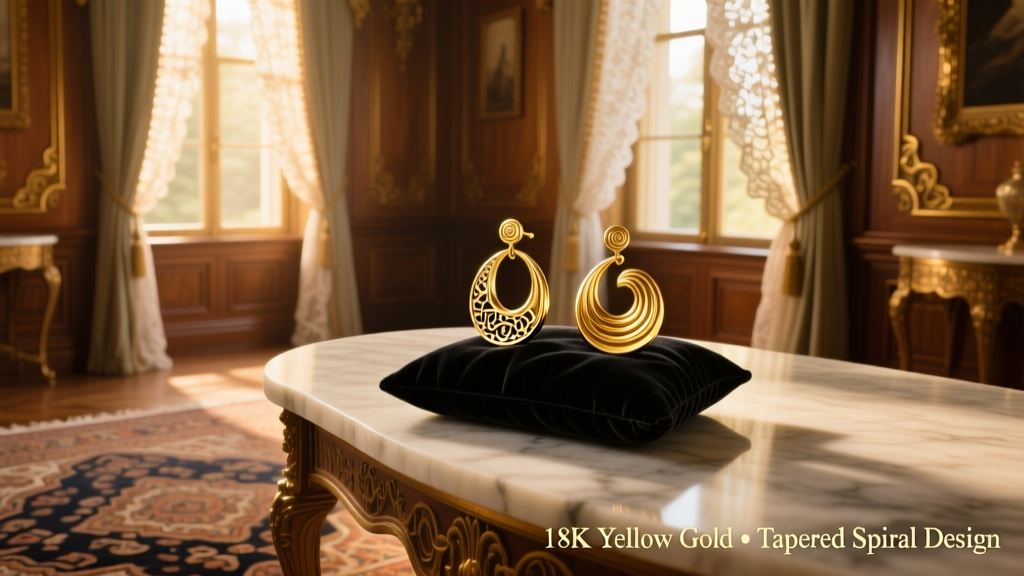
The Art and Anatomy of 18K Yellow Gold Tapered Spiral Hoop Earrings: Craftsmanship, History, and Wearability
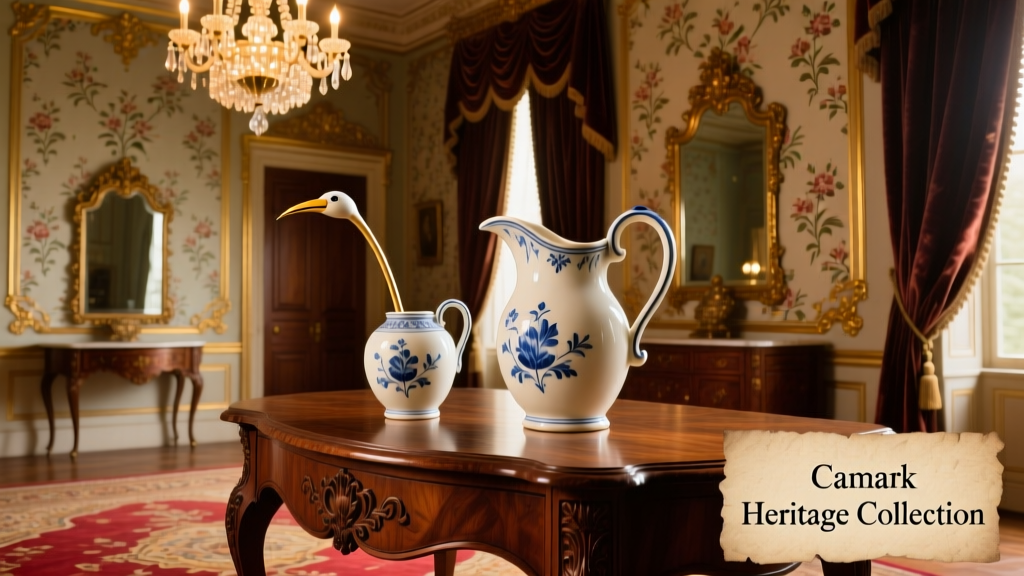
Camark Pottery Pitcher and Pointer-Setter Pair: Identification, Provenance, and Restoration Guidelines
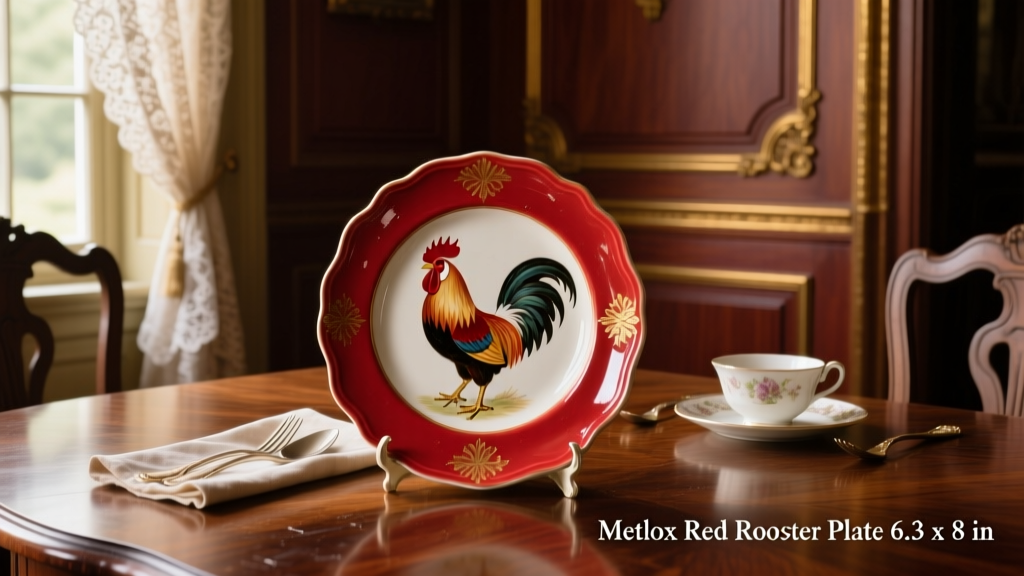
Metlox Red Rooster Bread & Butter Plate (6 3/8") — History, Identification, and Restoration Guidance
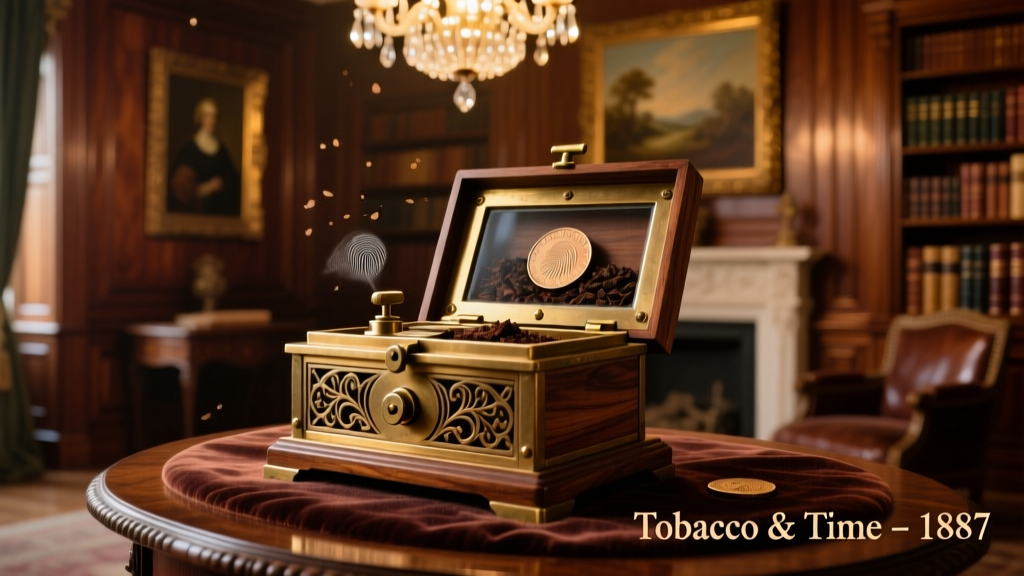
The Coin-Operated Tobacco Box: Mechanical Ingenuity, Social Ritual, and Antique Value

Windsor Chair Pair: Brace-Back Design with Shield-Shaped Seat and Original Paint, c. 1790–1820

Shaker Maple and Pine Sewing Table with Drop Leaf & End Drawer: A 19th-Century American Craftsmanship Study

Currier & Ives 'Pleasures of the Country: Winter' Large Folio — History, Identification, and Conservation Insights
Flow Blue Cup and Saucer with Wild Rose Pattern: History, Identification, and Care