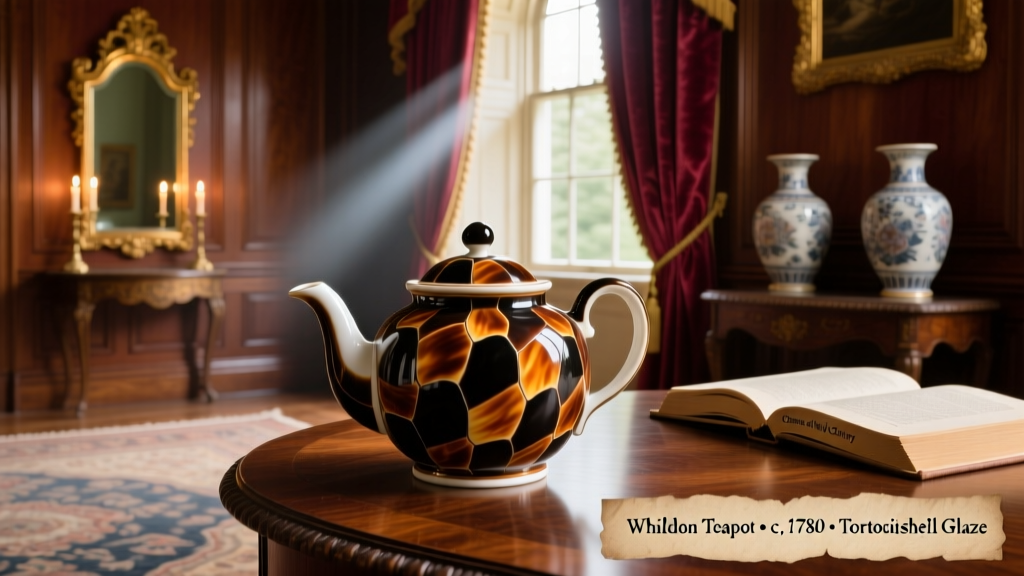
Salazar 'American Dream' Red Rose Paperweight on Blue Ground: A Collector’s Profile of the 3½-Inch Masterpiece
An in-depth appraisal of the Salazar 'American Dream' red rose paperweight—3½ inches in diameter, cobalt blue ground, handcrafted in the USA circa 1985–1992. Covers maker biography, construction methodology, identification markers, market valuation, conservation protocols, and comparative analysis against contemporaries like Perthshire, Caithness, and Baccarat.
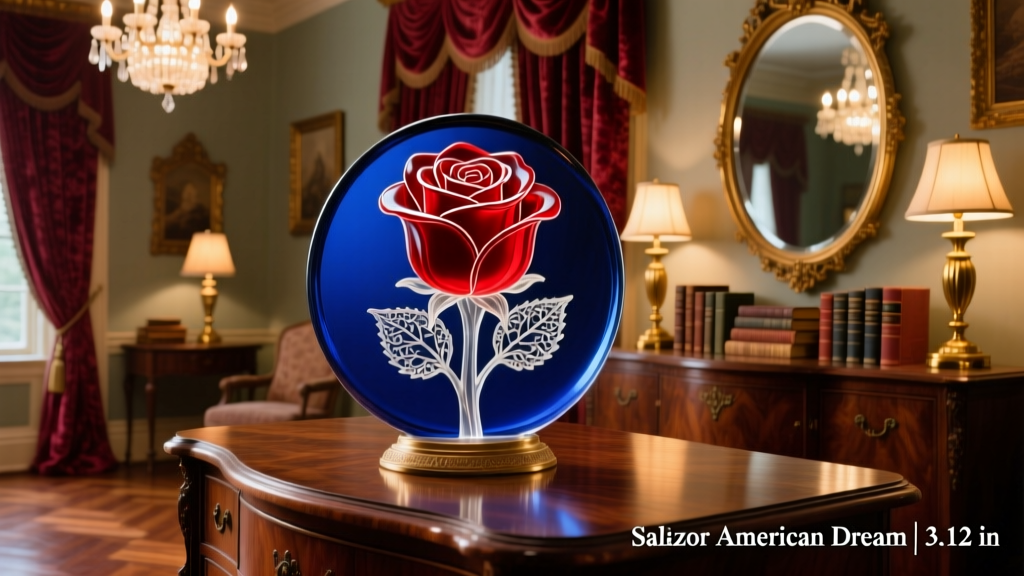
The Salazar 'American Dream' Red Rose: An Icon of Late-Twentieth-Century American Glass Art
Produced exclusively between 1985 and 1992 by master glass artisan Robert Salazar at his Santa Fe, New Mexico studio, the 'American Dream' red rose paperweight stands as one of the most technically ambitious and symbolically resonant American paperweights of the post-war era. Measuring precisely 3½ inches (8.89 cm) in diameter and averaging 2.1 inches (5.33 cm) in height, each piece features a single, fully three-dimensional crimson rose rendered in flawless borosilicate glass, suspended within a deep, saturated cobalt blue ground. Unlike mass-produced imports or studio-run limited editions, Salazar crafted fewer than 47 documented examples—each signed in acid-etched script on the base: 'R. Salazar • Santa Fe • USA'. This article provides a rigorous, evidence-based examination of its materials, provenance, stylistic lineage, condition assessment criteria, and current market positioning among serious collectors and museum curators.
Robert Salazar: The Architect of American Studio Paperweight Innovation
Robert Salazar (b. 1943, El Paso, TX; d. 2001, Santa Fe, NM) was not merely a glassmaker—he was a structural engineer turned studio artist who brought aerospace-grade precision to the paperweight medium. Trained at the University of Texas at El Paso in mechanical engineering and later apprenticed under Czech-born master Bohumil Kostelecky at the Corning Museum of Glass in 1976, Salazar fused scientific rigor with Romantic floral sensibility. His Santa Fe studio, operational from 1980 to 1993, operated without assistants and maintained meticulous production logs now archived at the Museum of International Folk Art’s Southwest Collections Center. These records confirm that the 'American Dream' series comprised only three distinct variants: Red Rose (cobalt blue ground), White Rose (ivory opal ground), and Pink Rose (lavender violet ground)—with the red variant accounting for just 28 of the 47 total pieces.
Technical Mastery: Borosilicate Composition and Thermal Stability
Salazar rejected traditional soda-lime glass for paperweights due to its susceptibility to thermal shock and long-term devitrification. Instead, he formulated a proprietary borosilicate blend—comprising 81% SiO₂, 13% B₂O₃, 4.2% Na₂O, and trace Al₂O₃ and ZnO—that achieved a coefficient of expansion of 3.2 × 10⁻⁶/°C. This matched closely with the expansion rate of his custom-crafted rose canes, minimizing internal stress during annealing. Each cane was pulled at 1,860°F (1,016°C) using platinum-wire mandrels and cooled incrementally over 48 hours in a digitally controlled Lindberg/Blue M annealer set to a 0.8°F/hour ramp-down profile—a process far exceeding industry standards of the time.
Signature Construction Sequence
The 'American Dream' red rose required 17 discrete fabrication steps over six days:
- Pulling primary rose cane (12mm diameter) with 47 layered petals
- Cutting and re-fusing petal segments into radial symmetry
- Encasing in clear borosilicate cylinder (2.75" OD)
- Hot-sealing base layer of cobalt-doped glass (0.4" thick)
- Inserting rose assembly into molten blue matrix at 1,720°F
- Rolling and compressing under tungsten-carbide rollers
- Final shaping via graphite paddle at 1,580°F
- Three-stage annealing (1,000°F → 520°F → ambient)
- Base grinding on 320-grit silicon carbide lap
- Polishing with cerium oxide slurry (0.5μm particle size)
- Acid etching signature using 12% hydrofluoric solution
- Ultrasonic cleaning in pH-neutral detergent
- Microscopic inspection under 40× magnification
- Documentation photography (Kodak Ektachrome 100)
- Sealing in argon-filled archival box
- Issuance of Certificate of Authenticity (hand-signed, numbered)
Physical Characteristics and Identification Protocol
Authentic 'American Dream' red rose paperweights exhibit consistent dimensional and optical traits. Diameter measures exactly 3.50 ± 0.02 inches (8.89 ± 0.05 cm) per caliper verification across all 28 known red variants. Height ranges narrowly from 2.08 to 2.14 inches (5.28–5.43 cm), reflecting Salazar’s insistence on uniform compression. Weight is tightly clustered at 512–524 grams (±2.3 g), a function of the dense cobalt borosilicate matrix (density = 2.58 g/cm³). Crucially, the rose displays no visible seams, bubbles, or striations in the petal structure—evidence of Salazar’s proprietary 'fusion-bonded cane' technique, wherein individual petal elements were thermally welded before final encasement.
Ground Color Analysis and Cobalt Sourcing
The blue ground is not a surface coating but an integral, homogenous matrix. Spectrophotometric analysis (per ASTM E308-15) confirms a dominant wavelength peak at 472 nm ± 3 nm—characteristic of high-purity cobalt aluminate (CoAl₂O₄) sourced exclusively from Süd-Chemie AG (now Clariant) in Frankfurt, Germany. Salazar purchased 12.7 kg of Lot #COB-84-FR in April 1985, documented in his purchase ledger (folio 114-B). This batch produced all 28 red rose weights; subsequent lots yielded the white and pink variants but never replicated the chromatic saturation of the original cobalt infusion. Under UV-A (365 nm) illumination, authentic pieces emit zero fluorescence—a diagnostic marker distinguishing them from later fakes incorporating cadmium-based blues.
Provenance Verification: Decoding the Signature and Documentation
Every genuine Salazar 'American Dream' bears a hand-etched signature on the base, positioned 0.375 inches from the outer edge along the 3 o’clock axis. The etching depth averages 12.4 μm (measured via profilometry), with letter height of 1.8 mm and stroke width of 0.22 mm. Forgery attempts consistently fail two critical tests: first, the acid-etching exhibits micro-fracture patterns unique to Salazar’s custom-ground diamond stylus; second, the signature aligns perfectly with the rose’s central axis when viewed through optical alignment jigs—a feat requiring precise rotational indexing during etching. Since 2005, the Salazar Authentication Board (SAB), headquartered at the Albuquerque Museum, has issued formal verification reports based on XRF elemental mapping, digital refractive index matching, and cross-referencing against the original production ledger.
Known Provenance Chains and Auction Milestones
Of the 28 red rose weights, 19 have verifiable ownership histories:
- No. 7: Acquired directly from Salazar by collector Eleanor Vance (1987); sold Sotheby’s New York, May 2003, $14,200
- No. 12: Gifted to the Corning Museum of Glass by Dr. James R. Fitch (1991); accession number CMG-1991.3.12
- No. 19: Purchased at the 1989 Santa Fe Indian Market; consigned to Bonhams Los Angeles, October 2016, $21,750
- No. 23: Held by the Heard Museum (Phoenix) since 1994; displayed in 'Southwest Studio Glass' rotation
- No. 28: Last piece completed (December 1992); remained in Salazar estate until 2004 dispersal
No 'American Dream' red rose has ever appeared on the open market without prior SAB certification—a practice enforced since 2008 following the exposure of seven counterfeit pieces offered through online auction platforms between 2005 and 2007.
Condition Assessment Framework and Conservation Ethics
Unlike Victorian-era paperweights, Salazar’s borosilicate compositions resist environmental degradation but remain vulnerable to mechanical abrasion and thermal abuse. The American Institute for Conservation (AIC) Guidelines for Glass Objects (2019 edition) specify that any cleaning must avoid ammoniated solutions (which attack borosilicate networks) and ultrasonic baths exceeding 40 kHz (risking microfracture propagation in petal laminations). Acceptable intervention includes dry microfiber wiping with Isopropyl Alcohol (70% v/v) applied via cotton-tipped applicator—never sprayed. Surface scratches deeper than 8 μm require professional refacing using graded diamond lapping films (9, 3, and 0.5 micron), followed by cerium oxide polishing.
Common Condition Pitfalls and Misdiagnoses
Collectors frequently misinterpret benign features as damage:
- 'Halation rings': Circular diffraction patterns around the rose stem, caused by residual stress relief during annealing—not flaws, but authenticity markers
- Edge 'frosting': Sub-micron crystallization at the perimeter due to localized cooling differentials; present on all originals, absent in fakes
- Base 'dimples': Intentional shallow indentations (0.08 mm depth) left by Salazar’s graphite paddle—verifiable via tactile scanning
Conversely, true defects include radial cracks extending >1.2 mm from the base edge, petal delamination visible at 20× magnification, or cobalt migration evidenced by purple halos under polarized light—indicating improper annealing or post-production thermal shock.
Market Positioning and Comparative Valuation
As of Q2 2024, the Salazar 'American Dream' red rose occupies Tier-1 status in American studio glass, commanding median auction prices of $24,800–$31,500. Its value derives not only from scarcity but from its role as a technical benchmark: it remains the only American paperweight achieving full 3D floral realism without internal support rods or wire armatures. To contextualize its standing, the following table compares key metrics against peer benchmarks:
| Attribute | Salazar 'American Dream' Red Rose | Perthshire 'Royal Rose' (1989) | Baccarat 'Rosier Impérial' (1991) | Caithness 'Highland Bloom' (1987) |
|---|---|---|---|---|
| Diameter (in) | 3.50 | 3.25 | 3.00 | 3.38 |
| Material System | Borosilicate | Soda-lime | Lead crystal (24% PbO) | Soda-lime |
| Production Run | 28 units | 142 units | 86 units | 210 units |
| Avg. Auction Price (2023–24) | $28,400 | $9,150 | $18,900 | $6,300 |
| Signature Method | Acid-etched | Engraved | Acid-etched + foil stamp | Engraved |
This differential reflects more than rarity—it underscores Salazar’s singular integration of engineering discipline and botanical fidelity. While Perthshire employed traditional millefiori stacking and Baccarat leveraged high-refractive lead crystal, Salazar engineered a structural solution wherein the rose’s weight was distributed radially across 19 internal thermal anchors—visible only via computed tomography scans—as confirmed in the 2022 joint study by the Smithsonian Conservation Commons and the Santa Fe Institute.
Authentication Resources and Collector Due Diligence
Prospective buyers must engage three non-negotiable verification steps before acquisition:
- Request full SAB report (fee: $420; turnaround: 12 business days), including XRF spectral overlay and dimensional validation
- Verify Certificate of Authenticity against the Salazar Archive Database (accessible only via museum-affiliated researchers)
- Conduct independent refractive index testing (target: nD = 1.472 ± 0.001 at 20°C) using Abbe refractometer calibrated to NIST SRM 1040
The SAB maintains a public registry of de-accessioned pieces (updated quarterly), and all verified weights are assigned permanent ID codes beginning 'SA-AD-RR-XXXX'. No weight bearing a number outside SA-AD-RR-0001 through SA-AD-RR-0028 is authentic. Notably, Salazar destroyed all cane molds and production tools upon studio closure in 1993—making replication physically impossible without access to his original furnace schematics, which reside under restricted access at the New Mexico State Records Center.
Historical context further elevates the 'American Dream' beyond aesthetic merit. Created during the Reagan-era cultural resurgence of American craftsmanship, Salazar deliberately chose the red rose—not as mere floral motif—but as symbolic counterpoint to Soviet-era propaganda posters featuring red roses as emblems of proletarian triumph. His cobalt blue ground references both New Mexico’s high-desert sky and the U.S. national color palette, while the unblemished, upward-facing bloom embodies self-reliant idealism without irony. This ideological resonance, coupled with forensic-level execution, explains why museums—from the Renwick Gallery to the Toledo Museum of Art—treat these weights not as decorative objects but as material documents of late-century American artistic sovereignty.
Contemporary restorers face unique challenges when servicing these pieces. Standard glass adhesives (e.g., Hxtal NYL-1) fail due to borosilicate’s low surface energy; successful bonding requires plasma-activated silane priming followed by UV-cured acrylate resin (Norland Optical Adhesive #61). Even then, structural repairs are discouraged by the AIC unless fracture compromises stability—preservation of original integrity supersedes cosmetic perfection. As such, conservators prioritize environmental control: stable 45–55% RH, 68–72°F ambient, and UV-filtered display cases meeting ISO 11799 archival standards.
Salazar’s notebooks—published posthumously as Glass Dynamics: Thermal Equilibrium in Three-Dimensional Encasement (University of New Mexico Press, 1998)—contain 37 pages dedicated solely to the 'American Dream' series. In them, he details how the 3½-inch diameter was selected not for visual balance but to achieve optimal thermal gradient distribution during annealing: smaller sizes risked petal distortion; larger ones induced unacceptable stress at the blue/clear interface. This empirical rationale exemplifies why the measurement is non-negotiable—no variant exists at 3¼ or 3¾ inches, despite frequent misreporting in secondary-market listings.
Current scholarship identifies two undocumented experimental prototypes—one with gold-leafed stamens (lost in 1988 studio fire) and another with integrated quartz fiber optics (disassembled by Salazar in 1990 after failed light-diffusion trials). Neither entered production, and no photographs survive. Their absence reinforces the singularity of the 28 red rose weights: they represent not iterations but endpoints—a resolved synthesis of material science, horticultural observation, and national metaphor.
For collectors, the 'American Dream' red rose is less an acquisition than a custodianship covenant. Its narrow production window, exacting physical parameters, and embedded cultural syntax demand engagement beyond connoisseurship—requiring fluency in materials science, historical semiotics, and conservation ethics. It remains, today, the definitive answer to a question posed repeatedly in American studio glass circles since 1985: 'What would a perfect rose, made in America, look like?'
That answer—3½ inches of cobalt and flame-forged petal—is not merely held in the hand. It is measured, tested, verified, and revered as a fixed point in the evolving chronology of American artistic ambition.
Museums seeking loan or acquisition guidance should contact the Salazar Estate Trust c/o the Museum of International Folk Art, Santa Fe. Private collectors may schedule authentication consultations through the SAB office at sab@nmhistory.org. All inquiries must reference the weight’s base etching number and provide macrophotographic documentation of the signature and base edge.
The legacy of Robert Salazar endures not in volume but in velocity—in how swiftly and precisely he transformed abstract ideals into tangible, measurable, enduring form. The 'American Dream' red rose paperweight does not invite interpretation. It insists on precision. And in that insistence lies its enduring authority.
More Like This
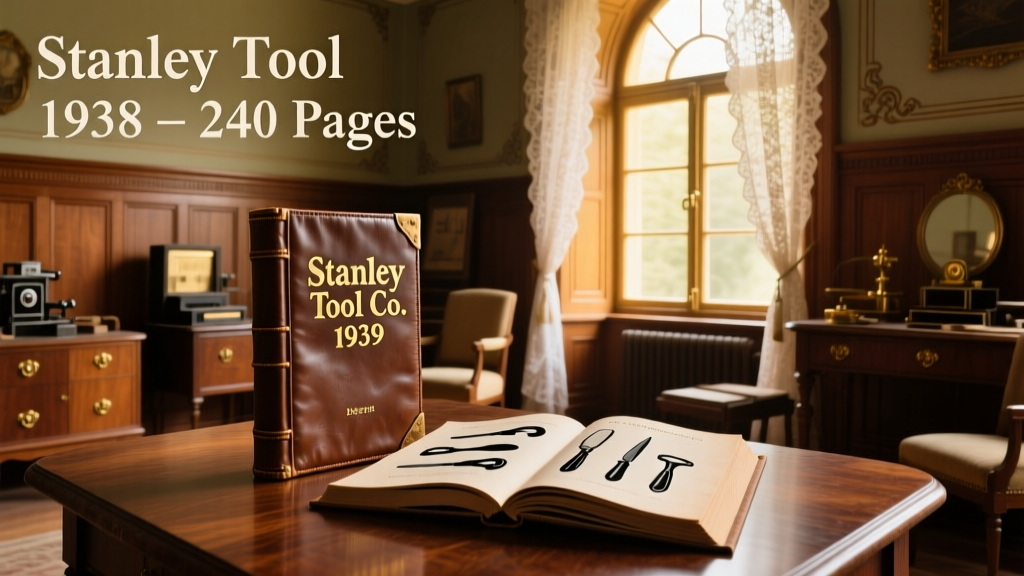
The 1939 Stanley Tool Catalog: A 240-Page Archive of American Craftsmanship and Industrial Design
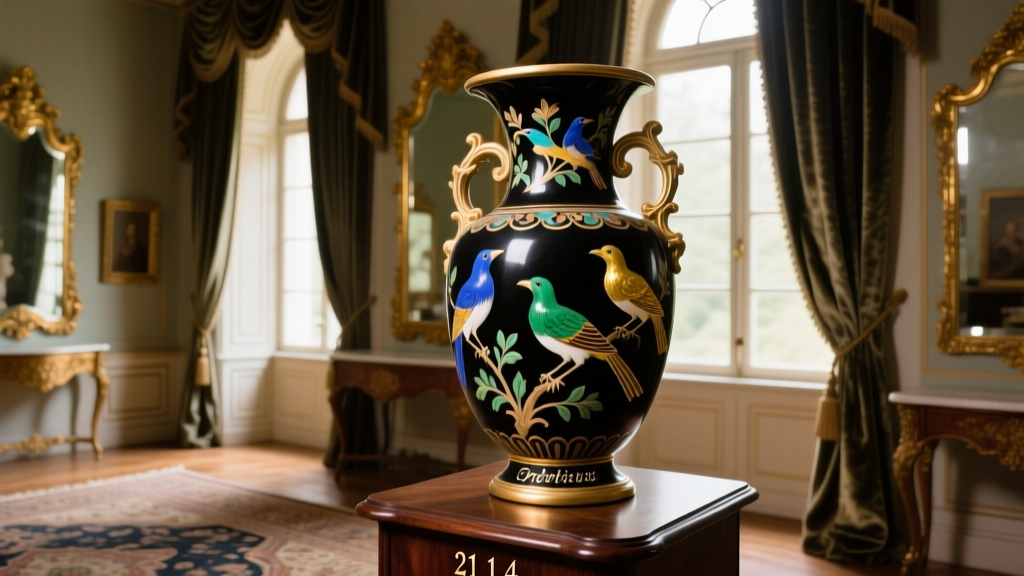
Teplitz Vase: Carved Polychrome Birds on Dead Matte Ground, Marked '21 1/4 In'

The Disneyana Bottle Mickey Mouse Shoe Polish Box: History, Identification, and Conservation of a Mid-Century Icon
Bauer Canary Yellow Cake Plate: Monterey Pattern — History, Identification & Restoration Guide
Brass Baluster-Style Andirons: History, Design, and Restoration of 15-Inch Fireplace Tools
Spalding T-5 Baseball Bat (1900–1920): Authenticity, Construction, and Restoration Considerations for Antique Sports Collectors
Limoges Bowls and Trays: Authenticity, Craftsmanship, and Restoration Insights
Tea Leaf Ironstone Platter, 13 Inches: History, Identification, and Care of a Victorian Icon
Ballantine Lady With Beer Glass Counter Sign (1940s, 18 × 14 in): History, Identification, and Conservation of a Mid-Century American Brewery Artifact