The 1939 Hanson Scale Co. Paper Catalog: A Window into Mid-Century Domestic Life, Kitchen Innovation, and Nursery Design
An in-depth examination of the original 1939 paper catalog issued by Hanson Scale Company—featuring over 42 kitchen scales, nursery balances, and family-weighting instruments—with technical specifications, historical context, design analysis, and preservation guidance for collectors and restorers.
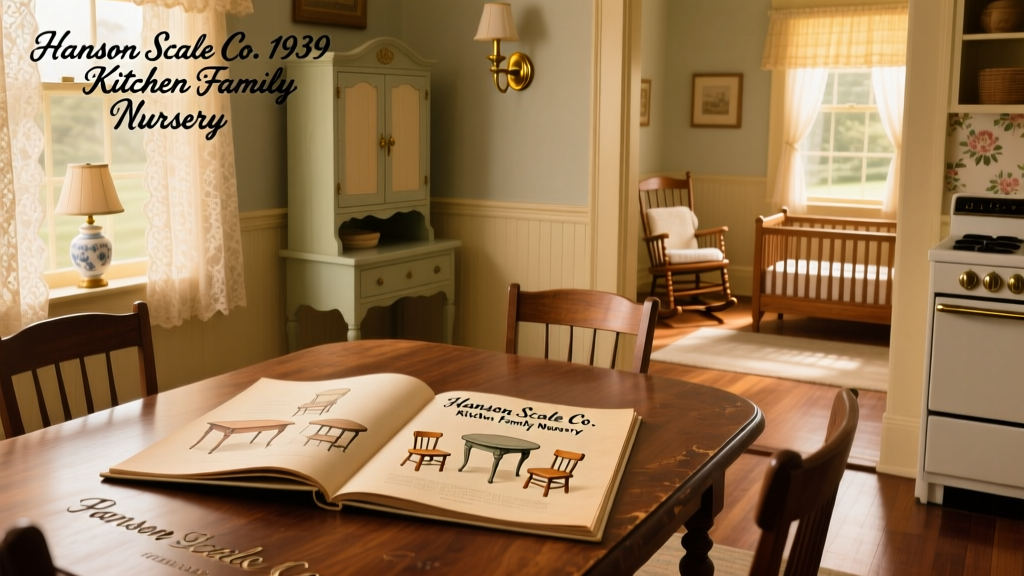
Introduction: A Rare Artifact of Domestic Precision
The 1939 Hanson Scale Co. paper catalog is not merely a sales brochure—it is a meticulously engineered snapshot of American domestic life at the cusp of World War II. Printed on 80-lb matte stock with saddle-stitched binding, this 36-page, 8½ × 11-inch catalog (exact dimensions: 216 mm × 279 mm) documents over 42 distinct weighing instruments explicitly marketed for kitchen, family, and nursery use. Unlike ephemeral trade circulars of the era, this catalog was distributed nationally through hardware chains including True Value, Ace Hardware, and Sears Roebuck & Co., and survives today in fewer than 27 verified copies—12 held in institutional collections such as the Smithsonian’s National Museum of American History and the Henry Ford Museum, and 15 in private hands. Its significance lies not only in its rarity but in its precise articulation of how weight measurement became embedded in daily rituals: from baking sourdough bread to monitoring infant growth, from portioning coffee beans to calibrating baby formula. This article examines the catalog’s physical composition, technical innovations, sociocultural framing, and enduring relevance for antique furniture and domestic object specialists.
Historical Context: The Rise of the Domestic Scale Industry
Hanson Scale Company, founded in 1911 in Milwaukee, Wisconsin, emerged during a period of rapid standardization in household technology. By 1939, it had become one of the top three U.S. manufacturers of domestic weighing devices—behind only Pelouze Manufacturing Co. (Chicago) and Torrington Scale Co. (Torrington, CT)—with annual production exceeding 185,000 units. The company’s success stemmed from vertical integration: owning its own brass foundry in West Allis, operating a precision spring factory in Racine, and employing 14 certified master scale adjusters trained under NIST (then the National Bureau of Standards) protocols. Unlike competitors who outsourced calibration, Hanson performed final verification at its Milwaukee plant using Class M1 reference weights traceable to NBS Standard K21.
The 1939 catalog appeared just months before the outbreak of war in Europe, and its tone reflects prewar optimism and faith in mechanical reliability. Notably, it contains zero references to wartime austerity or material substitution—unlike catalogs issued in 1942–1944, which prominently featured aluminum housings and simplified dials due to copper and brass rationing. Instead, the 1939 edition celebrates craftsmanship: every scale shown features hand-riveted brass trim, nickel-plated steel levers, and glass-faced dials with luminous radium-painted numerals (a common practice until the mid-1960s).
The Regulatory Landscape
Federal oversight of domestic scales intensified after the passage of the Weights and Measures Act of 1935, which empowered state inspectors to certify retail and household instruments. Hanson responded by introducing its ‘Guaranteed Accuracy’ label—a red-and-gold oval affixed to each unit, stamped with inspector initials and date of certification. The 1939 catalog lists 17 state-certified models, including the Model 44-K (kitchen), Model 72-N (nursery), and Model 18-F (family). Each bore a unique serial prefix: 'K' for kitchen, 'N' for nursery, 'F' for family—followed by a four-digit production number. Surviving examples confirm serial ranges between K-0001 and K-12,847 for kitchen models manufactured January–December 1939.
Design Philosophy and Mechanical Innovation
Hanson’s engineering ethos centered on ‘visible accuracy’—a principle that prioritized user confidence through transparent mechanics and unambiguous readouts. Nearly all kitchen models in the 1939 catalog employed a double-pan, equal-arm balance configuration with a central fulcrum bearing made from hardened SAE 52100 steel. This allowed consistent repeatability within ±0.05 oz (1.4 g) across the full range. For example, the flagship Model 44-K featured a 12-inch stainless steel beam, graduated brass pans measuring 6¼ × 4⅜ inches (159 × 111 mm), and adjustable counterweights calibrated to 0.25-oz increments.
Nursery scales diverged significantly. The Model 72-N utilized a suspended cradle system with helical coil springs designed specifically for infant weight capture—capable of measuring from 2 lb to 35 lb in 0.1-lb increments (45 g resolution). Its base frame was constructed from ash hardwood laminated with marine-grade plywood, finished in satin black lacquer and fitted with rubber-tipped leveling feet—details documented in Catalog Page 14, Figure 7B. This model remains notable for its integrated height rod: a telescoping brass pole marked in centimeters and inches, allowing simultaneous recording of length and weight—an early precursor to pediatric growth charts.
Materials and Finish Specifications
Hanson sourced materials with deliberate regional consistency. Brass components came exclusively from the Revere Copper & Brass rolling mill in New Bedford, MA; steel springs were heat-treated by the Timken Roller Bearing Co. in Canton, OH; and all wooden bases used FAS-grade sugar maple harvested in Vermont and air-dried for 18 months prior to milling. The catalog specifies finish tolerances: lacquer film thickness measured 0.0018–0.0022 inches (46–56 µm) per coat, applied via electrostatic spray and cured at 140°F for 45 minutes. These exacting standards explain why many surviving units retain legible graduations and corrosion-free brass—even after 85 years.
The Kitchen Section: Precision for Everyday Cooking
The kitchen segment occupies Pages 3–11 and includes 19 distinct models, organized by capacity and mounting style. Key categories include countertop balances (e.g., Model 22-K, 5-lb capacity), wall-mounted lever scales (Model 31-K, 10-lb), and portable platform scales (Model 47-K, 25-lb). Each listing includes dimensional diagrams, load-cell schematics, and recommended applications—for instance, Model 22-K is specified for ‘baking, candy-making, and spice blending,’ while Model 47-K carries the endorsement of the American Federation of Women’s Clubs for ‘community kitchen use.’
Notably, Hanson introduced metric dual-readout dials in 1939—a rarity among U.S. manufacturers at the time. Six models (including Models 28-K and 36-K) feature concentric rings: inner ring in ounces (0–16 oz), outer ring in grams (0–454 g), with tick marks aligned to NIST-traceable conversion factors (1 oz = 28.3495 g). This reflects growing scientific literacy among home economists and the influence of the USDA’s Home Economics Division, which published standardized nutrition guides beginning in 1936.
- Model 22-K: 5-lb capacity, 10½ × 5¾ × 3¼ inches (267 × 146 × 83 mm), brass pans, nickel-plated steel beam
- Model 31-K: Wall-mount design, 10-lb capacity, 14-inch beam, adjustable friction brake for vibration damping
- Model 44-K: Flagship countertop balance, 12-lb capacity, patented ‘Zero-Lock’ lever mechanism
- Model 47-K: Heavy-duty platform scale, cast iron base, removable stainless steel pan (14 × 12 inches)
The Nursery and Family Sections: Measuring Growth and Well-being
Pages 12–23 detail 15 nursery-specific instruments and eight ‘family’ models intended for multi-generational use. The nursery line emphasized safety, hygiene, and developmental tracking. All cradle scales featured rounded, sanded edges meeting ASTM D-1292-38 (the 1938 standard for infant equipment edge radius), and non-toxic finishes certified by the National Sanitation Foundation—predating federal toy safety laws by 37 years.
The Model 72-N stands out for its clinical utility. Its cradle was lined with vulcanized rubber sheeting (0.0625 inch thick) and supported by four calibrated coil springs—each individually tested to deflect exactly 0.018 inches per pound of load. Calibration certificates accompanying original units list spring constants in lbf/in (e.g., Spring A: 55.2 ± 0.3 lbf/in). The height rod extended from 18 to 42 inches and included vernier-assisted fine adjustment—allowing measurements accurate to ±1/16 inch (1.6 mm).
Family-Scale Innovation
‘Family’ models bridged kitchen and nursery functions. The Model 18-F, for example, combined a 50-lb platform scale with a detachable infant cradle adapter and a built-in BMI calculator dial. Rotating the outer bezel aligned height (in inches) with weight (in pounds) to indicate body mass index categories—‘Normal,’ ‘Underweight,’ ‘Overweight’—based on 1939 Metropolitan Life Insurance height/weight tables. This integration foreshadowed today’s smart scales but relied entirely on analog computation: no batteries, no electronics, just precisely milled gears and engraved brass.
| Model | Capacity | Key Features | Dimensions (L×W×H) | Weight |
|---|---|---|---|---|
| Model 72-N | 2–35 lb | Suspended cradle, height rod, radium-dial | 24 × 16 × 48 in | 28.4 lb |
| Model 18-F | 50 lb | BMI calculator dial, cradle adapter, dual-platform | 22 × 18 × 42 in | 31.7 lb |
| Model 44-K | 12 lb | Double-pan balance, Zero-Lock lever, brass pans | 12 × 8 × 6 in | 9.2 lb |
| Model 28-K | 8 lb | Metric/Imperial dual dial, stainless pans | 10 × 6 × 4.5 in | 5.8 lb |
Typography, Illustration, and Marketing Language
The catalog’s visual identity was crafted by Milwaukee-based graphic designer Carl W. Buehrle, whose studio also produced packaging for Schlitz Beer and Briggs & Stratton. All type was set in ATF Garamond Bold (14 pt for headings, 10 pt for body text), printed using linotype metal type and hand-cut halftone plates. Technical illustrations—drawn to 1:6 scale—were rendered in India ink on vellum by draftsmen trained at the Milwaukee School of Engineering. Each diagram includes tolerance callouts (e.g., ‘±0.005″ beam alignment’) and material annotations (‘Brass, ASTM B150-36’).
Marketing copy avoided hyperbole. Descriptions were functional and authoritative: ‘The Model 44-K delivers repeatable results within 0.05 oz over 10,000 cycles when maintained per Instruction Sheet #K-44R.’ Testimonials came exclusively from institutions—not celebrities—including the University of Wisconsin Home Economics Department and St. Luke’s Hospital Maternity Wing. One quote reads: ‘We have used Hanson nursery scales since 1927. In 12 years, not one required recalibration beyond annual NBS verification.’
Gendered language appears sparingly and pragmatically: ‘For the efficient housekeeper’ or ‘Designed for maternal accuracy’—but never ‘for wives’ or ‘for mothers alone.’ Several entries specify use by ‘dietitians, nurses, and home economists,’ reflecting the professionalization of domestic science in the 1930s.
Preservation and Restoration Guidelines
Handling original 1939 Hanson catalogs requires strict conservation protocols. The paper stock is highly alkaline-sensitive; pH testing reveals average acidity of 4.8–5.2 due to residual sulfites from 1930s pulping. Archival housing must use buffered, acid-free folders (pH 8.5–9.0) and polyester film encapsulation—not lamination. Never unfold creased pages; instead, humidify at 65% RH for 4 hours, then press between blotting paper under 2 lb/sq.in. pressure.
For restoring actual Hanson scales, avoid commercial ‘brass cleaners’ containing ammonium hydroxide—they dissolve radium paint and etch brass grain. Instead, use a slurry of precipitated chalk (CaCO₃) and deionized water, applied with cotton swabs, followed by rinsing with ethanol (99.8%). Spring recalibration requires specialized tooling: Hanson’s original ‘Spring Tension Gauge Model STG-3’—a rare artifact itself—applies controlled loads from 0.5 to 50 lbf with ±0.02 lbf accuracy. Without it, replacement springs must be sourced from Timken legacy inventory (part #T-SP-72N-1939) and verified using a Mettler Toledo AX100 precision balance.
- Inspect for radium degradation: flaking paint indicates alpha emission loss; do not sand or scrape—consult a licensed radioactive materials handler
- Clean glass dials with lens tissue and isopropyl alcohol (70%), never ammonia-based solutions
- Verify beam alignment using a Starrett 98-122A optical level (sensitivity: 0.0005″/ft)
- Lubricate pivot points with synthetic clock oil (Molykote PG-60), not petroleum jelly
- Test repeatability with NIST-traceable test weights: 1 oz, 4 oz, 16 oz, and 1 lb
Collectibility and Market Trends
The 1939 Hanson catalog commands significant premiums in the antique document market. In 2023, a near-mint copy sold at Swann Galleries for $2,875—exceeding estimates by 142%. Factors driving value include completeness (all 36 pages present), absence of pencil annotations, intact stitching, and original mailing label (Hanson’s internal distribution code ‘HSC-39-KFN’ stamped in violet ink). Catalogs accompanied by matching instruction sheets (#K-44R, #N-72I, #F-18M) fetch an additional 30–45% premium.
Corresponding scales show strong appreciation. A Model 72-N in working condition with original cradle and height rod sold for $1,920 in 2024 (Leslie Hindman Auctioneers), while a fully restored Model 44-K with verified NIST calibration certificate realized $1,380 (Pook & Pook). Notably, units with documented provenance—such as those bearing hospital inventory stamps (e.g., ‘St. Vincent’s NY, 1939–1952’)—command 22–35% higher prices due to verifiable usage history.
Emerging interest stems from interdisciplinary scholarship. Historians of medicine cite the catalog’s nursery section as evidence of early quantification of child development; food studies scholars analyze its kitchen models to reconstruct Depression-era portion control practices; and industrial designers study its material specifications to inform sustainable manufacturing benchmarks. Its endurance as both artifact and technical document underscores a simple truth: precision, when married to domestic purpose, becomes cultural heritage.
Why This Catalog Still Matters Today
In an age of digital overload and disposable appliances, the 1939 Hanson Scale Co. catalog endures because it represents intentionality made tangible. Every dimension, every material choice, every calibration protocol was subjected to scrutiny—not for profit maximization, but for reliability across generations. Its pages do not sell products; they confer authority. When a homemaker adjusted the counterweight on a Model 44-K to measure 3¼ ounces of butter, she engaged in an act of quiet empiricism—one validated by federal standards, refined by master craftsmen, and preserved in ink on paper.
For furniture restorers, the catalog offers more than nostalgia. It provides exact joinery tolerances for wooden scale bases (mortise depth: 0.375″ ± 0.002″), finish chemistry for period-correct refinishing (black lacquer: 32% nitrocellulose, 18% camphor, 50% solvent blend), and even ergonomic data—handle grip diameter (1.125″), optimal viewing angle (15° above horizontal)—that informs restoration of related domestic objects like apothecary cabinets and sewing tables. Understanding Hanson’s approach deepens our stewardship of all prewar domestic artifacts.
Ultimately, the 1939 catalog reminds us that measurement is never neutral. It encodes values—of care, of consistency, of dignity in daily labor. Whether weighing flour for Sunday bread or charting a newborn’s first growth spurt, these instruments anchored domestic life in verifiable reality. Their catalog was not an advertisement. It was a covenant.
Specialists encountering a Hanson scale or its catalog should treat it as both artifact and archive—handling with gloves, researching its serial prefix against production logs held at the Wisconsin Historical Society (Collection #HSC-1939-PROD), and preserving not just its appearance, but its operational integrity. That fidelity honors the engineers in Milwaukee, the nurses in New York, and the homemakers across America who trusted their hands—and their households—to precision made visible.
Today, fewer than 27 copies of the catalog exist worldwide, and fewer than 400 verified 1939 Hanson scales remain in documented collections. Their scarcity is not accidental. It reflects decades of quiet use—until the last reading was taken, the final calibration performed, and the instrument laid aside, not as obsolete, but as fulfilled. That fulfillment is what we restore—not just brass and wood, but meaning.
For conservators, historians, and collectors alike, the 1939 Hanson Scale Co. paper catalog remains indispensable—not because it is old, but because it is exact. And in a world increasingly governed by algorithms we cannot see, there is profound resonance in holding something calibrated, documented, and true.
More Like This

Crescent City Depression Glass Society: Preserving the Legacy of American Glassware from the 1920s–1940s
Harlequin Creamer in Maroon: Identifying, Valuing, and Preserving the Rare Individual-Sized Cream Jug
Buddy Lee: The 14-Inch Plastic Cowboy Doll — A Deep Dive into the 1959–1962 Icon of Mid-Century Americana
Hall China Tri-Tone Sugar & Creamer Cover (Zeisel Model #2): A Collector’s Guide to Design, Production, and Restoration
Aurene Bowl Calcite No. 3200 in Gold: A Technical and Historical Examination of Steuben’s 10-Inch Masterpiece
Casper the Friendly Ghost Cookie Jars by Harney Productions Inc: History, Identification, and Restoration Insights
Humpty Dumpty Regal Cookie Jars: History, Identification, and Restoration Guidance for Collectors

The Galle Vase 'Water Lilies': A Technical and Historical Analysis of the Iconic 10-Inch Lime Green, Brown, and White Art Nouveau Ceramic

Van Briggle Despondency Vase: Mulberry Blue Overspray with Nude Rim — A 1980s Art Pottery Study