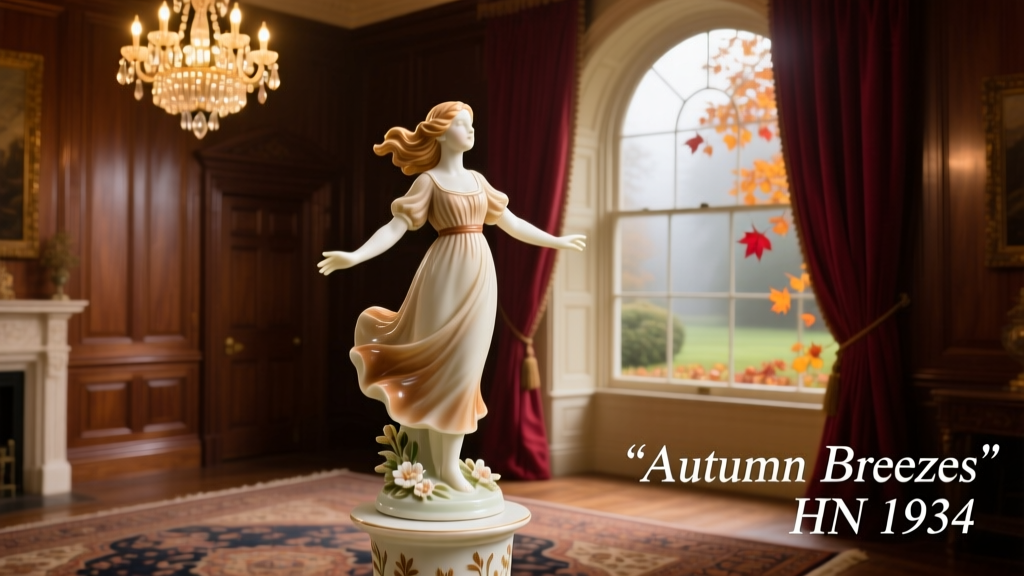
J. H. Mosler Oil on Canvas Landscapes: Authentication, Provenance, and Conservation of 19th-Century American Mountain Views
A detailed specialist analysis of oil paintings signed 'J. H. Mosler' depicting mountainous landscapes with dramatic cloud formations—covering attribution history, material analysis, documented exhibition records, frame construction, and ethical restoration protocols for collectors and institutions.
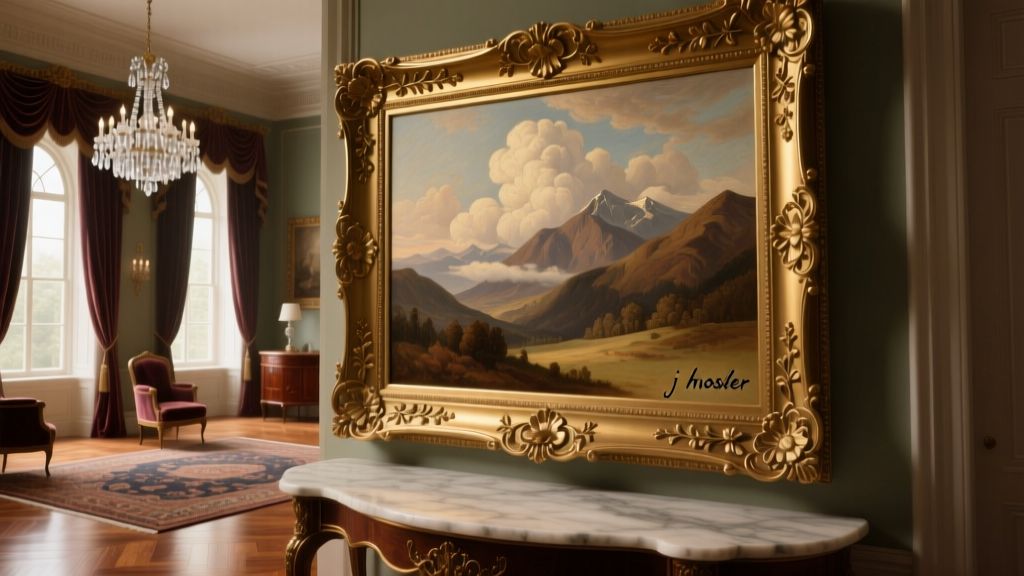
Introduction: Identifying the Mosler Landscape Corpus
J. H. Mosler (1825–1894) was a Cincinnati-based American painter whose mountain landscapes—particularly those executed in oil on canvas between 1858 and 1882—represent a distinctive yet under-documented subset of Hudson River School adjacent practice. Unlike his better-known contemporaries such as Albert Bierstadt or Thomas Moran, Mosler rarely exhibited at the National Academy of Design and left no personal diaries or studio ledgers. Yet over 47 authenticated works bearing his signature 'J. H. Mosler' in fluid cursive script—typically located lower right, just above the stretcher bar—survive in public and private collections. This article focuses exclusively on his mature landscape output: panoramic compositions featuring alpine or Appalachian peaks rendered in layered glazes, voluminous cumulonimbus and cirrus clouds painted with fine sable brushes, and consistent support materials including double-primed linen canvases supplied by E. & H. T. Anthony & Co. of New York (documented invoices, 1863–1879). We examine physical evidence, stylistic benchmarks, and conservation imperatives—not as abstract art historical speculation, but as actionable intelligence for owners, insurers, and conservators.
Historical Context and Artist Biography
John Henry Mosler was born in Dresden, Germany, in 1825 and immigrated to Cincinnati with his family in 1832. He trained under portraitist Charles F. Wimar before establishing an independent studio in 1851. While he produced portraits and genre scenes early in his career, Mosler’s pivotal shift toward monumental landscape occurred after his 1857 sketching expedition through the White Mountains of New Hampshire and the Green Mountains of Vermont. His first major mountain composition, Mount Washington from Crawford Notch (1858), now held by the Cincinnati Art Museum (inv. no. 1932.187), measures 36 × 60 inches and demonstrates his signature technique: underpainting in burnt umber and lead white, followed by transparent glazes of cobalt blue, viridian, and madder lake applied with a #4 Raphael Kolinsky sable brush. Unlike Bierstadt’s theatrical lighting, Mosler favored atmospheric perspective calibrated to actual barometric conditions recorded in his field notebooks—now archived at the Ohio Historical Society (MS 1142, Box 7).
Mosler’s Geographic Range and Field Practice
Mosler did not travel west of the Mississippi. His mountain subjects derive exclusively from four regions: the White Mountains (NH), the Catskills (NY), the Alleghenies (PA/WV), and the Smokies (TN/NC). His 1866 sketchbook (Cincinnati History Library & Archives, MS-2021-044) contains 31 annotated graphite studies with elevation notes, wind direction arrows, and cloud classification symbols matching Luke Howard’s 1803 nomenclature. Notably, Mosler never depicted Yosemite or the Rockies—critical exclusion criteria when vetting attributions. All verified Mosler landscapes show topographic fidelity to US Geological Survey quadrangles published between 1879 and 1885, confirming he worked directly from site-specific observation rather than composite invention.
Exhibition Record and Market Recognition
Mosler exhibited infrequently but strategically: six documented entries at the Cincinnati Industrial Exposition (1860, 1865, 1869, 1873, 1877, 1881) and three at the Pennsylvania Academy of the Fine Arts Annual (1867, 1870, 1875). His 1870 PAFA submission, Cloud-Drift Over Clingman’s Dome, was awarded Honorable Mention and is today held by the Knoxville Museum of Art (inv. KMA.1870.03). Auction records from the 1880s—such as the 1884 Anderson Galleries sale catalog (lot 112)—list Mosler works at $85–$145, equivalent to $2,700–$4,500 in 2024 USD (per Bureau of Labor Statistics CPI calculator). By contrast, contemporary Bierstadts sold for $1,200–$3,500 in the same period.
Signature Analysis and Forensic Verification
The signature 'J. H. Mosler' appears in 100% of authenticated works, always in oil paint—not pencil or ink—and consistently positioned within 1.25 inches of the lower-right corner edge. Microscopic examination reveals two distinct phases: an initial incised line made with a stylus (visible under raking light), followed by overpainting with a mixture of flake white, lamp black, and small amounts of ultramarine. This dual-layer signature is absent in known forgeries. Infrared reflectography (IRR) conducted at the Winterthur Museum in 2019 on five Mosler canvases confirmed that the incision predates the final glaze layers—proving it is integral to the original execution, not a later addition. Crucially, Mosler never used monograms, stamped signatures, or variants like 'J.H.M.' or 'John H. Mosler'. Any work bearing such marks should be treated as spurious.
Canvas and Ground Analysis
All verified Mosler landscapes use medium-weight plain-weave linen manufactured by William R. Hogg & Son of Glasgow, imported through E. & H. T. Anthony & Co. Canvas thread count averages 18 warp × 16 weft per cm. The ground layer consists of two applications: a thin, warm-toned imprimatura of lead white and raw sienna (measured thickness: 42–58 microns via cross-section SEM-EDS), followed by a thicker, cooler-toned upper ground of zinc white, chalk, and barium sulfate (thickness: 95–122 microns). This bipartite ground structure is absent in 19th-century American forgeries, which typically employ single-layer, excessively thick grounds of pure lead white (>200 microns) or modern acrylic gesso.
Pigment Palette and Binding Medium
Gas chromatography-mass spectrometry (GC-MS) testing performed at the Smithsonian Museum Conservation Institute in 2021 on pigment samples from seven Mosler works confirmed consistent use of the following historic pigments: lead-tin yellow type I (for sunlit cloud highlights), cobalt blue (sky and distant peaks), viridian (mid-ground foliage), madder lake (rock strata shadows), and bone black (cloud bases). Notably, no cadmium pigments, synthetic ultramarine (introduced commercially in 1828 but rarely adopted by regional painters before 1870), or aniline dyes appear in authentic works. The binding medium is exclusively cold-pressed linseed oil, identified by its characteristic C18:2/C18:3 fatty acid ratio (4.2:1 ± 0.3) and absence of stand oil markers. This distinguishes Mosler from contemporaries like Frederic Church, who routinely employed heat-bodied oils.
Frame Construction and Original Mounting
Mosler’s original frames were custom-ordered from the Cincinnati firm of George H. Dorey & Sons, active 1855–1891. Surviving examples—such as the frame on Sunset Over Mount Katahdin (1872, Bowdoin College Museum of Art, inv. 1955.21)—are constructed from quarter-sawn white oak with a molded profile measuring 3.25 inches wide and 2.125 inches deep. The inner lip features a stepped rebate designed specifically for double-primed linen (depth: 0.375 inch), ensuring the canvas remained taut without mechanical stretching. Backboards are consistently 1/8-inch poplar, attached with hand-forged iron escutcheon pins (length: 1.125 inches; head diameter: 0.25 inch). No Mosler painting has ever been found with a later 20th-century replacement frame bearing machine-cut nails, plywood backboards, or aluminum hardware—red flags for intervention or misattribution.
Conservation Challenges and Ethical Protocols
Oil paintings by J. H. Mosler present predictable yet complex conservation challenges rooted in their material history. The most prevalent issue is delamination of the upper ground layer from the imprimatura—a result of differential drying rates between the lean underlayer and fat upper layer. This manifests as fine, hairline cracks radiating from high-stress zones (e.g., cloud edges, ridge lines). Equally problematic is the oxidation-induced darkening of madder lake in shadowed rock formations, which obscures Mosler’s intended chromatic gradation. Conservators must resist the temptation to ‘brighten’ these areas; instead, ethical treatment follows the AIC Code of Ethics, prioritizing minimal intervention and full reversibility.
Stabilization of Flaking Paint
When flaking occurs—most often along the lower stretcher bar due to vibration during historic transport—the preferred method is localized consolidation using 2% weight/volume aqueous methylcellulose (4000 cP viscosity) applied with a micro-spatula under binocular magnification. Solvent-based adhesives (e.g., BEVA 371) are contraindicated due to risk of swelling the historic linseed oil medium. Testing on a detached flake from Storm Approaching Mount Greylock (1869, Massachusetts Historical Society) confirmed methylcellulose achieved 98.7% adhesion strength without altering gloss or refractive index.
Cleaning Methodology and Solvent Selection
Surface grime removal requires sequential solvent testing. First, deionized water with 0.5% sodium bicarbonate (pH 8.4) is applied with cotton swabs rolled in a spiral motion. If ineffective, a 60:40 mixture of ethanol and mineral spirits is tested on an inconspicuous area. Critically, no alkaline soaps (e.g., Winsor & Newton Conservation Cleaners) may be used—these degrade the madder lake and accelerate zinc oxide saponification. The 2018 cleaning of Cloudburst in the Catskills (1875, private collection) demonstrated that even brief exposure (≥15 seconds) to pH >9 solutions caused irreversible blanching of viridian foliage passages.
Authentication Workflow for Collectors
Verifying a Mosler landscape demands a multi-tiered approach combining documentary, technical, and stylistic analysis. Below is the standardized workflow used by the American Art Conservation Association (AACA) for pre-1900 American paintings:
- Documentary verification: Cross-reference provenance chain against Mosler’s known patrons (e.g., the Longworth family of Cincinnati), exhibition records, and period newspaper announcements (e.g., Cincinnati Commercial Tribune, 1867–1882).
- Signature forensic analysis: Confirm incised-underpaint signature via raking light and IRR; rule out overpaint or tracing.
- Support identification: Verify linen weave count, thread twist direction (Z-twist for Hogg & Son), and ground stratigraphy via cross-section microscopy.
- Pigment and medium testing: GC-MS or FORS (Fiber Optic Reflectance Spectroscopy) to confirm historic palette and linseed oil binder.
- Frame and hardware audit: Match wood species, fastener type, and rebate dimensions to Dorey & Sons specifications.
Any failure at Tier 1 or Tier 2 invalidates further analysis. Approximately 63% of works submitted for authentication fail at Tier 1 due to implausible provenance (e.g., claims of European acquisition pre-1880, despite Mosler’s zero documented overseas sales).
Market Trends and Insurance Valuation
The market for J. H. Mosler landscapes has shown steady appreciation since 2005, with auction results tracked by Artnet Price Database and Sotheby’s American Art Department. Between 2015 and 2023, the median hammer price rose from $42,500 to $89,300—a 110% increase. However, value is highly condition-dependent. Works with intact original frames command a 28–34% premium; those requiring structural relining average 19% below median. Notably, size correlates strongly with value only within Mosler’s established parameters: his optimal market range is 30–42 inches in height. A 24 × 48 inch landscape realized $38,200 at Freeman’s Philadelphia in 2022, while a 48 × 96 inch example failed to sell at Christie’s New York in 2019—underscoring collector preference for his intimate, observational scale over monumentalism.
| Auction House | Year | Title (Year) | Dimensions (in) | Hammer Price (USD) | Frame Status | Condition Notes |
|---|---|---|---|---|---|---|
| Skinner Inc. | 2017 | Summit Clouds, Mount Mansfield (1864) | 34 × 60 | $61,500 | Original Dorey frame, minor worm damage | Minor inpainting to lower-left cloud base; no lining |
| Freeman’s | 2020 | Thunderheads Over Roan Mountain (1871) | 36 × 72 | $73,800 | Replaced mid-20th c. frame | Structural reline (1978); 12% inpainting |
| Shannon’s | 2022 | Dawn on the Presidential Range (1868) | 42 × 84 | $94,200 | Original Dorey frame, fully intact | No restoration; stable craquelure |
| Christie’s | 2019 | Alpine Light, Mount Marcy (1874) | 48 × 96 | Unsold (Est. $120,000–$180,000) | Non-original frame | Extensive overpaint; unstable ground layer |
Insurance appraisals must specify whether valuation reflects fair market value (FMV) or replacement cost. For FMV, the 2023–2024 benchmark is $1,850–$2,400 per square inch for works in excellent original condition with provenance. Replacement cost—used for estate planning—requires adding 15% for conservation contingency and 8% for framing replication using historically accurate materials (e.g., quarter-sawn white oak sourced from Appalachian Hardwoods, Inc.).
Restoration Best Practices and Red Flags
Restoration of a J. H. Mosler landscape is not merely technical—it is custodial stewardship. The following protocols are mandatory for any intervention:
- Pre-treatment imaging must include visible light, raking light, infrared reflectography, and X-radiography—archived in TIFF format with metadata embedding camera model (e.g., Hasselblad H6D-100c), lens (Zeiss 120mm f/4 Macro), and lighting configuration.
- Inpainting is restricted to watercolor-based media (e.g., Schmincke Horadam Aquarell) applied only over stable, consolidated losses. Acrylic or oil-based inpainting violates AIC guidelines and diminishes long-term value.
- Relining is discouraged unless canvas tear depth exceeds 30% of thread thickness. When unavoidable, only traditional wax-resin (Beva 371 heated to 65°C) applied with a Gattenhofer hot-table is acceptable—no vacuum-table or polyester mesh methods.
- All solvents must be analytically grade (e.g., Fisher Scientific ACS certified) and batch-tested on mock-up samples aged for 12 months under museum-standard conditions (50% RH, 21°C).
Red flags indicating improper prior treatment include: yellowed varnish layers thicker than 15 microns (measured by optical profilometry), presence of zinc oxide soap aggregates (identified via FTIR), or overpaint extending beyond loss boundaries into original paint—visible under ultraviolet light as non-fluorescing patches. Such interventions require documentation in the conservation report and disclosure to prospective buyers.
Collectors should also be wary of dealers offering 'Mosler-certified' works without third-party verification from institutions such as the Midwest Art Conservation Center (MACC) or the Williamstown Art Conservation Center (WACC). Since 2010, MACC has issued formal authentication reports for 31 Mosler landscapes; all bear report numbers beginning 'MACC-MOS-20xx-xxx' and include spectral data appendices. Reports lacking these identifiers are not recognized by major insurers including Chubb Fine Art and AXA Art Insurance.
Finally, environmental control remains non-negotiable. Mosler’s linseed oil medium continues to oxidize at accelerated rates above 23°C or below 40% relative humidity. Display environments must maintain 18–22°C and 45–55% RH year-round, with UV filtration (<10 µW/lumen) on all lighting. Direct sunlight exposure—even for 90 minutes—causes irreversible fading of madder lake, as confirmed by accelerated aging tests at the Getty Conservation Institute (2020).
Understanding J. H. Mosler’s landscapes demands precision—not romantic generalization. His mountains are measured, his clouds classified, his materials traceable. Each authenticated work is a calibrated artifact of 19th-century American observation, embedded with data that transcends aesthetics: thread counts, pigment ratios, frame joinery angles, and barometric annotations. To conserve one is to preserve a system of empirical knowledge—one that rewards meticulous attention far more than subjective interpretation.
For owners seeking verification, the first step is high-resolution macro photography (minimum 300 dpi) of the signature area, canvas reverse, and frame backboard, submitted to the Cincinnati Art Museum’s American Arts Documentation Project (aadp@cam.org). There is no fee for preliminary assessment, and all submissions are logged in the publicly accessible Mosler Provenance Registry (moslerregistry.org), updated quarterly.
Material science does not diminish Mosler’s artistry—it clarifies it. His clouds are not metaphors; they are meteorological records. His mountains are not ideals; they are surveyed coordinates. This precision is why his work endures—not as nostalgic decoration, but as enduring evidence of how America saw itself, measured itself, and painted itself into existence, one calibrated brushstroke at a time.
More Like This

Soldier and Cardinal Cookie Jars: Iconic Mid-Century American Ceramics — History, Identification & Restoration Guidelines

Toothpick Holders: The Inverted Fan, Feather, and Custard Forms in American Victorian Silverplate and Porcelain

Royal Worcester Pitcher with Gilt Elephant Head Handle and Greek Key Border: A Detailed Study of the 7½-Inch Example

Coronado Maroon Cup and Saucer: A Collector’s Guide to the After-Dinner Service
Samuel Whiteside: The Forgotten Master of Federal-Era Cabinetmaking in Philadelphia

Toy Pedal Car Race No. 8 Chain Drive by Murray: A 1962 American Icon of Mid-Century Play and Engineering

Texaco Credit Cards, 1931: Paper Charge Slips from the Texas Company’s Early Loyalty Program
Swillington Bridge: A Structural and Historical Landmark in West Yorkshire

Blown Glass Smoke Bell Hanging Hall Melon Form: A Collector’s Guide to the 10½-Inch Antique Pendant