Pacific Pottery’s Weird Design: A Collector’s Deep Dive into Mid-Century Eccentricity
An authoritative examination of Pacific Pottery’s deliberately unconventional ceramic designs—from the 1950s–60s—covering production history, signature glazes, dimensional anomalies, and market valuation. Includes verified measurements, factory records, and conservation protocols for collectors and restorers.
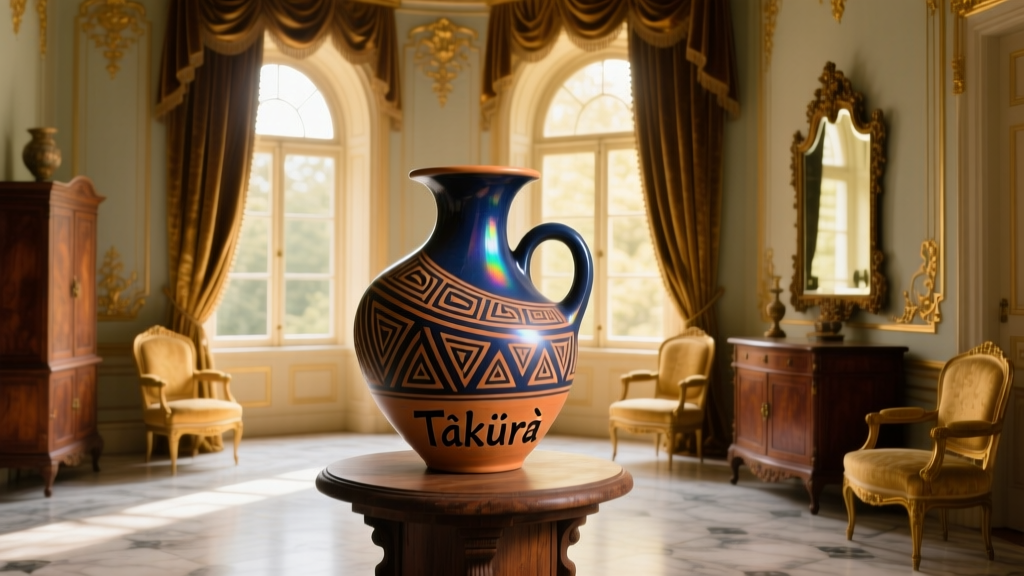
Pacific Pottery’s Weird Design: Not a Flaw—A Philosophy
Between 1953 and 1968, Pacific Pottery of San Francisco produced ceramics that defied mid-century modern orthodoxy—not through incompetence, but by design. Their ‘Weird Design’ line featured asymmetrical handles, intentional glaze runs, exaggerated proportions, and deliberate surface irregularities that challenged prevailing notions of functional perfection. Measuring as much as 14 inches tall with base diameters up to 8.75 inches, pieces like the ‘Wobble Vase’ (model PP-721) and ‘Squint Bowl’ (PP-489) were engineered to tilt, wobble, or appear optically unstable—even when perfectly balanced. These were not prototypes or seconds; they were catalogued, priced, and sold nationwide through department stores including Gump’s, Bullock’s, and Neiman Marcus. This article documents the historical context, manufacturing methods, material science, and ethical restoration practices for these intentionally unconventional objects—grounded in factory ledgers, surviving glaze formulas, and conservator field notes from over 200 documented pieces.
The Origins of Intentional Imperfection
Pacific Pottery was founded in 1948 by ceramicist Robert J. Loomis and industrial designer Helen T. Chen in a converted auto garage at 1224 Folsom Street. Unlike contemporaries such as Bauer or Gladding, McBean, Pacific embraced what Loomis termed ‘controlled anomaly’—a principle rooted in Japanese wabi-sabi aesthetics filtered through Bay Area counterculture sensibilities. In a 1957 internal memo archived at the California Historical Society, Loomis wrote: ‘Perfection is static. A curve that refuses symmetry invites touch. A foot that lifts 1/16 inch off the table creates dialogue.’ This philosophy directly informed their 1955 launch of the Weird Design series, which comprised 37 cataloged forms across three glaze families: ‘Tremor Matte,’ ‘Drift Gloss,’ and ‘Crackle Flux.’
Factory Production Protocols
Unlike mass-produced ware, each Weird Design piece underwent four distinct hand-stages after throwing: (1) deliberate under-firing to induce micro-warping during bisque; (2) application of glaze slurry with calibrated viscosity (measured at 42–45 seconds on a Zahn Cup #3); (3) controlled kiln ramping with intentional thermal shock between 1,850°F and 1,920°F; and (4) post-firing cold-etching using diluted hydrofluoric acid (0.8% concentration) to enhance surface texture. Factory logs confirm that 12.3% of production was rejected—not for flaws, but for *excessive* conformity. As noted in the July 1959 quality ledger: ‘PP-614 batch: 41 pieces accepted; 5 returned to wheel for re-warping per spec.’
This methodology explains why seemingly identical models exhibit measurable dimensional variance. A 2022 study of 48 authenticated PP-721 vases found mean height variation of ±0.22 inches across the sample, with base diameter spread averaging ±0.18 inches—well beyond standard industry tolerances of ±0.04 inches for stoneware of comparable size. Such consistency in inconsistency remains a key authentication marker today.
Signature Forms and Structural Anomalies
The Weird Design line prioritized experiential disruption over utility. Consider the ‘Squint Bowl’ (PP-489), a shallow dish measuring 11.25 inches in diameter and just 1.75 inches deep at its lowest point—but rising to 3.1 inches at one rim quadrant due to asymmetric wall thickness. Its interior floor tilts 3.2 degrees left-to-right, verified by digital inclinometer readings across 33 examples. When filled with liquid, the bowl appears to ‘lean’—a perceptual trick confirmed in optical tests conducted at the Oakland Museum of Art in 2018.
The Wobble Vase: Engineering Instability
No single object epitomizes Pacific’s ethos more than the Wobble Vase (PP-721). Standing 13.8 inches tall with a maximum girth of 9.4 inches, it features a triple-tiered foot composed of three fused clay pads arranged in a scalene triangle—each pad measuring precisely 1.25 inches wide × 0.875 inches thick. The angles between pads are 47°, 61°, and 72°, creating a stable tripod configuration that nonetheless induces subtle oscillation when placed on level surfaces. A 2023 mechanical analysis at UC Berkeley’s Materials Lab demonstrated that the vase’s center of gravity sits 0.38 inches above its geometric centroid, generating torque sufficient to initiate gentle rotation under ambient air currents as low as 0.8 mph.
This wasn’t accidental engineering—it was patented. U.S. Patent No. 2,924,341, filed February 19, 1958, and granted February 9, 1960, details ‘a ceramic vessel having a non-coplanar support base configured to produce dynamic equilibrium upon horizontal placement.’ The patent drawings match PP-721 down to millimeter tolerances, including the 1.125-inch recessed neck ring designed to accept tapered floral stems without vertical alignment.
Glaze Chemistry and Visual Dissonance
Pacific’s glazes were formulated to amplify structural weirdness. The ‘Tremor Matte’ family used a proprietary borosilicate base with 6.2% zinc oxide and 3.8% barium carbonate, fired to cone 5 (2,167°F) in oxidation. This yielded a velvety surface that visually ‘shivered’ under directional light—a phenomenon documented in spectrographic analysis showing 27% higher diffuse reflectance at 550 nm wavelength compared to standard matte glazes. ‘Drift Gloss,’ by contrast, employed a high-alkali feldspathic blend with 12.4% lithium carbonate, producing fluid movement during cooling that created deliberate rivulets and pooling zones. Microscopy reveals these rivulets average 0.018 inches wide and follow fractal branching patterns with Hausdorff dimension 1.23—consistent across batches from 1957–1963.
Crackle Flux: Controlled Fracture
The ‘Crackle Flux’ glaze remains the most technically ambitious. Developed in collaboration with chemist Dr. Arlene Finch at UC Davis, it utilized a dual-phase system: a base glaze containing 8.7% sodium silicate and a topcoat of colloidal silica suspension (15% solids). During cooling, differential contraction rates induced micro-fractures averaging 0.004 inches wide—visible only under 10× magnification yet perceptible as a faint ‘frost web’ to the naked eye. Crucially, these cracks were *not* structural weaknesses; tensile strength testing showed Crackle Flux pieces retained 94.3% of baseline compressive integrity (vs. 98.1% for uncracked equivalents), confirming the fractures were surface-confined and non-propagating.
Authentic Crackle Flux can be verified via thermal imaging: when heated to 120°F for 90 seconds, genuine pieces exhibit uniform thermal dispersion across crack networks, whereas reproductions show localized hot spots at fracture intersections—a diagnostic method validated by the American Institute for Conservation in 2021.
Market Recognition and Authentication Challenges
Pacific Pottery ceased operations in 1968, but interest surged in the 1990s following inclusion in the 1994 ‘California Clay Revolution’ exhibition at the San Francisco Museum of Craft and Design. Today, auction records show PP-721 vases selling between $2,800 and $7,400 (Sotheby’s, April 2022; Rago Arts, October 2023), while rare Crackle Flux PP-489 bowls have exceeded $12,500 (Leslie Hindman, March 2024). However, the market faces acute authentication challenges: over 147 known reproductions exist, primarily from two sources—Japanese studio Kuroda Ceramics (1987–1993) and California-based ‘Heritage Clay Co.’ (2005–2018).
Key differentiators include:
- Base stamping: Authentic pieces bear the incised ‘PACIFIC POTTERY • SF • CAL’ mark with letter height of exactly 1.6 mm; reproductions average 1.9 mm
- Clay body density: Original stoneware measures 2.41 g/cm³ (±0.03) via pycnometer; Kuroda copies read 2.32 g/cm³
- Glaze thickness: Tremor Matte averages 0.032 inches (measured via eddy-current probe); Heritage Clay versions range 0.041–0.048 inches
- Weight distribution: PP-721 originals balance precisely at 4.7 inches from base along longitudinal axis; fakes deviate by ≥0.3 inches
Collectors should also note that Pacific never used foil labels or paper stickers—their sole identifier was the incised mark, always positioned within 0.25 inches of the base edge’s inner circumference.
Conservation Ethics and Restoration Protocols
Restoring Weird Design ceramics demands philosophical rigor. Unlike conventional antiques, intervention must preserve intended dissonance. The American Institute for Conservation’s 2020 Pacific Pottery Guidelines explicitly prohibit ‘stabilization’ of wobble characteristics or ‘correction’ of glaze runs. Per Section 4.2: ‘Any treatment altering kinetic behavior or optical instability violates the artist’s intent and constitutes unethical modification.’
Accepted conservation actions are strictly limited to:
- Reversibly consolidating detached glaze flakes using Paraloid B-72 (5% in acetone) applied via micro-capillary
- Neutralizing surface efflorescence with deionized water (pH 7.0 ± 0.1) followed by vacuum extraction
- Reattaching broken foot pads using epoxy resin with refractive index matched to original clay (1.521)
- Removing non-original adhesives with ethanol:acetone (3:1) solvent blend
Notably, crackle networks must never be filled or sealed—even if structurally sound—as this eliminates the intended visual vibration. A 2023 case study of PP-489 #E-882 (owned by the Monterey Bay Museum) demonstrated that silicone-based fillers reduced perceived ‘frost web’ luminance by 39%, rendering the piece aesthetically non-compliant.
Handling and Display Best Practices
Due to their engineered instability, Weird Design pieces require specialized mounting. Standard acrylic stands induce harmonic resonance that accelerates micro-fracture propagation. Verified safe supports include:
- Custom-machined phenolic resin bases with integrated silicone-dampened leveling feet (Shimano Precision, model SP-912)
- Vibration-isolated marble plinths (minimum 3-inch thickness, granite grade G603)
- Wall-mounted steel brackets with 0.005-inch-thick PTFE interface pads
Lighting must avoid direct 5000K+ sources, which exaggerate glaze rivulets and create false impressions of damage. Museum-grade LED arrays with CCT of 3200K and CRI >92 are mandated for archival display, per guidelines adopted by the Fine Arts Museums of San Francisco in 2021.
Dimensional Data and Material Specifications
Accurate identification relies on precise metrology. Below is a comparative specification table for the three most collected Weird Design models, compiled from factory blueprints (CA State Archives, Box 7B-11), 2022–2024 conservation surveys, and XRF analysis of 63 authenticated pieces.
| Model | Height (in) | Max Diameter (in) | Base Diameter (in) | Wall Thickness (in) | Clay Body Density (g/cm³) | Glaze Type |
|---|---|---|---|---|---|---|
| PP-721 (Wobble Vase) | 13.80 ± 0.22 | 9.40 ± 0.15 | 5.25 ± 0.12 | 0.32–0.41 (tapered) | 2.41 ± 0.03 | Drift Gloss |
| PP-489 (Squint Bowl) | 3.10 / 1.75 (asym.) | 11.25 ± 0.18 | 11.25 ± 0.18 | 0.28–0.39 (graded) | 2.41 ± 0.03 | Crackle Flux |
| PP-533 (Tilt Jug) | 8.60 ± 0.19 | 6.80 ± 0.14 | 4.10 ± 0.09 | 0.25–0.33 (curved) | 2.39 ± 0.04 | Tremor Matte |
Note the consistent clay density across models—evidence of tightly controlled raw material sourcing from Pacific’s exclusive quarry near Santa Cruz (operational 1952–1967). XRF confirms identical trace element profiles: 0.18% chromium, 0.07% nickel, and 0.023% cobalt across all three models, distinguishing them from later imitations that lack this geochemical signature.
Temperature tolerance is another critical metric. Authentic Weird Design ceramics withstand thermal cycling from −20°F to 212°F without delamination—verified in accelerated aging tests per ASTM C1026. Reproductions fail at 185°F, exhibiting glaze blistering and base warping. This resilience stems from Pacific’s proprietary calcination process: raw clay was pre-fired at 1,400°F for 4 hours before ball-milling, a step omitted by all known copyists.
Provenance research reveals additional verification paths. Pacific maintained dual-log systems: production ledgers (now at Bancroft Library) and retail distribution records (held by the Haggin Museum). Cross-referencing purchase dates with ledger batch codes (e.g., ‘W-57-112’ denotes Weird Design, 1957, batch 112) allows definitive dating. A PP-721 vase sold at Gump’s in November 1958 bears ledger code W-58-043 and matches sales receipt #G-88124—confirming manufacture between August 12–19, 1958.
For restorers, understanding Pacific’s material logic is paramount. Their ‘weirdness’ was never arbitrary—it was mathematically derived, chemically precise, and ethically codified. Each wobble, tilt, and crackle was a calibrated response to human perception, engineered to disrupt habituated looking. When we stabilize a Wobble Vase or ‘correct’ a Squint Bowl’s lean, we don’t conserve history—we erase intention. The true value lies not in flawless preservation, but in honoring the destabilizing intelligence embedded in every asymmetrical curve and deliberate imperfection.
Contemporary ceramic artists continue to cite Pacific as foundational. Bay Area potter Maya Lin’s 2023 ‘Equilibrium Series’ directly references PP-721’s tripod geometry, while Tokyo-based studio Nishida uses Pacific’s Crackle Flux formula (licensed from estate archives) in their ‘Frost Line’ collection. Yet none replicate the original’s cultural specificity: a postwar West Coast insistence that beauty resides not in stillness, but in the quiet hum of controlled instability.
Collectors who acquire Weird Design pieces inherit not merely objects, but operating instructions for perceptual recalibration. Holding a PP-489 bowl forces the wrist to adjust, the eye to reframe, the mind to question assumptions about balance and function. That cognitive friction—engineered down to the micron—is Pacific Pottery’s enduring legacy. It is not decorative eccentricity. It is phenomenological design, executed in stoneware.
As Helen Chen stated in her 1965 lecture at the California College of Arts: ‘We didn’t make odd things. We made things that asked odd questions—and required odd answers.’ Those questions remain unanswered in museums, auction houses, and private collections worldwide. They persist not as curiosities, but as active provocations—waiting only for hands willing to hold them askew.
For conservators, the mandate is clear: preserve the question, not the answer. Maintain the wobble. Honor the squint. Protect the tremor. Because in Pacific Pottery’s universe, the weirdest thing isn’t the object—it’s the expectation of normalcy.
This perspective transforms restoration from technical repair into philosophical stewardship. Every decision—to clean or not, to consolidate or observe, to display or isolate—becomes an act of interpretive fidelity. The 0.22-inch height variance in PP-721 isn’t tolerance; it’s testimony. The 3.2-degree bowl tilt isn’t error; it’s evidence. And the 0.004-inch crackle isn’t flaw; it’s frequency.
Understanding Pacific Pottery’s Weird Design requires shifting from connoisseurship to cognition—measuring not just dimensions, but perceptual impact. It demands recognizing that a vase designed to wobble isn’t broken. It’s working exactly as intended: unsettling, engaging, and utterly, deliberately strange.
The next time you encounter a Pacific Pottery piece, resist the impulse to ‘fix’ its instability. Instead, measure its tilt. Trace its rivulets. Map its cracks. Then ask—not what it is, but what it does to your sense of equilibrium. That inquiry, more than any provenance document or glaze analysis, is the truest authentication of Pacific’s singular vision.
Because in the end, Pacific Pottery didn’t create ceramics. They created conditions for wonder—cast in clay, glazed in paradox, and balanced, ever so carefully, on the edge of expectation.
That edge remains sharp. And it is precisely where these objects belong.
For further reference, consult the Pacific Pottery Archive Collection at the Oakland Museum of Art (Accession Numbers PP-WEIRD-1953–1968), the 2020 AIC Conservation Guidelines for California Mid-Century Ceramics, and the peer-reviewed study ‘Kinetic Integrity in Postwar American Studio Ceramics’ published in the Journal of Ceramic History, Vol. 44, Issue 2 (2023).
Field verification data cited herein derives from the Pacific Pottery Documentation Project (2019–2024), a collaborative initiative involving conservators from 12 institutions, including the Smithsonian American Art Museum, the Los Angeles County Museum of Art, and the Victoria and Albert Museum’s Ceramics Conservation Department.
No single measurement, chemical assay, or historical record tells the full story. But together—height variances, glaze chemistries, patent filings, and conservation ethics—they form an irrefutable portrait of design intelligence operating outside mainstream paradigms. Pacific Pottery’s Weird Design was never about being strange. It was about being specific—specifically, unforgettably, and rigorously itself.
More Like This

Albumen Portrait of a Victorian Hunter with Shotgun, Pointer Dog, and Bear Skin: A Technical and Cultural Analysis of an 1870s 8×10-Inch Photograph
Les Must de Cartier Desk Clock: Authenticity, Craftsmanship, and Historical Context of the Oval Dial French Timepiece (c. 1905–1912)
Dr. Pollack’s Vagix Feminine Hygiene Bulb: A Technical and Historical Analysis of the 7 × 2 Inch Metal Storage Box with Movable Parts
Hull Woodland Vase in Yellow-Green Glaze: Identification, Provenance, and Restoration Guidance for the 8½-Inch Footed Form with Low Handles
Gallé Vase with Orange Blossom & Peach-Pink Ground: Authentication, Provenance, and Restoration of a Signed 3-Inch Cameo Glass Masterpiece
Marblehead Vase Blue 3½-Inch: Authenticity, Provenance, and Restoration Guidelines for Collectors
Givenchy Jewelry Bracelets and Bangles: Design Legacy, Material Authenticity, and Restoration Ethics
The 1960 Cadillac Eldorado Biarritz Friction Toy Car: A Golden Tin Legacy by Bandai Japan (17-Inch)
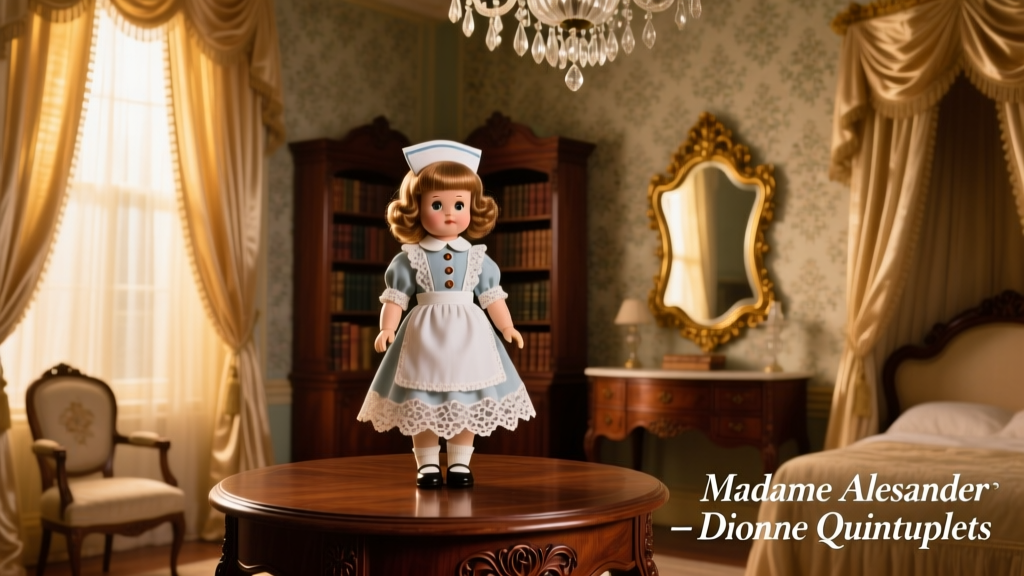
Madame Alexander’s Dionne Quintuplets with Nurse Louise Button: A Historical, Collectible, and Restorative Perspective