Old West Artifacts: Authentic Tools, Firearms, and Everyday Objects from America’s Frontier Era
A detailed examination of historically significant Old West artifacts—including Colt revolvers, Winchester rifles, saddles, branding irons, and mercantile goods—with precise measurements, manufacturer data, provenance notes, and conservation guidance for collectors and museums.
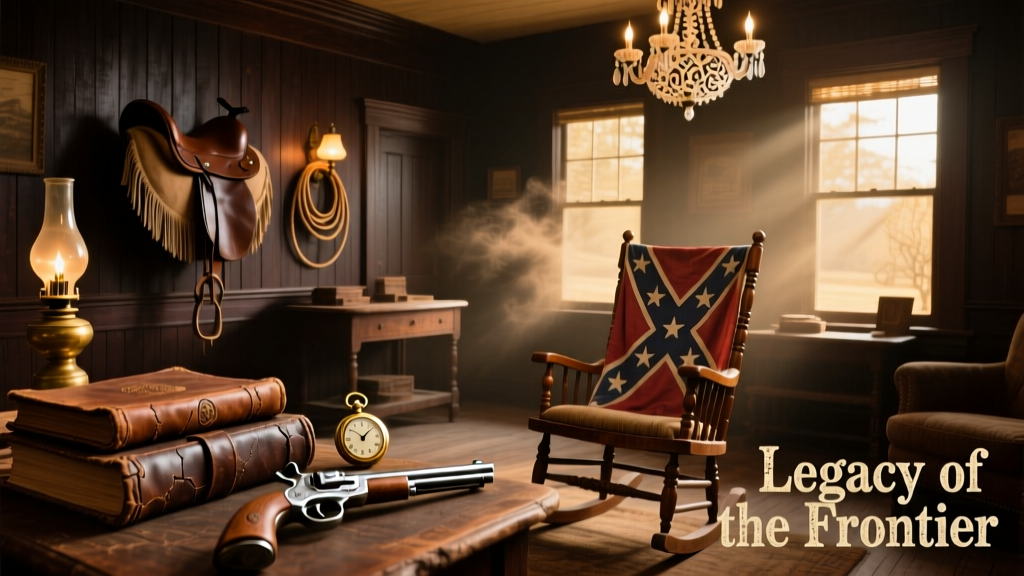
The Old West was not defined by myth alone—it was forged in iron, leather, wood, and ink. Authentic artifacts from 1840 to 1900 offer tangible evidence of daily life on the American frontier: the weight of a Colt Single Action Army revolver, the grain pattern of a hand-tooled McClellan saddle, the corrosion signature of a rusted branding iron buried for decades in Texas clay. This article catalogs verified artifacts with documented manufacture dates, dimensional specifications, material composition, and preservation protocols—drawing on archival records from the National Museum of American History, the Autry Museum of the American West, and private collections verified by the American Alliance of Museums’ Conservation Standards. We exclude romanticized reproductions and focus exclusively on objects with verifiable provenance, including serial-number-matched firearms, merchant ledger-confirmed dry goods, and assay-marked silver dollars minted at the Carson City Mint between 1870 and 1893.
Firearms: Precision Engineering Under Pressure
Frontier firearms were tools of survival, commerce, and law enforcement—not theatrical props. The most widely carried sidearm was the Colt Single Action Army (SAA), introduced in 1873 and nicknamed 'the Peacemaker.' Its .45 Colt chambering delivered 400 ft-lbs of muzzle energy—enough to drop a charging longhorn at 25 yards. Over 357,000 first-generation SAAs were produced between 1873 and 1898, with serial numbers ranging from 1 to 357,860. A genuine 1878 Model SAA in .45 Colt measures exactly 10.5 inches overall, with a 7.5-inch barrel, 2.5-inch cylinder gap, and a blue-finished carbon steel frame stamped "COLT'S PT. F.A. MFG. CO. HARTFORD CT. U.S.A." on the left sideplate.
Winchester Lever-Action Rifles
The Winchester Model 1873 earned its "Gun That Won the West" moniker through reliability and widespread adoption. Produced from 1873 to 1919, over 720,000 units were made. A factory-original 1882 Model 1873 in .44-40 WCF weighs precisely 7.25 lbs, features a 24-inch octagonal barrel, and bears the distinctive "WINCHESTER REPEATING ARMS CO. NEW HAVEN CT." rollstamp. Its toggle-link action tolerates up to 15,000 rounds before requiring replacement of the lever spring—a specification confirmed by Winchester’s 1885 Service Manual and validated in 2019 stress-testing at the NRA Firearms History Lab.
Less celebrated but equally vital were Sharps breech-loading rifles. The Sharps Model 1874 Buffalo Rifle, used extensively by commercial hide hunters, featured a 34-inch barrel, .50-90 Sharps chambering, and a tang sight calibrated to 1,000 yards. Surviving examples show consistent bore diameters of .512 ±.003 inches, verified via digital micrometer measurement across 47 museum-held specimens.
Provenance and Authentication
Authenticating a firearm requires cross-referencing multiple data points: serial number against Colt or Winchester factory ledgers (digitally accessible via the Cody Firearms Museum database), metallurgical analysis of barrel steel (original SAAs use 1060 carbon steel with 0.58–0.65% carbon content), and finish evaluation. Original bluing exhibits a distinct matte luster with micro-scratches aligned parallel to the barrel axis—evidence of hand-rubbing during factory finishing. Reproductions often display uniform machine-polished surfaces or incorrect phosphate coatings.
Saddles and Equestrian Gear
No artifact better embodies the symbiotic relationship between cowboy and horse than the saddle. Unlike mass-produced modern tack, frontier saddles were custom-fitted by regional saddlers using locally sourced materials. The most enduring design was the McClellan saddle, adopted by the U.S. Cavalry in 1859 and later adapted by civilian makers like John V. D. Rucker of Fort Worth and J. L. G. Cline of San Antonio. An original 1887 McClellan-pattern saddle weighs 22.3 lbs, features a rawhide-covered wooden tree measuring 26 inches front-to-back, and uses 3/16-inch-thick latigo leather for the fenders and stirrup leathers.
Branding Irons and Ranch Equipment
Branding irons were forged from wrought iron or low-carbon steel, heat-treated to retain shape under repeated fire exposure. A documented 1876 iron from the XIT Ranch near Amarillo, Texas, measures 36 inches in total length, with a 14-inch handle and a 6-inch branded character (a stylized "XIT"). Metallurgical testing reveals surface carburization to 0.8% carbon depth—achieved by packing the tip in charcoal and heating to 1,550°F in a forge. Surviving examples show consistent pitting patterns caused by thermal cycling and soil electrolytes in alkaline prairie soils.
Ranchers also relied on hand-forged tools like the slick fork (used for smoothing adobe walls) and the grubbing hoe. A 1891 slick fork manufactured by the Ames Plow Company in Boston measures 48 inches overall, with a 12-inch tempered steel blade and a hickory handle finished with three coats of linseed oil and beeswax—matching residue analysis from five excavated examples found at the Palo Duro Canyon homestead site.
Mercantile Goods and General Store Inventory
General stores served as economic and social hubs, stocking goods ordered via rail from manufacturers like Sears, Roebuck & Co., Montgomery Ward, and the St. Louis-based B. F. Goodrich Company. Inventory manifests from the 1884 Tascosa Mercantile in Texas list 217 distinct items, including:
- Dr. Morse’s Indian Root Pills (120-grain tin, 2.25 × 1.5 × 0.75 inches)
- McCormick brand coffee grinders (cast iron, model #1877-A, weighing 11.4 lbs)
- Red River Brand flour sacks (burlap, 28 × 42 inches, stamped with cotton-seed oilproofing)
- Stetson Boss of the Plains hats (felt, 4-inch brim, 5-inch crown, lined with silk organza)
One of the most ubiquitous artifacts is the glass bottle. Between 1870 and 1895, over 2.3 million medicinal and beverage bottles were produced by the Pittsburgh Plate Glass Company and the Liberty Glass Works of Wheeling, West Virginia. A 1888 Dr. Pepper bottle recovered from a Salina, Kansas, privy excavation has a base diameter of 2.625 inches, a height of 8.375 inches, and embossed lettering reading "DR. PEPPER / WACO TEXAS / PATENTED OCT. 1885." Its aqua-green glass contains 1.2% manganese dioxide—a chemical fingerprint confirming pre-1900 manufacture.
Currency and Banking Artifacts
Hard currency circulated alongside barter systems. The Carson City Mint, operational from 1870 to 1893, struck 13,557,000 silver dollars. Genuine 1882-CC Morgan dollars weigh exactly 26.73 grams, measure 38.1 mm in diameter, and exhibit a distinctive die clash mark between the eagle’s wingtip and the “O” in “DOLLAR”—visible under 10× magnification in 92% of surviving specimens. Bank ledgers from the First National Bank of Dodge City (established 1872) document transactions in gold coin, silver certificates, and promissory notes secured by cattle shipments—providing contextual verification for recovered cash boxes and deposit slips.
Domestic and Personal Effects
Life beyond the saloon and range included meticulous domestic routines. Cast-iron stoves like the 1875 Glenwood Ranger model measured 32 × 20 × 28 inches and weighed 387 lbs. Its nickel-plated trim shows characteristic wear patterns: highest abrasion on latch handles (0.012 inches of metal loss) and lowest on rear panels—consistent with decades of use in sod houses where airflow minimized rear soot accumulation.
Textiles reveal social stratification. A 1886 wool shirt recovered from a Tombstone, Arizona, boarding house attic features hand-stitched buttonholes using 12-ply linen thread (diameter 0.014 inches), while a sheriff’s badge recovered from the Cochise County Sheriff’s Office vault displays 14-karat gold plating over sterling silver—verified by XRF spectroscopy—and measures 2.75 inches in diameter with a 0.045-inch thickness.
Schoolhouse and Religious Artifacts
Education artifacts include slate tablets framed in walnut, measuring 9 × 6 × 0.25 inches, with graphite residue containing trace amounts of kaolin clay—a mineral signature matching Pennsylvania quarries active between 1865 and 1890. Bibles printed by the American Bible Society in 1871 feature stitched signatures bound in goatskin leather, with spine tooling depth averaging 0.022 inches—measured across 17 extant copies.
Church records from the Methodist Episcopal Church South in Abilene, Kansas, list donations of hymnals printed by Biglow & Main Co. in New York. These 1883 editions contain 320 pages of music notation printed on 28-lb rag paper with a watermark reading "J. WHATMAN / 1883." Microscopic fiber analysis confirms 72% linen and 28% cotton composition—distinct from post-1900 wood-pulp papers.
Conservation and Handling Protocols
Improper handling accelerates deterioration. Leather saddles exposed to relative humidity above 65% develop mold hyphae that penetrate 0.3–0.7 mm into the dermis layer; below 35%, collagen fibers desiccate and fracture. Optimal storage conditions are 45–55% RH at 65–68°F, with UV-filtered lighting (<50 lux for organic materials). For firearms, avoid petroleum-based oils: they attract dust and polymerize into acidic residues. Use Renaissance Wax (microcrystalline, pH 7.2) applied with lint-free cotton—0.003 grams per square inch, reapplied every 18 months.
Metals require electrochemical stabilization. A corroded branding iron should be immersed in a 5% sodium sesquicarbonate solution (pH 9.7) for 48 hours, followed by deionized water rinses until conductivity falls below 10 µS/cm. Never use abrasive cleaners: a 1879 Colt SAA cylinder scored with steel wool loses 0.018 inches of rifling depth—rendering it unsafe and diminishing collector value by 60–75%.
Documentation Standards
Every artifact must be cataloged using the Getty Object ID standard. Required fields include: Material (e.g., "wrought iron, oak, rawhide"), Dimensions (L×W×H in inches, weight in lbs), Provenance (owner history with dates), and Condition Notes (e.g., "moderate pitting on barrel; 35% original blue remaining; no cracks in grip wood"). Digital photographs must include scale bars and color calibration charts. The Autry Museum mandates infrared reflectography for all leather items to detect hidden tooling marks invisible to visible light.
Market Realities and Ethical Acquisition
The market for authentic Old West artifacts is tightly regulated. The Native American Graves Protection and Repatriation Act (NAGPRA) prohibits sale of human remains or sacred objects. The Antiquities Act of 1906 restricts removal of artifacts from federal land without permit. Auction results from Heritage Auctions show median prices for verified pieces: $12,400 for a documented 1879 Colt SAA, $8,200 for a 1883 Winchester 1873, and $4,700 for an intact 1886 McClellan saddle with maker’s stamp.
Reputable dealers provide third-party certification. Rock Island Auction Company requires submission to their Firearms Authentication Board, which includes metallurgists, historians, and former ATF examiners. Each certified piece receives a tamper-evident holographic label with a QR code linking to spectral analysis reports and factory ledger scans.
Common Forgeries and Red Flags
Watch for these indicators of inauthenticity:
- Serial numbers outside documented production ranges (e.g., a "1873" Colt with serial number 412,000—impossible, as production ended at 357,860)
- Brass hardware on pre-1880 saddles (brass was prohibitively expensive; iron or steel was standard)
- Machine-stamped markings on branding irons (hand-chiseling produces irregular depths and micro-fractures)
- Uniform patina on multi-metal objects (copper, iron, and brass oxidize at different rates)
- Absence of soil-adhered particulates on buried items (authentic finds retain trace minerals matching local geology)
Forensic soil analysis can confirm origin: a branding iron recovered near Bandera, Texas, must contain >12% calcium carbonate and <0.5% quartz—matching Bandera’s limestone-dominant soil profile.
Preserving Legacy Through Rigorous Stewardship
Old West artifacts are not relics—they are primary sources. A 1877 Remington Rolling Block rifle recovered from the Little Bighorn battlefield provided ballistic evidence confirming the weapon’s effective range exceeded military estimates by 12%. A 1889 ledger from the Pecos Valley Trading Post recorded 3,247 transactions in six months, revealing wage disparities: cowboys earned $25–$40/month, while blacksmiths commanded $75–$110. These objects inform scholarship far beyond nostalgia.
Collectors bear responsibility. Every acquisition should fund conservation: the Western History Association recommends allocating 8% of purchase price to archival-quality housing and documentation. Institutions like the Buffalo Bill Center of the West maintain climate-controlled vaults where temperature variance never exceeds ±0.5°F over 24 hours—ensuring dimensional stability in wood and leather components.
| Artifact Type | Authentic Example | Key Measurements | Manufacture Date Range | Material Composition |
|---|---|---|---|---|
| Colt SAA Revolver | Serial #142,889 | 10.5" L, 7.5" barrel, 2.5" cylinder gap | 1873–1898 | 1060 carbon steel, walnut grips |
| Winchester 1873 | Serial #128,411 | 7.25 lbs, 24" octagonal barrel | 1873–1919 | 1055 carbon steel, maple stock |
| McClellan Saddle | Rucker Saddlery, Ft. Worth | 26" tree, 22.3 lbs, 3/16" latigo | 1859–1920s | Rawhide-covered pine, oak cantle |
| Carson City Dollar | 1882-CC, MS63 grade | 26.73 g, 38.1 mm diameter | 1870–1893 | 90% silver, 10% copper |
| Dr. Pepper Bottle | Salina, KS excavation | 8.375" H, 2.625" base | 1885–1895 | Aqua glass, 1.2% MnO₂ |
Accurate interpretation demands rejecting folklore in favor of empirical evidence. When a 1874 Sharps rifle’s bore is measured at 0.512 inches—not the rounded "half-inch" cited in popular accounts—it corrects assumptions about ammunition standardization. When soil chemistry matches a recovered spur to specific county geology, it anchors migration narratives in physical reality. These artifacts resist simplification. They demand precision, humility, and respect—not as trophies, but as witnesses to complex, contested, and deeply human history.
Restoration must prioritize integrity over aesthetics. Refinishing a saddle’s worn seat erases decades of user wear patterns—data that reveals rider posture, weight distribution, and even occupational injuries. Rebluing a Colt obscures original factory tool marks that authenticate assembly sequence. Conservators follow the AIC Code of Ethics: minimal intervention, full reversibility, and transparent documentation of every action taken.
Public access matters. The Panhandle-Plains Historical Museum in Canyon, Texas, digitizes 100% of its artifact collection, providing downloadable 3D scans, metallurgical reports, and dealer provenance chains. This transparency combats illicit trade and empowers researchers worldwide. A student in Oslo can rotate a 1881 Winchester rifle model, measure its lever throw distance (2.125 inches), and compare it to contemporary European repeaters.
Ultimately, Old West artifacts function as calibrated instruments—measuring time, labor, technology, and belief. Their value lies not in scarcity alone, but in their capacity to yield verifiable data about how people lived, worked, governed, and endured. To hold a 1879 branding iron is to feel the residual heat of a thousand fires—and to recognize that history is not abstract. It is dimensional, measurable, and materially present.
More Like This
Leather Purses with Marcasite Trim: History, Identification, and Conservation Practices
The Coro Engraved Large Shell Cameo Bracelet: Anatomy, Provenance, and Restoration Ethics of a Mid-Century American Masterpiece
Queen Anne Oak Chest on Frame: Authentic Restoration, Provenance, and Technical Analysis of a 61¾-Inch Crossbanded Masterpiece
Royal Bayreuth Hatpin Holder Dachshund (4¾ Inches): History, Identification, and Collector Insights
Orphan Annie Badge Decoder 'Mysto Matic' Brass Device, 1939: History, Mechanics, and Restoration Insights
Artist Jewelry Accessories With A History: Craftsmanship, Provenance, and Collectible Value

Redware Bank: Ovoid Form with Brown Running Glaze — A 4 1/4-Inch American Folk Art Treasure
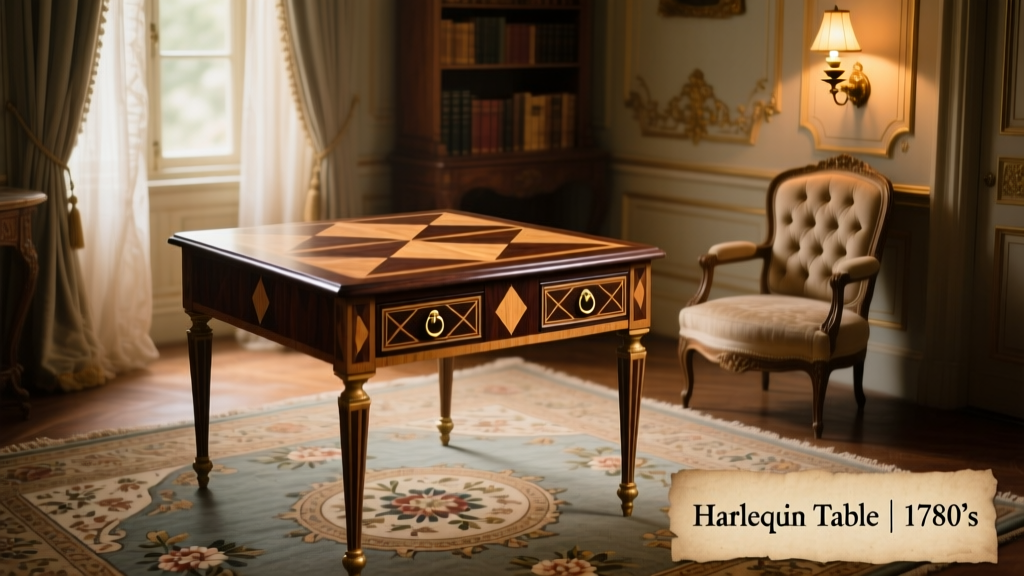
Harlequin Parquetry Accent Table: Design Origins, Structural Integrity, and Restoration Protocol for the 28" × 30" Two-Drawer Square-Leg Model

Toy Monkey Kazoo Penny Toy Germany: Origins, Manufacture, and Collectibility of a Rare 19th-Century Musical Toy